© Shutterstock
 Votre guide Ryo
Côtes-d'Armor: What You Really Need to See in 2026
There's something rather unfair about how Côte d'Armor is usually presented: we often reduce Côtes-d'Armor to their pink rocks and crêperies, as if the forty or so kilometers between Perros-Guirec and Trébeurden summed up everything. In reality, Côtes-d'Armor forms one of the most diverse territories in Brittany, a coastline of 350 kilometers that passes from the red sandstone cliffs of Cap Fréhel to the sheltered beaches of Goëlo, crossing wooded estuaries, car-free islands and medieval cities that have little to envy Carcassonne.
In this article, you'll find the sites that deserve your time: the ten-minute crossing to Bréhat and its blooming fig trees, the ramparts of Dinan that you can walk in forty-five minutes for a panorama of the Rance valley, Cap Fréhel and its cliffs at 70 meters above the sea, the Sept-Îles reserve and its unique gannet colony. To prepare your walking visits in the cities, the Ryo audio guide is available on the main Breton destinations, a way to explore without missing anything. Here's what to see in Côtes-d'Armor, without unnecessary detours.
The Pink Granite Coast and Ploumanac'h
The Pink Granite Coast owes its name to a particular geology: granite rich in potassium feldspar which gives it, depending on the angle of the sun, shades ranging from pale salmon to brick red. The phenomenon exists elsewhere in the world, in Corsica, in China, but nowhere does it present itself in this chaotic and accessible form, with rocks sculpted by marine erosion that advance directly into the sea at the end of the coastal path.
The most spectacular section of the GR 34 between Perros-Guirec and Ploumanac'h covers about 7 kilometers. Allow two to three hours on foot depending on your pace and desire to stop. The rocks have names: the Turtle, the Mushroom, the Death's Head, baptisms given by fishermen who had navigated between them for centuries. Upon arrival at Ploumanac'h, the Mean Ruz lighthouse, "the red rock" in Breton, was rebuilt in pink granite in 1946 after the destruction of the previous one by the Germans in 1944. It dominates the port and the chaos of rocks from its 15 meters.
Just offshore, the Sept-Îles nature reserve (Port de Trestraou, 22700 Perros-Guirec, rated 4.9/5 on Google for 8 reviews) is one of the most important in metropolitan France for marine birdlife. It houses France's only continental gannet colony, which had up to 21,500 breeding pairs before the 2022 bird flu decimated a large part of it (about 11,500 pairs recorded in 2023), as well as puffins, razorbills, guillemots and grey seals. Commented cruises leave from Trestraou port between April and September, duration about 2 hours. If you visit in July or August, know that the Ploumanac'h site exceeds 800,000 visitors in high season: arrive early in the morning or come on weekdays outside July-August.
Perros-Guirec has several beaches, including Trestraou beach (500 meters of sand), very well equipped in summer. To stay in close proximity to the Pink Granite Coast, Ploumanac'h and Perros-Guirec offer a good choice of rentals and hotels in all ranges.
Cap Fréhel and Fort La Latte
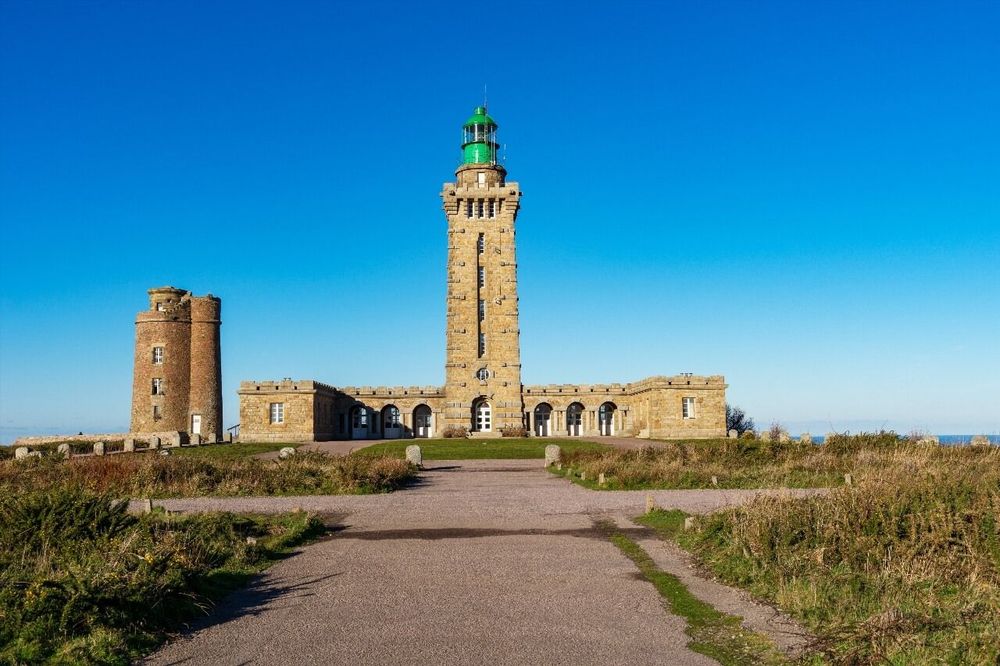
The Cap Fréhel is to the west what the Pink Granite Coast is to the north: a natural site whose reputation is fully justified. Its pink sandstone and red porphyry cliffs plunge into the sea at 70 meters, overlooking waters of a striking blue-green in clear weather. The current lighthouse, built in 1950 to replace the one dynamited during the war, peaks at about a hundred meters above sea level, and its lantern remains visible at more than 100 km in clear weather.
The moorland covering the cape is classified as a Natura 2000 site. In June and July, heather and gorse cover the plateaus with mauve and yellow, a spectacle that naturalist photographers know well, but which ordinary visitors often discover with surprise. Colonies of common guillemots and crested cormorants nest in the cliff fissures; binoculars recommended.
At 3 kilometers east of the cape, Fort La Latte (22240 Fréhel, rated 4.7/5 on Google for 9,736 reviews) is a medieval fortress built on a rocky spur separated from the continent by two natural crevices, crossed by drawbridges. Founded in the 14th century by the Goyon-Matignon family, redesigned by Vauban between 1690 and 1715, it served as a set for several film productions, including The Vikings (1958) with Kirk Douglas. The visit lasts about an hour; the ramparts offer a 180-degree panorama of the Fresnaye bay.
The most pleasant route between the two sites: park at Cap Fréhel, follow the GR 34 for 5 km one way to the fort along the cliffs, then return through the inland. This loop represents one of the most emblematic half-days of Côte d'Armor, in all seasons. In winter, the great equinoctial tides (coefficients above 100) make the Fresnaye bay particularly spectacular.
Bréhat Island
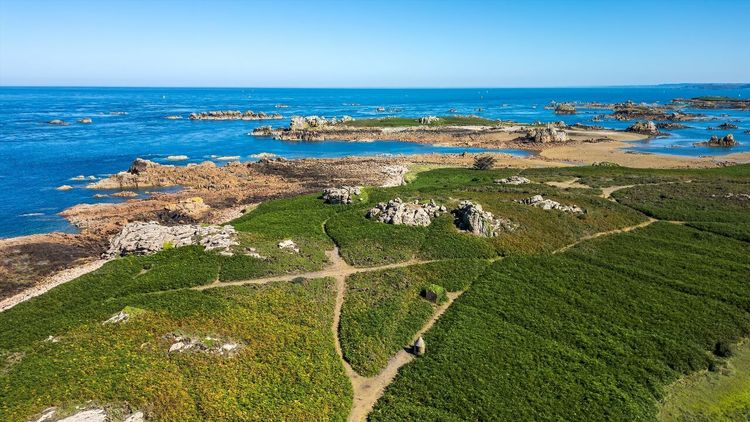
Bréhat has no cars. None. Deliveries are made by tractor, movement on foot or by bike, and the general atmosphere surprises those who expected a classic Breton island: mimosas and fig trees bloom there from February, the microclimate of the Channel is particularly mild here.
The island measures 3.5 km long and is divided into two parts connected by a bridge: the North island, wild and indented, and the South island, more inhabited, with the village and its 12th-century church. The Birlot tidal mill, built between 1633 and 1638, is presented as one of the oldest tidal mills still in working order in France, a claim that local guides defend with conviction. Allow half a day for the complete tour of the island on foot, about 4 kilometers of coastal path.
The boats leave from Pointe de l'Arcouest, commune of Ploubazlanec, 6 km north of Paimpol. 10-minute crossing, the shortest and, according to the local Bretons, one of the prettiest. In summer, Bréhat welcomes about 400,000 visitors per year for about 430 permanent residents: come in May or September to enjoy the island in its natural state.
Dinan, the Medieval City
Dinan ranks among the best-preserved medieval towns in Brittany. This isn't a brochure formula: Rue du Jerzual, which tumbles down to the port between 15th-century half-timbered houses, is one of the most intact medieval streets in all of western France. The slope exceeds 15% in places, the cobblestones are slippery after rain, but no one complains when reaching the bottom.
The ramparts of the old town extend for nearly 3 kilometers in perimeter, one of the most complete medieval fortified complexes in Brittany. The walk on the walls is free, takes forty-five minutes and offers views of the Rance valley and the 19th-century railway viaduct that spans the valley. The Château de Dinan (14th century), which houses the municipal museum, offers collections of medieval sculptures and a view from the towers over the rooftops of the old town.
At the bottom of Rue du Jerzual, Dinan port is one of the most pleasant river ports in northern Brittany. Cruises go up the Rance to Saint-Malo (about 2h30) or down to Dinard between April and October, an original way to see the landscape from the water. To enjoy Dinan without rushing, settle at Place des Merciers (Place des Merciers, 22100 Dinan, rated 4.6/5 on Google for 1.1K reviews): the overhanging 15th-century houses form an intact setting, and the crêperies that occupy them serve buckwheat galettes in one of the most photographed settings in the department.
Dinan remains significantly less crowded than Saint-Malo, just 35 km further north. This is one of the arguments for spending a night rather than half a day: in the evening, after the buses leave, the old town regains an atmosphere that daytime photos don't capture. A Ryo audio guide allows you to explore its alleys at your own pace, the history of each half-timbered house told as you walk.
Paimpol and the Goëlo Coast
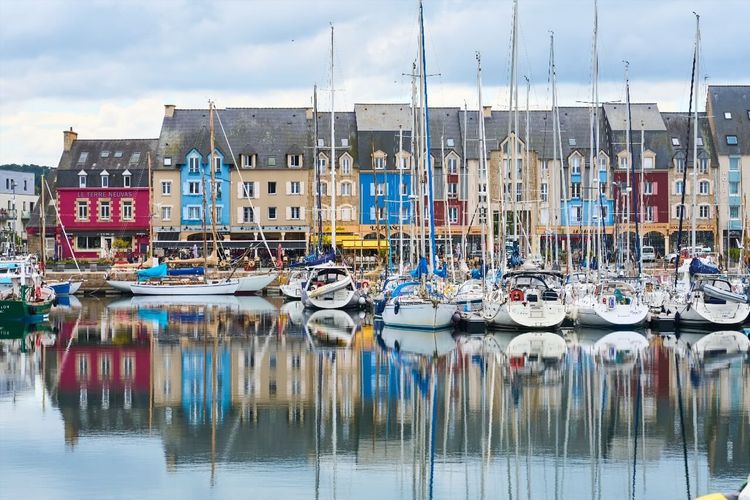
Paimpol has a literary identity above all: Pierre Loti set An Iceland Fisherman there in 1886, and this novel made known throughout France the destiny of the Icelanders, these sailors from Côtes-d'Armor who left each spring to fish for cod in the waters of the North Atlantic, sometimes never to return. The Paimpol Sea Museum (5 Rue Labenne, 22500 Paimpol, rated 4.2/5 on Google for 105 reviews), installed in a former cod drying house from the late 19th century, traces two centuries of deep-sea fishing with models and period navigation instruments.
The marina is one of the most active on the north coast. The Sea Shanty Festival is held there every two years (odd years) and brings together maritime music groups from around the world for four days, with more than 60,000 spectators at each edition. Outside of festivals, the quays are pleasant for a walk and provide access to several fish restaurants renowned in the region.
The Goëlo Coast, between Paimpol and Saint-Brieuc, is one of the least frequented parts of the Côtes-d'Armor coastline, and one of the most beautiful for walkers. Bonaparte beach in Plouha, nestled at the foot of the highest cliffs in Brittany (104 meters at the point), takes its name from a World War II escape network: between January and August 1944, 135 Allied aviators shot down over France were clandestinely embarked there to England.
The GR34: The Customs Officers' Path
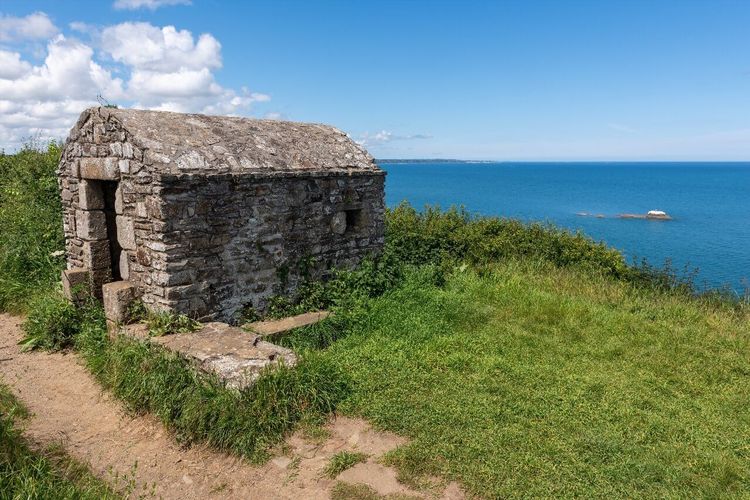
The GR 34 runs along the Breton coasts for more than 2,000 kilometers in total, but its Côtes-d'Armor section is among the most varied. In a few days of walking, the path passes from the red cliffs of Erquy to the pink granite chaos of Ploumanac'h, crossing wooded estuaries, fishing ports and gorse-covered moorlands.
In Côtes-d'Armor, some sections are priority. The Cap Fréhel, Fort La Latte section (5 km one way) is a very accessible loop. The Perros-Guirec, Ploumanac'h section (7 km) is the most frequented in the department, but in the morning on weekdays, it remains walkable without saturation. The Paimpol, Pointe de l'Arcouest section allows you to combine the coastal path with the crossing to Bréhat at the end of the day.
For longer stages, the GTMC Armor (Great Crossing of the Breton Central Massif) cuts across the interior of the department from Lake Guerlédan to the coasts. Hikers looking for an alternative to the summer crowds of the coastal GR 34 particularly appreciate it in June and September.
Cap d'Erquy and the Cliffs of Plouha
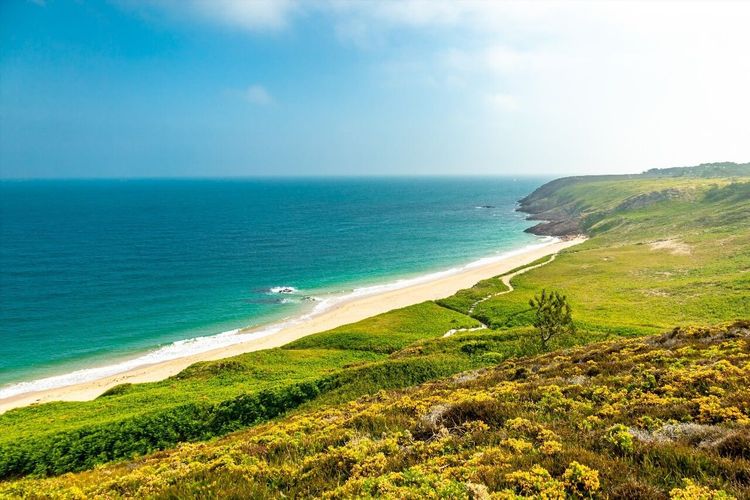
The Cap d'Erquy is often underestimated compared to the fame of its Fréhel neighbor. However, its pink sandstone cliffs plunging into a turquoise sea constitute a comparable spectacle, with the advantage of still reasonable attendance. From the cape parking lot, several paths lead to the different viewpoints over Saint-Brieuc bay.
The Plouha cliffs (Pointe de Plouha, 22580 Plouha, rated 4.7/5 on Google for 1,151 reviews), further north, are the highest in Brittany: 104 meters at the point. Little known by classic tourist circuits, they remain accessible from Bonaparte beach via the GR 34. The place is particularly appreciated by photographers in late afternoon, when the raking light accentuates the contrast between the red rock and green sea.
Saint-Brieuc and the Bay
Saint-Brieuc is the prefecture of Côtes-d'Armor, a city often underestimated by travelers hurrying to reach the coast. Its historic center is organized around Saint-Étienne Cathedral, a 14th-15th century building with fortress-like appearance with its two crenellated towers flanking the façade. The interior houses several Gothic chapels and a remarkable collection of stained glass windows, which the Ryo audio-guided tour helps place in the turbulent history of the city.
Saint-Brieuc bay is one of the largest in the Channel: 75 km of coast, tidal flats that are exposed for several kilometers at low tide. It's a major site for migratory birds, up to 30,000 wading birds stop there each autumn. The bay also houses the first scallop fishing zone in France, with more than 200 boats and several thousand tons harvested each season from October to April. For walkers, the coastal path between Le Valais and Cap d'Erquy offers a 12 km hike with views of the bay and cliffs.
Tréguier and the Plougrescant Chasm
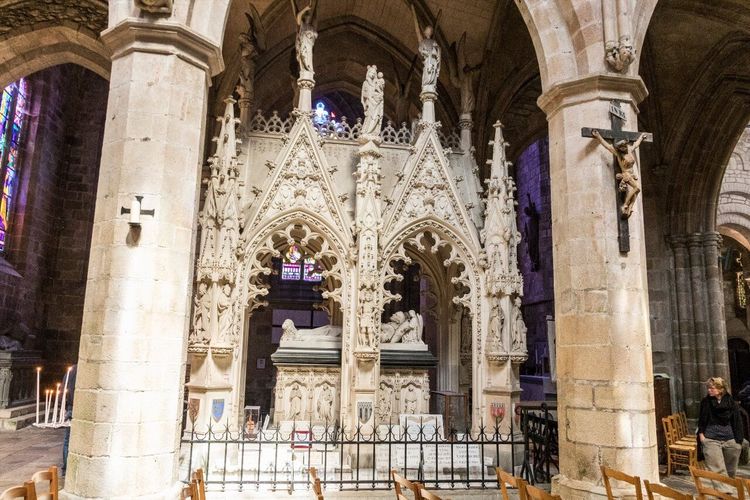
Tréguier is one of the nine episcopal cities of Brittany and one of the least known. Its Saint-Tugdual Cathedral (14th-15th centuries) nevertheless deserves a stop: the Hastings tower, originally Romanesque from the 11th century, neighbors with a flamboyant Gothic cloister whose 46 openwork arches frame a green garden. It's one of the most elegant Gothic cloisters in western France. The city is also the birthplace of Ernest Renan (1823-1892), whose birthplace has become a museum.
A few kilometers north of Tréguier, the Plougrescant Chasm (Route du Gouffre, 22820 Plougrescant, rated 4.7/5 on Google for 2,744 reviews) is one of the most shared photographic curiosities in Brittany. Between two granite blocks, a yellow house has slipped into a fissure, private property and not visitable, but visible from the coastal path. The chasm itself is a natural crevice in the rock where the sea rushes in forcefully at high tide, creating a dull roar particularly impressive during the great equinoctial tides.
Combine the visit with the nearby Saint-Gonery Chapel, whose lead bell tower has leaned at 15 degrees since the 15th century without anyone judging it useful to straighten the situation.
Lake Guerlédan
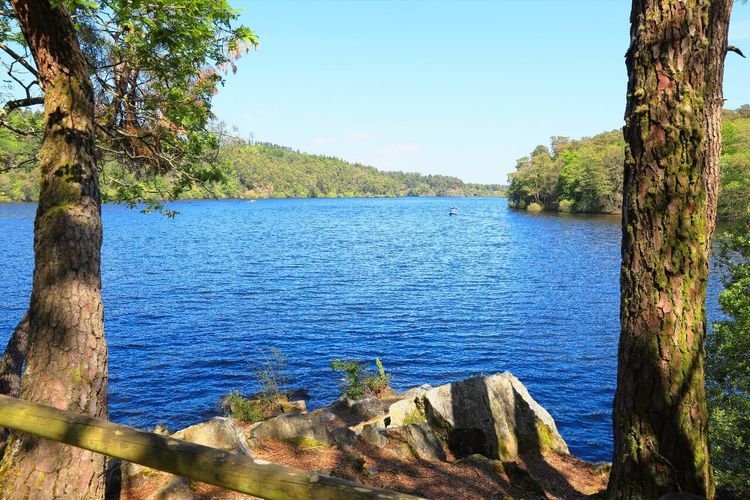
The Lake Guerlédan is an anomaly in the Breton landscape: 304 hectares of fresh water created in 1930 by the Saint-Aignan hydroelectric dam, straddling Côtes-d'Armor and Morbihan. Its wooded shores of beech and pine trees, its sandy coves and clear waters radically distinguish it from the marine coastline of the department.
The bike tour of the lake measures about 40 km and runs along varied panoramas: wooded cliffs, freshwater beaches, granite villages. Several water sports centers offer kayaks, pedal boats and windsurfing from May to September. On the north shore, the Abbey of Bon Repos (Abbaye de Bon-Repos, 22570 Saint-Gelven, rated 4.5/5 on Google for 1,655 reviews), founded in 1184 by Cistercian monks, now in partial ruins, hosts sound and light shows each summer that attract several thousand spectators.
Côtes-d'Armor Gastronomy
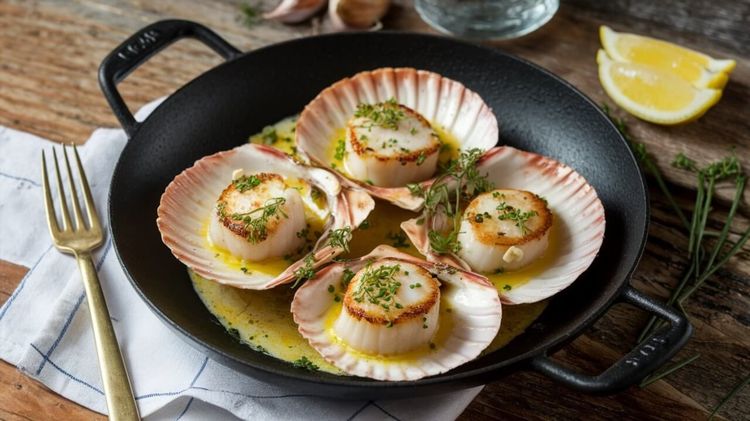
Côtes-d'Armor has two territories at the table: the coast, which provides scallops fished in Saint-Brieuc bay (the largest French fishing zone for this species), flat oysters from Paimpol and blue lobsters from the Pink Granite Coast; and the interior, which responds with farm cheeses and country charcuterie.
The Dinan market (Place Du Guesclin, 22100 Dinan, rated 4.5/5 on Google for 423 reviews) (Thursday morning, Place Du Guesclin) is one of the most well-stocked in the department for direct producer products, cheeses, packaged galettes, cider, seasonal vegetables. Those of Lannion (Thursday) and Guingamp (Wednesday and Saturday) are equally interesting for takeaway purchases.
The buckwheat galette remains the emblem of Côtes-d'Armor cuisine, served in crêperies or "galetteries." A complete meal, complete galette, dessert crêpe, bowl of cider, costs on average 12 to 15 euros in traditional establishments. The scallop season runs from October to April; out of season, coastal restaurants often offer line-caught sea bass or Brittany pollack as a replacement.
FAQ
What is the best time to visit Côtes-d'Armor?
May-June and September are the best periods. The coast is still lightly visited, mimosas and gorse are in bloom, and temperatures remain mild (15-20°C). July and August offer the best sunshine but concentrate 60-70% of the annual attendance on coastal sites. Winter is windy but spectacular on the cliffs, and the equinox tides in March and September attract lovers of high coefficients.
How many days should I plan to visit Côtes-d'Armor?
A week is the minimum to cover the major sites without rushing. In three days, it's possible to see the Pink Granite Coast, Bréhat and Dinan. In five days, you can add Cap Fréhel, Fort La Latte and Lake Guerlédan. To explore the coast and inland areas in depth, plan seven to ten days.
How to get around Côtes-d'Armor without a car?
It's doable but requires organization. The BreizhGo bus network serves the main towns (Saint-Brieuc, Dinan, Guingamp, Lannion, Paimpol) from Saint-Brieuc TGV station. The SNCF line Rennes, Saint-Brieuc, Brest remains the backbone. However, isolated natural sites (Cap Fréhel, Pink Granite Coast, Lake Guerlédan) are difficult to access without a car outside the season. In summer, seasonal shuttles complement the network on certain coastal sections.
What are the most beautiful beaches in Côtes-d'Armor?
The Trestraou beach in Perros-Guirec is the largest in the Pink Granite Coast area (500m of fine sand). The Grande Plage d'Erquy is among the most beautiful in Saint-Brieuc bay. The Palus beach in Plougrescant is a sheltered cove ideal for families. The Rosaires beach in Plérin offers a panoramic view over the entire Saint-Brieuc bay in clear weather.
Are Côtes-d'Armor suitable for families with children?
Yes, particularly. Bréhat, without cars, can be explored safely on foot with children. Lake Guerlédan offers supervised water activities for all ages. The Pink Granite Coast, with its rocks to climb, appeals to young ones. Fort La Latte, with its drawbridges and medieval towers, fascinates children from six or seven years old. On beaches with large tidal ranges, stay vigilant during spring tides with coefficients above 110.
Conclusion
From the pink rocks of Ploumanac'h to the cobbled streets of Dinan, from car-free Bréhat island to the vertiginous cliffs of Cap Fréhel, Côte d'Armor offers a diversity of landscapes that few French departments can claim. Each site deserves its half-day, each market its weekday morning, each sunset its cape.
To explore the department's cities at your own pace, the Ryo audio-guided tour accompanies you step by step through the main Breton sites, the stories behind the stones, without the crowds of a classic guided tour. Côtes-d'Armor's Brittany is earned: it rewards those who take the time to stop.