
Créé par Romane, le 4 juin 2026
Votre guide Ryo
© Shutterstock
Occitanie is full of forgotten architectural treasures that bear witness to a glorious past now frozen in time. Between majestic ruins perched on rocky spurs and medieval fortresses swallowed by vegetation, these abandoned castles offer a fascinating dive into the region's history. Whether you're a fan of urban exploration, passionate about medieval history, or simply curious in search of unusual experiences, these six abandoned sites in Occitanie promise memorable discoveries, combining mysteries, legends, and spectacular panoramas.
1. Peyrepertuse Castle in Aude
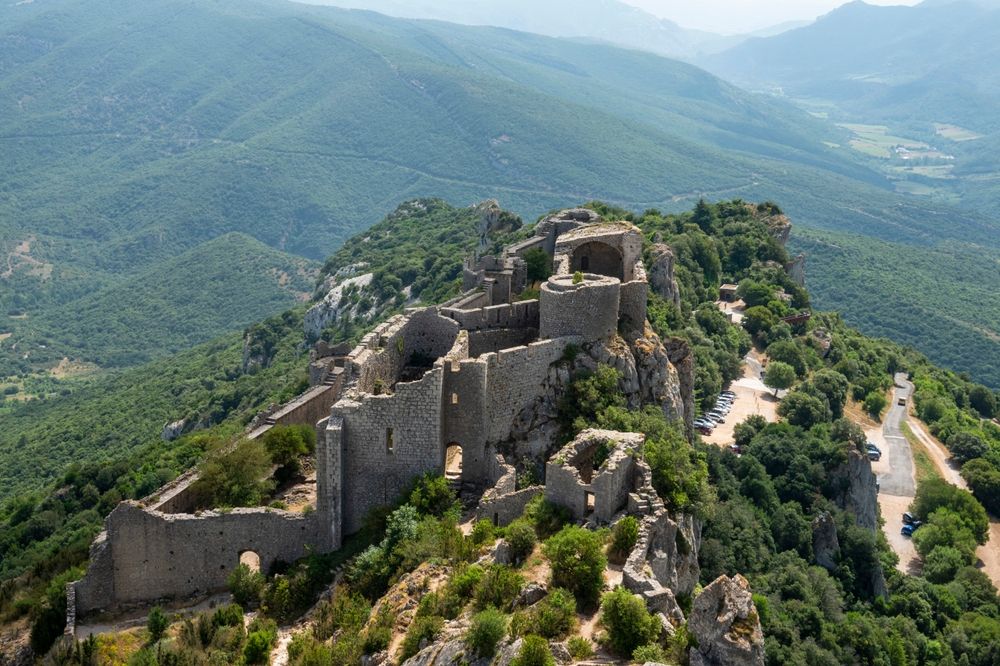
The undisputed jewel of Cathar country, Peyrepertuse Castle stands majestically at 800 meters altitude on a vertiginous limestone cliff. This royal fortress, now in ruins, offers a striking architectural spectacle that dominates the Corbières of Aude. Built during the reign of Saint Louis to protect the border between the Kingdom of France and Aragon in the 13th century, this abandoned castle of Occitanie bears witness to remarkable medieval military engineering, perfectly adapted to the steep terrain of the region.
Access to the castle requires a fifteen-minute climb on a rocky path, but the effort is largely rewarded by the exceptional panoramic view. The structure consists of two distinct enclosures connected by the famous Saint-Louis staircase, carved directly into the rock over sixty spectacular steps. The San-Jordi keep, built around 1250, constitutes the highest point of the site and offers a unique viewpoint over the vineyards, surrounding garrigue, and even Quéribus castle on the horizon.
The visit to this abandoned castle plunges you into the turbulent history of the crusade against the Albigensians. The imposing ramparts, defensive towers, and solidly fortified postern tell of the military strategies of a bygone era. For total immersion in this medieval atmosphere, the festival organized each year in August temporarily brings the fortress back to life with animations, historical reenactments, and period costume shows. If you're exploring the region, also consider visiting Carcassonne whose medieval city is located nearby.
2. The Medieval Site of Peyrusse-le-Roc in Aveyron
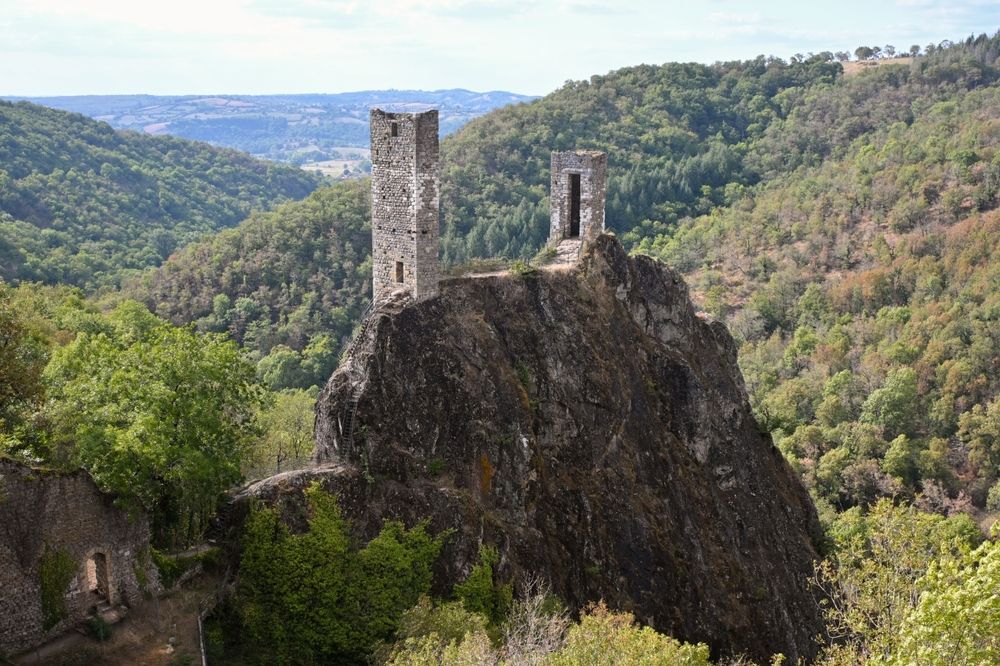
Perched on an impressive rocky promontory, the medieval site of Peyrusse-le-Roc constitutes one of the most fascinating abandoned castles in Occitanie. Only two towers of the lower castle remain today at 150 meters height on the Roc de Thaluc, silent vestiges of a once prosperous city that had about 3,500 inhabitants in the 13th century. Ancient Petrucia seeks its origins in the mists of time and today constitutes a veritable life-sized history book.
Chief town of an important bailliage of Rouergue comprising 107 parishes under the reign of Pepin the Short, Peyrusse-le-Roc experienced its golden age before the wars of religion radically transformed the destiny of this place. The destruction of the ramparts of the fortified lower town gradually led to the abandonment of the steep site. The inhabitants preferred to settle higher up, giving birth to the current village. Today, visiting this abandoned locality offers a captivating stroll through the vestiges of a glorious past.
Exploring the site, you will discover not only the two impressive towers of the lower castle, but also a third tower halfway up that still defies time. The Barbican Gate, former main entrance to the castle, and the arches of the borough bear witness to medieval urban organization. The wild and verdant natural setting in which this abandoned site is inscribed adds a romantic dimension to this historical exploration, particularly appreciated by photography and exploration enthusiasts.
3. Puilaurens Castle and the Legend of the White Lady
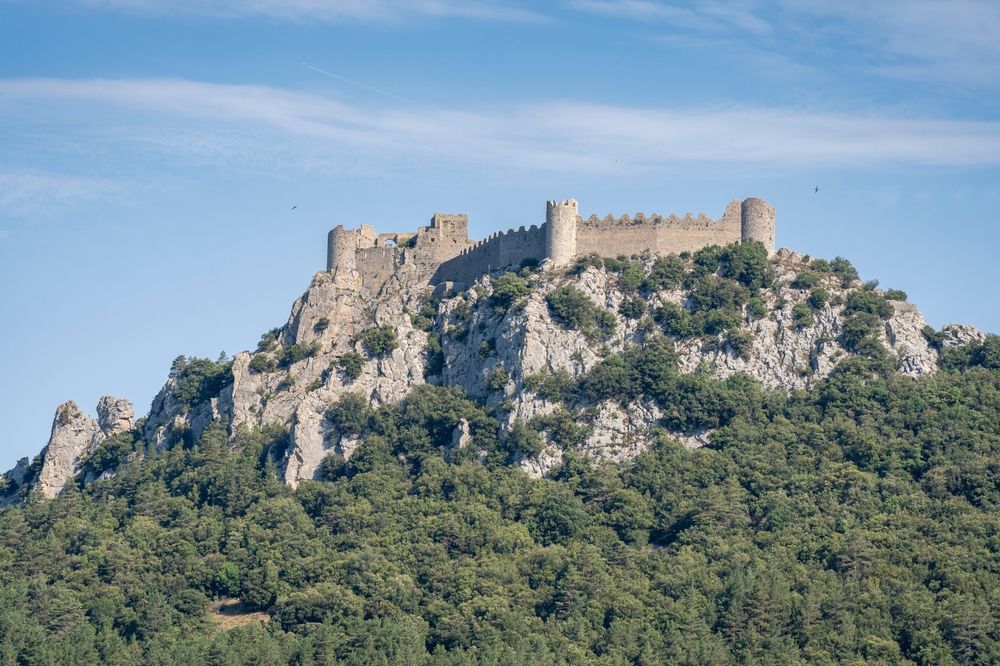
Nestled at 697 meters altitude on Mont Ardu, Puilaurens Castle ranks among the most mysterious abandoned castles in Occitanie. This medieval fortress perched on a rocky ridge offers exceptional panoramas over the verdant valley of Boulzane and surrounding mountains. Access requires a fifteen-minute hike on a steep path, but this ascent will lead you to one of the most bewitching Cathar sites in the Aude region.
The castle's architecture reveals sophisticated defensive organization with its outer wall, watchtowers, and a hidden door ingeniously concealed. After passing through the main gate, you enter the inner courtyard where various medieval constructions stand. But it is especially the West tower, baptized Tower of the White Lady, that attracts attention and feeds local legends for centuries.
The legend tells the tragic story of Blanche de Bourbon, wife of King Peter I of Castile. Assassinated on her husband's orders in 1361 at only 22 years old, her spirit would haunt the fortress during full moon nights. Villagers regularly claim to glimpse a figure dressed in a white veil floating on the ramparts and wall walk, giving the castle a mysterious aura that fascinates as much as it frightens. This supernatural atmosphere makes Puilaurens a privileged destination for thrill seekers and lovers of fantastic stories.
4. Belcastel Castle and its Aveyron White Lady
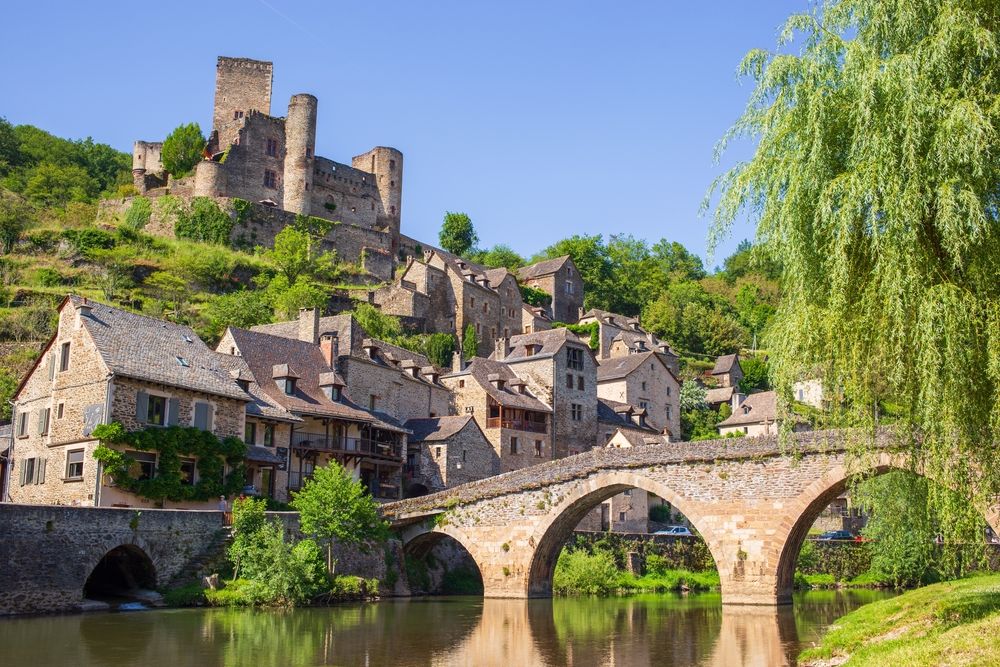
Belcastel Castle has dominated one of the most beautiful villages in France since the 11th century, offering a remarkable example of an abandoned castle then magnificently restored. Discovered in ruins in 1973, this millennial edifice seemed condemned to disappear after more than a century of abandonment. It was architect-urbanist Fernand Pouillon who undertook its renaissance, dedicating eight years to bringing this Aveyron architectural jewel back to life.
Today, visiting the castle allows discovering a unique synthesis between medieval heritage and contemporary art. The lower courtyard, medieval chapels, and various towers have been respectfully restored, while the square keep and corner towers now house temporary artistic exhibitions. Lovers of unusual experiences can even stay in a guest room arranged within the castle and savor a gastronomic dinner in the historic halls.
Like Puilaurens, Belcastel has its own White Lady legend that adds a mysterious dimension to the place. The story tells that Cécile de Saunhac, accused of infidelity by her husband Alzias de Saunhac in 1488, was thrown from the top of the keep. Her vengeful husband then had his wife's body walled up in the castle walls. Since this drama, her ghost would wander in the corridors and on the ramparts, perpetuating the memory of a conjugal tragedy that marked local history.
Download the audioguided tour to discover Carcassonne on foot and independently
To best explore the region and discover the medieval treasures of Occitanie, let yourself be guided by the Ryo itinerary of Carcassonne. This application accompanies you through 27 major points of interest in the medieval city, a true gateway to the abandoned castles of the region. Thanks to immersive audioguides, you will discover the fascinating history of this exceptional fortress that shares many common points with the abandoned sites presented in this article. The Carcassonne visit itinerary constitutes the ideal complement to your exploration of forgotten castles in Occitanie.
5. Valgros-Frontenac Castle near Bram
Near Carcassonne, in the commune of Bram, Valgros-Frontenac Castle embodies the tragic figure of abandoned castles in Occitanie. Built at the end of the 19th century (1870), this estate once extended over 26 hectares and counted three floors of 1,000 m² each. Property of the Fabre family then the Piquet family until 1987, the castle was then sold to a Dutch company that envisioned its transformation into luxury apartments, a project that never came to fruition.
The castle's destiny tragically shifted in October 2005 when a mysterious fire ravaged the edifice. The origin of the fire was never elucidated, leaving doubt about the circumstances of this disaster. While the exterior facade miraculously resisted the flames, preserving its original architecture that still reflects in the waters of the ornamental pond, the interior was entirely destroyed. Floors and ceilings collapsed, staircases rusted, making access to upper levels extremely dangerous.
Today, Valgros-Frontenac Castle remains an unusual place bearing witness to a tormented history. The surroundings bear traces of aborted rehabilitation attempts, adding to the site's melancholy. Despite ordeals and accidents, the facade holds strong, defying time and elements, like a last rampart against total oblivion. This abandoned castle particularly fascinates urbex enthusiasts who see it as a poignant example of endangered heritage, both magnificent and tragic.
In conclusion, these six abandoned castles of Occitanie offer much more than a simple historical visit. They constitute veritable temporal gates to a glorious past, where each stone tells a story, each tower evokes a legend, and each ruin bears witness to heritage resilience against time's assaults. From Peyrepertuse to Valgros-Frontenac, passing through the mysterious White Ladies of Puilaurens and Belcastel, these forgotten fortresses invite off-the-beaten-path exploration, mixing thrills, wonder, and deep connection with Occitan medieval history. To extend this heritage discovery, don't hesitate to explore the Carcassonne visit itinerary which will allow you to contextualize these abandoned jewels within the rich regional heritage. Whether you're an urbex enthusiast, history lover, or simply curious, these abandoned castles promise unforgettable moments in the heart of spectacular landscapes.
FAQ: Abandoned Castles in Occitanie
Can you freely visit abandoned castles in Occitanie?
Access varies according to sites. Some castles like Peyrepertuse and Puilaurens are open to the public with official ticketing and marked paths. Other truly abandoned sites like Thomas Rung castle or Valgros-Frontenac are on private property, making access technically illegal. For the latter, it is recommended to respect private property and inquire with local town halls before any visit. Belcastel castle, although restored, offers organized visits accessible to the general public.
What is the best period to explore these abandoned castles?
Spring (April-May) and autumn (September-October) constitute ideal periods to visit these abandoned castles in Occitanie. Temperatures are mild, lighting perfect for photography, and sites less crowded than in peak summer. Avoid winter when access paths can be slippery and dangerous, particularly for Peyrepertuse and Puilaurens perched at altitude. Summer offers excellent visibility but sites are more crowded and temperatures sometimes crushing during ascent.
Are the White Lady legends based on real facts?
White Lady legends mix historical reality and folklore. For Belcastel, Cécile de Saunhac's story rests on proven facts dating from 1488, even if ghostly appearances obviously belong to popular legend. Concerning Puilaurens, Blanche de Bourbon's existence and her tragic assassination in 1361 are historically documented, but her direct link with the castle remains uncertain. These tales nonetheless considerably enrich the mysterious atmosphere of these abandoned fortresses and contribute to their romantic charm.
Do you need particular physical condition to visit these sites?
Required physical condition varies considerably according to castles. Peyrepertuse and Puilaurens require good physical shape due to ascent and steep paths, with sometimes vertiginous passages. Count 15 to 30 minutes uphill walking. Peyrusse-le-Roc offers two routes of different difficulties, adapted to various levels. Belcastel castle, well restored, offers relatively easy access. For urbex sites like Thomas Rung or Valgros, caution is essential as structures can be unstable, with rusted stairs and collapsed floors.
What other Cathar castles can be visited in Occitanie?
Beyond the abandoned castles presented here, Occitanie counts numerous remarkable Cathar fortresses. Don't miss Quéribus castle facing Peyrepertuse, Montségur castle high place of Cathar tragedy, the medieval city of Carcassonne classified as UNESCO World Heritage, or the Lastours castles dominating the Orbiel valley. For complete exploration, consult our article on the 14 Cathar castles to absolutely visit in Occitanie. Each offers a unique perspective on this fascinating period of regional history and exceptional panoramas over Occitan landscapes.