
Créé par Romane, le 20 juin 2026
Votre guide Ryo
Secret Pyrenees Hikes: Wild Horses & Lakes
© Shutterstock
The Pyrenees conceal unsuspected treasures for hiking enthusiasts seeking authenticity. Far from overcrowded trails, these secret routes lead you to encounter majestic landscapes where wild horses and summer herds graze freely. Between sparkling high-altitude lakes, vertiginous glacial cirques and preserved valleys, these secret hikes in the Pyrenees promise intense emotions and unforgettable encounters with still wild nature. Prepare your hiking boots and camera: the adventure starts now.
1. The Ayous lakes and the pic du Midi d'Ossau: the jewel of the Ossau valley
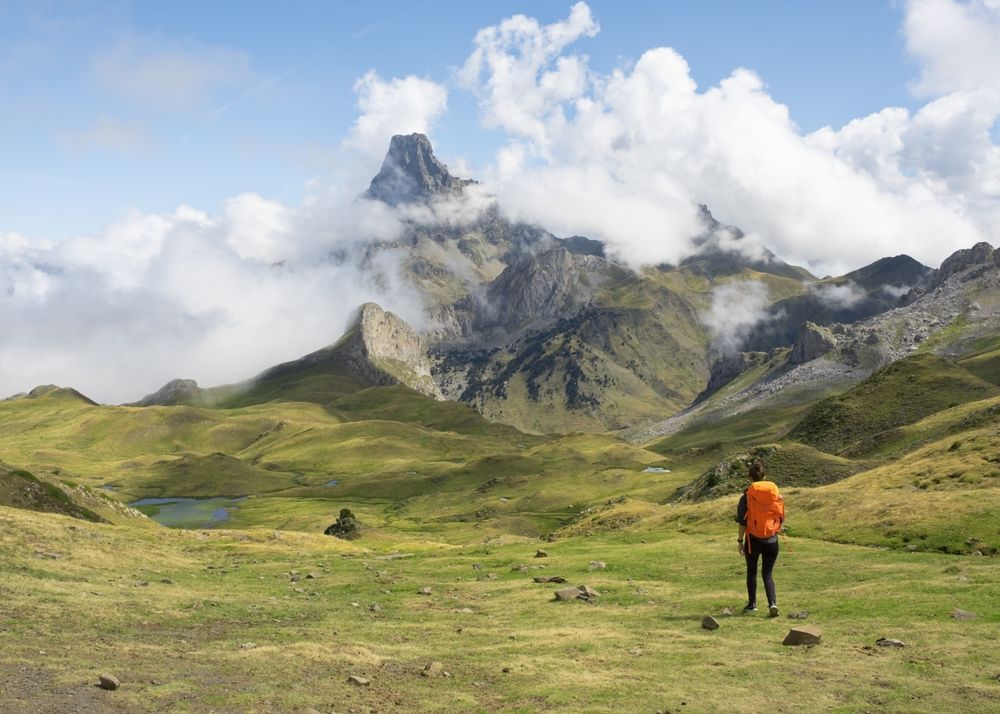
Nestled in the Pyrénées-Atlantiques, the Ayous lakes loop constitutes undoubtedly one of the most emblematic hikes of the Pyrenean range. This 14-kilometer route takes you to discover no fewer than five high-altitude lakes, each offering a different reflection of the majestic pic du Midi d'Ossau which peaks at 2,884 meters. The departure is from the Bious-Artigues lake parking, accessible from the village of Laruns.
The route gradually climbs through a pine forest, then opens onto high-altitude pastures where free-roaming horses often graze. You will successively discover lake Roumassot (1,845 m), lake du Miey (1,914 m), lake Gentau (1,947 m) where the Ayous refuge stands, then lakes Bersau (2,083 m) and Castérau (1,943 m). Each body of water offers a unique perspective on the pic du Midi d'Ossau, nicknamed "Jean-Pierre" by locals due to its characteristic two-peak shape.
Practical info: Allow 5 to 6 hours for the complete loop with 650 meters of positive elevation. Level: intermediate. The best period extends from June to October, outside snowy periods.
2. The Beille plateau and Mérens horses in Ariège
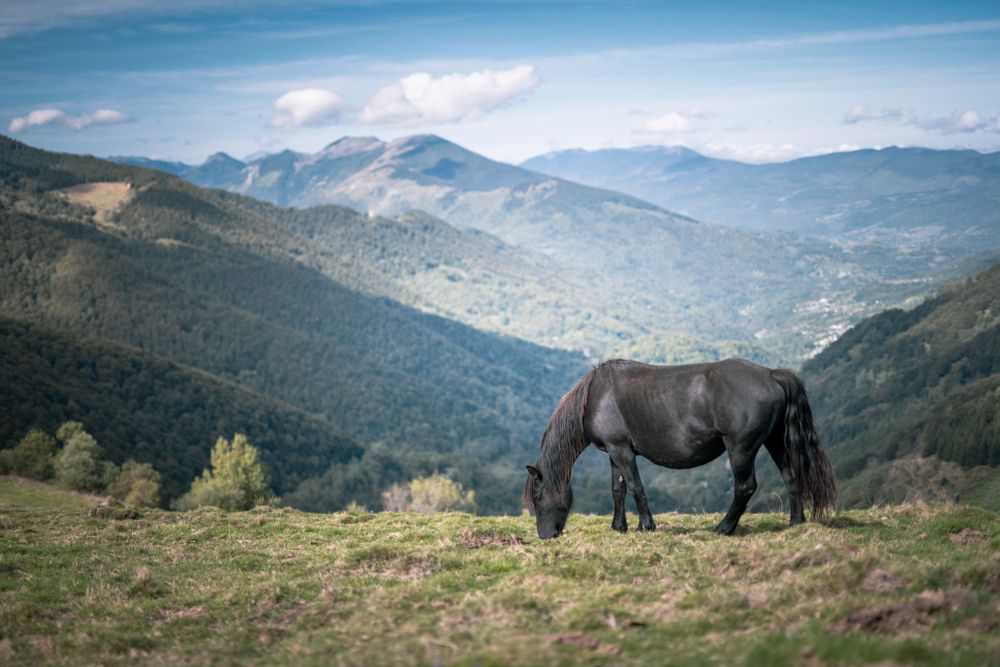
A true well-kept secret of Ariège, the Beille plateau is discovered through an accessible hike that immerses you in the heart of an exceptional pastoral landscape. Perched at 1,800 meters altitude, this summer pasture plateau welcomes transhumance herds each summer and especially herds of Mérens horses, these magnificent black equines emblematic of the Ariège Pyrenees.
The Mérens, nicknamed the "black prince of the Pyrenees", lives here in semi-freedom in a setting of rolling meadows bordered by spruce forests. Observing these hardy horses evolving in their natural environment constitutes a magical experience, particularly at sunrise or sunset when the grazing light sublimes the plateau's reliefs. Foals frolic alongside their mothers, while stallions watch over their herds with natural majesty.
Beyond equine encounters, the Beille plateau also offers exceptional panoramas of the surrounding peaks and constitutes an ideal starting point for more athletic hikes to the border ridges. In winter, the site transforms into a Nordic ski resort, but it is indeed in summer that the magic operates fully.
Practical info: Road access to the plateau from Les Cabannes. Several marked trails allow exploring the summer pastures. Level: easy to medium depending on the chosen route.
3. The Gavarnie cirque: a grandiose natural amphitheater
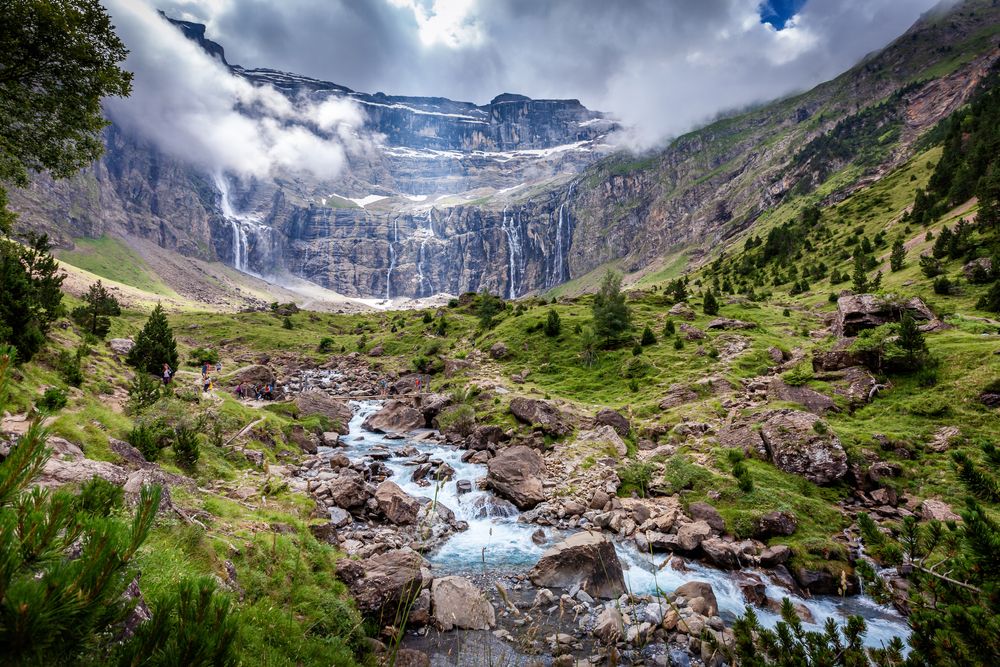
Listed as UNESCO World Heritage, the Gavarnie cirque remains an unmissable destination for any hiker traveling through the Hautes-Pyrénées. While the site attracts numerous visitors, it nevertheless maintains a majestic and wild character that commands admiration. The limestone cliffs rise 1,500 meters high, forming a spectacular natural amphitheater at whose foot tumbles the Grande Cascade, 427 meters high.
The classic trail from the village of Gavarnie represents a family-friendly 8-kilometer round trip with only 200 meters of elevation gain. However, for a more secret and immersive experience, favor the route via the Espugues ledge which offers vertiginous perspectives of the cirque. This more athletic variant allows admiring the waterfall from a unique angle and encountering far fewer people.
For the more adventurous, the ascent to the Roland breach, this legendary notch separating France from Spain at 2,807 meters altitude, constitutes an ambitious but unforgettable objective. The view from this mythical pass over both sides of the Pyrenees amply rewards the efforts made.
Practical info: Village of Gavarnie accessible from Luz-Saint-Sauveur. Classic route: 3h round trip, easy level. Roland breach: 8h round trip, difficult level, 1,400 m elevation gain.
4. Lake Estaing: secret pearl of the Hautes-Pyrénées
Less known than its neighbors but equally magnificent, lake Estaing nestles at 1,163 meters altitude in a setting of wooded mountains. This natural dam lake offers a peaceful and wild setting, ideal for a family hike or a first discovery of mountain hiking. Accessible by car from the village of Estaing, the lake constitutes an excellent starting point for more advanced excursions.
The lake loop is completed in one hour on an easy trail that winds between forest and shore. But seasoned hikers can push to lake Plaa de Prat (1h30 additional, 495 m elevation gain) or even to the Ilhéou refuge, nestled at 1,985 meters in a sumptuous glacial cirque. These extensions allow immersion in preserved high mountain landscapes where wildlife (marmots, chamois, raptors) reigns supreme.
In summer, shepherds lead their flocks to these summer pastures and it is not uncommon to encounter sheep, cows and horses grazing peacefully along streams. The pastoral atmosphere emanating from these encounters reinforces the feeling of being outside time, in a world where man and nature still coexist harmoniously.
Practical info: Road access to the lake from the village of Estaing. Lake loop: 1h, very easy level. Extension to lake Plaa de Prat: medium level.
5. The Aure valley and Néouvielle lakes: biodiversity sanctuary
The Néouvielle nature reserve, accessible from Saint-Lary-Soulan in the Aure valley, shelters no fewer than 70 lakes and tarns scattered in a breathtaking mineral setting. This biodiversity sanctuary protected since 1936 constitutes one of France's oldest nature reserves. Century-old mountain pines neighbor rhododendrons and blueberries here, creating a unique ecosystem.
Among the secret hikes in the Pyrenees, the Aumar and Aubert lakes circuit represents an accessible classic that reveals all the beauty of this granite massif. The trail winds between rocky chaos and alpine meadows, offering new panoramas of the turquoise-watered lakes at each turn. The most courageous will push to Cap de Long lake, a majestic body of water dominated by the Néouvielle peak (3,091 m).
The site's ornithological richness also makes it a paradise for bird watchers: bearded vulture, golden eagle, rock ptarmigan and yellow-billed chough frequent these heights. With luck and patience, you will also spot marmots, chamois or even a capercaillie in the undergrowth.
Practical info: Lakes road open from late May to early November (check before). Aumar-Aubert circuit: 2h30, easy level. Extension to Cap de Long: 4 to 5h, medium level.
6. Kakuetta gorges and pottoks of the Basque Country
Radical change of atmosphere with the Kakuetta gorges, a spectacular canyon carved 80 million years ago in the limestone of Haute-Soule. This easy but striking hike takes you into a mineral and aquatic universe where the torrent thunders between vertiginous walls 200 to 350 meters high. The lush vegetation, almost tropical, clinging to the cliffs creates a mysterious atmosphere.
Important note: The Kakuetta gorges are currently closed for safety and modernization works. Reopening is planned for 2026-2027. Meanwhile, hikes on the heights of the Basque Country allow admiring other wonders.
The inland Basque Country indeed offers magnificent hikes where you will encounter the famous pottoks, these small wild horses emblematic of the region. On the massifs of la Rhune, Baïgura, Artzamendi or Ursuya, these hardy ponies live in semi-freedom, perpetuating a millennial tradition. About 1.30 meters high, generally black or bay-colored, these stocky equines graze peacefully on mountain slopes, indifferent to hikers passing at respectful distance.
The ascent of mount Baïgura (897 m) from the eponymous leisure base constitutes a beautiful 3 to 4-hour loop offering 360° panoramas of the Basque Pyrenees and Atlantic Ocean. The meadows covered with golden ferns in autumn and herds of pottoks galloping in the distance compose unforgettable tableaux.
Practical info: Mount Baïgura accessible from Macaye. Several possible routes, from 2h to 4h depending on the chosen loop. Level: medium. Observe pottoks from distance without disturbing them.
7. The Aspe valley and the Mâture path: historical hike
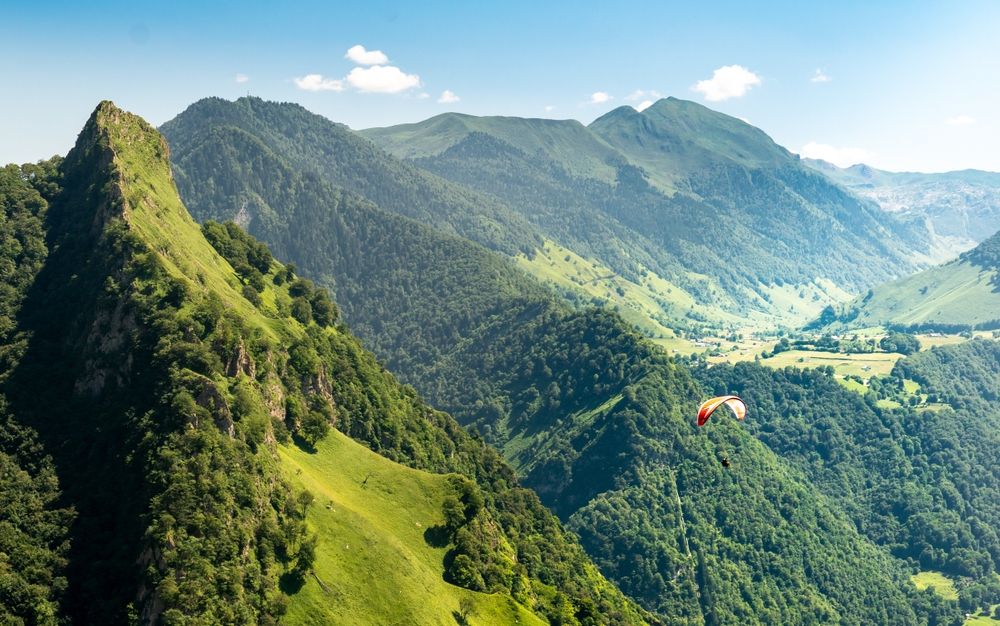
Among the secret hikes in the Pyrenees, the Mâture path in the Aspe valley deserves special mention for its exceptional historical character. This spectacular trail, carved into the cliff face in the 18th century, served to transport masts for the Royal Navy from valley forests to Béarn. Only 1.50 meters wide in places, it overlooks the Aspe torrent by several hundred meters.
The hike, accessible from Etsaut, first follows the torrent before beginning a gradual climb through beech forest. Then comes the gripping moment when the trail engages on the vertiginous ledge. Sensations are guaranteed, even if cables secure the most exposed passages. Once the Mâture path is traveled, you can push to Arras pass (1,614 m) which offers a plunging view over the valley.
The Aspe valley, the wildest of the three Béarn valleys, conceals other treasures like the Lescun cirque, the Ansabère huts or even lake Montagnon, a renowned bivouac spot. This authentic valley, preserved from mass tourism, allows total immersion in the Pyrenean mountains.
Practical info: Departure from Etsaut. Mâture path round trip: 3h30, 400 m elevation gain. Level: medium but vertiginous passages (not recommended for people prone to vertigo). Extension to Arras pass: 6h, athletic level.
Practical advice for your secret hikes in the Pyrenees
When to go?
The best period for hiking in the Pyrenees extends from June to October. June offers verdant landscapes and exceptional flowering, but some passes may still be snowed. July-August guarantees optimal conditions at altitude, although the most famous sites are more crowded. September-October reserve pleasant surprises with magnificent autumn colors and reduced crowds, but beware of first snows from late October at high altitude.
Recommended equipment
To fully enjoy your secret hikes in the Pyrenees, equip yourself properly: high-top hiking boots with grippy soles, layered clothing (3-layer system), waterproof windbreaker, hiking poles, hat and sunglasses, sunscreen, water bottle (at least 1.5 liters), energy snacks, first aid kit, IGN map and/or GPS app, charged phone, and whistle.
Respect nature and wildlife
The Pyrenees shelter exceptional biodiversity that must be protected. Stay on marked trails, leave no waste behind, respect wildlife tranquility (observation from distance, no feeding), keep dogs on leash, close fences and gates, respect breeding periods and quiet zones. Wild horses, pottoks and Mérens must be observed without being approached or disturbed.
Mountain safety
Mountains present dangers that should not be underestimated. Check weather before leaving and adapt your route if necessary. Inform someone of your route and expected return time. Leave early in the morning to avoid afternoon storms in summer. Honestly assess your physical condition and experience. In case of problem, dial 112 (European emergency number) or contact PGHM (High Mountain Gendarmerie Squad).
In conclusion, secret hikes in the Pyrenees offer a diversity of landscapes and experiences that is extremely rare. From sparkling high-altitude lakes of the Ossau valley to Mérens horses of the Beille plateau, passing through pottoks of the Basque Country and majestic cirques of the Hautes-Pyrénées, each route reserves its share of surprises and wonder. These preserved trails allow you to reconnect with authentic nature where man is only a respectful visitor. So lace up your shoes, fill your backpack and set off to discover these Pyrenean jewels that are just waiting for you. The mountain opens its arms to you, and wild horses are already watching you from high on their alpine pastures.
FAQ: Secret hikes in the Pyrenees
What is the most beautiful hike in the Pyrenees?
Difficult to designate THE most beautiful hike as the Pyrenees abound with gems. The Ayous lakes with views of the pic du Midi d'Ossau, the Gavarnie cirque and Roland breach, or the tour of the Néouvielle massif are among the must-sees. For a more secret experience, favor the Beille plateau, lake Estaing or hikes in the Aspe valley.
Where to see wild horses in the Pyrenees?
Mérens horses are mainly encountered on the Beille plateau in Ariège, but also in summer pastures of the Ossau valley and around the Ayous lakes. Pottoks, small Basque horses, live in semi-freedom on the massifs of la Rhune, Baïgura, Artzamendi and Ursuya. Summer remains the best season to observe them, when they graze in alpine pastures.
Are hikes in the Pyrenees accessible to beginners?
Yes, many hikes adapt to all levels. The lake Estaing loop, the classic trail to the Gavarnie cirque or walks around the Néouvielle lakes are perfectly suitable for families and beginners. However, ascending the Roland breach, the Mâture path or certain high-altitude passages require good physical condition and mountain experience.
Can you bivouac in the Pyrenees?
Bivouac is authorized in the Pyrenees National Park between 7 PM and 9 AM, more than one hour's walk from park limits and access roads. Camping is prohibited. Outside the park, regulations vary by department and commune. Always check with local tourism offices. In all cases, respect "leave no trace" principles: leave no waste and preserve the environment.
What is the best period for hiking in the Pyrenees?
The ideal period extends from June to October. June offers verdant and flowering nature, July-August guarantees stable conditions at altitude (but more crowds), while September-October seduce with their autumn colors and tranquility. For mid-mountain routes like the Basque Country or valleys, spring (April-May) and autumn (October-November) are also very pleasant.