
Créé par Romane, le 7 mai 2026
Votre guide Ryo
© Shutterstock
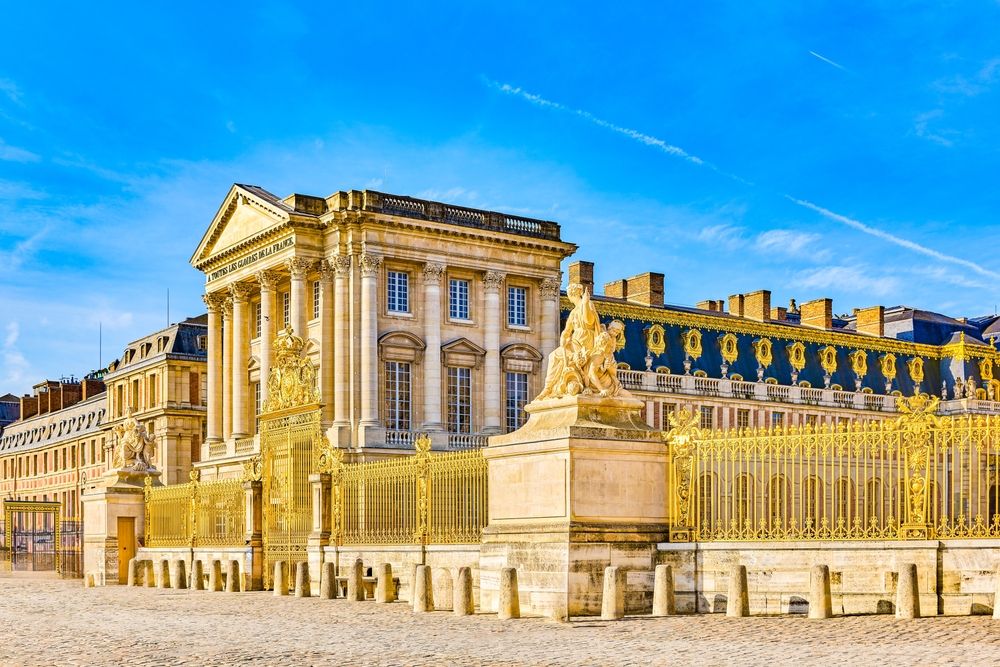
The Palace of Versailles embodies the grandeur and splendor of the French monarchy. This architectural jewel, commissioned by Louis XIV to glorify his reign, remains one of the most visited monuments in France and an exceptional testimony to French art of the 17th century. Listed as a UNESCO World Heritage Site since 1979, the palace fascinates with its rich history, sumptuous gardens and royal apartments of striking beauty. Located just 20 kilometers from Paris, this symbol of the French art of living promises you a total immersion in the history of France.
1. The fascinating history of the Palace of Versailles
The history of the Palace of Versailles begins in 1623 with a modest hunting lodge built by Louis XIII. It was only with the rise to power of Louis XIV that the domain underwent its legendary transformation. From 1661, the Sun King launched ambitious works that would extend over several decades, calling upon the greatest architects of the time: Louis Le Vau, Jules Hardouin-Mansart and André Le Nôtre for the gardens.
In 1682, Louis XIV decided to permanently install his court at Versailles, transforming the castle into the true center of French political power. This decision marked the golden age of Versailles, which became the theater of French political and cultural life for more than a century. The palace thus testifies to the evolution of French architecture and today houses more than 2,300 rooms spread over 63,154 m².
2. The Hall of Mirrors, unmissable architectural jewel
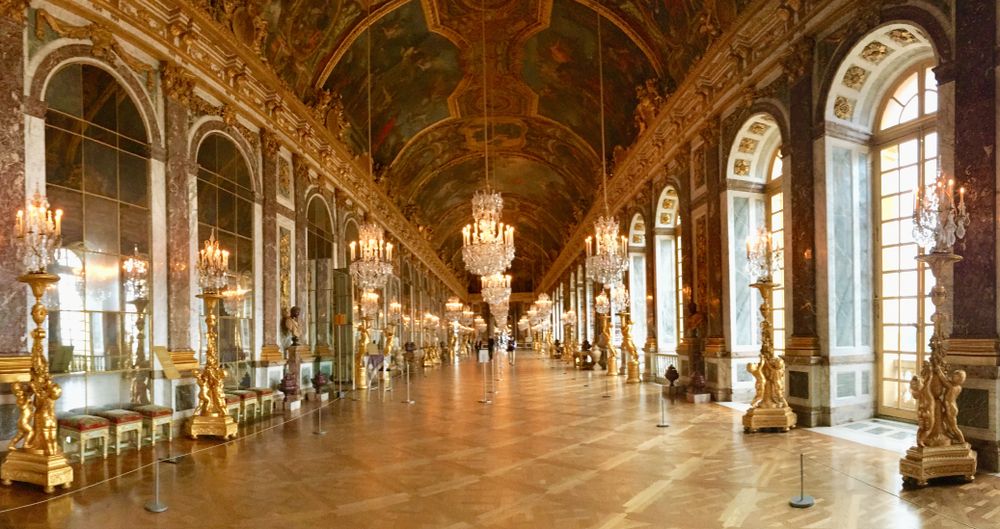
The Hall of Mirrors undoubtedly constitutes the absolute masterpiece of the Palace of Versailles. This exceptional ballroom extends over 75 meters in length and dazzles visitors with its 357 mirrors that face 17 large bay windows overlooking the gardens. Inaugurated in 1684, this gallery testifies to the exceptional know-how of French craftsmen of the time.
To create this marvel, Louis XIV called upon Venetian glass craftsmen, despite the considerable risks this represented – the Venetian government having ordered the assassination of these craftsmen to preserve Venice's monopoly on mirror manufacturing. The Hall of Mirrors has witnessed many major historical events, notably the signing of the Treaty of Versailles in 1919, which ended World War I.
3. The King's Grand Apartments, reflection of royal splendor
The King's Grand Apartments perfectly embody the refinement and opulence of Louis XIV's court. These sumptuous rooms, formerly the residence of the Sun King, consist of seven richly decorated salons according to a planetary theme. Each salon bears the name of a planet and presents sumptuous decorations created by Charles Le Brun, first painter to the king.
Visitors can admire the exceptional painted ceilings, period furniture and precious tapestries that testify to the extraordinary art of living of the French monarchy. The Apollo salon, throne room, constitutes the culmination of this visit with its solid silver throne and dazzling decorations dedicated to the solar god, symbol chosen by Louis XIV.
4. The gardens of Versailles, major work by André Le Nôtre
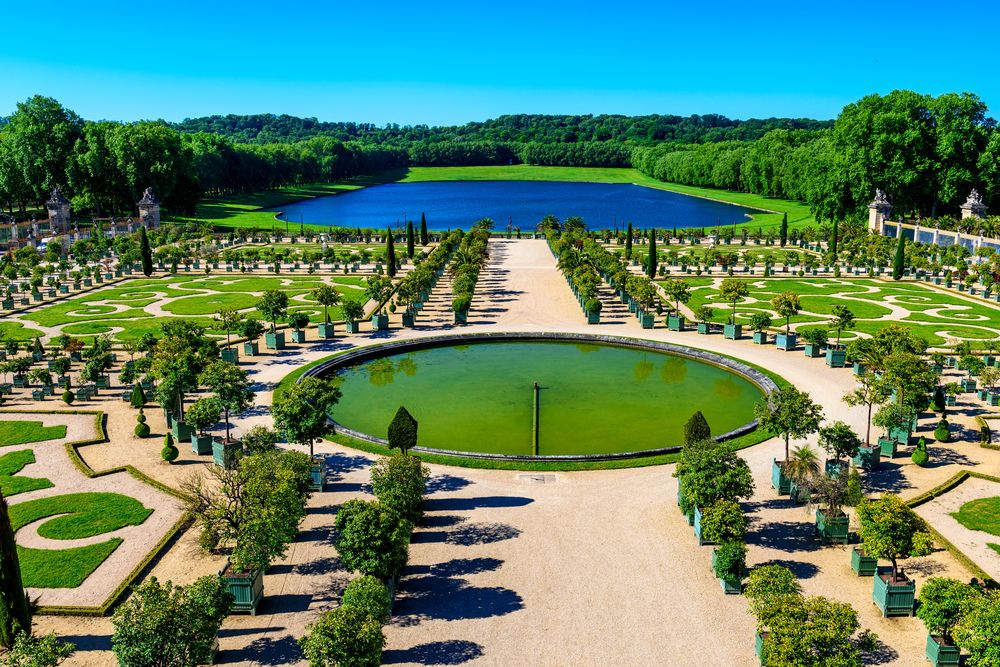
The gardens of Versailles extend over 800 hectares and constitute one of the finest examples of French gardens in the world. Designed by André Le Nôtre from 1661, these gardens perfectly reflect the art of living and aesthetic vision of the Grand Siècle. The ensemble includes geometric parterres, secret groves, spectacular fountains and the famous Grand Canal 1.67 kilometers long.
The gardens house 372 statues, 55 water features and 600 fountains fed by a hydraulic system that was revolutionary for the time. The Musical Fountains Show and Musical Gardens, organized on certain days, allow you to admire these fountains in action in a baroque musical atmosphere. A stroll through these gardens will allow you to discover grandiose perspectives and unique viewpoints of the castle.
Download the audio-guided circuit to discover Versailles on foot and independently
Although Ryo does not yet offer a specific circuit for the Palace of Versailles, the architectural and historical richness of this exceptional monument deserves an in-depth visit. While waiting for a future dedicated itinerary, you can discover our other tour circuits to explore the most beautiful French and European cities with our fun and interactive audio guides.
5. The Trianon estate, Marie-Antoinette's refuge
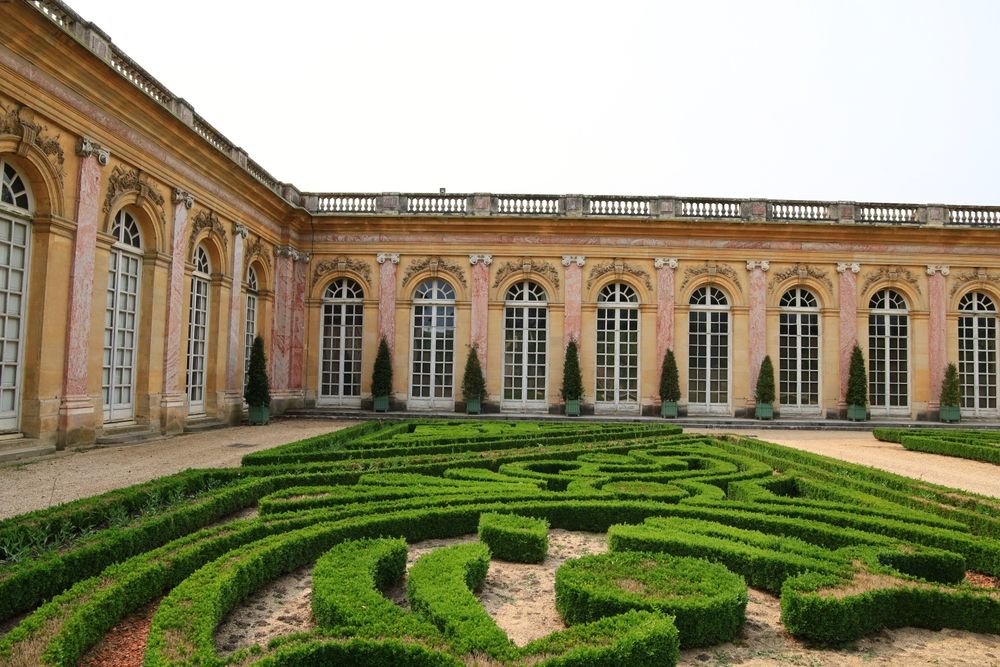
The Trianon estate offers a striking contrast to the opulence of the main castle. The Grand Trianon, built by Jules Hardouin-Mansart in 1687, served as a private residence for Louis XIV to escape the constraints of Versailles etiquette. This palace of pink marble and green porphyry is distinguished by its refined architecture and intimate apartments.
The Petit Trianon, offered by Louis XVI to Marie-Antoinette, testifies to the queen's taste for simplicity and intimacy. This architectural jewel, designed by Ange-Jacques Gabriel, is accompanied by the famous Queen's Hamlet, a reconstructed Norman village where Marie-Antoinette liked to play shepherdess, away from the splendors of the court. These places allow us to understand the complex personality of the last Queen of France.
6. The royal chapel, masterpiece of sacred art
The royal chapel of the Palace of Versailles, completed in 1710, represents a summit of French baroque architecture. Designed by Jules Hardouin-Mansart and Robert de Cotte, this chapel impresses with its exceptional height and remarkable acoustics. The building testifies to the deep faith of Louis XIV and the importance given to religious ceremonies at court.
Visitors can admire the ceiling paintings created by Antoine Coypel, the gilded woodwork and the historic organ still used today for exceptional concerts. This chapel has hosted numerous significant events, notably the wedding of the future Louis XVI with Marie-Antoinette in 1770.
7. The Royal Opera, theater of sumptuous performances
The Royal Opera of Versailles, inaugurated in 1770 for the wedding of Louis XVI and Marie-Antoinette, constitutes a true jewel of French theatrical architecture. Designed by Ange-Jacques Gabriel, this opera is distinguished by its gilding, blue velvet and revolutionary machinery allowing the hall to be transformed according to the needs of the performances.
Still active today, the Royal Opera hosts a varied program ranging from baroque operas to contemporary creations. Its capacity of 712 seats and exceptional acoustics make it one of the most beautiful performance halls in the world. Performances in this historic setting offer a unique cultural experience, allowing you to relive the atmosphere of 18th-century Versailles evenings.
8. Practical information for visiting the Palace of Versailles
The Palace of Versailles is located at Place d'Armes, 78000 Versailles (rated 4.4/5 on Google for over 89,000 reviews). The palace is easily accessible from Paris by RER C to Versailles Château Rive Gauche station, located ten minutes' walk from the monument.
The palace is open Tuesday to Sunday from 9am to 5:30pm (6:30pm from April to October). The gardens are accessible every day except Monday from 8am to 8:30pm in summer and until 6pm in winter. It is strongly recommended to book your tickets in advance to avoid queues, particularly in high season. Prices vary according to the chosen formula: palace only (€18), palace and gardens with shows (€27), or passport giving access to the entire estate (€30).
9. Cultural events and festivities at Versailles
The Palace of Versailles offers exceptional cultural programming throughout the year. The Musical Fountains Show (April to October) and the Night Fountains Show (summer) transform the gardens into a grandiose theater where fountains and baroque music create a magical atmosphere.
The palace also hosts internationally renowned temporary exhibitions, concerts in the Royal Opera and chapel, as well as performances in the gardens. The Royal Serenade, organized on certain summer evenings, allows you to discover the royal apartments by candlelight in an authentic period atmosphere. These events offer a unique approach to discovering Versailles in a new light.
10. Tips to optimize your visit to the palace
To make the most of your visit to the Palace of Versailles, plan your day according to your interests. Ideally start with the Grand Apartments and Hall of Mirrors in the morning, when crowds are lighter. Dedicate the afternoon to the gardens and Trianon estate, which are more peaceful and conducive to strolling.
Avoid Tuesdays and weekends, which are particularly busy, and prefer Wednesday to Friday time slots. The official audio guide, available in several languages, will considerably enrich your understanding of the places. Don't hesitate to plan a full day to discover the entire estate, including lunch at one of the palace restaurants for a gourmet break in the heart of French history.
In conclusion, the Palace of Versailles remains a must-see of French heritage, offering an exceptional dive into the history of the French monarchy. From the Hall of Mirrors to André Le Nôtre's gardens, through the royal apartments and the Trianon estate, every corner of this exceptional monument tells a page of our history. A visit to Versailles constitutes an unforgettable experience that will forever mark your discovery of French heritage. For optimal exploration, don't hesitate to discover our audio-guided circuits which will allow you to visit the most beautiful French and European destinations in complete autonomy.
Frequently asked questions about the Palace of Versailles
How long does it take to visit the Palace of Versailles?
A complete visit to the Palace of Versailles requires a full day. Allow 2-3 hours for the main palace, 2-3 hours for the gardens and 2 hours for the Trianon estate. For an in-depth visit with shows and events, plan two days.
What is the best time to visit Versailles?
The best periods are spring (April-May) and autumn (September-October) to avoid summer crowds. On weekdays, prefer Wednesday to Friday time slots. Opening at 9am is ideal for discovering the apartments in peace.
Can you visit Versailles for free?
The first Sundays from November to March, the entire estate is free for everyone. The gardens are free access except on Musical Fountains days. Under 18s and European residents under 26 benefit from free admission all year round.
How to get to Versailles from Paris?
The simplest way is RER C to Versailles Château Rive Gauche (10 min walk). From Montparnasse, take line N to Versailles Chantiers (18 min walk). From Saint-Lazare, line L serves Versailles Rive Droite (17 min walk).
What absolutely should not be missed at Versailles?
The must-sees are the Hall of Mirrors, the King's Grand Apartments, the King's bedroom, the French gardens, the Grand Trianon, the Petit Trianon and the Queen's Hamlet. If you only have half a day, focus on the main palace and the Hall of Mirrors.