
Créé par Romane, le 4 juin 2026
Votre guide Ryo
Berlin Wall, everything to know from its construction to its fall
© Shutterstock
Why was the Berlin Wall built, how long did it last and when was it destroyed? Discover all this and much more in the rest of this dedicated article.
Why was the Berlin Wall built?
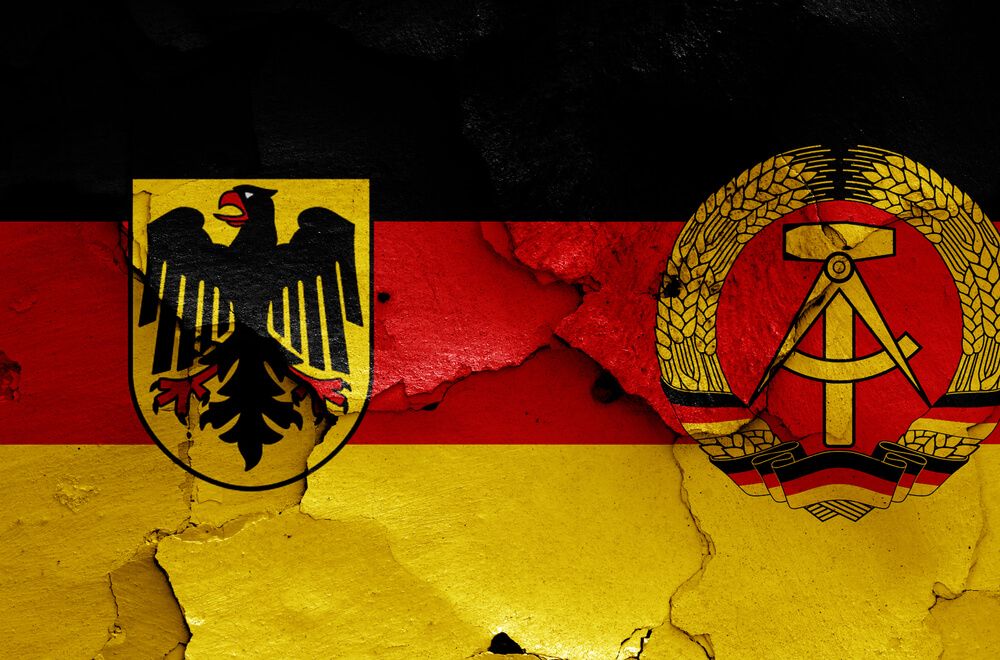
It would be impossible to understand the history of the Berlin Wall without first understanding the geopolitical context of the time. To do this, we must go back to World War II. In 1945, the German army was defeated by the Allied forces then composed of various states such as the United States, France and Great Britain, notably. Following this victory, the winners divided the country into four zones. The capital, Berlin, was also fragmented and separated into two zones:
- West Berlin, which belonged to the Federal Republic of Germany (FRG). It was managed by the United States, Great Britain and France.
- East Berlin, which belonged to the German Democratic Republic (GDR), managed by the communist Soviets.
From then on, the lives of Berliners were split in two without any family distinction, human consideration, or even professional consideration of any kind. Only soldiers on both sides remained authorized to move between the two states.
In West Germany, the situation was rather favorable. Economic growth and modernization of the country were underway. This part of the country experienced the implementation of a capitalist system based on the Marshall Plan. In East Germany, the situation was much more catastrophic. The standard of living and conditions imposed by the communist system prevented any social and economic development.
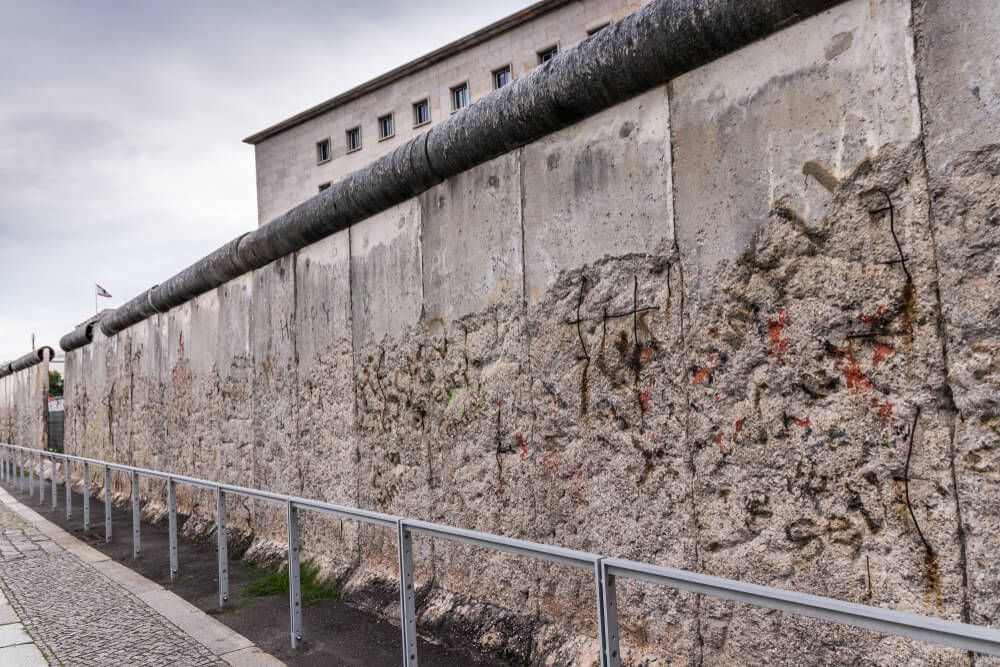
From this situation resulted a quite natural phenomenon: East Germans tried by all means to flee to the West. In total, no less than 3 million Germans left the GDR during this period. Despite massive control points, the situation became unmanageable for the Soviets. It was therefore to stop these migratory flows that the Soviets made a radical decision: to build an immense wall. The construction was thus launched in the greatest secrecy in the heart of Berlin on the night of August 12 to 13, 1961. Transportation was interrupted and 14,500 East German soldiers blocked the streets and railways. The next day, barbed wire and barriers no longer allowed crossing the border. The building facades present on the line drawn by the Soviets were walled up and integrated into the immense wall that henceforth separated the two Germanys.
The Berlin Wall was born; "Wall of Shame" for West Germans, it was on the contrary an "anti-fascist protection wall" for East Germans. Designed to be impassable, it extended over 111.9 kilometers and had a height of 4.2 meters. Its length only within Berlin was 43.1 kilometers.
Demonstration and indignation against the construction of the Berlin Wall
Faced with the construction of the Wall, the FRG's reaction was not immediate. The latter mainly called on the population to remain calm. It was not until August 16 that the very first demonstration in front of the Wall took place. That day, no less than 300,000 people gathered around Berlin mayor Willy Brandt to demonstrate. This would be the first of a long series of protests for nearly 30 years.
Indeed, in order to avoid a war, the Allied Forces would never take any real initiative against the Wall. Only one altercation took place on October 27, 1961 when GDR border guards tried to prevent the then effective free movement of western allied forces on their territory. Berlin then lived under tension for more than 36 hours while ten American tanks and ten Soviet tanks faced each other on either side of the Wall. It was fortunately this situation that could have turned dramatically that led to the longest period of peace in Europe for many years.
When did the destruction of the Berlin Wall take place?
November 9, 1989 is the day when the Berlin Wall was destroyed, 28 years after its construction. The struggle was therefore extremely long for East Germans who demonstrated for many years to be able to have the freedom to move to the west. The day was historic and marked the beginning of German reunification as well as the end of the communist era.
Thus, in front of cameras from around the world, Berliners armed themselves to destroy the Wall of Shame. From then on, one of the greatest symbols of the Cold War fell and highlighted the resounding failure of the Eastern bloc and the communist regime.
Today there are numerous photographic and videographic archives testifying to the many scenes of fraternity between East Berliners and West Berliners. This day was then nicknamed the Peaceful Revolution or die friedliche Revolution. A new era then began for Germany and a breathtaking economic ascent began throughout the country.
Today, the Berlin Wall remains in the minds of all Germans as a bad memory and an example never to be reproduced.
In conclusion:
Symbol of a now bygone era, the Berlin Wall marked an entire chapter of German History. If you had questions about it, this guide should have answered most of them. Don't forget that the Berlin Wall Memorial (Gedenkstätte Berliner Mauer) is now visitable in the German capital. Don't hesitate to discover it during your next stay there.