
Créé par Romane, le 7 mai 2026
Votre guide Ryo
© Shutterstock
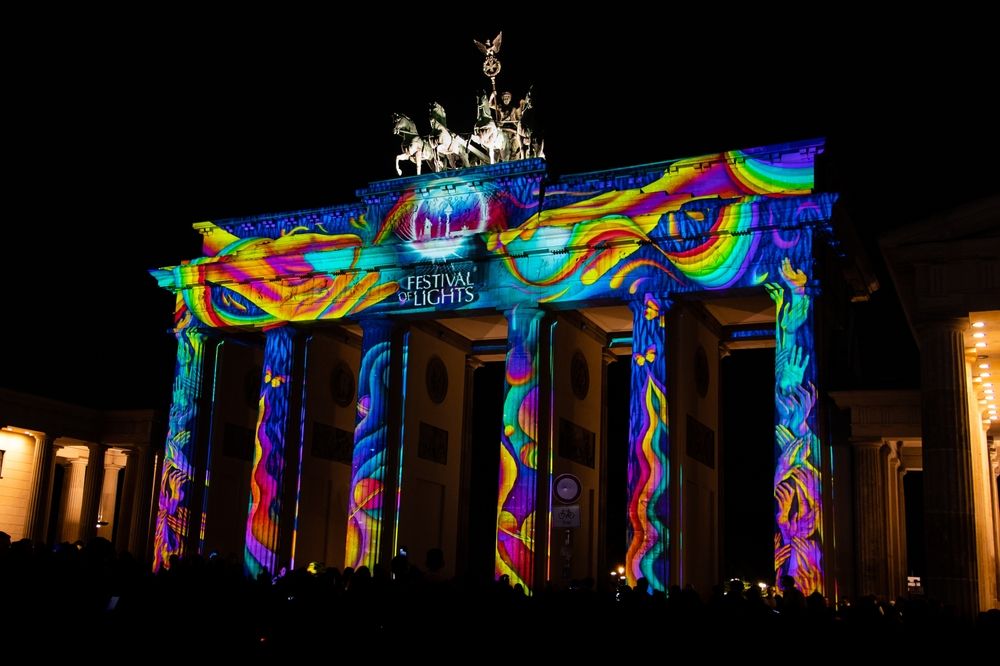
Every autumn, Berlin transforms into a gigantic open-air light art gallery. The Festival of Lights, an unmissable free event in the German capital, metamorphoses the city's emblematic monuments into spectacular canvases through breathtaking light projections and world-renowned 3D mapping.
What is the Berlin Festival of Lights?
The Festival of Lights Berlin is a free international artistic event that has taken place every year since 2005. For eight consecutive nights in October, more than 50 emblematic Berlin sites light up thanks to creative light projections, artistic installations and 3D mapping shows.
Created by Birgit Zander, this festival transforms the German capital into a giant stage where monuments, historic buildings and public squares become the stars of an enchanting light show. The event attracts millions of visitors from around the world each year, confirming Berlin as a major cultural destination in Europe.
Download the audio-guided circuit to discover Berlin on foot and independently
If you come to Berlin for the Festival of Lights, it's the perfect opportunity to discover the city from a new angle. Our Berlin visiting itinerary allows you to explore on foot the main monuments that light up during the festival, while discovering their fascinating history through our entertaining audioguides.
Dates and schedules for Festival of Lights 2025
The 21st edition of the Festival of Lights will take place from October 8 to 15, 2025, under the theme "Let's shine together". As every year, the illuminations will be visible from 7pm to 11pm every evening, allowing visitors to fully enjoy the show after sunset.
This 2025 edition promises to be exceptional with unprecedented installations that celebrate unity, community and human connections through light art. The festival being entirely free since its creation, it remains faithful to its philosophy of offering an artistic gift accessible to all, both Berliners and international visitors.
The emblematic illuminated monuments
The Festival of Lights transforms Berlin's most iconic sites into spectacular light artworks. Here are the must-sees not to miss during your visit to Berlin:
Brandenburg Gate
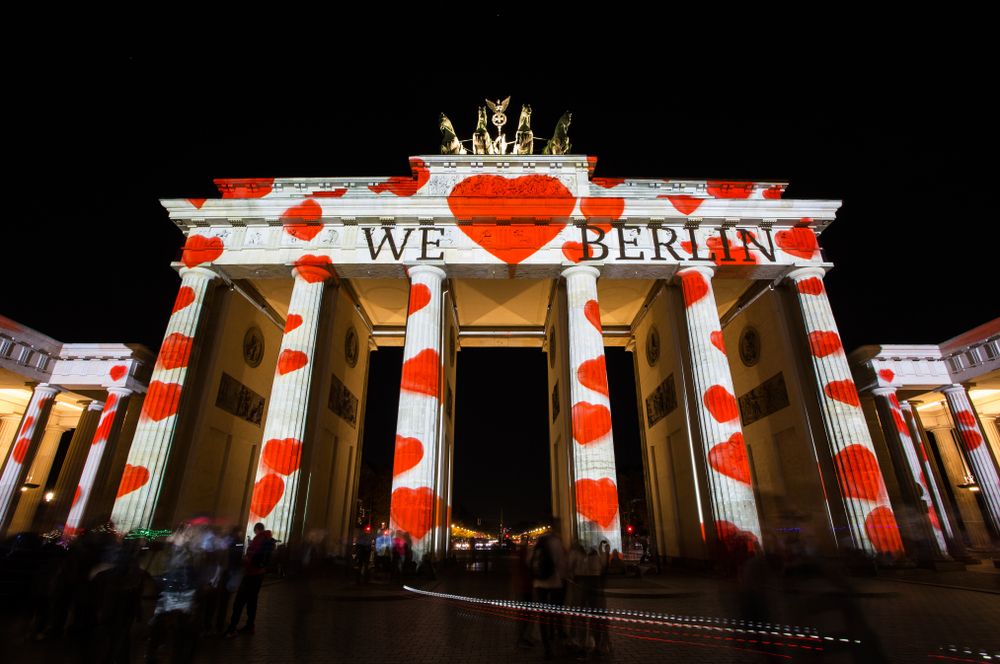
Monument symbol of Berlin and German reunification, the Brandenburg Gate constitutes one of the most impressive spectacles of the festival. The projections tell the story of freedom and unity, transforming this historic symbol into a striking contemporary artwork.
Berlin Cathedral
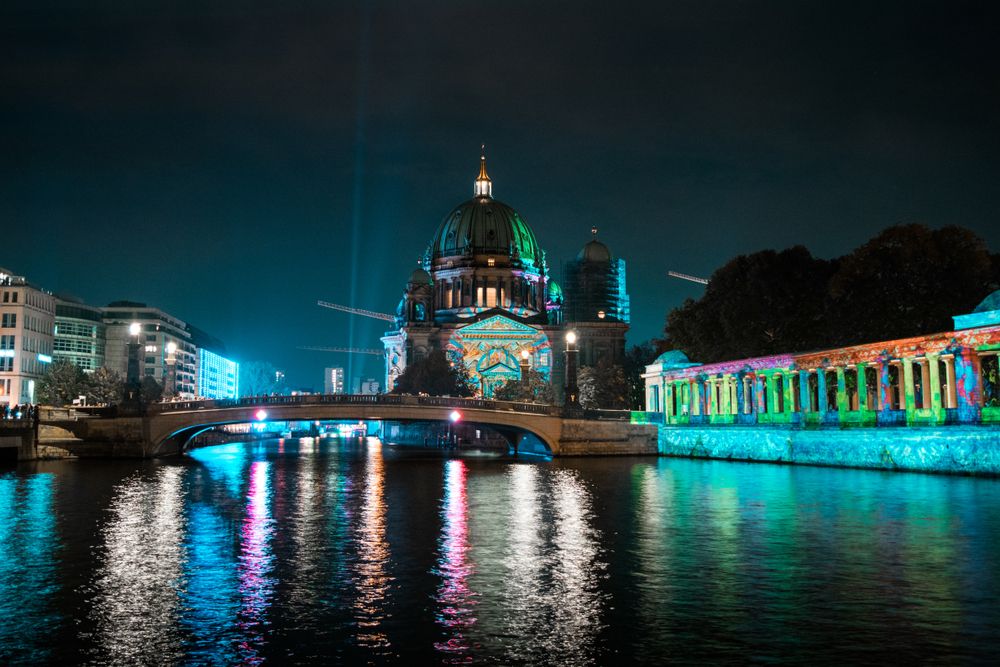
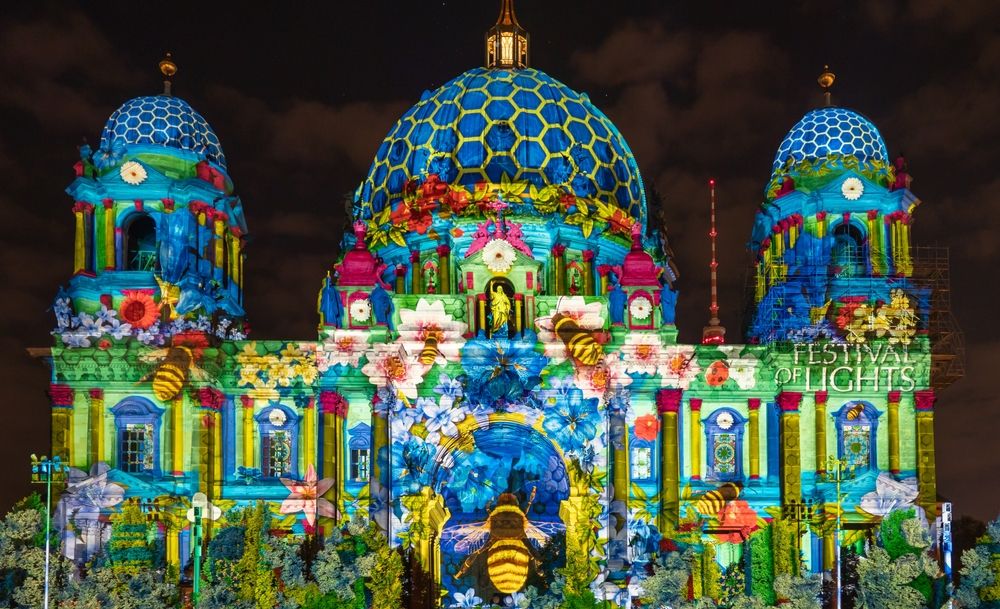
Located on Museum Island, Berlin's Protestant cathedral becomes during the festival the theater of immersive 3D shows accompanied by ambient music. Renowned artists and DJs offer unique performances that combine visual art and sound experience.
Television Tower (Fernsehturm)
With its 368 meters height, the Television Tower at Alexanderplatz offers a light show visible from the entire city. The projections that dress it make it an artistic beacon guiding visitors through the festival's different sites.
Reichstag Palace
Seat of the German Parliament, the Reichstag lights up to tell the turbulent history of German democracy. Its glass dome, already spectacular in normal times, becomes even more magical under the artistic spotlights.
Bebelplatz and the National Opera
The magnificent Bebelplatz, considered one of the most beautiful squares in Berlin, and the National Opera that borders it, offer a grandiose setting for artistic projections that blend history and modernity.
Potsdamer Platz
Symbol of modern Berlin, Potsdamer Platz hosts several light installations distributed across its futuristic buildings, creating a fascinating dialogue between contemporary architecture and digital art.
How to best enjoy the Festival of Lights?
To fully experience the Festival of Lights, some practical advice is essential. The festival being extremely popular, prepare your visit in advance to avoid crowds and optimize your route through the German capital.
Recommended itineraries
Organize your evening by planning a logical route between the different illuminated sites. Start with Brandenburg Gate and Pariser Platz, then head to the Reichstag before going down to Potsdamer Platz. End with Museum Island and the Cathedral to enjoy the 3D shows at the end of the evening.
The Ryo itinerary to visit Berlin perfectly accompanies you in this discovery, naturally guiding you to all the monuments that light up during the festival.
Transport and access
Berlin has an excellent public transport network that facilitates movement between the festival's different sites. The most practical metro and S-Bahn stations are Brandenburg Tor (Brandenburg Gate), Alexanderplatz (Television Tower), and Potsdamer Platz. A day pass will allow you to move freely throughout the city.
Practical advice
Bring warm clothes as October evenings can be cool in Berlin. Bring a camera with a good night mode to immortalize the light shows. Arrive slightly before 7pm at the most popular sites to position yourself in the best observation spots.
Don't hesitate to take breaks in the city center cafes and restaurants to warm up between visits. It's also an opportunity to taste some Berlin culinary specialties.
The history and evolution of the festival
Created in 2005, the Festival of Lights quickly gained notoriety to become one of Europe's most important cultural events. The 2024 edition marked the 20th anniversary under the theme "Celebrating Freedom", commemorating the 35th anniversary of the fall of the Berlin Wall.
Each year, the festival evolves and is enriched with new technologies, international artists and contemporary themes. The event collaborates with renowned light artists from around the world, making Berlin an international showcase for digital art and new creative technologies.
Today, the Festival of Lights inspires many other European cities and constitutes a model for participatory and accessible urban art. It contributes significantly to Berlin's cultural influence and its international tourist attractiveness.
Other events and activities during the festival
The Festival of Lights is accompanied by many parallel activities that enrich the Berlin experience. Specialized "Lightseeing" guided tours are organized, allowing discovery of the technical behind-the-scenes of installations and meeting the artists.
Berlin's museums and galleries often take advantage of this period to offer temporary exhibitions on digital and light art. It's also an excellent opportunity to discover the cultural richness of the German capital by visiting the Museum Island during the day before enjoying the nighttime illuminations.
Many restaurants and bars in the city center offer special menus and heated terraces to allow visitors to enjoy the show while dining. Don't hesitate to book in advance as this period is very popular with tourists.
In conclusion, Berlin's Festival of Lights represents much more than a simple light event: it's an artistic celebration that transforms the city into a living artwork accessible to all. Whether you're passionate about art, history or simply seeking wonder, this festival offers an unforgettable experience in the heart of one of Europe's most dynamic capitals. Don't hesitate to complete your stay by following our Berlin discovery itinerary for a complete immersion in this fascinating city.
Frequently asked questions
Is Berlin's Festival of Lights free?
Yes, the Festival of Lights has been completely free since its creation in 2005. This free access is part of the festival's philosophy that wishes to offer an artistic gift to Berlin, Berliners and visitors from around the world, regardless of their financial means.
How long does it take to see all the illuminated sites?
To visit all the main sites, allow between 3 and 4 hours of walking. However, you can easily dedicate an entire evening to the festival by taking your time to admire each installation and taking breaks in surrounding cafes.
What is the best time to visit the festival?
The illuminations are visible from 7pm to 11pm every evening of the festival. To avoid crowds, prefer weeknight evenings and arrive early at the most popular sites like Brandenburg Gate. Weekends naturally attract more visitors.
Can we photograph the light installations?
Absolutely! Photography is not only allowed but encouraged. Bring a camera with a good night mode or use a tripod to best capture the light effects. The organizers even encourage sharing on social networks to promote the event.
Does the festival take place in bad weather?
Yes, the Festival of Lights takes place regardless of weather conditions. In case of rain, bring an umbrella and waterproof clothing. The atmosphere can be even more magical under light rain that reflects the illuminations on the wet ground.