
Créé par Emilie, le 20 juin 2026
Votre guide Ryo
The 20 Most Beautiful Greek Islands You Must Visit
© Shutterstock
Greece has over 6,000 islands and islets scattered between the Aegean and Ionian seas, of which about 200 are inhabited. These Mediterranean gems offer an extraordinary diversity of landscapes, atmospheres and experiences. From the white houses with blue domes of Santorini to the paradise beaches of Zakynthos, passing through the ancient ruins of Rhodes and the preserved authenticity of small islands like Folegandros, each destination reveals its own personality. Some Greek islands have become must-see tourist destinations, while others remain havens of peace preserved from mass tourism. Whether you're looking for festive holidays, immersion in millennial history, hiking in nature or simply relaxation on dream beaches, the Greek islands will satisfy all your desires for escape under the Mediterranean sun.
1. Santorini, the emblematic island of the Cyclades
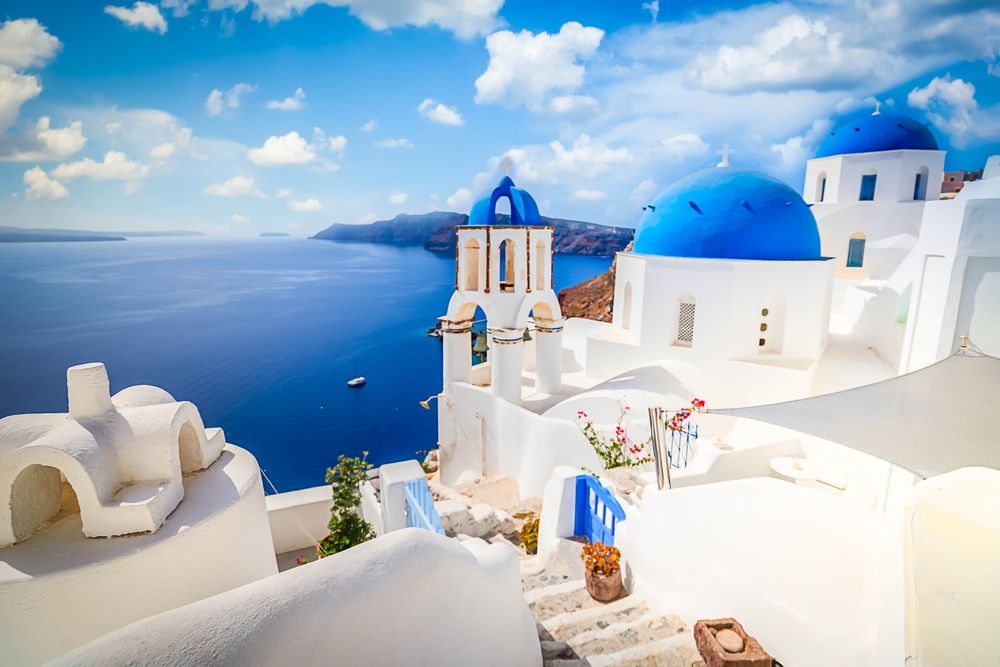
Santorini embodies the postcard image of the Greek islands. This volcanic island of the Cyclades fascinates with its spectacular architecture, with its villages perched on the cliffs of the caldera. Fira, the capital, and Oia, the most photographed village in Greece, offer breathtaking panoramas over the Aegean Sea. The white houses with blue shutters follow one another along steep alleys, creating an absolutely magical setting. The sunsets from Oia are legendary and attract hundreds of visitors every evening to immortalize this exceptional natural spectacle.
Beyond its architectural beauty, Santorini seduces with its unique volcanic beaches. Red Beach owes its color to oxidized lava, while Perissa beach displays black sand of volcanic origin. The island also offers remarkable historical richness with the archaeological site of Akrotiri, an ancient Minoan city preserved under volcanic ash. Wine lovers will appreciate the vineyards cultivated on volcanic soil, producing unique vintages like Assyrtiko. Santorini remains a romantic destination par excellence, perfect for a couple's trip, even if its popularity makes it a very busy island during the high summer season.
2. Mykonos, the festive paradise of the Aegean Sea
Mykonos has established itself as the essential festive destination of the Greek islands. This pearl of the Cyclades attracts an international clientele who come to enjoy its lively beaches and legendary nightlife. The charm of Mykonos lies in its striking contrast between tradition and modernity. The Chora, the island's capital, unfolds a maze of paved alleys lined with white cubic houses adorned with bougainvillea. The emblematic windmills overlook the port and constitute one of the most recognizable symbols of the island.
The Little Venice district, with its colorful houses built at the water's edge, offers a romantic setting where waves come to lick the balconies. Mykonos beaches respond to all desires. Paradise Beach and Super Paradise Beach vibrate to the rhythm of beach clubs and international DJ sets, attracting partygoers from around the world. For those seeking more tranquility, the beaches of Agios Sostis or Fokos, in the north of the island, offer preserved and authentic coves. Mykonos also serves as an ideal starting point to visit the sacred island of Delos, a major archaeological site inscribed on the UNESCO World Heritage List, where Apollo is said to have been born according to Greek mythology.
3. Crete, the big island with a thousand faces
Crete, the largest island in Greece and fifth largest island in the Mediterranean, deserves an entire journey by itself as its diversity is remarkable. This majestic island harbors landscapes of exceptional variety, alternating impressive mountains, spectacular gorges, paradise beaches and preserved traditional villages. The palace of Knossos, near Heraklion, testifies to the brilliant Minoan civilization that prospered here more than 4,000 years ago. This fascinating archaeological site plunges visitors into the legends of King Minos and the Minotaur, between myth and historical reality.
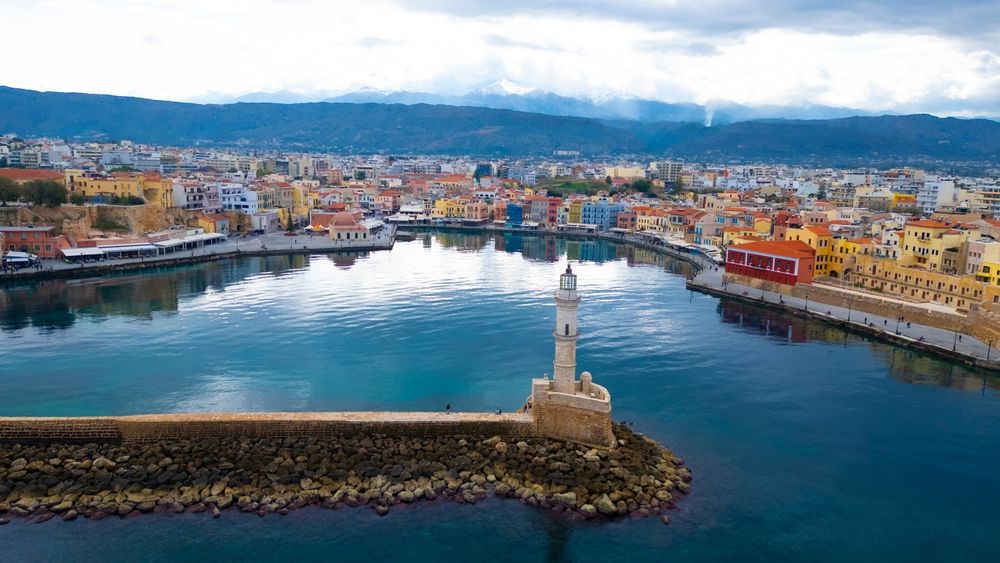
Crete offers authentic experiences away from mass tourism. The Samaria Gorge, 16 kilometers long, constitutes one of the most spectacular hikes in Europe, crossing a canyon with vertiginous walls before reaching the Libyan Sea. Elafonissi beach, with its pink sand and shallow turquoise waters, is among the most beautiful in the Mediterranean. Cretan cities like Chania, with its Venetian old port, or Rethymno, with its fortress dominating the sea, seduce with their authentic character. Cretan gastronomy, renowned for being one of the healthiest in the world, will delight the palate with its local products: exceptional olive oil, character cheeses, thyme honey and vegetables bursting with sunshine.
4. Rhodes, the island of knights and sun
Rhodes, the largest island of the Dodecanese, enjoys more than 300 days of sunshine per year, which earns it the nickname of the island of the sun. The medieval old town of Rhodes, inscribed on the UNESCO World Heritage List, constitutes one of the best preserved medieval ensembles in Europe. Surrounded by impressive ramparts, it was the stronghold of the knights of the Order of Saint John of Jerusalem in the Middle Ages. The Palace of the Grand Masters, an imposing Gothic fortress, testifies to this glorious period. The paved alleys of the medieval quarter invite strolling, revealing Ottoman mosques, fountains, craft shops and traditional taverns.
Beyond its exceptional historical heritage, Rhodes offers magnificent beaches and varied landscapes. The west coast, wilder and windier, attracts water sports enthusiasts, notably kitesurfing and windsurfing. Anthony Quinn Bay, named after the Hollywood actor who fell in love with this place, seduces with its crystal-clear waters ideal for snorkeling. The village of Lindos, with its acropolis perched on a rocky spur overlooking turquoise coves, offers one of the most spectacular views of the Greek islands. The mountainous hinterland of Rhodes reveals authentic villages like Embonas, renowned for its wine, where time seems to have stopped far from the tourist bustle of the coasts.
5. Corfu, the green pearl of the Ionian Sea
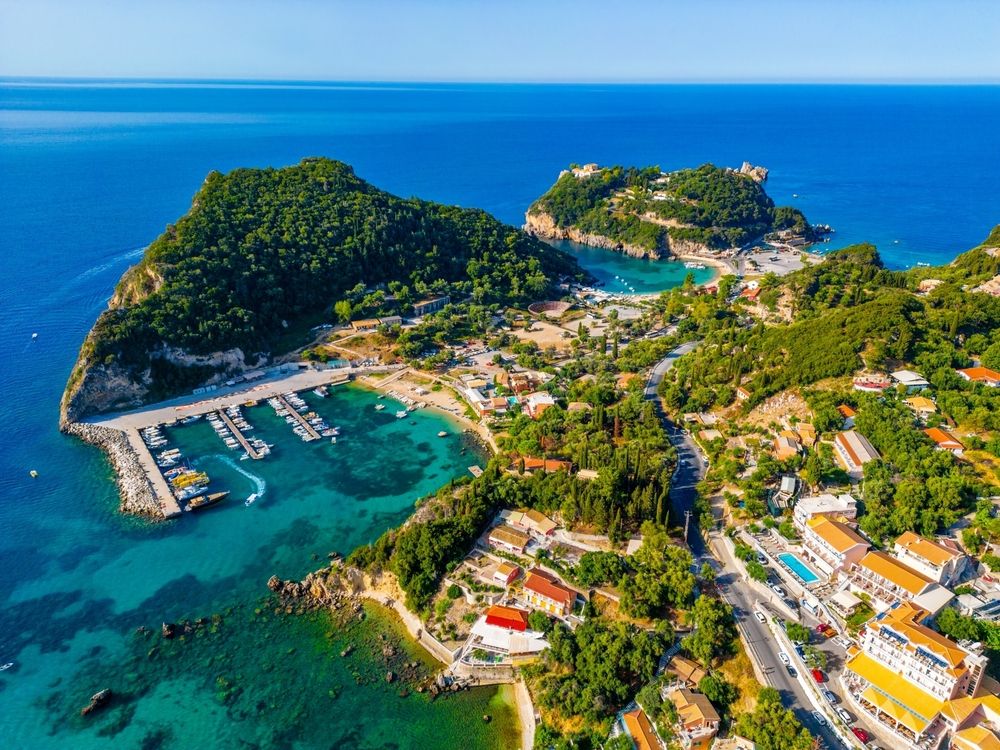
Corfu distinguishes itself from other Greek islands by its luxuriant vegetation which earns it the nickname of emerald island. Olive trees, cypresses and orange trees prosper under the influence of the Ionian climate more humid than that of the Cyclades. The old town of Corfu, inscribed on the UNESCO World Heritage List, reflects the multiple Venetian, French and British influences that have marked the island's history. The two Venetian fortresses, the old and the new, dominate the capital and offer magnificent panoramas over the sea and the nearby Albanian mountains.
The aristocratic architecture of the city, with its elegant arcades of the Liston inspired by rue de Rivoli in Paris, and the Spianada esplanade, one of the largest squares in Europe, give Corfu a unique atmosphere. Corfu beaches meet all expectations. Paleokastritsa, in the northwest, is famous for its emerald water coves framed by green cliffs. The Canal d'Amour beach in Sidari intrigues with its rock formations sculpted by erosion, creating romantic aquatic passages. The Achilleion Palace, built for Empress Elisabeth of Austria (Sissi), testifies to the attraction that Corfu exerted on European aristocracy. Mountain villages like Pelekas offer spectacular sunsets over the Ionian Sea from their perched positions.
6. Naxos, the largest of the Cyclades
Naxos, often overshadowed by its more famous neighbors Santorini and Mykonos, amply deserves the detour for its preserved authenticity. This island, the largest and most fertile of the Cyclades, offers a remarkable diversity of landscapes. The mountains of the interior culminate at over 1,000 meters altitude, sheltering traditional villages where cheese and honey are still produced according to ancestral methods. The Chora of Naxos welcomes visitors with its imposing Gate of Apollo, remains of an unfinished temple dating from the 6th century BC, which majestically frames the sunsets.
The Venetian kastro, a fortified quarter dominating the port, reveals beautiful aristocratic residences and paved alleys charged with history. Naxos possesses some of the most beautiful beaches of the Cyclades, with expanses of fine golden sand stretching for several kilometers. Agios Prokopios beach and Agia Anna beach regularly feature among the most beautiful beaches in Greece. For windsurfing and kitesurfing enthusiasts, Mikri Vigla offers ideal conditions with its regular winds. The mountainous hinterland of Naxos hides unsuspected treasures: the village of Halki and its neoclassical houses, Apiranthos nicknamed the marble village, and numerous hiking trails crossing olive trees, vines and lush vegetable gardens. This agricultural self-sufficiency makes Naxos a destination where local gastronomy particularly shines.
7. Paros, the beating heart of the Cyclades
Paros occupies a central position in the Cyclades archipelago, making it a privileged crossing point between the different islands. This island with undeniable charm has managed to preserve its authenticity while developing a quality tourist offer. Parikia, the island's capital, seduces with its lively port, its lime-whitened alleys where craft shops and welcoming taverns nestle. The church Panagia Ekatontapiliani, one of the oldest Byzantine churches in Greece, impresses with its imposing architecture and its history dating back to the 4th century.
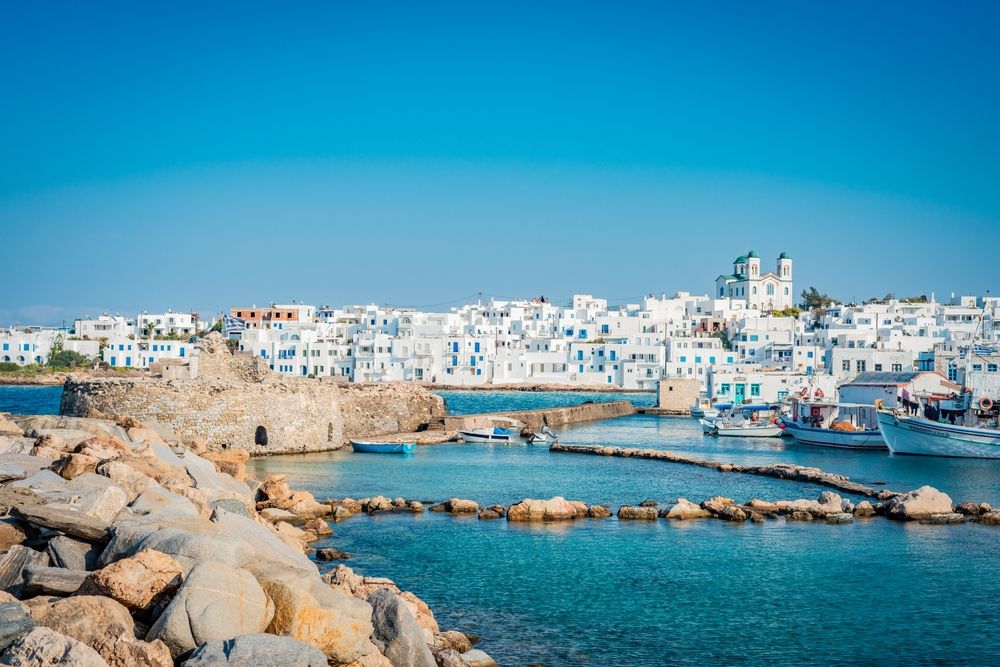
Naoussa, in the north of the island, immediately charms with its picturesque fishing port where colorful boats gently rock. Restaurants installed with their feet in the water offer freshly caught fish and seafood in a relaxed atmosphere. Paros beaches are among the most appreciated of the Cyclades. Kolymbithres surprises with its rounded granite rock formations that create sheltered natural pools. Santa Maria attracts water sports enthusiasts with its turquoise waters and relaxed ambiance. Golden Beach, on the east coast, regularly hosts international windsurfing competitions thanks to optimal wind conditions. Paros marble, famous in Antiquity for its whiteness and transparency, was used to sculpt the Venus de Milo and numerous major works of classical Greek art.
8. Milos, the volcanic island with spectacular beaches
Milos, nicknamed the island of colors, offers volcanic landscapes of striking beauty. This island of the western Cyclades has long remained away from mass tourism, thus preserving its authentic character. The volcanic geology of Milos has created more than 70 beaches, each presenting unique characteristics. Sarakiniko, with its white rock formations sculpted by wind and waves, resembles a lunar landscape where the contrast with deep blue water creates a surreal and photogenic setting.
Kleftiko, accessible only by boat, reveals impressive white rocky arches emerging from crystalline waters, creating marine caves where light plays with turquoise reflections. Firiplaka beach seduces with its multicolored cliffs alternating white, red and ochre strata. Plaka, the main village perched on high, offers a panoramic view over the bay and surrounding islands. Fishing villages like Klima are famous for their syrmata, these colorful boat garages built directly at the water's edge, which have become one of the visual symbols of Milos. The island also possesses fascinating historical sites, including early Christian catacombs and the ancient theater overlooking the sea. It was on Milos that the famous Venus de Milo was discovered in 1820, now displayed at the Louvre.
9. Zakynthos, the wild beauty of the Ionian Sea
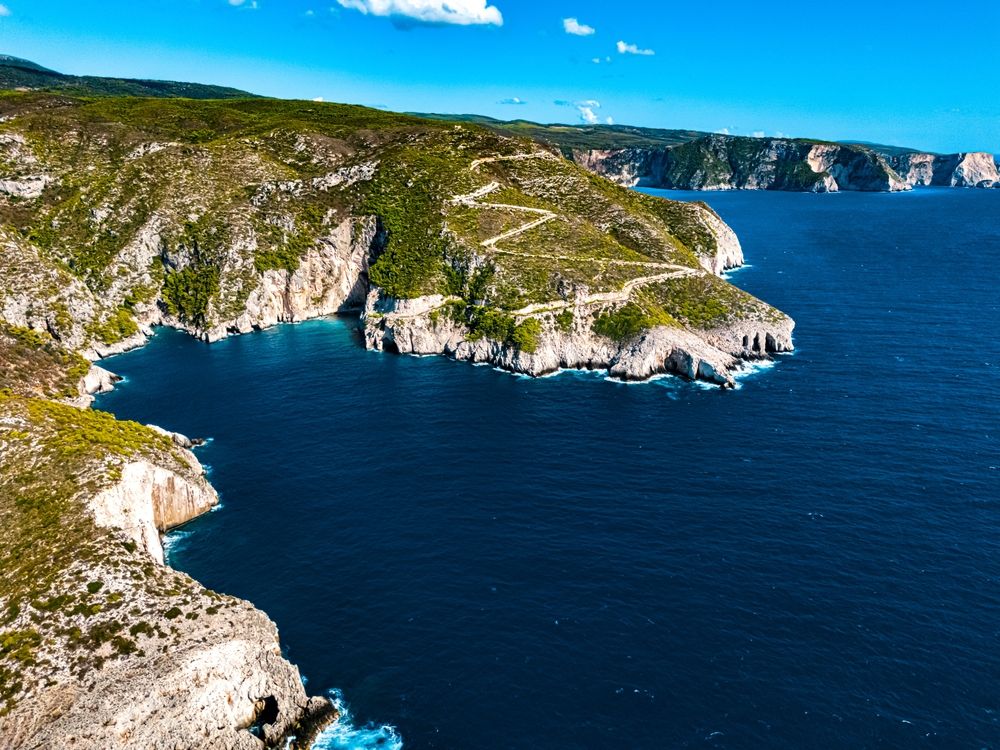
Zakynthos, also called Zante, houses one of the most photographed beaches in the world: Navagio beach, or Shipwreck beach. Nestled in a spectacular cove surrounded by vertiginous cliffs, this immaculate white sand beach owes its name to the wreck of a boat that has been rusting on the sand since 1980, creating a striking contrast with the turquoise waters. Accessible only by boat, this magical place attracts thousands of visitors each summer who come to contemplate this postcard landscape from the beach or from the viewpoints perched on the cliffs.
Beyond Navagio, Zakynthos harbors other natural wonders. The blue caves, in the north of the island, fascinate with their electric blue waters where sunlight creates enchanting plays of reflections in the rocky cavities. Laganas Bay, to the south, constitutes one of the most important reproduction sites for the loggerhead turtle in the Mediterranean, a protected species that can be observed during organized excursions with respect for the environment. Gerakas and Dafni beaches are actually closed at night during nesting season to protect these precious sea turtles. The mountainous interior of Zakynthos reveals traditional villages like Keri, perched on the heights with a plunging view over the sea, where time seems to have stopped. The island's capital, also named Zakynthos, was rebuilt after the 1953 earthquake in a harmonious neoclassical style.
10. Cephalonia, the majestic Ionian island
Cephalonia, the largest of the Ionian Islands, impresses with its spectacular mountainous landscapes. Mount Ainos, culminating at 1,628 meters, constitutes a national park sheltering a unique forest of endemic firs, the Abies cephalonica. This island with tormented relief offers striking contrasts between its verdant mountains and its paradise beaches. Myrtos beach, considered one of the most beautiful in Greece, unfolds its white sand and pebbles at the foot of vertiginous cliffs, creating a grandiose natural amphitheater where the waters take breathtaking blue hues.
Antisamos beach, made famous by the film 'Captain Corelli's Mandolin' shot in Cephalonia, enchants with its preserved natural setting framed by wooded hills. The geological phenomena of Cephalonia fascinate visitors. The Katavothres sinkhole, where seawater mysteriously engulfs into cavities to resurface on the other side of the island, constitutes a unique natural curiosity. The Melissani cave, an underground lake partially open to the sky following the collapse of its vault, offers a magical spectacle when sun rays penetrate the cavity and illuminate the cobalt blue waters. The village of Assos, considered one of the most beautiful in Greece, nestles at the foot of a rocky peninsula crowned by a Venetian fortress, with its colorful houses reflecting in the calm waters of the natural harbor.
11. Kos, the island of Hippocrates with Mediterranean charm
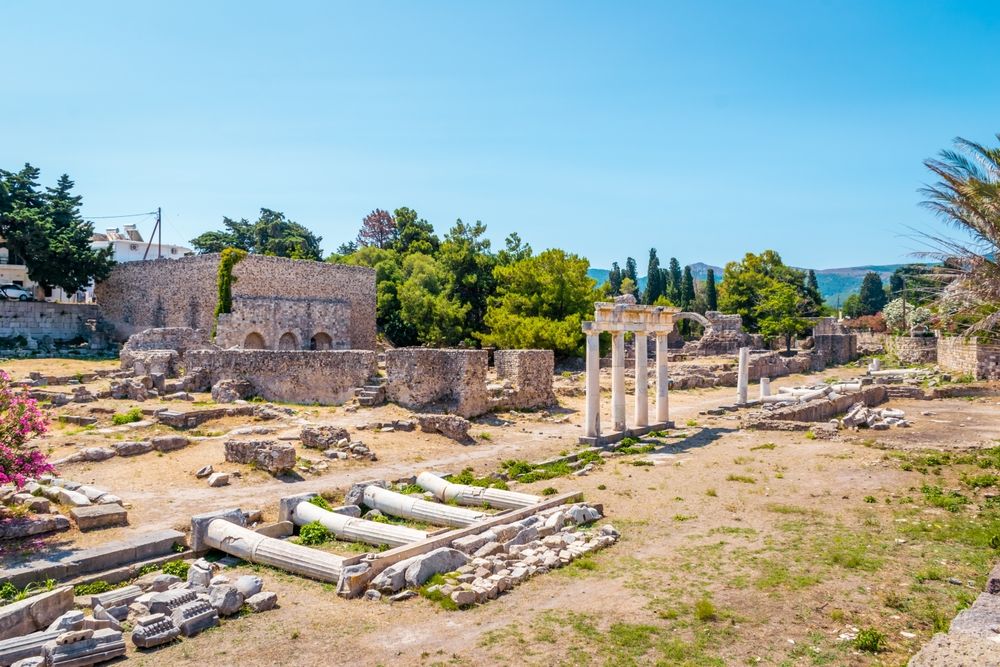
Kos, third largest island of the Dodecanese, combines historical heritage, magnificent beaches and festive atmosphere. This island was the birthplace of Hippocrates, the father of modern medicine, whose presence remains commemorated by the legendary plane tree in the city center, over 2,000 years old according to local tradition. The town of Kos offers a concentrate of history with its medieval castle of the Knights of Saint John, the Asclepiion (ancient care center dedicated to the god of medicine), and the Roman agora testifying to the different civilizations that have marked the island.
The beaches of Kos extend generously along its 112 kilometers of coastline. Paradise Beach lives up to its name with its golden sand and shallow crystal-clear waters, ideal for families. Tigaki and Marmari, in the north of the island, offer long sandy expanses beaten by the wind, paradise for windsurfers and kitesurfers. The proximity of Turkey, whose coasts are visible from Kos, adds an interesting cultural dimension with the possibility of excursions to Bodrum. The island lends itself perfectly to bicycle exploration thanks to its relatively flat relief and its numerous cycle paths. The interior villages like Zia, perched on the slopes of Mount Dikeos, offer a traditional atmosphere and spectacular panoramas over the Aegean Sea, particularly appreciated at sunset.
12. Hydra, the car-free island with timeless charm
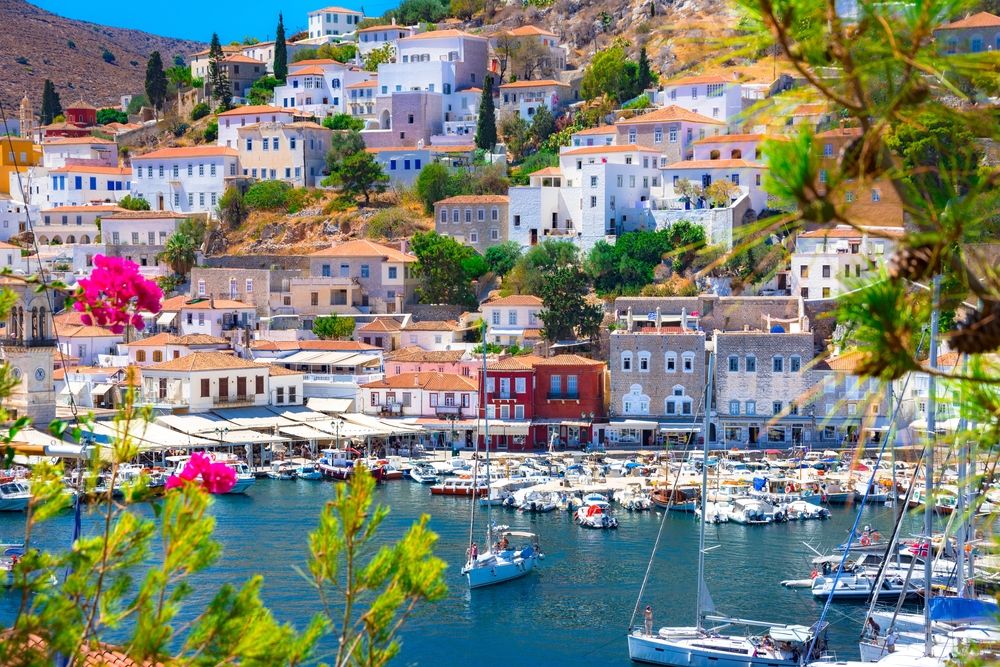
Hydra embodies preserved authenticity just two hours by boat from Piraeus, Athens' port. This small island of the Saronic Gulf has made the radical choice to ban cars and motorcycles from its territory, thus preserving a unique atmosphere and precious calm. Travel is done on foot, by donkey or by water taxi along the coasts. This particularity gives Hydra an old-fashioned charm that has seduced numerous artists, writers and personalities from around the world. Leonard Cohen actually lived on this island during the 1960s, finding inspiration in its paved alleys and bohemian atmosphere.
Hydra's port, crescent-shaped, offers a theatrical setting with its 18th-century captains' houses climbing the rocky hills. These imposing stone houses, with sumptuously decorated interiors, testify to the maritime prosperity the island knew at that time. Several of these archontika (masters' houses) can be visited, like the Lazaros Koundouriotis house transformed into a museum. Hydra's beaches are mainly rocky and accessible by coastal paths or water taxi. Vlychos, Kaminia and Mandraki offer quiet coves with a few traditional taverns with their feet in the water. In summer, Hydra comes alive during cultural festivals and art exhibitions that reinforce its reputation as a cosmopolitan and refined island, where the Athenian intelligentsia likes to gather away from urban bustle.
13. Ios, the festive island with paradise beaches
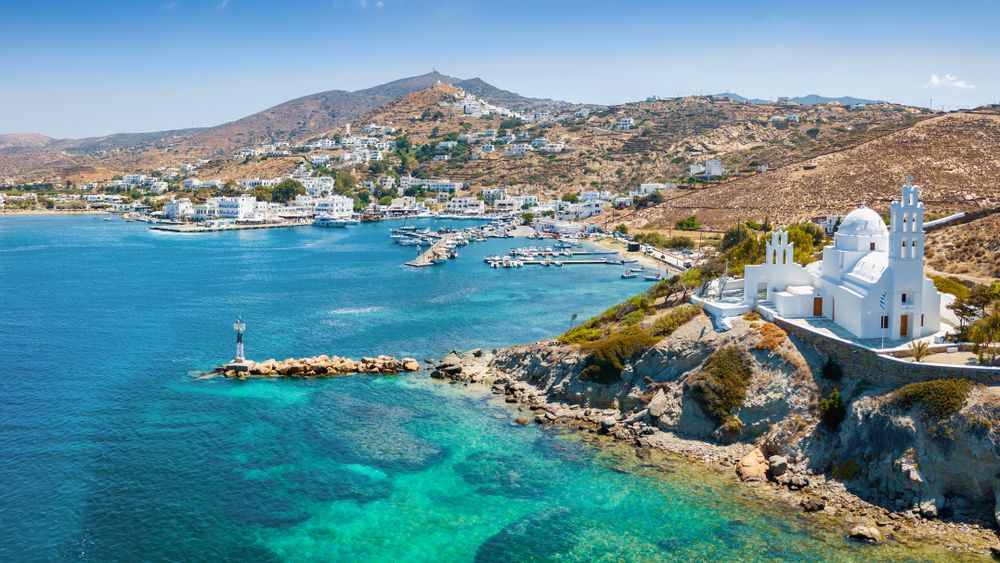
Ios has long been known as the party island par excellence in the Cyclades, privileged destination for a young clientele who come to enjoy its bustling nightlife. If this reputation remains current, Ios has managed to diversify its tourist offer and also reveals quieter and more authentic facets. The Chora of Ios, perched on a hill overlooking the port, unfolds a labyrinth of lime-whitened alleys punctuated by chapels with blue domes. The view from the restored windmills embraces the entire village and the sea, offering memorable sunsets.
Ios beaches are among the most beautiful of the Cyclades. Mylopotas beach, long stretch of golden sand, concentrates beach bars and water sports, creating a festive atmosphere during the day. For more tranquility, Manganari beach in the south of the island offers a paradise setting with its crystal turquoise waters and fine sand, accessible by road or by boat. Agia Theodoti, on the east coast, seduces calm enthusiasts with its long pebble beach in a preserved environment. Ios also cultivates a particular link with Homer, since tradition claims that the poet would have chosen this island for his last home. His supposed tomb can be visited in the north of the island, even if historical authenticity remains debated. This literary connection adds an unexpected cultural dimension to this island renowned for its festive atmosphere.
14. Folegandros, the preserved secret of the Cyclades
Folegandros embodies the preserved authenticity of the Cyclades, far from the mass tourism that has transformed some of its neighbors. This small mountainous and rocky island has long lived apart from tourist circuits, thus preserving its traditional character and peaceful ambiance. The Chora of Folegandros is among the most beautiful of the Cyclades, spectacularly clinging to the edge of a cliff nearly 200 meters high. Its three squares connected by paved alleys invite strolling in a relaxed atmosphere where time seems suspended.
The church of Panagia, perched even higher than the village, deserves itself after a 20-minute climb on a zigzag path, but rewards the effort with a breathtaking panoramic view over the sea and neighboring islands. The sunsets from this culminating point are among the most beautiful of the Cyclades. Folegandros beaches, although less numerous and accessible than elsewhere, offer wild and preserved coves. Katergo, accessible only by boat or by a steep path, unveils a pebble cove in a spectacular natural setting surrounded by cliffs. Angali offers a picturesque fishing village with a few traditional taverns and a quiet beach. Agios Nikolaos, the small beach near the port of Karavostasis, offers a practical option for a quick swim. Folegandros addresses travelers seeking authenticity, hiking and tranquility, far from tourist bustle.
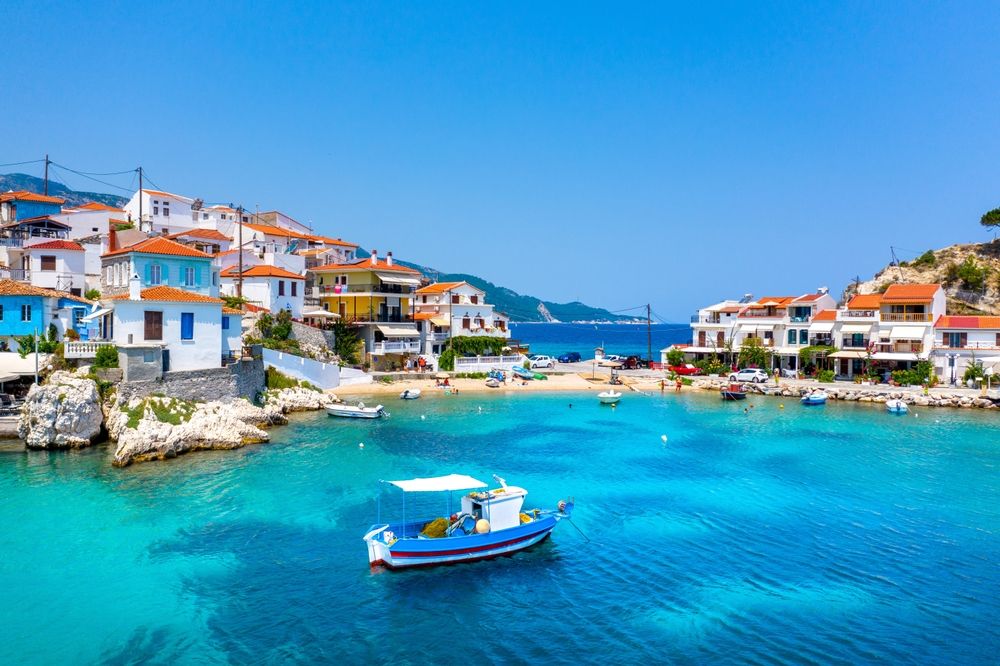
15. Samos, the green island of Pythagoras
Samos, nestled less than two kilometers from the Turkish coasts in the eastern Aegean Sea, distinguishes itself by its luxuriant vegetation unusual for a Greek island. Pines, cypresses, olive trees and vineyards cover its hills and mountains, creating refreshing green landscapes. This island was the birthplace of several great figures of Antiquity, including the mathematician Pythagoras and the philosopher Epicurus. The historical heritage of Samos impresses with the Heraion, sanctuary dedicated to the goddess Hera inscribed on the UNESCO World Heritage List, of which only one column remains standing but whose historical importance remains considerable.
The Eupalinos tunnel, masterpiece of ancient engineering dug in the 6th century BC, can be visited and testifies to the technical genius of the ancient Greeks. Samos beaches offer beautiful diversity. Psili Ammos, in the south of the island, seduces with its fine sand and turquoise waters in a preserved natural setting. Tsamadou, on the north coast, presents a long white pebble beach in a verdant environment. Kokkari, fishing village turned seaside resort, preserves its authentic charm with its seafront lined with taverns offering fresh fish and local specialties. Samos is renowned for its sweet muscatel wine, produced since Antiquity and protected by a controlled designation of origin. Mountain villages like Manolates or Vourliotes offer immersion in traditional rural life, with their stone houses, century-old plane trees and fresh fountains.
16. Patmos, the sacred island of the Apocalypse
Patmos occupies a particular place among the Greek islands because of its considerable religious importance. It is in the cave of the Apocalypse that Saint John is said to have received his revelation and written the book of Revelation, last book of the New Testament, in the 1st century AD. This major Christian pilgrimage site attracts believers from around the world who come to meditate in this cave transformed into a chapel. The monastery of Saint John the Theologian, imposing fortress dominating the Chora, was founded in 1088 and houses an exceptional library containing precious manuscripts and Byzantine icons of inestimable value.
The Chora of Patmos, with its lime-whitened houses and labyrinthine alleys, preserves a unique medieval atmosphere. The ensemble formed by the monastery and the historic village is inscribed on the UNESCO World Heritage List. Beyond its spiritual dimension, Patmos offers peaceful beaches and magnificent coastal landscapes. Psili Ammos, accessible by boat or by a path from Diakofti, offers a stretch of golden sand in a preserved natural setting. Lambi, on the north coast, seduces with its multicolored pebbles polished by the sea. Grikos, in a protected bay, offers a family atmosphere with several taverns at the water's edge. The island attracts a clientele seeking calm, spirituality and authenticity, far from the tourist bustle of the more frequented islands of the Cyclades.
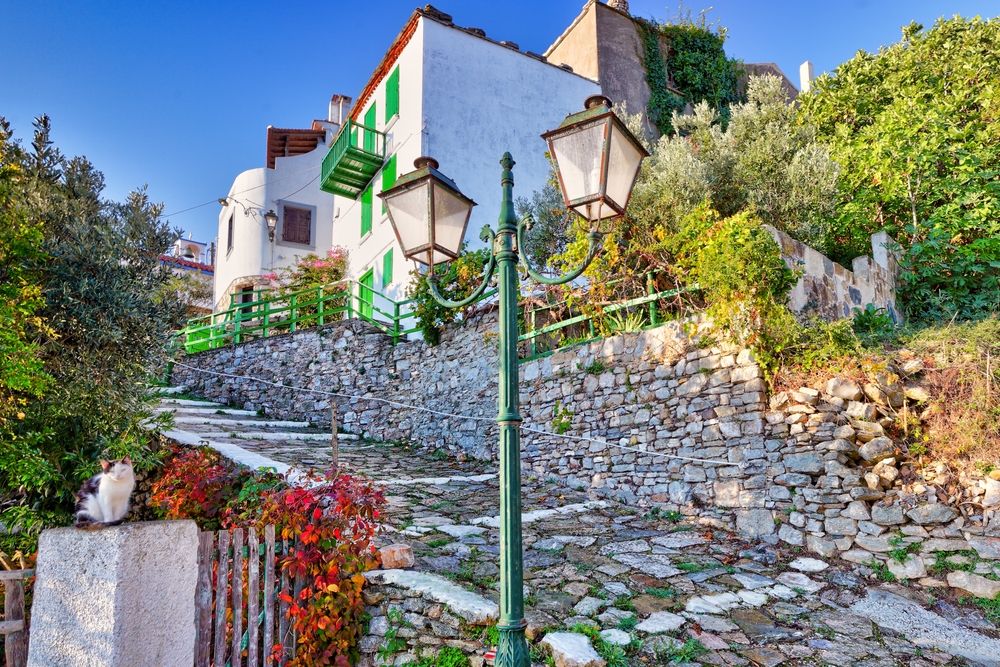
17. Alonissos, the paradise of ecotourism
Alonissos, the easternmost island of the Sporades, distinguishes itself by its exceptional commitment to environmental protection. The island is surrounded by the Alonissos and Northern Sporades National Marine Park, the largest protected marine area in Europe created in 1992. This natural sanctuary houses the Mediterranean monk seal, one of the most threatened seal species in the world, as well as dolphins, rare seabirds and seabeds of exceptional richness. Alonissos therefore attracts lovers of preserved nature, diving and ecotourism.
The old town of Alonissos, perched on a hill, was abandoned after an earthquake in 1965 then progressively restored by foreigners seduced by its charm. Today, its paved alleys, stone houses and flowered gardens offer a peaceful atmosphere with spectacular views over the sea. Patitiri, the main port, serves as a starting point for excursions in the marine park and to the surrounding deserted islands. Alonissos beaches, often accessible by dirt roads or by boat, preserve a wild and authentic character. Chrisi Milia enchants with its golden pebbles and crystal-clear waters, while Leftos Gialos offers a long beach in a verdant natural setting. The island lends itself wonderfully to hiking with a network of trails crossing pine forests, olive groves and fragrant Mediterranean scrubland, revealing landscapes and viewpoints preserved from intensive tourist development.
18. Skyros, the authentic island of the Sporades
Skyros, the largest and southernmost of the Sporades islands, remains unknown to classic tourist circuits, thus preserving rare authenticity. The island divides into two distinct parts: the verdant and fertile north covered with pines and olive trees, and the arid and mountainous south of wild beauty. This geological duality is also reflected in the unique local culture that mixes Cretan, Byzantine and Venetian influences. The Chora of Skyros, built in amphitheater on a rocky spur dominated by a Venetian kastro and a Byzantine monastery, offers a remarkable example of Cycladic architecture with its white cubic houses climbing the hill.
The paved alleys reveal small shaded squares and craftsmen perpetuating traditional know-how, notably the manufacture of carved miniature furniture and colorful decorative pottery. Skyros is also famous for its small endemic horses, an ancient reduced-size breed that would have inspired the representations of horses on the friezes of the Parthenon. These equids graze freely in the mountains of the south of the island. Skyros beaches alternate wild coves and developed bays. Molos and Magazia, near the Chora, offer long stretches of fine sand easily accessible. To the north, Atsitsa and Pefkos seduce with their preserved natural setting. The British poet Rupert Brooke is buried in an olive grove in the south of the island, where he died in 1915 during a military expedition. His tomb attracts visitors who come to pay homage to this figure of English literature in this peaceful setting facing the sea.
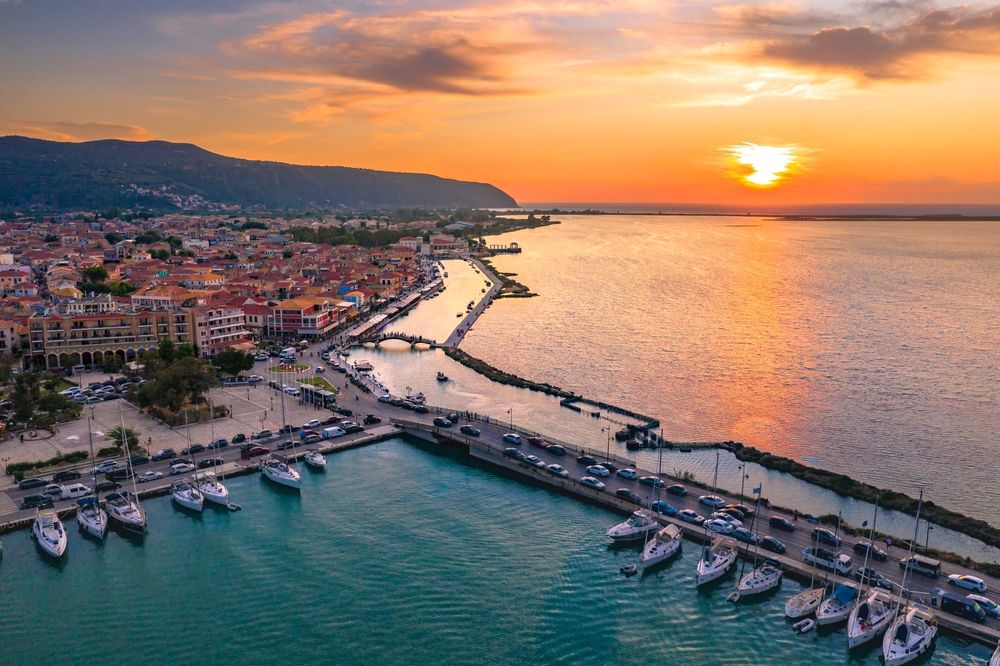
19. Lefkada, the island accessible by road
Lefkada, also called Leucas, has the particularity of being connected to the Greek mainland by a floating bridge, making it one of the rare Ionian islands accessible without ferry. This road connection greatly facilitates access while allowing to preserve the island character and relaxed atmosphere of the island. Lefkada possesses some of the most spectacular beaches in Greece, even in the Mediterranean. Porto Katsiki beach, on the west coast, regularly features in rankings of the most beautiful beaches in the world with its vertiginous white cliffs plunging into turquoise waters of crystalline purity.
Egremni, accessible by a long staircase or by boat, unfolds for nearly two kilometers its white sand and pebbles in a grandiose setting surrounded by impressive cliffs. Kathisma beach offers a more accessible alternative with all necessary services while preserving remarkable natural beauty. The capital of Lefkada distinguishes itself from other cities of the Ionian islands by its unique architecture, with houses with colorful facades built in wood and corrugated iron, an anti-seismic solution adopted after destructive earthquakes. This architectural originality gives the city a particular charm. The mountainous hinterland of Lefkada reveals traditional villages like Karya, renowned for its artisanal embroidery, and Englouvi, known for its lentils cultivated at altitude. The Lefkada lagoon, in the north of the island, constitutes an important protected wetland for birdlife, attracting ornithology and nature enthusiasts.
20. Ikaria, the island of longevity
Ikaria has acquired worldwide renown as one of the 'blue zones' of the planet, these regions where life expectancy far exceeds the world average. A third of Ikaria's inhabitants reach the age of 90, a phenomenon attributed to the traditional way of life, local diet rich in vegetables, wild herbs and olive oil, as well as a relaxed pace of life where stress seems absent. This island of the eastern Aegean Sea takes its name from Icarus, the mythological character who fell into the sea after flying too close to the sun with his wax wings. Ikaria cultivates its independent spirit and its refusal of mass tourism, thus preserving remarkable authenticity.
The island possesses spectacular mountainous relief culminating at over 1,000 meters, with deep gorges, oak and pine forests, and thermal springs renowned for their healing virtues since Antiquity. Therma, small thermal village, attracts visitors who come to enjoy natural hot baths gushing directly on the beach. Ikaria beaches, often wild and preserved, seduce lovers of authentic nature. Seychelles, despite its exotic name, is a long pebble beach with crystal-clear waters on the south coast. Nas, in an isolated bay at the foot of impressive cliffs, offers a spectacular setting with the remains of an ancient temple of Artemis. Mountain villages like Raches perpetuate ancestral traditions, notably the habit of living on shifted schedules, with shops opening late in the evening and a nightlife that comes alive after midnight. Ikaria represents a destination for travelers seeking authenticity, preserved nature and slow tourism, far from the standards of conventional seaside tourism.
In conclusion, the Greek islands offer an extraordinary palette of experiences and landscapes for all types of travelers. From the iconic Cyclades with their white houses and blue domes to the verdant Ionian islands, passing through the history-laden Dodecanese or the small preserved islands of the Sporades, each Greek archipelago reveals its unique character. Whether you seek the festive animation of Mykonos or Ios, the romanticism of Santorini, the cultural richness of Crete and Rhodes, the tranquility of authentic islands like Folegandros or Ikaria, or the natural wonders of Zakynthos and Milos, you will surely find the Greek island that corresponds to your desires. The diversity of the Greek islands allows composing a tailor-made journey, combining several islands with complementary atmospheres to discover all the facets of this enchanting archipelago bathed by the Mediterranean Sea. The well-developed ferry network facilitates travel between islands, allowing exploration of several destinations during the same stay and fully living the magical experience of Greek-style 'island hopping', between millennial history, paradise beaches, sunny gastronomy and legendary hospitality.
FAQ: The Most Beautiful Greek Islands
What is the best time to visit the Greek islands?
The ideal period to visit the Greek islands extends from May to October, with a preference for May-June and September-October to avoid crowds and excessive heat of July-August. The months of May and June offer pleasant temperatures around 25°C, more attractive prices and vegetation still green. September and early October benefit from a warm sea after summer and a calmer ambiance with the departure of summer vacationers. July and August, while guaranteeing maximum sunshine and a sea at perfect temperature, experience significant tourist affluence and high prices, particularly on the most popular islands like Santorini and Mykonos.
How to travel between the Greek islands?
The ferry network is the most used means to navigate between the Greek islands. Companies like Blue Star Ferries, Seajets or Hellenic Seaways ensure regular connections between islands, with classic ferries that are slower and more economical, or fast catamarans that are more expensive. It is recommended to book in advance in high season. Some islands have airports allowing domestic flights from Athens or Thessaloniki, a faster but more expensive solution. The main islands with airports are Santorini, Mykonos, Rhodes, Kos, Corfu, Zakynthos, Crete and a few others. To optimize your itinerary, prioritize islands from the same archipelago, as connections are more frequent and direct there.
How many islands should you plan to visit during a trip to Greece?
For a first trip of one to two weeks, it is advised to concentrate on two to four islands maximum in order to fully enjoy each one without spending your time in transportation. A stay of 10 to 14 days allows for example to comfortably combine three Cyclades islands (Santorini, Mykonos and Naxos or Paros) with a few days in Athens. For a longer trip of three weeks, you can consider four to five islands by varying the archipelagos. Keep in mind that each ferry transfer takes time (between 1h and 6h depending on distances), and that it is preferable to stay at least three nights on each island to really discover its atmosphere and main sites without constantly being in your luggage.
Which Greek islands to choose for family holidays?
For family holidays with children, prioritize islands offering sandy beaches with shallow waters, adapted infrastructure and less steep terrain. Naxos constitutes an excellent choice with its long fine sand beaches, picturesque villages and authentic character. Paros also offers beautiful family beaches and good tourist infrastructure without being too crowded. Corfu, with its luxuriant vegetation and varied beaches, generally pleases children. Rhodes offers an excellent combination of history, beaches and activities like the aquarium or water parks. Crete, by its size, allows varying activities between beaches, accessible archaeological sites like Knossos, and gorges adapted to family hikes. Avoid very steep islands like Santorini or very festive ones like Ios for a stay with young children.
What are the least touristic Greek islands?
To escape crowds and discover authentic Greece, orient yourself towards islands like Folegandros in the Cyclades, which has managed to preserve its traditional character. Ikaria, with its unique way of life and reputation as the island of longevity, attracts few conventional tourists. Alonissos in the Sporades offers preserved nature and quality ecotourism far from mass tourism. Samos, despite its proximity to Turkey and historical heritage, remains relatively little frequented. Skyros, the southernmost island of the Sporades, preserves its authenticity thanks to its relative isolation. Amorgos, Sikinos, Anafi in the Cyclades, or Kassos and Karpathos in the Dodecanese feature among the authentic islands where you will discover traditional Greek island life, far from the tourist bustle of Santorini or Mykonos.