
Créé par Emilie, le 7 mai 2026
Votre guide Ryo
© Shutterstock
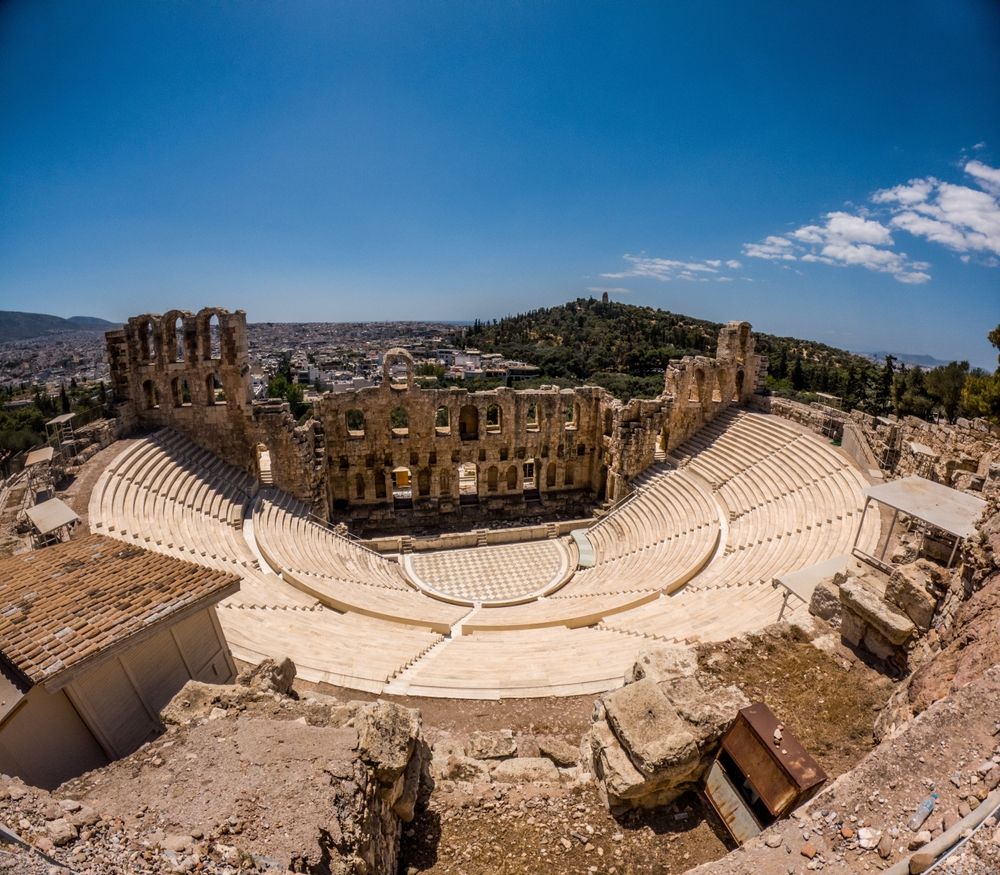
In the heart of Athens, on the southern slope of the Acropolis, stands the Theater of Dionysus, an exceptional monument that testifies to the birth of Western theater. Built in the 6th century BC, this ancient amphitheater could accommodate up to 17,000 spectators who came to attend performances by the greatest Greek playwrights. Sophocles, Aeschylus, Euripides and Aristophanes made their masterful works resonate here during the famous Great Dionysia. Today, this fascinating archaeological site invites you to walk in the footsteps of ancient Greek civilization and discover the place where tragedy and comedy as we know them were born.
History and origins of the Theater of Dionysus
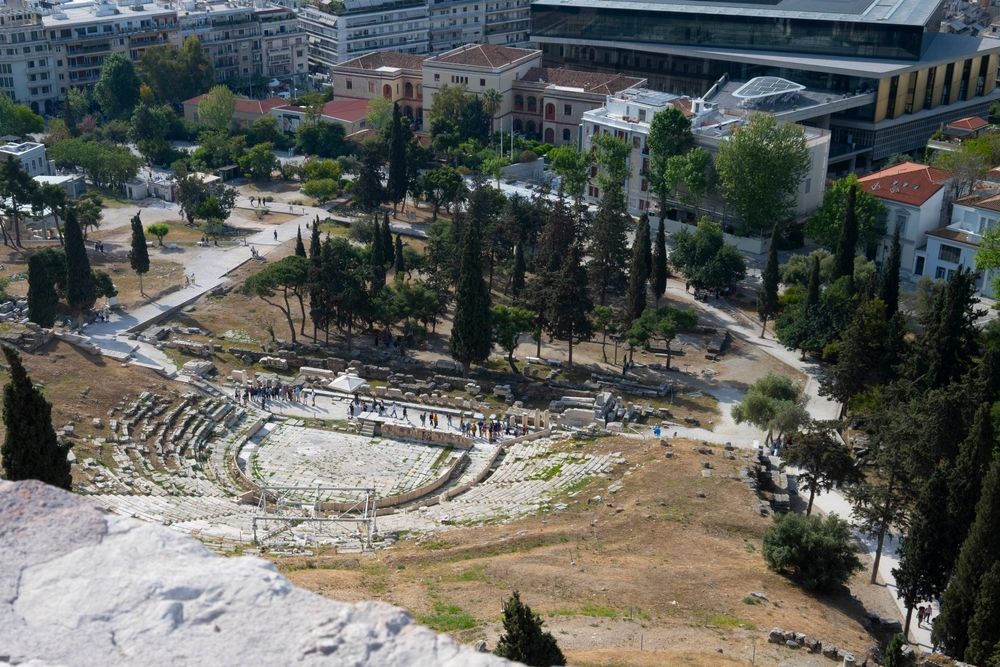
The Theater of Dionysus represents much more than a simple ancient monument: it embodies the cradle of Western dramatic art. Dedicated to Dionysus, god of wine, fertility and theater, this sacred place saw the birth of the first tragedies and comedies that shaped European culture. Originally built in wood in the 6th century BC, it was rebuilt in stone in the 4th century BC, testifying to the growing importance of theater in Athenian society.
The beginnings of Greek theater
The history of the Theater of Dionysus begins with the first festivals in honor of Dionysus. These religious celebrations, called the Great Dionysia, took place every year in spring and lasted several days. It was during these festivities that the first theatrical performances came to life, gradually transforming religious rituals into true dramatic representations. The original wooden structure already allowed thousands of spectators, proof of the popular enthusiasm for these cultural events.
The stone reconstruction
In the 4th century BC, under the impetus of the strategist Lycurgus, the theater was entirely rebuilt in Pentelic marble, the noble stone used for the Parthenon. This transformation considerably increased the seating capacity, reaching nearly 17,000 seats. The tiers were carved directly into the rock of the southern slope of the Acropolis, offering remarkable acoustics that allowed each spectator to hear the actors distinctly. This architectural feat testifies to the genius of Greek builders and the importance given to theater in the city.
The golden age of Athenian theater
The 5th century BC marks the apogee of the Theater of Dionysus. It was on this mythical stage that the immortal works of Aeschylus, Sophocles and Euripides for tragedy, as well as those of Aristophanes for comedy, were created. These playwrights participated in competitions organized during the Great Dionysia, and their plays explored universal themes: justice, power, love, human destiny. The Athenian audience, composed of free citizens but also slaves and women during certain performances, was passionate about these spectacles that mixed art, religion and philosophical questioning.
Download the audio-guided circuit to discover Athens on foot and independently
To fully enjoy your visit to the Theater of Dionysus and all the treasures of Athens, let yourself be guided by the Ryo audio-guided itinerary. This complete circuit takes you to discover the 29 major places of interest in the Greek capital, including the majestic Theater of Dionysus. Thanks to interactive navigation and enriching historical commentary, you will explore Athens at your own pace, in complete autonomy, while benefiting from fascinating anecdotes and detailed explanations about each site.
Architecture and remarkable elements of the theater
The architecture of the Theater of Dionysus perfectly illustrates the genius of ancient Greek builders. Built against the hill of the Acropolis, the theater naturally exploits the slope to create a hemicycle structure that optimizes visibility and acoustics. This ingenious design served as a model for all Greek and Roman theaters that followed, making the Theater of Dionysus the prototype of Western theatrical architecture.
The ancient tiers
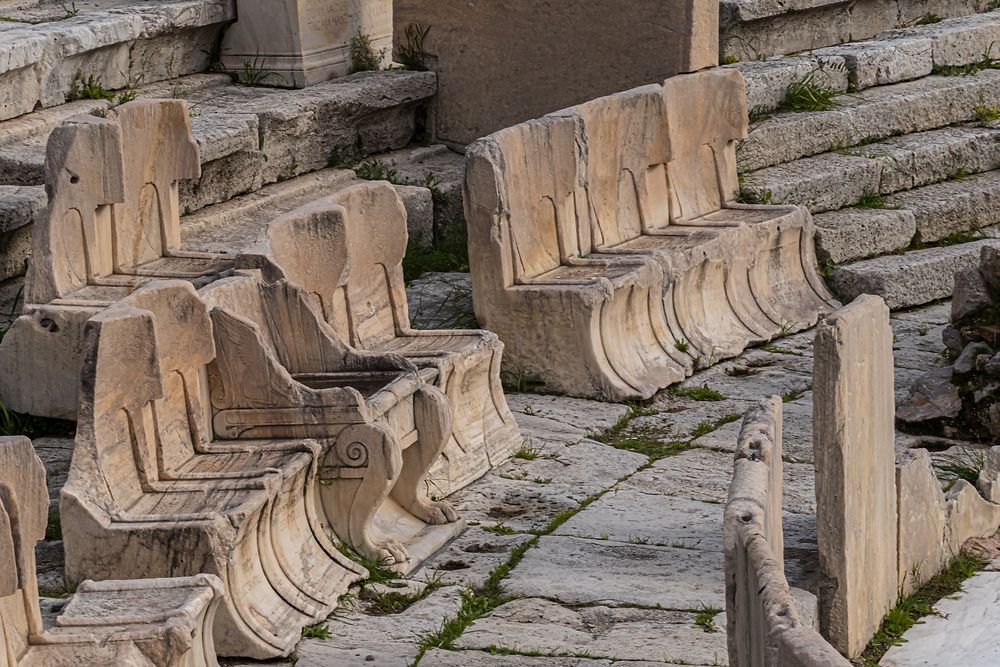
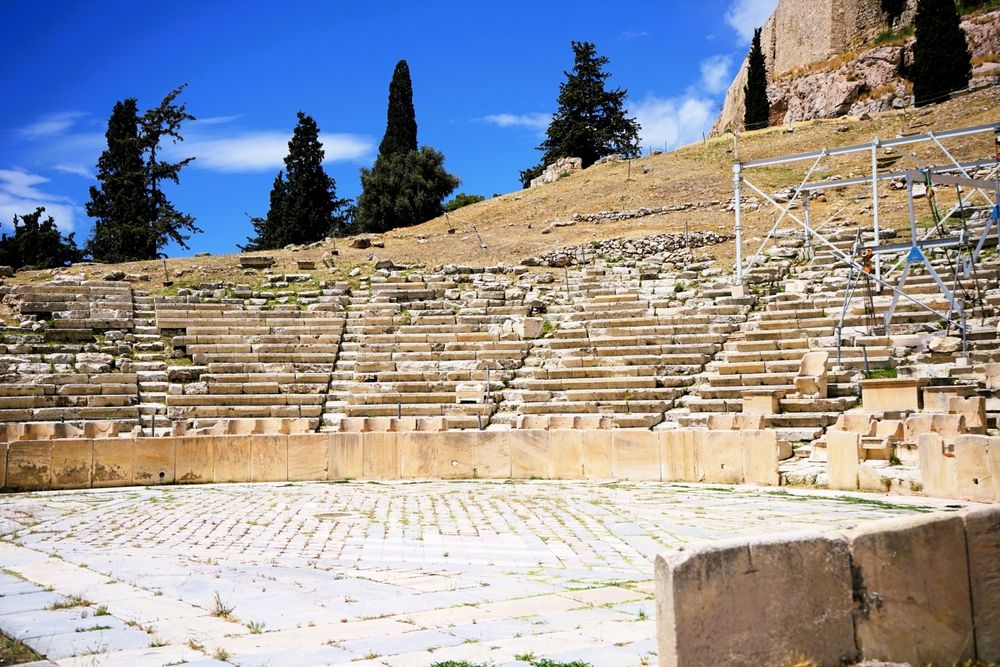
The tiers of the Theater of Dionysus, called koilon in ancient Greek, formed a vast semicircular amphitheater with 78 rows of seats. The first rows, the most prestigious, were reserved for dignitaries, priests and magistrates of the city. One can still observe today the proedries, marble thrones decorated with sculptures, the most famous of which is that of the priest of Dionysus, located in the center of the first row. These seats of honor testify to Athenian social hierarchy and the religious and political importance of the theater.
The circular orchestra
At the center of the theater is the orchestra, a circular space of about 20 meters in diameter that constituted the heart of the theatrical performance. This is where the chorus, a fundamental element of Greek theater, sang, danced and commented on the dramatic action. Initially made of packed earth, the orchestra was later paved with marble. At the center stood the altar of Dionysus (thymele), recalling the religious origin of the theater. This arrangement allowed excellent interaction between actors, chorus and audience, creating a unique immersive theatrical experience.
The stage and the stage building
The skene, or stage building, was located behind the orchestra and served as scenery, backstage and resonance box to amplify the actors' voices. This structure, initially simple, was gradually enriched with columns and architectural decorations. It allowed actors to change costumes and masks between scenes, and its three doors offered different possibilities for entrances and exits. The scenic innovations developed at the Theater of Dionysus, such as the use of machinery to make gods appear (deus ex machina), revolutionized dramatic art.
The bas-reliefs and sculptures
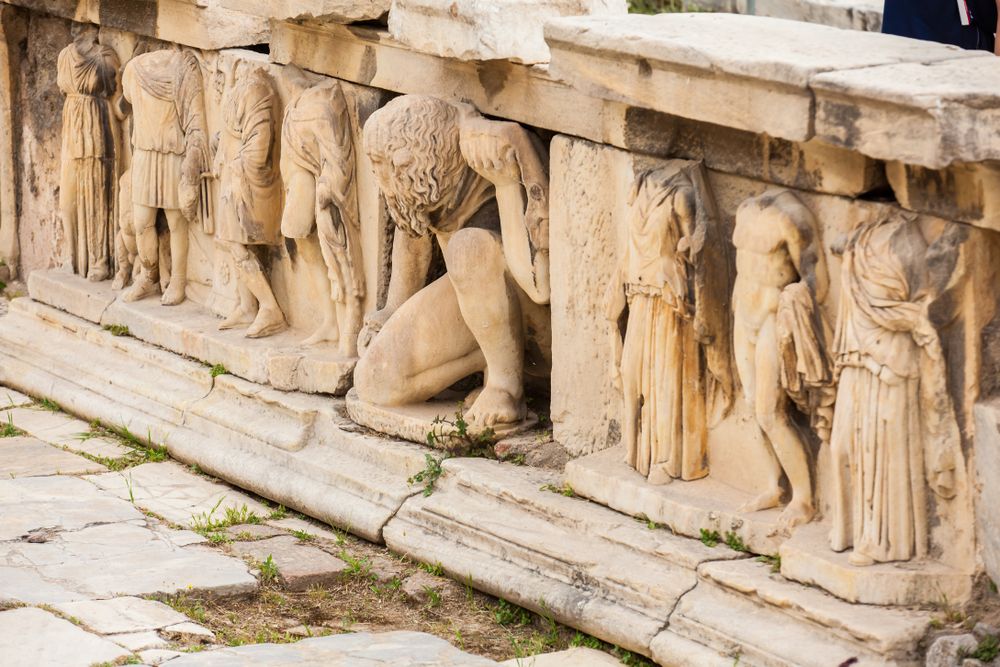
The Theater of Dionysus was richly decorated with sculptures and bas-reliefs depicting mythological scenes related to Dionysus. Among the most remarkable elements are the sculpted friezes illustrating the life of the god and his companions, the satyrs and maenads. Some of these artworks have been transferred to the Acropolis Museum for their preservation, but several reliefs remain visible on site. These decorations remind us that the theater was not only a place of entertainment, but also a sacred space dedicated to the cult of Dionysus.
Opening hours and prices to visit the Theater of Dionysus
The visit to the Theater of Dionysus is part of the discovery of the archaeological site of the Acropolis. The theater is located on the southern slope of the sacred hill and is accessible via the southern entrance of the site (Mitseon 25, Athina 117 42, Greece, rated 4.7/5 on Google for 6,230 reviews).
Opening hours
The Theater of Dionysus is open daily from 8:00 AM to 6:00 PM. During the high tourist season (April to October), hours may be extended until 7:00 PM. In winter (November to March), the site closes earlier, generally around 5:00 PM. It is advisable to check exact hours before your visit, especially on Greek holidays when changes may occur.
Entrance fees
Access to the Theater of Dionysus is included in the entrance ticket for the Acropolis. The full price is 20 euros in low season and 30 euros in high season (April to October). A combined ticket for 30 euros allows you to visit the Acropolis as well as six other major archaeological sites in Athens, including the Ancient Agora, the Roman Agora, the Temple of Olympian Zeus and Hadrian's Library. This pass is valid for five consecutive days and represents an excellent option for visitors wishing to explore ancient Athens in depth.
Discounts and free admission
Reduced rates apply for European Union students (with valid student card), people over 65 who are EU citizens, and young people from 6 to 25 years old. Admission is free for children under 6, people with disabilities and their accompanying person, as well as for all visitors on certain days of the year (March 6, April 18, May 18, last weekend of September, October 28 and first Sunday of each month from November to March).
To optimize your discovery of Athens and not miss any major site, consider following the Ryo itinerary which guides you through the most beautiful monuments of the Greek capital.
How to get to the Theater of Dionysus
The Theater of Dionysus benefits from a central location in Athens, at the foot of the southern slope of the Acropolis, making it easily accessible by various means of transport.
1. By metro
The most convenient way to reach the theater is by metro. The Akropoli station (line 2, red line) is about a 5-minute walk from the site. When exiting the station, follow the signs indicating the Acropolis and head towards the southern entrance. You can also get off at Monastiraki station (lines 1 and 3) or Thissio (line 1), but the walk will be a bit longer (10-15 minutes).
2. On foot from the historic center
If you are staying in the Plaka or Monastiraki district, you can easily reach the Theater of Dionysus on foot. From Syntagma Square, count about 20 minutes of pleasant walk through the picturesque streets of Athens. The Ryo audio-guided itinerary allows you to discover these historic districts while heading to the Acropolis and the theater.
3. By bus
Several bus lines serve the Acropolis: lines 230, 040 and A2 stop near the archaeological site. The nearest stop is "Makrigianni", located a few minutes' walk from the southern entrance to the Acropolis.
4. By taxi or VTC
Athenian taxis are relatively affordable. Ask the driver to drop you off on Dionysiou Areopagitou street, the large pedestrian artery that runs along the southern slope of the Acropolis. From there, the site entrance is just a few steps away.
The cultural role of theater in ancient Athens
The Theater of Dionysus was not just a simple place of entertainment: it occupied a central place in the civic, religious and cultural life of Athens. Understanding its role allows us to better grasp the importance of theater in ancient Greek society.
The Great Dionysia: a religious and civic celebration
Every year in spring, Athens celebrated the Great Dionysia, a festival of several days in honor of Dionysus. These festivities began with a solemn procession carrying the god's statue from the temple to the theater, followed by sacrifices and libations. For three days, dramatic competitions pitted the best authors of tragedies and comedies against each other. Three tragedians each presented a tetralogy (three tragedies and a satirical drama), while five comic poets competed with one comedy each. These competitions were judged by a jury of citizens, and the winners received a crown of ivy, symbol of Dionysus.
A space for education and debate
Athenian theater played a fundamental educational role. Tragedies, drawing inspiration from myths and legends, posed universal questions about justice, power, morality and destiny. They allowed citizens to reflect collectively on the great issues of their time. Comedies, meanwhile, humorously criticized political personalities and the flaws of Athenian society, functioning as a form of social satire. Theater was thus a place of democratic debate where freedom of speech was expressed, an essential characteristic of Athenian democracy.
The accessibility of theater
Unlike other cultural activities reserved for the elite, theater was accessible to all Athenian citizens, regardless of their wealth. Pericles had even instituted the theorikon, an allowance allowing the most modest citizens to buy their seat. This democratization of culture testifies to the importance given to theater as social cement and collective education tool.
The great playwrights of the Theater of Dionysus
The Theater of Dionysus hosted the greatest geniuses of Greek dramatic literature. These authors revolutionized theatrical art and their works continue to be performed and studied worldwide.
Aeschylus, the father of tragedy
Aeschylus (around 525-456 BC) is considered the creator of Greek tragedy as we know it. He introduced the second actor, enabling dialogue and dramatic conflict on stage. His major works, such as The Persians, The Oresteia (trilogy comprising Agamemnon, The Libation Bearers and The Eumenides), explore themes of destiny, divine justice and human responsibility. His grandiose style and philosophical depth established the foundations of tragic theater.
Sophocles and the humanization of the hero
Sophocles (around 496-406 BC) perfected the form of tragedy by introducing the third actor and reducing the importance of the chorus in favor of dramatic action. His most famous plays, Oedipus Rex, Antigone and Electra, feature heroes confronted with insurmountable moral dilemmas. Sophocles excelled in the psychological portrayal of his characters, making their suffering profoundly human and universal. He won numerous victories at the Great Dionysia, testifying to the favor of the Athenian public.
Euripides, the innovator
Euripides (around 480-406 BC) shook the conventions of tragedy by giving an important place to female characters and questioning traditional values. His works, such as Medea, The Trojan Women or The Bacchae, are marked by psychological realism and social criticism unusual for the time. Less appreciated during his lifetime than his predecessors, Euripides became the most performed tragic author after his death, profoundly influencing subsequent theater.
Aristophanes and political comedy
Aristophanes (around 445-386 BC) dominates the genre of ancient comedy. His plays, such as The Clouds, The Wasps, Lysistrata or The Frogs, criticize with verve and humor political personalities, philosophers (notably Socrates) and the customs of his time. His comedies mixed farce, political satire and poetic fantasy, offering a jubilant counterpoint to tragedies. They also constitute a precious historical source on daily life and political debates in 5th-century Athens.
Other monuments on the southern slope of the Acropolis
The visit to the Theater of Dionysus can be combined with the discovery of other remarkable monuments located on the southern slope of the Acropolis, forming a coherent archaeological ensemble.
1. The Sanctuary of Dionysus
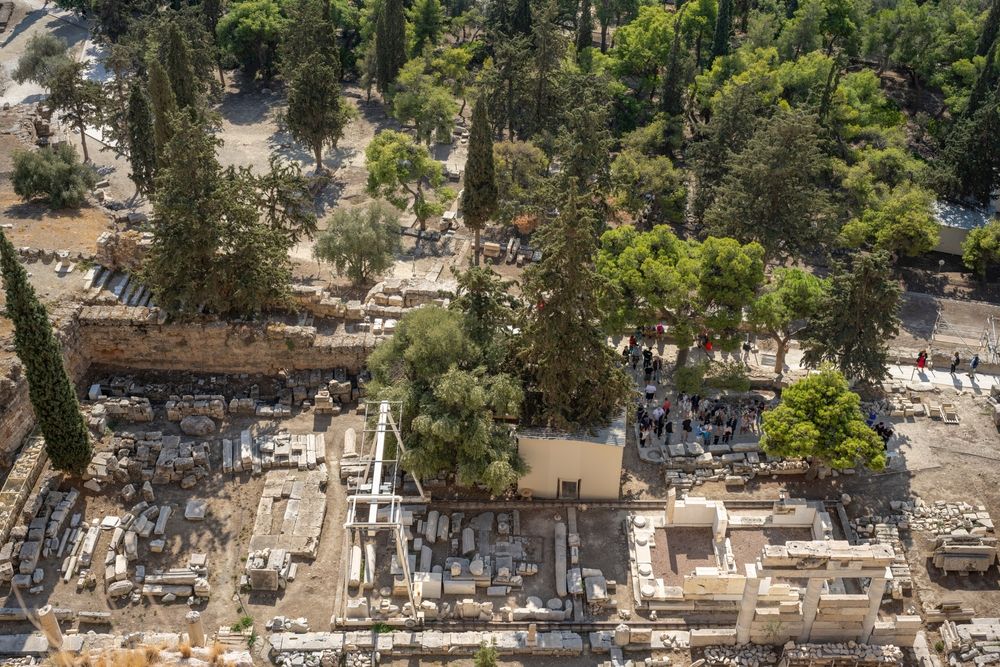
Adjacent to the theater is the Sanctuary of Dionysus Eleutherios, a place of worship dedicated to the god. One can observe the remains of a small temple, as well as bases of votive statues offered in honor of Dionysus. This sanctuary recalls the religious origin of the theater and the importance of the Dionysiac cult in the Athenian city.
2. The Odeon of Herodes Atticus
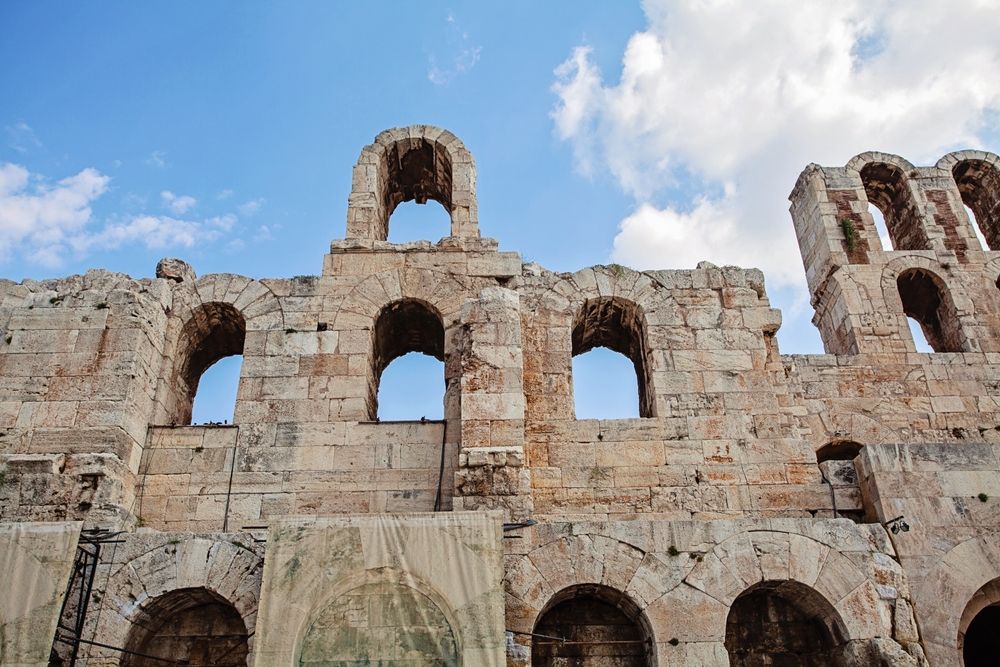
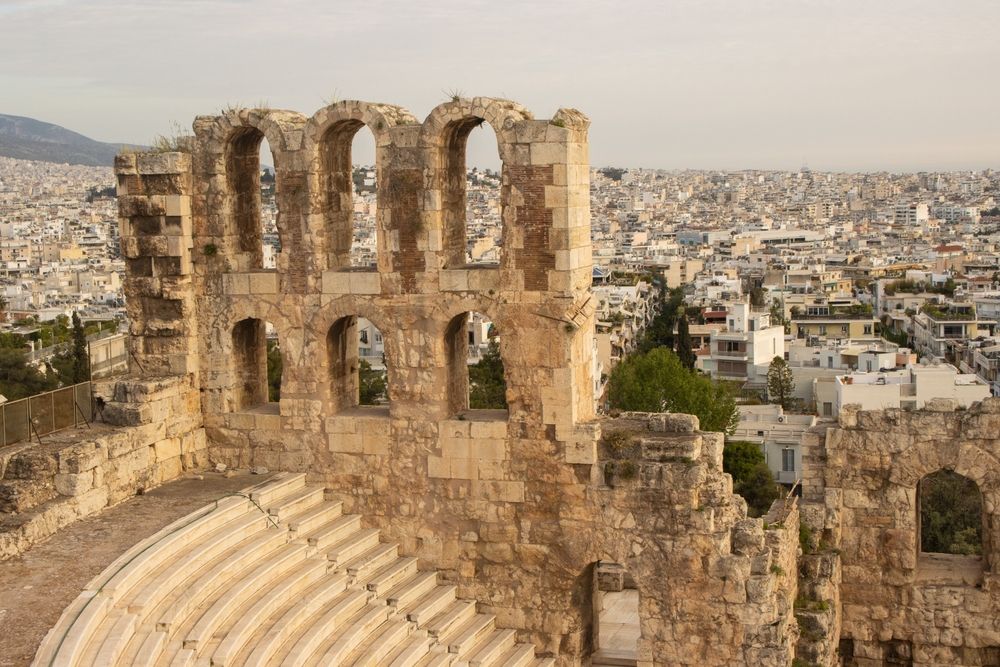
Built in 161 AD by the wealthy patron Herodes Atticus in memory of his wife, this odeon is remarkably well preserved. Unlike the Theater of Dionysus, it had a roof made of cedar wood. Restored in the 1950s, it now hosts concerts and performances during the Athens and Epidaurus Festival, perpetuating the ancient theatrical tradition. Its capacity of 5,000 seats makes it a privileged place to attend performances in an exceptional historical setting.
3. The Asclepieion
Located between the two theaters, the Sanctuary of Asclepius, god of medicine, housed a healing center where the sick came seeking cure. Founded in the 5th century BC, it included a sacred water spring and porticoes where patients slept hoping to receive a revealing dream from Asclepius indicating the treatment to follow. This sanctuary testifies to the importance of medicine and therapeutic practices in ancient Athens.
4. The Stoa of Eumenes
This long covered colonnade, built in the 2nd century BC by King Eumenes II of Pergamon, connected the Odeon of Herodes Atticus to the Theater of Dionysus. It served as a promenade where spectators could take shelter in case of rain and discuss before and after performances. Its foundations and some columns are still visible today, testifying to the sophisticated development of this cultural space.
The Ryo audio guide will allow you to discover all these monuments in a logical order, while enjoying detailed explanations of their history and architecture.
Practical advice for your visit
To make the most of your visit to the Theater of Dionysus and the Acropolis site, some recommendations are essential.
1. Best time to visit
The site is open year-round, but the best periods to visit are spring (April-May) and autumn (September-October), when temperatures are pleasant and crowds are smaller. In summer, prefer a visit early in the morning (from opening at 8 AM) or late afternoon to avoid the heat and crowds. In winter, days are shorter but the site is much quieter.
2. Recommended equipment
Bring comfortable and non-slip shoes, as the ground is uneven and steps can be slippery. A hat, sunscreen and water are essential, especially in summer, as the site offers little shade. Binoculars can be useful for observing details of sculptures and reliefs located at height.
3. Duration of visit
Allow about 30 to 45 minutes to visit the Theater of Dionysus alone, and 2 to 3 hours to explore the entire southern slope of the Acropolis including the Odeon of Herodes Atticus and the Asclepieion. If you also wish to go up to the Parthenon, plan a complete half-day.
4. Online booking
It is strongly recommended to buy your tickets online on the official website of the Greek Ministry of Culture to avoid long queues, particularly in high season. Electronic tickets allow you direct access to the site. You can also opt for a guided tour that includes skip-the-line access and commentary from a professional guide.
5. Accessibility
The site presents access difficulties for people with reduced mobility due to rough terrain and numerous steps. However, an elevator allows access to the top of the Acropolis from the western entrance. For the Theater of Dionysus, part of the site remains accessible, although limited.
For an optimal Athens visit experience, follow the complete Ryo itinerary which will guide you through all the major sites of the Greek capital.
Restorations and archaeological discoveries
The Theater of Dionysus has undergone numerous transformations throughout its history, and archaeological excavations have helped better understand its evolution.
19th-century excavations
The first systematic excavations were conducted in 1862 by German archaeologist Johann Strack. These works uncovered the theater's extent and revealed numerous architectural and sculptural elements. Discoveries included reliefs depicting Dionysiac scenes, honorary inscriptions and statue fragments. These excavations marked the beginning of scientific interest in the site.
Roman modifications
In Roman times, the theater was adapted to host gladiator shows and animal fights, popular practices in the Roman Empire. A protective wall was erected around the orchestra to protect spectators during these violent spectacles. Emperor Nero, during his visit to Greece in 61 AD, had a stage decorated with marble mosaics depicting scenes from the life of Dionysus added, some fragments of which are still visible.
Modern restorations
In the 20th century, consolidation and restoration work was undertaken to preserve the site. Archaeologist Wilhelm Dörpfeld directed important excavation campaigns at the end of the 19th century, clarifying the monument's chronology. More recently, punctual restorations have been carried out to stabilize the seating and protect sculptural elements from erosion. The site is subject to continuous archaeological monitoring to ensure its long-term conservation.
Visiting the Theater of Dionysus with children
The Theater of Dionysus can be a fascinating visit for children, provided it is adapted to their age and interests.
Telling the story of the theater
Children are often fascinated by stories from Greek mythology. Before the visit, tell them about the adventures of Dionysus, the exploits of tragic heroes like Oedipus or Antigone, or the comic stories of Aristophanes. On site, encourage them to imagine the grandiose spectacles that took place in this theater more than 2,000 years ago. The Ryo audio guide offers adapted content that captivates young visitors' attention.
Fun activities
Suggest your children climb the seating and test the theater's exceptional acoustics by whispering from the orchestra. Organize a small game where they have to find the marble thrones of dignitaries in the first row. Have them play a small scene like ancient actors, with imaginary masks. These activities make the visit interactive and memorable.
Planning breaks
Visiting the archaeological site can be tiring for young children. Plan regular breaks, snacks and water. The garden adjacent to the theater offers some shaded areas to rest. Don't hesitate to shorten the visit if children show signs of fatigue, even if it means returning another time.
In conclusion, the Theater of Dionysus represents much more than an ancient monument: it is the cradle of Western theater, a place where the voices of the greatest playwrights in history still resonate. Its visit allows us to understand the importance of dramatic art in ancient Greece and to measure the lasting influence of this civilization on our contemporary culture. Whether you are a history enthusiast, theater lover or simply curious, a visit to the Theater of Dionysus will immerse you in the fascinating atmosphere of classical Athens. Don't hesitate to extend your exploration by following the complete Ryo itinerary which will guide you through the treasures of Athens, millenary capital where history and modernity meet harmoniously.
Frequently Asked Questions (FAQ)
How long does it take to visit the Theater of Dionysus?
Visiting the Theater of Dionysus alone takes about 30 to 45 minutes. If you also wish to explore the entire southern slope of the Acropolis with the Odeon of Herodes Atticus and the Asclepieion, allow 2 to 3 hours. For a complete visit including the Parthenon and other Acropolis monuments, plan a half-day.
Does the Acropolis ticket include access to the Theater of Dionysus?
Yes, entry to the Theater of Dionysus is included in the entrance ticket for the Acropolis. The standard ticket costs 20 euros in low season and 30 euros in high season. A combined ticket for 30 euros also allows you to visit six other major archaeological sites in Athens.
Can we attend performances at the Theater of Dionysus today?
No, the Theater of Dionysus no longer hosts regular performances due to its conservation status and heritage value. However, the nearby Odeon of Herodes Atticus hosts performances during the Athens and Epidaurus Festival in summer.
What is the best period to visit the Theater of Dionysus?
The best periods are spring (April-May) and autumn (September-October), when temperatures are pleasant and crowds are smaller. In summer, prefer a visit early in the morning or late afternoon to avoid heat and crowds.
Is the site accessible to people with reduced mobility?
Accessibility is limited due to rough terrain and numerous steps. An elevator allows access to the top of the Acropolis, but the Theater of Dionysus, located on the slope, presents access difficulties for wheelchair users. Contact the site in advance to learn about possible accommodations.
Should tickets be reserved in advance?
It is strongly recommended to buy your tickets online, especially in high season, to avoid queues that can be very long. Electronic tickets allow you direct access to the site without going through the ticket office.