
Créé par Emilie, le 7 mai 2026
Votre guide Ryo
© Shutterstock
The Acropolis: a universal symbol
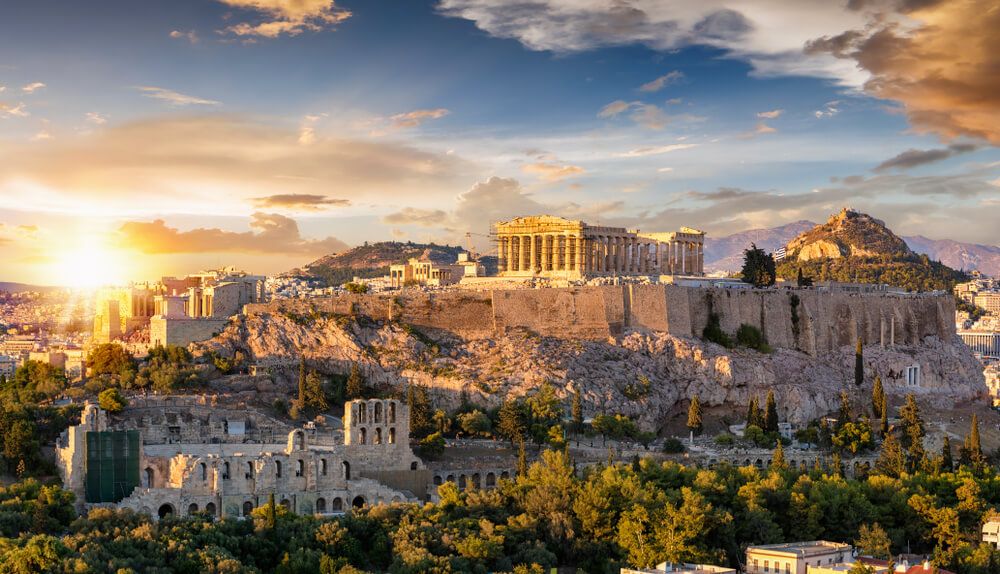
The Acropolis is a collection of different monuments that come straight from ancient times, located on a rocky plateau 156 meters high. The term "acropolis" was born from the association of the words "ákros" – which means high, elevated – and "pólis" – which means city. The acropolis is therefore the upper city. Occupied since the Neolithic period, this hill has been considered an acropolis since the 13th century BC, when a wall was built all around the site. We can still see some remains today.
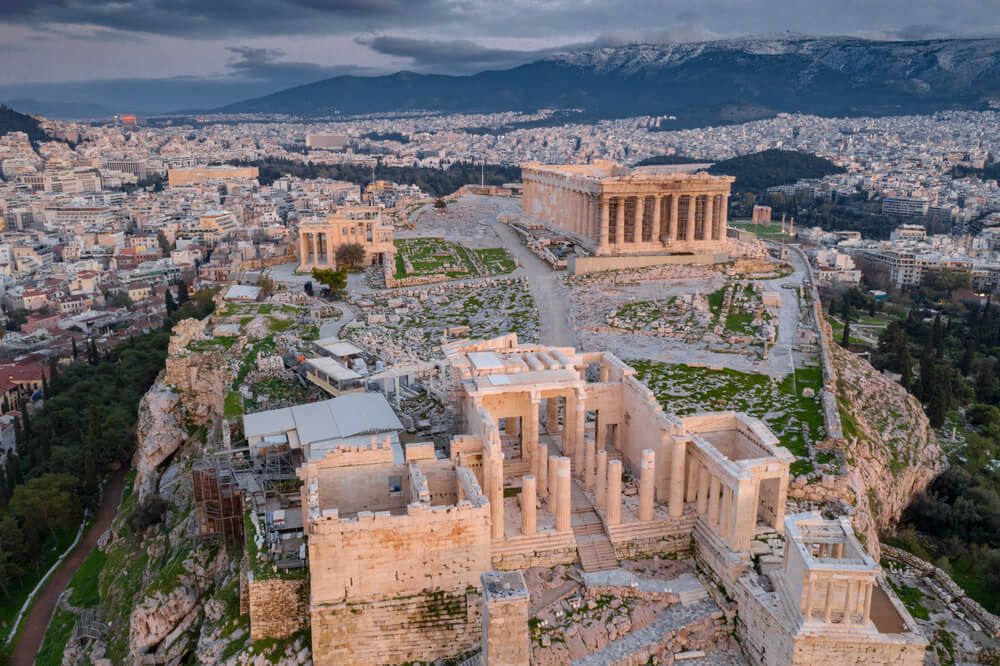
It consists of the ruins of multiple ancient sites, including the Parthenon, the Erechtheion, the temple of Athena Nike, the Propylaea, the sanctuary of Artemis Brauronia, the theater of Dionysus and the odeon of Herodes Atticus. The Parthenon, the flagship and most imposing monument of the Acropolis, was erected more than 2,500 years ago.
The legend of Athens
The city of Athens has a history closely linked to that of the goddess Athena. You might have wondered, it is indeed she who would have, according to legend, given her name to the city. It is, in fact, after a confrontation with the god of the Seas, Poseidon, that she becomes the divinity associated with the city. And it is on this hill, the one that today reveals the greatest vestiges of Greece, that the battle would have taken place. This is why most of the monuments that were erected there are in honor of this goddess of wisdom and war and have become a sacred place.
How to visit the Acropolis of Athens?
1- Getting to the Acropolis
From the center of Athens, you can easily walk to the Acropolis. There are two entrances: the first, the main one, is located on Dionysiou Areopagitou street, and the second, often a little less crowded, is through the theater of Dionysus, opposite the Acropolis Museum.
By metro, you need to take line n°2 and get off at the Acropoli stop. Everything is then indicated to reach the entrance.
2- What to see at the Acropolis?
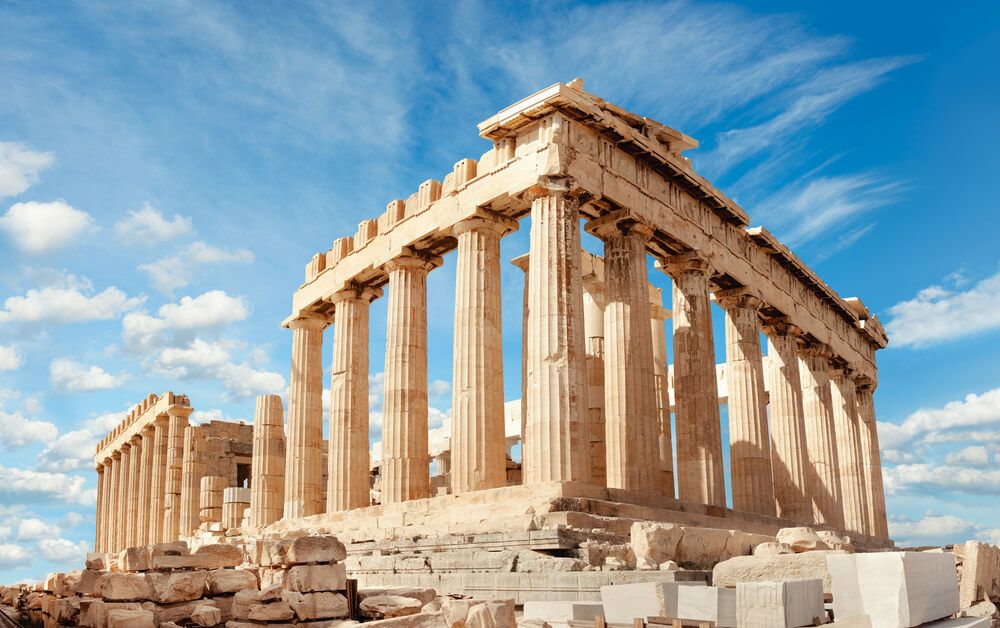
The Parthenon: this is the largest monument you will see in the Acropolis. It was built between 447 and 432 BC, and has thus stood on this hill for nearly 2,500 years. It is the symbol of Athens' freedom, as it was built after the Athenians managed to drive the Persians from their territory. Dedicated to Athena, it displays exceptional dimensions: 70 meters long by 30 meters wide. It consists of 46 columns more than 10 meters high. It is the largest Greek temple of the classical period.
It became, in the 13th century, a Christian church when the Byzantines took control of Greece, then a mosque for several centuries when the Ottoman Empire seized the territory. It was even used, in the 17th century, as a munitions depot, which caused a strong explosion that badly damaged it. Although it has suffered numerous degradations over the centuries, it has nevertheless managed to survive through time and today reveals impressive vestiges. In 1975, a restoration project was born and the Greek government transformed the Acropolis site to make it a tourist place open to visits.
Originally, there was an ancient temple in place of the Parthenon that was destroyed by the Persians. When the Greeks regained control of their territory, they had a large sum of money left that was intended to fight the Persians. It is thanks to this money that the Parthenon was then built, to beautify the city and to serve both as a temple dedicated to Athena and as a treasury, where what remains of the money after its construction is deposited. This is how the Parthenon came to be!
The Erechtheion: this monument dating from the end of the 5th century BC is located at the place where the dispute between Athena and Poseidon for the territory of Athens would have taken place. It is therefore dedicated to the former, goddess of wisdom and war and corresponds to the most sacred site of the Acropolis.
The temple of Athena Nike: built in 420 BC, this temple bears the name of the protective goddess of the city to which is added the word "nike" which means victory. Built in the context of the Peloponnesian War, we imagine it was therefore erected in the hope that Athens would emerge victorious from this conflict.
The Propylaea: these are the first vestiges you will see when arriving at the Acropolis. The Propylaea were built to mark the entrance to the Acropolis: five monumental gates of which the central gate gave access to the Sacred Way, the main road of the Acropolis. They would, however, never be completed. It nevertheless became, in the 12th century, the episcopal palace of the Byzantines.
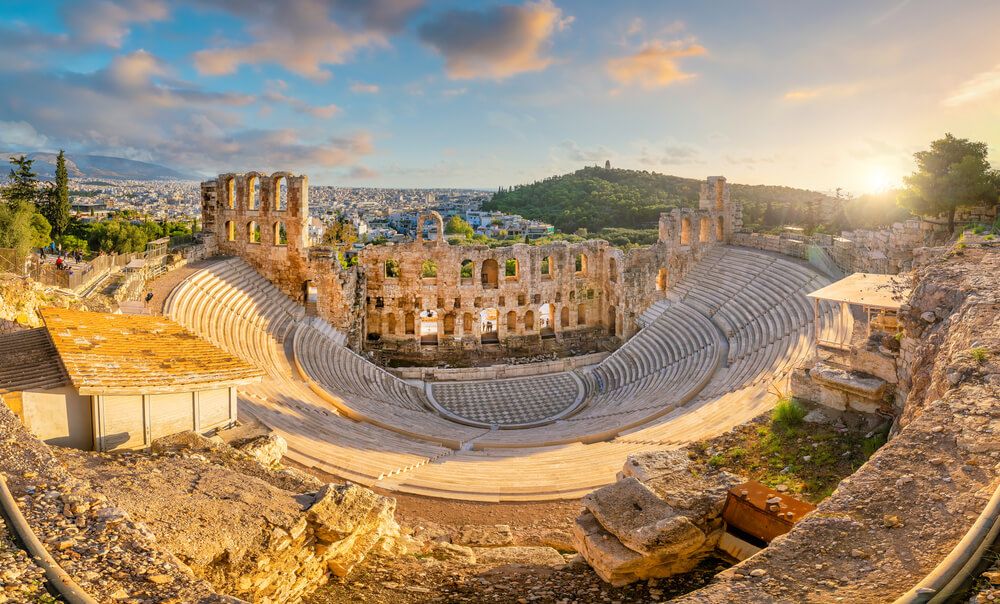
The theater of Dionysus: considered the first theater in the world, it dates back, like the rest of the Acropolis, to the 5th century BC. It is also the largest theater ever built by the ancient Greeks, once revealing 17,000 seats. It is dedicated to Dionysus, the god of wine and theater.
Did you know? The Parthenon is today the monument that has been most reproduced in the world. It has inspired the construction of the United States Supreme Court, the White House, the Madeleine church in Paris, the Ivan Vazov theater in Bulgaria and the Palace of Justice in Bordeaux.
To know before your visit: it is very possible that there will be, during your visit, many cranes and other scaffolding all over the Acropolis. This is unfortunately inevitable since numerous works are carried out permanently to ensure the sustainability and renovation of the site. The statues, sculptures and bas-reliefs are often reconstructions, the originals being carefully kept and exhibited in the Acropolis museum, protected from pollution and elements that could damage them.
3- How to visit the Acropolis?
You should plan about 2 hours to visit the Acropolis. There are different ways to discover this superb site:
You can choose to visit the Acropolis freely.
If you want maximum information, there are private or group guided tours, sometimes on the theme of mythology, in English. Don't hesitate to inquire about the different possibilities and choose the visit that appeals to you most!
If you are visiting with children, you can choose a more playful way with, for example, a smartphone application or an organized treasure hunt. Several structures offer this.
In any case, for a guided tour or treasure hunt, you must book in advance to be sure of the place and organization.
4- When to visit? Tips and practical info
You will see, the advice that comes up most often for visiting the Acropolis of Athens is not to go there during the summer period! Already because there are a lot of people, obviously, but also because summer in Athens can turn out to be very hot and stifling! Temperatures are often above 30°C and on a site like the Acropolis, there is almost no shade. If you visit Athens in summer, I can only advise you to go to the Acropolis early in the morning or late in the afternoon to avoid both crowds and heat. Remember to take a water bottle with you. Be careful, when the temperature is above 39°C, it is closed to visits between 1pm and 5pm!
The best way if you want to be peaceful for your visit is to arrive in the morning at opening time or in the afternoon, about 2 hours before the site closes.
Don't hesitate to bring comfortable shoes that you can walk well in, as the Acropolis is located at height and you often have to walk on rocks to reach one of the monuments. Be careful, some rocks can even be slippery!
Leave your big bag/luggage at your accommodation, you will only be allowed to enter with a small backpack or handbag!
5- Hours and prices
The prices to enter the Acropolis depend on the season...:
- Between April and end of October: €20 per person
- Between November and end of March: €10 per person
... and age!:
- Free for those under 25 from the EU
- Free for all those under 5
- Free for students from the EU
- Free for people with disabilities
- €10 for people over 65 (regardless of season)
Note that you must go through the ticket offices to benefit from a reduced rate or free ticket and show the necessary supporting documents.
Tip: if you spend several days in Athens and plan to visit several of its tourist sites, get a combination ticket!! It costs €30 per person and allows you to enter the Acropolis, the ancient Agora, the Roman Agora, the temple of Zeus (Olympieion), Hadrian's Library, the Lykeion site and the Keramikos site. You will save more than thirty euros! It is valid for 5 days and can be purchased at any of these sites. It also serves as a skip-the-line ticket.
Note: with the combination ticket, you can only visit each site once. The Acropolis museum is not included and must be purchased separately directly at the museum.
Entry to the Acropolis is free for everyone on certain dates:
- March 6
- April 18: it's International Monuments Day
- May 18: it's International Museum Day
- The last weekend of September: for Heritage Days
- October 28: it's the date of the Greek national holiday
- Every first Sunday of the month between November and March!
Warning, the Acropolis is closed on January 1, March 25, May 1, Easter Sunday and December 25 and 26!
Opening hours also vary according to season:
- Summer (April to end of October): 8am-8pm
- Winter (November to end of March): 8am-5pm
In any case, entry to the site is possible until 30 minutes before closing. However, know that if you arrive 30 minutes before closing, you won't have time to go around as you'll already have to go back down. Plan at least 1h30, even for a quick visit.
6- Access for people with reduced mobility
Some areas are accessible to people with reduced mobility. An elevator is also provided to allow these people to go up to the acropolis and start their visit.
7- The Acropolis Museum
Opposite one of the entrances to the Acropolis is a museum that traces the entire history of this emblematic hill of Greece. The visit is unfortunately not included in the entrance ticket to the Acropolis, you must get another ticket from the museum to be able to discover it. But it's interesting to combine both to have a complete overview and explanations of this unmissable site!
In conclusion
Whether through a guided tour or on your own, the Acropolis is a site you absolutely must see if you spend some time in Athens. Some of the greatest vestiges of Greek Antiquity open their doors to you for a real leap into the past, between mythology and reality. A jewel of architecture and history that has managed to cross the centuries and has rightfully become one of the most visited sites in Greece!