© Shutterstock
 Votre guide Ryo
20 Things to Do in Crete: the Most Beautiful Places on the Island in 2026
Crete surprises those who visit for the first time. You think you are arriving on a beach holiday island, only to discover the largest island in Greece, stretching 260 kilometres from east to west, crossed by three mountain ranges whose peaks exceed 2,400 metres, carved by gorges that rank among the most spectacular in Europe, dotted with Minoan palaces 3,500 years old, and harbour towns where Venetian, Ottoman, and Byzantine influences intertwine. What to do in Crete with a week, ten days, or two weeks? The question could fill an entire book. This list distils it to the essentials: twenty places and experiences that capture what the island does best, from the wild west to the near-deserted eastern coast.
Here you will find archaeological sites that redefine our understanding of European civilisation, beginning with the Palace of Knossos, around which the Minoan settlement may have housed several tens of thousands of inhabitants at its peak around 1500 BC, making it one of the largest cities of the Bronze Age. There are also gorges where you walk 16 kilometres between towering walls, a palm forest that has grown on this coastline for millennia, a lagoon of a turquoise that even photographs struggle to capture, and mountain villages where Cretan cuisine — one of the healthiest in the world according to several nutritional studies — is passed down from generation to generation. To understand what to do in Crete without getting lost in brochure superlatives, this guide prioritises practical information (prices, opening hours, access) and historical details that other lists tend to overlook. Ryo has documented several of these places with audio-guided tours that enrich the visit with historical anecdotes rarely found in standard printed guides.
1. The Palace of Knossos
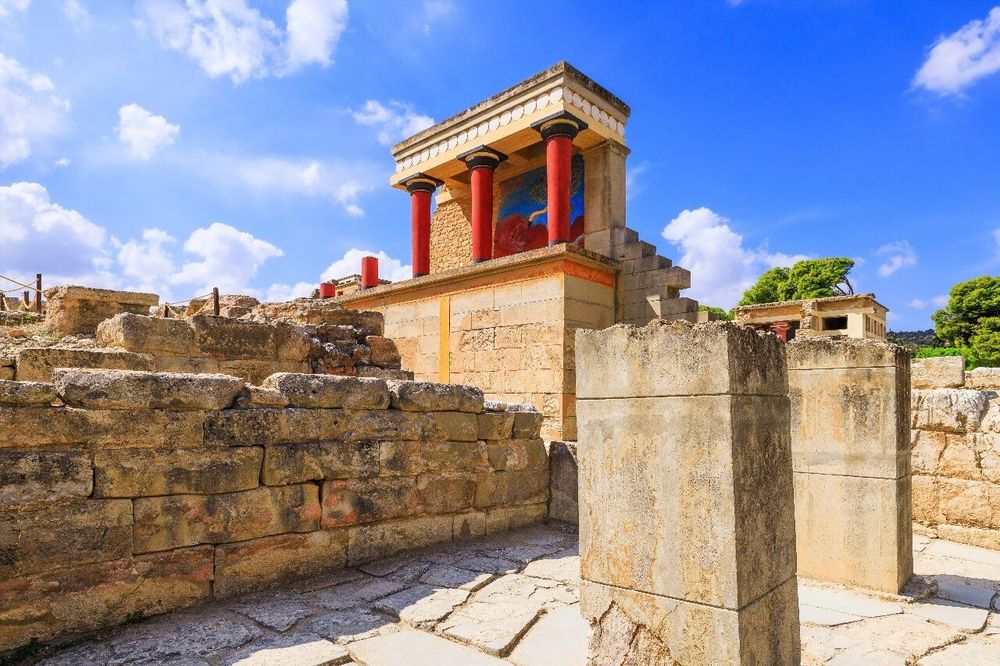
No history-minded traveller can leave Crete without stopping at the ruins of the Palace of Knossos (Knossos, 714 09 Héraklion, rated 4.3/5 on Google with 57,966 reviews), five kilometres south of Héraklion. This monumental complex, continuously occupied between 2000 and 1350 BC, is said to have given rise to the myth of the Minotaur and the labyrinth — and for good reason: its 1,300 interconnected rooms, arranged around a central courtyard, still disorient even the best-prepared visitors today.
British archaeologist Arthur Evans partially reconstructed the site in the early twentieth century, a decision that divides historians but makes the spatial layout easier to read for non-specialists. Arrive at opening time (8 am in summer) to avoid the cruise-ship coaches that begin arriving from 10 am onwards. Full-price admission is 20 euros in high season; a combined ticket with the Héraklion Archaeological Museum, valid for three days, lets you visit both sites without paying twice.
2. The Old Town of Chania
Chania (Χανιά in Greek) is often described as the most beautiful city in Crete, and the comparison with Venice, however overused, is not entirely unjustified. The Venetian harbour, sheltered by a sixteenth-century lighthouse, is lined with stone warehouses converted into restaurants and cafés where you can sip a freddo coffee watching the caïques return from fishing.
But Chania is worth visiting above all for its inner lanes. The Splantzia neighbourhood, with its Ottoman corbelled houses and mosques converted into galleries, offers an architectural stroll unmatched anywhere in the Aegean. The covered market (Agora), built in 1913 on the model of the Marseille market, brings together around fifty stalls where you can find wild-thyme honey, cold-pressed olive oil, and mizithra cheese made in the Lefká Óri mountains.
Take time to walk along the Venetian ramparts to the Sabbionara bastion for a sweeping view over the city. In the evening, Skridlof Street, nicknamed the 'leather street', is the best place to find handcrafted sandals made to measure within a few hours.
3. Elafonissi Beach
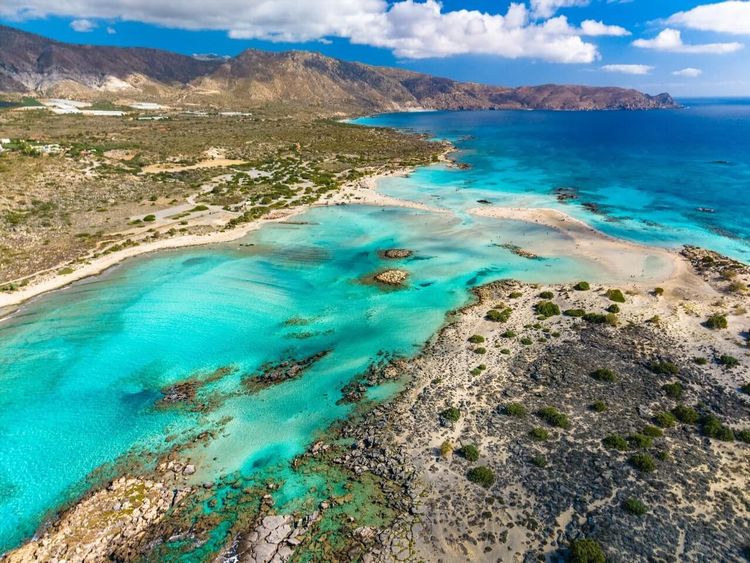
At the south-western tip of Crete, 76 kilometres from Chania, Elafonissi beach owes its reputation to the colour of its water — a shallow lagoon where white and turquoise blend into shades that Instagram filters only manage to corrupt. The sand, mixed with fragments of pink shells, takes on a slightly rosy hue at sunset.
The area is classified as a Natura 2000 zone: taking sand or shells away is prohibited. In July and August the beach is very busy; opt for a visit in May or September, when the sea is already warm (22–24 °C) and sun loungers are still scarce.
4. The Samaria Gorge
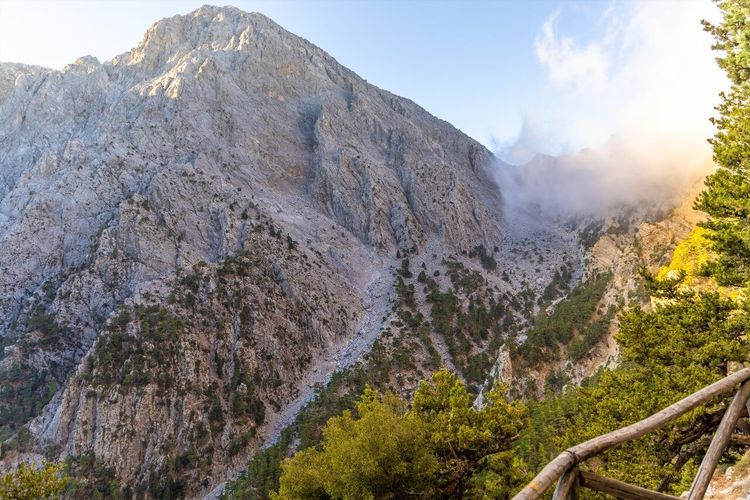
Hiking through the Samaria Gorge (Xyloskalo, 730 11 Sfakia, rated 4.7/5 on Google with 3,682 reviews) is one of the most famous — and most physically demanding — treks in the Mediterranean if you are not prepared for it. The trail descends 16 kilometres from the Xyloskalo plateau (1,227 metres altitude) to the coastal village of Agia Roumeli on the Libyan Sea, covering a descent of nearly 1,200 metres.
The national park, established in 1962, closes from mid-October to mid-April due to flooding. In season, allow 4 to 7 hours of walking depending on your pace, and carry at least two litres of water — there are springs along the way, but it is better not to rely on them. Trekking shoes are essential: the path is rocky, and the Gates (Sideroportes) — the narrow passage where the gorge walls close to 3 metres wide beneath cliffs 300 metres high — require jumping from rock to rock above a rushing stream.
The logistics are worth planning ahead. The trail starts at Xyloskalo (reachable by bus from Chania or Héraklion); the finish at Agia Roumeli requires a boat to Hora Sfakion or Sougia, from where buses return to the main towns. Allow a full day. Park entry costs 5 euros per adult, free for under-15s.
The gorge is home to one of the last wild populations of the kri-kri, the endemic Cretan ibex, with its gently curved horns. In May and June, oleanders and wild orchids bloom on the cliff faces — the best time to combine physical effort with botanical beauty.
5. The Balos Lagoon
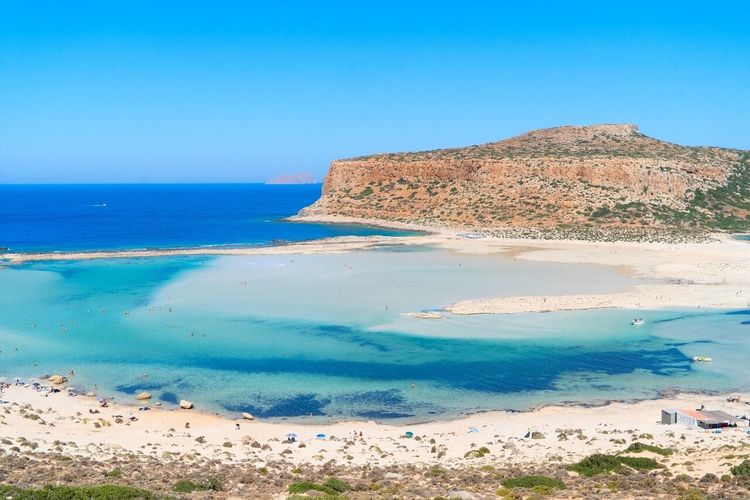
Balos is to Crete what Santorini is to Greece: a photographic cliché that turns out to be real. The lagoon, formed by the Gramvousa peninsula at the north-western tip of the island, combines several shades of water in a single frame — from pale turquoise to deep blue, through the white of the sandy shallows — alongside a Venetian fortified island whose ruins stand out against the sky.
Two options are available. The most popular: board a ferry from Kissamos — boats run to Balos throughout the day in season (departure around 10:30 am, return around 5 pm). The crossing takes 1 hour 15 minutes and generally includes a stop at Gramvousa Castle, a Venetian fortress perched 137 metres above the sea, which Greek pirates seized in the nineteenth century in a daring coup that became legendary in the history of Ottoman resistance.
The second option, for travellers with their own transport: take an 8-kilometre dirt track from the village of Kaliviani — a path manageable in a standard car in dry weather — then walk down 20 minutes to the beach. This approach lets you avoid the July–August crowds, at the cost of a car park that fills up by 9 am in high season.
Whichever way you arrive, avoid going between 11 am and 4 pm in summer: the heat is overwhelming and the lagoon, with no natural shade, becomes unforgiving. Arrive early or stay into late afternoon when the ferries have taken their passengers back and the sand regains a little peace.
6. The Island of Spinalonga
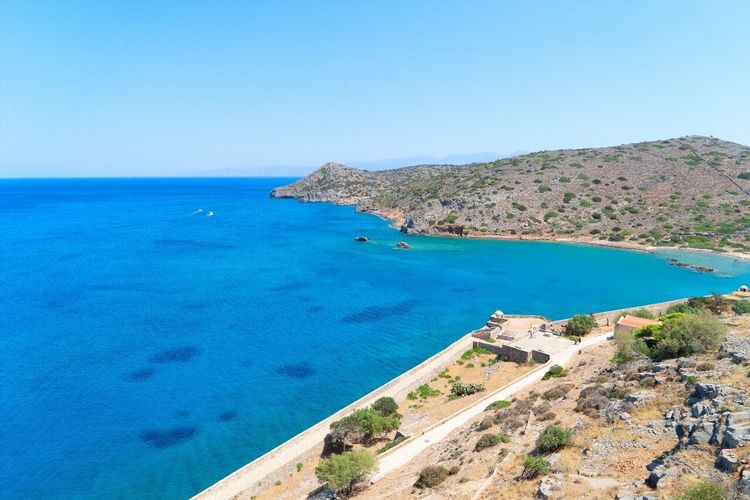
The island fortress of Spinalonga, in the Gulf of Elounda, was the last leper colony in Europe to close its doors, in 1957. It began receiving leprosy patients in 1903. This recent and dramatic history, popularised by Victoria Hislop's novel The Island (2005), lends the place a particular aura that group visits sometimes struggle to preserve.
The fortress itself, built by Venice in 1579, served successively as a bulwark against Ottoman invasion — it held out for 45 years after the fall of Crete in 1669 — before becoming a leper colony whose partially restored ruins tell a surprisingly organised daily life: a church, a bakery, a café, houses with still-painted facades.
Boats depart from Plaka (the shortest crossing, 10 minutes), Elounda, or Agios Nikolaos. Opt for the crossing from Plaka to reach the island earlier than the groups embarking from Elounda.
7. Réthymnon
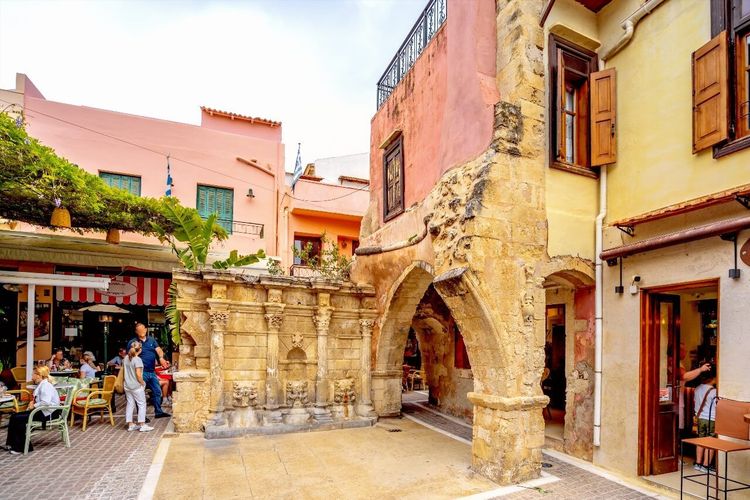
Halfway between Chania and Héraklion, Réthymnon is the third-largest city in Crete and perhaps the most enjoyable to explore without a fixed itinerary. The old town, enclosed by Venetian ramparts, is a maze of cobbled lanes where Ottoman minarets rise between Renaissance fountains and carved wooden balconies.
The Fortezza, built by Venice in the sixteenth century on a hill overlooking the harbour, offers the most complete panorama of the city and the sea. Admission costs 4 euros. The old harbour, more intimate than that of Chania, is the ideal spot to try dakos — the Cretan open sandwich of barley bread, fresh tomatoes, and mizithra cheese — at one of the quayside tavernas.
8. The Héraklion Archaeological Museum
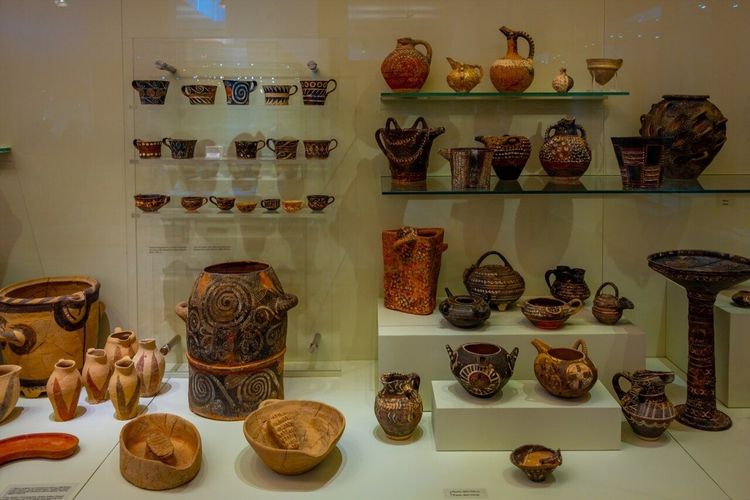
If you visit the Palace of Knossos without stopping at the Héraklion Archaeological Museum (Xanthoudidou 2, 712 02 Héraklion, rated 4.7/5 on Google with 35,266 reviews), you will only see half the picture. This museum, one of the most important in Greece, houses nearly all the objects found at the island's Minoan sites: reconstructed frescoes, alabaster vases, gold jewellery, Linear A tablets (a Minoan script still undeciphered), and the famous Snake Goddess, a faience figurine whose wide-open eyes have inspired generations of art historians.
The museum reopened in 2023 after several years of partial renovation. The new galleries now feature modern museography with LED lighting and bilingual labels. Allow two to three hours for a thorough visit. Full-price admission is 12 euros (reduced rate 6 euros), but a combined ticket with Knossos at 20 euros, valid for three days, remains the most economical option if you plan to visit both.
An entire room is devoted to the decorated sarcophagi of Knossos, whose depictions of ritual sacrifices are irreplaceable documents on Minoan religion. A Ryo audio guide is available to deepen your exploration of the key collections with contextualised commentary.
9. The Lassithi Plateau and the Cave of Zeus
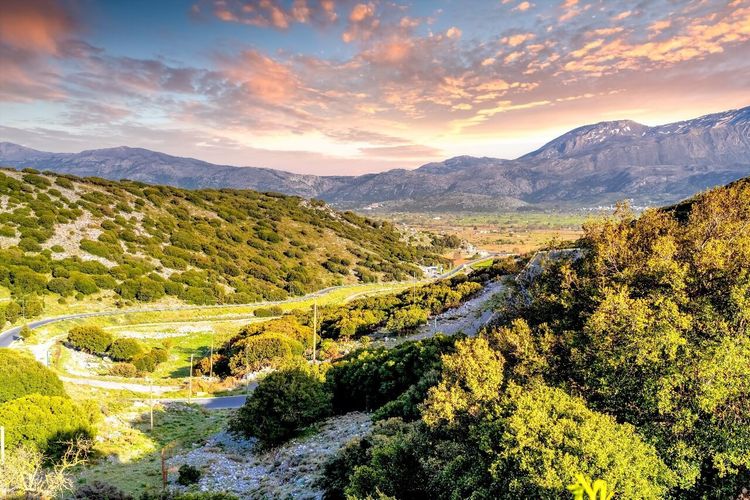
The Lassithi Plateau (Lasithi Plateau, 720 52 Lasithi, rated 4.5/5 on Google with 1,156 reviews) is one of the most singular geographical curiosities in the Mediterranean: a vast highland basin at 840 metres altitude, almost perfectly flat, encircled by the peaks of the Dikti massif. The villages that border it — around twenty in total — live off potato and apple farming and sheep rearing. The old white windmills that once lined the paths have almost all disappeared, replaced by electric pumps, but their silhouette remains ubiquitous on Cretan postcards.
The plateau's main attraction is the Dikteon Cave (also known as the Cave of Zeus), accessible on foot from the village of Psychro via a 500-metre uphill path. According to Greek mythology, it was in this cavern that Rhea hid the newborn Zeus to protect him from the destructive appetite of Cronus. The cave descends 65 metres through millennia-old stalactites and stalagmites to an underground lake that archaeologists excavated in the 1990s, extracting hundreds of bronze votive offerings dating from the Minoan era.
The plateau is best visited by motorbike or hire car; buses from Héraklion are infrequent and their schedules suit a day of exploration poorly. If you have just one day, combine the plateau with lunch in the village of Tzermiado, the largest on the plateau, with its Sunday weekly market, and a descent via the Neapoli road towards the north coast.
Cave entry costs 6 euros and includes a torch rental if you wish to leave the main waymarked path.
10. Matala and Its Cave Dwellings
Matala is a fishing village turned seaside resort on the south coast, 75 kilometres from Héraklion. What sets it apart from most Cretan resorts is the limestone cliff bordering its main beach: riddled with Neolithic rock-cut tombs, it served as a refuge for an international hippie community in the 1960s and 1970s. Joni Mitchell spent the winter of 1970 here, and the song Carey preserves the memory.
Today the caves are listed and closed at night (daytime entry 2 euros), but their presence transforms the setting into something unique in the Aegean: a sandy beach flanked by a cliff honeycombed with dozens of cavities that glow red at sunset. The Matala Festival, held each year in June, revives the hippie spirit with open-air concerts on the beach.
The neighbouring bay, reached on foot in 15 minutes along the path that follows the cliff northward, is called Red Beach, named after the ferrous colour of its rocks. The beach is wilder, without facilities, and less crowded. It is worth the detour for its relative solitude and the quality of its water.
From Matala, the road inland leads to the archaeological site of Phaistos in 25 minutes, a combination
11. Preveli Beach
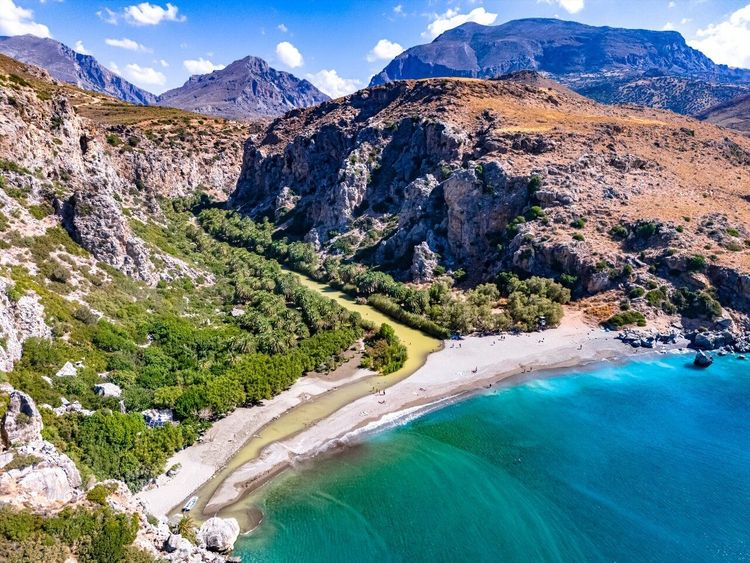
On the south-central coast of Crete, Preveli is a two-sided beach: a river meets the sea between two pebble beaches, creating a micro-habitat of native palm trees that gives the place an unexpectedly tropical feel at this latitude. You can reach it either from Preveli Monastery (30 minutes on foot downhill) or by boat from Plakias.
The monastery itself, perched on a cliff overlooking the Libyan Sea, is one of the most venerated sites of Cretan resistance: during the German occupation (1941–1945), its monks helped several hundred Allied soldiers escape to Egypt by sea. A museum within the monastery displays testimonies and artefacts from that period.
12. Agios Nikolaos and Lake Voulismeni
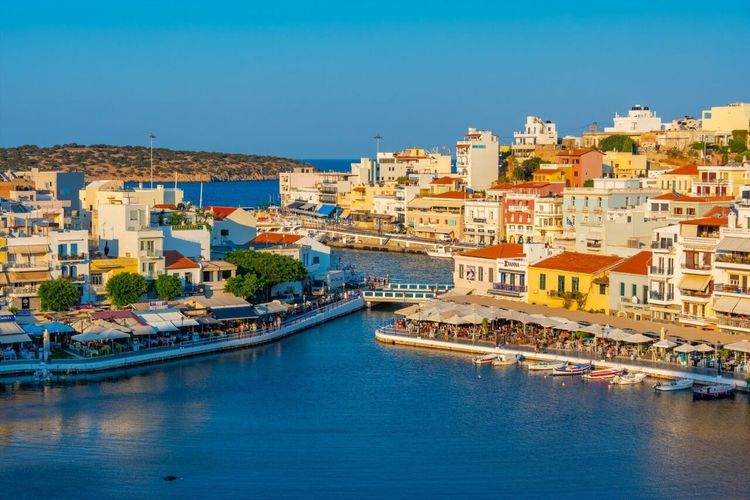
Agios Nikolaos, the administrative capital of the Lasithi regional unit on the east coast, is a town that knows how to surprise. Its most singular feature is its central lake, Voulismeni, connected to the sea by an artificial canal dug in 1870. Long nicknamed the 'bottomless lake', it reportedly reaches around sixty metres in depth according to some measurements, which has fuelled a persistent local legend: the elders of Agios Nikolaos claim it is connected to Atlantis. Its banks are today lined with café terraces where people linger for hours.
The town enjoyed a golden era in the 1970s and 1980s when it was one of the most fashionable destinations for the European jet set. That period left behind a quality hotel infrastructure in and around the town, particularly in Elounda, ten kilometres to the north, considered one of the most luxurious resorts in the Mediterranean, with private-pool villas built on promontories overlooking the gulf.
For travellers not staying in the area, Agios Nikolaos is worth half a day for its evening market on the harbour, its archaeological museum — which houses, among other things, a Minoan burial with the deceased's skull crowned by a gold diadem — and for its atmosphere of an authentic Greek town spared the excesses of mass tourism.
From here, a boat excursion to the island of Pseira or the Dionysades islands offers the chance to discover partly submerged archaeological sites, including Minoan remains engulfed by ancient earthquakes.
13. The Village of Kritsa
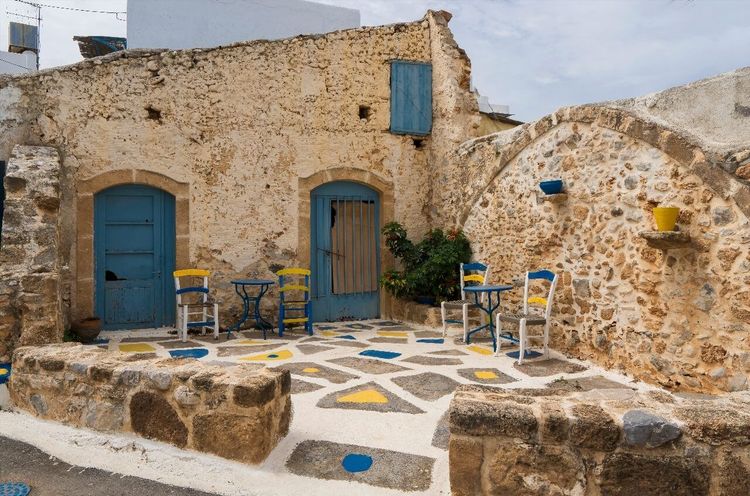
Some 11 kilometres south of Agios Nikolaos, the village of Kritsa is presented in every guidebook as the quintessential Cretan village, and the tourist influx that results in high season sometimes tempers that reputation. It is nonetheless a remarkable place for two reasons.
First, the chapel of Panagia Kera (Our Lady of Kera), two kilometres before the village on the road from Agios Nikolaos: a small thirteenth-century Byzantine church whose interior is entirely covered in fourteenth- and fifteenth-century frescoes depicting scenes from the Apocalypse, the Last Judgement, and the life of the Virgin. It is one of the best-preserved ensembles of Byzantine painting in Crete.
Second, the village itself, with its staircase lanes, geraniums spilling over window boxes, and hand-weaving workshops where women still work at traditional looms. The tablecloths, table runners, and shawls produced here are a world apart from the mass-produced souvenirs sold elsewhere.
14. The Imbros Gorge
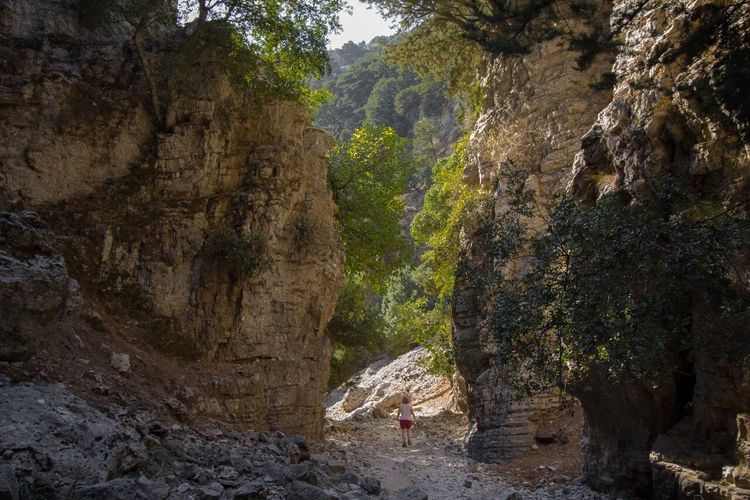
Less famous than Samaria, the Imbros Gorge (Imbros Gorge, 730 11 Sfakia, rated 4.6/5 on Google with 2,149 reviews) is often described by experienced hikers as the most beautiful gorge in Crete, and certainly the most accessible — which accounts for its growing visitor numbers. The trail covers 8 kilometres (versus 16 for Samaria), with a descent of 700 metres and a walking time of 2.5 to 3 hours for a moderately fit walker.
The trail starts from the village of Imbros (750 metres altitude), reachable by bus from Hora Sfakion or by car from Chania (50 kilometres). The gorge gradually deepens between grey-white limestone walls that reach 300 metres in places. The narrowest passage, the Stená — literally 'the narrows' — squeezes the gorge to just 2 metres wide, and the sky appears only as a thin blue line between the walls.
Unlike Samaria, the Imbros Gorge is open year-round and access is very affordable (around 3 euros in season). The gorge floor is filled with plane trees, evergreen chaste trees, and kermes oaks whose roots cling to the limestone rubble. In spring, wild anemones and broom bloom in abundance.
The trail ends at the village of Komitades (250 metres), from where shared taxis take hikers back up to Imbros to collect their vehicles. You can also continue on foot to Hora Sfakion (5 additional kilometres), a coastal village where boats depart for Agia Roumeli (exit of the Samaria Gorge) or for Loutro.
If you only have time for one gorge in Crete, Samaria remains the most grandiose experience. But if you want to combine two days of hiking, Imbros fits perfectly with Samaria in an itinerary that starts from Chania and follows the south coast of the Sfakia — a region of Crete known for its indomitable character and fierce attachment to independence. The Ryo audio guide on the history of the Sfakiotes provides context for this region that resisted every successive occupation, from the Venetians and Ottomans to the Germans.
15. Falassarna Beach
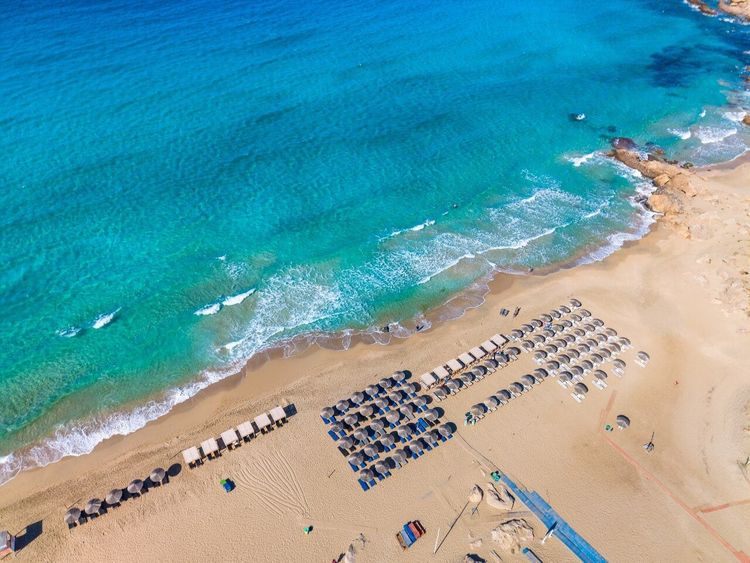
At the north-western tip of Crete, Falassarna beach is one of the longest on the island: 1.5 kilometres of golden sand, gentle to moderate waves, and a sunset regularly cited as one of the most beautiful in Greece by travel websites. The ancient ruins of the city-state of Phalasarna, visible at the northern end of the beach, are evidence that this spot was already considered exceptional 2,500 years ago.
The beach is accessible by car from Chania (60 kilometres, about 1 hour 15 minutes). It has a few tavernas and sun-lounger rental in season, yet remains noticeably less crowded than Elafonissi despite being of comparable quality. It is one of the simplest answers to 'what to do in Crete' when you are looking for a long beach without the Instagram crowds.
16. The Palace of Phaistos
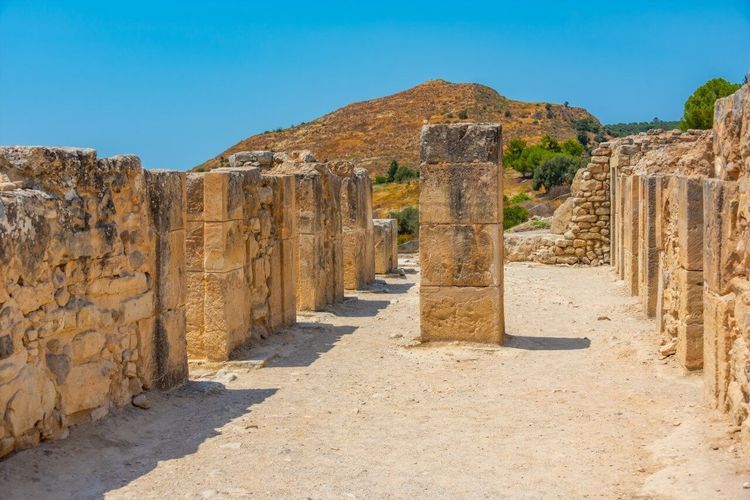
Where Knossos impresses through its scale and reconstructions, the Palace of Phaistos (Phaistos, 702 00 Héraklion, rated 4.3/5 on Google with 7,148 reviews) captivates through the opposite approach: the Italian excavations conducted since 1900 by the Italian Archaeological Mission carried out no reconstruction whatsoever. What you see is exactly what the island has preserved since the end of Minoan palatial civilisation, around 1450 BC, a period often linked to the upheavals caused by the eruption of Thera (Santorini).
The site overlooks the Messara Plain from a hill at 100 metres altitude. The view from the palace's central courtyard takes in the Ida mountains to the north, the Libyan Sea to the south, and the millennia-old olive groves of the plain. It was here, in 1908, that the famous Phaistos Disc was discovered — a clay tablet 16 centimetres in diameter covered in spiral symbols whose decipherment remains one of the great mysteries of world archaeology.
The original disc is on display at the Héraklion Archaeological Museum. On site, a panel marks the exact spot of the discovery. The Ryo audio guide available for the Messara region presents several decipherment hypotheses — some serious, others frankly fanciful — which make the visit far more lively than a standard academic commentary.
17. Sitia and the East Coast
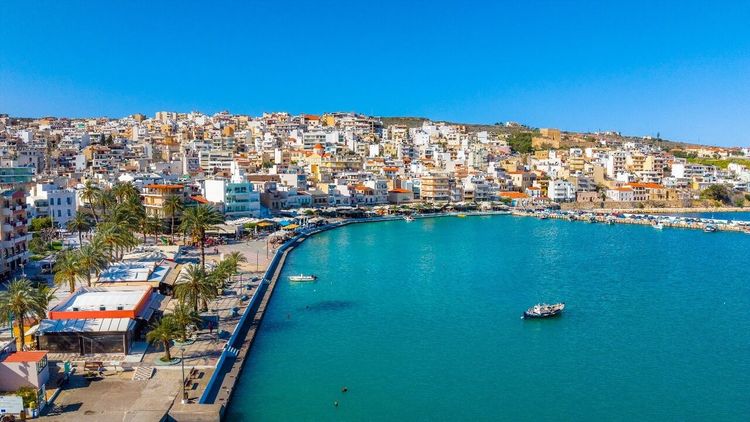
Sitia (Port of Sitia, 723 00 Lasithi, rated 4.2/5 on Google with 25 reviews), at the eastern end of Crete, is the town that rushed travellers overlook — and that is precisely what makes it one of the most pleasant to live in day to day. This town of around 10,000 inhabitants has preserved an authentic local life that mass tourism has yet to reshape: the Saturday morning market is frequented by producers from neighbouring villages, the harbour still sees lorries loaded with raisins depart (the region is one of Europe's leading producers of sultanas), and the seafront cafés are occupied by backgammon players far more than by tourists.
The hinterland around Sitia rewards independent exploration by car. The monastery of Toplou, 18 kilometres to the north-east, is a fortified monastery whose treasury includes one of the finest Cretan icons, the polyptych by painter Ioannis Kornaros (1770), composed of dozens of intricate scenes from the Old and New Testament. Adjacent to the monastery, the Toplou agricultural estate produces award-winning organic olive oil and wine that you can buy directly on site.
The coast between Sitia and Cape Sidero remains one of the least developed in Crete: pebble coves accessible only by boat or after long descents on foot, cliffs where Eleonora's falcons nest on their late-summer passage, a landscape of garrigue and carob trees where the road burrows ever deeper before stopping at Vai.
18. The Vai Palm Forest
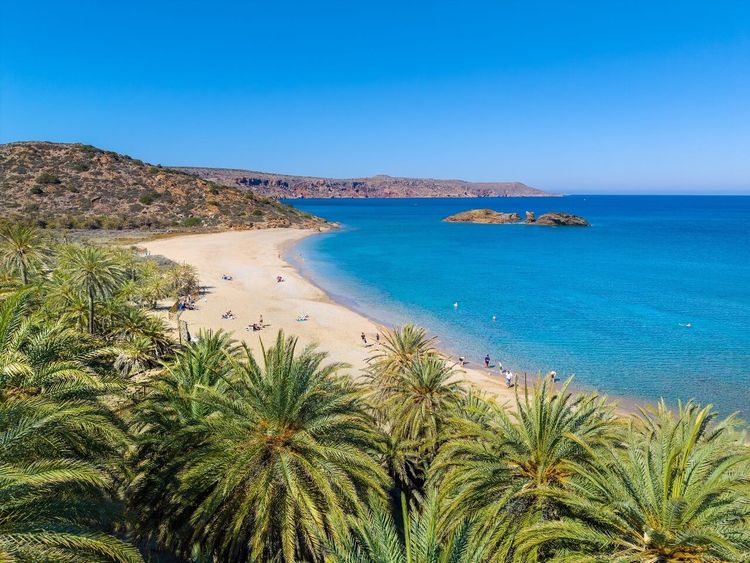
Some 24 kilometres north-east of Sitia, the palm forest of Vai is one of Crete's most frequently photographed natural curiosities. It contains several thousand palm trees (Phoenix theophrasti), a species endemic to the eastern Mediterranean, growing spontaneously on and around a golden sandy beach in a cove sheltered by cliffs.
The origin of this forest has long fuelled legends. The most widespread attributes its creation to date stones discarded by Arab pirates who rested here in the Middle Ages. The reality is older: Phoenix theophrasti is a relict species that has grown on this coastline for millennia, a survivor of a Mediterranean plant cover that existed long before the first Arab incursions.
The forest and beach are classified as a nature reserve. Access to the site is managed (paid car park and shuttle in season) and explanatory panels are placed along the discovery path that runs through the palm grove from the car park to the sea. Picking dates, leaving the marked paths, or placing parasols against the trunks is strictly forbidden.
The beach itself is one of the rare ones in Crete to offer natural shade: the palm canopy casts shadow over the sand in the middle of the day, making it bearable even in August. The water is shallow and clear for 50 metres from the shore.
Plan your visit for when the gates open (8 am in summer) or after 5 pm, once the tour-operator coaches have left. On peak summer days, Vai receives several thousand visitors between 10 am and 3 pm, turning the paradise into a human traffic jam. Outside those hours, the palm grove regains its quiet singularity.
19. The Village of Loutro
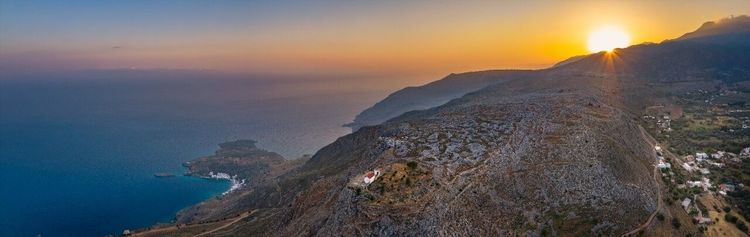
Loutro (Loutro Village, 730 11 Sfakia, rated 4.7/5 on Google with 3K reviews) is one of the few places in Crete that can only be reached on foot or by boat. This fishing village on the south coast of the Sfakia — a handful of permanent residents and a few dozen white houses nestled in a small cove — is accessible from Agia Roumeli (exit of the Samaria Gorge) or from Hora Sfakion by water taxis running several times a day in season.
Its isolation is Loutro's primary appeal: without cars, without a road, without nightclubs, and without fast-food signs, the village has maintained the atmosphere of a Greek hamlet from the 1970s that those who find it tend to keep to themselves. The two or three tavernas serve fish caught that same morning, accompanied by home-baked bread and a carafe of local white wine at prices that come as a pleasant surprise.
Swimming is excellent in the main cove (crystal-clear water, white pebble floor) and in several inlets reachable on foot from the village, including Sweetwater Beach, so named because freshwater springs filter through the beach pebbles, creating a sensation of fresh and salt water mixing underfoot. The E4 long-distance trail crossing Crete from east to west passes through Loutro, making it a natural stop for hikers walking the Sfakia coast over several days.
Plan to stay at least one night: the boats stop running in the late afternoon, and Loutro in the evening, with its lights reflecting in the harbour, is a spectacle in itself that a half-day visit simply does not allow you to appreciate.
20. Héraklion: Minoan Heritage and Harbour Life
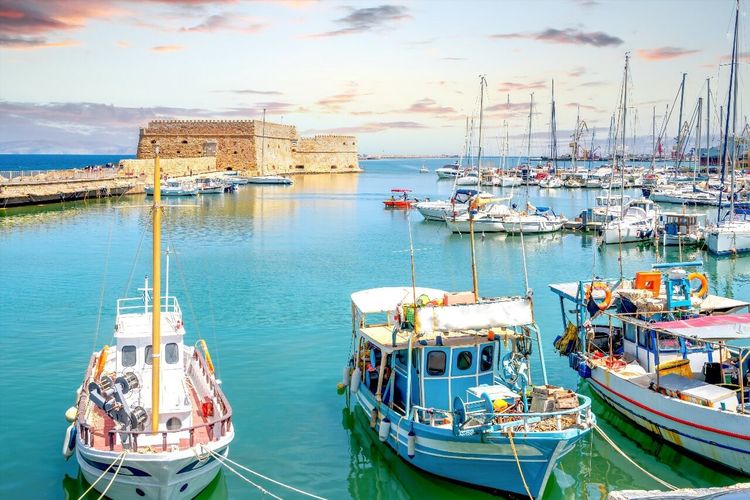
Héraklion is the capital and largest city of Crete, with around 175,000 inhabitants in its urban area, and it is often underestimated by travellers who pass through only between the airport and their hotels. That is a mistake. The city combines exceptional historical density with a nightlife and cultural scene that holds its own against any major Mediterranean city.
The historic centre is anchored by several remarkable Venetian monuments. The Morosini Fountain (1628), on Lions Square, is surrounded by cafés and shops in a setting that would put many an Italian piazza to shame. The Venetian walls, among the best-preserved in Europe, several kilometres long and punctuated by massive bastions, can largely be walked along a rampart path open to the public. From the Martinengo bastion, you can see the tomb of novelist Nikos Kazantzakis (Zorba the Greek, The Last Temptation of Christ) — a simple marble slab engraved with the words: I hope for nothing. I fear nothing. I am free.
The city's harbour is dominated by the Koules Fortress (Rocca al Mare), built by Venice in the sixteenth century and restored in 2015. The interior hosts temporary exhibitions; the rooftop terrace offers a striking view over the modern harbour and the Sea of Crete.
Héraklion also holds some fine gastronomic surprises. The 1866 Market (Odos 1866, 712 01 Héraklion, rated 4.4/5 on Google with 1,126 reviews) (street of the same name) is one of the liveliest covered markets in Crete: dried aromatic herbs, mountain tea, thyme honey, graviera cheese, apaki sausages smoked with savory... Milatou Street, a short walk from the market, concentrates the city's best small restaurants — often without an English sign, frequented by locals, where a full meal with a carafe of wine costs 15–18 euros per person.
Our Héraklion audio-guided tour, available on the Ryo app, runs 1 hour 50 and covers the ramparts, the Morosini Fountain, the Koules harbour fortress, and the shopping streets of the historic centre, with stories about Cretan resistance during the Ottoman occupation and the Second World War.
FAQ
What is the best time to visit Crete?
April–May and September–October are the ideal months: temperatures are comfortable (25–28 °C), the sea is warm enough for swimming, archaeological sites are less crowded, and hotel rates drop by 20 to 40 % compared to the July–August peak. July and August remain manageable if you avoid the hottest hours (noon–4 pm) and book popular sites early in the morning. Crete in winter is cold and wet inland, but the coasts remain pleasant for cultural stays.
How many days do you need to visit Crete?
One week is the minimum to cover the highlights of the west (Chania, Balos, Samaria Gorge) and the centre (Héraklion, Knossos). Ten days allow you to add the east coast and the Lassithi Plateau. To explore the island seriously, with hiking and detours through mountain villages, plan for two weeks. Many travellers regret not having allowed more time — Crete is larger than it appears on maps.
Do you need to rent a car in Crete?
Yes, in the vast majority of cases. Public transport (KTEL buses) covers the main routes between large towns, but the most spectacular sites — the Balos lagoon, the Lassithi Plateau, Matala, the Vai palm forest — are very difficult to reach without a car. Rental rates are reasonable (from 25–35 euros per day for a small city car in May or October), and Cretan roads, well maintained on main routes, turn into picturesque winding tracks in the hinterland.
Which Cretan dishes should you absolutely try?
Cretan cuisine is one of the most celebrated in Greece, and it is itself a compelling answer to the question of what to do in Crete. Start with dakos — dried barley bread topped with grated tomato, olive oil, and mizithra cheese. Also try kalitsounia (small pastries filled with fresh cheese or wild herbs, sometimes sweetened with honey), apaki (pork marinated in vinegar and then smoked), chochlioi boubouristi snails sautéed with rosemary, and aged graviera cheese from the mountains. Everything is rounded off with raki (the Cretan marc spirit) at the end of a meal. For wine, the local Vidiano and Kotsifali grape varieties are well worth discovering at tavernas with a Cretan wine list.
Can you hike the Samaria Gorge independently?
Yes, no guide is required. The trail is waymarked, the national park has rangers on duty in season and drinking-water points along the route. You should bring hiking boots (no sandals), at least two litres of water per person, a snack, and sunscreen. The return logistics from Agia Roumeli (boat + bus) must be organised in advance, or you can plan to spend the night there at one of the two guesthouses in the village. The trail closes from mid-October to mid-April.
Héraklion or Chania: where should you stay?
Chania is generally preferred for a stay that values atmosphere and neighbourhood life: its Venetian harbour, narrow lanes, and gastronomy make it a particularly pleasant city to live in. Héraklion is more central geographically, better connected for transport (main airport, ferry to Piraeus), and unmissable for the archaeological museum and Knossos. If you are mainly visiting the west and centre, choose Chania. If you are exploring the east and the Lassithi Plateau, Héraklion is more convenient.
Conclusion
Crete is not an island that can be summed up in a few days or a few lines. Across the 260 kilometres that stretch from east to west — from snow-capped peaks still white in May to the near-virgin coves of the south — it offers a diversity of landscapes, histories, and flavours that justifies returning again and again, each trip uncovering a different facet of this island that has been, at successive periods, the cradle of the first great European civilisation, a commercial crossroads between three continents, and a territory of resistance whose people have kept their reputation intact.
To prepare your exploration of the sites of Héraklion and central Crete with quality historical commentary, the Ryo audio guide offers offline-accessible audio tours that ideally complement a visit to the places featured in this article. The Ryo app accompanies you on the ground with anecdotes and context that turn a walk into a genuine journey through time.