
Créé par Emilie, le 4 juin 2026
Votre guide Ryo
Glaciers & Ice Caves Iceland: Memorable Experiences
© Shutterstock
Iceland, land of contrasts between fire and ice, offers unique experiences in the world to explore its majestic glaciers and crystalline ice caves. From artificial tunnels of Langjökull to natural caves of Vatnajökull, through glacier hiking and ice climbing, discover the most memorable adventures this Nordic island has to offer. Whether you're an adrenaline seeker or a simple contemplator, Icelandic glaciers promise you unforgettable memories.
1. Exploring the natural ice caves of Vatnajökull glacier
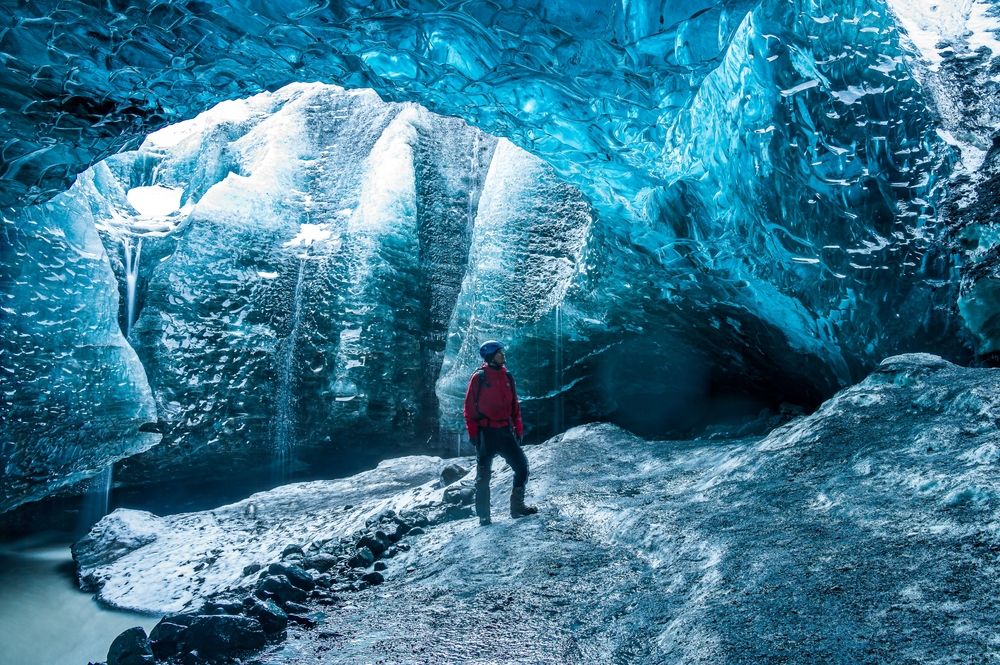
The Visit Reykjavik is often the starting point towards glacial wonders, but it's at the heart of Vatnajökull that the most spectacular ice caves in Iceland are hidden. Europe's largest glacier houses natural cavities with supernatural colors, notably the famous Crystal Cave near Jökulsárlón.
This crystalline ice cave, accessible only from November to March, offers a dazzling spectacle with its walls of deep translucent blue. The experience begins with a Super Jeep journey from the glacial lagoon of Jökulsárlón, followed by a walk equipped with crampons and helmets. Inside, the millennial ice reveals its secrets: trapped air bubbles, volcanic ash strata and unique crystalline formations.
Download the audio-guided circuit to discover Reykjavik on foot and independently
Before exploring Iceland's glaciers, discover the capital with our audio-guided itinerary of Reykjavik. This 7.3 km route takes you through 20 unmissable places of interest, from the emblematic Hallgrimskirkja church to the picturesque Tjörnin lake, passing by the Harpa cultural center. A perfect preamble before your glacial adventure!
Certified guides evaluate access conditions daily, as these caves constantly evolve. Some disappear, others form, creating an underground landscape in perpetual motion. This ephemeral characteristic makes each visit unique and reinforces the privileged aspect of the experience.
2. Discovering the artificial ice cave of Langjökull
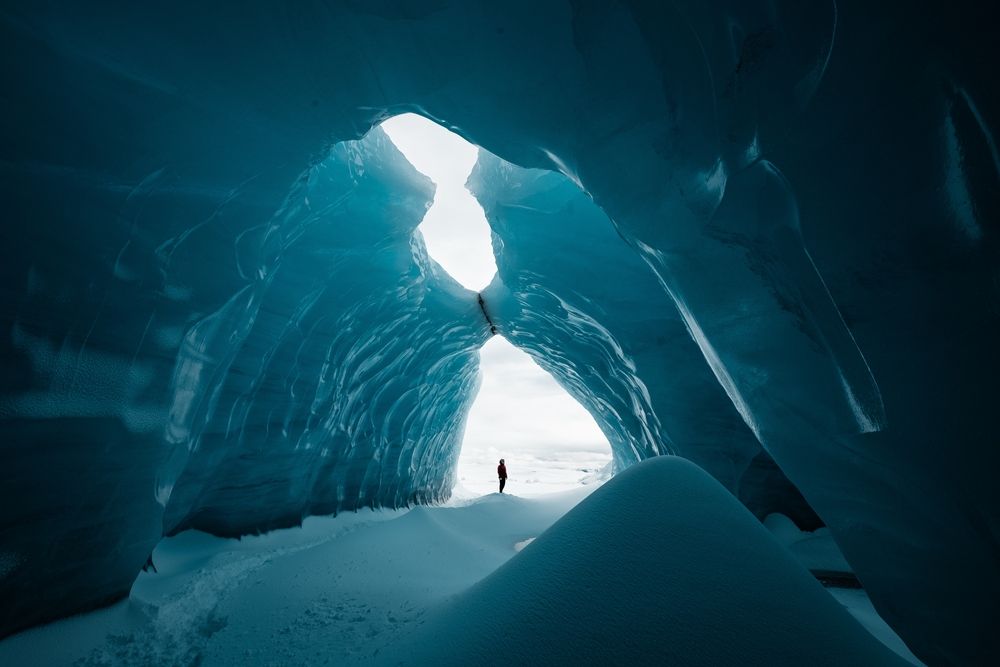
Unlike seasonal natural caves, the artificial ice tunnel of Langjökull offers an experience accessible year-round. Located at 1,200 meters altitude, this unique project in the world allows penetrating the heart of Iceland's second largest glacier via a system of tunnels carved directly into the ice.
The adventure begins with a spectacular 8×8 Super Truck journey from Húsafell, crossing lunar landscapes of ice and volcanic rock. Once at the tunnel entrance, you enter a fairy-tale underground world where blue ice sparkles under artificial lighting. The walls reveal the glacier's history through its millennial layers, creating a true natural history book in the open.
This 'Into the Glacier' experience is particularly suitable for families and people wishing to discover the glacial universe without weather constraints. The underground route extends for several hundred meters, with natural exhibition halls and exceptional viewpoints on the glacier's internal structure.
3. Venturing into Katla's black ice cave
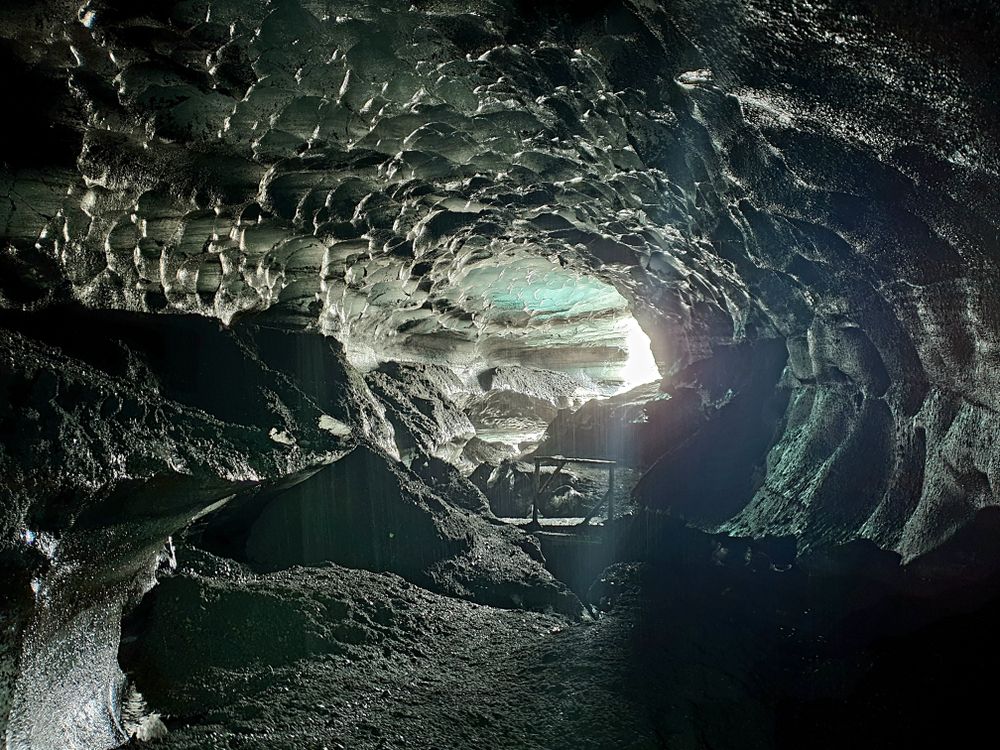
Katla's ice cave offers a radically different experience with its 'dragon glass' formations – a striking mixture of pure ice and black volcanic ash. Located under Mýrdalsjökull glacier, this natural cave draws its unique character from its proximity to Katla volcano, one of Iceland's most active.
The excursion usually begins from Vík í Mýrdal, accessible via Route 1. The Super Jeep journey through black volcanic sand landscapes is already an adventure in itself. Inside the cave, the contrast is striking: black streaks of volcanic ash mix with crystalline ice, creating abstract patterns of troubling beauty.
This cave has the advantage of being accessible much of the year, generally from May to October, offering a summer alternative to Vatnajökull caves. The experience combines moderate hiking, underground exploration and geological discovery, all in an active volcanic environment that reminds of Iceland's telluric power.
4. Experiencing ice climbing at Sólheimajökull
For thrill seekers, ice climbing at Sólheimajökull glacier constitutes one of Iceland's most adrenaline-filled experiences. This glacial tongue of Mýrdalsjökull, easily accessible from Route 1, offers ideal conditions to initiate in this spectacular discipline.
The adventure begins with complete equipment: helmet, harness, crampons and ice axes. Certified guides teach basic techniques before accompanying participants on ice walls. Progress is gradual, from gentle slopes to more challenging vertical walls, allowing everyone to find their comfort level.
Sólheimajökull glacier fascinates with its diversity: deep crevasses, unstable seracs, glacial moulins and ice formations with hues ranging from pure white to deep blue. This color palette is explained by ice density and age, creating a unique playground for climbing. The most experienced can tackle vertical formations, while beginners appreciate the progression on accessible slopes.
5. Hiking on Skaftafell glacier
Skaftafell National Park, gateway to Vatnajökull, offers glacier hikes adapted to all levels. This experience allows grasping the immensity of Europe's largest glacier while discovering its exceptional geological characteristics.
Equipped with crampons and guided by experienced guides, hikers evolve on constantly changing terrain. The route reveals secrets of glacial formation: spectacular crevasses, turquoise blue moulins, volcanic ash streaks and millennial ice formations. Each step on this living surface reminds of the power of natural forces at work.
Hikes vary from 3 to 5 hours depending on the level chosen. The 'Blue Ice' experience pushes deeper into the glacier, revealing zones where compressed ice reaches sapphire blue hues of striking intensity. These colors result from extreme compression that expels air bubbles, allowing light to penetrate deeper into the crystalline structure.
6. Exploring glacial expanses by snowmobile
Glacier snowmobiling offers a unique perspective to discover the immensity of Iceland's ice caps. Accessible mainly on Langjökull and Mýrdalsjökull glaciers, this activity combines adrenaline and contemplation of polar landscapes.
On Langjökull, the experience begins from Gullfoss base, allowing combination of Golden Circle visit with glacial adventure. The snowmobile ride reveals white expanses as far as the eye can see, punctuated by spectacular geological formations and panoramic views of surrounding mountains. Guides offer photographic stops in grandiose settings where polar silence reigns supreme.
The adventure on Mýrdalsjökull from Vík offers a striking contrast with its black volcanic landscapes contrasting with the glacier's immaculate whiteness. This experience allows grasping Iceland's duality between fire and ice, with exceptional panoramas of the south coast and Atlantic Ocean.
7. Discovering Jökulsárlón lagoon icebergs
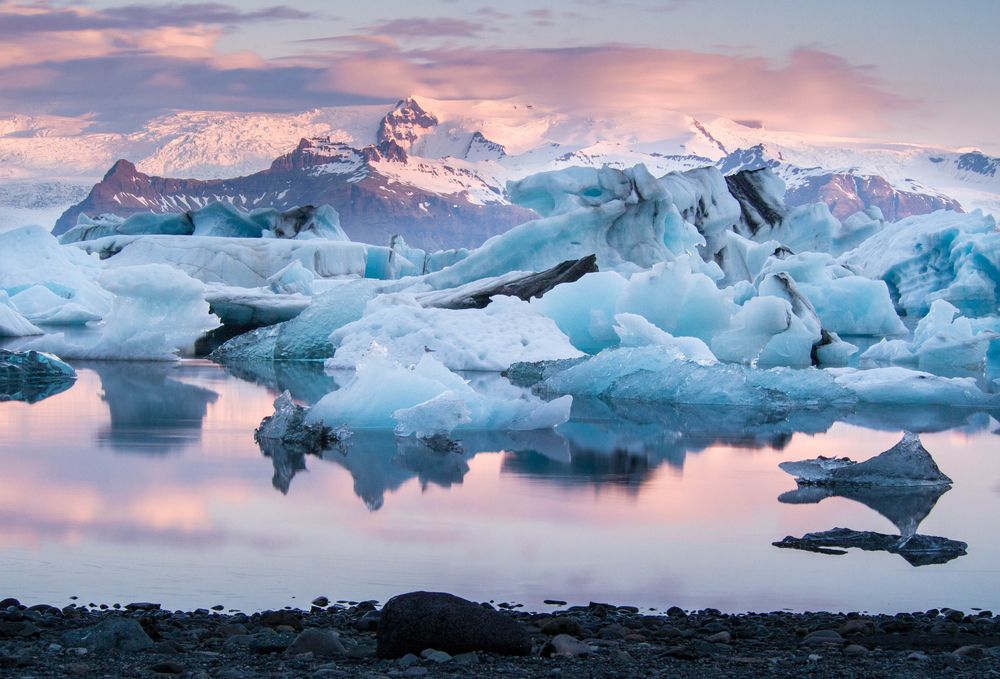
While not strictly constituting active glacial exploration, Jökulsárlón lagoon offers an exceptional glacial spectacle accessible to all. This proglacial lagoon, formed by Breiðamerkurjökull glacier melting, presents a permanent ballet of icebergs with varied shapes and colors.
Exploration can be done on foot along the shores, but the amphibious boat experience reveals all the site's magic. Navigating between icebergs allows observing their complex structures: cavities sculpted by waves, colored streaks witnessing their formation, and this chromatic palette ranging from snow white to electric blue.
The adjacent Diamond Beach perfectly complements this discovery. On this black volcanic sand beach, stranded icebergs create a striking visual contrast, particularly spectacular at sunrise and sunset. This juxtaposition between millennial ice and volcanic sand perfectly summarizes Iceland's unique geological identity.
8. Participating in specialized photography expeditions
To immortalize these exceptional glacial experiences, specialized photography expeditions combine exploration and technical learning. Led by professional photographers and glacial guides, these tours offer privileged access to the most photogenic sites.
These expeditions favor golden and blue hours, moments when Nordic light sublimates glacial formations. Participants learn techniques specific to photography in glacial environment: managing extreme contrasts, protecting equipment from humidity and cold, and composition in minimalist landscapes.
The advantage of these tours lies in their flexibility and access to secret locations. Photography guides know less frequented caves, exceptional viewing angles and optimal conditions to capture glacial magic. Some expeditions even include night sessions to photograph northern lights above glaciers, creating compositions of supernatural beauty.
9. Combining glacial exploration and wildlife observation
Iceland's glacial environments host remarkably adapted fauna to extreme conditions. Combining glacial exploration and wildlife observation considerably enriches the experience, particularly around Jökulsárlón and in the southeast fjords.
The seals regularly frequent the glacial lagoon, resting on icebergs or hunting in fish-rich waters. Observation is done with total respect for these marine mammals, from shores or during boat excursions. Their presence adds a living dimension to this mineral landscape.
The arctic terns also nest in the region during boreal summer. These migratory birds, champions of intercontinental journeys, evolve gracefully above icebergs. The skuas and other seabirds complete this unique ornithological tableau, creating a natural symphony in these ice landscapes.
10. Planning according to seasons to optimize experience
Timing constitutes a crucial element to optimize exploration of Iceland's glaciers and ice caves. Each season offers distinct experiences, with specific advantages and constraints that should be known to plan your trip.
Winter (November to March) represents the high season for natural ice caves. Negative temperatures stabilize glacial formations, allowing safe access to Vatnajökull cavities. This period also offers the best chances to observe northern lights above glaciers, creating unforgettable magical moments.
Summer (June to August) favors surface activities: glacier hiking, ice climbing and snowmobiling. Long days (up to 20 hours of light) allow extended explorations, while milder weather conditions facilitate access to remote sites. It's also the optimal season to combine glacial exploration and arctic wildlife observation.
The intermediate seasons (April-May and September-October) offer interesting compromises: generally stable weather, moderate tourist affluence and possibility of access to certain caves depending on conditions. These periods particularly suit photographers seeking exceptional lighting conditions.
In conclusion, exploring Iceland's glaciers and ice caves constitutes a transformative experience that reveals arctic nature's power and beauty. Whether you choose ice climbing adrenaline, contemplation in Langjökull tunnels, or wonder facing Vatnajökull's crystalline formations, each glacial adventure forges imperishable memories. Don't forget to begin your Icelandic journey with the guided discovery of Reykjavik, gateway to these exceptional natural wonders. Iceland awaits you to live these unique experiences in the world, where each step on millennial ice connects you to our planet's geological history.
Frequently asked questions
What is the best time to visit ice caves in Iceland?
The best time to visit natural ice caves extends from November to March, when cold temperatures stabilize glacial formations. For artificial caves like Langjökull's or Katla cave, access is possible year-round.
What equipment is necessary to explore glaciers?
Safety equipment (crampons, ice axes, helmets, harnesses) is generally provided by tour operators. It's recommended to wear warm waterproof clothing, robust hiking shoes and bring gloves, hat and sunglasses.
Are glacial activities accessible to beginners?
Yes, most activities offer beginner levels with professional supervision. Basic glacier hiking, cave visits and artificial tunnels suit novices. Ice climbing requires minimal physical condition but remains accessible with instruction.
How much do glacier excursions in Iceland cost?
Prices vary by activity: €150-200 for an ice cave visit, €100-150 for glacier hiking, €200-300 for ice climbing, and €300-400 for snowmobile expeditions. These rates generally include guide, equipment and transport from meeting points.