
Créé par Emilie, le 20 juin 2026
Votre guide Ryo
Halloween Around the World: Traditions and Celebrations
© Shutterstock
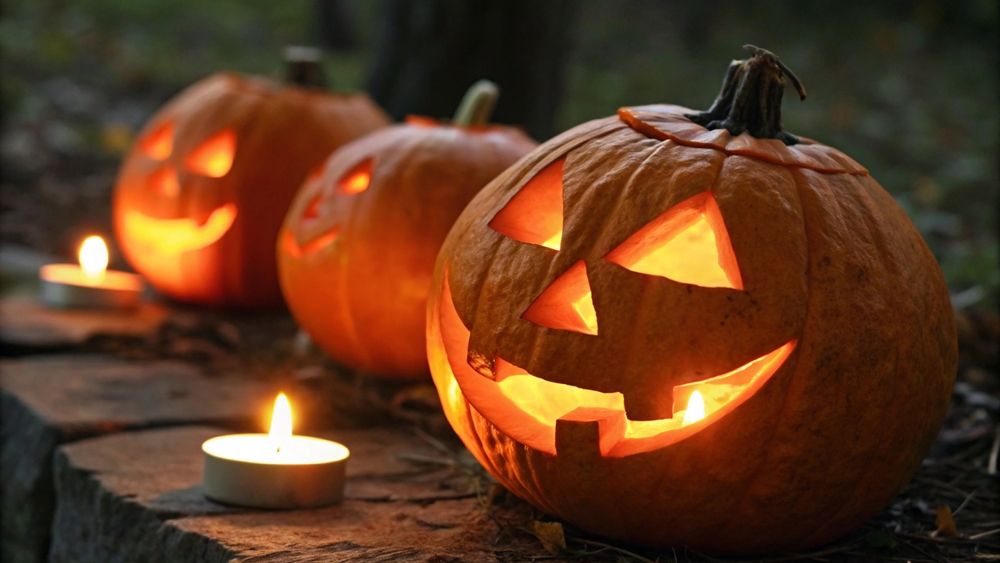
Every year, October 31st marks the return of Halloween, this mysterious festival that blends fright with festivities. While today this celebration is globally known for its carved pumpkins, scary costumes and famous trick-or-treating, few people know that Halloween comes in multiple forms depending on countries and cultures. From Ireland, the birthplace of the Celtic tradition of Samhain, to Mexico with its vibrant Día de los Muertos, passing through Transylvania and its vampiric legends, each destination celebrates in its own way the thin boundary between the world of the living and that of the dead. Let's journey together to discover these Halloween traditions around the world, which remind us that this festival extends far beyond American borders.
1. Ireland: The Birthplace of Halloween and the Samhain Tradition
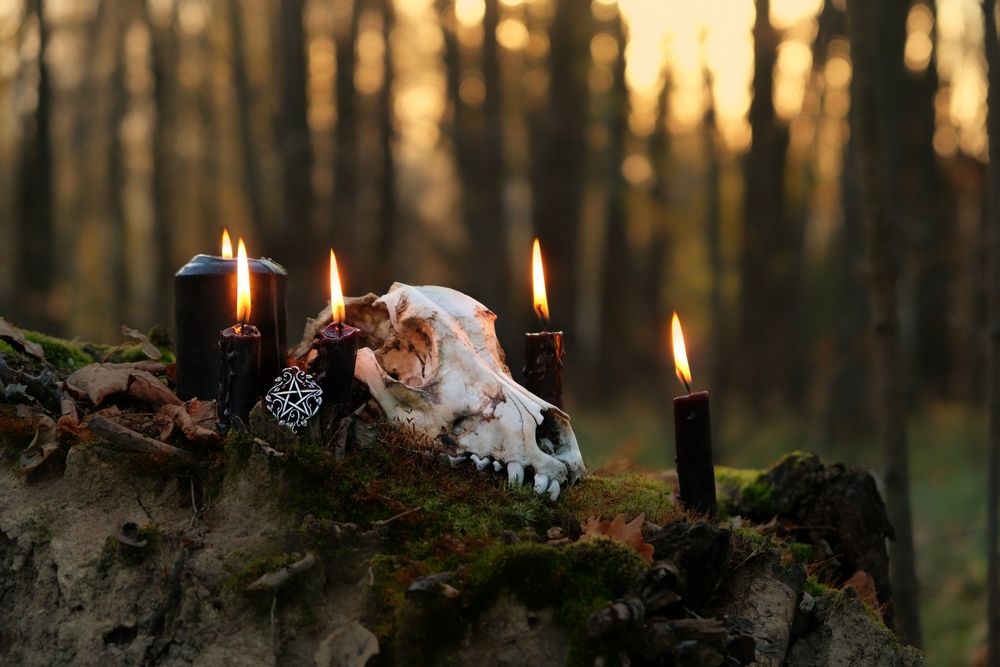
Ireland holds the title of Halloween's founding country. This festival finds its roots in Samhain, a Celtic celebration over 2500 years old that marked the end of summer and the beginning of the dark season. According to Celtic beliefs, this night of October 31st allowed spirits to cross the boundary between the world of the living and that of the dead. To protect themselves from these malevolent entities, the Irish lit great bonfires and disguised themselves as frightening creatures.
Even today, Halloween traditions in Ireland perpetuate this ancestral heritage. In Dublin, the capital, the spectacular Samhain Halloween Parade takes place every year, a colorful procession where ghosts, witches, zombies and goblins invade the streets. But it's in Derry, Northern Ireland, that we find Europe's most impressive celebrations. This city has established itself as the essential destination for celebrating Halloween: street carnivals, monumental bonfires, spectacular fireworks and terrifying animations attract thousands of visitors from around the world.
The Irish tradition of barmbrack also deserves mention. This fruit cake traditionally prepared for Halloween hides small objects, each with its own meaning: a ring predicts marriage, a coin announces wealth, while a piece of cloth suggests poverty. This ancient custom of divination remains an integral part of Halloween celebrations throughout Ireland.
2. Mexico: Día de los Muertos, A Joyful Celebration of Life
In Mexico, Halloween takes a radically different turn with Día de los Muertos (Day of the Dead), which takes place on November 1st and 2nd. Unlike the macabre and frightening vision of Halloween in Anglo-Saxon countries, this Mexican festival is a true celebration of life and a joyful tribute to the deceased. Far from being a period of mourning, Día de los Muertos represents a moment of communion between the living and the dead, where it's believed that the souls of the departed return to visit their loved ones.
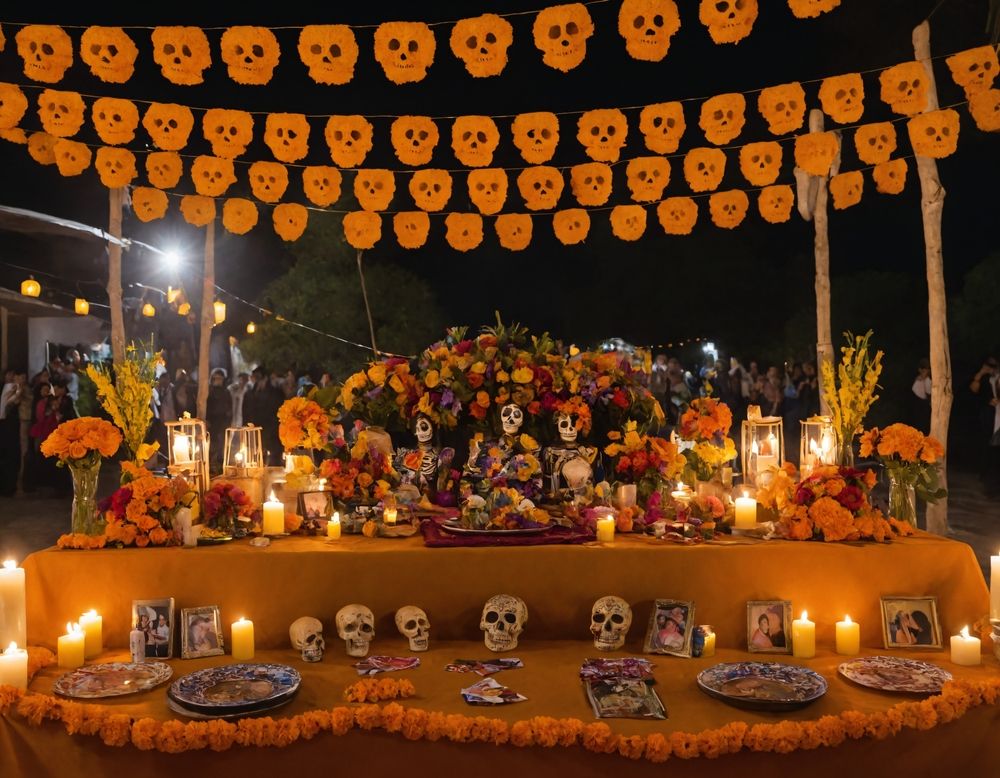
The streets of Mexico City and throughout the country are adorned with bright colors. Families create ofrendas (altars) richly decorated in their homes and on graves, adorned with cempasúchil (orange marigolds), candles, photographs of the deceased, and their favorite foods. The famous colorful calaveras (sugar skulls) and pan de muerto (bread of the dead) are specially prepared for the occasion.
Mexicans wear sophisticated skeleton makeup, called catrinas, and participate in impressive parades. In San Miguel de Allende, north of Mexico City, the Festival La Calaca offers an entire week of festivities with nocturnal parades, art exhibitions, traditional music and culinary tastings. This Mexican tradition, recognized as UNESCO's intangible cultural heritage, perfectly illustrates how Halloween transforms into a unique festival according to cultures.
3. United States: Modern Halloween and Its Iconic Traditions
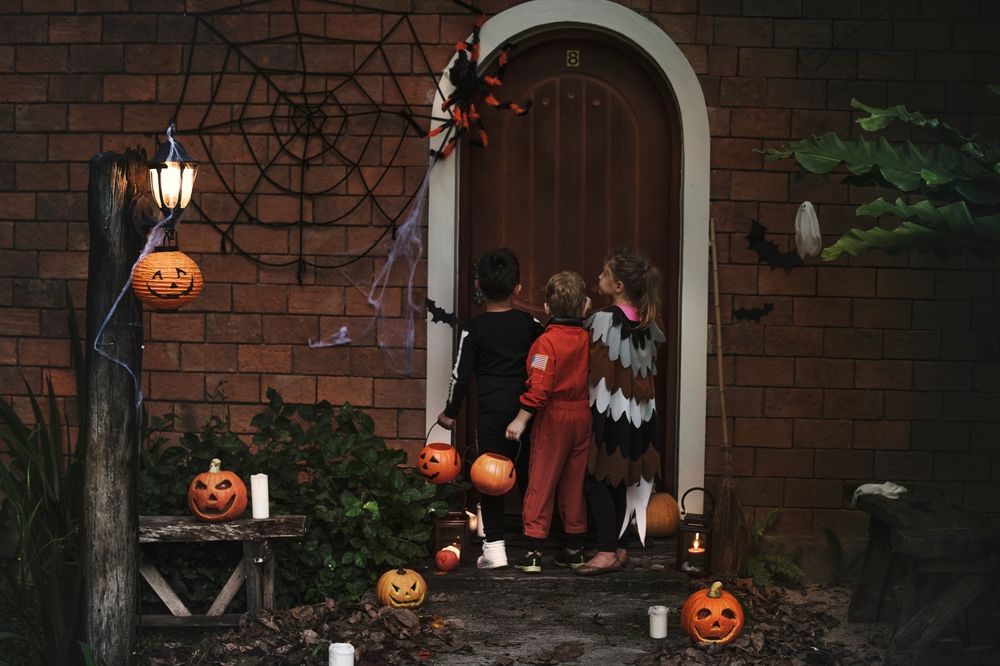
The United States has transformed Halloween into a true cultural and commercial phenomenon. It was in the 19th century that Irish and Scottish immigrants brought this tradition to American soil, where it evolved to become the festival we know today. The famous "Trick or Treat" has become the very symbol of American Halloween: millions of costumed children roam neighborhoods on the evening of October 31st to collect treats.
Americans compete in creativity to decorate their houses with carved pumpkins (jack-o'-lanterns), spider webs, ghosts and skeletons. Some residential neighborhoods transform into true tourist attractions with their elaborate decorations. Professional haunted houses offer terrifying courses for thrill-seekers.
In New Orleans, Louisiana, Halloween takes on a particularly mystical dimension with its voodoo roots. The Voodoo Music Experience, held shortly before Halloween, attracts world-renowned artists. French Quarter bars offer traditional voodoo music, while esoteric object markets set up in streets decorated in macabre fashion. This unique atmosphere makes New Orleans one of the most sought-after destinations for celebrating Halloween in the United States.
4. Transylvania: On Dracula's Trail in Romania
What better way to celebrate Halloween than to travel to Transylvania, the homeland of the famous Vlad the Impaler, who inspired the character of Dracula? The city of Sighișoara, Romania, birthplace of the Wallachian prince in the 15th century, offers a perfect medieval setting for authentic and thrilling Halloween celebrations.
As Halloween approaches, the cobblestone streets of this fortified city are adorned with macabre decorations. Medieval festivals are organized in surrounding castles, recreating the atmosphere of ancient times with period costumes, traditional music and banquets. The Vampire Festival attracts visitors from around the world, who come to encounter witches, vampires and fantastic creatures freely roaming the dark alleys of the old town.
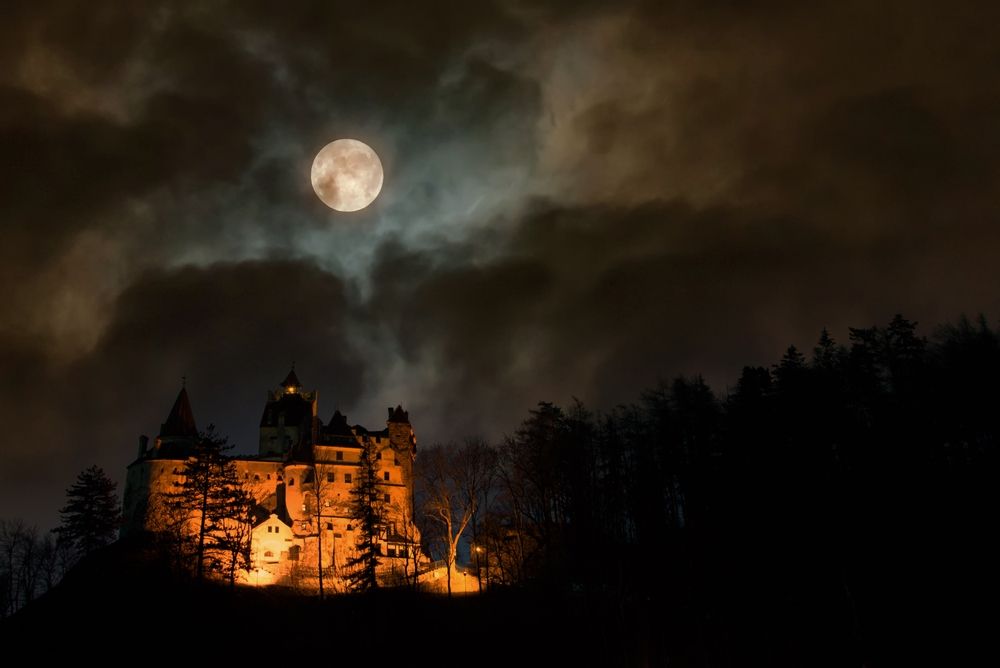
Not far from there, Bran Castle, often associated with the Dracula myth, offers special nocturnal visits for Halloween. The Gothic atmosphere of this fortress perched on a rocky promontory, with its imposing towers and secret passages, provides an unforgettable experience for vampire story enthusiasts. Transylvania thus transforms literary legend into a unique tourist experience where history, folklore and Halloween meet.
5. England: Ancestral Traditions and Modern Celebrations
England, like Ireland and Scotland, possesses Halloween traditions deeply rooted in its history. The Anglo-Saxon feast of All Saints' Day merges here with pagan customs to create unique celebrations. A particularly interesting ancient tradition is that of "soul cakes": formerly, the poor would go door to door on November 2nd to receive these small cakes in exchange for prayers for the family's deceased. This custom is considered the ancestor of modern "Trick or Treat".
In London, Halloween is celebrated with splendor. The London Ghost Festival offers guided tours of the capital's reputedly haunted places: the Tower of London with its royal ghosts, the dark alleys of Whitechapel where Jack the Ripper prowled, or the old West End theaters and their legendary specters. These nocturnal routes allow discovering London's macabre history from a different angle.
English pubs also play an important role in the festivities, organizing costume parties and costume contests. In the English countryside, particularly in the Yorkshire and Lancashire regions, the ancient tradition of "guising" is still perpetuated, where children dress up and offer small performances (songs, poems, magic tricks) in exchange for treats.
6. Scotland: Guising and Celtic Traditions
Scotland also claims a strong link to Halloween's origins. The tradition of "guising" is particularly vibrant there: unlike simple American "Trick or Treat", Scottish children must earn their treats by presenting a small performance (song, joke, poem or magic trick) at each door. This custom dates back to ancient Samhain celebrations and encourages creativity in the youngest.
Scots also practice traditional divinatory games during Halloween. "Dooking for apples" (apple bobbing) consists of catching apples floating in a water basin, using only the mouth. There's also the "treacle scones" game, where scones covered with molasses are hung from strings, and participants must eat them without using their hands.
In Edinburgh, the Scottish capital organizes spectacular festivities every year. The city, already renowned for its ghost stories and Gothic atmosphere, lends itself perfectly to Halloween celebrations. Torchlight processions illuminate the cobblestone streets of the old town, while Edinburgh Castle offers special nocturnal visits recounting the most terrifying legends of Scottish history.
7. Philippines: Pangangaluluwa and Catholic Tradition
In the Philippines, a country with strong Catholic tradition, Halloween manifests through the custom of Pangangaluluwa, which takes place during the night of October 31st to November 1st. This ancestral practice combines pre-Hispanic Philippine beliefs with Spanish Catholicism introduced during colonization.
During Pangangaluluwa, groups of children and adults, often disguised as angels or souls from purgatory, go from house to house singing traditional songs in Tagalog. They ask inhabitants to pray for the souls of the deceased and receive in return treats, food or money. This tradition recalls both Western "Trick or Treat" and the ancient English custom of "soul cakes".
Filipinos also massively visit cemeteries during this period. November 1st (All Saints' Day) and November 2nd (All Souls' Day) are public holidays when families gather on their loved ones' graves, clean them, decorate them with flowers and candles, and sometimes spend the entire night at the cemetery in an atmosphere that is both contemplative and festive.
8. China: The Ghost Festival and Ancestral Traditions
In China, while Halloween in the Western sense is not traditionally celebrated, the country has its own festival of the dead called Zhongyuan Jie or Ghost Festival, which takes place on the 15th day of the seventh lunar month (usually in August). According to Taoist and Buddhist beliefs, during this period called "the month of ghosts", the gates of hell open and the spirits of ancestors as well as tormented souls return to earth.
To appease these spirits and honor the deceased, Chinese perform several rituals: they prepare elaborate meals that they symbolically offer to the dead, burn incense and paper money (called "ghost money"), and organize religious ceremonies. Floating lanterns are lit and placed on rivers and lakes to guide lost souls to the afterlife.
In Hong Kong, the Ghost Festival gives rise to particularly spectacular celebrations. Traditional Chinese operas are organized outdoors, with the front row of seats left empty for spirits. Impressive fireworks illuminate Victoria Harbor, and cultural exhibitions explaining ancestral traditions can be witnessed. Even though this festival doesn't coincide with Halloween, it shares the same theme of the boundary between the world of the living and that of the dead.
9. Japan: Obon and Halloween's Growing Influence
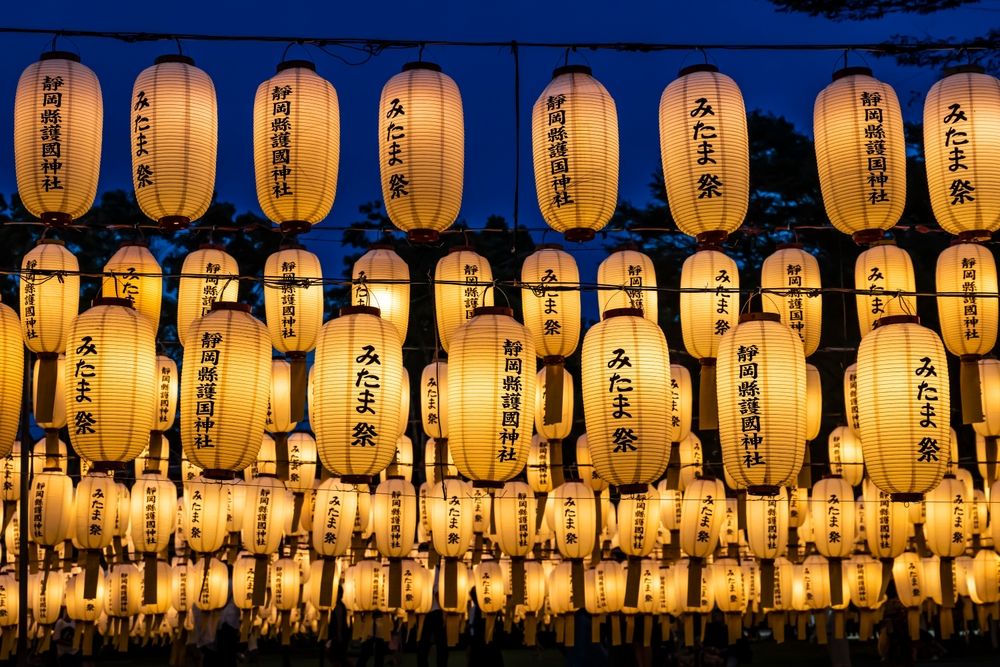
In Japan, the traditional festival honoring the dead is called Obon (or simply Bon) and usually takes place in mid-summer, in August. This Buddhist celebration, over 500 years old, is a time when Japanese believe that the spirits of their ancestors return to visit the living. Families return to their hometown to clean family graves, make offerings and light lanterns to guide souls.
The Bon Odori dances, traditional performances executed in a circle around a central tower, constitute the highlight of the festivities. These graceful choreographies tell ancestral stories and vary according to regions. At the end of the festival, thousands of floating lanterns called tōrō nagashi are placed on rivers and the sea to escort spirits to the afterlife, creating a moving visual spectacle.
However, since the 2000s, Halloween has gained popularity in Japan, particularly among younger generations. In Tokyo, the Shibuya district transforms every October 31st into a gigantic gathering of costumed people. Tens of thousands of young Japanese wear elaborate costumes, often inspired by manga, anime or Japanese pop culture. Theme parks like Tokyo Disneyland and Universal Studios Japan also offer special Halloween events that attract considerable crowds.
10. Australia: Halloween in the Southern Hemisphere
In Australia, Halloween is a relatively recent import that is gradually gaining popularity, especially among younger generations. The particularity? This festival takes place in southern spring rather than autumn, creating an interesting contrast with traditional Halloween imagery associated with dead leaves and cool evenings.
In Brisbane, Queensland's capital, a unique tradition has developed: the Zombie Walk. Every year, thousands of Australians dress up and costume themselves as the undead to recreate a real zombie invasion in the city streets. The goal is to be as terrifying as possible, with torn clothing, fake blood and sophisticated makeup. This offbeat demonstration has become an anticipated event that attracts both participants and curious spectators.
In other Australian cities like Sydney and Melbourne, shopping centers and theme parks organize Halloween events for families. Trick-or-treating is gradually developing in some residential neighborhoods, although this practice remains less widespread than in the United States. Australians adapt Halloween to their own culture, creating a unique blend of imported traditions and local initiatives.
11. Guatemala: All Saints' Day and Giant Kites
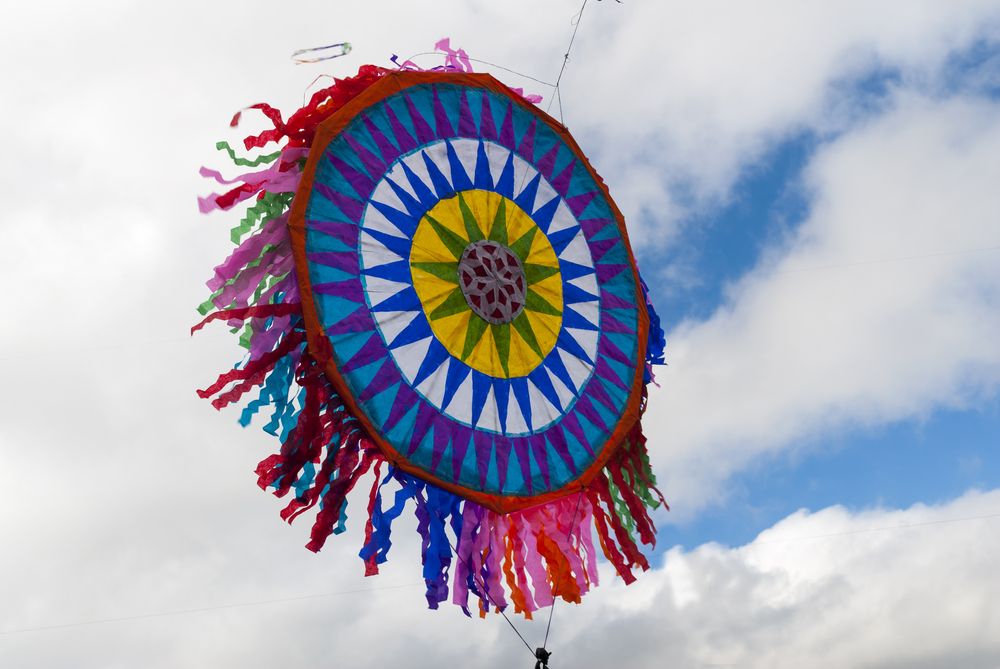
In Guatemala, a Central American country with strong Mayan and Catholic tradition, the Halloween period merges with All Saints' Day and Day of the Dead celebrations. A spectacular tradition particularly distinguishes this country: the Giant Kite Festival held every November 1st in the villages of Sumpango and Santiago Sacatepéquez.
According to local beliefs, these colorful kites, some measuring up to 20 meters in diameter, serve as a bridge between the world of the living and that of the dead. Their flight would allow the souls of the deceased to communicate with their loved ones remaining on earth. The fabrication of these monumental works of art in tissue paper requires months of preparation and mobilizes entire communities. The complex geometric patterns adorning them often represent ancestral Mayan symbols.
Guatemalan families also visit cemeteries to decorate graves with flowers, particularly orange and yellow marigolds. They picnic on the burial sites of their loved ones in a festive and colorful atmosphere, sharing the favorite dishes of the deceased. On December 7th, another unique celebration takes place: the Quema del Diablo (Burning of the Devil), where an effigy of the devil is burned in the streets to purify houses and chase away evil spirits before Christmas.
12. Haiti: Voodoo and the Festival of the Gédés
In Haiti, the period corresponding to Halloween takes on a profound spiritual dimension with the Festival of the Gédés (or Fèt Gede), celebrated on November 1st and 2nd. This voodoo festival, a unique syncretism between African beliefs brought by slaves and Catholicism, honors the Gédés, the spirits of death and fertility in the Haitian voodoo pantheon.
Baron Samedi, emblematic figure of voodoo represented with a top hat, dark glasses and a cane, is the most famous spirit of this family of loas (deities). In Port-au-Prince, the capital, cemeteries become the theater of impressive ceremonies. The faithful, dressed in black, purple and white, gather around the oldest tomb in the cemetery, considered Baron Samedi's spiritual dwelling.
Participants dance, sing, drink rum and kleren (a local spirit), smoke cigars and spit rum on tombs as an offering. Voodoo priests (houngans) and priestesses (mambos) enter into trance and are possessed by the Gédés, who then express themselves through them with crude language and bawdy jokes, reflecting the provocative nature of these spirits. This colorful celebration reminds us that death is an integral part of life and must be honored with respect but also with joy.
13. Taiwan: The Lantern Festival and the Month of Ghosts
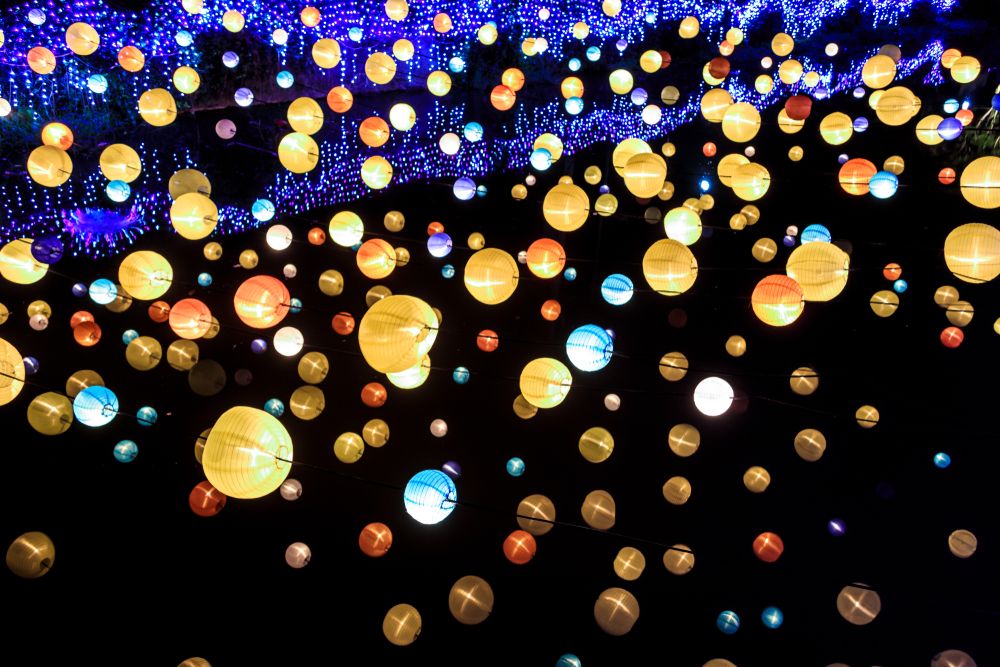
In Taiwan, the celebration of the dead takes the form of the Lantern Festival and the Month of Ghosts, which share similarities with Chinese traditions but possess their own particularities. The Lantern Festival takes place on the 15th day after Chinese New Year and marks the end of New Year celebrations. This bright and colorful festival strongly contrasts with the dark imagery of Western Halloween.
Thousands of traditional lanterns, often shaped like Chinese zodiac animals, illuminate Taiwanese cities. The festival is celebrated in a different city each year, with acrobatic shows, dragon and lion dances, and spectacular fireworks. In Yanshui, a pyrotechnic event nearly 200 years old attracts the boldest: tens of thousands of firecrackers are fired simultaneously, creating a spectacle that is both dangerous and fascinating.
The Month of Ghosts (usually in August) is a period when Taiwanese believe the doors between worlds open. During this month, considered unlucky, people avoid moving, marrying or swimming. Food offerings are left in the streets for wandering spirits, and religious ceremonies are organized to appease tormented souls. These traditions show how different cultures approach the universal theme of death and remembrance of ancestors.
In conclusion, this journey through Halloween traditions around the world reveals the richness and diversity of ways humanity celebrates the boundary between life and death. From Irish Samhain to Mexican Día de los Muertos, from Chinese Ghost Festival to Haitian Festival of Gédés, each culture brings its own interpretation to this time of year when the veil between worlds grows thin. Whether you prefer the frightening atmosphere of American Halloween, the colorful joy of Mexican celebrations, or the mystical atmosphere of Transylvania, these traditions remind us that behind cultural differences lies a universal need to honor those who preceded us. If you wish to discover these destinations during your travels, don't hesitate to explore the tours offered on Ryo to visit these fascinating cities and their unique traditions.
FAQ: Everything You Need to Know About Halloween Around the World
What is Halloween's country of origin?
Halloween finds its origin in Ireland, with the Celtic festival of Samhain celebrated over 2500 years ago. This celebration marked the end of summer and the beginning of the dark season, a period when the boundary between the world of the living and that of the dead was considered thinner.
Which countries celebrate Halloween the most?
The countries that celebrate Halloween the most are Ireland, the United States, Canada, the United Kingdom (England, Scotland), Australia and, more recently, Japan. Mexico celebrates Día de los Muertos, a similar but distinct festival that takes place on the same days.
What is the difference between Halloween and Día de los Muertos?
Halloween is a festival of Celtic origin focused on the frightening aspect and protection against evil spirits, while Día de los Muertos is a joyful Mexican celebration that honors the deceased with bright colors, offerings and altars. Día de los Muertos is more a family commemoration festival than a costume party.
Why does Japan celebrate Halloween now?
Halloween has been adopted in Japan since the 2000s, primarily as a popular commercial and cultural festival among young people. Japanese appreciate the festive aspect and the opportunity to dress up, particularly as manga and anime characters. Tokyo's Shibuya district has become the center of Halloween celebrations in Japan.
Where to celebrate Halloween in Europe for an authentic experience?
For an authentic Halloween experience in Europe, visit Ireland (Dublin or Derry), Scotland (Edinburgh), England (London) or Transylvania (Sighișoara and Bran Castle in Romania). These destinations offer celebrations rooted in historical traditions with a unique atmosphere.
What are the most unusual Halloween traditions?
Among the most unusual traditions are Pangangaluluwa in the Philippines (songs for souls), the Giant Kite Festival in Guatemala, the voodoo Festival of Gédés in Haiti, the Zombie Walk in Australia, and soul cakes in England. Each of these traditions offers a unique perspective on celebrating death and remembrance.