
Créé par Romane, le 20 juin 2026
Votre guide Ryo
The 16 Most Beautiful Places to Visit in Ireland
© Shutterstock
Ireland, nicknamed the Emerald Isle, ranks among Europe's most enchanting destinations. Between its endless green landscapes, breathtaking cliffs battered by the Atlantic, colorful villages and thousand-year-old cultural heritage, Ireland offers a unique travel experience. Whether you're a lover of wild nature, passionate about history or simply seeking a change of scenery, this land of legends will seduce you with its authenticity and the legendary warmth of its inhabitants. From the dynamism of Dublin to the mysterious expanses of Connemara, passing through UNESCO World Heritage sites, here are the 16 most beautiful places to visit in Ireland for an unforgettable journey.
1. Dublin, the cosmopolitan Irish capital
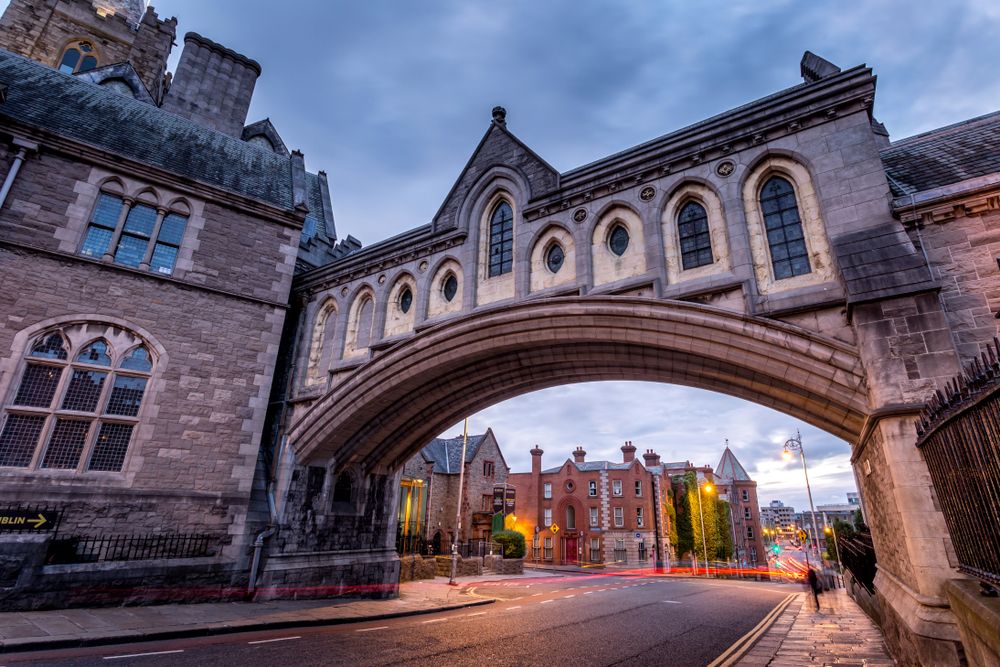
It's impossible to imagine visiting Ireland without discovering Dublin, its dynamic and welcoming capital. This historic city located on the banks of the Liffey offers a fascinating blend of tradition and modernity. Dublin's heart beats to the rhythm of its emblematic monuments such as Trinity College and its library housing the famous Book of Kells, an illuminated manuscript from the 9th century.
The Temple Bar district, with its cobbled streets and colorful facades, represents the festive soul of the capital. This is where you can savor an authentic pint of Guinness in one of the many traditional pubs animated by live music. Lovers of this emblematic black beer won't miss visiting the Guinness Storehouse (St James's Gate, Dublin 8, D08 VF8H, rated 4.5/5 on Google with over 80,000 reviews).
Dublin also offers magnificent architectural discoveries with Christ Church Cathedral and its medieval crypt, St. Patrick's Cathedral, Ireland's largest church, as well as Dublin Castle which bears witness to eight centuries of Irish history.
2. Galway, the cultural pearl of western Ireland
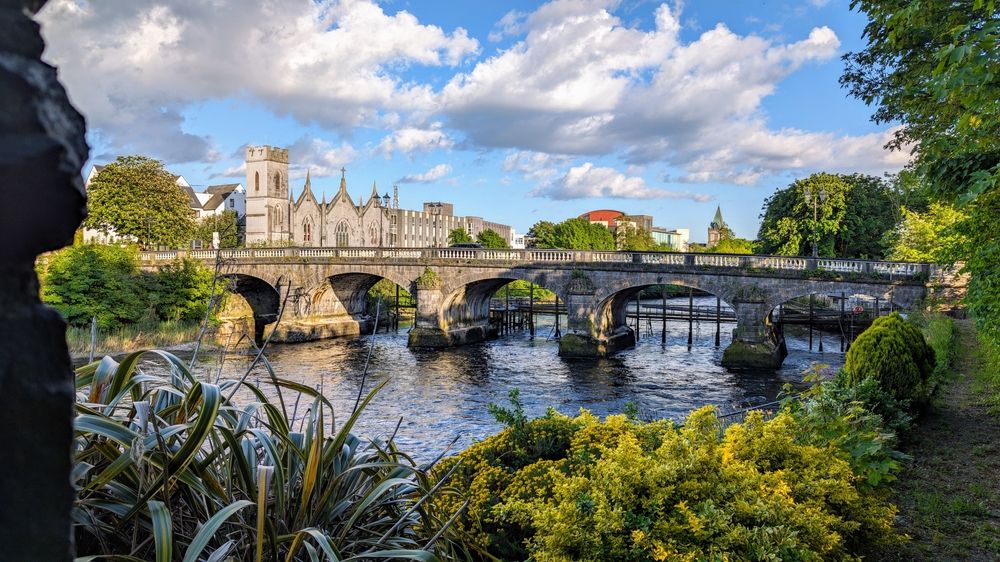
On Ireland's west coast, Galway embodies the bohemian and artistic spirit of Ireland. This vibrant university city is renowned for its cultural effervescence, traditional music festivals and friendly atmosphere. The Latin Quarter, Galway's beating heart, will seduce you with its colorful shops, warm restaurants and pubs where the sounds of fiddle and bodhrán resonate daily.
Among the must-see monuments, the Collegiate Church of St Nicholas (Market St, Galway, H91 V5KW, rated 4.6/5 on Google with over 3,500 reviews), Ireland's largest medieval church still in use, is absolutely worth a visit. The imposing Lynch's Castle, a 16th-century fortified residence, testifies to the past prosperity of the merchant city. Don't forget to stroll along the Spanish Arch, remains of the 16th-century ramparts offering a splendid view over Galway Bay.
3. Connemara, wild and pristine Ireland
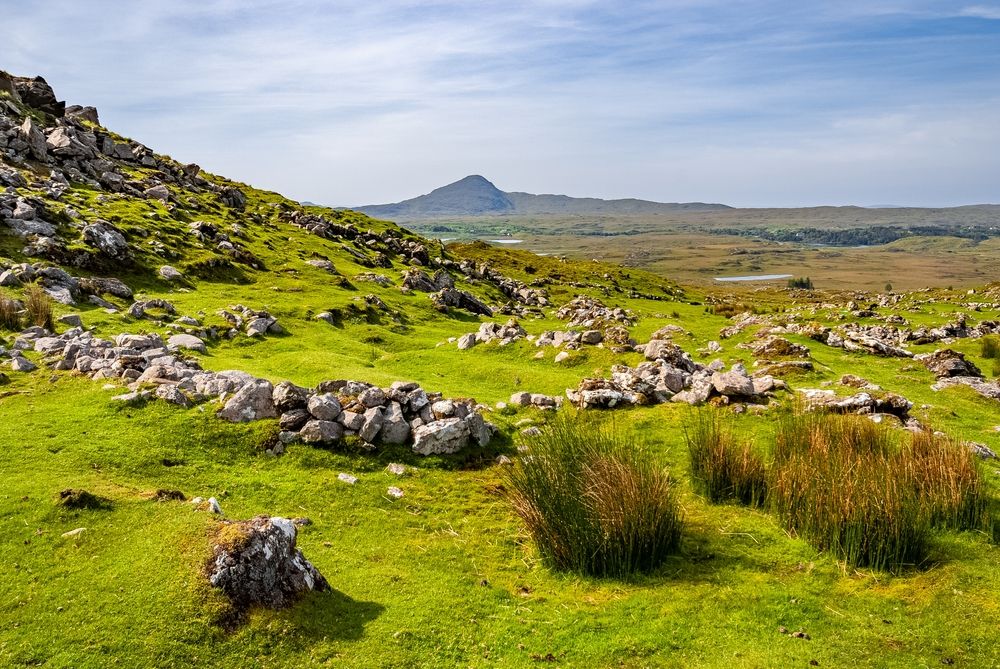
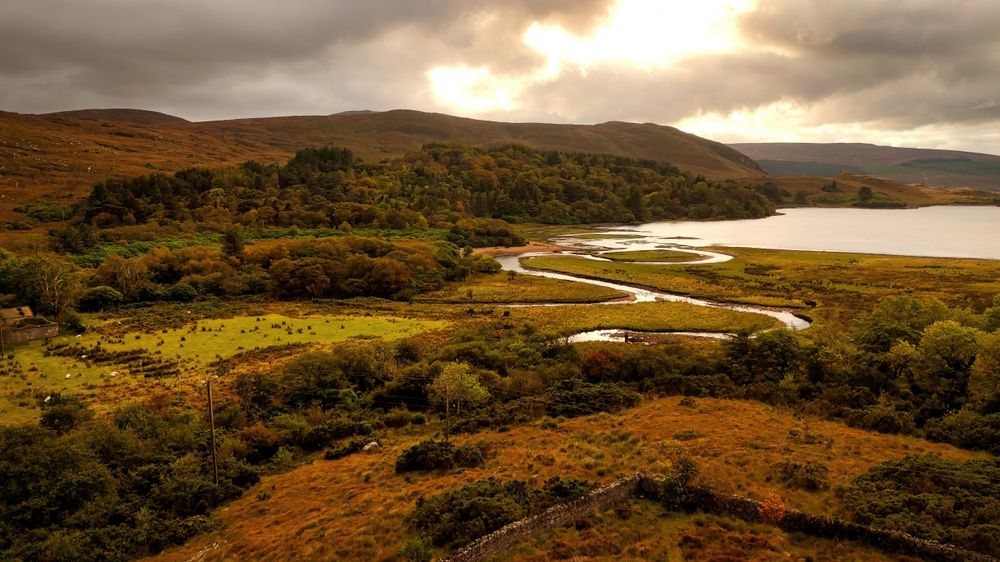
A few kilometers from Galway extends the legendary Connemara, an emblematic region that alone embodies the raw beauty of Ireland. Connemara National Park (Letterfrack, Co. Galway, H91 PX49, rated 4.7/5 on Google with over 6,000 reviews) spans over 2,000 hectares of wild and pristine nature. Three hiking trails, with varying difficulty levels, allow you to explore this magical territory where steep mountains, russet bogs, infinite moors, crystalline lakes and mysterious forests succeed one another.
This grandiose landscape, immortalized in Michel Sardou's song, offers breathtaking panoramas from the summits of the Twelve Bens. Fauna and flora thrive in an environment still untouched by urbanization: Connemara ponies, blackface sheep, colorful bogs according to the seasons. For hiking enthusiasts, the Diamond Hill Trail constitutes one of the most rewarding routes with its spectacular views over the Atlantic Ocean and surrounding islands.
4. Cliffs of Moher, Ireland's natural icon
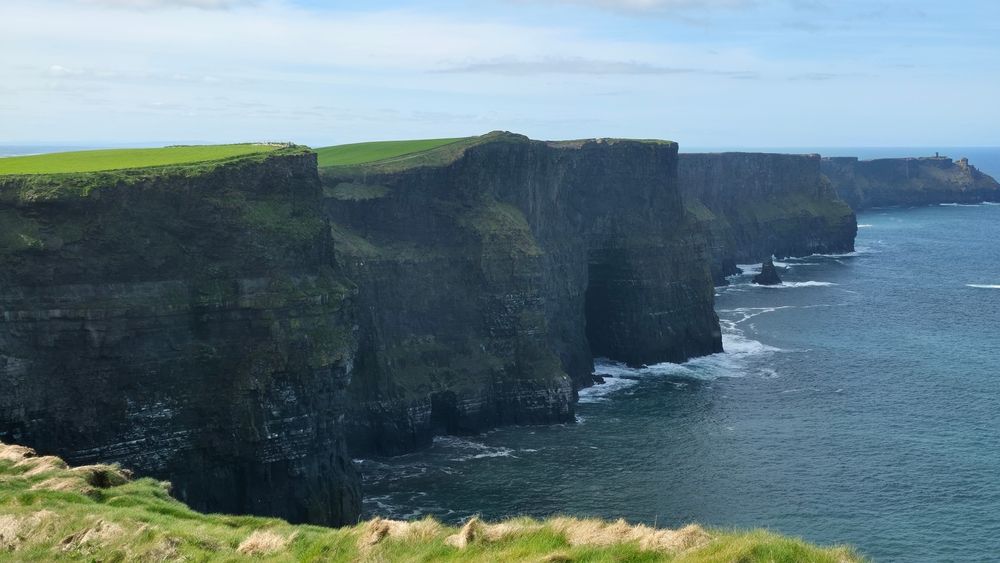
Among all the most beautiful places to visit in Ireland, the Cliffs of Moher (Lislorkan North, Co. Clare, V95 KN9T, rated 4.7/5 on Google with over 50,000 reviews) occupy a special place. These vertiginous stone ramparts rise majestically above the Atlantic Ocean for over 8 kilometers, reaching 214 meters in height in some places. The spectacle of these cliffs beaten by the waves is simply breathtaking, especially when the setting sun sets the rock faces ablaze.
The visitor center, cleverly integrated into the hill, offers an interactive exhibition on the geology, fauna and history of the site. From there, several trails allow you to appreciate different perspectives on the cliffs. O'Brien's Tower, built in 1835, offers an exceptional viewpoint from its summit. On clear days, you can see the Aran Islands and the Connemara mountains. The cliffs also shelter one of Ireland's most important seabird colonies, notably including puffins, fulmars and guillemots.
5. Giant's Causeway, Northern Ireland's geological wonder
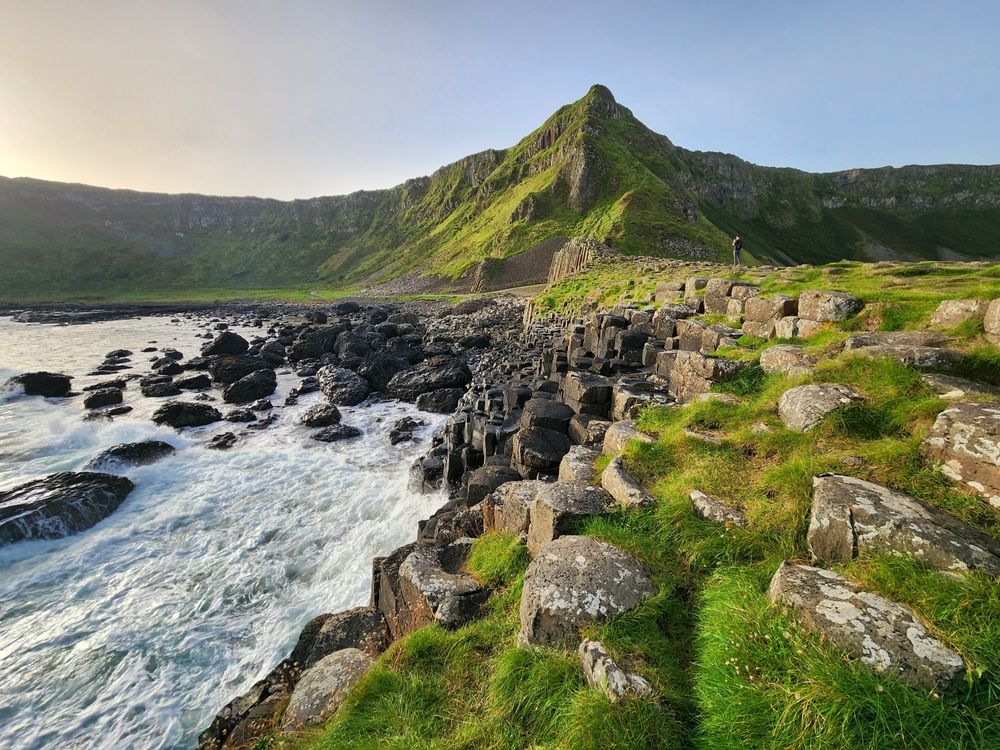
In Northern Ireland, the Giant's Causeway (44 Causeway Rd, Bushmills, Co. Antrim, BT57 8SU, rated 4.6/5 on Google with over 45,000 reviews) represents one of Europe's most extraordinary geological formations. This UNESCO World Heritage site consists of some 40,000 hexagonal basalt columns, remnants of a volcanic eruption that occurred 60 million years ago. Some of these columns reach up to 12 meters in height, creating an absolutely unique landscape.
According to Irish legend, these columns were erected by giant Finn MacCool to reach his Scottish rival Benandonner across the sea. This fascinating rock formation is discovered through several guided tour circuits that allow you to learn more about the site's geology, mythology and ecosystem. The different sectors of the Causeway bear evocative names like 'the Organ', 'the Causeway', 'the Camel' or 'the Giant's Boot', each offering unique formations to admire.
6. Belfast, Northern Ireland's capital with a turbulent past
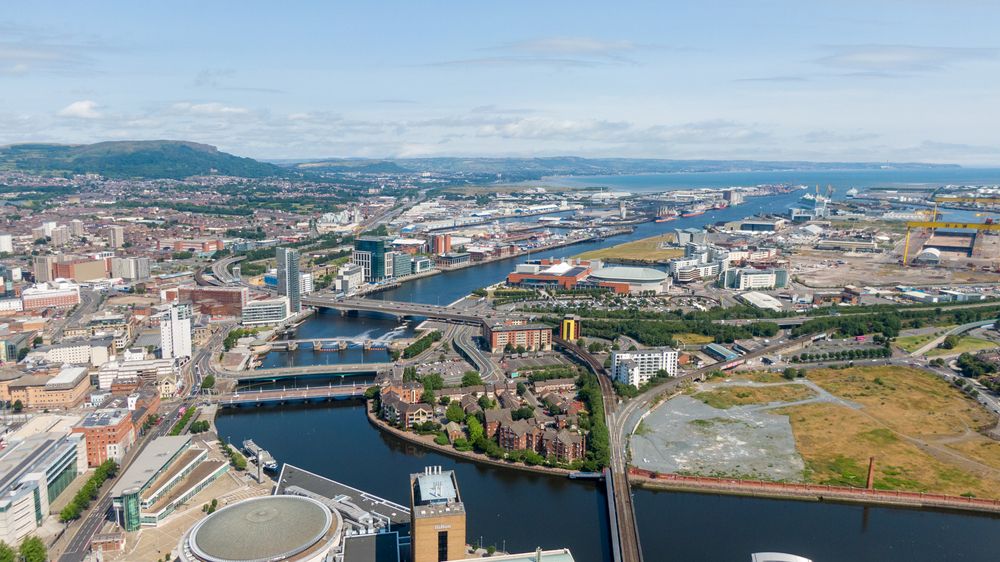
Capital of Northern Ireland, Belfast still bears the scars of its tumultuous history, particularly visible on the famous peace walls that separate Catholic and Protestant neighborhoods. These murals tell the story of 'The Troubles', the conflict that marked the late 20th century. Despite this painful past, Belfast has transformed into a dynamic and welcoming city that thoroughly deserves an in-depth visit.
The city's Victorian architecture testifies to its past prosperity, particularly the Grand Opera House (Great Victoria St, Belfast BT2 7HR, rated 4.6/5 on Google with over 1,800 reviews), a magnificent Italian-style theater. Titanic Belfast (1 Olympic Way, Queens Rd, Belfast BT3 9EP, rated 4.6/5 on Google with over 28,000 reviews) pays tribute to the famous liner built in the city's shipyards. The Botanic Gardens, Queen's University and the Botanic Garden offer peaceful green retreats in the heart of the metropolis.
7. County Kerry and the Ring of Kerry
County Kerry concentrates some of Ireland's most spectacular landscapes. The Ring of Kerry, a 179-kilometer scenic route, circles the Iveragh Peninsula and ranks among the country's most famous tourist itineraries. This enchanting circuit crosses picturesque villages, follows jagged coasts, winds between mountains and lakes, offering breathtaking panoramas at every turn.
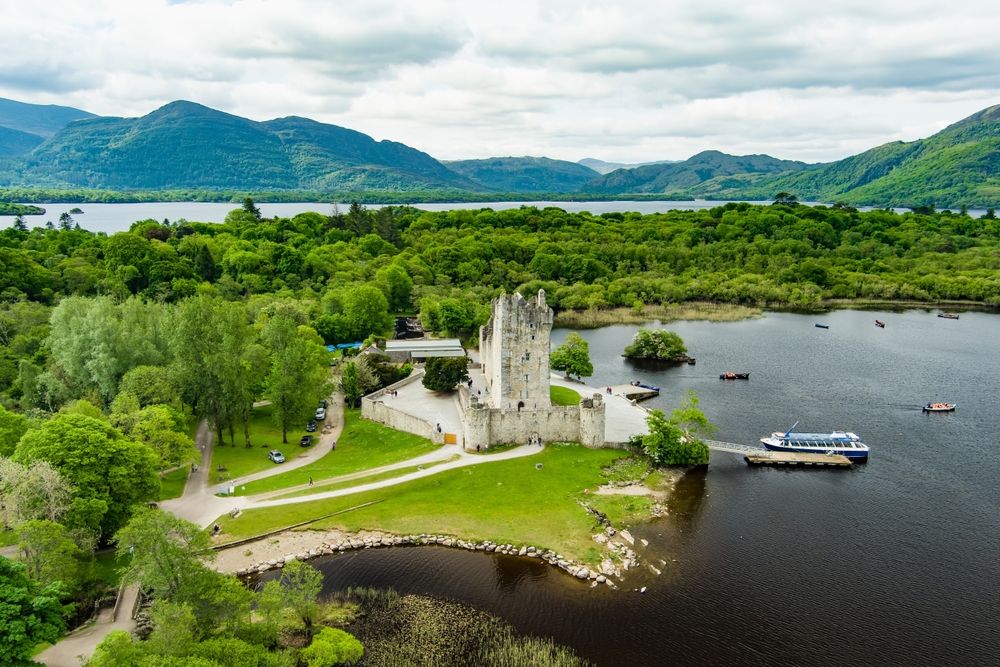
During your journey, you'll discover remarkable sites like Moll's Gap, a vertiginous viewpoint over the Killarney lakes, the colorful village of Sneem, or the imposing Kerry cliffs. The town of Killarney, an ideal starting point for exploring the region, seduces with its friendly atmosphere and numerous historical monuments, notably Ross Castle (Ross Rd, Ross, Killarney, Co. Kerry, V93 V304, rated 4.6/5 on Google with over 9,000 reviews) which stands majestically on the shores of Lough Leane.
8. Dingle Peninsula, Kerry's authentic jewel
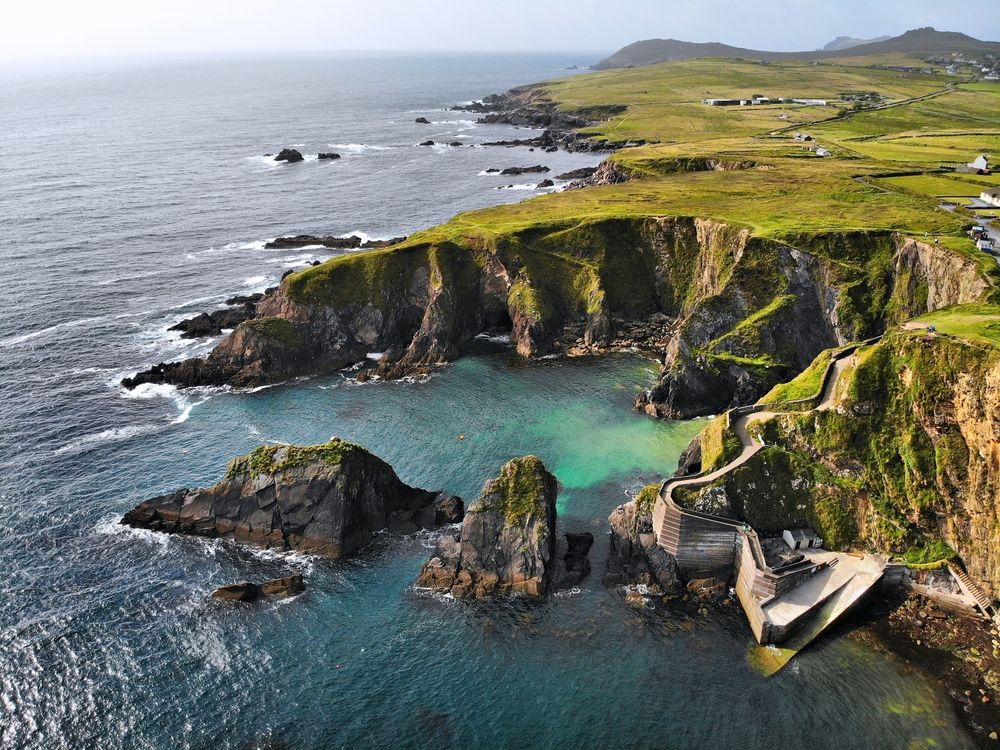
North of County Kerry, the Dingle Peninsula offers a more intimate and authentic experience than its neighbor the Ring of Kerry. This wild tongue of land advances into the Atlantic, dominated by Mount Brandon which peaks at 951 meters altitude and offers spectacular views over the region. The mild climate and relative isolation have preserved here an exceptional natural environment where ocean and mountain meet in a ballet of cliffs, golden beaches and green pastures.
The town of Dingle (An Daingean in Irish) constitutes the beating heart of this Gaeltacht region where Irish is still commonly spoken. Its traditional pubs resonate each evening with live music, while its restaurants serve the best sea products freshly caught. The atmosphere is resolutely authentic and warm, far from tourist bustle. The beaches of Inch Beach and Slea Head, archaeological sites like the Gallarus Oratory, and panoramas from the Slea Head Drive make this peninsula an essential stop for those wishing to visit Ireland off the beaten path.
9. Skellig Michael, the mystical Star Wars island
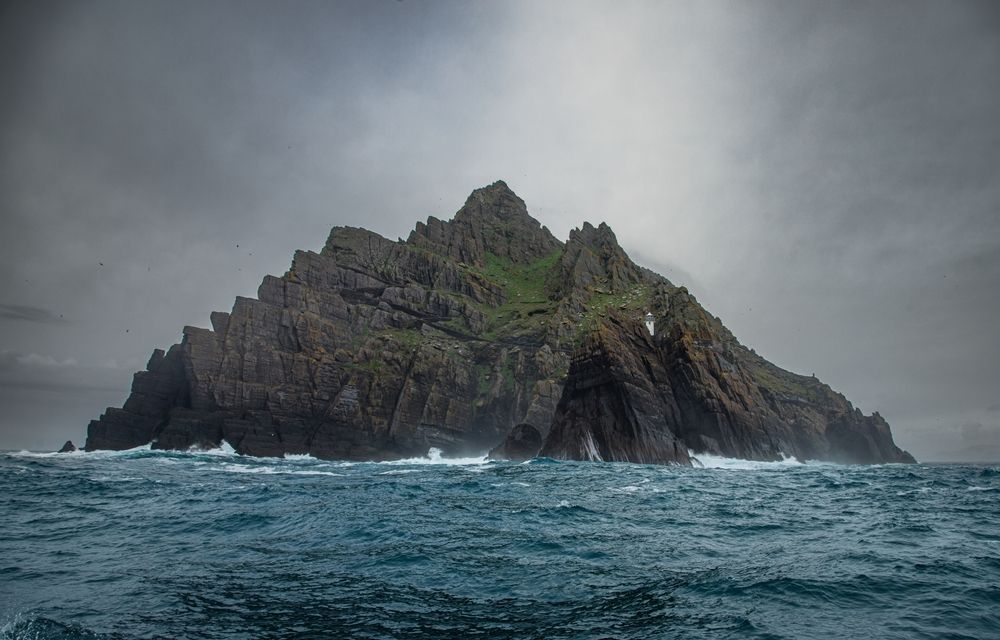
Off the Kerry coast, Skellig Michael island emerges dramatically from the Atlantic Ocean, like a vertiginous rocky peak culminating at 218 meters above the waves. This UNESCO World Heritage site shelters the remains of a Christian monastery dating from the 6th century, where monks lived in almost total isolation. The ascent of the 618 steps carved into the rock leads to the monks' ancient dry stone cells, beehive-shaped structures perfectly preserved that testify to extremely austere living conditions.
The island gained new international notoriety by serving as a setting for episodes VII and VIII of the Star Wars saga, where it embodies Jedi Luke Skywalker's refuge. Access to Skellig Michael is strictly regulated to preserve this exceptional site: only a limited number of visitors can land each day between May and September, depending on weather conditions. The boat crossing from Portmagee or Ballinskelligs constitutes an adventure in itself, offering the opportunity to spot colonies of gannets, puffins and seals. This unique experience remains engraved in the memory of all those lucky enough to set foot on this mythical rock.
10. Cork, the rebel capital of the south
Ireland's second city after Dublin, Cork proudly cultivates its rebellious spirit and distinct identity. This dynamic university city, built on several islands formed by the River Lee, is currently experiencing remarkable cultural and economic growth. The city center abounds with architectural testimonies spanning the ages, from the Middle Ages to today, creating a harmonious blend between tradition and modernity.
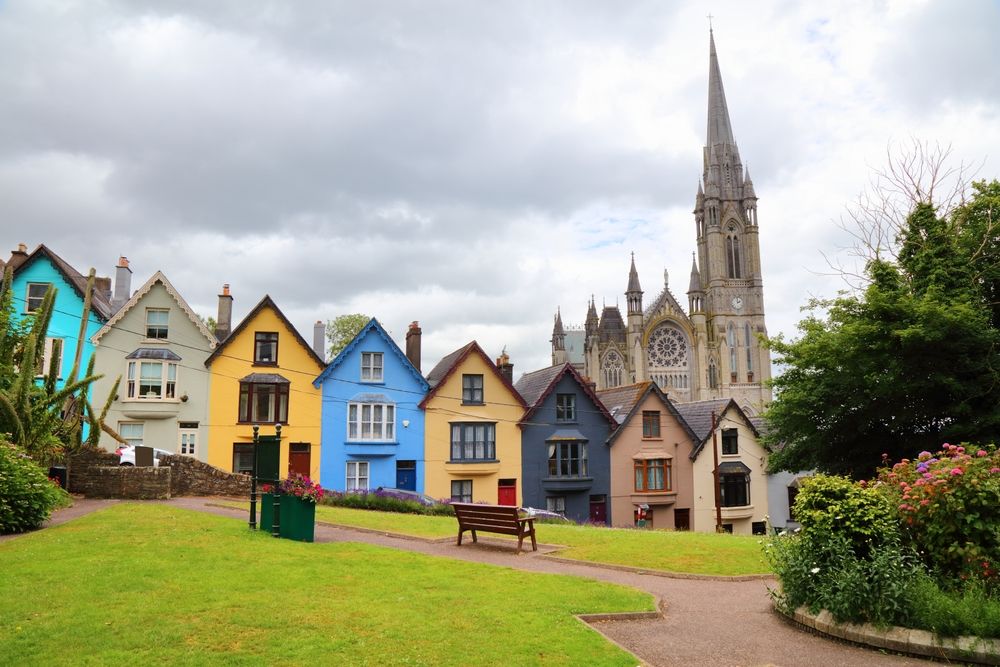
St. Patrick's Street, Cork's main artery, vibrates to the rhythm of shops, cafés and street artists. The famous English Market (Princes St, Centre, Cork, T12 KW89, rated 4.5/5 on Google with over 8,000 reviews), a Victorian covered market, will delight gourmets with its stalls overflowing with fresh local produce. Cork's cathedrals, notably Saint Mary and Saint Anne Cathedral, impress with their neo-Gothic architecture. In the evening, the city center's pubs and restaurants come to life, offering inventive cuisine and traditional Irish music concerts in a warm, typically Cork atmosphere.
11. Kinsale, the colorful charm of the Irish Riviera
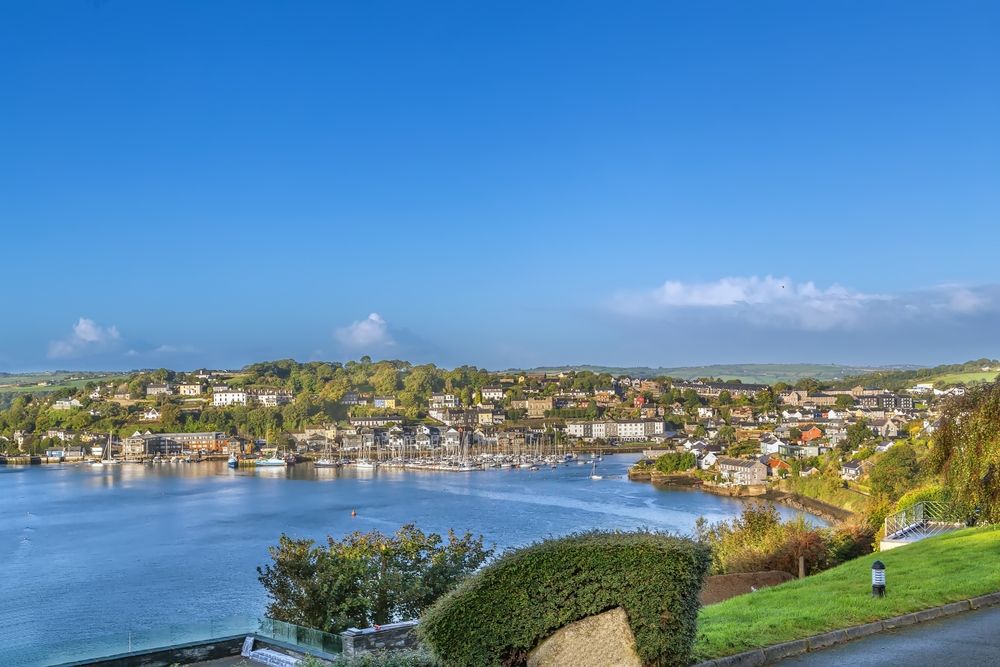
South of Cork, the port village of Kinsale immediately seduces with its particular atmosphere. Its houses with colorful facades that reflect in the peaceful harbor waters, its steep cobbled streets and maritime ambiance make it one of Ireland's most photogenic villages. Kinsale has forged a reputation as the country's gastronomic capital, attracting fine food lovers who come to taste sea products in its many renowned restaurants.
The village's historical heritage is notably revealed through Charles Fort (Summercove, Kinsale, Co. Cork, P17 XH67, rated 4.5/5 on Google with over 3,500 reviews), an imposing star-shaped fortress built in the late 17th century that majestically dominates the bay. This remarkably preserved fortification offers spectacular panoramic views over the harbor and ocean. Art galleries scattered throughout the village testify to the creative effervescence that reigns in Kinsale, making each stroll an artistic discovery. The annual gastronomic festival attracts gourmets from around the world each autumn, confirming the exceptional culinary reputation of this jewel of southern Ireland.
12. Rock of Cashel, spectacular medieval fortress
Perched on a limestone rocky outcrop rising nearly 60 meters above the fertile Golden Vale plain, the Rock of Cashel (Moor, Cashel, Co. Tipperary, E25 KD80, rated 4.6/5 on Google with over 16,000 reviews) constitutes one of Ireland's most impressive medieval sites. This monumental complex gathers in one place remarkable buildings dating from different periods: a 12th-century round tower, Cormac's Chapel with its unique Romanesque frescoes, a 13th-century Gothic cathedral and St. Patrick's Cross.
For over 900 years, the Rock of Cashel was the seat of the Kings of Munster, symbol of their temporal and spiritual power. Legend tells that St. Patrick himself converted King Aenghus to Christianity there in the 5th century. The buildings' architecture testifies to the evolution of architectural styles through the centuries, from Romanesque art to late Gothic. Visiting this majestic site allows you to dive into over a millennium of Irish history, while enjoying exceptional panoramas over the surrounding Tipperary countryside. The visitor center offers a multimedia exhibition that contextualizes the historical and spiritual importance of this high place of Irish heritage.
13. Coumshingaun Lough, suspended glacial lake
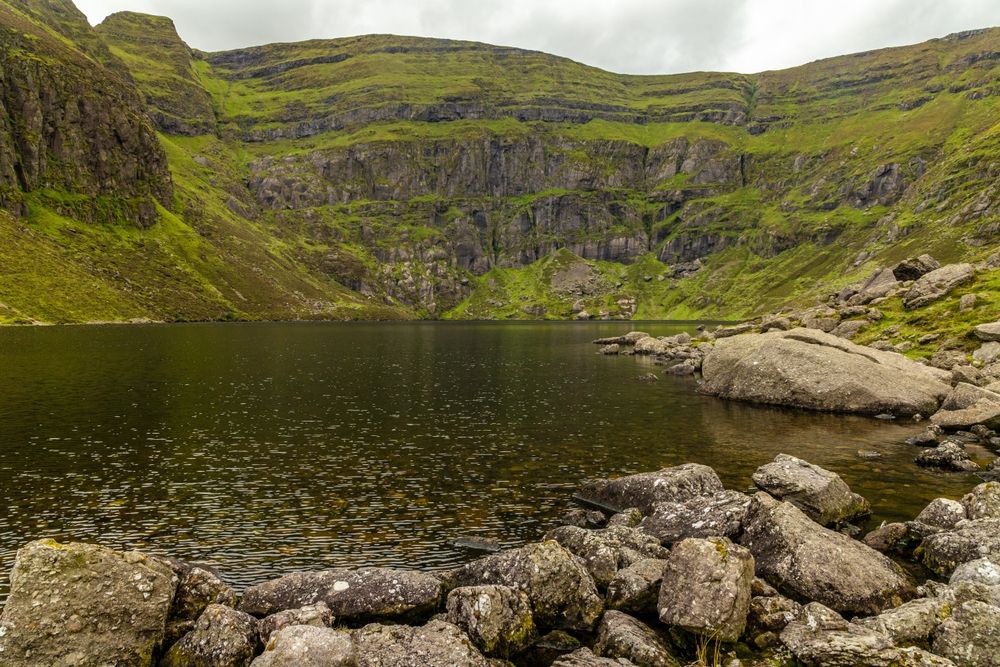
Nestled in the heart of a vertiginous natural cirque in the Comeragh Mountains, Coumshingaun Lough ranks among Ireland's most spectacular glacial lakes. This high-altitude lake, surrounded by almost vertical rock faces that plunge into its dark waters, offers a striking natural spectacle to brave hikers who undertake the ascent.
Access to Coumshingaun Lough requires approximately a 3-hour round-trip hike from the nearest parking in County Waterford. The trail gradually climbs through moors and bogs before reaching the cirque's edge, where the plunging view of the lake nearly 400 meters below literally takes your breath away. The surrounding cliffs, among Ireland's highest, create a dramatic and wild atmosphere. This preserved site allows nature and hiking enthusiasts to immerse themselves in Ireland's most authentic mountain landscapes, far from tourist crowds. On clear days, the panorama from the summit extends to the Irish Sea, amply rewarding the physical effort required to reach this hidden jewel.
14. Kilkenny, the preserved medieval city
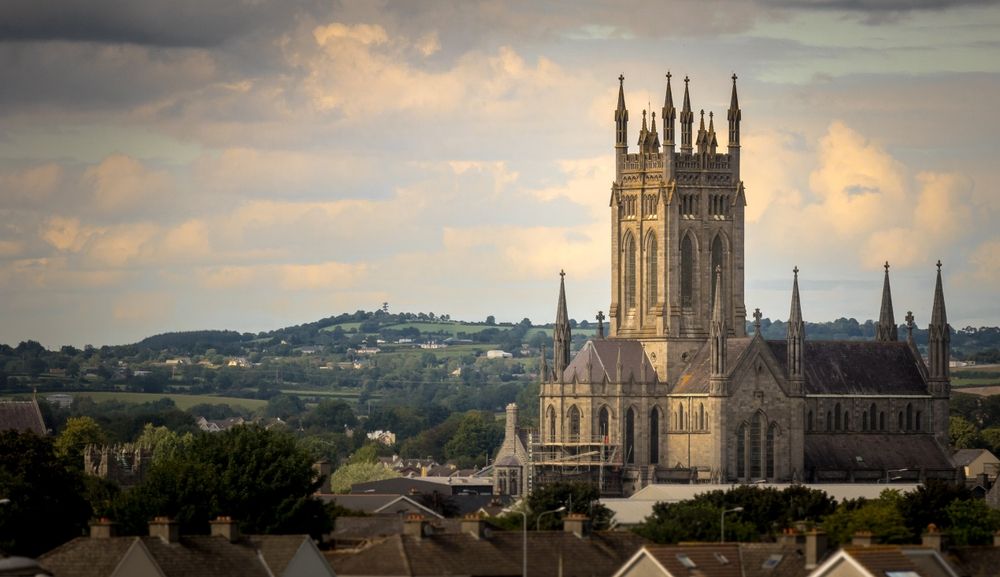
Nicknamed 'the marble city' due to locally quarried black limestone, Kilkenny constitutes one of Ireland's best-preserved medieval cities. Its remarkable architecture makes it a prized destination for those wishing to travel back in time and discover medieval Ireland. The cobbled streets of the historic center wind between ancient buildings and artisan shops, creating a unique atmosphere imbued with charm and authenticity.
Kilkenny Castle (The Parade, Gardens, Kilkenny, R95 YRK1, rated 4.6/5 on Google with over 12,000 reviews) majestically dominates the city from its position overlooking the River Nore. This Norman fortress transformed into an elegant residence over the centuries features sumptuous interiors adorned with tapestries, portraits and period furniture. St. Canice's Cathedral, a jewel of 13th-century Gothic architecture, stands as another unmissable monument with its 9th-century round tower offering a 360° panorama over the city. Kilkenny is also renowned for its eponymous beer and numerous traditional pubs where you can enjoy a pint while taking in Irish music concerts.
15. Slieve League, Donegal's giant cliffs
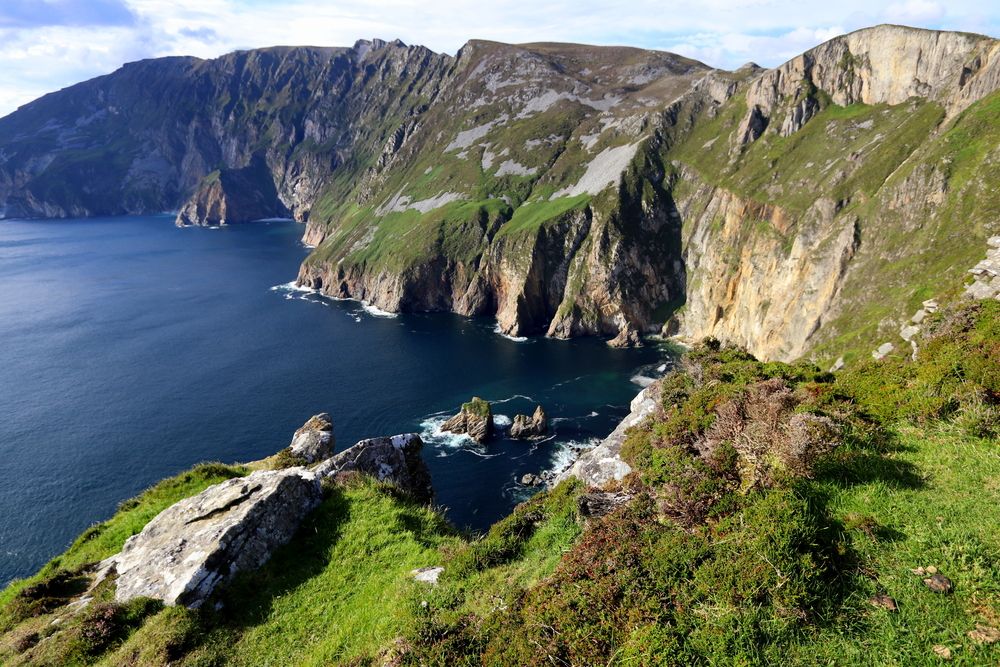
In County Donegal, at Ireland's extreme northwest, stand the imposing Slieve League cliffs (Sliabh Liag, Co. Donegal, F94 X2F2, rated 4.8/5 on Google with over 4,000 reviews), among Europe's highest. Culminating at 601 meters above the Atlantic Ocean, these vertical multicolored rock ramparts offer an absolutely grandiose natural spectacle and are less frequented than the famous Cliffs of Moher.
Several options are available to visitors to discover these stone giants: a demanding but rewarding hiking trail leads to the summit along the wind-exposed ridge, offering vertiginous panoramas over the ocean below. For the less daring, a viewpoint accessible by car allows you to admire the cliffs from a secure belvedere. The rock's changing colors according to daylight create an ever-evolving natural tableau, passing from orange tints at sunrise to golden reflections at dusk. This isolated Donegal region preserves a wild and authentic atmosphere, where sheep graze freely on grassy slopes and where Gaelic still resonates in surrounding villages. Visiting the Slieve League cliffs represents an off-the-beaten-path escape for lovers of raw nature and wide open spaces.
16. Glenveagh National Park, Donegal's wild jewel
Still in County Donegal, Glenveagh National Park (Church Hill, Letterkenny, Co. Donegal, F92 XC2N, rated 4.8/5 on Google with over 6,500 reviews) spans 16,000 hectares of preserved wild nature, forming Ireland's second largest national park. This vast expanse encompasses landscapes of exceptional diversity: steep Derryveagh Mountains, deep glacial valleys, mirroring lakes, heather-covered bogs and century-old oak forests.
Glenveagh Castle, a romantic 19th-century residence built in Scottish baronial style, sits on the shores of Lough Veagh. Accessible only on foot or by shuttle, this castle houses richly decorated interiors and is surrounded by sumptuous Victorian gardens where subtropical plants flourish thanks to the temperate climate. Hikers can take several marked trails crossing the park, notably the one leading to Poisoned Glen, a mysterious valley with an evocative name. The park's fauna includes an important population of red deer, successfully reintroduced after disappearing from the region. Glenveagh National Park thus offers total immersion in Ireland's wildest nature, magnificently crowning this tour of the most beautiful places to visit in Ireland.
In conclusion, Ireland reveals itself as a destination of exceptional richness where each region unveils its own treasures. From the vibrant cities of Dublin and Galway to the wild landscapes of Connemara and Donegal, passing through the geological wonders of the Giant's Causeway and Cliffs of Moher, the Emerald Isle never ceases to surprise and enchant its visitors. Whether you favor discovering historical heritage, exploring pristine nature or immersing yourself in authentic Celtic culture, these 16 most beautiful places to visit in Ireland constitute as many invitations to travel in a country where the beauty of landscapes is matched only by the warmth of the welcome. Ireland awaits you for a memorable adventure in the land of legends, where every turn of the road reveals a new postcard-worthy tableau and where millennial history still resonates at every street corner.
FAQ: Visiting Ireland
What is the best time to visit Ireland?
The best time to visit Ireland extends from May to September, when temperatures are mildest (15-20°C) and days are longest. July and August experience the highest tourist crowds. To enjoy green landscapes with fewer people, favor May-June or September. Autumn also offers beautiful colors, though wetter. Winter remains relatively mild but rainy, with short days.
How many days are needed to visit Ireland?
To discover the main most beautiful places to visit in Ireland, count at least 7 to 10 days. A one-week itinerary allows you to cover Dublin, Galway, Connemara and the Cliffs of Moher. With 10 to 14 days, you can add the Ring of Kerry, Cork, Belfast and the Giant's Causeway. For an in-depth exploration including less touristy regions like Donegal, plan 2 to 3 weeks.
Do you need to rent a car to visit Ireland?
Car rental is highly recommended to visit Ireland freely, particularly for exploring rural regions, scenic routes like the Ring of Kerry and isolated natural sites. Attention: driving is on the left in Ireland. Tourist buses and organized excursions exist from major cities for those who prefer not to drive. The train network connects main cities but remains limited for accessing natural sites.
What budget to plan for a trip to Ireland?
Ireland is a relatively expensive destination. Count on average 100-150€ per day per person for a comfortable trip (B&B accommodation, restaurant meals, car rental, site entries). Backpackers can manage with 60-80€/day favoring hostels and pubs. Accommodation represents the main expense item (80-150€/night in hotels, 30-50€ in hostels). A pint of beer costs 5-7€, a restaurant meal 15-30€.
Can you visit Northern Ireland with the Republic of Ireland?
Absolutely! Despite the political border between the Republic of Ireland and Northern Ireland (part of the United Kingdom), there are no physical border controls since the Good Friday Agreement of 1998. You can travel freely between the two territories by car or bus. Simply note that Northern Ireland uses the pound sterling (£) while the Republic uses the euro (€). The most beautiful places to visit in Northern Ireland include Belfast, the Giant's Causeway and the Causeway Coast.