
Créé par Romane, le 7 mai 2026
Votre guide Ryo
© Shutterstock
Dublin, the capital of Ireland, is a fascinating city with multiple faces. Its cobblestone streets resonate with traditional music, its century-old pubs tell centuries of history, and its neighborhoods each conceal a distinct personality. But faced with this diversity, one question naturally arises before booking your accommodation: where to stay in Dublin to fully enjoy your stay? Whether you're seeking lively nightlife, refined Georgian architecture, an authentic atmosphere away from the beaten path, or a quiet neighborhood ideal for families, Dublin has the answer. This comprehensive guide helps you identify the ideal neighborhood to set down your bags, according to your profile and desires.
The Irish capital is a human-sized city, particularly pleasant to explore on foot. Before even choosing your neighborhood, know that it naturally divides into two large zones separated by the River Liffey: the Southside, more residential and elegant, and the Northside, more popular and authentic. To Visit Dublin in the best conditions, let our advice guide you.
1. Temple Bar: for nightlife and Dublin buzz
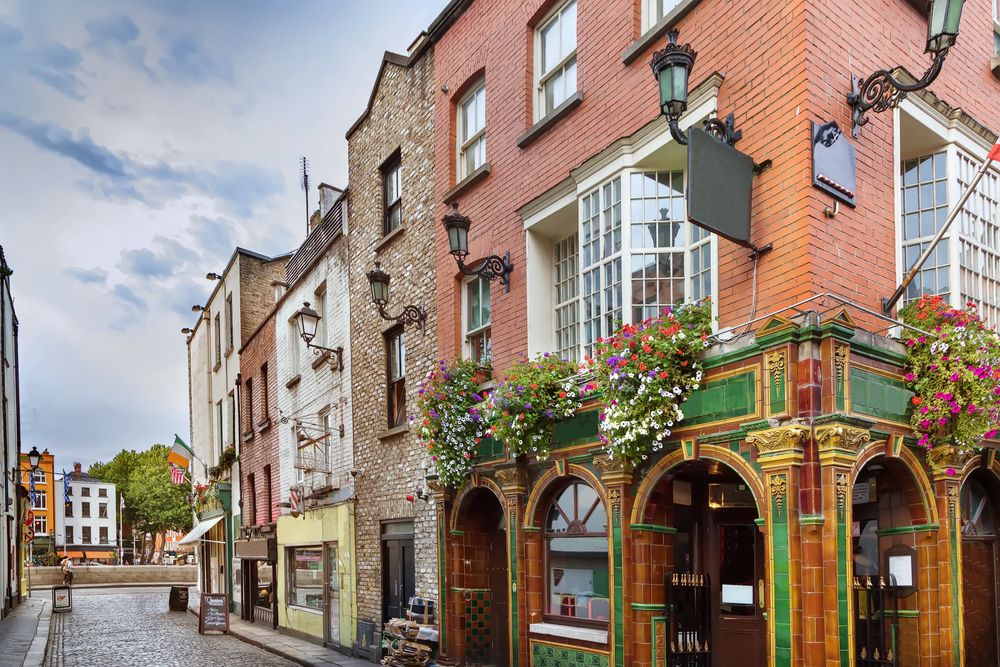
Impossible to discuss neighborhoods where to stay in Dublin without starting with the Temple Bar neighborhood, the most famous and liveliest in the Irish capital. Nestled on the south bank of the Liffey, between Ha'penny Bridge and Dublin Castle, this neighborhood with cobblestone streets and colorful facades is the beating heart of the city's cultural and nightlife. Hard to miss its neon signs, crowded pubs and lively terraces that overflow with life until the wee hours, even on weekdays.
Temple Bar is the dream place for travelers who want to immerse themselves in the typically Irish festive atmosphere. Its streets house dozens of traditional pubs, gourmet markets like the Temple Bar Food Market(Meeting House Square, Dublin 2, rated 4.5/5 on Google for over 2,500 reviews) and contemporary art galleries. The Temple Bar Pub, located at 47-48 Temple Bar, is unmissable: its walls covered with photos, live musicians and selection of Irish beers make it one of the most photographed pubs in Ireland. Culture enthusiasts will also appreciate the Project Arts Centre(39 Essex St E, Dublin 2, rated 4.6/5 on Google for over 500 reviews), which programs exhibitions and shows throughout the year.
During the day, the neighborhood transforms: designer boutiques, independent bookstores and art galleries invade the alleys, offering a very different atmosphere from the nocturnal fever. It's also just steps away from two major monuments to add to your list: the Dublin Castle and Christ Church Cathedral, two must-sees when visiting the city.
Temple Bar is ideal for: young travelers, groups of friends, party-goers and all those who want to be at the heart of the action. However, if you're looking for peace and quiet to sleep, this very lively nighttime neighborhood is not the most suitable. Prefer a room on a high floor or bring earplugs! Youth hostels are particularly well represented there, alongside numerous hotels of all categories.
2. Trinity College, Grafton Street & St. Stephen's Green: for historic sites and shopping
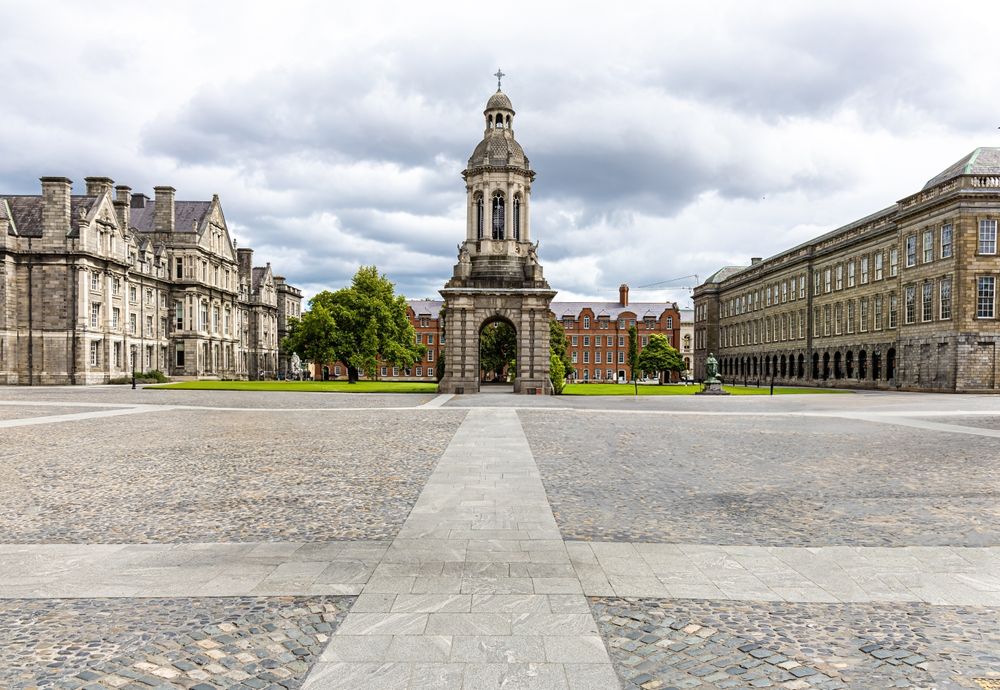
Want to stay in Dublin at the heart of history, within walking distance of all the major tourist sites? The neighborhood formed by the triangle Trinity College, Grafton Street and St. Stephen's Green is probably the most central and complete for a first stay in the Irish capital. This sector, located immediately south of the River Liffey, brings together the best of what Dublin has to offer in terms of monuments, shopping and urban life.
The Trinity College, founded in 1592 by Queen Elizabeth I, is Ireland's oldest university and one of Europe's most beautiful. Its green lawns, Old Library and the precious Book of Kells displayed there attract visitors from around the world. Just opposite, Grafton Street is the city's most emblematic pedestrian shopping street, lined with shops ranging from major brands to local designers. A few streets away, St. Stephen's Green, a vast 9-hectare park in the city center, offers a welcome green break after an intense day of sightseeing.
This neighborhood is also an opportunity to discover the statue of Molly Malone, symbol of Dublin, installed at the entrance to Grafton Street. For your local shopping experience, take a detour through George's Street Arcade, a Victorian covered market open since 1881, offering vintage, crafts and curiosities of all kinds.
In terms of restaurants and pubs, this sector is full of quality addresses. In the evening, O'Donoghue's pub (15 Merrion Row, Dublin 2) hosts musicians every evening for an authentic traditional Irish music session – an experience not to be missed to understand the soul of Dublin. If you want to be guided through all these treasures in a fun and autonomous way, the Ryo audio guide circuit to visit Dublin takes you step by step to discover all these emblematic places.
This neighborhood is ideal for: families, first-time visitors, culture and shopping enthusiasts. Hotels are numerous but often expensive; the streets around Nassau Street and Kildare Street offer the best accommodation options in this highly sought-after sector.
Download the audio guide circuit to discover Dublin on foot and independently
To fully enjoy all these neighborhoods without depending on a guided tour, Ryo offers a complete audio guide itinerary to visit Dublin. In 20 carefully selected stages, this walking circuit takes you from Merrion Square to the Temple Bar neighborhood, passing through Trinity College, the Ha'penny Bridge and many other must-sees. Each place is accompanied by a fun audio commentary mixing history, anecdotes and some mysteries specific to the Irish capital. Available on the Ryo app, this itinerary is perfect for discovering Dublin at your own pace, when you want, without time constraints.
3. Merrion Square: for art, Georgian architecture and elegance
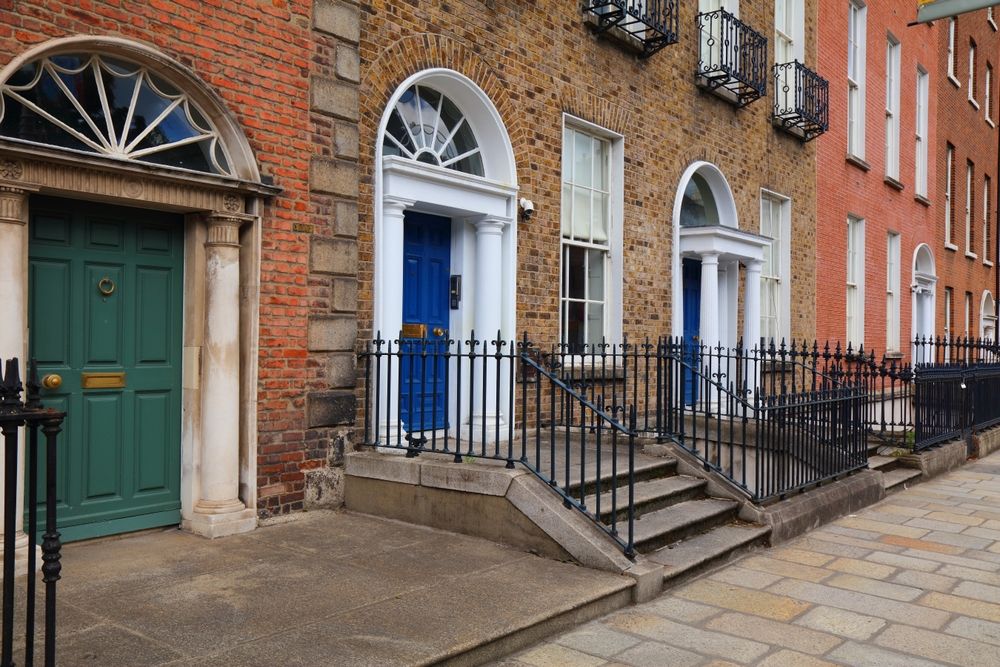
For those seeking a neighborhood where to stay in Dublin combining refinement, culture and serenity, Merrion Square stands out as an obvious choice. Located east of the city center, this Georgian neighborhood of incomparable elegance is one of the most beautiful in the Irish capital. Its 18th-century red brick buildings with sober facades and characteristic colorful doors give the neighborhood an atmosphere that is both historic and lively.
Merrion Square park, with its manicured lawns and sculptures, is a walking place much appreciated by Dubliners. It's in this same park that you'll find the statue of Oscar Wilde, depicted lying on a rock in a casual and colorful pose — a mischievous nod to the writer's ironic tone. Just steps away is also Oscar Wilde's house, where the author of The Picture of Dorian Gray grew up, and which testifies to the Georgian bourgeois setting in which he evolved.
Merrion Square is also the neighborhood of Dublin's great cultural institutions. The National Gallery of Ireland(Merrion Square W, Dublin 2, rated 4.7/5 on Google for over 11,000 reviews) offers an exceptional permanent collection of Irish and European works, accessible for free. Equally unmissable, the National Museum of Ireland – Archaeology(Kildare St, Dublin 2, rated 4.7/5 on Google for over 10,000 reviews), located right next door, immerses visitors in the island's history, from Celtic golden age treasures to Viking periods.
This neighborhood is one of the safest and most pleasant to stay in Dublin, whether as a couple, family or solo. The atmosphere is muted in the evening, accommodations range from luxury hotels to vacation apartments to charming bed & breakfasts. And if you want to explore the whole city from this ideal starting point, remember to download the Ryo tour circuit to not miss any of Dublin's treasures.
This neighborhood is ideal for: couples, art and history enthusiasts, travelers seeking calm and elegance. It's also one of the recommended neighborhoods for a first stay or for a week in Dublin.
4. The Liberties: for history, beer and Irish authenticity
West of Dublin's historic center, the Liberties neighborhood is one of the city's oldest. Long considered the stronghold of Dublin's craftsmen and workers, it has been experiencing a remarkable renaissance in recent years, while maintaining an authenticity and soul that more touristy neighborhoods have sometimes lost. Staying in the Liberties means choosing to experience real Dublin life, away from the bustle of Temple Bar, while remaining a few minutes' walk from major attractions.
The neighborhood's flagship monument is undoubtedly the Guinness Storehouse(St James's Gate, Dublin 8, rated 4.6/5 on Google for over 100,000 reviews). This immersive 7-story museum dedicated to the world's most famous beer is Ireland's most visited tourist attraction. A visit is essential, if only to savor a freshly poured pint of Guinness at the top of the Gravity Bar, with a breathtaking panoramic view of Dublin. Nearby, St. Patrick's Cathedral, Ireland's largest church, stands majestically in this same neighborhood, witnessing centuries of Irish religious history.
The Dublinia Museum is also very close, housed in a remarkable neo-Gothic building adjacent to Christ Church Cathedral. This interactive museum on medieval and Viking Dublin is particularly appreciated by families. Continuing your exploration through the neighborhood's lively streets, you'll discover craft breweries, local producers' markets and a booming gastronomic scene. All while being within walking distance of the city center to easily reach other must-sees covered by the Ryo audio guide circuit.
This neighborhood is ideal for: beer and gastronomy enthusiasts, history buffs, travelers seeking authenticity at reasonable prices. Accommodations are cheaper than in the heart of the tourist center, with a good offer in affordable hotels and apartments.
5. Docklands: for modern architecture and business travelers
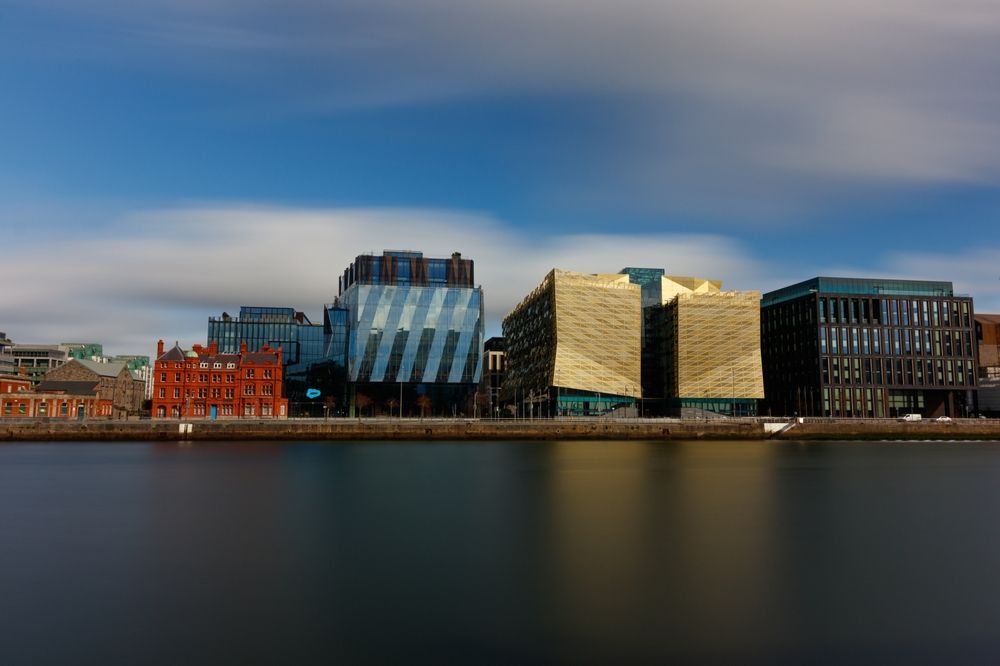
The Docklands(Grand Canal Dock, Dublin 2) neighborhood represents a facet of Dublin that one doesn't necessarily imagine when arriving in the Irish capital. Located east of the city center, along the Grand Canal and the Liffey quays, this rapidly changing neighborhood is the symbol of the city's economic and architectural dynamism. Former factories and port warehouses have been converted into multinational offices, designer apartments and trendy cultural spaces.
The Bord Gáis Energy Theatre(Grand Canal Square, Dublin 2, rated 4.7/5 on Google for over 12,000 reviews), designed by architect Daniel Libeskind, is one of the city's major performance venues, hosting Broadway musicals, concerts and operas. Facing it, the Convention Centre Dublin completes the contemporary architectural landscape of this neighborhood that has forged its own identity over the years. The Grand Canal Dock area offers beautiful walks along the water in good weather, with cafes and restaurants with sunny terraces.
For business travelers in particular, the Docklands are a strategic choice: the neighborhood houses the European headquarters of Facebook, Google and Twitter, as well as numerous very well-equipped modern business hotels. Despite its apparent remoteness, the neighborhood is only about twenty minutes' walk from the historic center, and well served by the DART (coastal train) and the Luas (tram). From this starting point, reaching the Ha'penny Bridge or O'Connell Street takes only a few minutes.
This neighborhood is ideal for: business travelers, contemporary architecture enthusiasts, couples seeking modern accommodation in a quiet setting while staying close to the center. Hotel pricing varies, with a beautiful selection of design boutique hotels.
6. The Northside & Smithfield: for small budgets and authentic atmosphere
Crossing the River Liffey and heading north of Dublin means venturing into another facet of the city, more popular, more authentic and often less expensive. Dublin's Northside encompasses several neighborhoods with distinct personalities, including Smithfield, Stoneybatter, Phibsborough and Glasnevin, which are well worth the detour and constitute excellent bases for exploring the Irish capital without breaking the bank.
In Smithfield, the covered market and the Jameson Distillery Bow St.(Bow St, Smithfield, Dublin 7, rated 4.6/5 on Google for over 28,000 reviews) are the flagship attractions. A distillery visit will immerse you in the secrets of Irish whiskey making, with tasting included — an authentic and memorable experience. Not far from there, O'Connell Street, Dublin's main artery located on the Northside, gives access to the Famine Memorial sculpture, a moving work paying tribute to the victims of the Great Irish Famine of 1845-1849.
Further north, Phoenix Park(Phoenix Park, Dublin 8, rated 4.8/5 on Google for over 55,000 reviews) is one of Europe's largest urban parks, twice the size of Central Park in New York. Its 700 hectares of greenery house notably Dublin Zoo, the official residence of the Irish President (Áras an Uachtaráin) and free-roaming deer herds. An essential nature and serenity interlude. Sports enthusiasts will not miss visiting the legendary Croke Park(Jones's Rd, Dublin 3, rated 4.7/5 on Google for over 20,000 reviews), the temple of Gaelic football and hurling.
Practically, Northside accommodations are significantly cheaper than on the Southside, with a varied offer ranging from traditional guesthouses to accessible chain hotels. Public transport service is good, with several bus lines and access to the Luas. To explore the whole city from this base, don't forget to download the Ryo app and its Dublin audio guide circuit — you can join the itinerary in less than 20 minutes on foot or by bus.
This neighborhood is ideal for: budget travelers, backpackers, solo travelers and those who want to live like a Dubliner away from classic tourist circuits. However, be careful about certain more peripheral streets that deserve more vigilance in the evening.
7. Portobello & Rathmines: for families and local quality of life
For those seeking a quiet and residential neighborhood where to stay in Dublin without moving away from the city center, Portobello and Rathmines are two particularly appealing options. Located south of St. Stephen's Green, these two neighboring neighborhoods offer a relaxed and authentic atmosphere, away from the tourist bustle of Temple Bar while remaining within walking distance of the city's major sites.
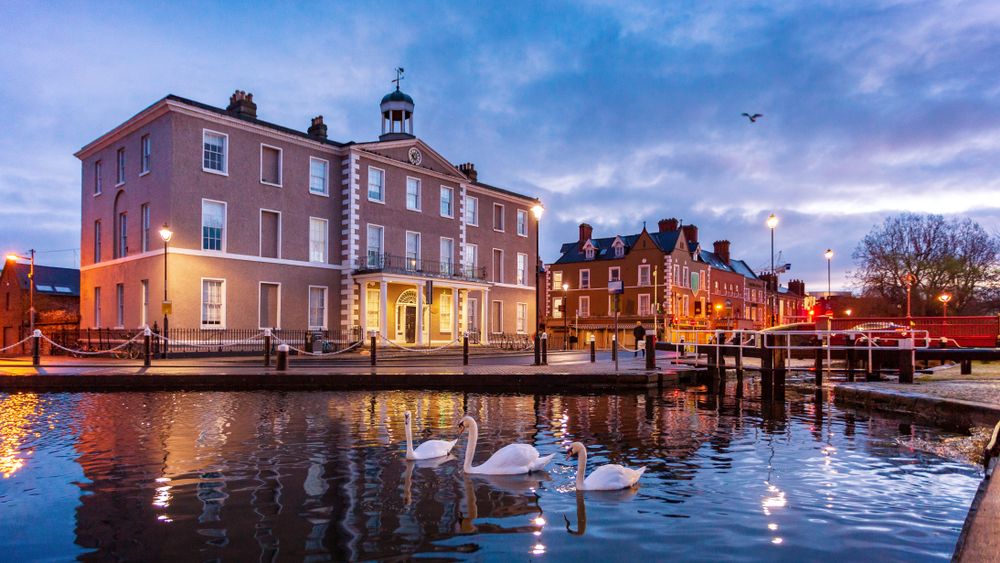
Portobello owes much of its charm to the Grand Canal(Grand Canal, Portobello, Dublin 8) that runs alongside it. Its green banks, lined with colorful Victorian houses and moored barges, form an enchanting setting ideal for morning walks. The neighborhood is also renowned for its independent gastronomic scene: trendy cafes, neighborhood restaurants and fine grocery stores abound. Coffee lovers will particularly appreciate the numerous independent establishments that have made Portobello's reputation as a true specialty coffee hub in Dublin.
Rathmines, for its part, is a neighborhood popular with students and young professionals, giving it a positive energy and very diverse dining options. Its main artery, Lower Rathmines Road, is dotted with shops, supermarkets and restaurants from around the world. The atmosphere is decidedly friendly, and rents and accommodation rates are gentler than in the city center. The neighborhood is served by several frequent bus lines that reach the center in about twenty minutes.
For families with children in particular, Portobello and Rathmines offer the advantage of tranquility and safety, with parks, playgrounds and a reassuring residential atmosphere. Staying in this sector also means enjoying an ideal position to explore other Dublin neighborhoods through walking or transport. And to structure your sightseeing days, the Ryo audio guide circuit for Dublin is an excellent way to discover the city in a fun and autonomous way with the whole family.
This neighborhood is ideal for: families, couples, travelers wishing to immerse themselves in Dublin neighborhood life, and all those who prefer a quiet setting to an ultra-central position. The offer in vacation apartments is also very developed, ideal for stays of a week or more.
Which Dublin neighborhood to choose according to your traveler profile?
To summarize, where to stay in Dublin depends above all on your expectations and travel style. Each neighborhood has its own assets, and none is truly bad — the city being small enough for all to be accessible on foot or within a few minutes by transport.
If you're a party-goer or young traveler seeking intense nightlife, Temple Bar will be your playground. If you're visiting Dublin for the first time and want to be close to all major sites, the triangle Trinity College / Grafton Street / St. Stephen's Green offers the ideal location. Art and Georgian architecture enthusiasts will find their happiness in Merrion Square, while beer and Irish history enthusiasts will be delighted in the Liberties, steps away from the Guinness Storehouse and St. Patrick's Cathedral.
For a modern and design approach, the Docklands offer contemporary accommodations in a spectacular architectural setting. Budget-conscious travelers seeking authenticity will opt for the Northside and its neighborhoods of Smithfield or Stoneybatter. Finally, families and neighborhood life lovers will favor Portobello and Rathmines, residential, quiet yet well connected to the center. Whatever your choice, don't forget to be guided by the Ryo audio guide visit itinerary to make the most of your Dublin days!
FAQ – Where to stay in Dublin?
What is the best neighborhood for a first stay in Dublin?
For a first stay, the neighborhood around Trinity College, Grafton Street and St. Stephen's Green is most recommended. Ideally located, it allows you to reach most must-see tourist sites on foot and offers a wide choice of accommodations for all budgets.
Which Dublin neighborhood is safest for sleeping?
Dublin is generally a safe city for tourists. The quietest neighborhoods considered most reassuring are Merrion Square, St. Stephen's Green, Portobello and Rathmines. Temple Bar can be lively at night due to nightlife, and some peripheral areas of the Northside merit increased vigilance after midnight.
Where to stay in Dublin cheaply?
To find affordable accommodations in Dublin, head to the Northside (Smithfield, Stoneybatter, Glasnevin) or residential neighborhoods like Rathmines. These areas offer significantly lower prices than the tourist center, with good public transport connections. The most economical youth hostels are often found in or near Temple Bar.
Where to stay in Dublin with family?
Families with children will be comfortable in the quiet and residential neighborhoods of Portobello, Rathmines or even Merrion Square. These sectors offer a serene atmosphere, parks and local shops. The Northside is also an interesting option for its proximity to Phoenix Park and Dublin Zoo.
Which Dublin neighborhood is liveliest at night?
Temple Bar is undoubtedly Dublin's liveliest neighborhood at night. Its numerous pubs, bars and concert halls draw an international crowd every evening. The Camden Street neighborhood (between Portobello and the center) is also very popular for its trendy bars and local trendy clientele.
What is the best time to visit Dublin?
The best time to visit Dublin and fully enjoy the city's neighborhoods is from May to September. Temperatures are milder (between 15 and 20°C), days are long and the atmosphere is at its peak. St. Patrick's Day (March 17) is also a legendary date to experience Dublin in an incomparable festive atmosphere, but plan to book your accommodation very early.
How to get around between Dublin neighborhoods?
Dublin is a pleasant city to explore on foot, and most tourist neighborhoods are accessible within 30 minutes' walk from the center. For longer distances, the Dublin Bus network is dense, the Luas tram serves the Southside and center, and the DART connects coastal neighborhoods. Dublinbikes bike-sharing is also very practical for moving from one neighborhood to another.
In conclusion, choosing where to stay in Dublin is a decision that depends above all on your travel priorities. This human-sized city has the precious advantage of making all its neighborhoods accessible, whatever your base. Whether you opt for the effervescence of Temple Bar, the Georgian elegance of Merrion Square, the residential gentleness of Portobello or the modern dynamism of the Docklands, you won't go wrong. The essential thing is to fully enjoy every street, every pub and every monument that Dublin has to offer. To structure and enrich your discovery of the Irish capital, remember to download the Ryo audio guide circuit to visit Dublin independently — a fun and immersive way to make the city your own, at your own pace and according to your desires.