
Créé par Emilie, le 20 juin 2026
Votre guide Ryo
17 Must-Do Things in Sicily in 2026
© Shutterstock
What to do in Sicily when the island contains twenty-five centuries of superimposed civilizations and no itinerary seems long enough? Sicily defies classification. It's the largest island in the Mediterranean, the one that has stacked Greek, Carthaginian, Roman, Arab, Norman and Spanish heritages, and has transformed each layer into architecture, cuisine and its own character. To know what to see in Sicily without getting scattered, start with Palerme: the Ryo audio guided tour of Palerme offers 23 audio commentaries over 7.7 km to decode in three hours what most visitors take several days to grasp, the unique interweaving of the Arab and Norman worlds in the same street, sometimes in the same building.
What you will discover here goes far beyond the cliché of volcano and beach: the Greek temples of the Valley of the Temples in Agrigente are better preserved than those of the Athens Acropolis, the Roman mosaics of Villa del Casale in Piazza Armerina cover 3,500 m² without interruption, Stromboli has been continuously spewing lava for more than 2,000 years, and Noto was rebuilt from scratch after the 1693 earthquake according to such a homogeneous baroque plan that European architects still come to study it. Seventeen destinations, one island that will never be exhausted in a single trip.
1. Palerme, Arab-Norman Capital
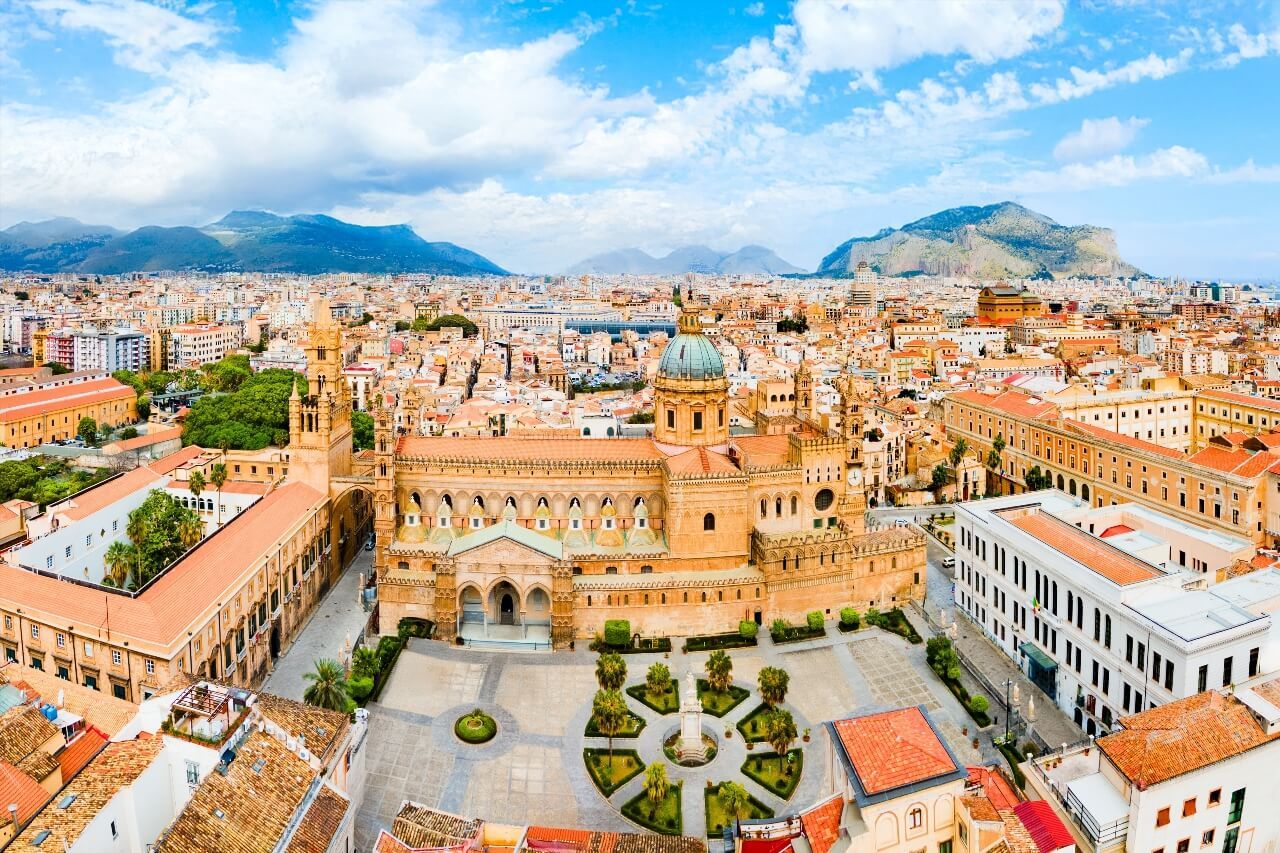
Palerme is a city that requires time to let itself be understood. One often arrives with the idea of a noisy Southern metropolis, one leaves with the memory of a cultural stratification without equivalent in Europe. The Phoenicians founded it in the 8th century BC, the Arabs made it one of the most opulent cities of the medieval world between the 9th and 11th centuries, and the Normans superimposed their cathedrals on mosques with an ease that remains disconcerting nine centuries later.
The Palatine Chapel of the Norman Palace alone concentrates the essence of this syncretism. Built by Roger II in the 12th century, it superimposes Byzantine gold mosaics on Arab columns and a cedar wood framework carved according to the technique of Fatimid craftsmen. The effect is immediate, almost irrational: the eye no longer knows which civilization to address. Count 5 euros for entry to the palace, plan the morning to avoid tour groups that arrive en masse from 10am.
The market of Ballarò is the oldest in the city. It already existed under the Arabs and remains, even today, more frequented by inhabitants than by tourists, making it the most authentic sensory experience of Palerme. Between 7am and 10am, the piles of Bronte pistachios, freshly caught octopus, bulk spices and vendors in Sicilian dialect create an atmosphere that has no equivalent in the standardized covered markets of major European capitals. Taste the panelle (chickpea fritters) and pane con la milza (spleen sandwich), two street foods impossible to find identically outside Palerme.
The Cathedral of Palerme (Via Vittorio Emanuele, 90134 Palerme, rated 4.7/5 on Google for 49,331 reviews) on Corso Vittorio Emanuele is an architectural palimpsest visible from the outside: one can read both Arab arches, Norman towers and the neoclassical dome added in the 18th century. Inside, the royal tombs, including that of Frederick II of Hohenstaufen, Germanic emperor and king of Sicily, are worth the 3 euros entrance fee. Piazza Pretoria, five minutes' walk away, houses the 16th-century baroque fountain whose nude figures earned the square the popular nickname of "Piazza della Vergogna" (Square of Shame).
To explore the historic quarters, Kalsa, Capo, Albergheria, without getting lost in their maze of alleys, the Ryocity of Palerme offers a structure that contextualizes each monument in relation to successive waves of occupation. Plan a full day for Palerme, even two if you want to go off the beaten track and explore the Capuchin catacombs, where 8,000 mummified bodies have been displayed since the 16th century in a staging as disturbing as it is instructive.
2. Monreale and Its Golden Mosaics
Monreale, 8 km southwest of Palerme, houses what many art historians consider the largest ensemble of medieval mosaics in the Western world. The cathedral, built by William II between 1174 and 1185, displays over 6,340 m² a complete iconographic program, from Genesis to Revelation, in gold tessera mosaics on blue background.
The Christ Pantocrator of the apse, at 13 meters high, is the focal point of the entire composition. No photograph can render the effect this figure produces when entering the nave and it suddenly occupies the entire field of vision. Access to the cathedral is free for the nave, the treasury and terraces require a separate ticket (5 euros for the terraces, recommended for the view of the cloister and the Conca d'Oro valley).
The adjacent Benedictine cloister is UNESCO-listed along with the cathedral in the Sicilian Arab-Norman ensemble. Its 228 twin columns, all different in their sculpted decoration, constitute a masterpiece of southern Romanesque art. The visit to Monreale naturally combines with that of Palerme in half a day, local buses (line 389 from Piazza Indipendenza) depart every 30 minutes.
3. Catane, the Black Lava City
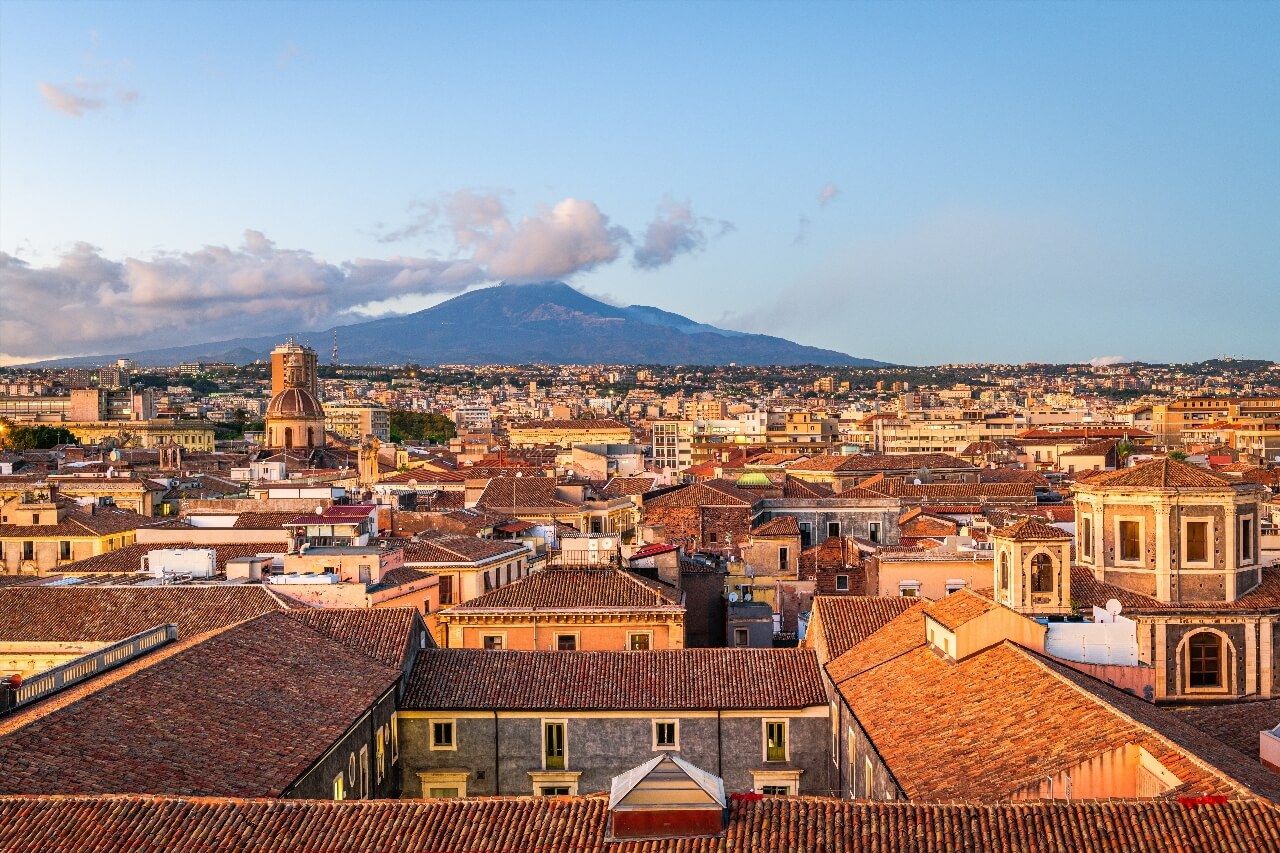
Catane was built and rebuilt in volcanic stone after the 1693 earthquake. Everywhere in the city, this cooled lava gives facades a dark color that the Sicilian sun illuminates with an intensity that belongs only to it. It's a city that doesn't seek to please immediately, it imposes itself through its own energy, the bustle of its markets, the density of its baroque and the permanent awareness of Etna dominating the northern horizon.
The Piazza del Duomo is the heart of everything. In the center, the lava elephant, official symbol of the city since the Middle Ages, carries an Egyptian obelisk on its back. The Cathedral of Saint Agatha, rebuilt in baroque style after 1693, preserves behind its white facade fragments of the original Norman building. The Feast of Saint Agatha in February mobilizes more than a million participants over three days, it's the most important religious event in eastern Sicily and one of the most spectacular in Italy.
The Pescheria market, below the cathedral in a former lava quarry, is an urban spectacle in its own right. Dozens of stalls of whole swordfish, tuna, sea urchins and squid, with a soundtrack of vendors in Sicilian dialect that functions like an improvised musical composition. It takes place every morning except Sunday, until around 1pm. Arrive before 9am to see it at its peak.
Catane is also the logical starting point for the ascent of Etna, 30 km from the first summit craters. It offers the hotel infrastructure and transport connections, SAIS buses from the central station, private shuttles, organized excursions, that are lacking in the small villages on the volcano's flanks. If you plan a night on the island without a car, Catane is the most practical base to cover both the volcano, Taormina and the Ionian coast.
The Ryo audio guide of Palerme covers the Norman foundations found all the way to Catane, a way to enter the history of eastern Sicily by understanding the same dynasties that shaped the capital.
4. Etna, the Volcano That Shapes the Island
Etna culminates at 3,357 meters and remains the highest active volcano in Europe. This altitude is not fixed: each eruption slightly modifies the summit profile, and maps published five years ago show different elevations from those in effect today. It's not a monument visited from the outside, it's a living territory crossed on cooled lava flows, some of which date from less than a decade.
Two main slopes allow access to the summit. The southern slope, from Nicolosi and Rifugio Sapienza (1,900 m), is the best equipped: a cable car goes up to 2,500 m, then 4×4 off-road vehicles driven by certified guides allow reaching 2,900 m. The last kilometer is done on foot on unstable ash and scoria, with a clear view of the active Southeast craters. The northern slope, from Piano Provenzana, offers wilder and less crowded landscapes, with vegetation that abruptly passes from beech forest to bare lava fields.
The regulations deserve to be known before leaving: above 2,900 m, no visitor can access without an INGV-certified official guide. This limit varies according to current volcanic activity, some days, access is forbidden beyond 2,500 m and the cable car doesn't run. Check the INGV (National Institute of Geophysics and Volcanology) website the day before to know the alert level. In high season, guided excursions to upper craters are fully booked up to one week in advance.
Etna also reserves surprises less known to classic circuits. The lava tubes form below the surface an underground network that some specialized guides offer to explore. The Grotta del Gelo, accessible from the northern slope, contains a permanent glacier, an absolute paradox on an active volcano. And the lower flanks between 400 and 1,000 meters are covered with AOC Etna DOC vineyards: Nerello Mascalese produced on the northern slope flows reach prices that rival great Burgundy wines, for a confidential total production of a few tens of thousands of bottles.
Bring warm clothes even in July: at 3,000 m, temperatures drop below 10°C when the coastal plain shows 35°C. Rigid-soled hiking shoes are essential, block lava lacerates sport soles in a few hundred meters. Also bring eye protection against flying ash in strong winds.
5. Taormina, the Balcony Over the Ionian Sea
Taormina occupies a theatrical position: perched at 250 meters altitude on a cliff, with the Ionian Sea below and Etna as backdrop to the northwest. It's probably the most photographed panorama in Sicily, and it deserves its reputation, provided you arrive at the right time, before tour buses transform Via del Corso into a compressed corridor.
The Greek-Roman Theatre is the building that alone justifies the detour. Built by the Greeks in the 3rd century BC, remodeled by the Romans, it remained in use until the 6th century AD. Its absolute particularity: from the tiers, the view simultaneously frames the stage, the sea and Etna's summit, an alignment that archaeologists have never definitively attributed to deliberate intention or fortunate topographical coincidence. From May to September, the theater hosts the Taormina Film Festival and international concerts; tickets sell out several weeks in advance.
The Via del Corso, central pedestrian artery, concentrates shops and granita bars between Porta Messina and Porta Catania. Sicilian granita deserves a separate note: thicker and creamier than industrial versions, served in the morning with a brioche col tuppo (with a tuft), it exists in almond, pistachio, lemon and wild blackberry versions. Arrive before 8am for the breakfast version, in one of the bars on Via del Corso or Piazza IX Aprile.
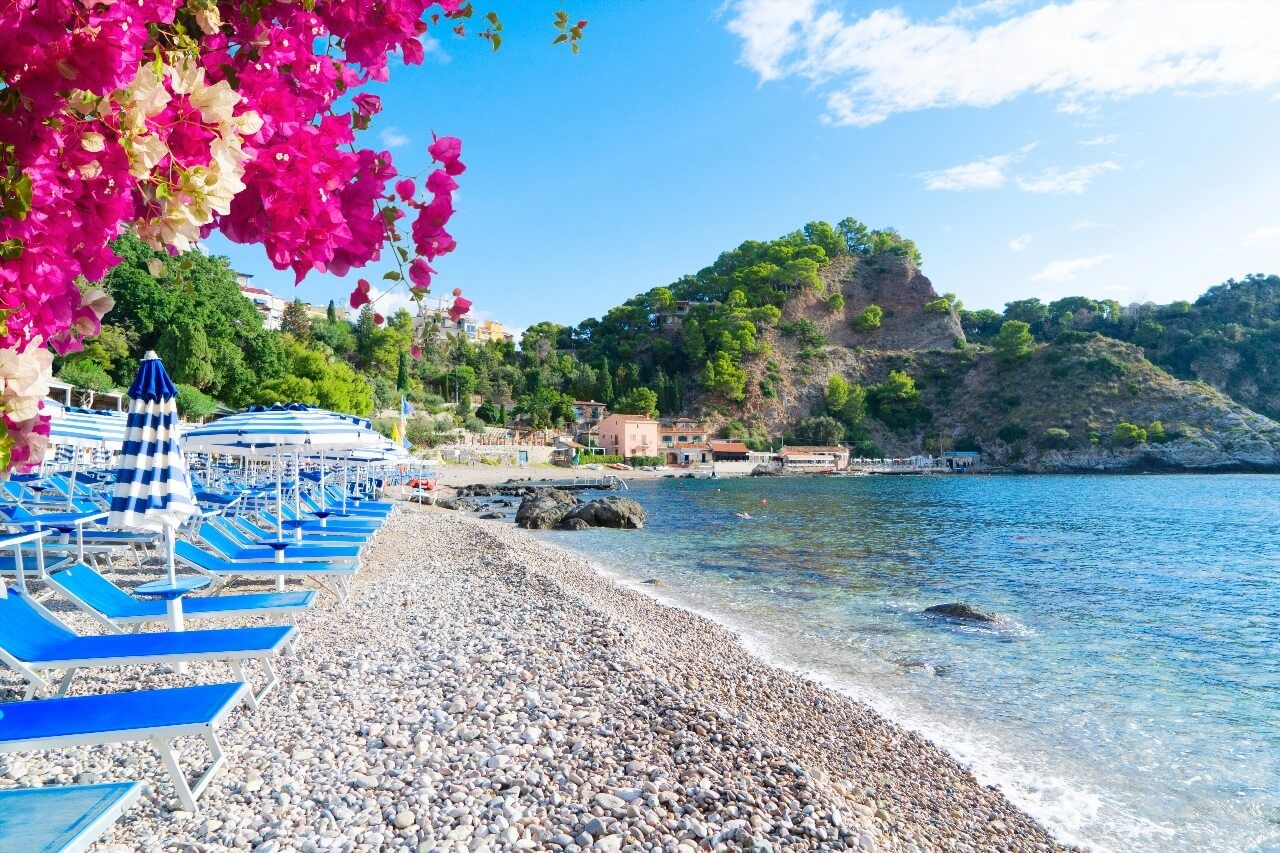
The beach of Isola Bella, accessible from Taormina by funicular (2 euros one way) or a 20-minute path, is a small island connected to the coast by a sandbar. Classified as a nature reserve, it has neither parasols nor bars, its appeal lies entirely in the clarity of the water and the shape the sand takes according to tides. In July-August, it's invaded from 9am; arrive early or come in late afternoon for the raking light on the rocks.
Plan to spend the night in Taormina to enjoy the city once day groups have left. In the evening, Piazza IX Aprile regains a tranquility that allows seeing the panorama in better conditions than any afternoon hour.
6. Syracuse and Ortygia Island
Syracuse was, in the 5th and 4th centuries BC, the most powerful Greek city in the entire western Mediterranean, more populated than Athens according to the most serious estimates of antiquity. This colossal history can still be read in stone, from the Greek theater carved directly into rock to the columns of the temple of Athena embedded in the cathedral walls.
The visit naturally divides into two ensembles. The Neapolis, on the mainland, concentrates the major archaeological sites: the 5th-century BC Greek theater (it could accommodate 15,000 spectators and Aeschylus plays were performed there during his lifetime), the Roman amphitheater and especially the Ear of Dionysius, an artificial cave 23 meters high and 65 meters deep whose extraordinary acoustics allegedly allowed tyrant Dionysius the Elder to amplify and spy on conversations of Athenian prisoners captured in 413 BC
The island of Ortygia, connected to the mainland by two bridges, is the historic heart of the city founded by Corinthian colonists in 734 BC. The Cathedral of Syracuse (Piazza del Duomo, 96100 Syracuse, rated 4.7/5 on Google for 11,681 reviews) is its central point: built in the 7th century AD, it literally reuses the Doric columns of the 5th-century BC temple of Athena, still visible from the outside, embedded in the baroque cathedral walls. Twenty-five hundred years of history are superimposed in a single building, without artificial restoration.
The Fountain of Arethusa, a freshwater spring emerging just meters from the Ionian Sea, is mentioned by Pindar in the 5th century BC. Today, it's a small basin planted with papyrus (the only plant growing naturally in Europe outside the Nile delta) where ducks have taken up permanent residence. Both anecdotal and moving, the water of this spring has been flowing for at least twenty-five centuries. The Ortygia market on Via Trento, every morning, sells species caught in the Strait of Messina using ancestral techniques, including swordfish that cannot be found as fresh anywhere else.
Plan at least a full day for Ortygia, even two if you add Neapolis. The Ryocity of Palerme, with its 23 commentaries on the dynasties that governed all of Sicily, helps contextualize what is seen in Syracuse, the same Normans left their mark in both cities.
7. The Valley of the Temples in Agrigente
The Valley of the Temples is the best-preserved Greek archaeological site in the world outside Greece. Not a reconstruction, not a museum: seven Doric temples built between the 6th and 5th centuries BC, standing on a rocky ridge above the Mediterranean, in a state that often surpasses their equivalents on the Athens Acropolis.
The Temple of Concordia (Via Sacra, 92100 Agrigente, rated 4.9/5 on Google for 5,871 reviews) is the masterpiece. Erected around 440 BC, it preserves the 34 columns of its peristyle (six on the short sides, thirteen on the long ones), all still standing, an exceptional preservation rate explained by conversion to a Christian church in the 6th century. Christians blocked the intercolumns to create walls, transforming the temple into a basilica and unwittingly preserving it for fifteen centuries. At the end of the day, when the sun declines on golden limestone and organized tour groups have left, the atmosphere at this site is difficult to match elsewhere in the Mediterranean.
The Temple of Olympian Zeus tells another story, that of a titanic construction site never completed. Begun in 480 BC to celebrate Agrigente's victory over Carthage, it would have been the largest Doric temple ever built (113 m × 56 m). Atlantes of 7.65 m were to serve as load-bearing columns. The life-size copy, lying on the ground in the adjacent archaeological museum, gives a dizzying idea of the project's ambition. This museum alone deserves an additional half-day for sculptures and ceramics found on site.
Visit strategy: arrive at opening (8:30am) for the Valley of the Temples with morning light, then dedicate early afternoon to the Regional Archaeological Museum to contextualize everything you've seen. The combined site + museum ticket costs about 15 euros. The Scala dei Turchi, white marl cliff 4 km away, integrates perfectly into the same day in late afternoon.
8. Cefalù, Norman Cathedral and Beach
Cefalù, 70 km east of Palerme, successfully achieves a rare association: UNESCO architectural heritage and a fine sand beach in the city center, just a few hundred meters from each other. For travelers who want to alternate historic sites and swimming without wasting time on travel, it's one of the most successful balance points on the island.
The Cathedral of Cefalù (Piazza del Duomo 1, 90015 Cefalù, rated 4.7/5 on Google for 14,095 reviews), built in the 12th century by Roger II after a vow fulfilled during a storm at sea, houses in its apse the Christ Pantocrator of Cefalù, one of the oldest and best-preserved Byzantine mosaic faces of Christ in the West. The gold tessera laying technique allows the face to change expression according to the angle of light: a 12th-century technical prowess that continues to baffle modern visitors. Arrive at opening (9am) for morning light on the mosaics.
The beach of Cefalù, directly adjacent to the historic center, stretches in the shadow of the Rocca, the 270 m rock dominating the city. The path that climbs to the Rocca in 45 minutes from the bottom of the city reveals the remains of a megalithic temple probably pre-Hellenic and a 360° view of the Tyrrhenian coast. It's also from there that one understands why the Normans chose this site, the visual control of the coast is total.
Avoid Cefalù in August: the beach becomes unmanageable with Italian vacationers. June and September offer the best conditions, water still or already warm, reduced crowds and Mediterranean light at its maximum.
9. Noto, the Reconstructed Baroque City
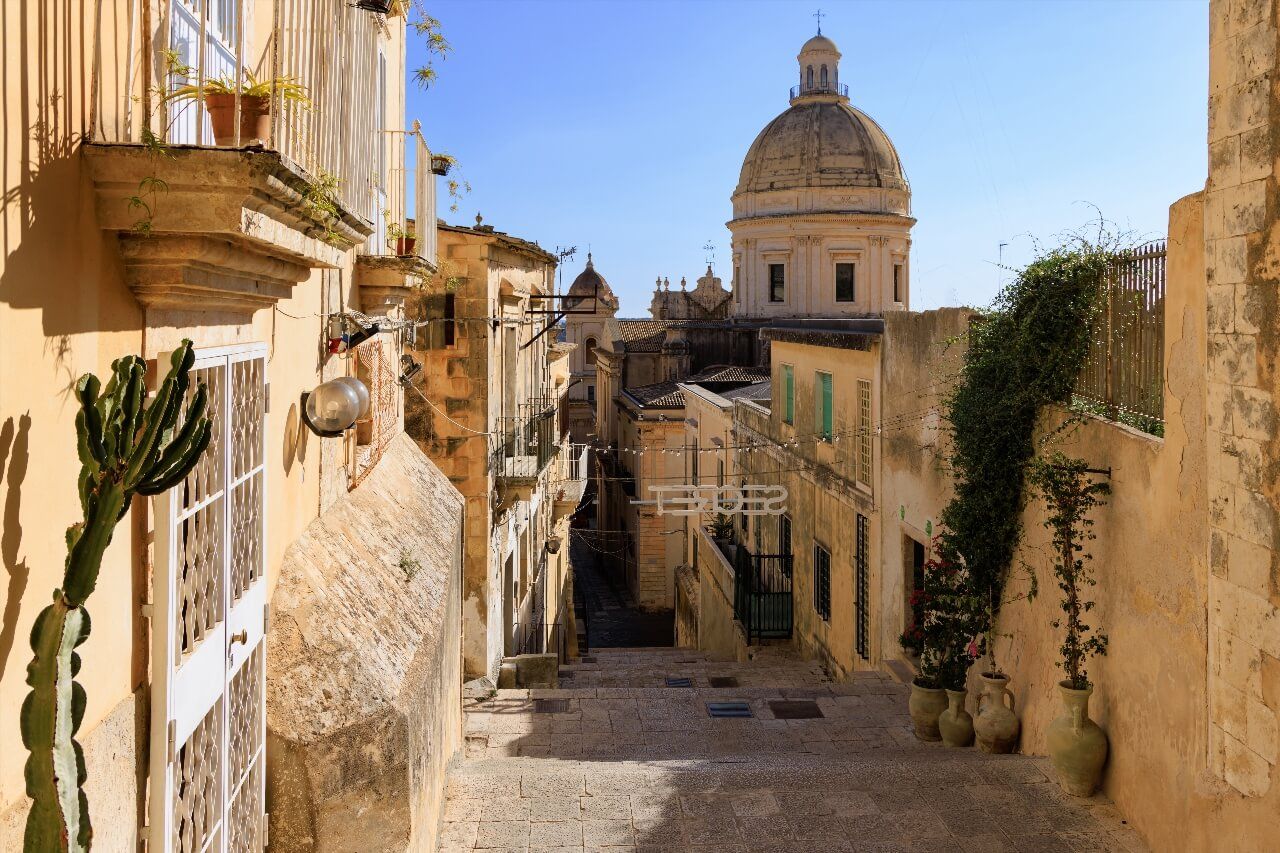
Noto is a unique case in European architecture: an entire city built ex nihilo after the 1693 earthquake on a different site from the original location, according to a rational grid plan and in such a homogeneous baroque style that architects continue to come and study it as a built manifesto.
The Corso Vittorio Emanuele, the city's central artery, is an open-air movie set. The Cathedral of Noto (Piazza Municipio, 96017 Noto, rated 4.7/5 on Google for 10,023 reviews) and its monumental staircase, the Palazzo Ducezio (town hall) and Gagliardi's Chiesa di San Domenico: three baroque facades aligned in enfilade over three hundred meters, all built in the same golden limestone that turns burnt orange at the end of the day. The cathedral collapsed in 1996 under the weight of its degraded dome, entirely rebuilt identically, and reopened in 2007.
In May, the Infiorata di Noto transforms Via Nicolaci into a carpet of fresh flowers: geometric and figurative patterns 300 meters long composed of petals collected the day before. The festival takes place on the third Sunday in May and attracts visitors from around the world. If you plan your trip around this date, book your accommodation in Noto or Syracuse several months in advance. Noto combines in one day with Raguse (1 hour by car) to cover the essential of baroque Val di Noto.
10. Raguse Ibla, Baroque Perched on the Ravine
Raguse is actually two superimposed cities: Ragusa Ibla (Piazza del Duomo, 97100 Ragusa, rated 4.6/5 on Google for 14K reviews), the medieval lower city rebuilt in baroque after 1693, and Ragusa Superiore, the upper city built after the earthquake. Ibla concentrates most of the interest and is among the eight municipalities of Val di Noto inscribed together as UNESCO World Heritage.
The Duomo of San Giorgio, completed in 1775 by Rosario Gagliardi, is the Sicilian architect's masterpiece. Its concave facade with three levels of superimposed columns, Doric, Ionic, Corinthian, constitutes an exercise in baroque exuberance regularly cited among the most accomplished in Europe. The interior, more sober, preserves 17th-century Flemish paintings and Art Nouveau stained glass windows placed there by happy stylistic error.
Outside Sicily, Raguse is known thanks to the series Inspector Montalbano, many scenes of which were filmed in Ibla. Fans will recognize the stairs of Corso XXV Aprile, the facade of the fictional police station and several restaurants in the center. This television fame has significantly increased tourism since the 2000s, another reason to come off-season, in April-May or October, when the alleys regain their calm and accommodation costs half as much.
11. Villa Romana del Casale in Piazza Armerina
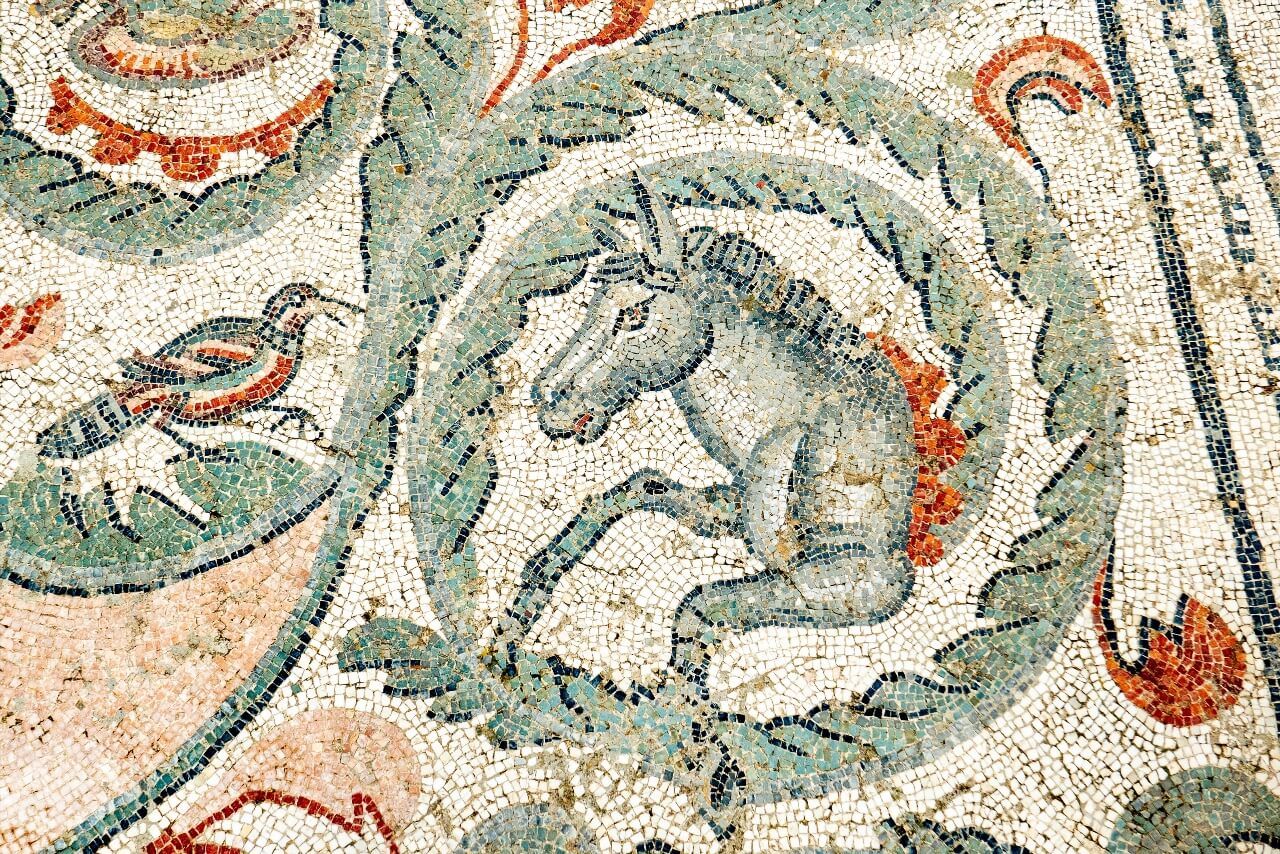
The Villa Romana del Casale (Contrada Casale, 94015 Piazza Armerina, rated 4.7/5 on Google for 17,180 reviews), buried under meters of mud after a 12th-century flood and rediscovered in the 20th century, is the most extraordinary Roman site in Sicily. Its state of preservation, due precisely to this burial, stunned archaeologists during systematic excavations in the 1950s.
Its 3,500 m² of polychrome mosaics constitute the largest ensemble of Roman mosaics in situ in the world, a figure to remember to understand the site's scope. Built between the end of the 3rd and beginning of the 4th century, probably for a very high-ranking person (some historians lean toward Maxentius or Maximian), it develops on its floors an iconographic program of unparalleled richness.
The Great Hunt room is the most spectacular: a continuous frieze of 60 meters representing the capture of wild animals in Africa and the Orient, elephants, rhinoceros, ostriches, leopards, tigers, for Rome's arenas. Zoological precision is such that 20th-century biologists identified species now extinct from certain regions. The female athletes' room (called "Bikinis") represents ten young women practicing sports in outfits that indeed resemble modern bikinis, 4th-century mosaics that continue to baffle visitors as much as they make them smile.
Plan 2 to 3 hours on site to walk on the elevated walkways that allow seeing the mosaics without stepping on them. The city of Piazza Armerina, 5 km from the villa, offers an appreciated lunch break after the visit.
12. Sélinonte, Greek Ruins by the Sea
Sélinonte is the largest Greek archaeological site in Europe by area: 270 hectares of ruins spread over two hills by the sea. Founded around 628 BC by Greek colonists from Megara Hyblaea, destroyed by Carthage in 409 BC, it was never rebuilt. What you see today is the catastrophe itself, columns toppled by Punic armies or later earthquakes, scattered capitals like giant dice in the sparse grass.
The Temple E, the best preserved, regained seven erected columns after partial 20th-century anastylosis. Its original metopes, transferred to Palerme's Regional Archaeological Museum, count among the most beautiful examples of archaic Greek sculpture. The Temple C, the oldest on the site (6th century BC), preserves fourteen standing columns, a panorama that opens directly onto the Mediterranean Sea.
The atmosphere is fundamentally different from Agrigente. One can walk for hours on the site without encountering organized groups, the place is more difficult to access from major Sicilian cities, which naturally filters mass tourism. Come in late afternoon for raking light on the stones.
13. The Aeolian Islands
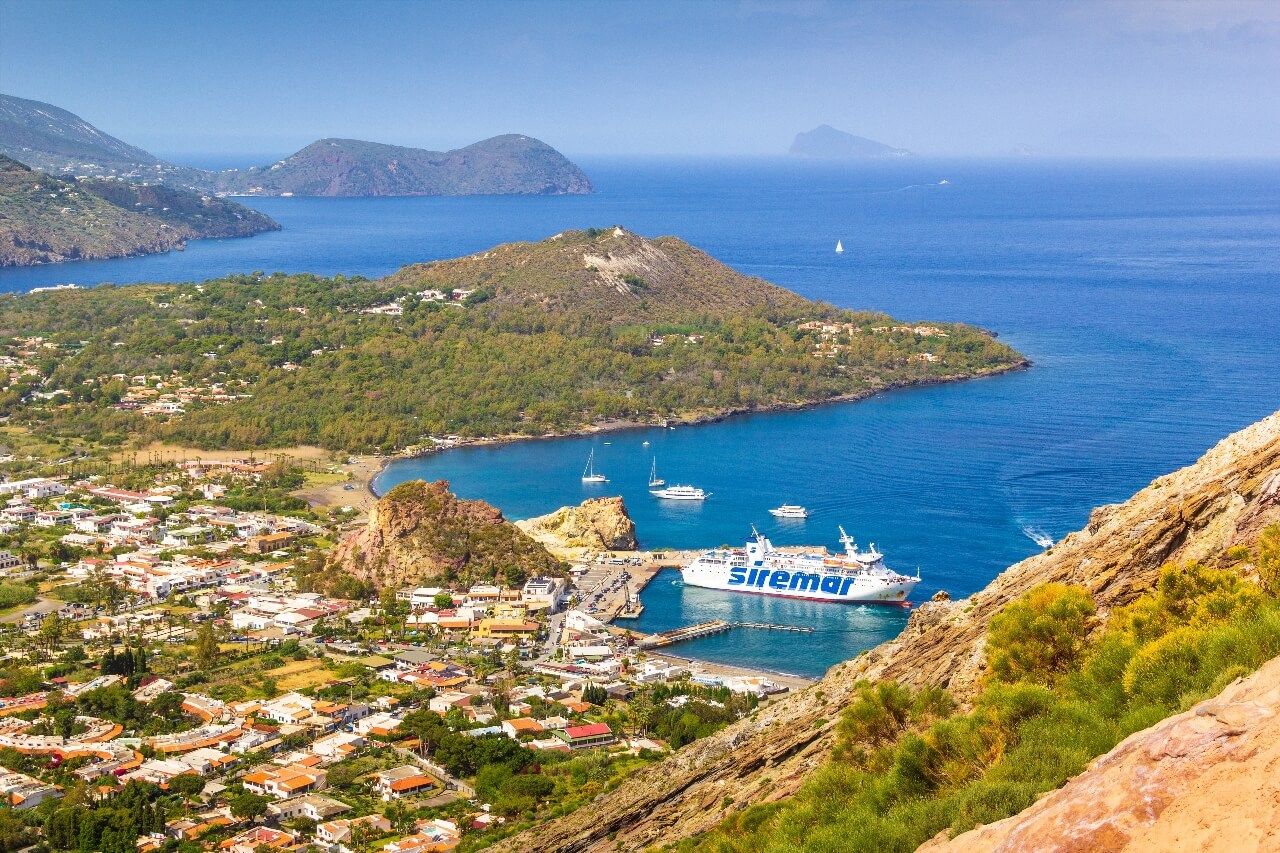
The Aeolian Islands archipelago, seven volcanic islands north of Sicily, has been UNESCO World Heritage since 2000 for the quality of its "active volcanism", a formulation that takes on full meaning on Stromboli, the most spectacular and demanding of the seven.
Stromboli has been continuously spewing lava for at least 2,000 years, hence its nickname "lighthouse of the Mediterranean". The nocturnal ascent to Pizzo sopra la Fossa (926 m) must be done with a certified guide above 400 m altitude. Explosions visible from the summit occur every 15 to 20 minutes on average. In high season, nocturnal explosions seen from boat ("in barca" excursions from the port) constitute a less physical but equally striking alternative. Book guided excursions at least 48 hours in advance.
Lipari is the largest of the islands (10,000 permanent inhabitants). Its Aeolian Archaeological Museum, installed within the Norman castle enclosure, is one of the most important in the Mediterranean world for Bronze Age ceramics and objects. Vulcano, closest to the Sicilian coast (20 km from Milazzo), offers sulfurous mud baths that the smell of hydrogen sulfide announces from afar, a thermal experience practiced since antiquity. Salina, the greenest of the archipelago, cultivates capers and Aeolian Malvasia, a sweet liqueur wine produced in confidential quantities. It's there that scenes from the film Il Postino (1994) were shot.
Access is from Milazzo (hydrofoils year-round, 50 minutes to Lipari) or from Messina and Palerme in season. Plan at least 3 nights to explore two or three islands without rushing, a one-night stay doesn't leave time to understand each island's unique rhythm.
14. Scala dei Turchi
The Scala dei Turchi (Via Scala dei Turchi, 92010 Realmonte, rated 4.5/5 on Google for 12,529 reviews), 4 km from Agrigente, is a white marl cliff sculpted by erosion into natural steps that plunge into the Mediterranean. The name recalls that Barbary corsairs used these natural steps to land on the Sicilian coast during their 16th and 17th-century raids.
The white rock (calcareous-clayey marl) contrasts with the intense blue of the sea and the golden sand of the adjacent beach, a visual combination that has made this place unmissable on social media, to the point that reserve managers have introduced access restrictions on certain days of summer crowds. Arrive before 9am in July-August: the cliff becomes slippery with heat and crowds. Integrate it into an Agrigente-Agrigente loop itinerary, ending with Scala in late afternoon when the light is most favorable.
15. San Vito Lo Capo and Zingaro Reserve
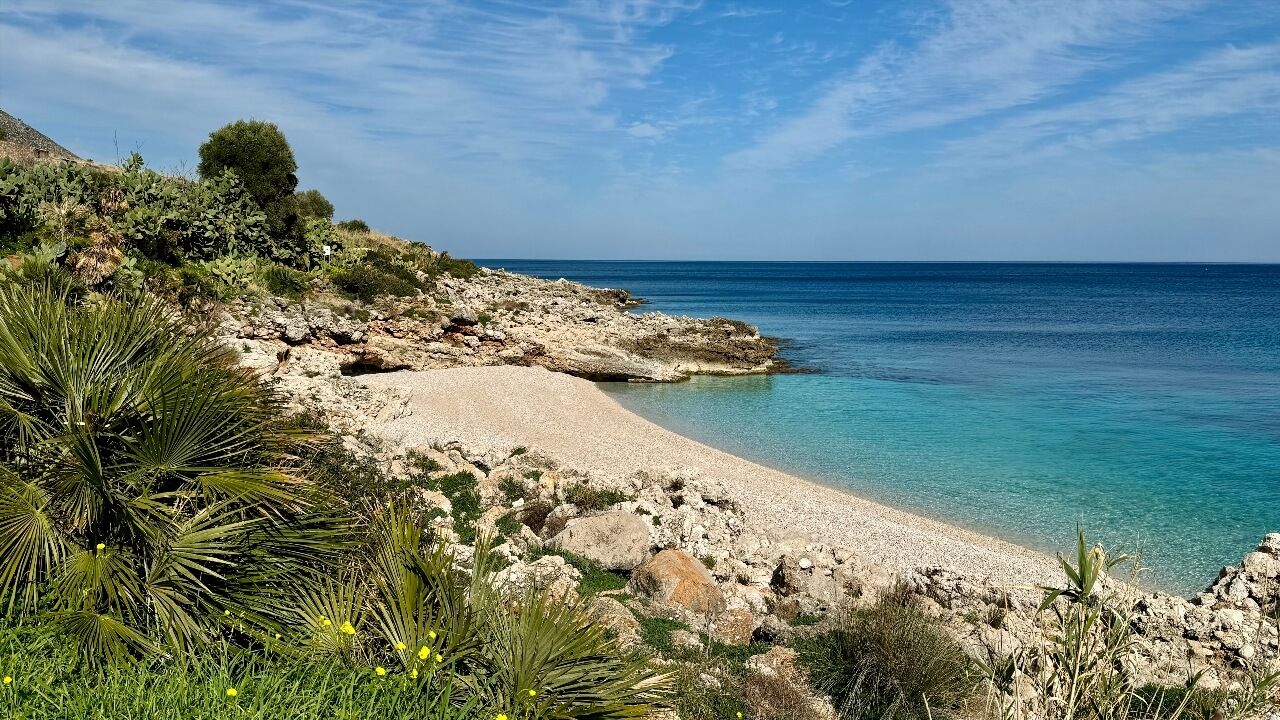
San Vito Lo Capo (Via Savoia, 91010 San Vito Lo Capo, rated 4.7/5 on Google for 11K reviews) is known for its fine sand beach with turquoise waters, regularly ranked among the most beautiful in Italy. But it's mainly the gateway to Zingaro Nature Reserve, the first nature reserve created in Sicily in 1981 after a popular mobilization that prevented construction of a coastal road.
Seven kilometers of wild coast between Scopello and San Vito Lo Capo, without roads or construction, accessible only on foot. The main coastal trail connects both entrances in 5 to 6 hours one way. Along the way: a succession of coves, Cala dell'Uzzo, Cala Capreria, Cala Berretta, with water transparency that the Mediterranean usually reserves for postcard backgrounds. Take the north entrance from Scopello in the morning to have the sun behind you, and reach the most beautiful coves before the influx of hikers going the opposite direction. Bring enough water, no supply points inside the reserve.
The Cous Cous Festival of San Vito Lo Capo in September attracts cooks from around the world and transforms the beach into a gastronomic stage for a week. If your stay coincides, it merits a detour even for those who didn't come to Sicily for the cuisine.
16. Modica and Baroque Chocolate
Modica, in Val di Noto, is a two-story baroque city connected by monumental staircases, with a San Giorgio cathedral attributed to Rosario Gagliardi's circle, the same baroque architect as in Raguse, dominating the upper city from 250 meters height. The Modica-Raguse-Noto ensemble forms a 30 km triangle that can be covered in one intensive day by car.
Modica's particularity, which earns it international fame independent of its architecture, is its Modica chocolate: a cold preparation from Aztec tradition transmitted by the Spanish in the 16th century, without addition of cocoa butter or milk. The texture is granular, the taste intense and lightly sweetened. The chocolateries of Via Fratelli Testa offer spice variants (cinnamon, chili, carob) that have no equivalent in classic European confectionery. It's a souvenir to bring back, but must be tasted on site to understand the difference with exported versions.
17. Ségeste, the Solitary Temple in the Hills
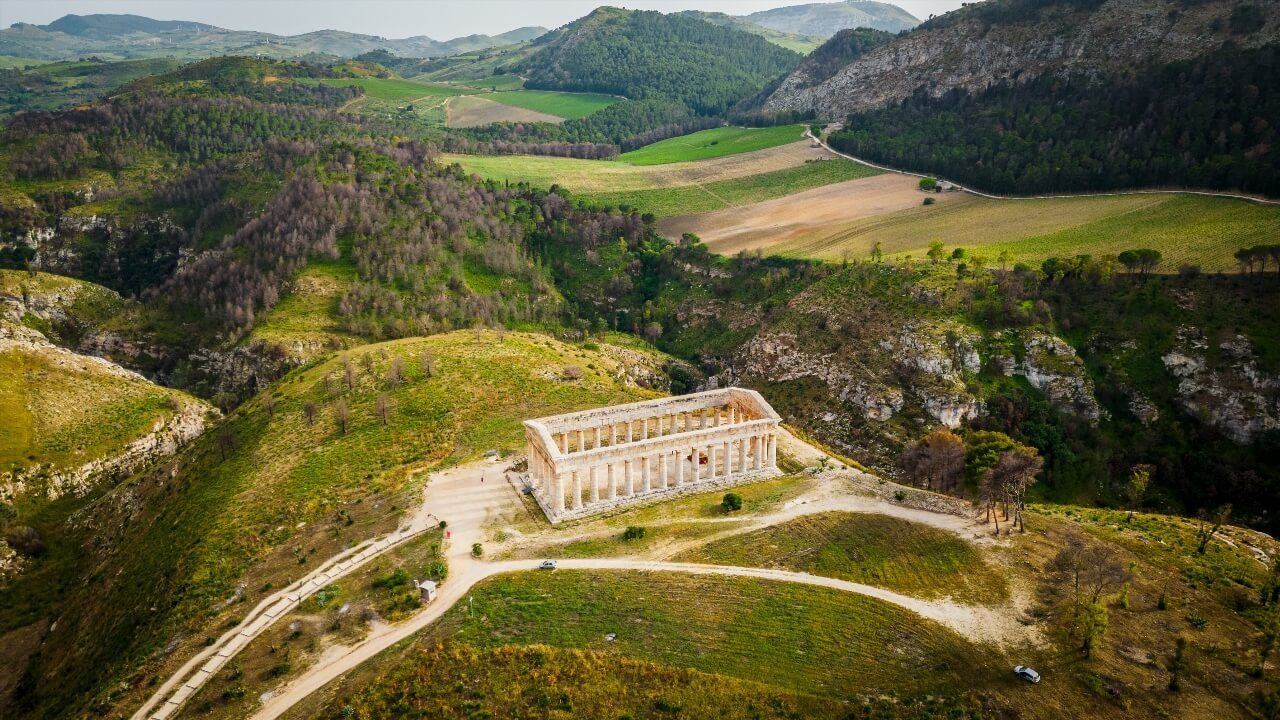
Ségeste offers one of the most striking visions of all Greek Sicily: a 5th-century BC Doric temple sitting alone on a hill between Trapani and Palerme, in a landscape of Mediterranean maquis with no other construction visible on the horizon. The temple was never completed, the columns are not fluted, the roof was never installed, which gives it a simultaneously raw and moving presence that completed temples don't have.
A 3rd-century BC Greek theater, accessible 15 minutes on foot from the temple or by shuttle, dominates the hill with a panoramic view of the Castellammare bay and interior mountains. Ségeste can be visited in 2 hours from Trapani or as a stop on the Palerme-Trapani route. There is no tourist infrastructure in the site itself, bring water and sun protection.
FAQ
What is the best time to visit Sicily?
April-May and September-October are the ideal periods: pleasant temperatures between 20 and 26°C, warm sea from late May, archaeological sites accessible without the scorching heat of summer. July-August is very hot (35-40°C on plains) and very crowded on the coast, but ideal for the Aeolian Islands. Sicilian winter is mild, but some sites reduce their opening hours and Stromboli is less accessible in bad weather.
How much time is needed to visit Sicily?
Two weeks allow covering the essential sites of this article without rushing too much. One week is enough for a targeted Palerme-Cefalù-Taormina-Syracuse circuit. One month is necessary to integrate the Aeolian Islands, Etna, interior archaeological sites (Agrigente, Piazza Armerina, Sélinonte) and baroque cities of Val di Noto at a comfortable pace.
How to get around in Sicily?
Car rental is essential to explore the island's interior: isolated archaeological sites (Sélinonte, Villa del Casale), nature reserves (Zingaro) and baroque cities of Val di Noto. Between major cities (Palerme, Catane, Syracuse, Messina), the railway network and long-distance buses work correctly. For the Aeolian Islands, only ferry from Milazzo or hydrofoil allow access to the archipelago.
Should you book in advance for Etna?
Yes, particularly for the guided ascent above 2,900 m. In high season (July-August), INGV-certified guides are fully booked up to a week in advance. Book as soon as you know your dates. The southern slope cable car doesn't require reservation, but generates significant queues in summer. Also check the volcanic alert level the day before, access can be restricted at any time.
What are the most impressive Greek archaeological sites?
The Valley of the Temples in Agrigente for outdoor temples, Syracuse and Neapolis for historical depth, Sélinonte for the wild atmosphere and feeling of being the first visitor, and Ségeste for total isolation. Villa Romana del Casale is not Greek but Roman, and its mosaics surpass everything the other sites offer indoors.
Can you visit Sicily without a car?
Yes, by limiting yourself to major cities connected by train: Palerme, Catane, Taormina, Syracuse. For everything else, Agrigente, Noto, Raguse, Sélinonte, Piazza Armerina, Zingaro reserve, a car or organized taxi is essential. Sicilian intercity buses exist but are slow, infrequent and rarely coupled together for connections.
Conclusion
Sicily doesn't reduce to its postcard landscapes or Greek vestiges. It reveals itself in superimposition, a cathedral placed on a temple, a market established for centuries on the same Arab pavements, an active volcano surrounded by appellation vineyards. Seventeen sites in one article, but each would deserve a stay in itself. If you still hesitate about what to see in Sicily as priority, remember this principle: alternate a major archaeological site, a baroque city and a volcano or beach day, and you will have grasped the island's soul without running from one end to the other.
To approach Sicily through its capital, and it's the best entry point into the island's history, the Ryo audio guide of Palerme offers 23 audio commentaries over 7.7 km to understand how Arabs and Normans built together one of the most singular metropolises of medieval Mediterranean. A three-hour introduction that changes the perspective for the rest of the journey.