
Créé par Emilie, le 7 mai 2026
Votre guide Ryo
© Shutterstock
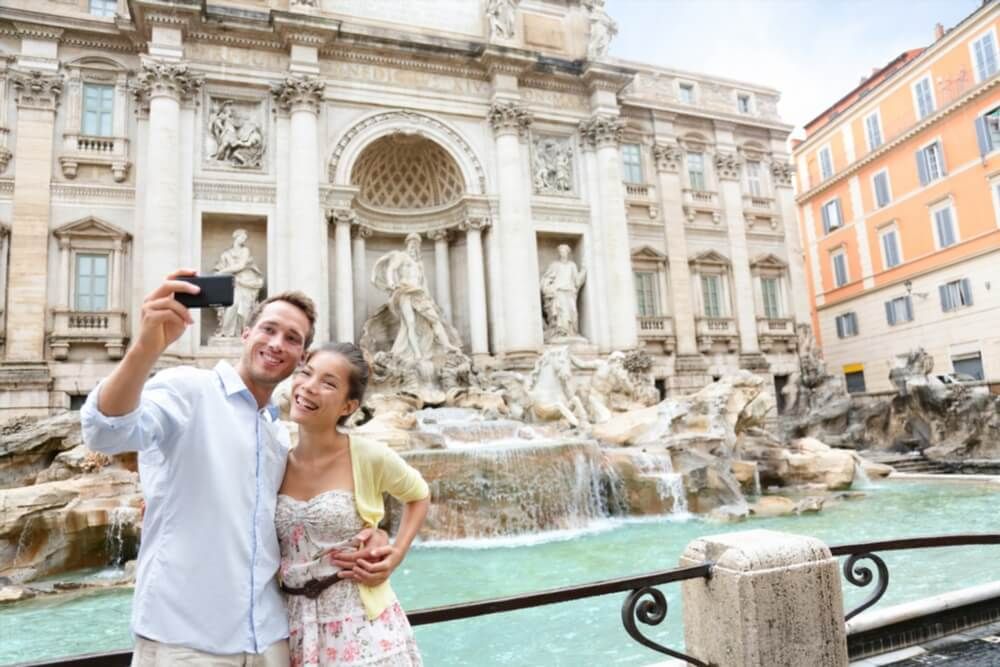
During your trip to Rome, it is absolutely impossible not to visit the Trevi Fountain. Whether for its bewitching beauty, its exceptional dimensions, its baroque architecture or out of superstition, the Trevi Fountain is an essential stop during your stay in Rome.
How to get to the Trevi Fountain? When to visit the Trevi Fountain? What is the legend of the Trevi Fountain?…
Discover why you shouldn't miss this visit with family, friends, or as future lovers if your wish comes true!
Discover the largest and most popular fountain in the city of Rome, and very likely in all of Italy…
A bit of history…
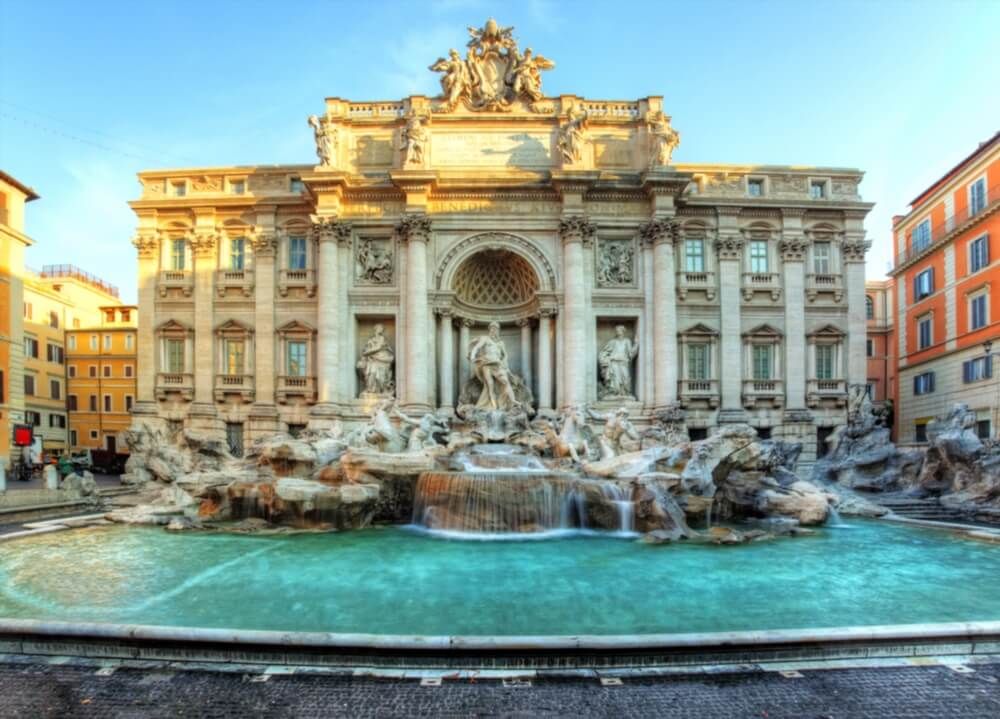
The Trevi Fountain was built in the 18th century at the request of Pope Clement XII so that the small fountain that had supplied the neighborhood until then would be replaced by a gigantic fountain finally giving residents access to spring water.
It was architect Nicola Salvi's plans that caught the pope's attention, work began in 1732 and finished in 1762. In the meantime, the construction would be taken over several times between the architect's death and the 2 successors who followed.
The hydraulic system was modified in 1998 to modernize it and renovation work had to be undertaken between 2014 and 2015 following acts of vandalism.
This fountain, made of Carrara marble and travertine, is a very well-preserved baroque-style work of art.
The Trevi Fountain would enter history and become extremely popular worldwide thanks to Federico Fellini's film: "La Dolce Vita" and the midnight bath scene with Anita Ekberg and Marcello Mastroianni.
How to visit the Trevi Fountain
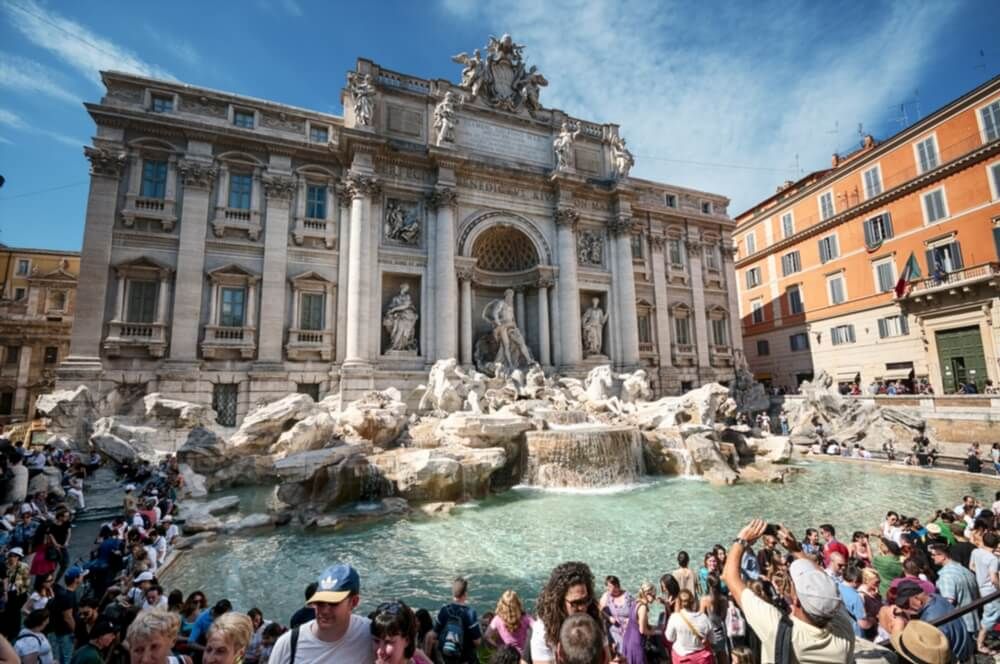
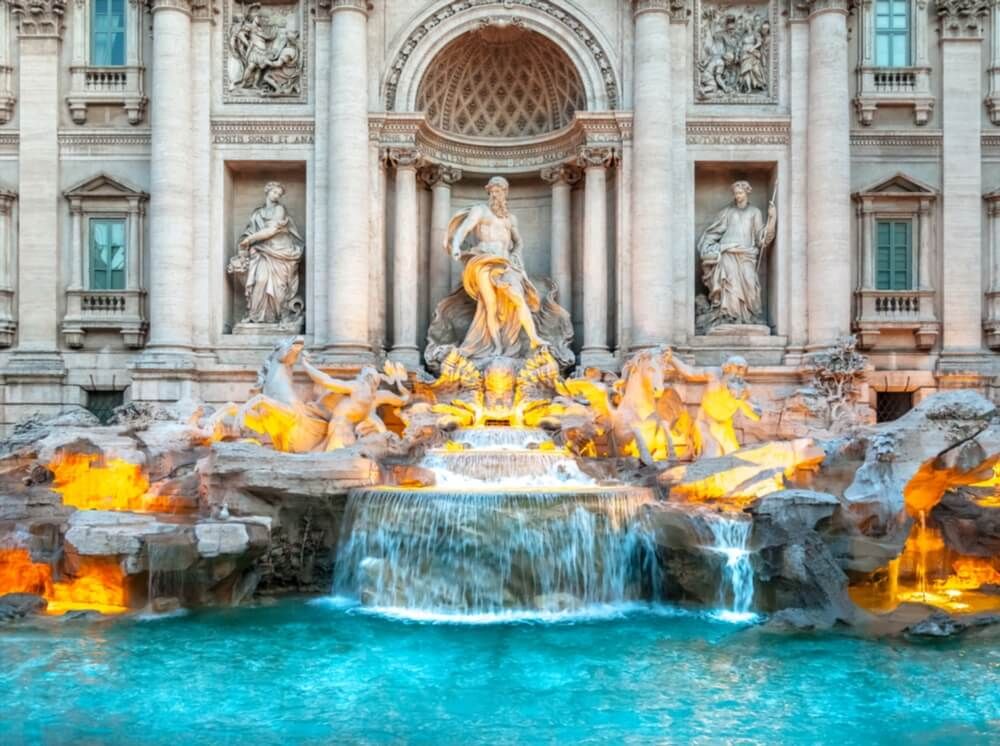
There are always many people at the Trevi Fountain, as we mentioned above, it is very popular. But it's worth seeing, it represents a temple or triumphal arch to the glory of water with Neptune, God of the seas, as the central character on his shell-shaped chariot driven by winged horses.
Other sculpted characters surround Neptune: seahorses, tritons, a young girl, Trevi (who, according to legend, would have led Roman soldiers searching for a water source to the spring of the Sabine mountains to preserve her innocence), she would have given her name to the fountain.
The character located to the left of Neptune would be Agrippa's consul (Roman general and politician of the 1st century BC), the horses sometimes docile and sometimes spirited represent the moods of the ocean, the statues in alcoves represent on the left, Prosperity, and on the right, Health. The other 4 statues represent the 4 seasons.
The fountain, 20 m long by 26 m high, is composed of 4 basins, including 3 small ones that then fill the large one.
The lovers' fountain is located to the left of the monument, according to legend, lovers who drink water from this fountain will always be faithful to each other.
The Latin inscription above the fountain means: "Clement XII, Sovereign Pontiff, embellished with grandiose refinement the Aqua Virgo aqueduct, recommended for its abundance and healthiness, in the year of grace 1735, the sixth year of his pontificate."
The legend surrounding the Trevi Fountain
It states that whoever throws a coin into its basin will see their wish come true. This tradition comes from a 1954 film "Three coins in the Fountain" which is known in France as "La Fontaine aux Amours."
But be careful, the number of coins would have a meaning, see for yourself:
- 1 coin means you will return to the city of Rome,
- 2 coins means you will fall in love with an Italian man or woman, or that great love will be revealed in Rome, or that a wish dear to you will be fulfilled,
- 3 coins means you will marry within the year the person you met in Rome…
According to some "experts", it would be better to throw the coins while thinking about your wish for it to work… But also to do it with your back turned to the fountain, with your left hand over your right shoulder or over your left shoulder with your right hand.
Not to do (unless you deeply wish it): throwing 4 coins into the Trevi Fountain would bring the end of a union, in other words, guaranteed divorce.
The coins, and this is not a legend, are collected every Monday and redistributed by the city to charitable works. This represents almost one million euros per year…
How to get to the Trevi Fountain?
It is located in the modern district of Rome, Trevi square.
1 – By metro to the Trevi Fountain
Take line A (red), get off at "Barberini" station, you'll only have 500 meters to walk to reach it.
2 – By bus to the Trevi Fountain
Lines 52, 62, 63, 71 80, 83, 85, 160, 492, C3, N4, N5, N12, N25 stop "Tritone – Fontana di Trevi".
Price of visiting the Trevi Fountain
The visit is free.
When to visit the Trevi Fountain?
You can go at any time of day or night, but there are many people between 10 am and 11 pm.
It's therefore better to go before 10 am or after 11 pm if you don't have young children with you who need to sleep early, the fountain will be much more accessible, but it's almost never empty, popularity obliges! At night, the light shows are very pleasant to watch.
Avoid, as we mentioned above, Monday morning, because that's when the fountain is emptied of its coins, for taking souvenir photos or appreciating the sound of water it's really not the best time! In winter, it's a bit calmer, except in December.
It is forbidden to bathe and collect coins in the Trevi Fountain, ignoring this advice could cost you dearly… Between 40 and 240 € fine.
Last advice: beware of pickpocketing, backpacks or bags placed on the ground are easy targets!