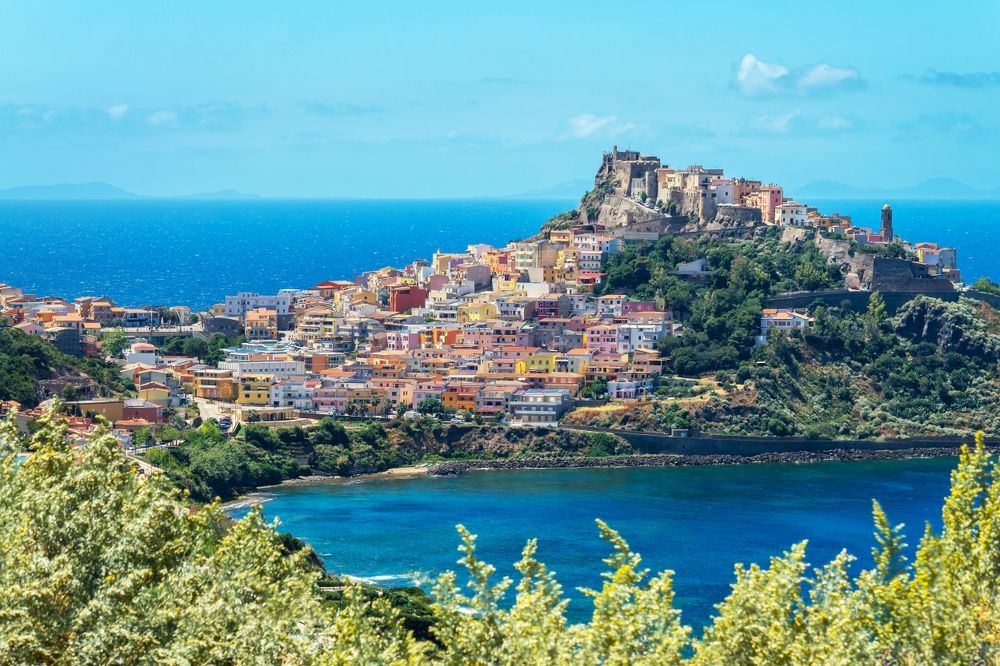

Créé par Emilie, le 7 mai 2026
Votre guide Ryo
© Shutterstock
The second largest island in the Mediterranean after Sicily, Sardinia is a dream destination that captivates with the beauty of its contrasting landscapes. Between paradisiacal beaches with turquoise waters, authentic perched villages, mysterious archaeological sites and wild mountains, the island offers exceptional diversity. Whether you're a fan of lounging on white sand, passionate about ancient history or a hiker seeking preserved nature, Sardinia will charm you. Discover our selection of the 13 most beautiful places to visit in Sardinia to prepare an unforgettable stay on this fascinating Italian island.
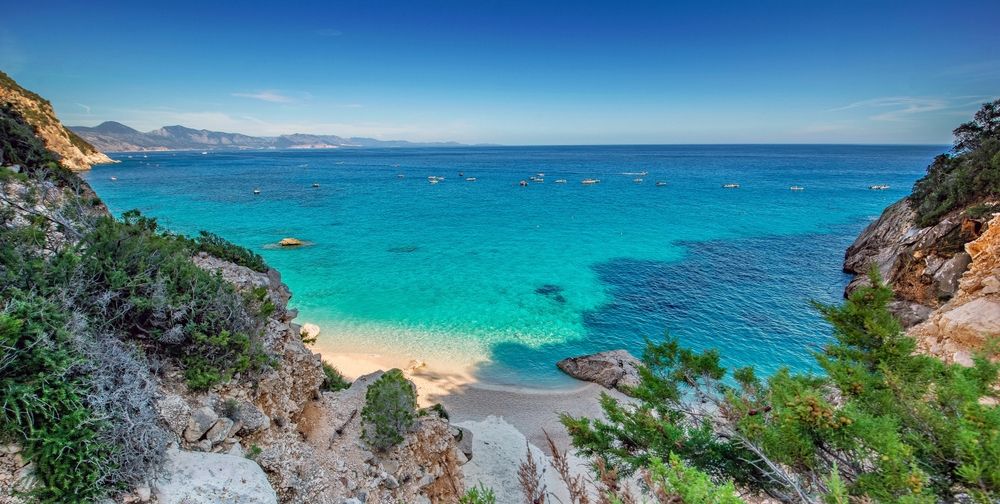
1. Cala Goloritzé, the pearl of the gulf of Orosei
Considered one of the most beautiful beaches in the world, Cala Goloritzé (40°07'51.6″N 9°41'09.6″E, rated 4.8/5 on Google for 8,237 reviews) embodies the wild beauty of Sardinia. Nestled in the south of the gulf of Orosei, near the municipality of Baunei, this cove classified as a natural monument is distinguished by its spectacular natural rock arch that seems to spring from the sea. Immaculate white sand, round pebbles polished by the waves and exceptionally clear turquoise water compose a tableau worthy of the most beautiful postcards.
Accessible only on foot after a hike of about one hour or by boat, Cala Goloritzé has preserved its wild and unspoiled character. A freshwater spring flows directly into the sea, offering a unique feature to this beach. For climbing enthusiasts, the limestone cliffs offer multiple climbing routes, making this place a popular spot for experienced climbers. The cove is one of Sardinia's must-sees, a magical place where mountains meet the sea in perfect harmony.
2. Cala Luna, the jewel of the Sardinian coast
A few cable lengths from Cala Goloritzé, Cala Luna (40°15'15.4″N 9°37'42.8″E, rated 4.8/5 on Google for 4,129 reviews) stands out as one of the most emblematic beaches of the gulf of Orosei. This white sand stretch of about 800 meters, framed by impressive cliffs pierced with caves, offers a breathtaking natural spectacle. The crystal-clear water with turquoise and emerald hues rivals the beauty of the most beautiful Caribbean beaches.
What makes Cala Luna particularly unique are the natural caves carved into the limestone cliff that borders the beach. These cavities offer natural shelter to visitors during the hottest hours. The beach is accessible by boat from Cala Gonone or by a steep but rewarding hiking trail. Thanks to the constant efforts of Italian environmental authorities, Cala Luna remains preserved from mass tourism, thus maintaining its authenticity and natural beauty intact.
3. The La Maddalena archipelago and its paradisiacal islands
Northeast of Sardinia unfolds the La Maddalena archipelago (41°12'51.6″N 9°24'36.0″E, rated 4.7/5 on Google for 2,891 reviews), an island paradise composed of seven main islands and about sixty islets. This national marine park offers breathtakingly beautiful landscapes, with crystal-clear waters in a thousand shades of blue and granite formations sculpted by wind and spray. The main island, La Maddalena, is accessible by ferry from Palau and constitutes an ideal base for exploring this enchanting archipelago.
Among the jewels of the archipelago, Budelli island houses the famous Spiaggia Rosa (Pink Beach), whose tinted sand comes from the erosion of millions of shells and corals. Although access to this beach is now forbidden to preserve it, observing it from the sea remains an unforgettable experience. Spargi island offers wild coves with translucent waters, perfect for snorkeling. A day by boat in the archipelago allows you to discover secret beaches, marine caves and exceptional underwater fauna.
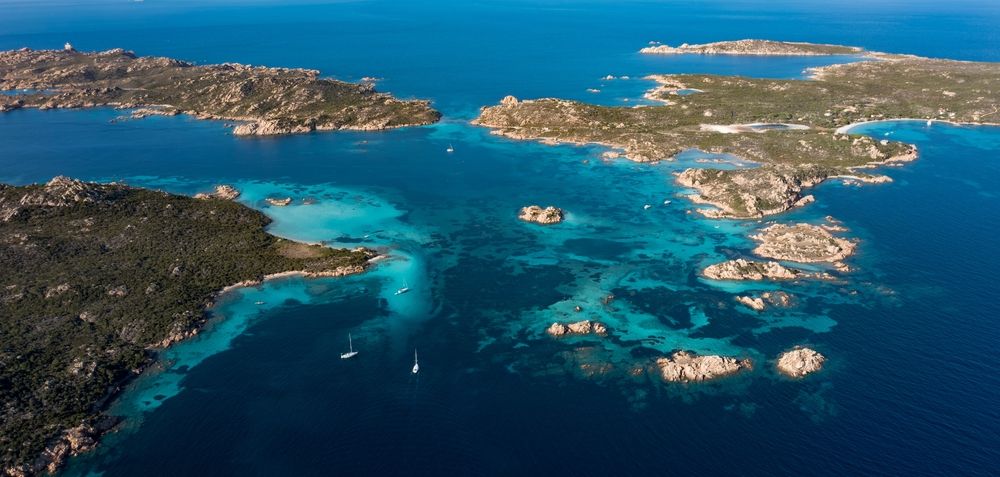
4. Cagliari, the historic capital with seven hills
Download the audio-guided circuit to discover Cagliari on foot and independently
Capital of Sardinia, Cagliari is a fascinating city that harmoniously combines millennial history and Mediterranean art of living. Built on seven hills overlooking the Gulf of Angels, the city offers spectacular panoramas at every street corner. The medieval Castello district, perched at the top of the hill, constitutes the historic heart of the city with its Pisan ramparts, narrow streets and emblematic monuments such as the Cathedral of Saint Mary and the medieval towers of San Pancrazio and dell'Elefante.
To visit Cagliari optimally, the Ryo itinerary guides you through 17 unmissable points of interest, from Saint-Remy bastion to the popular districts of Marina and Villanova. The national archaeological museum houses an exceptional collection of remains from the Nuragic civilization, while the Roman amphitheater testifies to the city's ancient past. Don't miss the long Poetto beach either, which extends for nearly 8 kilometers and offers an ideal setting for swimming and water activities. Let yourself be guided in your exploration of Cagliari thanks to the Ryo audio-guided itinerary, which will reveal all the secrets of this endearing Sardinian capital.
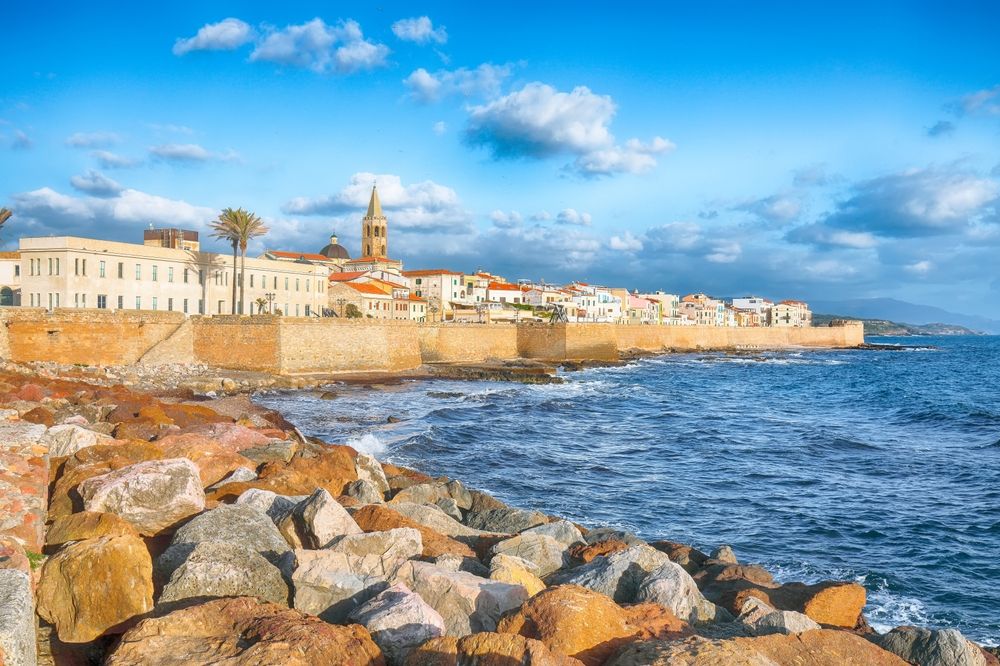
5. Alghero and Neptune's Caves
On the northwest coast of Sardinia, Alghero (40°33'36.0″N 8°18'36.0″E, rated 4.6/5 on Google for 1,823 reviews) seduces with its unique Catalan atmosphere in Italy. Nicknamed the "Sardinian Barcelonetta", this fortified city has preserved a strong Catalan heritage, visible in its architecture, language and traditions. The historic center, surrounded by ramparts plunging into the sea, houses charming cobbled streets, Gothic churches and elegant palaces. The promenade along the bastioni at sunset offers a memorable spectacle.
A few kilometers from Alghero are located Neptune's Caves (40°33'50.4″N 8°09'25.2″E, rated 4.5/5 on Google for 13,428 reviews), accessible by a vertiginous staircase of 654 steps carved into the cliff of cap Caccia or by boat from Alghero. These spectacular karst formations are among the largest marine caves in Italy. Inside, an underground saltwater lake extends for nearly a kilometer, surrounded by millennial stalactites and stalagmites that reflect in the crystal-clear water, creating a fairy-tale landscape. The guided tour allows you to fully appreciate the geological beauty of this exceptional site.
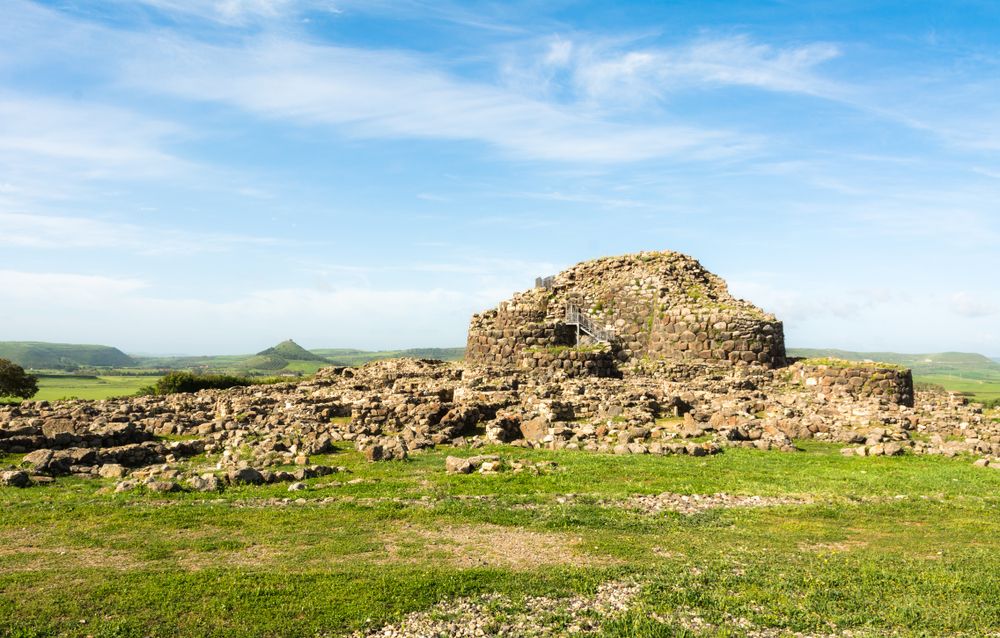
6. Su Nuraxi of Barumini, UNESCO archaeological treasure
One hour's drive north of Cagliari, Su Nuraxi of Barumini (39°42'22.8″N 8°59'31.2″E, rated 4.6/5 on Google for 7,428 reviews) constitutes the most important archaeological site in Sardinia and the only UNESCO World Heritage site on the island. This remarkably preserved Nuragic complex testifies to the mysterious civilization that developed in Sardinia between 1900 and 730 BC. The central tower, originally over 18 meters high, is surrounded by four smaller towers connected by defensive walls.
Around this megalithic fortress extends a Nuragic village of about fifty circular stone huts, offering a fascinating glimpse into the social organization of this prehistoric civilization. Archaeologists continue to debate the exact function of the nuraghes: temples, fortresses, meeting places or dwellings? This enigma adds to the mysterious charm of Su Nuraxi. A guided tour is essential to understand the architectural complexity of the site and its historical importance. Objects discovered during excavations are displayed at the Casa Zapata museum in Barumini, perfectly complementing the site visit.
7. Costa Smeralda and Porto Cervo
Northeast of Sardinia stretches the mythical Costa Smeralda (41°07'48.0″N 9°31'12.0″E, rated 4.6/5 on Google for 892 reviews), a 55-kilometer coastline that embodies luxury and exclusivity. Developed in the 1960s by a consortium led by Prince Karim Aga Khan, this emerald-colored coast attracts the international jet set to its five-star hotels, sumptuous villas and VIP beach clubs. The beaches of Capriccioli, Romazzino and Spiaggia del Principe are among the most beautiful in the Mediterranean, with their fine sand and translucent waters.
Porto Cervo (41°08'24.0″N 9°32'24.0″E, rated 4.5/5 on Google for 1,247 reviews), capital of Costa Smeralda, is a village built in an architectural style that respects Sardinian traditions while displaying sophisticated elegance. The marina hosts some of the most impressive yachts in the world, while luxury boutiques line the picturesque streets. While Costa Smeralda may seem expensive, it's possible to enjoy it by visiting the free public beaches and simply admiring the natural beauty of this exceptional coast, a true showcase of Sardinia to the entire world.
8. The Orosei Gulf and Gennargentu National Park
Extending over more than 73,000 hectares between the provinces of Nuoro and Ogliastra, the Orosei Gulf and Gennargentu National Park (40°05'24.0″N 9°22'48.0″E, rated 4.7/5 on Google for 843 reviews) protects Sardinia's wildest and most spectacular landscapes. The Gennargentu massif culminates at 1,834 meters altitude with Punta La Marmora, the island's highest peak. This mountainous territory houses remarkable biodiversity, with endemic species such as the Sardinian mouflon, golden eagle and griffon vulture.
The park offers infinite hiking possibilities, from spectacular coastal trails overlooking the cliffs of Orosei gulf to mountain paths crossing holm oak forests and rocky plateaus. The Gorropu gorges, 500 meters deep, are among Europe's most impressive canyons. On the coast, the park protects some of Sardinia's most beautiful coves, including Cala Luna and Cala Goloritzé. This immersion in preserved and grandiose nature constitutes a perfect counterpoint to tourist beaches, revealing the wild and authentic face of Sardinia.
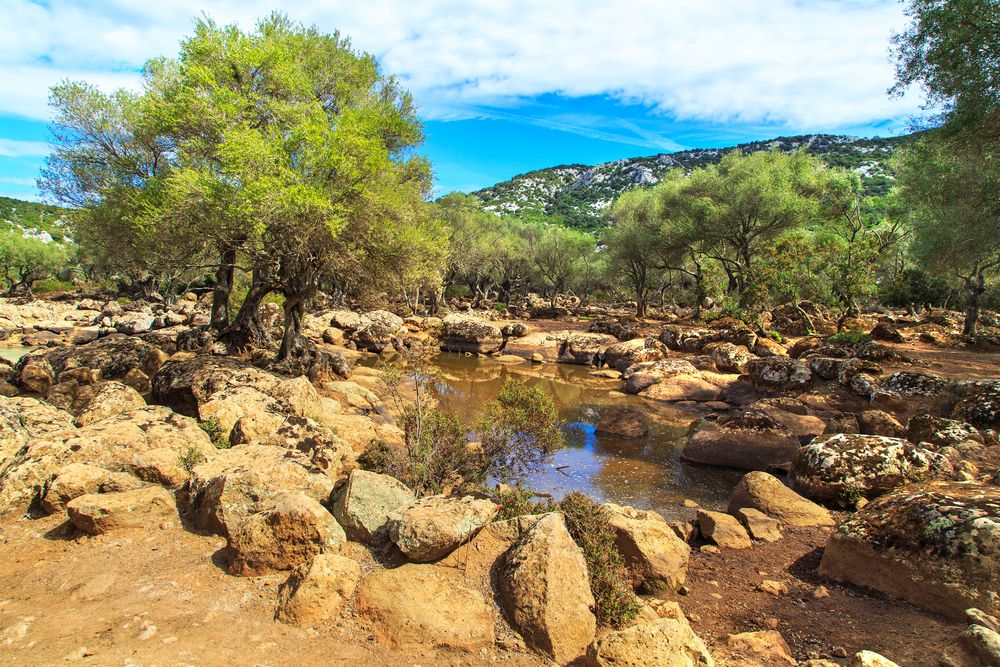
9. Castelsardo and the Elephant Rock
Perched on a rocky promontory overlooking the sea in northern Sardinia, Castelsardo (40°54'54.0″N 8°42'36.0″E, rated 4.6/5 on Google for 1,892 reviews) is considered one of the island's most beautiful villages. Its colorful houses cascade from the Doria castle that crowns the village down to the small fishing port. The steep and narrow streets of the historic center invite strolling, offering magnificent panoramas of the Asinara gulf at every turn. The village is also renowned for its traditional crafts, particularly weaving baskets from dwarf palm.
A few kilometers from Castelsardo, on the road to Sedini, stands the Elephant Rock (40°53'24.0″N 8°42'00.0″E, rated 4.6/5 on Google for 1,543 reviews), a trachyte rock formation whose shape remarkably evokes this pachyderm. Beyond this geological curiosity, the rock houses two domus de janas, prehistoric tombs carved into the rock over 4,000 years ago. These Neolithic burials testify to Sardinia's very ancient occupation and constitute one of the many fascinating archaeological sites scattered across the island. The visit to this unusual site, easily accessible from the road, offers a unique glimpse into Sardinian prehistoric history.
10. The Supramonte massif and the village of Tiscali
In central-eastern Sardinia extends the Supramonte massif (40°14'24.0″N 9°32'24.0″E, rated 4.8/5 on Google for 673 reviews), a wild and mountainous territory that offers some of the island's most spectacular landscapes. This karst limestone plateau, delimited by the Cedrino and Rio Olai rivers, lends itself marvelously to hiking through lunar landscapes and holm oak forests. Vertiginous gorges, mysterious caves and breathtaking panoramas make Supramonte a paradise for lovers of wild and preserved nature.
In the heart of the massif hides the Nuragic village of Tiscali (40°14'39.6″N 9°31'37.2″E, rated 4.7/5 on Google for 428 reviews), an exceptional archaeological site nestled inside a doline, a vast natural depression at the summit of Mount Tiscali. This fortified village, built over 3,000 years ago, would have served as a refuge for local populations during the Roman invasion. The ruins of about sixty stone huts testify to the ingenuity of this hidden installation. Access to the site requires a steep hike of several hours with a guide, but the effort is largely rewarded by the discovery of this unique place, a true archaeological treasure protected by nature.
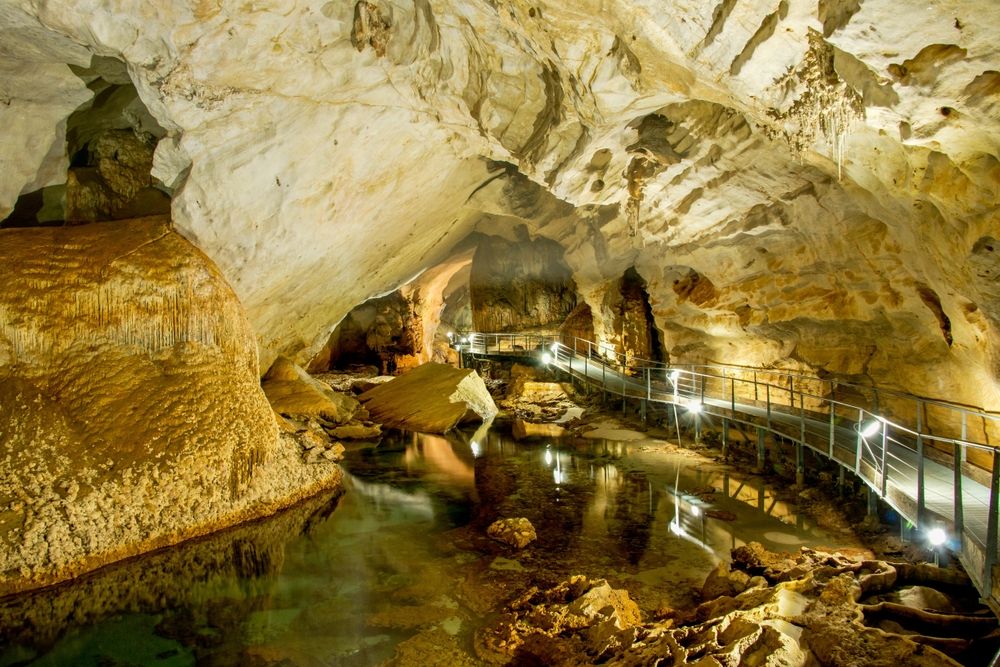
11. The Bue Marino Caves
On the Dorgali coastline, in the province of Nuoro, the Bue Marino Caves (40°16'48.0″N 9°38'24.0″E, rated 4.6/5 on Google for 3,247 reviews) constitute one of Sardinia's most impressive speleological sites. The name means "monk seal" in Sardinian, referring to this species now extinct from the region that found refuge in these marine cavities until the 1980s. The cave network extends over several kilometers and is divided into two branches: the northern part, accessible to visitors, and the southern part, reserved for experienced speleologists.
The guided tour allows you to discover galleries adorned with millennial stalactites and stalagmites in spectacular shapes, reflecting in the crystal-clear waters of an underground lake. Natural light effects create a fairy-tale atmosphere, accentuated by the absolute silence that reigns in these mineral cathedrals. The seal beach, at the bottom of the cave, testifies to the former presence of these marine mammals that came here to reproduce. Accessible by boat from Cala Gonone, visiting the Bue Marino Caves constitutes a unique experience to discover Sardinia's underground treasures.
12. The Nuragic complex of Palmavera
Near Alghero, in the province of Sassari, the Nuragic complex of Palmavera (40°35'24.0″N 8°16'48.0″E, rated 4.5/5 on Google for 1,892 reviews) offers remarkable testimony to the Nuragic civilization. Built about 3,500 years ago, this archaeological site consists of a central tower surrounded by several secondary towers connected by walls, forming an impressive defensive ensemble. The complex testifies to the architectural evolution of Nuragic constructions, with successive additions made over several centuries.
Around the towers extend the remains of a village with its circular huts and its "meeting hut", a communal space that suggests an elaborate social organization. Free access to the site allows you to wander freely among the ruins and imagine the daily life of this mysterious civilization. The most precious archaeological pieces discovered during excavations are preserved in the archaeological museums of Cagliari and Sassari. The Palmavera site, less frequented than Su Nuraxi but equally fascinating, is worth a detour for all archaeology enthusiasts visiting northwest Sardinia.
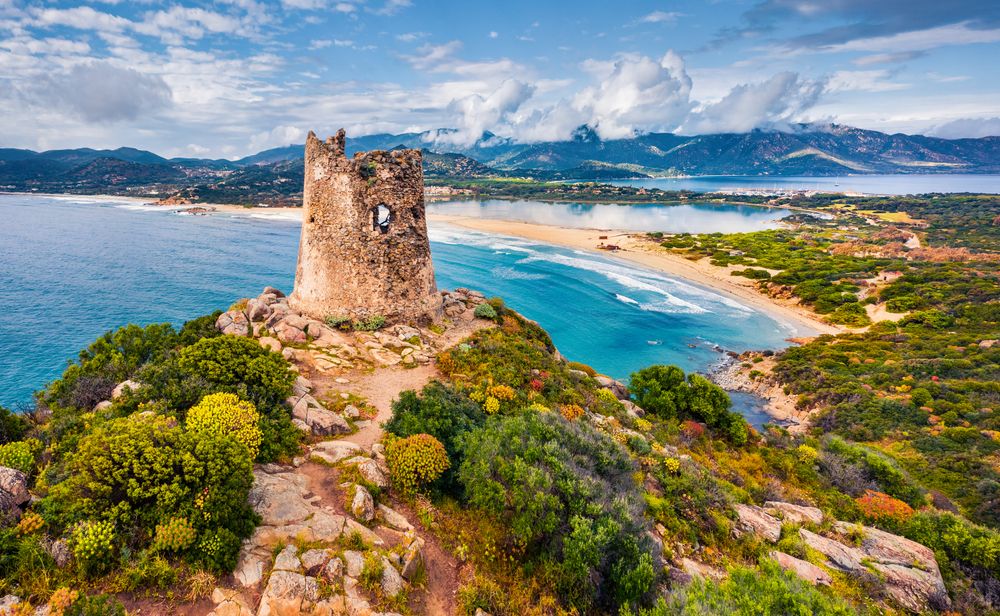
13. Cape Carbonara and the beaches of Villasimius
At the southeastern tip of Sardinia, Cape Carbonara (39°06'36.0″N 9°31'48.0″E, rated 4.7/5 on Google for 1,234 reviews) forms a spectacular rocky peninsula connected to the mainland by a sandy isthmus. This protected area offers some of Sardinia's most beautiful beaches, with exceptionally transparent waters ranging from turquoise to deep blue. The cape delimits the vast gulf of Cagliari to the east and constitutes a paradise for boaters, divers and snorkeling enthusiasts.
The municipality of Villasimius (39°08'24.0″N 9°31'12.0″E, rated 4.5/5 on Google for 2,847 reviews), located nearby, is surrounded by magnificent beaches that count among the island's most prized. Simius beach extends over several kilometers of white sand bordered by dunes and junipers, while Porto Giunco beach offers a paradisiacal setting with its immaculate sand and shallow waters. The cove of Cala Caterina (39°07'12.0″N 9°30'36.0″E, rated 4.6/5 on Google for 892 reviews), more intimate, seduces with its tranquil atmosphere. Cavoli island, accessible by boat, completes this idyllic picture with its exceptional seabeds. Cape Carbonara and its surroundings represent beach Sardinia in all its splendor.
In conclusion, Sardinia reveals itself to be a destination of exceptional richness that will seduce all types of travelers. From the paradisiacal beaches of Cala Goloritzé to the mysterious Nuragic archaeological sites, passing through authentic perched villages and the preserved mountainous landscapes of Gennargentu, the island offers a diversity of landscapes and experiences rarely equaled in the Mediterranean. Whether you choose to relax on white sand beaches, explore marine caves, hike in wild massifs or discover millennial historical heritage, each place visited reveals a different facet of this fascinating island. Sardinia fortunately preserves its authenticity despite tourism, with living traditions and a strong cultural identity. To fully enjoy your stay, don't hesitate to use the audio-guided itinerary of Cagliari which will allow you to discover the Sardinian capital in a thorough and enriching way, an ideal starting point to explore the wonders of this unique Mediterranean island.
FAQ
What is the best time to visit Sardinia?
The best time to visit Sardinia extends from May to September to fully enjoy beaches and water activities. The months of May, June and September offer an excellent compromise with pleasant temperatures, fewer crowds and more advantageous rates. July and August are the hottest and busiest months. For a cultural city break, the months of March, April and October are also very pleasant with mild weather.
How to get around in Sardinia?
Car rental remains the most practical way to discover Sardinia and access remote beaches and sites. Major cities like Cagliari, Alghero and Olbia have international airports where you can rent a vehicle. To visit historic city centers, prioritize walking or public transport, as parking can be difficult. Maritime connections allow you to reach the islands of the La Maddalena archipelago.
How many days are needed to visit Sardinia?
To discover Sardinia's main sites, ideally plan 10 to 15 days. One week allows you to visit a specific region (north or south) in depth. A 3-4 day stay suits a city break in Cagliari with some excursions in the surroundings. If you have more time, two weeks allow you to make a complete tour of the island including natural, cultural sites and the most beautiful beaches.
What are the most beautiful beaches in Sardinia?
Among Sardinia's most beautiful beaches are Cala Goloritzé (Orosei gulf), voted most beautiful beach in the world, Cala Luna with its spectacular caves, La Pelosa beaches near Stintino, Spiaggia del Principe on Costa Smeralda, the pink beach of Budelli in the La Maddalena archipelago, and the beaches of Villasimius in the southeast. Each beach offers a unique landscape with crystal-clear waters of exceptional beauty.
Do you need to book to visit archaeological sites?
For Su Nuraxi of Barumini, UNESCO classified site, reservation is strongly recommended in high season as visits are only done in guided groups. For other Nuragic sites like Palmavera, access is generally free without reservation. Neptune's Caves sometimes require reservation during summer period. For Cala Goloritzé, a mandatory and paid reservation system has been set up to limit crowds and preserve the site.