© Shutterstock
 Votre guide Ryo
The Most Beautiful Villages of the Chianti Valley Around Siena
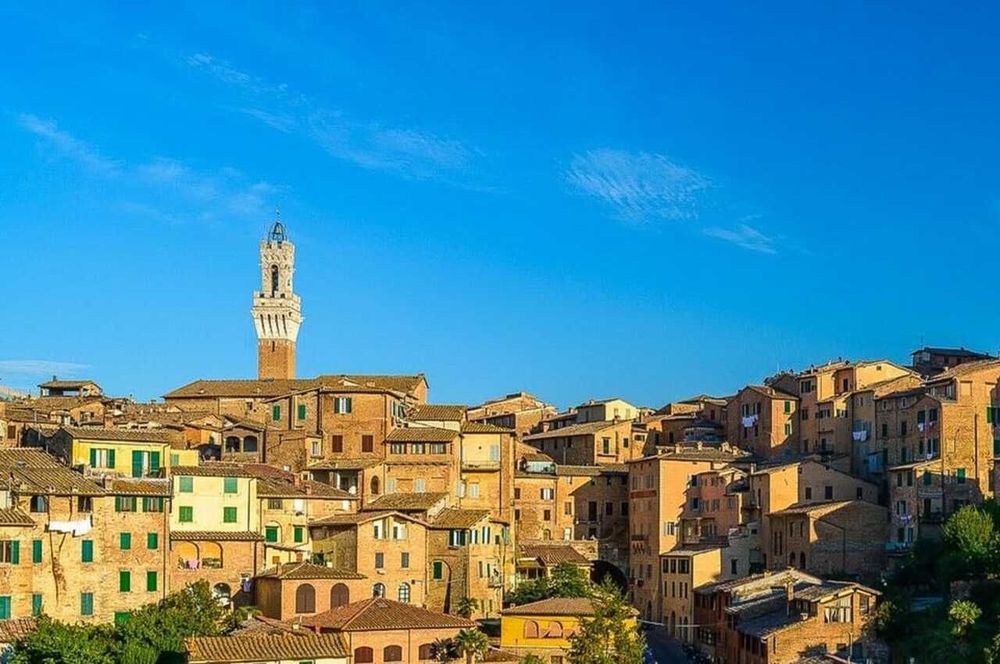
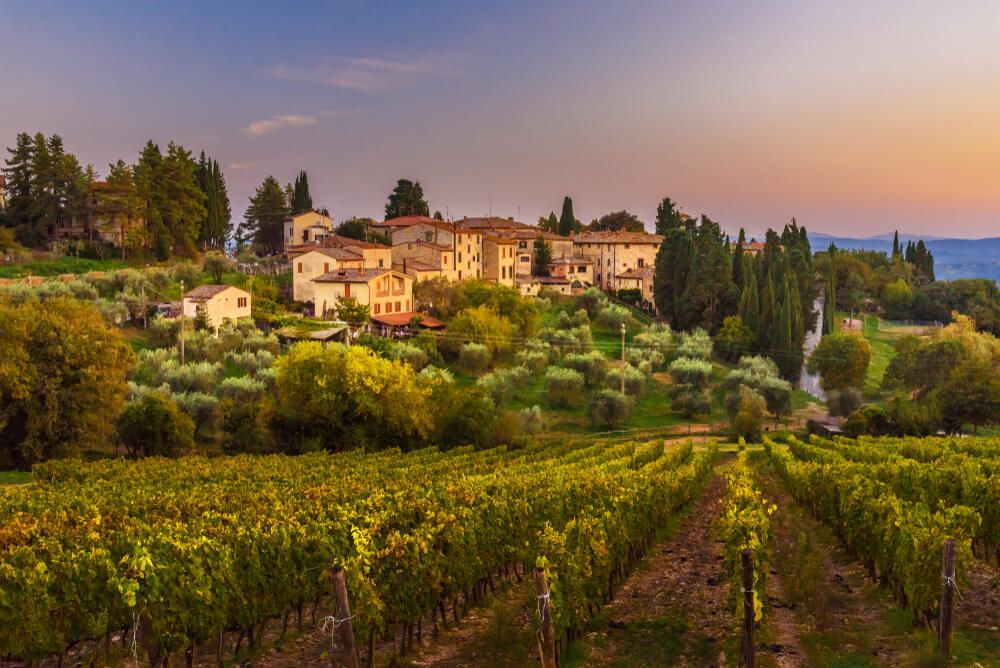
The Chianti valley, this magical region of Tuscany stretching between Florence and Siena, houses some of the most beautiful medieval villages in Italy. Land of centuries-old vineyards and breathtaking landscapes, Chianti reveals its hidden treasures through a constellation of authentic towns where time seems to have stood still. Between towering cypresses and rolling hills, these ochre stone villages tell the millennial history of this emblematic region of Tuscany.
Discovering the most beautiful villages of the Chianti valley around Siena means encountering exceptional architectural heritage, ancestral winemaking traditions, and a typically Tuscan art of living. Each village has its own personality, culinary specialties, and unique panoramas of this Tuscan countryside that has inspired so many artists and travelers.
1. Greve in Chianti, the Gateway to Chianti
Considered the beating heart of Chianti, Greve in Chianti constitutes the essential stop of any journey in the valley. This charming medieval town is distinguished by its Piazza Matteotti, a unique triangular square surrounded by Renaissance porticoes where artisan shops, traditional restaurants, and wine cellars are hidden.
The triangular square of Greve, with its particular shape, testifies to the village's ancient commercial vocation. Every Saturday, the weekly market animates this historic square, perpetuating a centuries-old tradition. At the center stands the statue of Giovanni da Verrazzano, the illustrious navigator and explorer from these lands, who gave his name to the bridge connecting Brooklyn to Staten Island.
Gastronomy enthusiasts won't miss the famous Antica Macelleria Falorni (Piazza Matteotti, 71, 50022 Greve in Chianti FI, rated 4.2/5 on Google for 2,800 reviews), a historic butcher shop that has delighted visitors since 1729 with its artisanal charcuterie and local specialties. The establishment offers an incredible variety of local products, from salamis to aged cheeses, including extra-virgin olive oils.
2. Montefioralle, the Fortified Village of Amerigo Vespucci
Perched on a hill overlooking Greve in Chianti, Montefioralle is among the most beautiful villages of Italy. This fortified medieval hamlet, classified among the 'Borghi più belli d'Italia', has kept its authentic character intact with its ramparts, cobbled streets, and centuries-old stone houses.
Local tradition claims that Montefioralle is the birthplace of Amerigo Vespucci, the famous explorer who gave his name to the American continent. A house in the village still bears the coat of arms of the Vespucci family, tangible testimony to this illustrious ancestry. Visitors can admire this historic blazon carved on the entrance portal of the former family residence.
The medieval village offers exceptional panoramas over the Chianti valley and constitutes an ideal starting point for hikes in the surrounding vineyards. Its restored fortifications and hanging gardens create a romantic atmosphere that seduces photographers and lovers of beautiful landscapes.
3. Panzano in Chianti, the Village of the Famous Butcher
A few kilometers from Greve, Panzano in Chianti charms with its panoramic position and relaxed atmosphere. This perched village offers a breathtaking view of the rolling Chianti hills, punctuated with vineyards and centuries-old olive trees.
Panzano is world-famous thanks to Dario Cecchini, the most famous butcher in Tuscany, a true local star who has revolutionized the art of butchery. His establishment, the Antica Macelleria Cecchini (Via XX Luglio, 11, 50020 Panzano in Chianti FI, rated 4.3/5 on Google for 1,200 reviews), attracts gourmets from around the world who come to taste his famous bistecche alla fiorentina and discover his unique culinary philosophy. This eighth representative of a line of butchers organizes memorable communal meals where Tuscan conviviality is fully expressed.
The village also houses the Pieve di San Leolino, a remarkably preserved 11th-century Romanesque church, surrounded by majestic cypresses. This parish church, with its sober and elegant architecture, constitutes a perfect example of medieval Tuscan religious art.
4. Castellina in Chianti, the Etruscan Fortress
Castellina in Chianti, one of the oldest villages in the region, has its roots in Etruscan history. This fortified town, strategically positioned on a hill, testifies to its military past with its Rocca, a 15th-century fortress that majestically dominates the surrounding landscape.
The Via delle Volte, a medieval covered passage that runs along the ancient ramparts, constitutes the village's main attraction. This vaulted gallery, pierced with windows offering spectacular views of the countryside, allows visitors to stroll in the shade while admiring exceptional panoramas of the Chianti Classico vineyards.
The Archaeological Museum of Chianti Senese, installed in the fortress, presents a remarkable collection of Etruscan objects discovered in the region. The surrounding necropolises, notably that of Poggio Pinci, testify to the richness of this ancient civilization that has permanently marked the territory's identity.
5. Radda in Chianti, Preserved Medieval Charm
Radda in Chianti seduces with its authenticity and peaceful atmosphere. This medieval village, one of the three 'terzieri' of the ancient Chianti League with Castellina and Gaiole, has preserved its original urban plan with its concentric streets and traditional stone houses.
The Palazzo del Podestà, former seat of communal power, proudly displays the coats of arms of the noble families who governed the village throughout the centuries. This historic facade, adorned with multiple escutcheons, tells the complex political history of the region, torn between the influences of Florence and Siena.
Religious architecture enthusiasts will appreciate the Pieve di Santa Maria Novella, a 15th-century parish church that houses remarkable artworks. The village also serves as a starting point to discover the Castello di Volpaia, a medieval hamlet-castle transformed into a wine estate, where the Tuscan art of living is expressed in all its splendor.
6. Gaiole in Chianti, Between Castles and Vineyards
Gaiole in Chianti, the easternmost village of Chianti Classico, is distinguished by the exceptional concentration of castles and fortresses that dot its territory. This former stronghold, located on the road connecting Chianti to Valdarno, has maintained its strategic role through the centuries.
The Castello di Brolio (Località Madonna a Brolio, 53013 Gaiole in Chianti SI, rated 4.4/5 on Google for 3,500 reviews), property of the Ricasoli family for over 800 years, majestically dominates the landscape from its perched position. This castle-vineyard, birthplace of modern Chianti Classico, offers exceptional guided tours and tastings in a unique historic setting. The Ricasoli family, which counts among its members a former Italian Prime Minister, passionately perpetuates the centuries-old winemaking tradition.
The village also houses the Castello di Vertine, a perfectly preserved small fortified medieval town, and the Castello di Meleto (Località Meleto, 53013 Gaiole in Chianti SI, rated 4.2/5 on Google for 1,800 reviews), an elegant Renaissance manor surrounded by vineyards. These historic residences, often transformed into wine estates or charming hotels, testify to the architectural and cultural richness of the region. Siena, close by, invites the same unhurried pace with our audio-guided tour.
7. Volpaia, the Castle-Hamlet of Chianti
Volpaia, a tiny hamlet attached to Radda in Chianti, constitutes one of the best-preserved jewels of the valley. This village-castle, entirely restored with remarkable care, offers an idealized vision of Tuscan medieval life.
Transformed into a wine and hotel estate, Volpaia offers a unique experience blending history, gastronomy, and wine tourism. Visitors can stroll through the cobbled streets, admire the hanging gardens, and discover winemaking techniques in centuries-old cellars. The Santa Maria church, a jewel of religious architecture, harmoniously completes this idyllic picture.
8. Hidden Treasures of the Chianti Valley
Beyond the main villages, the Chianti valley around Siena conceals numerous lesser-known but equally remarkable treasures. The hamlet of Vertine, with its golden stone houses and flowering gardens, offers a perfect example of respectful restoration of architectural heritage.
The abbeys and pievi (parish churches) scattered throughout the countryside testify to the intense religious life that animated the region in the Middle Ages. The Pieve di San Giusto in Salcio, Badia a Coltibuono, or the abbey of San Salvatore tell the spiritual history of these lands sanctified by centuries of prayer and contemplation.
Download the Audio-Guided Circuit to Discover Siena on Foot and Independently
To complete your discovery of the most beautiful villages of the Chianti valley, don't miss the Siena visit itinerary with our exclusive audio-guided circuit. This 3 km tour takes you through 20 major points of interest in the medieval city, from the majestic Piazza del Campo to the sublime cathedral, passing through historic neighborhoods and panoramic viewpoints.
Thanks to our 21 audio commentaries, discover the secrets and anecdotes of this UNESCO city, a true jewel of Tuscany. The application naturally guides you from one point to another, allowing you to visit Siena at your own pace while missing no detail of this exceptional city. Let yourself be guided by our Ryo itinerary in Siena for an unforgettable experience at the heart of Tuscan medieval grace.
9. The Tuscan Art of Living in Chianti Villages
The villages of the Chianti valley around Siena perfectly embody the Tuscan art of living, that 'dolce far niente' that makes Italy's charm. In each town, family trattorias perpetuate traditional recipes: refreshing panzanella, comforting ribollita, and of course fresh pasta accompanied by local wines.
The local markets remain the beating heart of community life. That of Greve, on Saturday morning, or that of Gaiole, on Monday, offer a colorful spectacle where local producers, artisans, and inhabitants mingle. These weekly appointments perpetuate a centuries-old tradition of exchange and conviviality.
The traditional festivals punctuate village life: the Festa dell'Uva in Impruneta, the Sagra del Tartufo in San Miniato, or the numerous patron saint festivals that animate the main squares during the warm season. These popular celebrations reveal the authentic soul of rural Tuscany.
10. Practical Tips for Visiting Chianti Villages
The best period to discover the most beautiful villages of the Chianti valley extends from April to October, with a preference for spring and autumn. The months of May and September offer ideal conditions: mild temperatures, golden light, and landscapes sublimated by seasonal colors.
The Strada Chiantigiana (SR222) constitutes the main artery for connecting the different villages. This panoramic road, winding through vineyards and olive groves, offers spectacular viewpoints and numerous opportunities for stops at wine estates.
For an optimal experience, plan at least three days to leisurely explore the region. Each village deserves a half-day to be fully appreciated, between visiting the historic center, tasting in local cellars, and lunch at a traditional trattoria.
In conclusion, the most beautiful villages of the Chianti valley around Siena offer an exceptional concentrate of history, culture, and Tuscan traditions. From Greve in Chianti with its unique triangular square to Gaiole and its centuries-old castles, passing through Montefioralle and its preserved medieval charm, each town tells a different facet of this mythical region. These authentic villages, nestled in the heart of the world's most renowned vineyards, constitute an essential destination for all lovers of true Tuscany. Don't hesitate to complete your trip by exploring Siena with our audio-guided circuit, for total immersion in Tuscan magic.
What is the best season to visit Chianti villages?
The ideal period extends from April to October, with a preference for May-June and September-October. These months offer pleasant temperatures, fewer tourists, and landscapes sublimated by spring or autumn colors.
How much time should you plan to visit Chianti villages?
Count at least 3 days to discover the main villages of the Chianti valley around Siena. A full week allows you to deepen the visit, include tastings at wine estates, and fully enjoy the Tuscan art of living.
How to get around between Chianti villages?
The car remains the most practical means to explore the region. The panoramic road SR222 (Chiantigiana) connects the main villages. Local bus services exist, but schedules are limited. Some tour operators offer organized excursions from Florence or Siena.
Which Chianti villages are the most authentic?
Montefioralle, Volpaia, and Vertine are among the most authentic villages, with their perfectly preserved medieval architectures. These fortified hamlets have maintained their historic character and offer total immersion in ancient Tuscany.