
Créé par Romane, le 4 juin 2026
Votre guide Ryo
Venice Carnival: dates, masks and tradition
© Shutterstock
Every winter, when mist envelops the canals of the Serenissima, Venice transforms into an open-air theater where time seems suspended. The Venice Carnival, one of the oldest and most prestigious carnivals in the world, transforms the city of the Doges into a fairytale scene where Venetian masks and sumptuous costumes reign supreme. Between mystery and splendor, this unique event attracts hundreds of thousands of visitors from all over the world each year to experience a timeless adventure.
The origins of the Venice Carnival
The Venice Carnival has its roots in the depths of Venetian time. From the 11th century, pre-carnival festivities were already animating the city streets. It was in 1162 that the carnival truly found its official origin, when the Republic of Venice celebrated its victory over the patriarch of Aquileia. The Venetians then took over St. Mark's Square to dance and celebrate, inaugurating a tradition that would last for centuries.
Over time, the carnival became a major social institution of the Serenissima. During this period of rejoicing preceding Lent, social hierarchies temporarily disappeared behind masks. Nobles and commoners mingled anonymously in the alleys, creating a unique space of freedom in Old Regime Europe. The Venetian mask thus became the symbol of ephemeral equality, allowing everyone to temporarily free themselves from their social rank.
The 18th century marked the golden age of the Venice Carnival. The festivities then extended over several months, attracting European aristocracy seeking refined entertainment. Casanova himself, the famous Venetian seducer, immortalized in his memoirs the libertine and enchanting atmosphere of these masked balls. Unfortunately, in 1797, during the Austrian occupation, Napoleon Bonaparte banned the carnival, fearing popular gatherings. This ban marked the end of a sumptuous era.
It was only in 1979 that the carnival was reborn from its ashes, thanks to a citizen initiative supported by the Venetian municipality. Since then, this event has continued to grow in scale, becoming one of the most famous carnivals on the planet. Today, the official Venice Carnival website testifies to the renewed vitality of this centuries-old tradition that enchants the whole world.
Venice Carnival 2026: dates and program
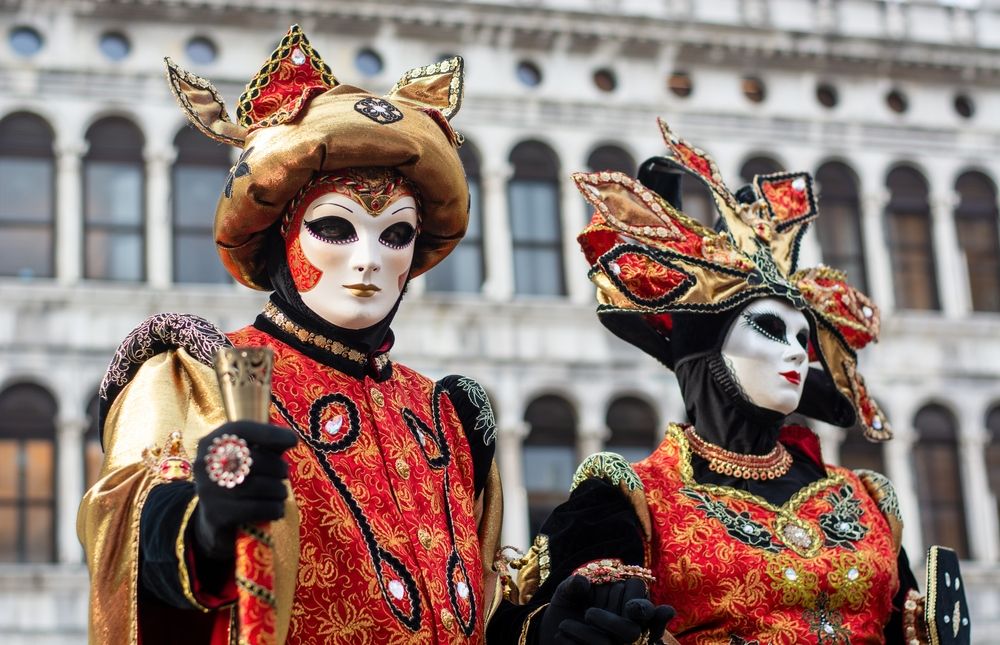
For the 2026 edition, the Venice Carnival will take place from Saturday January 31st to Tuesday February 17th, offering nearly three weeks of uninterrupted festivities. This period coincides with the Catholic tradition that places carnival before Ash Wednesday, marking the beginning of Lent. The year 2026 takes on special significance as it celebrates the Olympic year, with a theme that interweaves history, art and sport in tribute to Venetian heritage.
The unmissable carnival events
The Venice Carnival program revolves around flagship events that punctuate Venetian days and nights. The official opening takes place on Saturday January 31st at 8pm with the masked ball "Un Ballo in Maschera", a grandiose evening that sets the tone for the festivities to come. The following day, Sunday February 1st at 11am, the traditional Venetians' boat carnival animates the Grand Canal in a colorful nautical parade.
Saturday February 7th marks a highlight with the Feast of the Maries, one of the oldest carnival traditions. This historic ceremony commemorates the liberation of young Venetian women kidnapped by pirates in the 10th century. Twelve young girls, dressed in sumptuous period costumes, parade from the Castello district to St. Mark's Square, where one of them will be crowned "Marie of the year". This tradition offers a fascinating visual spectacle that plunges spectators into the heart of Venetian history.
Sunday February 8th at noon is the most anticipated moment: the Flight of the Angel (Volo dell'Angelo). A young woman, usually the previous year's "Marie", launches herself from the top of the St. Mark's Campanile to the square below, suspended from a cable, before thousands of amazed spectators. This vertiginous spectacle symbolizes bravery and grace, in a performance that blends tradition and technical prowess. Throughout these festive days, St. Mark's Square becomes the theater of costumed parades, concerts and shows that enchant young and old alike.
Download the audio-guided circuit to discover Venice on foot and independently
If you attend the Venice Carnival, it's the ideal opportunity to explore the wonders of the Serenissima at your own pace. Thanks to Ryo's audio-guided itinerary to visit Venice, discover 26 major places of interest in the city, from St. Mark's Basilica to the Doge's Palace, including the famous Rialto Bridge. This interactive visit allows you to combine the effervescence of carnival with complete cultural immersion in Venice's fascinating history.
Venetian masks: symbols and traditions
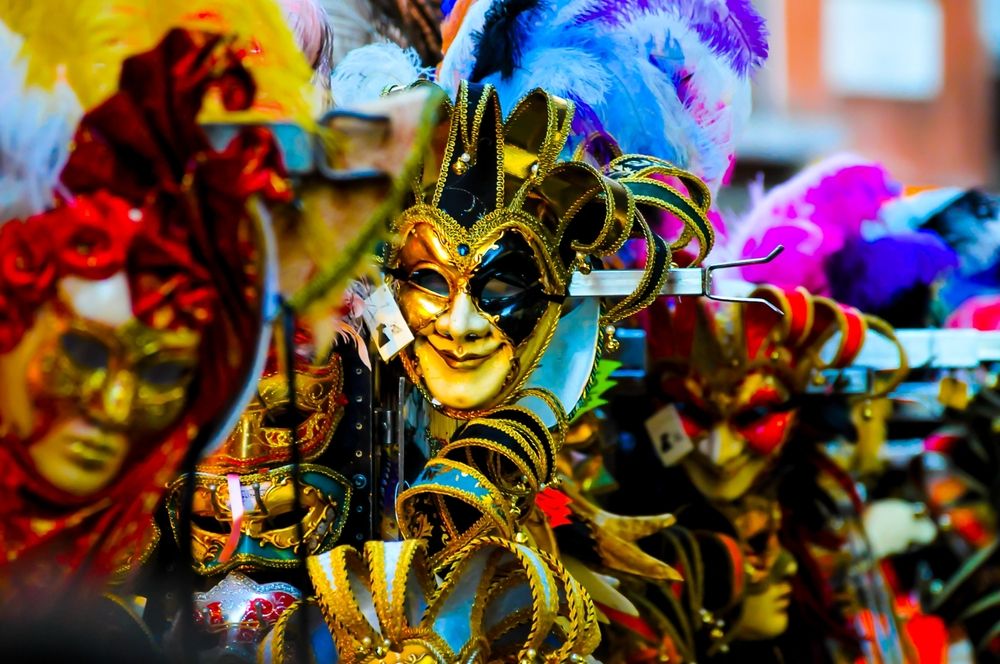
Venetian masks constitute the very soul of the Venice Carnival. Much more than simple accessories, they embody a centuries-old artisan tradition and represent different characters from the Commedia dell'Arte or Venetian society of yesteryear. Each mask has its own history, symbolism and manufacturing method, perpetuating know-how transmitted from generation to generation in the city's artisan workshops.
The bauta: the mask of anonymity
The bauta is undoubtedly the most emblematic mask of the Venice Carnival. This white mask covers the entire face, with a particular shape that allows its wearer to eat and drink without removing it. Traditionally, the bauta is accompanied by a black tricorn (the typical Venetian hat) and a dark cape called tabarro. This disguise was once worn by both men and women, and even outside the carnival period, as it guaranteed total anonymity during romantic encounters or confidential business.
The moretta and other legendary masks
The moretta, also called "servetta muta" (mute servant), was the feminine mask par excellence. Oval-shaped and entirely black, it was held on the face thanks to a button that the woman held between her teeth, thus preventing her from speaking. This constraint reinforced the mystery and seduction of the wearer. Among other traditional masks, we find the plague doctor with his characteristic long nose, the delicately decorated Colombina that only covers the upper half of the face, or the Jolly, embodying the festive jester.
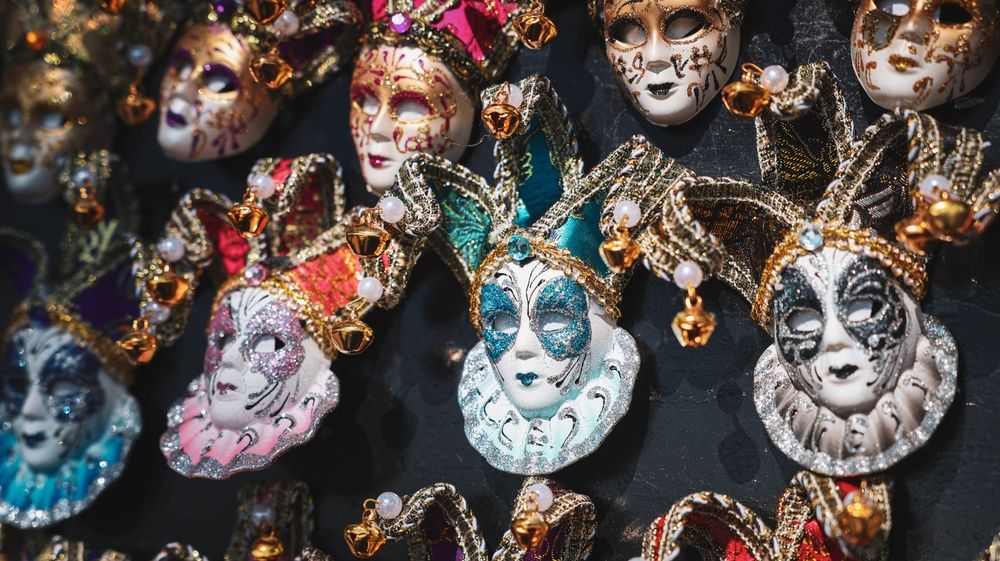
Today, mascareri artisans perpetuate this ancestral art in their Venetian workshops. The making of an authentic mask follows a meticulous process: clay modeling, creation of a plaster mold, application of papier-mâché, then decoration with gold leaf and paint. Prices vary considerably according to the quality and complexity of the mask, ranging from a few dozen euros for a simple mask to several hundred euros for an exceptional piece made by a master craftsman. For an authentic experience, don't hesitate to visit Venice and its traditional workshops where you can even witness the creation of these works of art.
Costumes and disguises: the art of metamorphosis
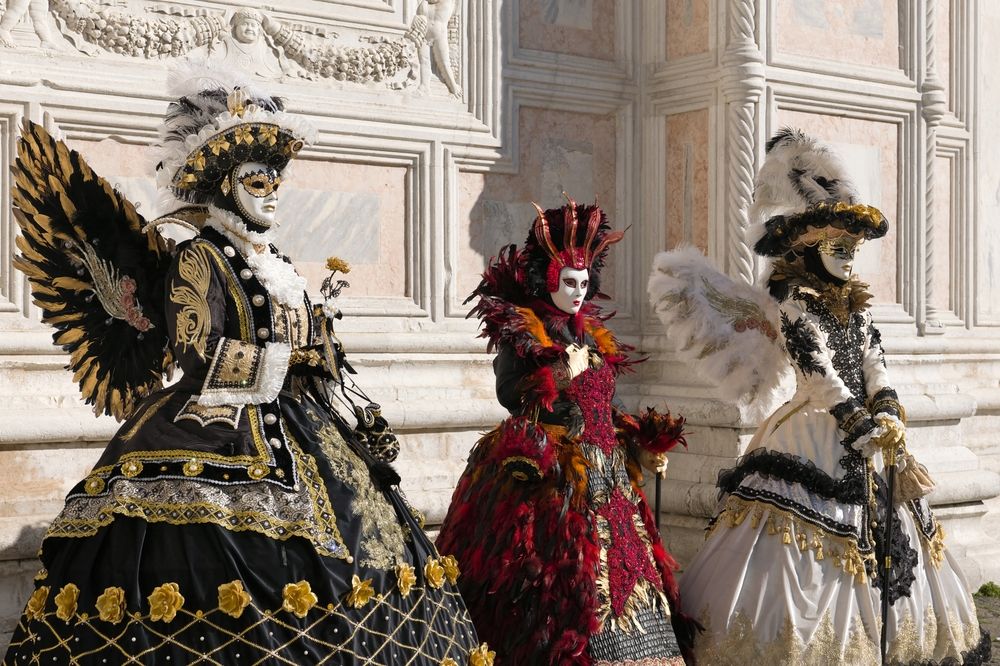
While the mask constitutes the central element of the disguise, the costume as a whole fully participates in the magic of the Venice Carnival. Venetian costumes are mainly inspired by 18th century fashion, the golden age of the Serenissima, with their voluminous dresses, powdered wigs, elegant tricorns and sumptuous capes. Precious fabrics like silk, velvet and brocade are adorned with golden embroidery, refined lace and sparkling stones.
To fully experience the carnival, many visitors choose to rent a complete period costume. Several Venetian workshops and boutiques offer this service, with rates generally varying between 100 and 400 euros for a day's rental, depending on the quality and complexity of the ensemble. Some establishments even offer professional photo sessions in sumptuous settings, immortalizing your transformation into an 18th century Venetian noble. However, it's not mandatory to dress up to enjoy the carnival: many spectators simply come to admire this colorful living theater that invades the city streets.
Costumes are not limited to historical attire. Some participants give free rein to their creativity with fantastic disguises inspired by mythological characters, extraordinary animals or fairy creatures. This creative freedom makes the Venice Carnival a true living art festival where every street, every bridge and every square becomes stages where an eternal play is performed. Strolling along the Zattere or in the Dorsoduro district, you'll encounter these majestic apparitions that seem to emerge from another time.
Masked balls and private parties
Beyond the public festivities that animate the squares and canals, the Venice Carnival also shines through its private masked balls organized in the city's historic palaces. These exclusive evenings perpetuate the tradition of 18th century aristocratic receptions, offering an unforgettable experience in sumptuous settings. The Ballo del Doge, organized at Palazzo Pisani Moretta, remains one of the most prestigious and sought-after. Guests, dressed in authentic period costumes, dance to baroque music in salons adorned with frescoes and crystal chandeliers.
Other masked balls take place at Ca' Vendramin Calergi, Palazzo Nani Bernardo or Ca' Sagredo, each with its particular atmosphere. These evenings generally include a gastronomic dinner, music and dance performances, as well as surprise entertainment. Tickets for these exclusive events range from a few hundred to several thousand euros per person, depending on the prestige of the evening. It's highly recommended to book well in advance, as these balls quickly sell out.
For those seeking a more accessible alternative, many historic cafés and Venetian restaurants organize themed evenings during carnival. The famous La Fenice Theatre also offers opera performances and concerts in a festive atmosphere, allowing you to combine musical culture with carnival spirit. These different options allow each visitor to find the experience that matches their desires and budget, while soaking up Venetian magic.
Practical tips to enjoy the carnival
Attending the Venice Carnival requires some preparation to fully enjoy the event. First, accommodation is a major issue: hotels and rentals quickly fill up and charge high rates during this period. It's therefore imperative to book several months in advance. Prioritize accommodation located in the historic center to be at the heart of the action, even though this represents a considerable budget. The districts of San Marco, San Polo or Dorsoduro offer ideal proximity to the main events.
Regarding transportation, Venice prohibits car traffic in its historic center. Vaporetti (water buses) are the main means of public transport, complemented by walking through alleys and bridges. The Venezia Unica City Pass can prove very advantageous: it combines unlimited access to public transport, entry to certain museums and discounts on various activities. During carnival, expect considerable crowds, especially on St. Mark's Square and around the Rialto Bridge. To avoid crowds, favor mornings and explore less touristy districts like Cannaregio or Castello.
Regarding clothing, February in Venice can be cold and humid, with temperatures oscillating between 5 and 10 degrees. Plan warm, waterproof and comfortable clothes for walking. Beware of the acqua alta phenomenon (high waters) that can flood certain low areas of the city: rubber boots will then be your best allies. Finally, even though most street events are free, plan a considerable budget for accommodation, dining and possible paid activities. Restaurants often display increased prices during carnival, but the unique experience of tasting Venetian specialties in the middle of this festive atmosphere is priceless.
Carnival gastronomic traditions
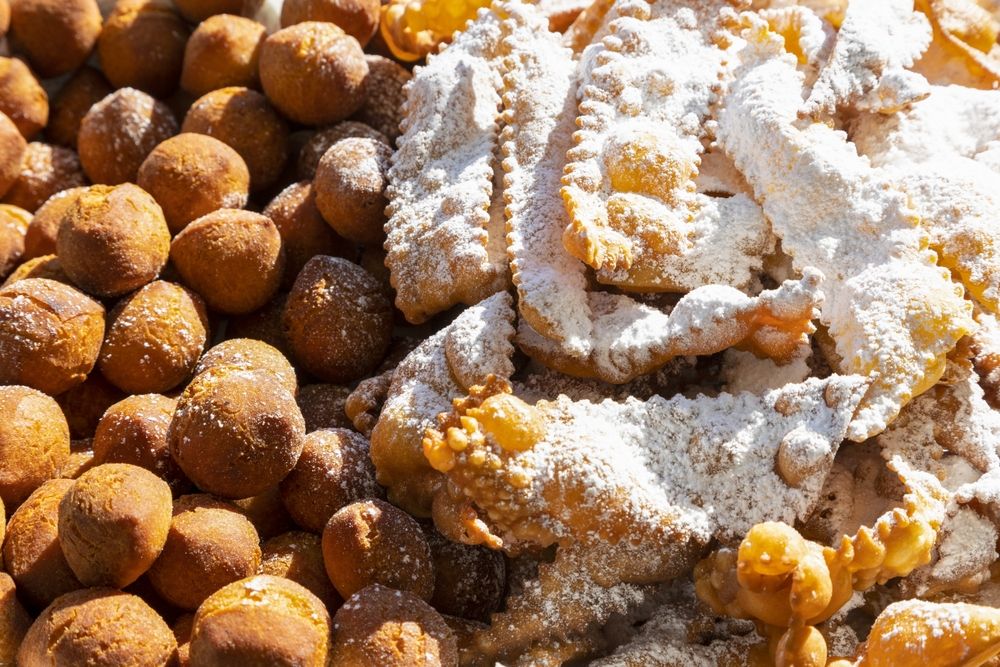
The Venice Carnival is savored as much with the eyes as with the taste buds. This festive period is accompanied by specific culinary traditions that delight gourmands. Fritelle, these traditional Venetian fritters, reign supreme during carnival. There are two main varieties: fritelle alla veneziana, filled with raisins and pine nuts, and fritelle alla crema, filled with smooth pastry cream. These delights are fried and sprinkled with powdered sugar and can be tasted in the city's pastry shops, some of which perpetuate century-old family recipes.
Galani (or crostoli) constitute another emblematic carnival sweet. These fine strips of fried dough, lightly sweetened and flavored with rum or lemon, are enjoyed crispy and light. They can be found in all Venetian bakeries during this period. To accompany these delicacies, nothing beats a spritz, the quintessential Venetian cocktail made with Prosecco, Aperol and sparkling water, or a glass of chilled Prosecco from the hills of Valdobbiadene.
Beyond these carnival specialties, take advantage of your stay to discover the richness of Venetian gastronomy. Cicchetti, these Italian-style tapas served in bacari (traditional wine bars), risotto al nero di seppia (cuttlefish ink risotto), baccalà mantecato (creamy cod) or fegato alla veneziana (Venetian-style calf's liver) constitute as many specialties not to be missed. Walking from the Rialto market to the small trattorias of the San Polo district, you'll discover authentic cuisine that has managed to preserve its traditions while seducing palates from around the world.
In conclusion, the Venice Carnival represents much more than a simple festive event: it's a dive into the millennial history of the Serenissima, a celebration of art and beauty, a moment out of time where magic operates in every alley, on every bridge and along every canal. Whether you choose to dress sumptuously to participate in a masked ball in a historic palace, or simply stroll as an admiring spectator through the animated streets, carnival offers you an unforgettable experience. And after experiencing the effervescence of these extraordinary days, take time to discover Venice in all its splendor thanks to audio-guided tours that will reveal the secrets of this unique city in the world.
Frequently asked questions
What are the dates of Venice Carnival 2026?
Venice Carnival 2026 will take place from Saturday January 31st to Tuesday February 17th, 2026, offering nearly three weeks of uninterrupted festivities throughout the city.
Is it mandatory to wear a costume to attend the carnival?
No, wearing a costume is absolutely not mandatory. Many visitors simply come to admire the costumed participants and enjoy the festive atmosphere. However, dressing up allows for a more immersive and authentic experience.
Where can you rent an authentic Venetian costume?
Several specialized workshops in Venice offer rental of authentic period costumes, particularly in the San Marco and Castello districts. Rates vary between 100 and 400 euros per day depending on costume quality. It's recommended to book in advance, especially for the most popular carnival dates.
What are the free events of Venice Carnival?
Most street events are free: costumed parades, animations on St. Mark's Square, street performances and parades. The Flight of the Angel and the Feast of the Maries are also free to attend, although arriving very early is advised to get a good spot.
What's the best time to visit the carnival?
The weekend preceding Fat Tuesday is the most intense moment of carnival, with maximum events and costumed participants. To avoid crowds while enjoying the atmosphere, favor weekdays at the beginning or middle of carnival.
How to get around Venice during carnival?
Venice is visited mainly on foot and by vaporetto (water bus). The Venezia Unica City Pass offers unlimited access to public transport during your stay. Allow more time for your travels due to exceptional crowds during carnival.