
Créé par Emilie, le 20 juin 2026
Votre guide Ryo
Everything you need to know about Sumo tournaments in Japan!
© Shutterstock
The Origin of Sumo
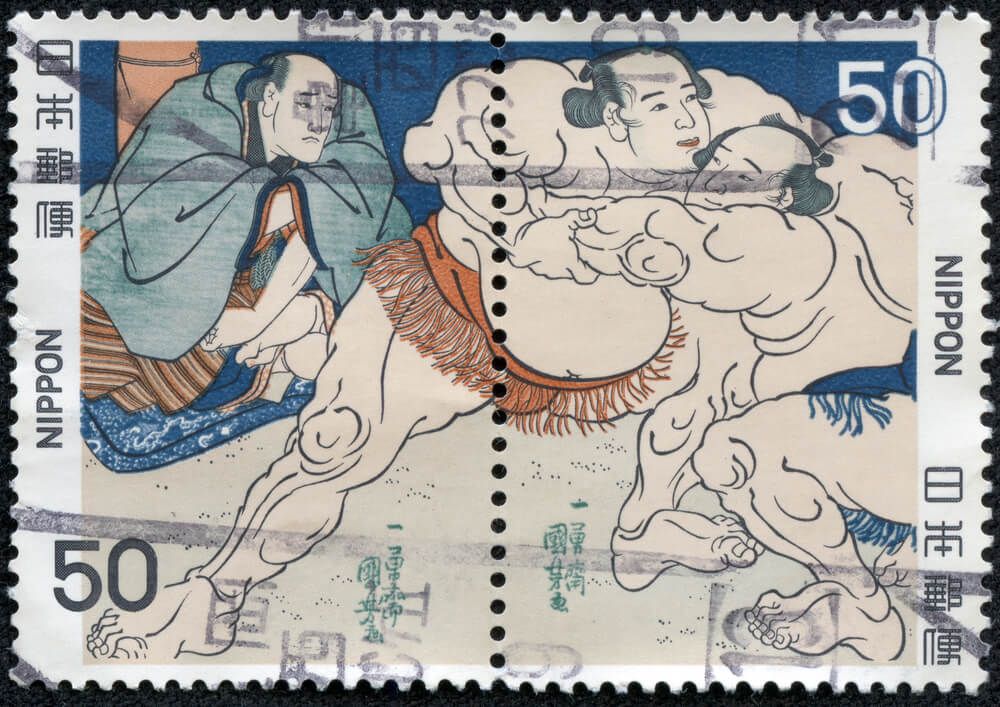
The history of Sumo is intimately linked to that of the country and blends between legend and traditions, dating back to the very creation of Japan.
The oldest written mention of Sumo comes to us from the Kojiki, the Record of Ancient Matters in English, a book written in the early 8th century and which is also the oldest example of Japanese writing.
The Kojiki tells a legend according to which, 2500 years ago, the God of Thunder "Takemikazuchi" and the God of Wind "Takeminakata", fought for control of the archipelago of the islands of Japan at the end of a sumo match, on the beaches of Izumo (where Shimane-ken is located today).
Takemikazuchi won the tournament and then established the royal family, of which the current emperor would still be a descendant.
Legend aside, it is impossible to determine exactly when this tradition was born. It seems that initially, Sumo participated in a kind of agricultural ritual to please the Shinto Gods and obtain good harvests. The first historically recognized fight took place in 642, at the court of Emperor Kogyoku, to entertain his guests. So, it's really old!
How does a Sumo live?
Sumotoris start training as teenagers.
They start in the morning, on an empty stomach, and practice combat movements using the heavy weight of their bodies.
They follow a precise diet and eat the equivalent of 20,000 calories per day. They only eat two meals a day, but these are very hearty. This is Chankonabe, a very high-calorie and protein-rich soup or chicken broth, with chicken, fried fish, beef, vegetables, tofu, etc. Chankonabe can be accompanied by bowls of rice (up to 10!) and washed down with beer.
To allow their bodies to accumulate as much fat as possible, Sumos lie down and sleep after each meal.
They live in community, in what are called "heyas", kinds of training centers with gyms and dormitories.
Sumotoris weigh between 90 and 160 kg and meet during fights according to their grades and weight categories.
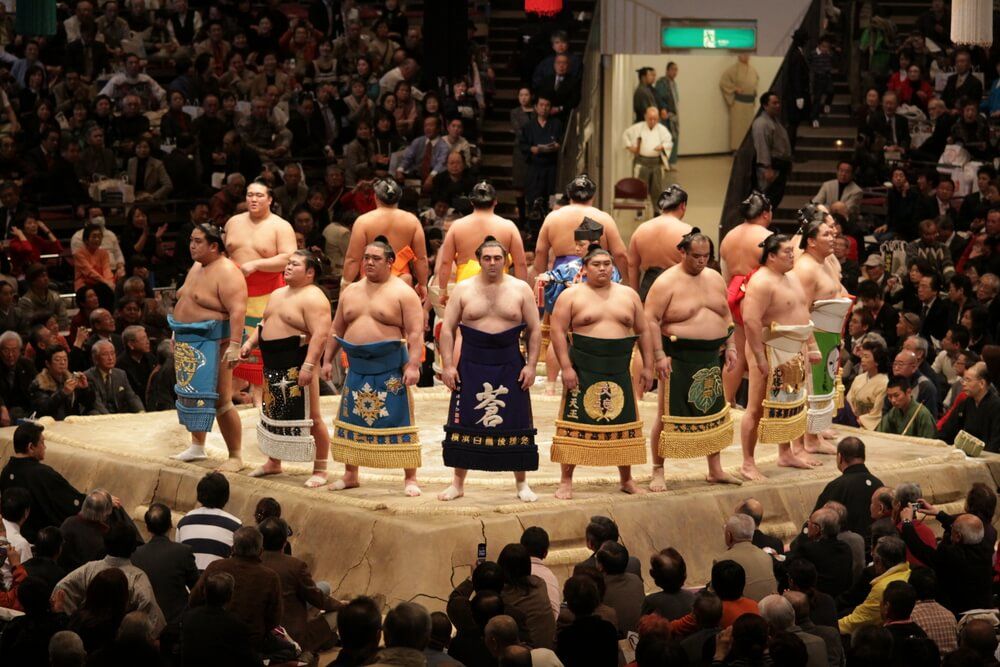
The highest rank a Sumo can reach is "Yokozuna". Once promoted, a Yokozuna can never lose his title, and since he has reached the peak of his career and can no longer obtain more honorary titles, he is generally expected to retire from competition.
Unfortunately, the wrestlers' health is very fragile. When wrestlers retire and stop their exercises, they unfortunately develop classic problems of obesity and diabetes.
Techniques and Rituals
You have to realize that, for the Japanese, Sumos are considered as demigods. Their place is therefore very important in Japanese cultural life.
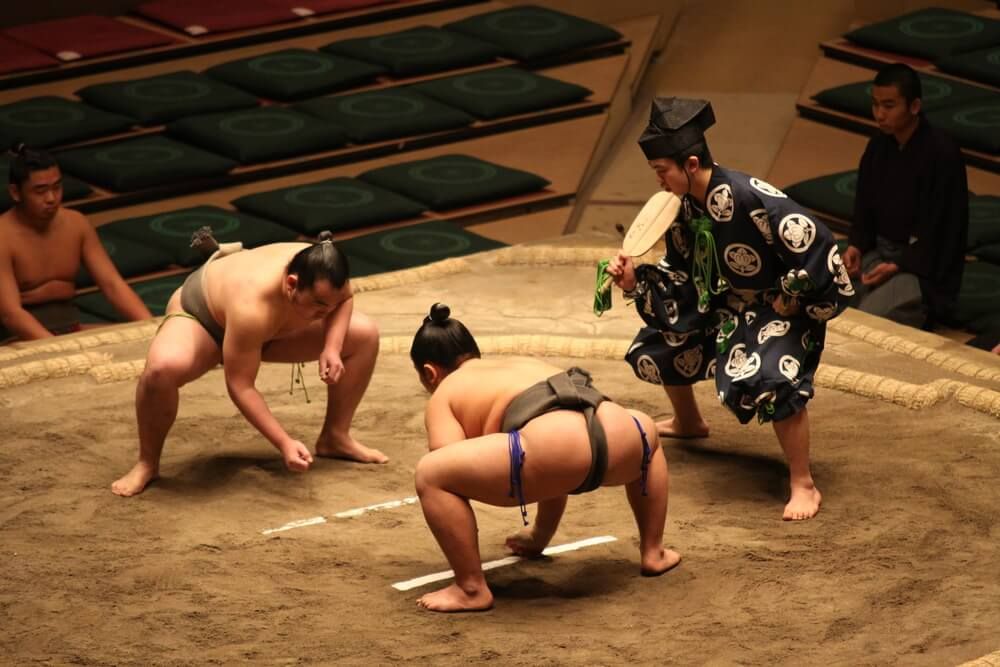
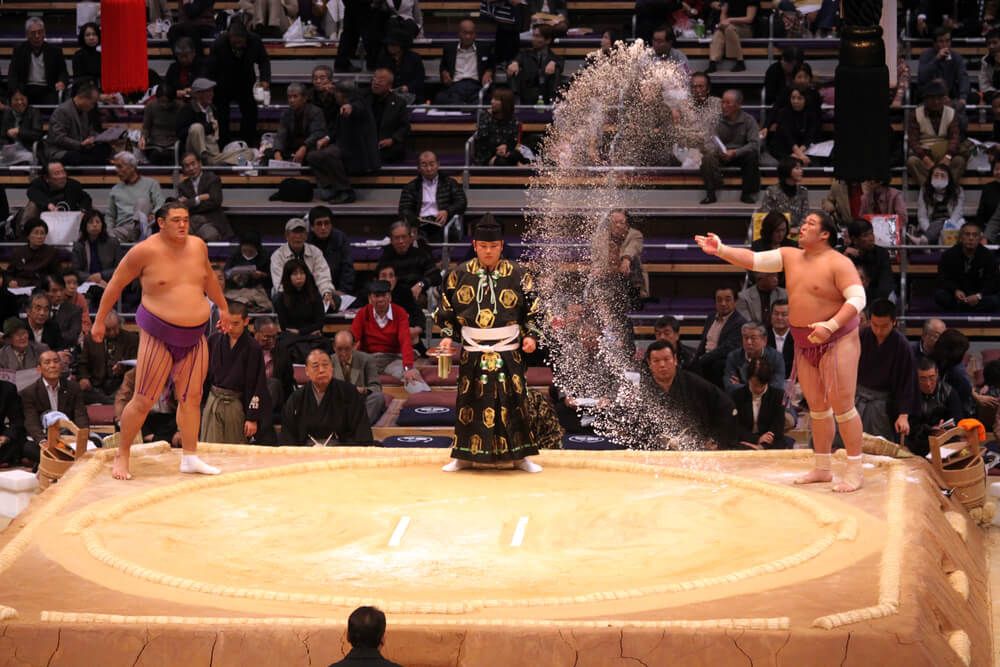
The ancestral ceremony is steeped in traditions and is very codified. Each fighter must perform rites before beginning the fight.
- Clap hands to attract the attention of the gods
- Stomp the ground to chase away evil spirits
- Sprinkle salt on the dohyô (the ring) to purify the space
- Rinse mouth with water and wipe body with paper towels to protect against injuries
- At the end of the fight, a makushita (the 3rd highest division for professional sumos), will enter the dohyô and perform a traditional dance with his bow.
Sumotoris fight on a 6m² Dohyô which symbolizes the sky and above which is installed a suspended roof that recalls that the arena is a sanctuary and that the fight is above all dedicated to the gods.
They wear as simple clothing, a mawashi, a strip of fabric 6 to 8 meters long, tied around the waist. The mawashi is very practical for lifting, pushing or grabbing your opponent, but if a wrestler loses his mawashi, he is automatically disqualified.
You win the fight by pushing the opponent out of the inner circle or by making him fall on the Dohyô. It is forbidden to hit above the hips, strangle your opponent or pull his hair. 82 holds in total are allowed.
When to go to Japan to see a Sumo tournament?
There are 6 national tournaments in Japan. They are called "Hon-Basho". They last 15 days and take place every odd month, in 4 organizing cities. The tournaments start with Tokyo and then alternate with provincial cities. Tokyo therefore hosts three tournaments and the three other cities each host one.
You can therefore go see a tournament in:
- Tokyo: in January, May and September at Kokugikan Sumo Hall
- Osaka: in March at Furitsu Taiikukaikan
- Nagoya: in July at Aichi ken Taiikukan
- Fukuoka: in November at Kokusai Center
How to buy a ticket for a Sumo tournament?
To buy a ticket, nothing could be simpler!
- You can get them online, on the sites www.sumo.pia.jp or www.sumo.or.jp
- On site, the same day, but only the worst seats will remain
- In Konbini, which are ticket distributors (be careful, it's not always translated into English, so good luck)
How much does an entrance ticket to a Sumo tournament cost?
Like everywhere, prices depend on your location in the hall. Your ticket gives you the right to attend all the fights of the day. The fights follow one another and the day can be long, they usually end around 6/7 pm. You can go out to eat, but you will also have what you need on site.
We distinguish three main price categories:
- The closest to the central ring: about €100 (15,000 JPY)
- Boxes for 4 to 6 people on the 1st floor level: between €80 and €300
- The second floor: from €15 to €100