
Créé par Emilie, le 15 mai 2026
Votre guide Ryo
© Shutterstock
Tokyo doesn't ease you in. The city throws 37 million residents, neon-lit skyscrapers, 200-year-old temples, and vending machines selling everything from hot ramen to neckties at you, all before breakfast. Working with a two-day stopover or a full two weeks, narrowing down what to see is genuinely hard. This guide to the best things to do in Tokyo cuts through the noise with 25 experiences that cover the breadth of the city: the spiritual and the futuristic, the hyper-local and the world-famous, the free and the bucket-list splurge. For those who want an expert narrative while walking the streets, Ryo's audio guide for Tokyo turns any neighbourhood stroll into a deep-dive experience, no headphone jack required, no tour group to keep up with.
Expect a few surprises along the way. The world's busiest pedestrian crossing moves over 3,000 people per cycle. One fish market serves tuna that sold for over ¥200 million at auction. A digital art museum has no permanent collection, the immersive installations dissolve and remake themselves continuously. And a tucked-away residential neighbourhood called Yanaka survived the 1923 earthquake and the 1945 firebombing, preserving a slice of Edo-era Tokyo that the rest of the city lost. Twenty-five stops, one extraordinary city.
1. Senso-ji Temple
Senso-ji
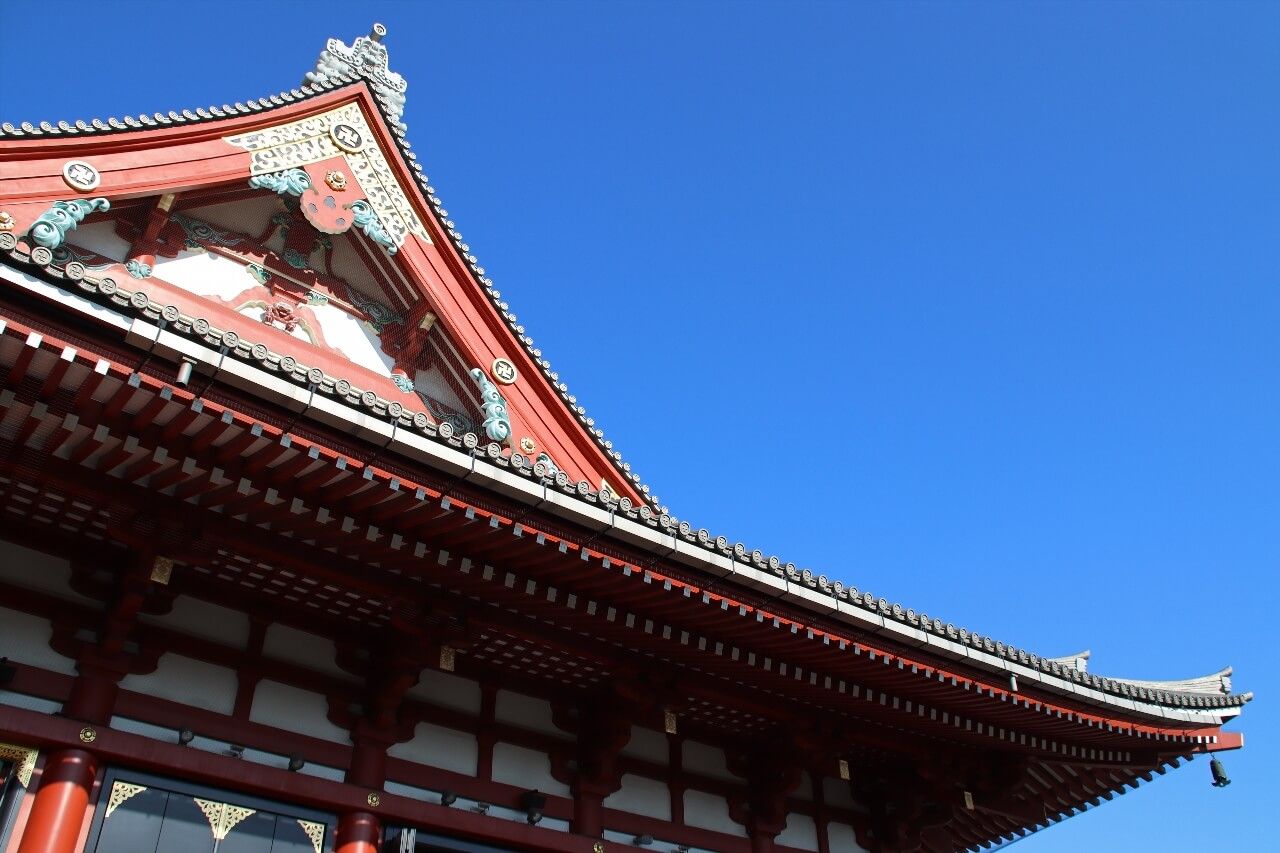
Tokyo's oldest temple is also its most visited, drawing roughly 30 million visitors a year, and somehow still managing to feel genuinely sacred once you push past the souvenir stalls. Founded in 645 AD, Senso-ji was built to enshrine a golden image of Kannon, the goddess of mercy, which according to legend was pulled from the Sumida River by two fishermen. The statue has never been put on public display. You come not to see it, but to feel the weight of its presence.
The approach begins at the Kaminarimon Gate, whose enormous red paper lantern, nearly 700 kg, has been reproduced on every Tokyo postcard ever printed. Passing through leads you into Nakamise-dori, a 250-metre arcade of around 90 shops selling ningyo-yaki (small cakes filled with sweet red bean paste), folded fans, tenugui cotton towels, and enough Tokyo kitsch to fill a carry-on. Resist the impulse to rush: the vendors here have been feeding pilgrims and tourists since the Edo period.
Beyond the inner gate, the five-storey pagoda rises 55 metres above the courtyard. On festival days, particularly the Sanja Matsuri in May, one of the three great Shinto festivals of Tokyo, the compound becomes a press of bodies, drumbeats, and portable shrines carried by men in happi coats. On an ordinary weekday morning, it's a different experience: incense smoke drifts from the giant bronze cauldron, and older visitors fan the smoke toward their bodies to invite health and good fortune. Arrive before 8 a.m. to walk the main hall in relative quiet. The temple grounds are open around the clock and free to enter. If you want the layers of legend and ritual without an in-person guide, the Ryo audio guide narrates the approach from Kaminarimon to the inner sanctuary as you walk.
2. Shibuya Crossing
Shibuya Scramble Crossing (2 Chome-2 Dogenzaka, Shibuya City, Tokyo 150-0043, rated 4.5/5 on Google (20 698 avis))
No intersection on earth moves people quite like Shibuya Crossing. When the lights turn red in all directions simultaneously, up to 3,000 pedestrians surge into the intersection from every angle, threading through one another in a choreography that looks chaotic from street level and miraculous from above. There are no collisions. No one is directing it. It simply works, a daily demonstration of the social contract that makes Tokyo function.
The best ground-level view is from the Shibuya Station exit facing the crossing; the best overhead view is from the second-floor window seats of the Starbucks in the Tsutaya building on the corner, though competition for those seats starts early. For an even higher perspective, the rooftop terrace at Mag's Park or the observation deck at Shibuya Sky (on the roof of the Scramble Square tower, 229 metres up) gives you the full picture: a city that never pauses, even for a moment.
Shibuya is also where you'll find the bronze statue of Hachiko, the Akita dog who waited outside this station every day for nearly ten years after his owner's death in 1925, becoming a national symbol of loyalty. The statue, installed in 1934, sits just outside the Hachiko exit of the station and is perpetually mobbed by people taking photographs, which somehow makes the story sadder and sweeter at the same time. The Ryo app weaves the Hachiko story into its Shibuya walk in a way that catches most visitors off guard.
3. Tokyo Skytree
At 634 metres, Tokyo Skytree is the tallest tower in the world and the second-tallest structure overall, trailing only the Burj Khalifa. The figure is not accidental: 634 can be read in old Japanese as mu-sa-shi, the name of the ancient province on which Tokyo now stands. The engineers embedded history into mathematics.
Two observation decks are open to visitors. The Tembo Deck at 350 metres gives you a 360-degree panorama over the Kanto plain; on clear winter days you can see Mt. Fuji, roughly 100 kilometres to the southwest, floating above the haze like a paper cut-out. The Tembo Galleria at 450 metres is a spiralling glass walkway where the floor is partially transparent, look down if you dare. Tickets must be booked online in advance, especially during cherry blossom season (late March to mid-April) when queues without reservations can stretch to three hours.
At the base of the tower, Tokyo Solamachi is a five-floor complex with over 300 shops and restaurants that would justify a visit on its own. The aquarium on the sixth floor, the planetarium, the postal museum, the Skytree experience routinely swallows half a day. Budget accordingly, or arrive in the late afternoon to catch the city transitioning from daylight to its neon alter ego. Night views from the Tembo Deck are among the most striking urban panoramas anywhere.
4. Shinjuku Gyoen National Garden
Shinjuku Gyoen National Garden (11 Naito-cho, Shinjuku City, Tokyo 160-0014, rated 4.6/5 on Google (44 740 avis))
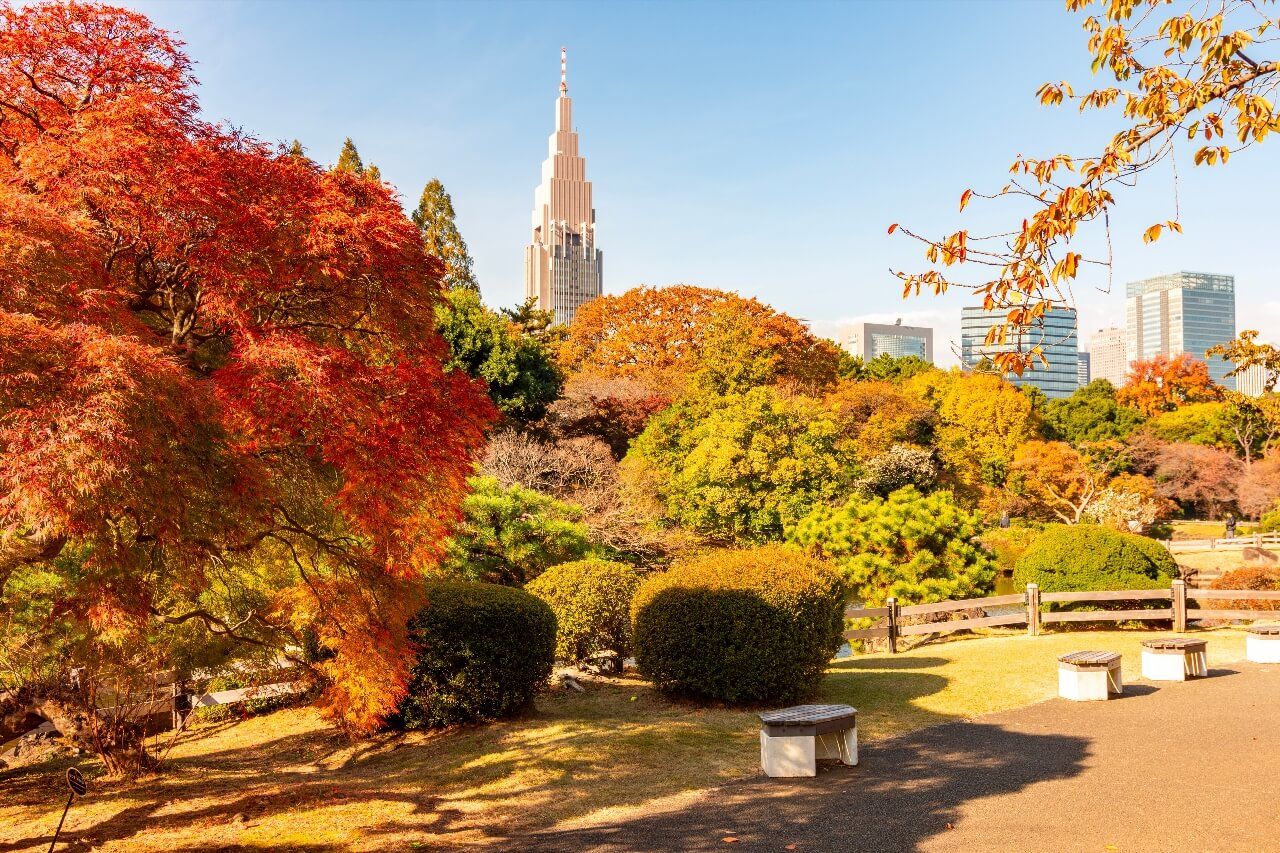
Shinjuku Gyoen proves that a city of Tokyo's density can still set aside 58.3 hectares for nothing more purposeful than beauty. Opened to the public in 1949 after serving as an imperial garden, it combines three distinct garden styles, French formal, English landscape, and traditional Japanese, within a single enclosure, the transitions between them abrupt enough to feel like walking between centuries.
The garden becomes world-famous each spring. Around 1,500 cherry trees of 65 different varieties means blooms that begin in late March and continue well into April, when most other spots have already shed their petals. This extended season makes Shinjuku Gyoen the premier cherry-blossom destination in the city for those whose timing is off by a week. Hanami (flower-viewing) picnics fill every available lawn from the moment the gates open. Alcohol is officially prohibited inside, an unusual rule in Japan's generally permissive outdoor-drinking culture, but one that keeps the atmosphere family-friendly and the crowds slightly thinner than at nearby parks.
Outside cherry blossom season, the greenhouse holds a permanent collection of tropical plants and rare orchids worth an hour of anyone's time. Admission is a negligible ¥500. Come mid-morning on a weekday and you may have entire sections of the English landscape garden virtually to yourself.
5. Meiji Shrine
Meiji Jingu Shrine (1-1 Yoyogikamizonocho, Shibuya City, Tokyo 151-0052, rated 4.6/5 on Google (50 045 avis))
In 1920, 70,000 volunteers planted roughly 100,000 trees from every corner of Japan and her then-territories to create an artificial forest in the heart of Tokyo. A century later, the forest feels ancient, towering camphor trees and cryptomeria cedars filter out the city's noise within two minutes of entering the path, producing a hush that feels earned. This is the setting for Meiji Jingu, the Shinto shrine dedicated to Emperor Meiji and Empress Shoken, built to enshrine their divine spirits two years after the emperor's death.
The main path stretches nearly 700 metres from the first torii gate to the inner shrine, passing a display of sake barrels donated by brewers, a traditional Shinto offering, and a collection of Burgundy wine barrels, a reminder that Meiji actively embraced Western culture during his reign. The inner courtyard contains the main hall, its copper roof turned sea-green by decades of oxidation. Visitors write wishes on ema wooden plaques and hang them near the shrine; the cumulative wall of requests, love, health, exams, safe travel, is one of the more quietly moving sights in the city.
Meiji Jingu draws 3 million visitors on the first three days of the New Year alone, the largest hatsumode (first shrine visit of the year) in Japan. At any other time it absorbs its crowds more gracefully. Yoyogi Park directly adjoins the shrine grounds, making the combination a full morning: spiritual weight in the forest, then picnic tables, street performers, and amateur rock bands in the park.
The shrine is free to enter. Allow at least an hour for the grounds; the Meiji Jingu Museum inside the inner garden charges a separate fee and is worth it for the display of personal belongings belonging to the emperor and empress.
6. Akihabara
Akihabara Electric Town (1 Chome Sotokanda, Chiyoda City, Tokyo 101-0021, rated 4.5/5 on Google (8 300 avis))
Akihabara started life in the post-war years as a black-market district for electrical components. Today it is the global centre of gravity for anime, manga, vintage video games, and a subculture of fandom that has shaped pop culture worldwide. The main street, Chuo-dori, is closed to traffic on Sunday afternoons, turning it into a pedestrian arcade of neon signs, mascot-adorned buildings, and maid-café staff handing out flyers to passers-by.
The electronics stores are multi-storey labyrinths. Yodobashi Camera alone occupies an entire city block across several interconnected buildings, selling everything from DSLR cameras to robot vacuum cleaners to floor-to-ceiling walls of capacitors. Serious collectors come for the specialist shops on the upper floors or the basement levels of older buildings: drawers of circuit boards, stacks of retro Famicom cartridges, shelves of limited-edition figures still in their original boxes.
For the uninitiated, the maid cafés offer a particular window into Akihabara's culture. Staff dressed in maid costumes serve food decorated with cartoon faces and perform short songs at your table, addressing customers as « master » or « mistress ». It is simultaneously absurd and charming. Minimum charges apply, usually around ¥500 on top of your order. Go once; you'll know within five minutes whether you want to stay longer. Akihabara is also the departure point for understanding how deeply animation and gaming have shaped modern Japanese identity, not as niche interests but as legitimate art forms with museum-level critical attention. Ryo's audio commentary for the district digs into that history without the tour-group choreography.
7. Tsukiji Outer Market
Tsukiji Outer Market (4 Chome-16-2 Tsukiji, Chuo City, Tokyo 104-0045, rated 4.2/5 on Google (55 607 avis))
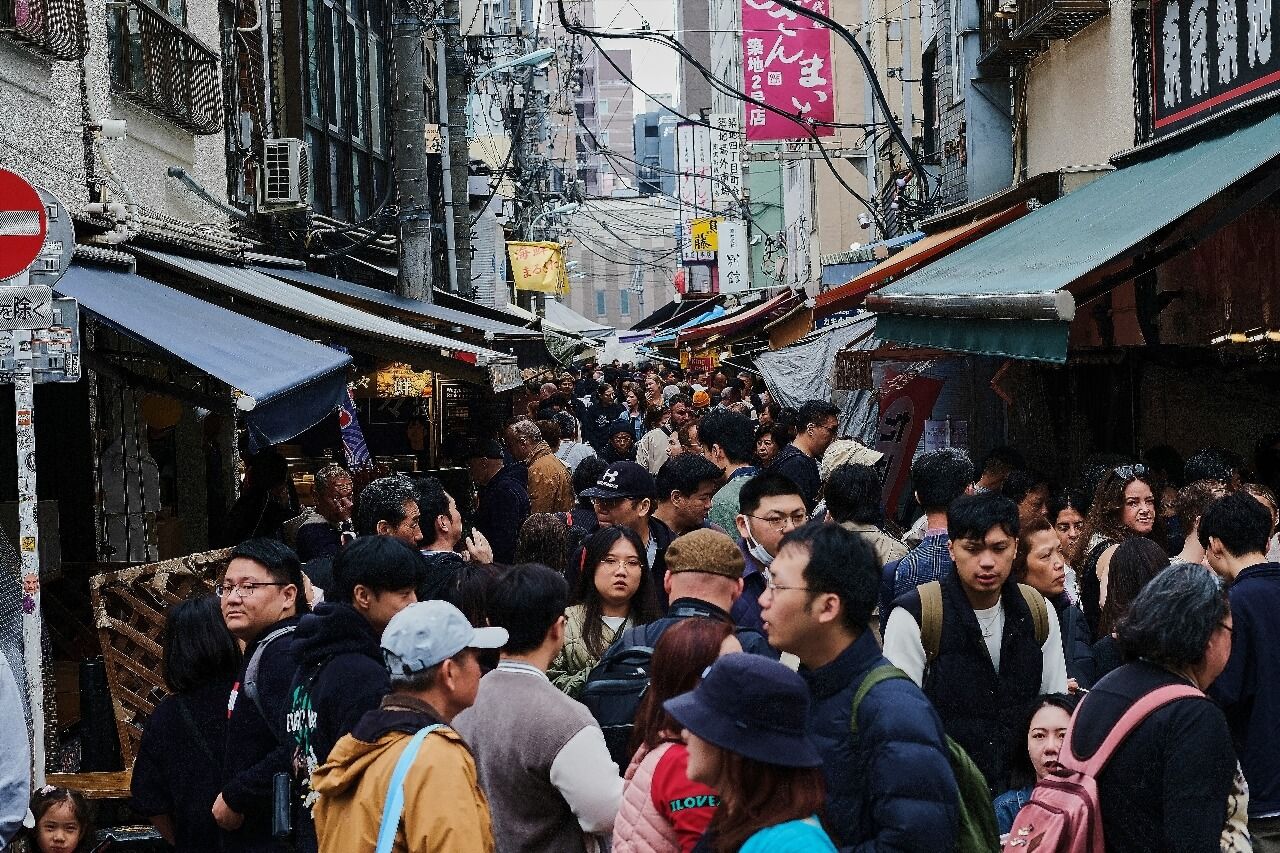
The famous tuna auctions moved to Toyosu Market in 2018, if you want to bid for observer tickets to watch 300-kg bluefin tuna sell for prices that would buy a car, that's where you go, and the ballot system fills up months in advance. But the Tsukiji Outer Market, the warren of small shops and restaurants that surrounded the old wholesale market, stayed put. And it remains one of the finest food experiences in the city.
The outer market occupies roughly six blocks of narrow alleys packed with around 400 stalls and restaurants, most of which have been operating under the same family ownership for two or three generations. The product is relentless quality. Tamagoyaki (Japanese rolled omelette) vendors let you watch the technique in real time; the spatula work is rhythmic and precise, a small performance every two minutes. Sushi chefs at standing counters serve omakase sets, chef's selection, no menu, for as little as ¥2,000, with cuts of fish that would command four times the price in the restaurant next door.
The tuna sold at Toyosu's first New Year auction of 2024 went for ¥114.2 million (about $788,000 USD) for a single 238-kilogram bluefin. That context puts the standing-counter sushi in perspective: you're eating from the same supply chain as the world's most expensive fish market, at picnic prices. Arrive between 7 a.m. and 10 a.m. before the best pieces sell out; the alleys are at their most animated in that window, stallholders calling out, knives moving fast, the smell of fresh seafood and coal-grilled shellfish competing for attention.
Beyond raw fish, the market sells professional-grade kitchen knives among the best in the world; ask for something forged by a named smith. Expect to pay ¥15,000 to ¥60,000 for a quality piece, in a tradition that traces to the 14th-century Sakai style.
8. teamLab Borderless
teamLab Borderless (1 Chome-3-8 Ariake, Koto City, Tokyo 135-0063, rated 4.6/5 on Google (28 069 avis))
teamLab Borderless reopened in a new Azabudai Hills location in early 2024 after its original Odaiba venue closed, and the move gave the digital art collective an opportunity to reimagine the experience from the ground up. The result is 10,000 square metres of interconnected rooms where the visual boundaries between installations don't exist, artworks spill from one space to the next, following you, responding to your movement, shifting in real time based on the presence of other visitors in adjacent rooms.
There is no map. This is by design. The founders describe the work as art that « transcends boundaries », between rooms, between artworks, between art and audience. You are not meant to navigate it; you are meant to become part of it. Visitors wearing white or light-coloured clothing effectively become canvases themselves, the projections wrapping around them. Children run through cascading digital waterfalls; adults stand motionless in rooms where flowers bloom and decay in minutes; couples photograph one another in spaces that look like walking inside a jewellery box.
The Athletic Forest section lets you climb rope structures suspended above glowing terrain while the landscape reacts to your weight. The Floating in the Falling Universe of Flowers installation has become one of the most photographed rooms in Japan, a slowly revolving sphere of flowers that bloom, peak, and fall while you float among them on mirrored floors. Tickets cost around ¥3,800 for adults; booking online in advance is essential. Queues for same-day tickets are long and availability is not guaranteed. Plan for two to three hours inside; the experience does not reward rushing.
9. Harajuku and Takeshita Street
Takeshita Street, Harajuku (1 Chome-17 Jingumae, Shibuya City, Tokyo 150-0001)
Takeshita Street is 350 metres long and contains more concentrated fashion creativity per square metre than most cities manage across entire districts. It was here, during the 1980s and 1990s, that the street fashion subcultures that now define global youth style, Lolita, Decora, Visual Kei, Fairy Kei, developed and mutated through decades of teenage experimentation.
On weekends the street is essentially impassable, the crowd a slow shuffle past crepe stands, vintage stores, pastel-coloured accessory shops, and clothing boutiques where the window displays look like costume department overflow. The crepes deserve specific mention: served in paper cones, filled with strawberries, matcha cream, fresh whipped cream, and a brownie perched on top, they are the Harajuku street food. One per person, always.
A five-minute walk from Takeshita, Omotesando is Harajuku's adult counterpart: a wide boulevard of zelkova trees whose canopy meets overhead in summer, lined with flagship stores from Prada, Louis Vuitton, Comme des Garçons, and Issey Miyake, some in architecturally significant buildings commissioned from world-class architects. The contrast between the two streets, separated by a few minutes on foot, encapsulates something essential about Tokyo's ability to hold contradictions.
10. Asakusa District
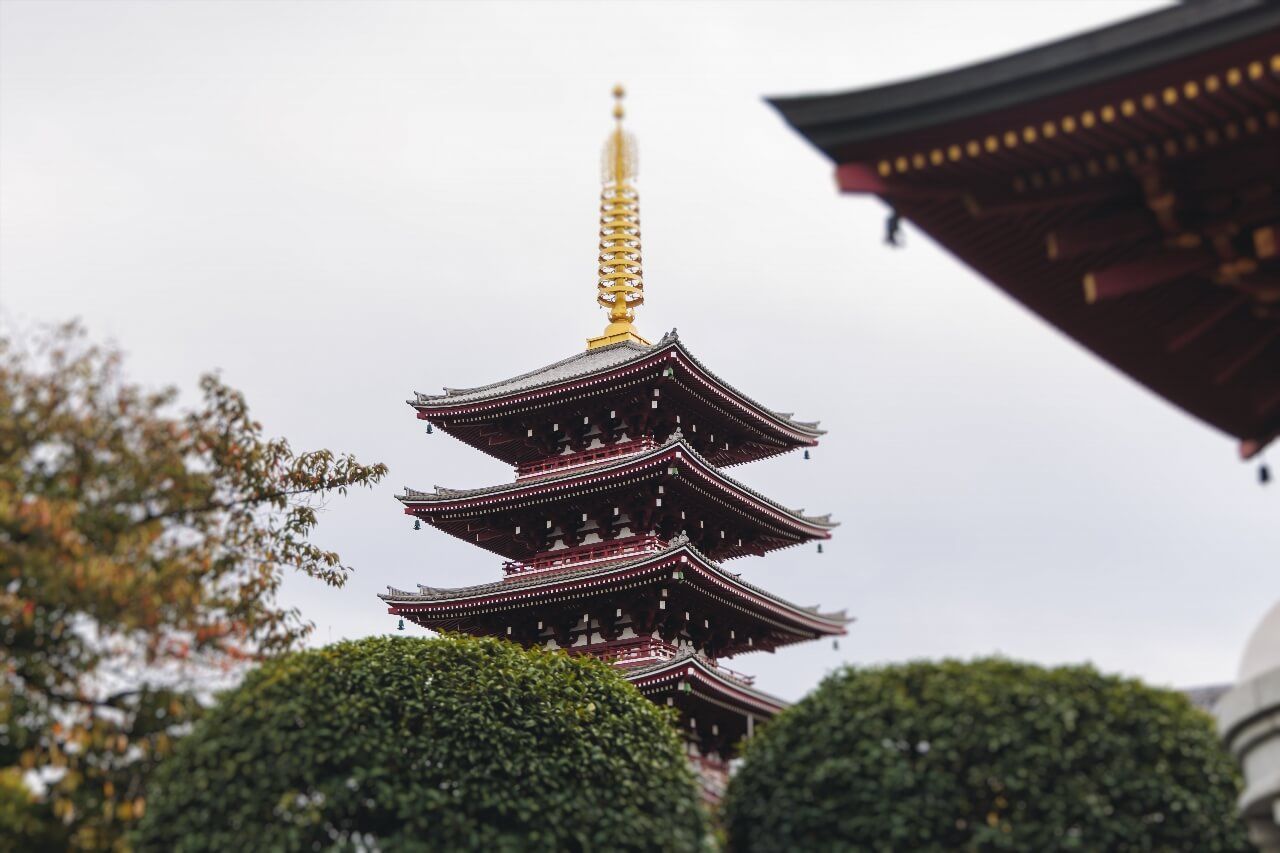
Asakusa is where Senso-ji lives, but the temple is only the anchor for a neighbourhood that rewards extended exploration. The streets radiating out from the main gate retain more of pre-war Tokyo's atmosphere than almost anywhere else in the city, low wooden shopfronts, rickshaw drivers waiting for fares, elderly vendors in traditional dress, the smell of incense carried on the breeze well beyond the temple grounds.
Nakamise-dori gets most of the foot traffic, but the parallel shopping streets, Denboin-dori in particular, are where the authentic neighbourhood shows through: a tofu shop that has been operating since the Meiji era, a senbei (rice cracker) vendor cooking crackers over an open charcoal grill, a tenugui fabric shop where the hand-dyed designs reference Edo-period woodblock prints.
The Sumida River runs along the eastern edge of the district, and the riverbank promenade from Asakusa south toward Ryogoku is a pleasant 30-minute walk that passes under the Tokyo Skytree and through the quiet residential streets that buffer the river from the commercial centre. Rent a rickshaw (jinrikisha) for a 30-minute narrated tour around the temple neighbourhood, the drivers speak competent English and take you down alleys that most visitors never find. Costs run approximately ¥3,000 to ¥8,000 depending on route duration.
For dinner, Asakusa has an exceptional concentration of restaurants serving traditional Tokyo cuisine: unaju (freshwater eel over rice), tempura, and soba made in-house. The neighbourhood's restaurants are not trendy in any contemporary sense; they are simply very good at what they have been doing for decades. Reservations are advisable at the better-known establishments.
11. Tokyo DisneySea
Tokyo DisneySea (1-13 Maihama, Urayasu, Chiba 279-0031, rated 4.5/5 on Google (105 872 avis))
Tokyo DisneySea is routinely ranked the best theme park in the world by visitors and industry observers, and it earns the accolade. Unlike other Disney parks, DisneySea was designed specifically for adults and older teenagers, with a nautical and exploratory theme organised around seven themed ports of call set around a lagoon at the centre of the park. There is no Magic Kingdom castle here; the centrepiece is a working volcano, Mount Prometheus, which erupts on schedule throughout the day.
The park holds the record for the most expensive theme park ever constructed, at approximately $4 billion USD. That investment is visible in every detail: the reproduction of Venice's Rialto Bridge, the Jules Verne-inspired Mysterious Island, the Art Deco lines of the American Waterfront. Opened on 6 June 2024, Fantasy Springs is the largest expansion since the park's 2001 debut, themed around Frozen, Tangled, and Peter Pan, and adds four major attractions, three restaurants, and the new Tokyo DisneySea Fantasy Springs Hotel visible from within the park itself. Construction reportedly cost roughly ¥320 billion (about $2.1 billion).
Tickets cost around ¥10,900 for a one-day adult pass. Buy them online well in advance; the park operates at reduced capacity and popular date slots sell out weeks ahead. The train from central Tokyo takes about 30 minutes, budget a full day.
12. Ueno Park and Its Museums
Ueno Park is Tokyo's cultural district compressed into 53 hectares of public green space. The park itself is free and open at all hours; what fills it justifies an entire day of dedicated museum-going, and the combination of institutions here rivals what you'd find in any national capital.
The Tokyo National Museum is the oldest and largest art museum in Japan, holding over 120,000 objects across six main buildings. Its permanent collection spans 5,000 years of Japanese art history: Jomon-period ceramic vessels, Tang-dynasty Buddhist sculpture, Edo-period lacquerware, Meiji-era oil paintings, and arguably the finest collection of samurai armour and swords available for public viewing anywhere. The Honkan (Japanese Gallery) alone, a 1938 building housing paintings, calligraphy, and decorative arts, takes three hours at a comfortable pace. Admission is ¥1,000.
Adjacent to the national museum, the National Museum of Nature and Science suspends a full-scale blue whale model in its lobby and covers everything from the geological history of the archipelago to the endemic species of the Ogasawara Islands. Children love it; adults are surprised by how much they do too.
The National Museum of Western Art, designed by Le Corbusier, is itself a UNESCO World Heritage Site, one of 17 buildings worldwide listed for their contribution to the Modern Movement. Inside: European painting from the medieval era through the 20th century, with particular strength in French Impressionism. Rodin's The Gates of Hell stands in the forecourt.
Beyond the museums, Ueno is famous for its cherry blossom, which turns the park into a canopy of pink each spring; the hanami parties here are the oldest-established in the city, a tradition dating to the early Edo period. Shinobazu Pond, thick with lotus plants in summer and a bird-watching site in winter, is the park's quieter draw.
13. Odaiba
Odaiba (1 Chome-4 Daiba, Minato City, Tokyo 135-0091, rated 4.2/5 on Google (20K avis))
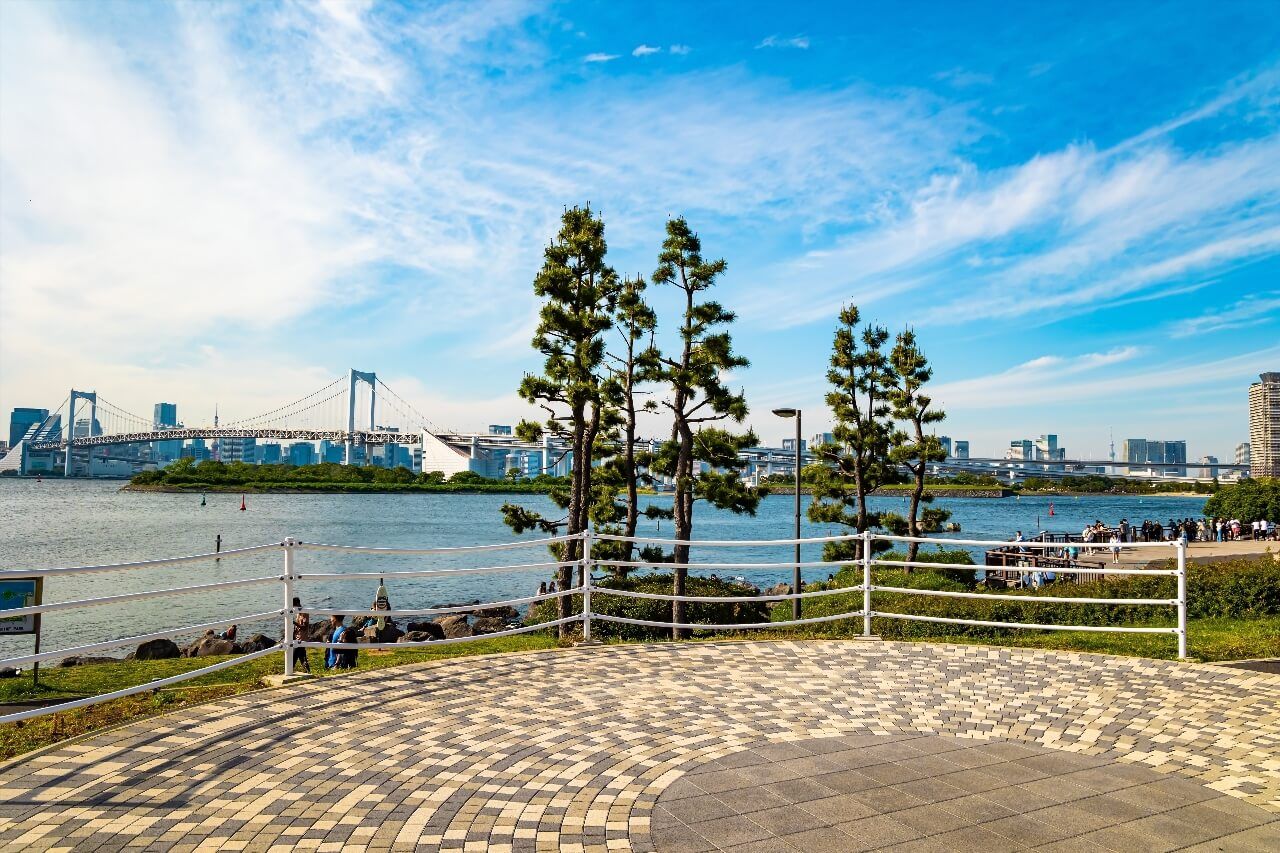
Odaiba is a man-made island in Tokyo Bay constructed in the 1990s during Japan's bubble economy, when urban planners imagined a futuristic residential district that never quite materialised as intended. What it became instead is something more interesting: a collection of entertainment facilities, shopping malls, and architectural statements on reclaimed land, connected to the mainland by the Rainbow Bridge and served by the automated, driverless Yurikamome line.
The teamLab Planets installation (covered separately in entry 22) is now one of the main reasons to cross the bridge. Beyond that, Palette Town gave way in 2022 to the development of Tokyo Mystery Circus and various pop-up venues; the Venus Fort shopping mall, a reproduction of a European streetscape with a painted sky ceiling, closed but has been replaced by new dining and entertainment venues. The Fuji Television Headquarters, a building that looks like a sphere has landed on the roof of an office block, offers observation decks and studio tours.
The island's best feature may simply be its waterfront boardwalk, which gives you the view of central Tokyo across the bay that the city never gives you from within: the skyline assembled at distance, the Rainbow Bridge threading across the foreground, and, on exceptionally clear days, Mt. Fuji visible beyond the western edge of the city.
14. The Ghibli Museum
Ghibli Museum, Mitaka (1 Chome-1-83 Shimorenjaku, Mitaka, Tokyo 181-0013, rated 4.5/5 on Google (19 106 avis))
No museum in Tokyo has a more demanding admission process or a more ardent following. Tickets for the Ghibli Museum are released on the 10th of each month for the following month, sold exclusively through a Lawson convenience store ticketing system in Japan, and through authorised agents abroad. By the 11th, most dates are gone. This is the price of entry to what is, by universal agreement among visitors, one of the most thoughtful and beautifully designed small museums on earth.
Hayao Miyazaki designed the museum personally, refusing to make it a conventional exhibition of Studio Ghibli's history. There are no chronological displays, no trophy cases of Academy Awards, no retrospective posters. Instead, the building explores the craft and imagination behind animation: drawers full of hand-drawn frames, a reconstruction of Miyazaki's cluttered studio, a working animation desk inviting visitors to sequence their own drawings. The message is processual, art is made, not received.
The rooftop garden features a life-size robot soldier from Castle in the Sky, overgrown with moss. The basement holds a small cinema showing short films made exclusively for the museum, works that will never be released commercially. The gift shop stocks items unavailable anywhere else in the world, including artbooks and limited-edition materials from specific productions.
The museum sits in Inokashira Park in Mitaka, a 25-minute train ride from Shinjuku. The park itself is a significant destination: a large natural lake, a zoo, and the kind of zelkova-lined paths that appear in Ghibli films with obvious reason. Allow a full day: the museum in the morning, the park and lakeside cafés in the afternoon.
15. Imperial Palace East Gardens
Imperial Palace East Gardens (1-1 Chiyoda, Chiyoda City, Tokyo 100-8111, rated 4.4/5 on Google (9 917 avis))
The Imperial Palace itself is not open to the public for most of the year, the emperor and empress still reside in the inner palace, but the East Gardens (Higashi Gyoen), occupying the former site of the Edo Castle's inner citadel, are free to enter and contain more historical substance than most museums.
The castle that once stood here was the largest in the world, its outer walls enclosing an area greater than Versailles. Virtually nothing survives above ground: the 1657 Meireki fire and subsequent earthquakes destroyed most of the main structures, and the stone foundations of the main keep (tenshudai) rise from a well-maintained lawn as a kind of monument to absence. Standing on the foundations and looking out over the garden, you're standing where the castle's five-storey keep once rose to roughly 51 metres, the tallest castle tower ever built in Japan.
The garden's curated plantings are exceptional in every season: plum blossoms in February, irises in June, chrysanthemums in November. The Sannomaru Shozokan museum within the gardens holds rotating exhibitions of imperial art treasures. Admission to the East Gardens is free; wear comfortable shoes, as the grounds cover considerable area and the stone paths are uneven in places.
16. Yanaka
Yanaka
Yanaka survived the 1923 Great Kanto Earthquake and the 1945 firebombing that remade most of Tokyo. The result is a neighbourhood with wooden machiya townhouses still standing, an old shopping street called Yanaka Ginza that sells handmade goods and grilled chicken skewers, and a cemetery so large and well-maintained it serves as the de facto park for the area. The cemetery holds the grave of Japan's last shogun, Tokugawa Yoshinobu, and the small temple complex around it remains one of the few neighbourhoods in central Tokyo where you can hear actual silence between trains.
This is Tokyo at its quietest and most human in scale. Come on a weekday, walk slowly, eat something from a street stall, and resist the urge to photograph everything. Yanaka rewards presence over documentation, and Ryo's audio guide for Tokyo is one of the few that treats it with the patience the neighbourhood deserves.
17. Shimokitazawa
Shimokitazawa (2 Chome-12 Kitazawa, Setagaya City, Tokyo 155-0031, rated 4.4/5 on Google (15K avis))
Shimokitazawa is Tokyo's counterculture neighbourhood, resolutely ungentrified despite the pressure. The streets are narrow and irregular, the area was never laid out on a grid, and the spaces between the vintage clothing shops, independent theatres, jazz bars, and curry restaurants are filled with the kind of accidental architecture that results when a city simply grows.
This is where Tokyo's musicians, theatre-makers, and working artists live and work. Most of the live music venues hold fewer than 100 people; most of the food is cheap and excellent. Come at night to hear a band in one of the basement venues, or on a Sunday afternoon to browse the record stores and thrift shops that have been feeding Shibuya's fashion ecosystem for thirty years. The Honda Theatre and a cluster of smaller stages around the south exit anchor what locals call Tokyo's off-Broadway, where the comedy and avant-garde theatre scene runs every weekend with tickets typically under ¥3,000.
18. Shinjuku at Night
Kabukicho, Shinjuku (1 Chome-16-1 Kabukicho, Shinjuku City, Tokyo 160-0021)
Among the most atmospheric things to do in Tokyo after dark, Shinjuku turns into a different city from the department stores and government offices that define it during the day. The neighbourhood of Kabukicho, Tokyo's entertainment district, lights up after 9 p.m. with host clubs, izakayas, cinemas, and late-night ramen shops operating behind curtained doorways. The streets here are lively rather than threatening, and the sheer density of neon, signage, and foot traffic creates an atmosphere that is difficult to replicate at any other hour or in any other city.
Golden Gai, tucked behind Kabukicho, is a grid of six narrow alleys containing around 200 tiny bars, each holding perhaps eight people. Most have a nomihodai (all-you-can-drink) option and a theme, film, jazz, anime, established by the owner's personal obsessions. There is a cover charge (typically ¥500 to ¥1,000) at most venues, and the atmosphere depends almost entirely on whether other customers are already there when you arrive. Go early (around 9 p.m.) and let it evolve.
For a more recent phenomenon, the Omoide Yokocho alley adjacent to Shinjuku Station west exit, known colloquially as Memory Lane or sometimes Piss Alley, a survival of post-war street culture, serves yakitori skewers and beer from stalls barely large enough for two customers under a permanent haze of charcoal smoke. The stalls have been here since the 1940s. Nothing about the experience has been cleaned up for tourism, and that authenticity is precisely the point.
19. Tokyo Tower
Tokyo Tower (4 Chome-2-8 Shibakoen, Minato City, Tokyo 105-0011, rated 4.5/5 on Google (96 333 avis))
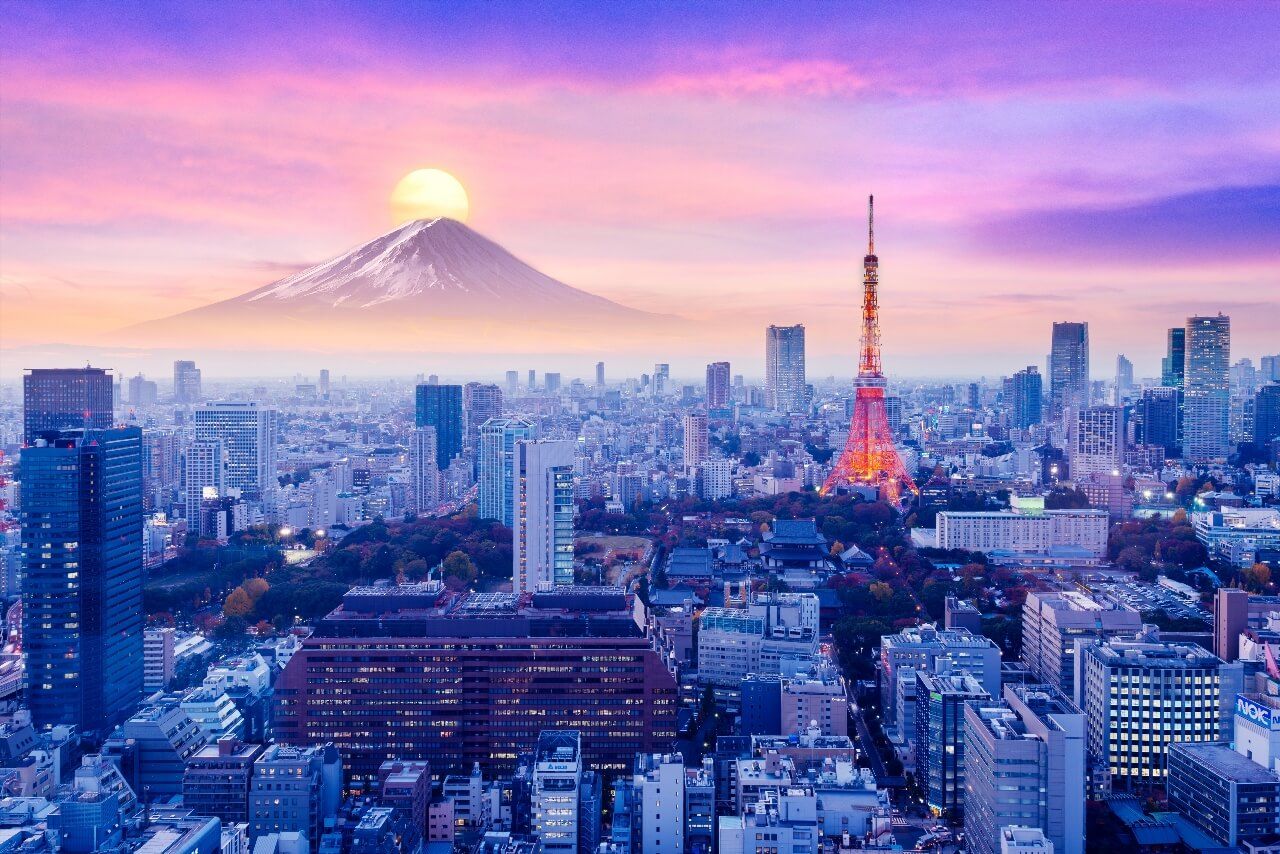
Built in 1958 and modelled loosely on the Eiffel Tower, Tokyo Tower was Japan's declaration of post-war ambition: a 333-metre steel lattice structure painted orange-white to comply with aviation safety regulations, which happened to produce one of the most recognisable silhouettes in Asia. For over 50 years it was the tallest structure in Japan. Tokyo Skytree overtook it in 2012, but the Tower has, if anything, gained in cultural resonance since: it appears in every generation of anime set in the city, in countless films, and on merchandise produced in quantities that suggest a national affection bordering on the tender.
The Main Deck at 150 metres has recently been renovated, with sections of glass floor inserted to let visitors look straight down through the tower's legs to the street. The Top Deck at 250 metres is a more intimate experience: the enclosed observation area is smaller, the queues shorter, and the views, which include the Imperial Palace grounds, Tokyo Bay, and the entire Kanto plain, arguably clearer than from the Skytree, because you're looking across the city rather than down onto it.
The tower is especially beautiful at night, when its illumination shifts seasonally: the warm orange Diamond Veil in winter, blue-white during summer, special lighting schemes for national holidays. The neighbourhood of Shiba Park immediately around the tower is quiet and residential, with the red-lacquered Zojo-ji Temple providing a satisfying historical counterpoint to the tower's modernity. Both in the same frame make for the photograph that most captures Tokyo's characteristic layering of eras.
20. Sumida River Cruise
Sumida River Water Bus
Tokyo's river system is largely invisible to visitors who stick to the train network. The Sumida River cruise between Asakusa and Odaiba, operated by Tokyo Cruise, takes about 50 minutes and passes under no fewer than twelve bridges, each a distinct design spanning the period from Meiji-era ironwork to contemporary engineering. The boats are futuristic in their exterior design, styled to look like spacecraft; the interiors are plain, which is fine, because the reason you're here is the view.
Boarding at Asakusa pier just below Senso-ji gives you the tower and the city skyline behind you as the boat heads south through the shitamachi low-city neighbourhoods. The fare is around ¥860 one way. Combine with a visit to Hamarikyu Gardens (see entry 25), where the boat has a mid-journey stop and where the contrast between the garden's cultivated stillness and the surrounding skyscrapers is one of the most composed visual experiences Tokyo offers.
21. Nikko Day Trip
Tosho-gu Shrine, Nikko (2301 Sannai, Nikko, Tochigi 321-1431, rated 4.5/5 on Google (33 407 avis))
Nikko sits 140 kilometres north of Tokyo and is accessible in under two hours on the Tobu Nikko Line from Asakusa (limited express, around ¥1,300 one way). The town's UNESCO World Heritage Site encompasses 103 buildings and structures across three main shrine and temple complexes, built in 1617 to enshrine the first Tokugawa shogun, Ieyasu, and expanded by subsequent shoguns who understood that magnificence is its own argument for legitimacy.
Tosho-gu Shrine is the centrepiece: a complex of buildings in the ornate Gongen style, covered in gold leaf and lacquerwork to an extent that makes the Imperial Palace's gardens feel austere by comparison. The famous three wise monkeys, see no evil, hear no evil, speak no evil, are carved into a stable roof here, their original context Shinto-religious rather than the secular proverb they've become. The Yomeimon Gate (Gate of Sunlight), decorated with over 500 relief carvings of flowers, animals, and mythical creatures, has been a benchmark of Japanese decorative craft for four centuries.
Beyond the shrines, Nikko is surrounded by Nikko National Park: cedar-lined avenues, waterfalls including the spectacular Kegon Falls (97 metres drop), and Lake Chuzenji at altitude above the town. A day trip comfortably covers the World Heritage sites; two days allows you to extend into the national park. Nikko is most beautiful in autumn, when the Japanese maple and Japanese zelkova turn the hillsides a sustained, burning red.
22. teamLab Planets
teamLab Planets (6 Chome-1-16 Toyosu, Koto City, Tokyo 135-0061, rated 4.5/5 on Google (51 575 avis))
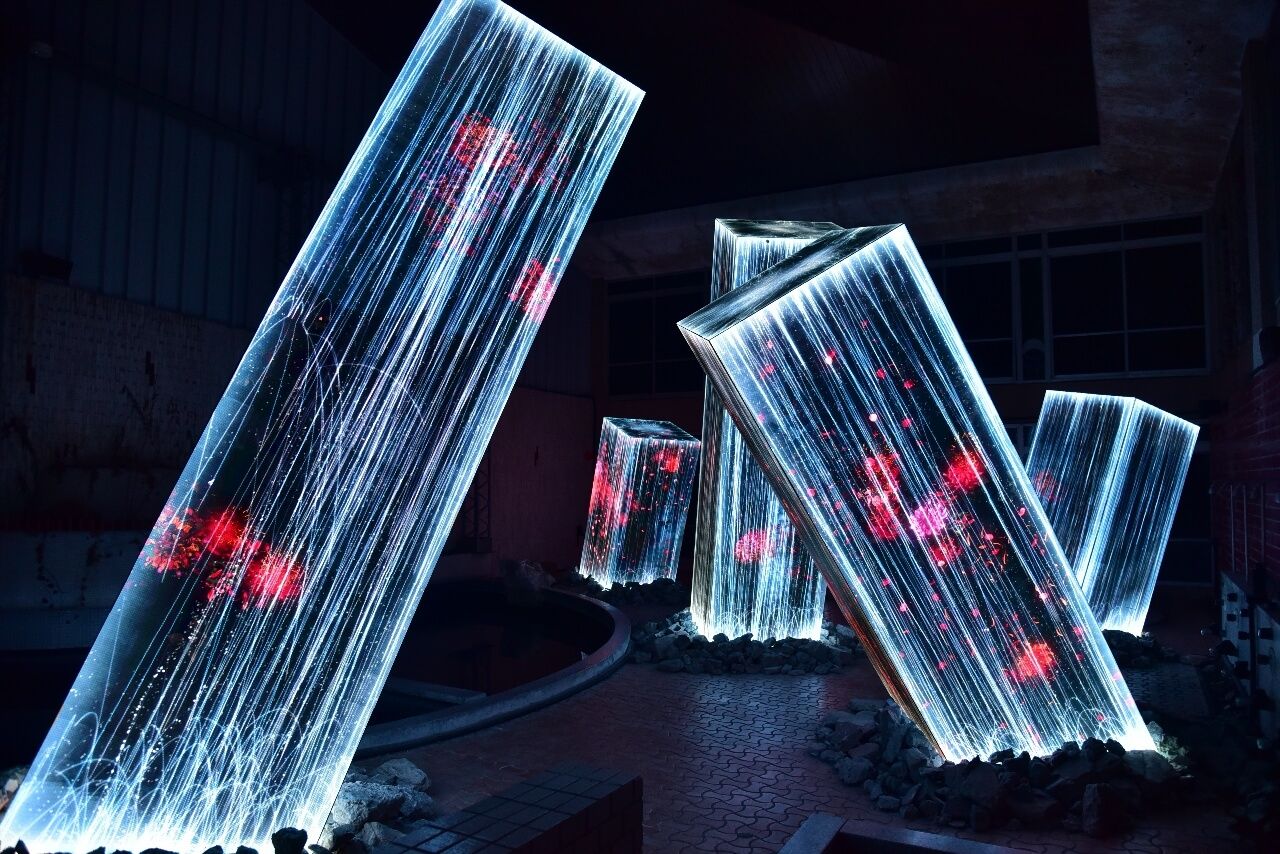
teamLab Planets in Toyosu is a different, more focused experience than the sprawling Borderless venue in Azabudai Hills. Where Borderless invites wandering, Planets guides you through a sequence of four large-scale installations experienced barefoot, you begin by wading through a shallow pool of water with reflections that extend the space into apparent infinity, then progress through rooms of crystal light, a space packed with ovoid bronze sculptures that react to your proximity, and finally into a vast field of projected flowers.
The barefoot element is central to the design. Without shoes, the boundary between your body and the installation dissolves; the cold water of the entry pool is part of the work. Visitors are advised to roll up trousers to the knee. Each installation takes approximately 10 to 20 minutes to move through, and the total experience runs about 60 to 90 minutes, shorter and more concentrated than Borderless, which makes it a good option if your schedule is tight. Tickets run around ¥3,200 for adults. Book online; same-day availability is rare.
23. Watch a Sumo Practice
Ryogoku Kokugikan Sumo Hall (1 Chome-3-28 Yokoami, Sumida City, Tokyo 130-0015, rated 4.4/5 on Google (8 710 avis))
Japan's national sport holds three of its six annual tournaments in Tokyo at the Ryogoku Kokugikan, in January, May, and September. Tickets for tournament bouts, particularly ringside seats, sell out months in advance through the official Sumo Association website. If you're visiting outside tournament season, or if tickets are gone, the next best option is watching morning keiko (practice sessions) at one of the stables in the Ryogoku neighbourhood.
Several stables accept visitors for morning practice, which runs from approximately 6 a.m. to 11 a.m. Arrangements must be made in advance through your hotel concierge or directly with the stable. The protocol is strict: sit quietly on the floor at the edge of the dohyo (ring), no flash photography, no talking. What you observe is athletes at peak physical condition running the same drills, shiko (leg stomps), pushing practice against a padded pillar, full-contact bouts, that have been the core of sumo training for centuries. The scale of the wrestlers is genuinely startling in person.
24. Nakameguro Canal
Nakameguro Canal (2 Chome-1 Kamimeguro, Meguro City, Tokyo 153-0051, rated 3.9/5 on Google (781 avis))
Nakameguro is where Tokyo's design-conscious residents shop, eat, and congregate. The Meguro River canal, lined with cherry trees that produce one of the city's most famous blossom tunnels in late March, runs through the heart of the neighbourhood and gives it an intimacy unusual for a district this close to Shibuya.
The buildings along the canal are uniformly small-scale and architecturally considered. Independent boutiques selling Japanese ceramics, concept record stores, architecture bookshops, and coffee bars that take their roasting as seriously as a Michelin-starred restaurant takes its sourcing line both banks. The Starbucks Reserve Roastery here, one of a handful worldwide, is genuinely worth the queue: a multi-storey building with a working roaster on the ground floor and a tea bar and cocktail bar above, housed in a building whose design references Japanese craft architecture at every point.
Nakameguro is best explored with no agenda: walk the canal, duck into the alleys on either side, and follow whatever catches your eye. Budget two hours minimum; the neighbourhood repays longer.
25. Hamarikyu Gardens
Hamarikyu Gardens (1-1 Hamarikyuteien, Chuo City, Tokyo 104-0046, rated 4.4/5 on Google (12 262 avis))
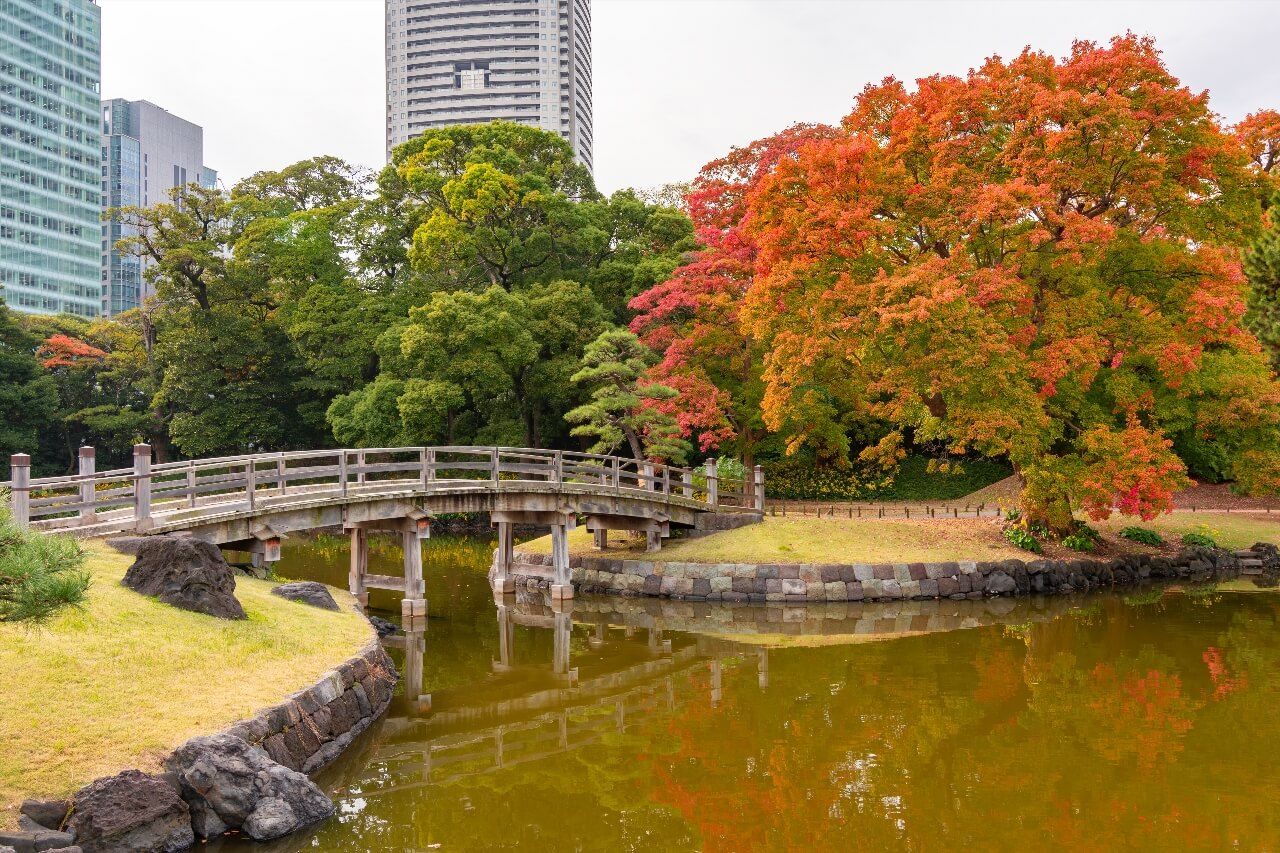
Hamarikyu Gardens occupies one of the most extraordinary positions of any green space in any city: 25 hectares of traditional Japanese garden, with a seawater tidal pond fed directly by Tokyo Bay, surrounded on all sides by some of the densest skyline in Asia. The contrast is stark enough to feel calculated, although the garden long predates the towers, it was an Edo-era shogunal duck-hunting reserve, dating to the 17th century.
The tidal pond changes character through the day as the sea level rises and falls; the stone lanterns reflected in the water at dawn are a photographer's standard, but the garden earns its admission fee (¥300) at any hour. The 300-year-old pine tree near the main pond was planted during the garden's original construction and remains structurally supported by an elegant system of wooden props, a form of living preservation that itself becomes a feature worth examining.
The garden connects directly to the Sumida River cruise pier, making it the logical endpoint for the water bus route from Asakusa (see entry 20). A teahouse on an island in the pond serves matcha and traditional sweets; the teahouse dates to the Meiji era, the sweets to the same recipe, the matcha to a supplier in Uji, near Kyoto, where the finest ceremonial-grade tea has been grown for six centuries.
FAQ
What is the best time of year to visit Tokyo?
Spring (late March to mid-April) and autumn (October to November) are the most popular seasons, with cherry blossoms and autumn foliage as the respective draws. Summer (July to August) is hot, humid, and busy; winter (December to February) is cool and clear with excellent visibility for views of Mt. Fuji. Avoid the Golden Week holiday (late April to early May) and the Obon period (mid-August) when domestic travel peaks and accommodation prices spike.
How many days do you need in Tokyo?
A minimum of four to five days allows you to cover the major highlights at a reasonable pace. Seven days gives you room for the best day trips (Nikko, Kamakura, Hakone) and the slower pleasures of Yanaka, Shimokitazawa, and Nakameguro. Two weeks begins to feel like genuine residency. Tokyo is the kind of city that rewards depth over breadth: one neighbourhood explored thoroughly beats five glimpsed from the train. The smartest planning question is not how many things to do in Tokyo you can squeeze into an itinerary, but which of them you can experience without rushing.
Is Tokyo safe for solo travellers?
Tokyo is consistently ranked one of the safest major cities in the world. Violent crime against tourists is exceptionally rare. The main practical concerns for solo travellers are getting lost in a city whose street-addressing system is non-intuitive (buildings are numbered by order of construction, not street position), navigating signage that may not be in English outside the tourist-heavy areas, and managing the social expectations around eating alone (perfectly acceptable in Japan, often actively catered to with counter seating).
How do you get around Tokyo?
The Tokyo Metro and JR Yamanote Line cover almost everything a visitor needs. A Suica or Pasmo IC card, loaded with cash at any station machine, works on virtually every train, subway, and bus in the city and can be used for purchases at convenience stores. Taxis are clean, reliable, and expensive; use them for short distances when carrying luggage or when the last train has gone. Walking between nearby attractions in the same neighbourhood is often faster than taking the subway.
Do you need to speak Japanese to visit Tokyo?
No. English signage is reliable in the Metro system, at airports, and in most major tourist areas. Many restaurant menus include English translations or plastic food models in the window. Google Translate's camera function (pointing your phone at text for instant translation) handles most situations that signage doesn't. The greater adjustment is behavioural rather than linguistic: keep left on escalators (right-hand side for standing in Osaka, but left in Tokyo), don't eat while walking, keep your phone conversation quiet on trains, and the city will accept you without difficulty.
Conclusion
Tokyo is the kind of city that rewards investment, not financial, though it can certainly absorb that, but attentive. The more deliberately you move through it, the more it returns. A temple visited at dawn before the crowds arrives feels categorically different from the same temple at noon. A neighbourhood walked without a specific destination gives up details that no itinerary captures. The twenty-five things to do in Tokyo in this list are starting points, not conclusions.
For those who want informed narration as they walk, the kind of contextual depth that turns a stone gate into a story and a garden into a four-century argument about beauty, Ryo's audio guide for Tokyo is available through the Ryo app. Explore the city at your own pace with a guide that knows when to speak and when to let the place breathe. Start building your Tokyo experience with Ryo today.