
Créé par Emilie, le 16 mai 2026
Votre guide Ryo
© Shutterstock
Cancún is not the city you think it is. Most visitors land, grab a shuttle to the Hotel Zone, and spend their week oscillating between a sunlounger and a swim-up bar, then fly home convinced they've seen Mexico. They haven't. Beneath the resort corridor lies a city of 2.9 million people, a coastline that shifts from Caribbean turquoise to emerald lagoon within half a kilometre, and some of the most accessible Maya archaeology on the continent. If you want to plan the best things to do in Cancun properly, Ryo's destination guides are a solid starting point for building an itinerary that goes beyond the beach, and the Ryo audio walks elsewhere in Mexico (Mérida in particular) are a useful preview of the format if you've never used a Ryocity guide before.
This guide covers 25 genuinely worthwhile things to do in Cancún in 2026, from free public beaches that rival anything in the Hotel Zone, to cenotes only a 45-minute drive from your hotel, to a UNESCO World Heritage site where you can arrive before the tourist coaches. Expect a few surprises: an underwater sculpture museum visited by submarine or snorkel mask, a whale shark season that runs from June to September off the coast, and a downtown market where the best tacos in the city cost less than a dollar fifty. Treat what follows as a working menu of things to do in Cancun rather than a fixed itinerary, pick the four or five entries that match your travel style and build outward.
1. Swim at Playa Delfines
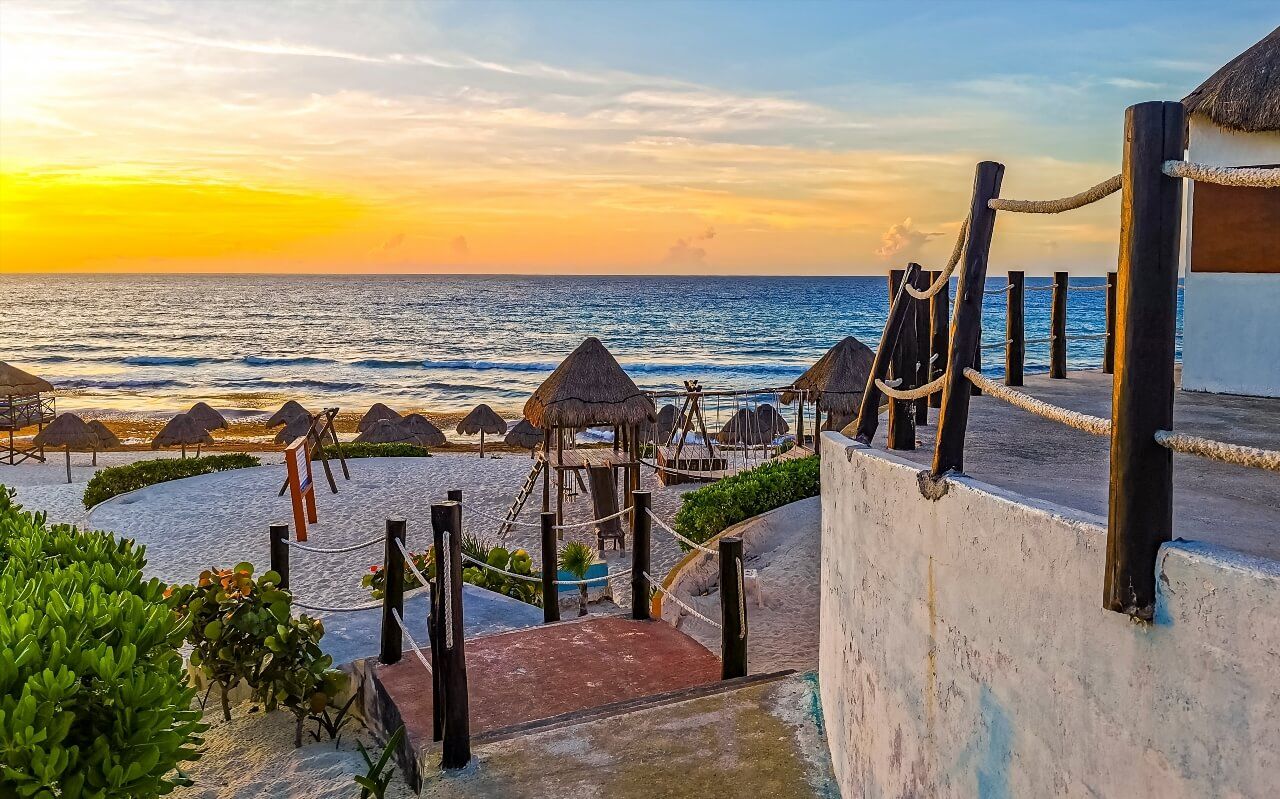
Playa Delfines (Blvd. Kukulcán Km 17.5, 77500 Cancún, rated 4.8/5 on Google (28 912 avis)) sits at the southern end of the Hotel Zone, where Boulevard Kukulcán finally runs out of resorts and the beach opens to something broader and wilder. This is the postcard Cancún, the giant letters spelling CANCÚN for the obligatory photograph, the violent turquoise of the open Caribbean, the long strip of pale sand with nothing behind it but dunes and scrub.
More importantly, it's a free public beach. Unlike many Hotel Zone stretches where private resorts informally claim the sand, Playa Delfines has a proper public access point with car parking, showers, and vendors selling cold coconuts and beer. The waves here can be strong, this is not the calm, protected water you'll find at Playa Tortugas or near the pier, so check the flag system before swimming. Red means stay out. Orange means proceed with caution. The lifeguards mean it.
Arrive early on weekday mornings to claim a spot without negotiating for space. Sunsets here are genuinely spectacular, the beach faces west at its southern tip, and the light on the water around 6:30 pm in November is something hotels charge a premium to simulate. Of all the free things to do in Cancun, this one is hardest to argue with.
2. Explore the Zona Arqueológica El Rey
Nearly every visitor to the Hotel Zone drives past El Rey Archaeological Zone (Blvd. Kukulcán Km 18, 77500 Cancún, rated 4.5/5 on Google (4 760 avis)) without realising it. Tucked between Boulevard Kukulcán and the Nichupté Lagoon at kilometre 18, this small Maya site predates the current city by roughly a thousand years and costs 65 Mexican pesos to enter, less than four dollars at current exchange rates.
El Rey (« The King ») gets its name from a stucco mask found here in the 1950s, depicting a figure that archaeologists cautiously describe as a ruler or deity. The site comprises around 47 structures, including a main temple platform, several ceremonial platforms aligned with the solstices, and a network of low walls that once defined a coastal trading settlement active from roughly 900 to 1550 CE. The Maya used this stretch of the Yucatán coastline as a waypoint for canoe trade routes running north toward Cuba and south toward Honduras.
The practical reason to come here rather than simply paying for a tour to Chichén Itzá is proximity and scale. You can walk the entire site in 45 minutes, read every information panel in English and Spanish, and be back at your hotel before lunch. The resident population of large iguanas, some exceeding a metre in length, adds genuine spectacle to what might otherwise be a modest ruin visit. They have learned that tourists drop food, and they position themselves accordingly.
Go on a Tuesday or Thursday morning, before the heat peaks and well before the handful of guided groups that arrive around 10:30 am. The site opens at 8 am.
3. Snorkel (or Submarine) the MUSA Underwater Museum
The Museo Subacuático de Arte, MUSA, is one of the most conceptually unusual attractions in Mexico and, globally, one of a tiny handful of permanent underwater sculpture installations. It was created partly as a conservation project: by installing a dense field of artificial structures on the seafloor, the museum gives coral polyps and marine organisms surfaces to colonise, relieving pressure on the natural Mesoamerican Barrier Reef nearby.
The result is a surreal gallery of over 500 sculptures submerged in Cancún Bay and off Isla Mujeres, sitting at depths between 4 and 8 metres. The figures are modelled on real people from the nearby fishing village of Puerto Morelos, and rendered in pH-neutral marine cement designed to encourage coral growth. After more than a decade underwater, many are substantially encrusted, which makes them more extraordinary, not less. The most photographed piece, « The Silent Evolution, » groups roughly 400 life-sized human figures in shallow water at Manchones reef, their faces eroding slowly into the reef.
You can see the Cancún Bay section by snorkel (the shallow 4-metre gallery), by glass-bottom boat, or aboard a small semi-submersible vessel. The Isla Mujeres section sits deeper and is better visited by scuba if you're certified. Most Hotel Zone dive operators offer combined snorkel-and-MUSA excursions lasting around three hours, including equipment and guide. Book directly at the marina rather than through hotel concierges, who add a commission layer.
Early morning excursions offer the clearest water visibility, afternoon boat traffic and wind tend to stir silt by 2 pm. The best visibility windows run November through May.
4. Take a Day Trip to Isla Mujeres
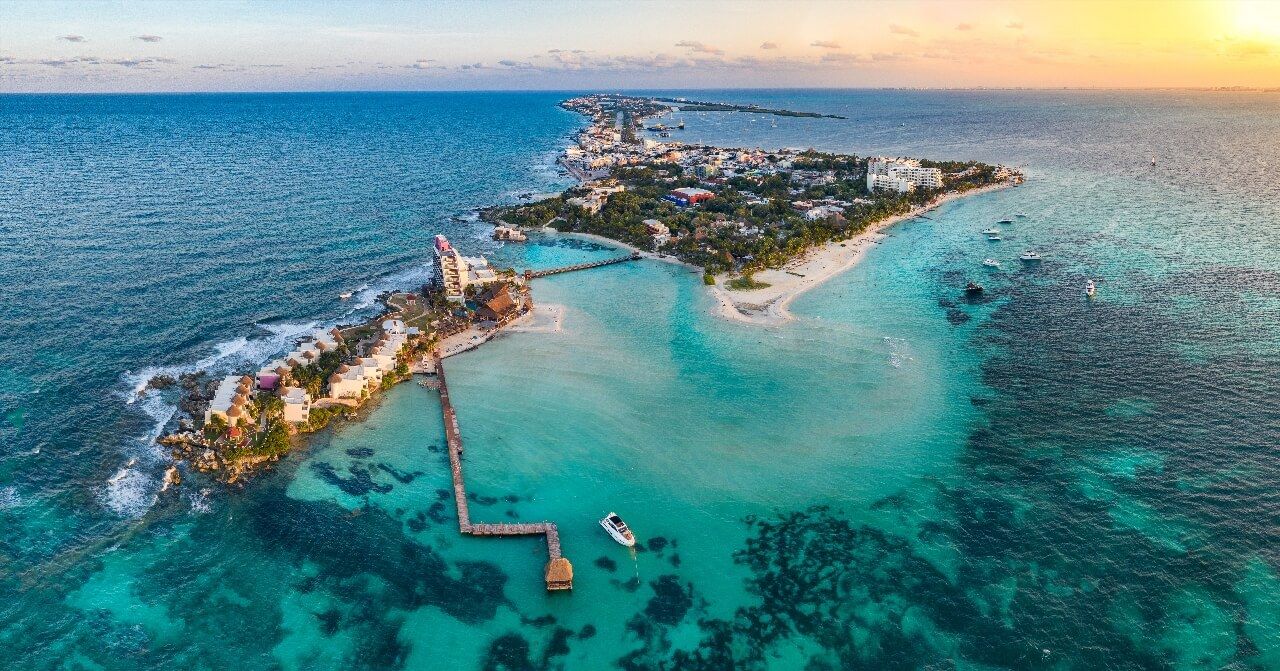
At 13 kilometres long and less than 500 metres wide, Isla Mujeres is the strip of land visible from the Hotel Zone on any clear day. It sits 11 kilometres offshore and is reached by a 20-minute ferry from Puerto Juárez or Playa Tortugas. The island was one of the first Maya ceremonial sites on the Caribbean coast, likely used as a waypoint for pilgrims travelling south to Cozumel to worship Ixchel, the goddess of the moon and medicine.
Today the north end of the island centres on Playa Norte, consistently rated among the finest beaches in Mexico: shallow, calm, startlingly clear, and wide enough that even on a busy Saturday in January you can find space without stacking on top of strangers. The water temperature averages 27 : 29°C year-round. The sand is so fine it squeaks underfoot.
The southern tip, Punta Sur, rewards a golf cart rental or bicycle ride down the island's single main road. The dramatic rocky coastline here was the site of a temple to Ixchel, mostly destroyed in Hurricane Gilberto in 1988, but the cliffs and the Sculpture Garden installed afterward make for an arresting combination. On a clear day you can see the Hotel Zone skyline across the water.
For food, skip the beachfront tourist restaurants on Hidalgo Street and head one block inland to the tianguis market area where local women sell fresh ceviche, fish tacos, and agua de jamaica from makeshift stalls. Prices are a third of what you'll pay on the sand. The last ferry back runs at around 11 pm; if you want to see the island after dark, when the day-trippers have left and the town feels genuinely Caribbean, plan your return accordingly. Of the off-shore things to do in Cancun, this is the gentlest and the easiest to combine with a half-day on the mainland.
5. Visit Xcaret Park
Xcaret (pronounced « ish-ka-ret ») is the flagship of the Xcaret Group's network of eco-archaeological parks along the Riviera Maya, and it's where the distinction between theme park and genuine cultural experience gets productively blurry. Built around a natural inlet and several freshwater cenotes on the coast 75 kilometres south of Cancún, the park contains an underground river system, a coral reef aquarium, a sea turtle nursery, a Maya village reconstruction, a regional archaeological museum, and a 6,000-seat amphitheatre where a 300-person troupe performs a two-hour evening show tracing Mexican history from pre-Columbian times through independence.
The numbers are significant. Xcaret attracts millions of visitors per year, consistently ranking among the most visited paid attractions in Mexico, which either makes it the country's flagship eco-park or a theme park you should avoid, depending on your tolerance for crowds. The honest answer is: go on a Tuesday or Wednesday, arrive when the gates open at 8:30 am, and head directly to the underground river before the queues form. The river system, a 600-metre channel flowing from a freshwater cenote through caverns decorated with stalactites before opening into a bay, is the park's signature experience and worth the admission price alone.
Transportation from Cancún is included in most park packages. If you book independently, the ADO bus from the Hotel Zone runs hourly and stops at the Xcaret entrance. Admission starts at roughly 130 USD for the base package; the « Plus » tier including evening show runs closer to 175 USD. Book online at least three days in advance, the park caps daily visitors and sells out on Saturdays and holidays.
6. Dive or Snorkel at Puerto Morelos Reef
Puerto Morelos is a fishing town that somehow avoided the resort development that consumed its neighbours, sitting quietly between Cancún and Playa del Carmen. Its defining feature is the Puerto Morelos National Reef Park, a protected section of the Mesoamerican Barrier Reef that runs 1.5 kilometres offshore, stretching across 9,000 hectares of protected marine area.
The reef here is remarkably healthy by Caribbean standards. You'll routinely see nurse sharks resting on the sandy bottom, eagle rays cruising the wall, hawksbill sea turtles grazing on seagrass, and large moray eels parked in coral crevices. Water visibility regularly exceeds 25 metres in the dry season (November : April). Most dive operators in Puerto Morelos offer two-tank dives for around 80 : 90 USD, significantly cheaper than Hotel Zone operators offering access to the same reef system. As reef-based things to do in Cancun go, this is the highest quality-to-price ratio on the coast.
If you're snorkelling rather than diving, the shallow inner reef starts at just 3 : 4 metres and is accessible by a short boat ride from the town pier. Rent gear in town for a fraction of Hotel Zone prices.
7. Kayak the Nichupté Lagoon
The Nichupté Lagoon (Laguna Nichupté, 77500 Cancún, rated 4.6/5 on Google (68 avis)) is the body of water that makes the Hotel Zone's geography so unusual: a narrow strip of land trapping a vast saltwater lagoon, creating a sheltered inner sea visible from virtually every hotel window facing west. What most guests never do is get on the water.
Kayak rental operators are concentrated near the bridge at kilometre 6 and along the lagoon-side of several hotels. A two-hour solo kayak runs around 350 : 450 pesos. The experience is worth it for the perspective alone, the Hotel Zone skyline seen from the water is oddly beautiful, the mangroves along the northern shore shelter herons and roseate spoonbills, and the flat calm of the lagoon makes this accessible to anyone who can sit in a boat and paddle.
The birdlife is better early morning. Manatees have been sighted in the lagoon, though reliably is the wrong word. Bring sunscreen, a hat, and water. The lagoon provides no shade.
8. Tour the Museo Maya de Cancún
Museo Maya de Cancún (Blvd. Kukulcán Km 16.5, 77500 Cancún, rated 4.5/5 on Google (7 802 avis)) opened in 2012 on the grounds of the San Miguelito archaeological site at kilometre 16.5 of the Hotel Zone, and it remains one of the most undervisited attractions in the entire resort corridor. Admission is 85 pesos, about five dollars, and includes access to both the museum building and the adjacent ruins.
The museum houses around 400 Maya artefacts across two principal galleries, including the striking Palenque jade mask, ceremonial vessels from Chichén Itzá, and a series of carved stelae that would be headline exhibits at a European archaeology museum. Explanatory panels are in English and Spanish. The building itself, designed by Alberto Kalach, is worth attention: a long horizontal structure in reinforced concrete and glass that frames views of the lagoon while keeping the interior cool without conventional air conditioning.
San Miguelito, the archaeological site behind the museum, covers roughly the same era as El Rey but extends over a larger area with a taller main temple. The combination of museum context followed by live ruins makes this a more complete Maya introduction than either site alone, and it's one of the best rainy-afternoon things to do in Cancun when the beach isn't cooperating.
Budget 2 : 2.5 hours for the full experience. The museum shop sells genuinely good reproductions and locally published archaeological guides at reasonable prices, rarer than you'd think in the Hotel Zone.
9. Take a Day Trip to Chichén Itzá
The logistics of visiting Chichén Itzá (Yucatán 97751, Mexico, rated 4.8/5 on Google (136 950 avis)) from Cancún deserve honest treatment, because the standard approach, a group coach tour departing at 8 am, results in arriving at the site between 10:30 am and noon, which is precisely when several hundred other coaches do the same. The resulting experience at high season (December : April) involves shuffling through the site in dense crowds, photographing El Castillo pyramid over a hundred people's heads, and buying jade-coloured magnets in the parking lot.
The better approach: rent a car or hire a private driver and arrive at the 8 am opening time. You will have roughly 90 minutes of relative quiet before the first tour coaches arrive. El Castillo, the 30-metre stepped pyramid aligned so that the spring and autumn equinoxes produce a serpent shadow on the northern staircase, is more comprehensible when you can actually stand in front of it without negotiating for space.
Chichén Itzá covers approximately 10 km² and contains far more than the pyramid cluster most visitors see. The Great Ball Court is the largest known pre-Columbian ball court in the Americas, stretching 168 metres in length. The players (or perhaps the losers, scholars still debate it) were apparently beheaded, as depicted in the carved frieze running the court's length. The Cenote Sagrado, a 60-metre natural sinkhole into which the Maya cast offerings, jade objects, and at times human sacrifices, sits a 300-metre walk north of El Castillo and is nearly always skipped by hurried tour groups.
The Observatory (El Caracol) demonstrates the sophistication of Maya astronomy: its spiral interior and offset windows align with Venus, the Pleiades, and the solar zenith passage with precision that required centuries of observation to calibrate. UNESCO designated Chichén Itzá a World Heritage Site in 1988; the new seven wonders of the world vote in 2007 brought roughly a million additional visitors per year thereafter, so timing your visit matters more than any other single factor.
Drive time from Cancún is approximately 2.5 hours on the ADO highway (cuota). Bring cash for the entrance fee (about 533 pesos federal INAH + about 90 pesos state Cultur in 2026, roughly 623 pesos total; fees adjust annually). Wear closed shoes, carry a litre of water per person per hour, and do not touch the pyramid, climbing has been prohibited since 2006. Among all the day-trip things to do in Cancun, this is the one most worth setting an early alarm for.
10. Party on the Hotel Zone Strip
Cancún's nightlife needs no particular introduction, but a few coordinates help. Coco Bongo at kilometre 9.5 is the famous venue, a three-floor club-theatre hybrid where live artists perform between DJ sets and acrobats swing from the ceiling. Lines form by 11 pm; the action runs until 5 am or later. Expect to pay 500 : 1,000 pesos at the door depending on the night.
Foro Sol, Mandala, and The City represent different points on the volume-versus-elegance spectrum further along the strip. If you find all of it overwhelming, El Fish Fritanga at kilometre 22 is where Cancún's actual hospitality workers eat at 2 am after their shifts, no tourists, great beer prices, and the best chicharrón tacos in the zone.
11. Swim in a Cenote Near Cancún
The Yucatán Peninsula sits on a thick slab of porous limestone riddled with an underground river network that, where the ceiling has collapsed, forms cenotes, flooded sinkholes ranging from intimate circular pools to vast cathedral-like chambers with stalactites. The Maya considered them sacred portals to Xibalba, the underworld, and used them for ritual offerings and, in drier regions, as the primary source of fresh water. There is no surface river system on the peninsula; cenotes are how the water cycle works here.
For Cancún visitors, the closest accessible cenotes sit roughly 45 minutes south by car, in the area around Puerto Morelos and Plácido. Cenote Cristalino (Carretera Federal 307, 77710 Playa del Carmen, rated 4.7/5 on Google (5.3K reviews)) near Playa del Carmen is one of the most photogenic, an open cenote where the turquoise water is clear to 15 metres depth and small stalactite formations remain visible along the edges. Cenote Dos Ojos near Tulum is a cave system rather than an open pool, and one of the longest mapped underwater cave systems in the world: over 82 kilometres of surveyed passages (and now connected to the much larger Sistema Sac Actun). You can snorkel the first section without a guide in the designated tourist area; a certified cave-diving guide takes you deeper.
Cenote Azul, closer to Puerto Morelos, is shallower and calmer, making it better for families or non-swimmers who want to wade in the extraordinary blue water without committing to open-water swimming. The admission is typically 150 : 200 pesos at most cenotes, cash only at rural sites. Bring biodegradable sunscreen, all commercial sunscreens are officially banned in cenote water due to the chemicals' damaging effect on the cave ecosystem, and rangers do check.
For a different experience entirely, the Ik Kil cenote adjacent to Chichén Itzá is commercial but dramatic: a circular shaft 60 metres in diameter, walls covered in hanging vines, a natural pool 26 metres below grade. Swimmers jump from platforms; the sound of water and voices echoes in the circular chamber in a way that makes the Maya reverence for these places entirely understandable.
12. Sail to Isla Contoy
Isla Contoy is a national park island 24 kilometres north of Isla Mujeres, and strict visitor limits, a maximum of 200 people per day, keep it in a completely different category from the Hotel Zone beaches. No hotels, no restaurants, no permanent residents: just a biological reserve that protects nesting colonies of magnificent frigatebirds, brown boobies, red-footed boobies, and double-crested cormorants, along with nesting beaches for four sea turtle species.
Boat tours depart from Puerto Juárez and Isla Mujeres in the early morning, typically running a snorkel stop over the shallow reef between the islands before reaching Contoy for a guided walk through the vegetation and a basic lunch on the beach. The round trip takes a full day. Because daily visitor numbers are capped, you genuinely need to book ahead, tour operators hold allocated permits, and popular dates in winter sell out a week or more in advance.
It's a quiet, unhurried day in contrast to nearly everything else on this list. The frigate colony is one of the largest in the Mexican Caribbean, and watching birds with wingspans approaching two metres circle the treetops is a distinctly different Cancún memory from the ones most people bring home.
13. Shop and Eat at Mercado 28
Mercado 28 (Avenida Sunyaxchen, 77500 Cancún, rated 4.2/5 on Google (58 434 avis)) sits in downtown Cancún, the actual city, not the Hotel Zone, and represents the most concentrated local food and craft market in the region. Getting there requires either a 15-minute taxi from the Hotel Zone (around 150 : 200 pesos) or the R-1 bus that runs along Boulevard Kukulcán, which costs 12 pesos and takes about 30 minutes.
The ground level is souvenir vendors selling hammocks, textiles, silver jewellery, and the full range of Mexican craft imports from across the country. The back section, less immediately obvious, houses the food court: around 40 market stalls selling cochinita pibil (slow-roasted pork wrapped in banana leaf), poc chuc (grilled pork in sour orange), sopa de lima (lime-scented chicken broth), and tacos in quantities that make Hotel Zone restaurant prices feel almost fraudulent.
A complete meal for two people here costs roughly 200 : 300 pesos. Go for lunch between noon and 2 pm when everything is fresh and the market is buzzing. Avoid the aggressive touts at the front entrance who will attach themselves to you to earn a commission, duck past them and navigate independently.
14. Visit Xel-Há All-Inclusive Water Park
Xel-Há (« where the water is born » in Yucatec Maya) is distinct from Xcaret despite belonging to the same company. Where Xcaret leans toward cultural programming and evening spectacle, Xel-Há is an all-day aquatic experience built around a natural inlet, a cove where a freshwater river meets the Caribbean, creating a brackish zone that attracts enormous schools of tropical fish.
The all-inclusive price covers unlimited food and drinks, snorkelling equipment, life jackets, and a range of water activities including cliff jumping, a zip line over the water, river tubing, and a lazy river through the mangroves. The snorkelling in the central inlet is excellent, visibility is consistently good, fish density is high, and you're unlikely to feel like you're fighting for space with tour groups the way you might at a busier reef site.
Budget approximately 120 : 140 USD for the all-inclusive package, with transportation from Cancún adding around 15 USD each way if booked separately. The park is 100 kilometres south of Cancún, making it a longer commitment than most activities on this list, pair it with Tulum ruins nearby to justify the drive.
15. Take a Sunset Catamaran Cruise
The water between the Hotel Zone and Isla Mujeres at sunset is one of those situations where the reality actually matches the promotional photograph. Several catamaran operators run two-to-three-hour evening cruises departing from the Marina Aquatours (Blvd. Kukulcán Km 6.25, 77500 Cancún, rated 4.4/5 on Google (1 619 avis)) at kilometre 6.25, heading north along the coast before anchoring for a swim stop as the light changes.
Most packages include an open bar and a light buffet. Prices run 70 : 110 USD per person depending on the operator and whether dinner is included. The key practical detail: book a departure timed so you're on open water between 6 and 7 pm rather than heading back to the marina during the best light. Read the itinerary before booking.
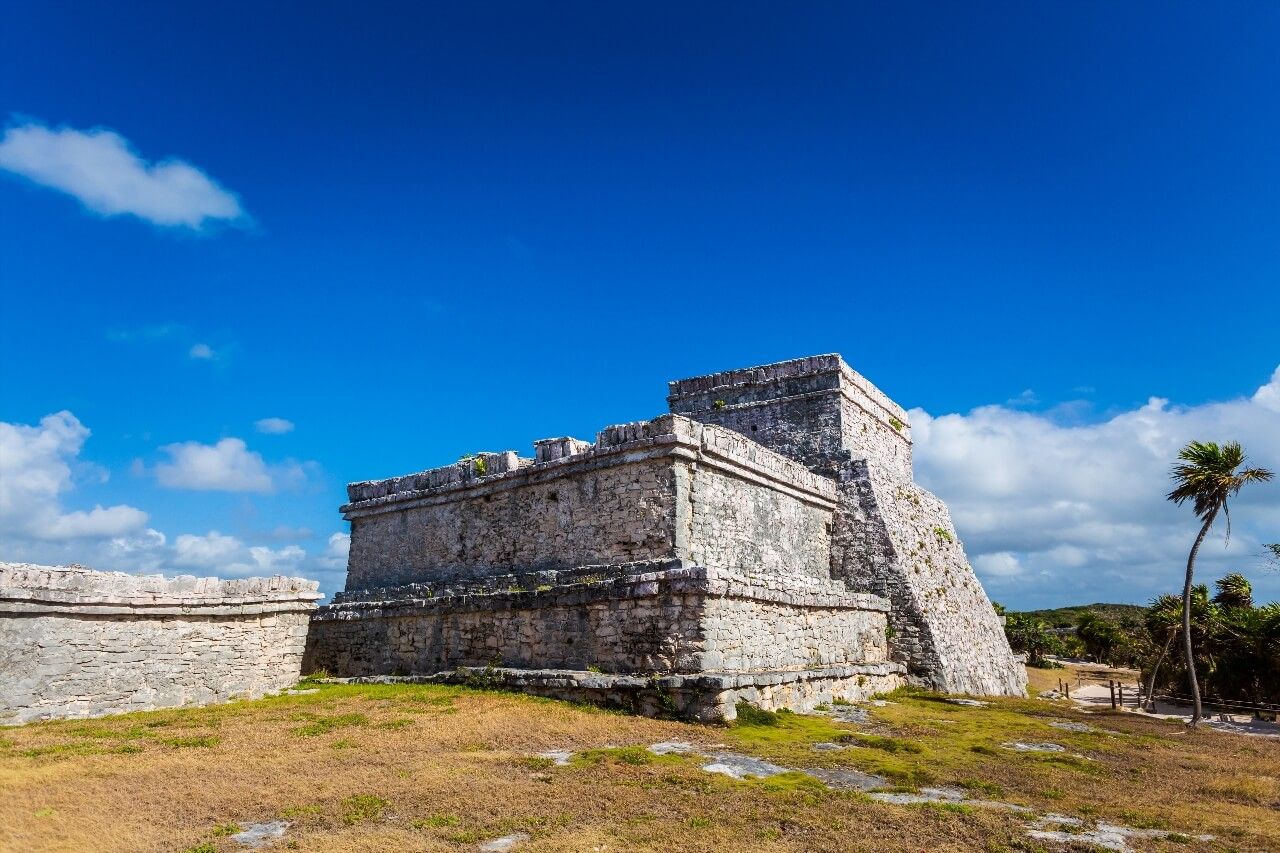
16. Explore the Ruins of Tulum
Tulum is arguably the most dramatically positioned archaeological site in Mexico. A walled Maya city built on a 12-metre limestone cliff directly above the Caribbean, its principal structure, the Castillo, is visible from approaching boats and serves as a navigational landmark as it has for approximately 800 years. The site was active from roughly 1200 to 1521 CE, making it a relatively late Maya settlement; it was one of the last cities still occupied when Spanish contact began.
The view from the cliff edge, with turquoise water crashing against the base of the ruins below, is genuinely extraordinary. It is also genuinely crowded, Tulum receives upwards of 1.5 million visitors annually, concentrated in a relatively compact site covering around 600 by 400 metres. The same early-arrival strategy that applies to Chichén Itzá is doubly important here. The site opens at 8 am; arrive at 7:45 and queue at the gate. By 9:30 am, the parking lot is full and groups are stacked six deep in front of the Castillo.
If you arrive early enough, walk first to the Temple of the Frescoes, a two-storey structure featuring some of the best-preserved pre-Columbian painted murals still visible in the open air in Mexico, depicting Ixchel surrounded by celestial bodies and rain deities. The colours have survived centuries of sea air and sun. Then circle to the north residential area, which most visitors skip entirely, where smaller platforms and wall sections give a better sense of what the actual inhabited city looked like beyond its ceremonial core.
Tulum town, a kilometre inland from the ruins, has undergone extraordinary transformation in the past decade, boutique hotels, international restaurants, a nightlife scene. The beach clubs at Tulum Beach charge premium prices for the aesthetic, but the stretch of coastline is legitimately beautiful, and combining a morning ruins visit with an afternoon at one of the beach clubs is a reasonable use of a long day trip from Cancún. The drive takes 1.5 hours each way on the 307 highway.
17. Try Kitesurfing or Windsurfing
The stretch of the Hotel Zone beach between kilometres 12 and 16 catches consistent northeast trade winds between November and March, producing reliable conditions for both kitesurfing and windsurfing. The flat water inside the Hotel Zone's shore break is forgiving for beginners; the open reef pass at Punta Cancún has stronger conditions for experienced riders.
Several kitesurfing schools operate on the beach with IKO-certified instructors. A three-day beginner course runs approximately 250 : 300 USD including equipment. If you already know what you're doing, board and kite rental runs around 80 : 100 USD per day. Of the wind-driven things to do in Cancun, this is the one most undervalued by the typical hotel package.
18. Walk the Cancún Scenic Overlook at Punta Cancún
Punta Cancún (Blvd. Kukulcán Km 9, 77500 Cancún, rated 4.5/5 on Google (2.7K reviews)) is the northern tip of the Hotel Zone peninsula, where the beach changes character from Caribbean east-facing to the calmer bay on the northwest side. The Forum by the Sea shopping complex here is easily ignored, but the rocky promontory just beyond it, accessible via a short walk past the convention centre, gives a sweeping view rarely shown in Cancún photography.
From the point, you can see the Hotel Zone strip running south to Playa Delfines, Isla Mujeres floating on the horizon to the northeast, the entrance to the Nichupté Lagoon to the west, and the open Caribbean directly east. On a clear morning, the colour contrast between the deep blue of the open sea and the tourmaline of the shallower bay is striking. It takes all of 30 minutes, costs nothing, and provides a physical understanding of why people chose this particular peninsula to build a city.
The walkway also passes the Cancún Convention Center (CCUN), an architectural oddity from the 1970s whose original design drew explicitly on Maya temple platforms, worth a glance even if you're not attending a conference.
19. Visit Cobá and Climb the Nohoch Mul Pyramid
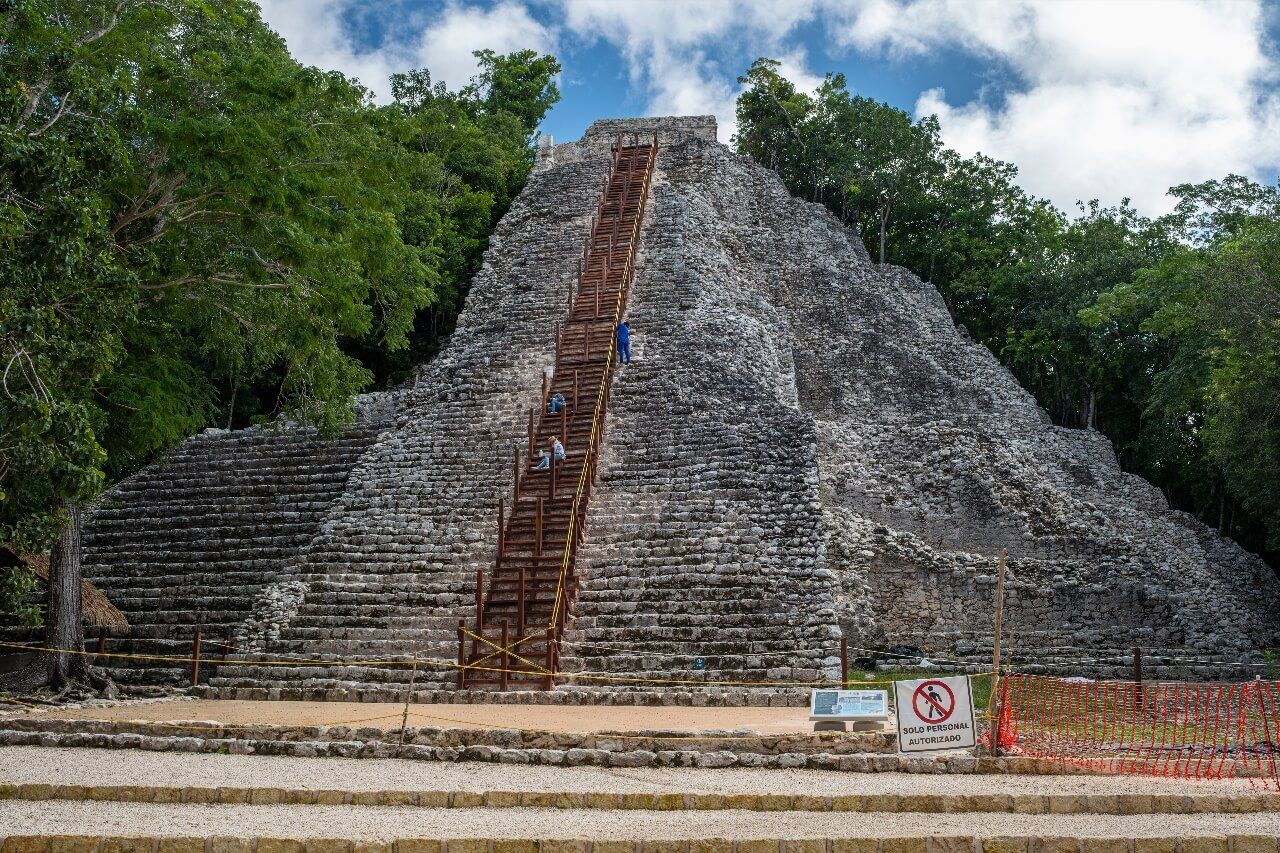
Cobá is the most unusual major Maya site accessible from Cancún, and possibly the most rewarding for visitors willing to put in the 2.5-hour drive southwest into the jungle interior. Unlike Chichén Itzá or Tulum, which restrict access to the structures, Cobá still permits visitors to climb the Nohoch Mul pyramid, at 42 metres, the tallest climbable pyramid in the Yucatán.
The ascent is steep. The steps are narrow and worn smooth by decades of tourist feet, and there is a rope down the centre that you will use both going up and coming down. At the top, the view is a solid canopy of jungle extending to the horizon in every direction, broken only by the occasional faint grey dot of another pyramid emerging from the trees. The Maya built Cobá's ceremonial core on a series of raised platforms specifically to remain visible above the rainforest canopy.
The site itself covers an enormous area, approximately 70 km² of forest containing around 6,500 structures, of which a small fraction are excavated. Bicycles and tuk-tuks are available for rent at the entrance to travel between the main pyramid group and the Macanxoc Group (notable for its carved stelae documenting specific historical dates) and the Pinturas Group. Budget at least 3.5 : 4 hours on site, more if you're genuinely interested in the archaeology.
Cobá is also notable for the lake system around which the ancient city grew, Lakes Cobá and Macanxoc are visible from certain elevated points on site and were central to the city's water supply and ritual calendar. Cobá was a major population centre between 250 and 1000 CE, contemporary with Teotihuacan in central Mexico, and its political connections to Tikal in Guatemala are documented in the carved stelae.
Admission is 95 pesos federal entry. The site opens at 7 am; arrive before 9 am to climb the pyramid before the day-trip coaches arrive and before the heat makes the climb genuinely unpleasant.
20. Eat Your Way Through Downtown Cancún
Downtown Cancún, the part of the city that actually functions as a city rather than a resort zone, is where people live, work, eat, and shop without performing hospitality at tourists. The main commercial artery, Avenida Tulum, runs through a grid of streets lined with taquería stalls, juice bars, bakeries, and regional restaurants serving Yucatecan food at prices that bear no relation to Hotel Zone menus. Eating downtown is one of those things to do in Cancun that quietly rewrites whatever assumption you arrived with about Mexican food.
Specific stops worth planning around: La Parrilla on Avenida Yaxchilán has served grilled meats and traditional Yucatecan dishes since the 1970s and is the kind of place that gets recommended by every hotel kitchen worker in the city. El Cejas near Parque de las Palapas (Calle Alcatraces, 77504 Cancún, rated 4.4/5 on Google (33 963 avis)) is a seafood institution, the shrimp tacos here have been cited in Mexican food media for a decade. The park itself, with its weekend craft market and palapa-roofed food stalls, is worth an evening visit for the ambient city life alone.
Cochinita pibil, pork slow-cooked in achiote paste and bitter orange, wrapped in banana leaf and traditionally buried to roast in an underground pit, is the Yucatán's defining dish. Downtown Cancún prepares it authentically; the Hotel Zone versions are approximations. If you're only eating one genuinely local meal during your trip, this is the one.
21. Go Whale Shark Snorkelling (June : September)
Between June and September each year, the waters off Isla Holbox and the northeast tip of the Yucatán Peninsula host the world's largest seasonal aggregation of whale sharks, the largest fish species on Earth, reaching up to 12 metres in length. They congregate here to feed on fish eggs and plankton in the surface water, their mouths filtering enormous volumes at the surface in a slow, predictable pattern that makes close approach by snorkellers relatively straightforward.
From Cancún, whale shark tours typically depart from Isla Mujeres early morning and travel 45 : 60 minutes north to the aggregation zone. The experience: you enter the water in groups of two plus one guide, swim alongside a whale shark for a couple of minutes, return to the boat, and rotate with the next group. The sharks are entirely indifferent to human presence. They weigh up to 20 tonnes and filter-feed; you are not on the menu.
July and August are the peak months, with the highest shark density. Tour prices run 150 : 200 USD per person including equipment and a light breakfast on the boat. This is a seasonal activity, if you're visiting outside June : September, it simply isn't available. Plan accordingly. The tours are regulated: guides follow protocols to prevent harassment, and you can only be in the water with a shark for designated periods.
22. Discover Sian Ka'an Biosphere Reserve
Sian Ka'an (Carretera Tulum-Punta Allen, 77780 Quintana Roo, rated 4.6/5 on Google (4 044 avis)) (« Origin of the Sky » in Yucatec Maya) is a UNESCO World Heritage biosphere reserve covering 528,000 hectares of tropical jungle, mangrove coast, freshwater lagoons, and Caribbean reef along the coast south of Tulum. It is one of the largest protected areas in Mexico and one of the most biologically diverse coastal ecosystems in the Western Hemisphere.
Access from Cancún is a 2-hour drive south to the Tulum entrance, followed by a dirt road through the reserve to the various tour departure points. This is not a destination for independent exploration, the reserve has limited infrastructure and the ecosystems are genuinely fragile. Licensed tour operators are required for most activities, which is less restrictive than it sounds: the best tours are genuinely good.
The signature experience is the floating tour through the canal system: channels cut by the Maya connect the lagoon network, and visiting guides float groups in life rings through calm, crystal-clear water while explaining the ecosystem and pointing out wildlife. The species count in Sian Ka'an is extraordinary, the reserve contains at least 103 species of mammals, including jaguars, pumas, tapirs, and five species of wild cats; 330 bird species; four sea turtle species nesting on the beaches; and manatees in the lagoons.
Half-day and full-day tours depart from Tulum town. The full day, including the canal float, bird walk, and snorkel on the reef, is worth the extra cost and the extra time. If you're only doing one « nature » day trip from Cancún, make it this one, it's a different order of experience from the commercial eco-parks.
23. Experience a Mexican Fiesta Night
Several resorts in the Hotel Zone host weekly Mexican fiesta evenings open to non-guests, a production combining folkloric dance performances, mariachi music, live cooking demonstrations of regional dishes, and an open buffet covering the cuisines of different Mexican states. The format is theatrical rather than ethnographic, but as an introduction to the breadth of Mexican regional culture for first-time visitors, it's considerably more informative than the average all-inclusive dinner.
La Destilería restaurant at kilometre 12.65 hosts one of the better-reviewed versions, and their regular menu of premium tequilas and mezcals is worth exploring regardless of whether you attend the fiesta night. Check Hotel Zone event boards or concierge desks for current schedules, programming varies seasonally.
24. Explore Playa Tortugas and the Ferry Pier Area
Playa Tortugas (Blvd. Kukulcán Km 6.5, 77500 Cancún, rated 4.3/5 on Google (186 avis)) at kilometre 6.5 is one of the Hotel Zone's most useful beaches precisely because it's also a transit hub. The pier here serves the Ultramar ferry to Isla Mujeres, which departs roughly every 30 minutes and costs 230 pesos round trip. The beach itself is calm, sheltered, and popular with families, the lack of strong current makes it safer for children than the exposed eastern beaches.
The surrounding area has evolved into a cluster of casual restaurants, equipment rental shops, tour booking kiosks, and convenience stores. If you're planning a day trip to Isla Mujeres, arrive here 20 minutes before your planned departure and eat breakfast at one of the open-air places facing the water. The view of the ferry heading toward the island with the Caribbean behind it is a perfectly adequate way to start a morning.
25. Catch Sunrise at Playa Chac Mool
Playa Chac Mool (Blvd. Kukulcán Km 10, 77500 Cancún, rated 4.8/5 on Google (493 avis)) at kilometre 10 faces the open Caribbean due east, which makes it the best spot in the Hotel Zone to watch the sun come up over the water. Set your alarm for 5:45 am. Walk to the beach. Watch the sky turn through four colours before the heat reasserts itself. You'll likely have the sand nearly to yourself at that hour, which is a disorienting experience after the compressed activity of any Cancún afternoon.
The waves at Chac Mool are among the most consistent in the Hotel Zone for bodysurfing, a west-facing swell produces rideable shore break from October through February. The water is clear, the sand is good, and there's no entry fee. As quiet things to do in Cancun go, sunrise here closes the loop on a list that started with sunset at Playa Delfines.
FAQ
What is the best time of year to visit Cancún?
November through April is the dry season and offers the best weather: low humidity, minimal rain, water temperatures around 26°C, and excellent visibility for snorkelling and diving. December through February brings peak crowds and peak prices. May is a sweet spot, still dry, noticeably cheaper, fewer tourists. Hurricane season runs June through October; September is statistically the most active month, though storms are not guaranteed.
Is it safe to travel to Cancún?
The Hotel Zone and the main tourist areas of downtown Cancún have remained consistently safe for visitors throughout periods of elevated security alerts in other parts of Mexico. The issues affecting parts of Quintana Roo state are largely concentrated away from tourist areas. Standard precautions apply: don't carry more cash than you need, avoid unlit streets late at night, use registered taxis or Uber rather than unmarked cabs. The US State Department assessment for the Hotel Zone has been stable at Level 2 (exercise increased caution) for several years.
How do you get around in Cancún?
The R-1 bus runs the entire length of Boulevard Kukulcán from downtown to Playa Delfines for 12 : 14 pesos, genuinely the most underused transport option in the Hotel Zone. Taxis operate on set zone rates rather than meters; confirm the price before getting in. Uber works in Cancún and is generally cheaper than taxis. Renting a car is worthwhile only if you're planning multiple day trips, for Hotel Zone-based activity, the bus and taxis cover everything.
Can you visit Chichén Itzá independently without a tour?
Yes. The ADO bus from the Hotel Zone's bus terminal runs twice daily to Chichén Itzá (approximately 160 pesos each way), and the site's entrance includes audio guide rental options. The independent option takes longer due to fixed bus schedules but puts you in control of your arrival time. A rental car gives you the most flexibility, an early arrival by car, before tour coaches reach the site, is significantly better than any group tour option.
What local food should you try in Cancún?
Prioritise: cochinita pibil (Yucatecan slow-roasted pork), sopa de lima (lime chicken soup with fried tortilla strips), ceviche de pulpo (octopus ceviche in lime and habanero), and marquesitas (crispy rolled crepes filled with Edam cheese and caramel, sold from street carts in the evening). Habanero chile, native to the Yucatán region, features across the food culture here in ways that distinguish it from the generalised Mexican food most tourists have encountered elsewhere.
Is renting a car necessary in Cancún?
For a Hotel Zone-based trip with one or two day trips via organised tour, a car is not necessary. For independent access to Chichén Itzá, Cobá, Sian Ka'an, multiple cenotes, or smaller towns along the Riviera Maya, a car makes the itinerary substantially more flexible. Rental prices start around 400 : 600 pesos per day through local operators, significantly cheaper than international chains at the airport. Book in advance for the November : April peak season.
Plan Your Cancún Itinerary with Ryo
Cancún rewards planning more than almost any other destination in the Americas, the gap between a thoughtfully constructed itinerary and a week of poolside inertia is enormous. If you want structured guidance on building that itinerary, Ryo's audio guides cover destinations across Latin America and Europe with locally curated routes built by people who actually know the places. The Ryo format, downloadable Ryocity walking tours plus longer Ryotrip road-trip routes, is built specifically for travellers who want context and history layered over a flexible day plan rather than a fixed coach schedule.
For the Yucatán specifically, the combination of beach recovery time, day trips to Maya sites, one cenote session, and a full day in Sian Ka'an represents a week that is hard to improve on. Treat the 25 things to do in Cancun above as a working menu rather than a tick-list. The ruins are extraordinary. The water is extraordinary. The food, if you get off the Hotel Zone, is extraordinary. Book the whale shark tour if you're visiting in summer. Arrive at Chichén Itzá before 8:30 am regardless of when you visit. Everything else can be decided at the margins, and a good Ryocity-style audio walk through downtown Cancún or Mérida is a low-effort way to anchor any single day inside a longer trip.