
Créé par Romane, le 7 mai 2026
Votre guide Ryo
© Shutterstock
Marrakech, the red pearl of Morocco, holds many architectural and botanical treasures often unknown to the general public. Well beyond the must-see Majorelle and Menara gardens, the imperial city houses sumptuous palaces and secret gardens that bear witness to its rich historical and cultural heritage. These havens of peace, nestled in the heart of the medina or in modern districts, offer a unique experience to discover the Moroccan way of life far from tourist hustle and bustle. From Saadian architecture to contemporary creations, these exceptional places reveal the diversity and beauty of Marrakech heritage.
1. The Secret Garden, a mysterious oasis in the heart of the medina
Located at 121 Rue Mouassine, The Secret Garden (121 Rue Mouassine, Marrakech 40030, Morocco, rated 4.2/5 on Google for 9,374 reviews) constitutes one of the most beautiful examples of traditional Islamic gardens in Marrakech. Rebuilt in the mid-19th century by an influential caid from the Atlas, this palatial complex with Saadian origins reveals its wonders after centuries of abandonment. Visitors discover two distinct gardens: the Islamic garden, designed according to sacred geometry with its four flowerbeds separated by water paths, and the exotic garden, which houses species from around the world. The refined architecture of the pavilions, adorned with colorful zelliges and carved woodwork, testifies to Moroccan craftsmanship. An ingenious irrigation system, fed by Atlas waters, perpetuates the millennial traditions of the art of gardens in Morocco.
2. El Badi Palace, vestige of Saadian grandeur
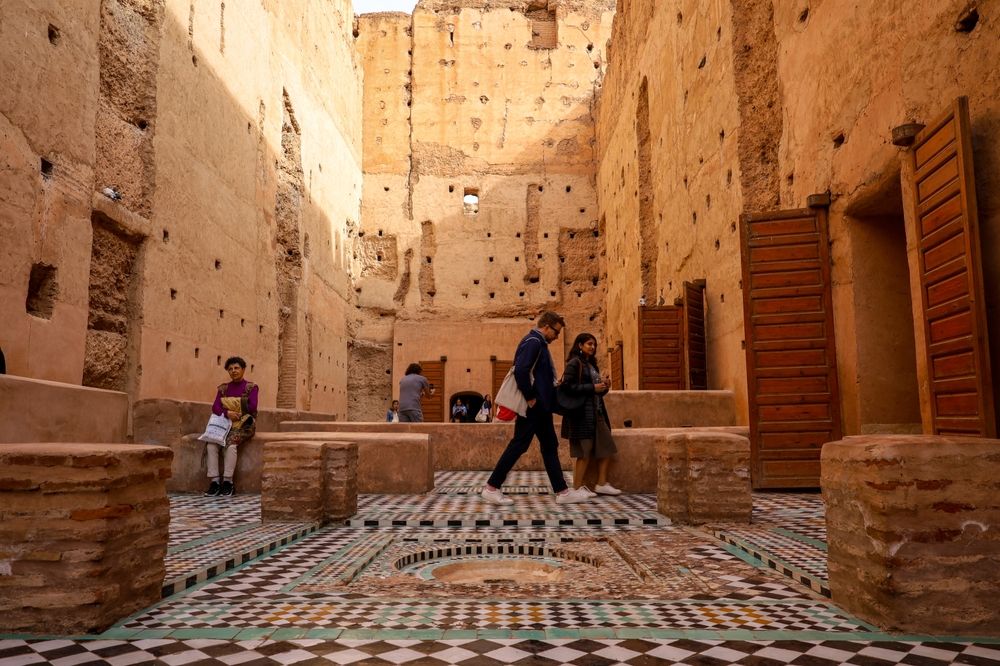
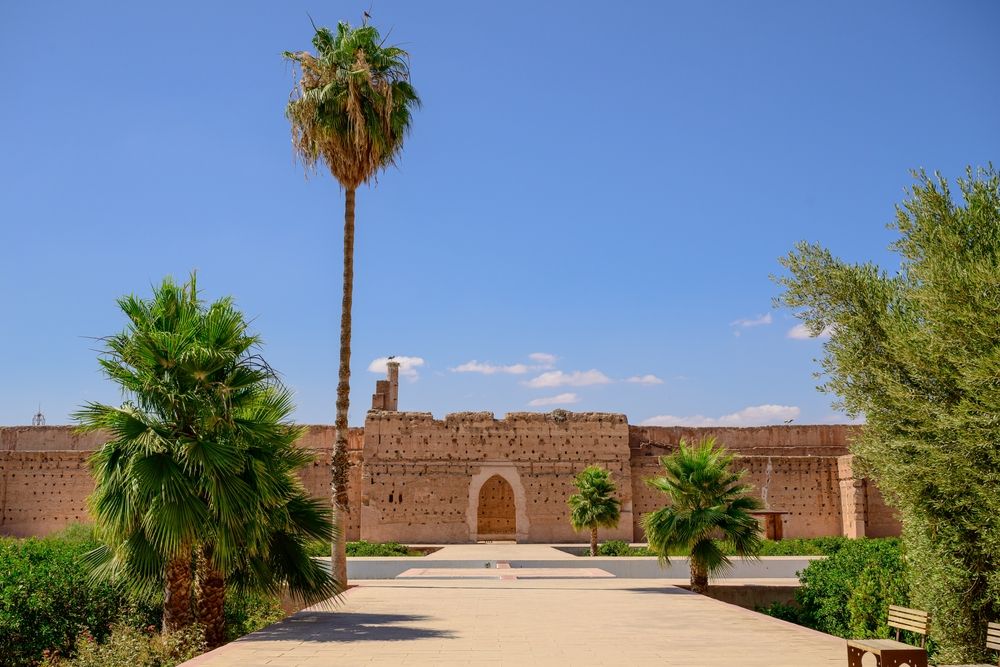
Nicknamed "the wonder of the world" during its splendor era, El Badi Palace (Ksibat Nhass, Marrakech 40000, Morocco, rated 4.3/5 on Google for 9,587 reviews) remains one of the most impressive testimonies of Saadian art in Morocco. Built by Sultan Ahmad al-Mansur at the end of the 16th century, this palace with colossal dimensions extended over more than 150 meters in length. Today in majestic ruins, it preserves its sunken gardens adorned with orange groves and marble basins that reflect the sky. Visitors can explore the underground rooms where servants once lived, discover the pulkeria with its collections of art objects, and admire the stork nests protected by ancestral law. A climb to the terrace offers a panoramic view over the medina rooftops and the Atlas mountains.
3. The Agdal gardens, millennial heritage south of the city
Extending over nearly 500 hectares south of Marrakech, the Agdal gardens constitute the largest green space in the red city. Created in the 12th century under the Almohad dynasty, these royal gardens testify to traditional Moroccan landscape art inscribed in UNESCO's intangible cultural heritage. The shaded alleys wind between immense olive groves, orange orchards and retention basins that supply the whole through an ancestral irrigation system. The central pavilion, surrounded by a large basin, served as a summer residence for the sultans. Let yourself be guided by the Ryo itinerary to visit Marrakech and discover these preserved gardens where an atmosphere of absolute serenity reigns, far from urban tumult.
4. Bahia Palace, jewel of Moroccan architecture
Built at the end of the 19th century by Grand Vizier Si Moussa, Bahia Palace represents the pinnacle of Moroccan decorative art. This architectural masterpiece, whose name means "the brilliant one", was destined to become the most beautiful palace of its time. Its 160 rooms and numerous interior patios reveal sumptuous decor where multicolored zelliges, chiseled plaster and cedar woodwork blend together. The interior gardens, planted with orange trees, banana trees and jasmine, create a succession of peaceful courtyards where bird songs resonate. Each room tells a different story, from the concubines' apartment to the ceremonial salons, offering a fascinating journey into the intimacy of the Moroccan royal court.
Download the audio-guided circuit to discover Marrakech on foot and independently
Explore the unknown palaces and gardens of Marrakech with our exclusive audio-guided itinerary. This route of 21 points of interest leads you from secret gardens to hidden palaces, revealing the history and anecdotes of each place. Download the application and let yourself be carried away by an immersive experience that will transform your discovery of the red city into a real journey through time.
5. Anima Garden, contemporary artistic creation
28 kilometers from Marrakech, on the Ourika road, Anima Garden stands as one of the most original botanical creations in Morocco. Designed by Austrian artist André Heller, this 8-hectare garden harmoniously combines contemporary art and lush vegetation in an exceptional mountain setting. Monumental sculptures by Paul Bowles, Farid Belkahia and other international artists punctuate a botanical journey that houses more than 1,200 plant species from four continents. The themed gardens – aromatic garden, zen garden, centennial olive grove – offer contrasting atmospheres while preserving the harmony of the whole. From the upper terraces, the view embraces the Ourika valley and the snow-capped peaks of the High Atlas, creating a spectacle of striking beauty.
6. Cyber Park Arsat Moulay Abdeslam, modernity and tradition reconciled
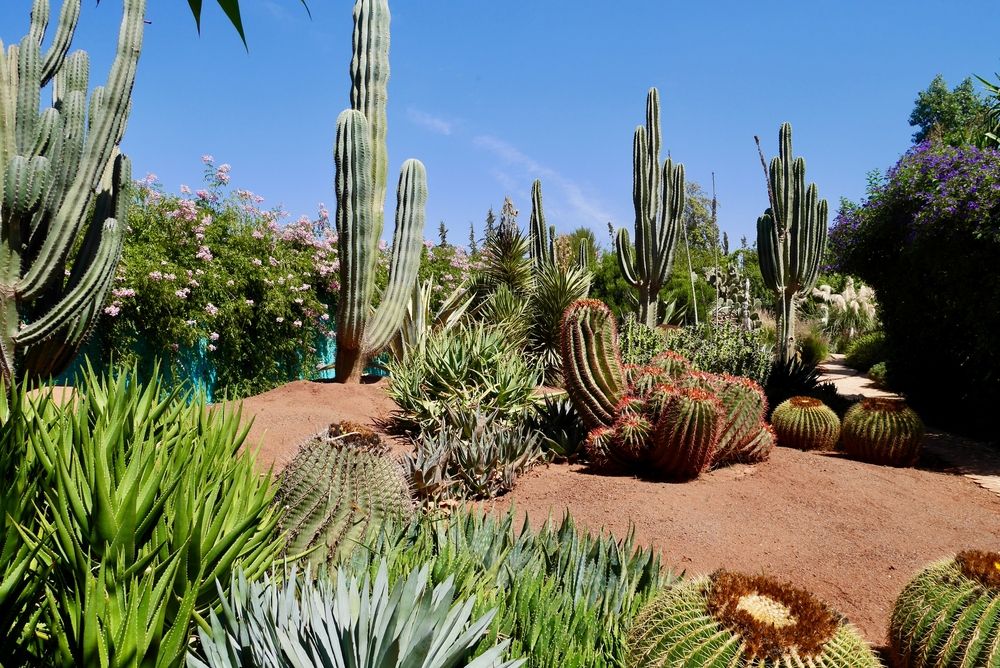
Located in the Hivernage district, Cyber Park Arsat Moulay Abdeslam perfectly illustrates Marrakech's capacity to combine tradition and modernity. This 8-hectare park, developed in a former 18th-century royal garden, offers an innovative approach to urban green spaces. The themed gardens – rose garden, orange garden, palm grove – sit alongside technological spaces equipped with free Wi-Fi and interactive terminals. The green amphitheater regularly hosts shows and concerts, while modern play areas appeal to families. This successful fusion between historical heritage and contemporary equipment makes Cyber Park a model of sustainable urban development, appreciated by both Marrakech residents and visitors seeking a refreshing break.
7. Ben Youssef Medersa and its gardens, temple of knowledge and beauty
Founded in the 14th century, Ben Youssef Medersa represents one of the jewels of Islamic architecture in Marrakech. This former Koranic school, which welcomed up to 900 students from throughout the Muslim world, is distinguished by its interior gardens of striking beauty. The central patio, adorned with a marble basin and surrounded by arcaded galleries, creates a haven of peace conducive to meditation and study. The medersa gardens, although modest in size, testify to the subtle art of Islamic landscape design: water features, geometric plantings, alternation of shade and light. The chiseled stucco, zelliges with changing reflections and carved cedar ceilings create an exceptional setting for these green spaces that invite spiritual contemplation.
8. Dar Si Said Palace and Museum, showcase of Moroccan craftsmanship
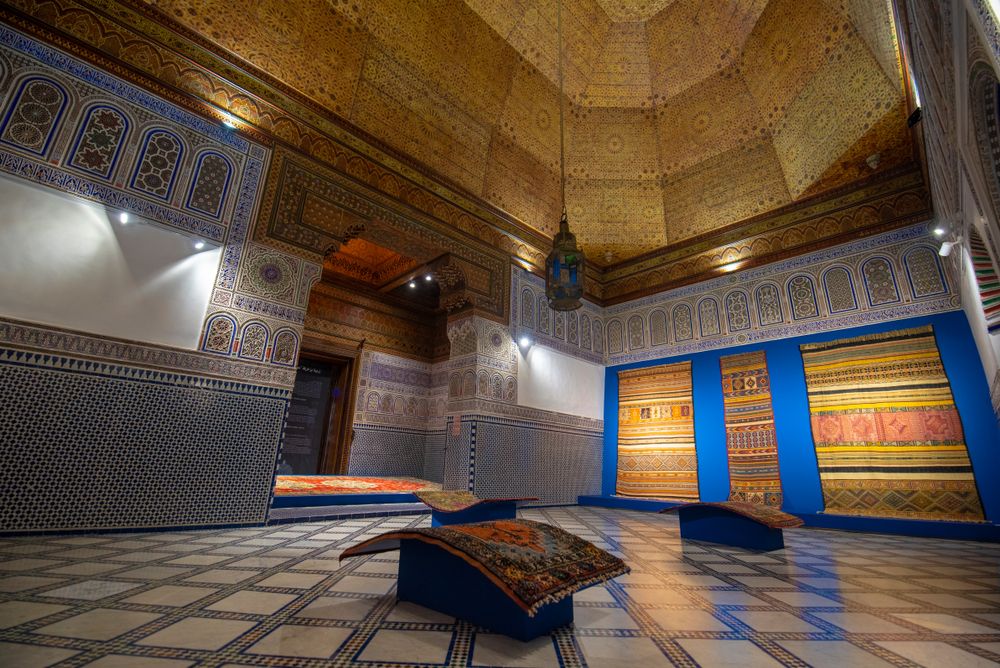
Former palace of Grand Vizier Si Moussa's brother, Dar Si Said today houses the Museum of Arts and Popular Traditions in a remarkable 19th-century architectural setting. Located in the Kasbah district, this palace seduces with its verdant patios where palm trees, orange trees and rose bushes create a welcome fresh atmosphere. The interior gardens, designed according to the canons of Andalusian-Moorish landscape art, are organized around central basins that reflect the ornate arcades. Each courtyard reveals a specific collection: ancient weapons, Berber jewelry, Rif pottery, High Atlas carpets. This exceptional staging transforms the visit into a sensory journey where Moroccan lifestyle is revealed in all its splendor, making Dar Si Said a must-see to understand the creative soul of the Sherifian kingdom.
9. Menara gardens, poetic reflection of the Atlas
Created in the 12th century under the Almohad dynasty, the Menara gardens constitute one of the oldest and most symbolic green spaces in Marrakech. This vast 100-hectare park, dominated by its famous Saadian pavilion, offers a spectacle of timeless beauty with its centennial olive groves extending as far as the eye can see. The central basin, fed by Atlas waters via a millennial seguias system, reflects the snow-capped peaks and creates fascinating light effects throughout the seasons. The Menara pavilion, restored under the Saadian dynasty, served as a retreat for sultans who came to enjoy its coolness and tranquility. The Ryo itinerary allows you to discover these mythical gardens in their historical context, revealing how they embody Moroccan lifestyle and the harmonious relationship between man and nature.
10. Arts Garden and Photography House, culture and nature in symbiosis
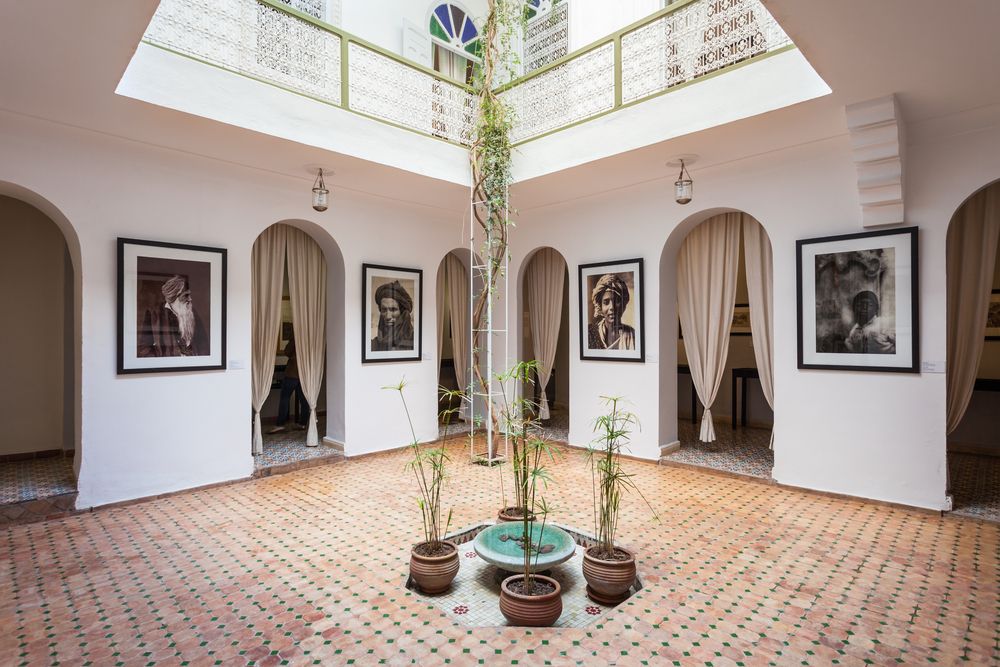
Nestled in the lively Gueliz district, the Arts Garden represents a unique concept in Marrakech where contemporary creativity and green spaces harmoniously combine. This atypical place, created by local artists, regularly offers exhibitions, performances and creative workshops in a carefully arranged green setting. Not far from there, the Photography House (46 Rue Souk Ahal Mellah, Marrakech 40000, Morocco, rated 4.4/5 on Google for 1,247 reviews) reveals its intimate gardens on rooftop terraces, offering a unique perspective on the medina. These suspended green spaces create a particular atmosphere where jasmine perfumes, city sounds and artistic discoveries blend together. The Photography House's terrace-garden constitutes one of the most beautiful viewpoints over the medina rooftops, particularly magical at sunset when golden light caresses the minarets and surrounding terraces.
In conclusion, these ten unknown palaces and gardens reveal the exceptional heritage richness of Marrakech beyond the most famous sites. From the architectural refinement of Saadian palaces to contemporary creations of Anima Garden, each place tells a different facet of Moroccan history and culture. These havens of peace, often preserved from mass tourism, offer an authentic experience of the red city and its millennial traditions. For optimal discovery of these hidden treasures, follow the Ryo audio-guided circuit which will reveal all the secrets of these exceptional places and allow you to visit Marrakech like a true connoisseur.
FAQ – Unknown palaces and gardens of Marrakech
What are the opening hours of Marrakech's secret gardens?
Most unknown palaces and gardens in Marrakech open from 9am to 5pm in winter and from 9:30am to 7:30pm in summer. The Secret Garden is open daily from 9:30am to 6pm (November to January) and from 9:30am to 7:30pm the rest of the year. It is recommended to check the schedules before your visit as they may vary according to seasons.
How much does visiting the unknown palaces and gardens cost?
Prices vary by site: The Secret Garden costs about 100 MAD (11€), El Badi Palace 100 MAD, Bahia Palace 70 MAD. Agdal and Menara gardens are generally free. For substantial savings, consider the Ryo audio-guided circuit which gives you access to numerous sites with exclusive information.
What is the best time to visit these gardens?
Spring (March-May) and autumn (October-November) offer ideal conditions with pleasant temperatures and lush vegetation. Avoid the hottest hours in summer (12pm-4pm) and favor morning or late afternoon visits to enjoy the best light and reduced crowds.
How to access gardens located on the outskirts like Anima Garden?
Anima Garden, located 28 km from Marrakech on the Ourika road, is accessible by taxi (negotiate the price in advance), organized excursion or rental car. The journey takes about 45 minutes and offers magnificent Atlas landscapes. Agdal and Menara gardens are more easily accessible by taxi or horse-drawn carriage from downtown.