
Créé par Romane, le 8 juin 2026
Votre guide Ryo
The 10 Most Beautiful Cities in Morocco to Discover Absolutely in 2026
© Shutterstock
Morocco surprises from the first hours. Not because of its monuments, other countries have equally imposing ones, but because of this particular faculty its cities have to absorb you in a setting that seems to have stopped time, while pulsating with furiously contemporary life. The medina of Fès has more than 9,000 alleys; that of Marrakech welcomes millions of visitors each year who systematically leave with the feeling of having only skimmed a surface. Morocco's most beautiful cities are not easily ranked: they complement each other.
This guide covers ten essential destinations, from the imperial cities of the center to Atlantic ports, from the blue city of the Rif to Saharan gateways. You'll find the highlights of each city, the Hassan II Mosque in Casablanca, a true cathedral on the ocean, the leather tanneries of Fès whose smell remains etched, the sunset over the ramparts of Chefchaouen, but also less beaten angles: why Meknès deserves a night rather than a quick stop, how Tanger has transformed into a creative capital, and at what time Essaouira reveals its true face outside the Gnaoua festival. To explore Marrakech at your own pace and without missing anything, the Ryo audio-guided tour of Marrakesh offers a complete immersion in the medina and beyond.
Marrakech: The Red City That Enchants With Each Visit
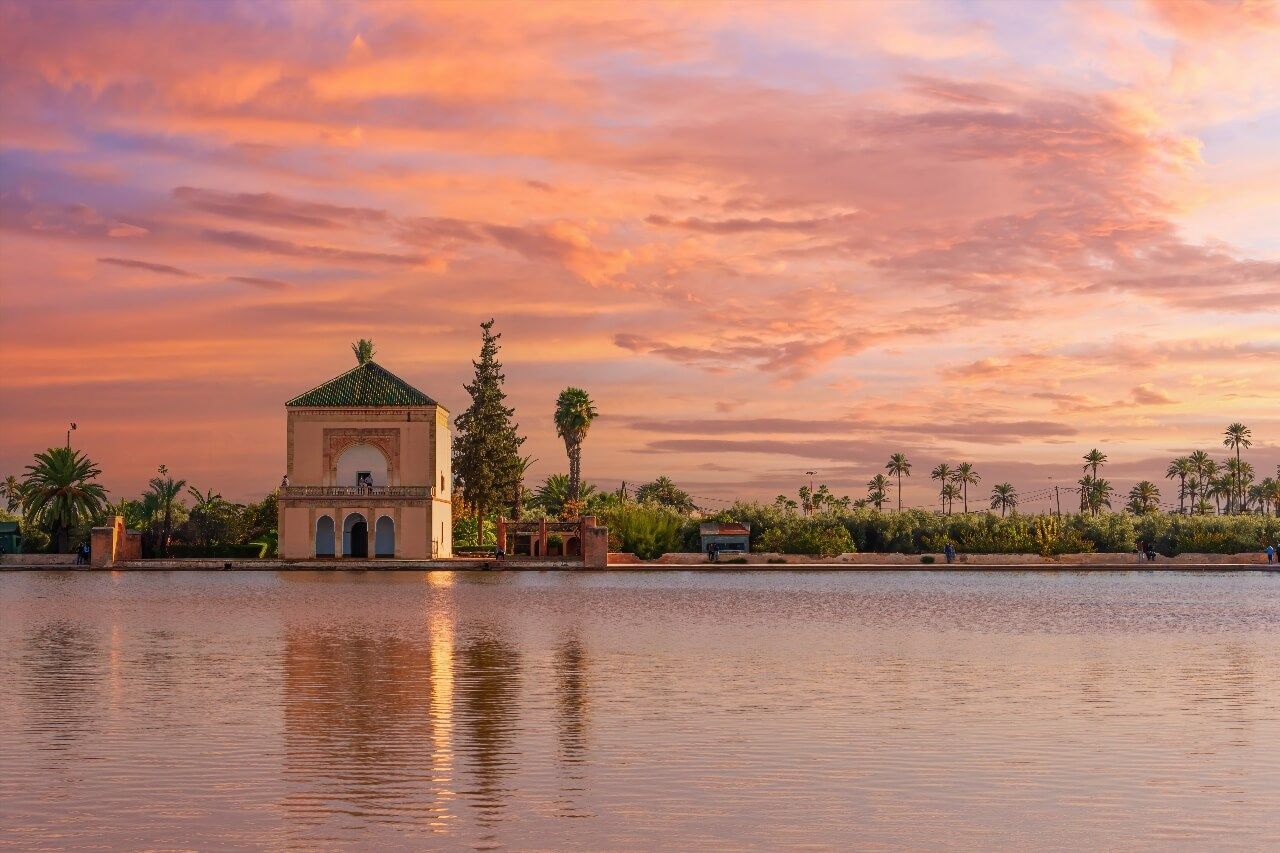
Marrakech remains the first foreign destination for many French travelers, and it's no coincidence. The city keeps a rare promise: that of surprising with each visit, even the third or fourth. The historic center, inscribed on the UNESCO World Heritage List since 1985, concentrates a density of places charged with history and atmosphere that you won't find anywhere else in the country.
The square Jemaa el-Fna is the beating heart of the ochre city. Early in the morning, it belongs to acrobats and fresh orange juice vendors. At nightfall, it transforms into an open-air theater where dozens of itinerant cooks set up their stalls side by side, in a smoke of spices and embers. Classified as a 'masterpiece of oral and intangible heritage' by UNESCO in 2001, the square is much more than a tourist attraction: it's a living social space that Marrakchis frequent as much as visitors.
Among the monuments, the Saadian Tombs constitute one of the country's best-preserved architectural surprises. Walled up for centuries and rediscovered by aerial photography in 1917, they house the sepultures of more than sixty members of the Saadian dynasty in a setting of zellige ceramic and sculpted plaster of stunning precision. The Bahia Palace, built at the end of the 19th century by Grand Vizier Ahmed Ben Musa, unfolds 8,000 m² of interior gardens, marble-paved patios and rooms decorated according to Andalusian tradition. Light filters differently depending on the hour, return in the afternoon if you passed by in the morning.
The Majorelle Gardens (Rue Yves Saint Laurent, 40000 Marrakech, rated 4.4/5 on Google for 59,565 reviews), bought by Yves Saint Laurent in 1980 after a period of abandonment, deserve their reputation despite the crowds. The cobalt blue of the buildings, christened 'Majorelle blue' by painter Jacques Majorelle who created the estate in 1924, contrasts strikingly with the red of the city walls. Arrive at opening (8am) to enjoy it without crowds. The adjacent Berber Museum displays a remarkable collection of jewelry, carpets and textiles from southern Morocco.
For accommodation, the riads of the medina offer an experience that chain hotels cannot reproduce. Count between 80 and 200 € per night for a good-level riad with breakfast included. The Mellah district, the former Jewish quarter adjacent to the Royal Palace, offers riads that are less frequented and often cheaper than those near Jemaa el-Fna. The Ryo audio guide of Marrakesh guides you from the historic medina to the new creative neighborhoods, on foot and at your own pace.
Fès: The Densest Medina in the Arab World
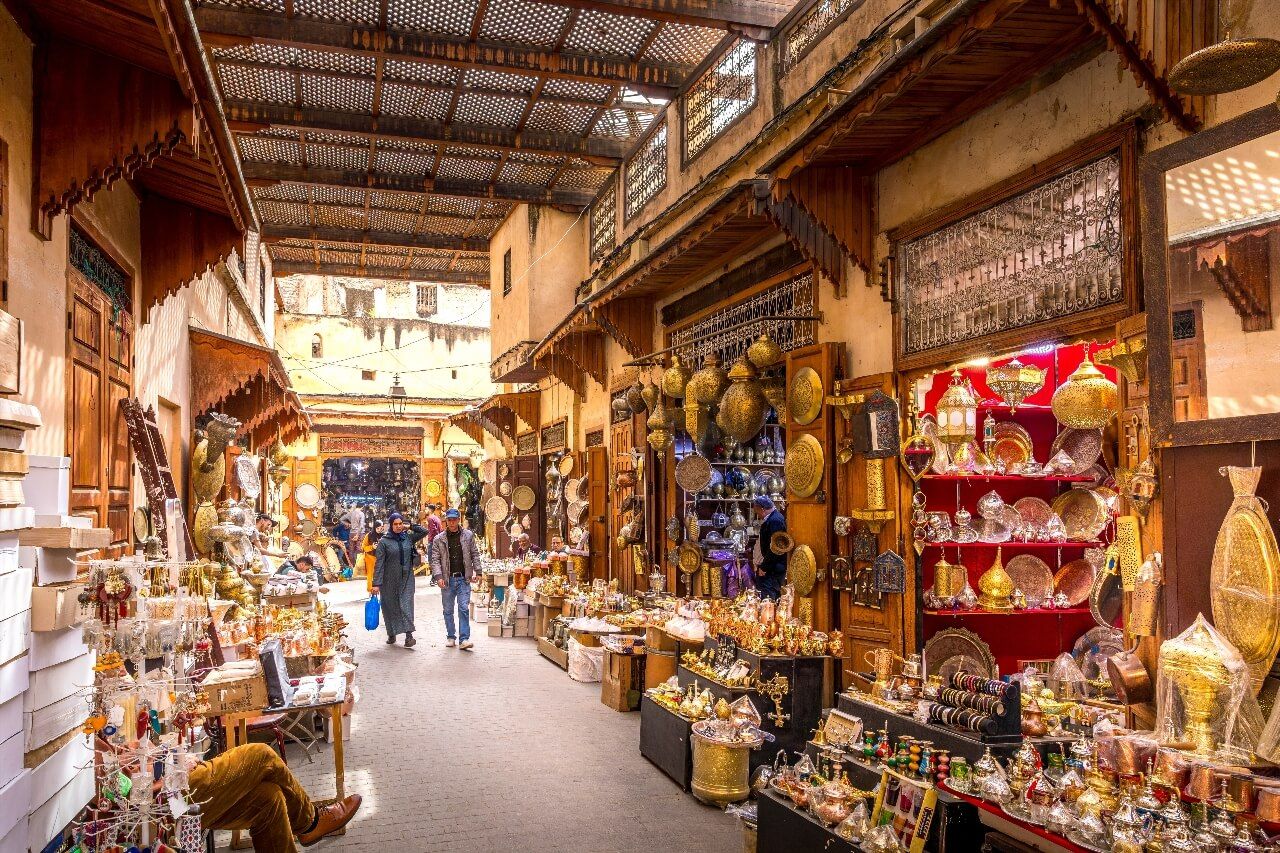
Fès intimidates. Its two million inhabitants make it Morocco's third city, but it's its medina, Fès el-Bali, that gives vertigo: more than 9,000 alleys where no motorized vehicle can circulate, a labyrinth that reorganizes itself at each crossroads according to rules that only locals truly master. Founded in 789 by Idris I, Fès was Morocco's first capital and concentrates today the best-preserved Islamic medieval heritage in the world.
The Medersa Bou Inania, built in the 14th century, is the best-restored building of the medina. Its green ceramic minaret and sculpted stuccos represent the summit of Merinid art. It's one of the rare madrasas still active as a place of prayer, which gives it an atmosphere that simple museums cannot rival. A few hundred meters away, the Nejjarine Fountain marks the entrance to the carpenters' souk; the wood museum occupying the adjacent caravanserai offers a rare panorama of the medina rooftops from its terrace.
The Chouara tanneries are the most photographed image of Morocco. From the terraces of surrounding leather shops, access is generally free if you accept to cross the shop, you overlook the dyeing vats in earth, ochre, red, blue and black, where men work standing in acid baths for centuries. Come in the morning, before 11am: the light is better and the vats are most active. The spectacle is striking but the smell, intense. Vendors offer fresh mint as an olfactory filter; accept it.
The Medersa Al-Attarine (Place Seffarine, 30000 Fès, rated 4.5/5 on Google for 2,506 reviews), neighboring the Karaouiyine mosque (the world's oldest university, founded in 859), is more intimate than Bou Inania but of equal finesse. The mosque itself is not accessible to non-Muslims, but its doors regularly open glimpses of its marble-tiled interior courtyards. Dedicate at least two days to Fès, one alone is not enough to make the difference between getting lost and understanding.
Fès Ville Nouvelle, designed by French architects at the beginning of the 20th century, offers a useful break between two medina sessions: quiet cafés, modern restaurants, covered market. Hassan II Avenue concentrates most practical services. For sleeping, medina riads are often cheaper than in Marrakech for comparable quality. It's also in Fès that you'll find the country's best ceramic craftsmen, the faïenciers of Place Seffarine still work the old way, with hammer on copper plates, in a rhythmic cacophony you won't forget.
Chefchaouen: The Blue City That Keeps All Its Promises
Chefchaouen is perhaps Morocco's most photographed city on social networks, which pushes some savvy travelers to avoid it on principle. Mistake. The Rif's 'blue city' keeps its visual promises, but it also offers something else: an improbable calm for such a popular destination, an organic architecture where alleys climb towards the mountain as if the city itself was trying to reach the sky, and inhabitants whose warm welcome contrasts with the sometimes palpable fatigue of the great medinas.
Founded in 1471 as a Berber fortress, the city was long closed to foreigners, non-Muslims were only admitted from the French Protectorate. Place Outa el-Hammam, with its 15th-century kasbah and its cafés under orange trees, is the natural starting point for any exploration. The kasbah houses a small ethnographic museum and a peaceful Andalusian garden. The alleys that climb towards the Barrio Al-Andalus quarter offer the most photogenic perspectives, especially in late afternoon when the low light brings out the nuances of blue, from cobalt to lavender through turquoise.
The hike to Ras el-Maa Waterfall, twenty minutes walk from the center, is accessible to all and rewards with welcome freshness. The Talassemtane national park, which surrounds the city, offers marked trails in cedar and pine forests where the tourist crowd disappears totally. Chefchaouen can be visited in one day from Fès (3h30 by bus), but one night on site radically changes the experience: the evening and morning city belongs to the inhabitants.
Essaouira: Wind, Ramparts and Atlantic Creativity
Essaouira is the opposite of Marrakech in all points, 175 km to the west and in another world. The blue and white city of the Atlantic once lived under the name Mogador, strategic port where Saharan caravans and European merchants crossed paths. Today, it's the wind that sets the tempo: the trade wind blows almost all year, making Essaouira the world capital of windsurfing and kitesurfing, and giving its alleys a particular freshness even in mid-summer.
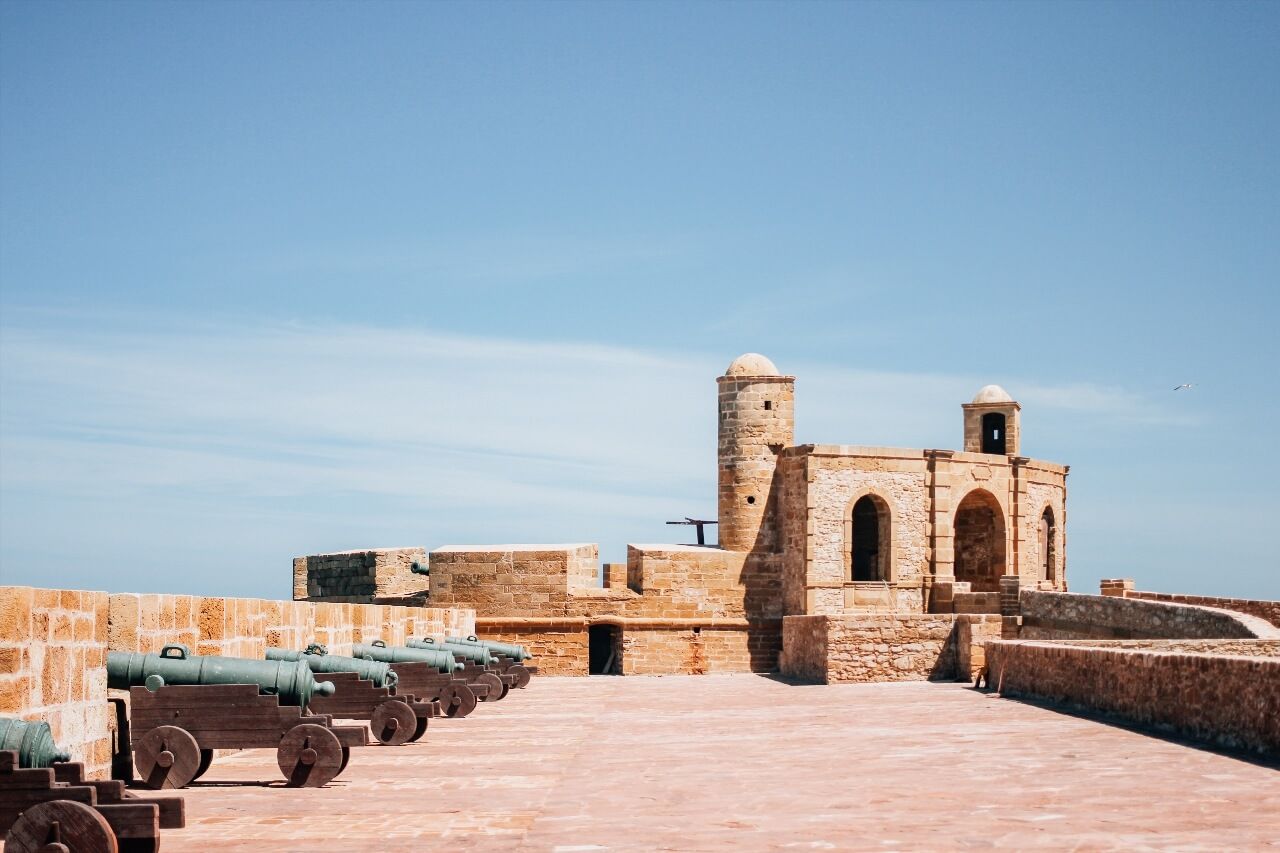
The Sqala ramparts directly overlook the ocean from their Portuguese cannon platforms. The walk on the fortifications at sunset is part of the country's essential moments. Below, Essaouira's fishing port is one of the most active on the Atlantic coast: blue boats, drying nets, grilled fish vendors on improvised embers just outside the port. Essaouira's medina, also UNESCO World Heritage listed, is more airy and easier to apprehend than those of Fès or Marrakech, its orthogonal streets inherited from French engineer Théodore Cornut's plan facilitate orientation.
Essaouira has long been a refuge for artists. Jimi Hendrix stayed there in 1969; Orson Welles shot scenes from Othello there in the early 1950s. The city today has a concentration of art galleries, thuya marquetry workshops (fragrant wood from the Atlas) and Gnaoua music shops. The Gnaoua and World Music Festival, in June, transforms the city into a giant stage for four days, but beware, accommodations are booked months in advance. If you prefer tranquility, visit Essaouira between November and March: the beach empties, prices drop by 30 to 40%, and the winter light on the white ramparts is unforgettable.
Rabat: The Royal Capital That Pleasantly Surprises
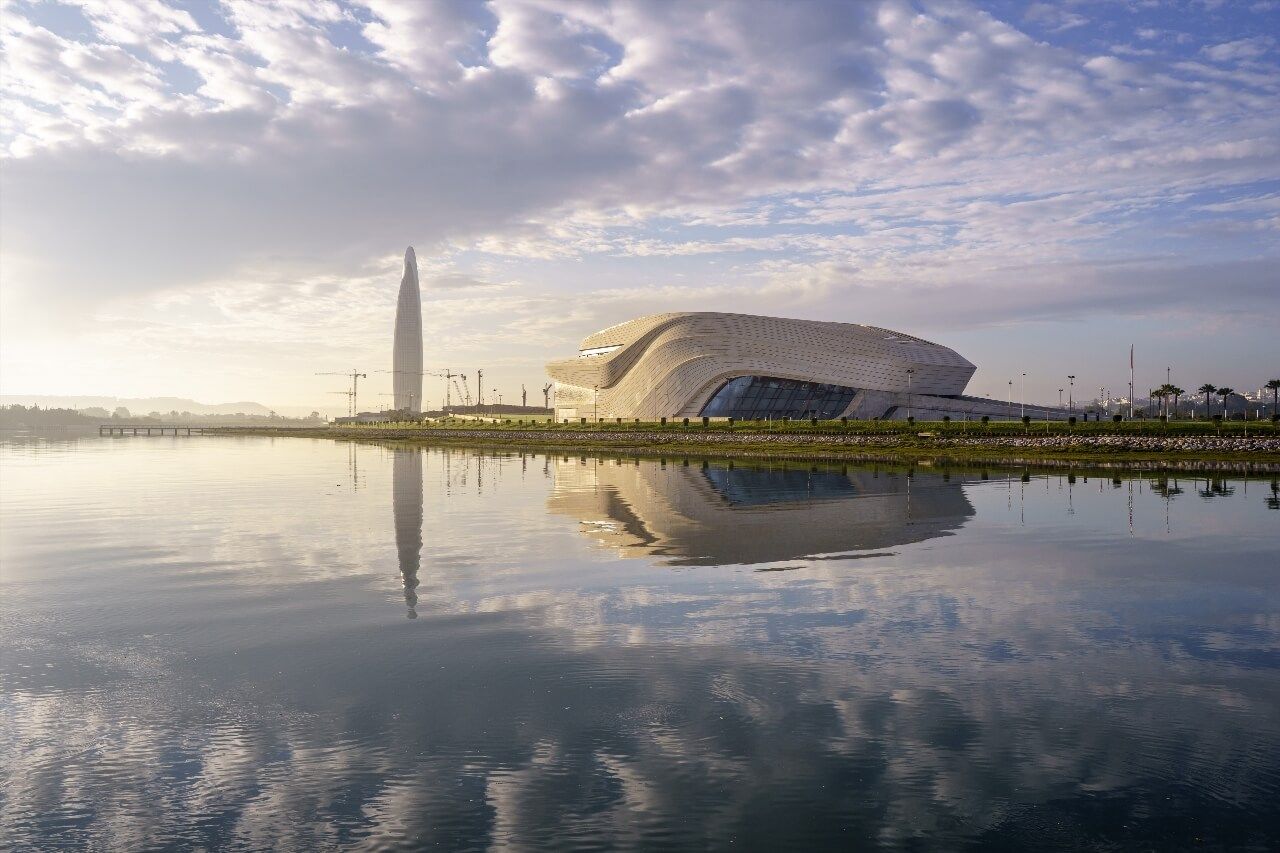
Rabat is not the city travelers plan first, it's often a last-minute addition, or a forced stopover. It's a mistake that Morocco regulars regret having made. The kingdom's administrative capital is a human-sized city, less dense and less commercially aggressive than Marrakech or Fès, and its historical heritage is of unexpected richness.
The Hassan Tower, symbol of the city, is the minaret of an unfinished mosque whose construction was interrupted at the death of Sultan Yacoub al-Mansour in 1199. Flanked by broken columns and crowned by a sky that seems painted on purpose, the platform constitutes one of the country's most impressive monumental ensembles. A few meters away, the Mausoleum of Mohammed V houses the tombs of King Mohammed V and King Hassan II in a hand-worked white marble sanctuary, access is free and the guard changing ceremonies are worth the trip.
The Kasbah of the Oudayas (Rue Jamâa, 10000 Rabat, rated 4.7/5 on Google for 1,436 reviews), 12th-century Almoravid fortress planted at the mouth of the Bou Regreg, counts among the Maghreb's most beautiful. Its alleys painted blue and white, an aesthetic that predates Chefchaouen by far, descend towards an Andalusian garden closed behind high walls, extraordinarily calm unlike tourist streets. The terrace overlooking the Atlantic from the kasbah offers a direct view of Salé, the twin city on the other shore.
The archaeological site of Chellah, Merinid necropolis built on the ruins of a Roman city, deserves half a day. Thermal ruins, broken columns, storks nesting on minarets, the site mixes several millennia of history in an almost bucolic setting. Rabat also houses two first-rate museums: the National Museum of Archaeology, whose collections cover from prehistory to the 19th century, and the Mohammed VI Museum of Modern and Contemporary Art, one of Africa's most ambitious. Count two days to do justice to the city. The Ryo article on Morocco's must-sees develops several Rabat sites with complementary practical details.
Casablanca: Art Deco, Ocean and Moroccan Modernity
Casablanca confuses visitors who expected a picturesque city. Morocco's economic capital, 4.5 million inhabitants in the metropolitan area, is above all a large modern city, busy, noisy, with traffic jams worthy of Paris. Its charm is less immediate than that of imperial cities, but it exists, and it reveals itself to those who look in the right place.
The Hassan II Mosque (Boulevard Sidi Mohammed Ben Abdellah, 20000 Casablanca, rated 4.7/5 on Google for 30,093 reviews) is without possible discussion one of the African continent's most spectacular monuments. Built between 1986 and 1993, it can accommodate 25,000 worshippers in its prayer hall and 80,000 people on its esplanade. Its 210-meter minaret is the world's second highest. What strikes most is the location: the mosque advances directly on the Atlantic, partially built on the ocean. Guided tours are available for non-Muslims, they give access to the interior and allow appreciation of zellige mosaics, cedar woodwork and glass floor under which ocean water is visible.
The Art Deco district of downtown is Casablanca's other treasure. Between 1920 and 1940, French architects built here one of the world's most coherent art deco ensembles, with buildings with worked façades and domes that juggle between East and West. The Casa Mémoire association organizes guided tours of architectural heritage, a much richer way to cross the city than simple façade tourism.
Casablanca's Central Market, created in 1917, remains the best place to taste fresh Moroccan Atlantic fish and seafood at reasonable prices. The Ain Diab Corniche, 8 km from the center, is the city's urban shoreline: beach clubs, fish restaurants, seawater swimming pools open to the public. This is where Casablancais spend their summer weekends.
Meknès: The Unjustly Overshadowed Imperial City
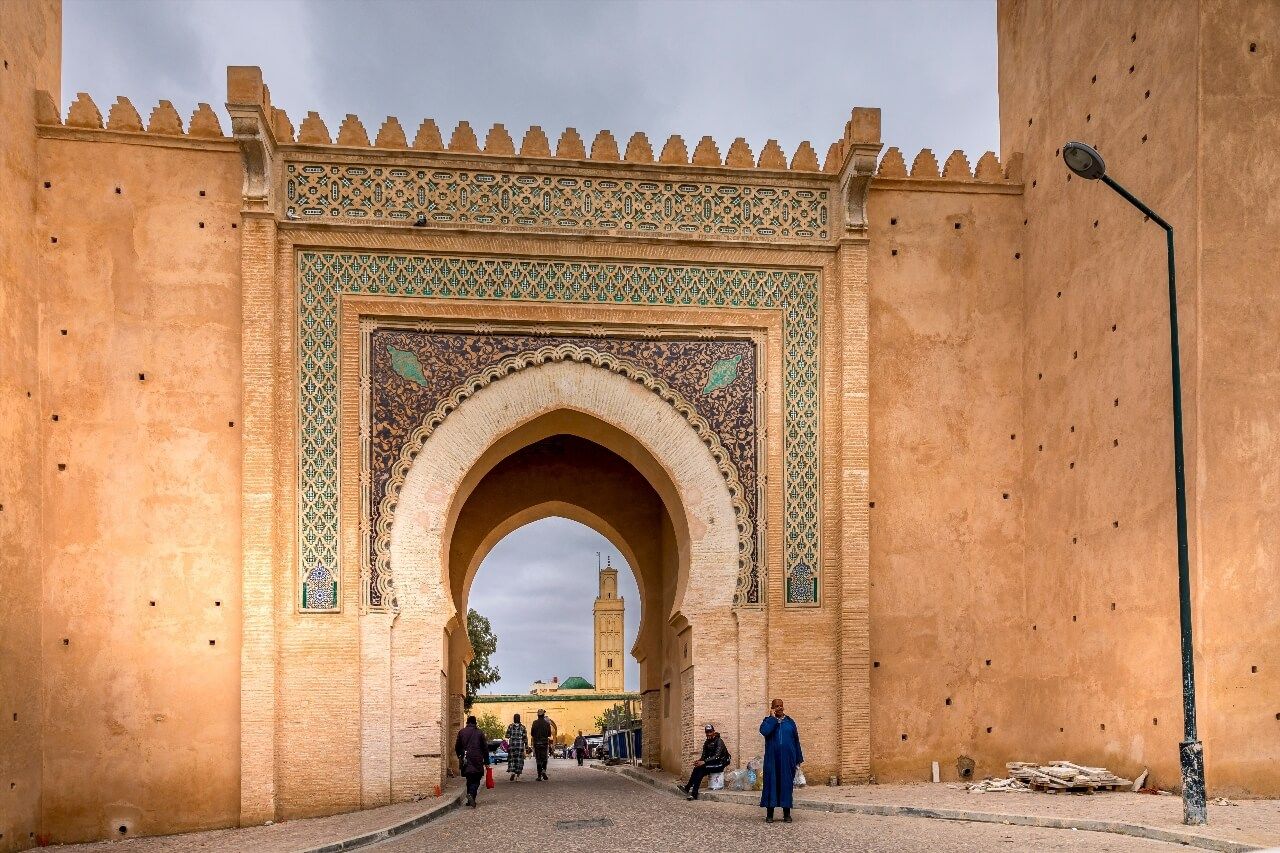
Meknès suffers from an unfair reputation: too often treated as a two-hour stopover on the Fès-Rabat route, it deserves much better. Morocco's fourth imperial city, founded by Moulay Ismaïl in the 17th century in direct response to Versailles, has its own grandeurs, less restored than those of Fès or Marrakech but often more authentic in their patina.
The Bab Mansour Gate, built in 1732, is considered the most beautiful in Morocco and all the Maghreb. Its zellige façade and marble columns pillaged from Volubilis (Volubilis Archaeological Site, 50000 Meknès, rated 4.5/5 on Google for 7,815 reviews) rival any European triumphal arch. Place el-Hedim, facing it, plays a role comparable to Jemaa el-Fna in Meknès, with a fraction of the crowd and prices twice as low.
The archaeological site of Volubilis, 33 km from Meknès, is Morocco's main Roman city and one of North Africa's best-preserved sites. The mosaics there are spectacular, some represent hunting and mythological scenes still in color despite eighteen centuries of exposure. Taxi access from Meknès costs about 150 dirhams round trip (15 €). Plan a full morning: the site covers 42 hectares.
Meknès deserves one night, not just a stopover. Hotels in the medina are inexpensive and restaurants on Place el-Hedim serve some of the country's best tagines.
Tanger: The Gateway to Africa Reinvented
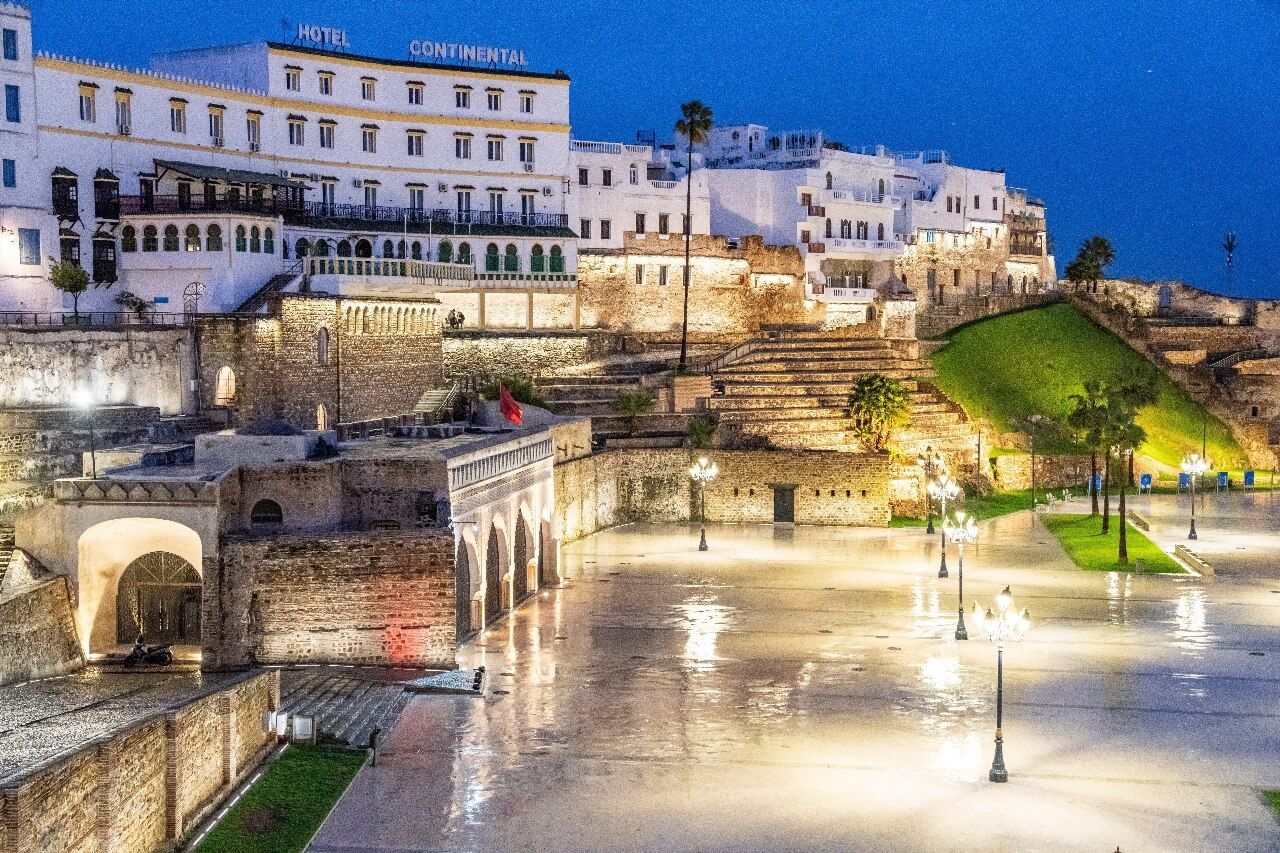
Tanger long lived on its reputation as a shady border city, crossroads of all trafficking between Europe and Africa. The city that inspired Matisse, Paul Bowles and William Burroughs has metamorphosed since the 2010s: new Tanger-Med port, renovated corniche, modern museums, creative quarter in the old medina. Tanger in 2026 is a booming city, with dynamic youth and an artistic scene that attracts galleries and international residencies.
The Kasbah dominates the bay from its promontory. The Kasbah Museum, installed in the former sultan's palace, exhibits collections of archaeology and Moroccan decorative arts in a setting of tiled patios and rooms with sculpted cedar ceilings. The view from the ramparts over the Strait of Gibraltar (Cap Spartel, 90000 Tanger, rated 4.6/5 on Google for 6,298 reviews), 14 km separate Africa from Europe, is one of the continent's most striking. In clear weather, Spanish coasts are perfectly visible.
The Café Hafa, founded in 1921 on cliffs overlooking the strait, has welcomed Jimi Hendrix, the Rolling Stones and generations of intellectuals. Its stepped terraces descending to the water remain one of Africa's most singular places for mint tea. The Marshan quarter, residential and calm, is the Tanger of inhabitants, far from classic tourist circuits.
Ouarzazate: Between Desert and Cinema Sets
Ouarzazate is the gateway to the desert. At 1,160 meters altitude in the Drâa valley, at the foot of the High Atlas, this city of 75,000 inhabitants might have remained confidential without an astonishing choice: Hollywood installed its African studios there. Lawrence of Arabia, Gladiator, Game of Thrones, The Last Samurai, the list of productions shot here or in its immediate surroundings is dizzying.
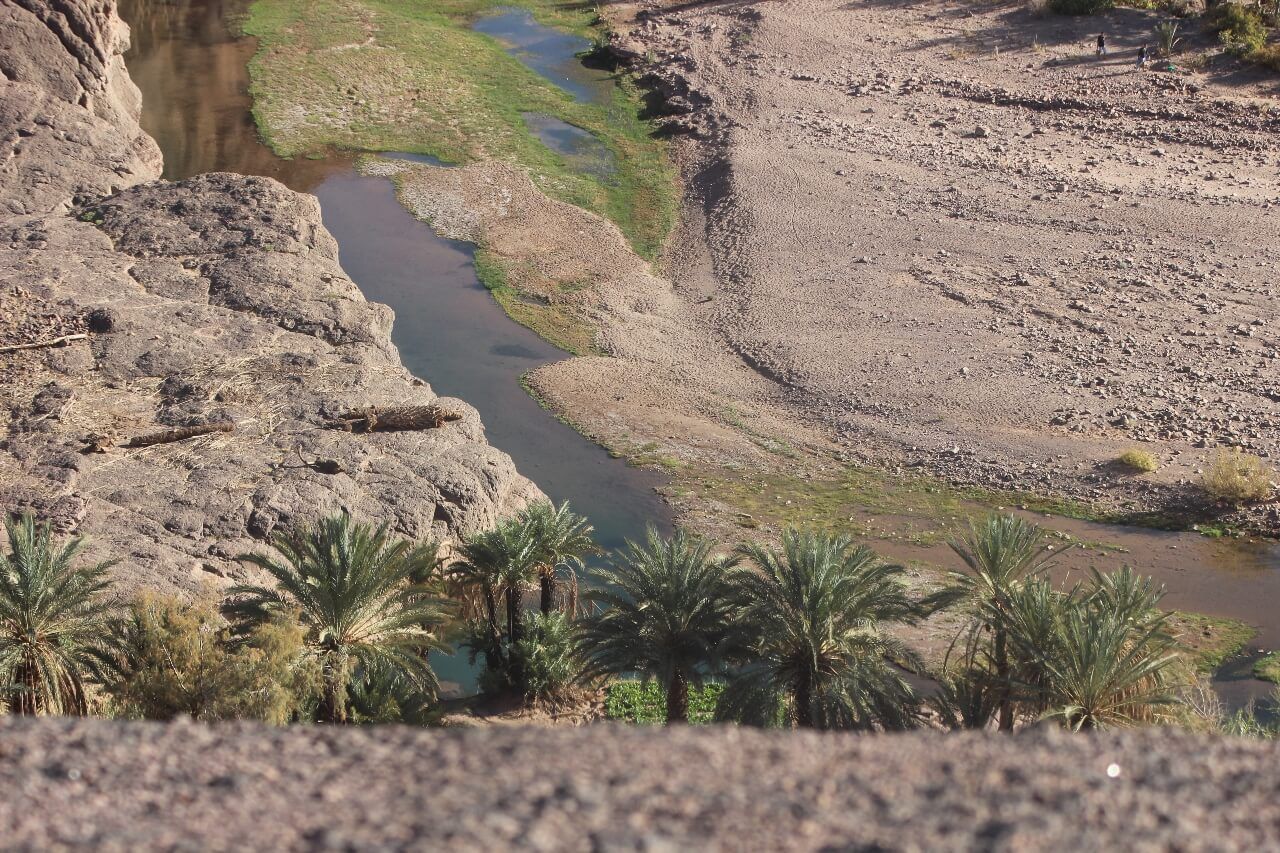
The Ksar of Aït Benhaddou, 32 km from Ouarzazate on the Marrakech route, is the region's most emblematic site. This red pisé fortified village, UNESCO World Heritage listed, has served as a set for dozens of film productions. The alleys climbing to the fortress still cross some inhabited houses, giving the impression of walking in a film that hasn't finished shooting.
The Atlas Studios (Route de Marrakech, 45000 Ouarzazate, rated 3.8/5 on Google for 1,934 reviews), on Ouarzazate's outskirts, organize visits that allow seeing life-size sets from famous films, an offbeat but genuinely amusing experience. The city is also the departure base for excursions to the dunes of Erg Chebbi (4h drive to Merzouga), Dadès and Todra gorges, and Drâa valley palm groves.
Agadir: The Beach Resort That Rebuilt Everything
Agadir is a unique case in Moroccan history: the city was razed by a magnitude 5.7 earthquake in 1960, which killed between 12,000 and 15,000 people in twenty-five seconds. What was rebuilt on its ashes resembles little other Moroccan cities, no labyrinthine medina, no ancient alleys. Agadir is a modern and horizontal city, built around a 9 km bay with calm waters protected by a natural cape.
Agadir beach (Boulevard Mohammed V, 80000 Agadir, rated 4.4/5 on Google for 4,861 reviews) is quite simply one of Africa's best beach resorts. Fine sand, water at 22°C from May to October, tree-lined promenades, developed tourist infrastructure, the city welcomes more than a million foreign tourists per year. The old Kasbah on the hill dominating the bay is the only vestige preserved from before the earthquake; the night view of the bay's lights from its ramparts is worth the detour. For tradition lovers, the village of Tikiwt and Souk el-Had remain the best access to authentic Berber crafts from the Souss region.
Tétouan: The Unknown Andalusian Pearl of the North
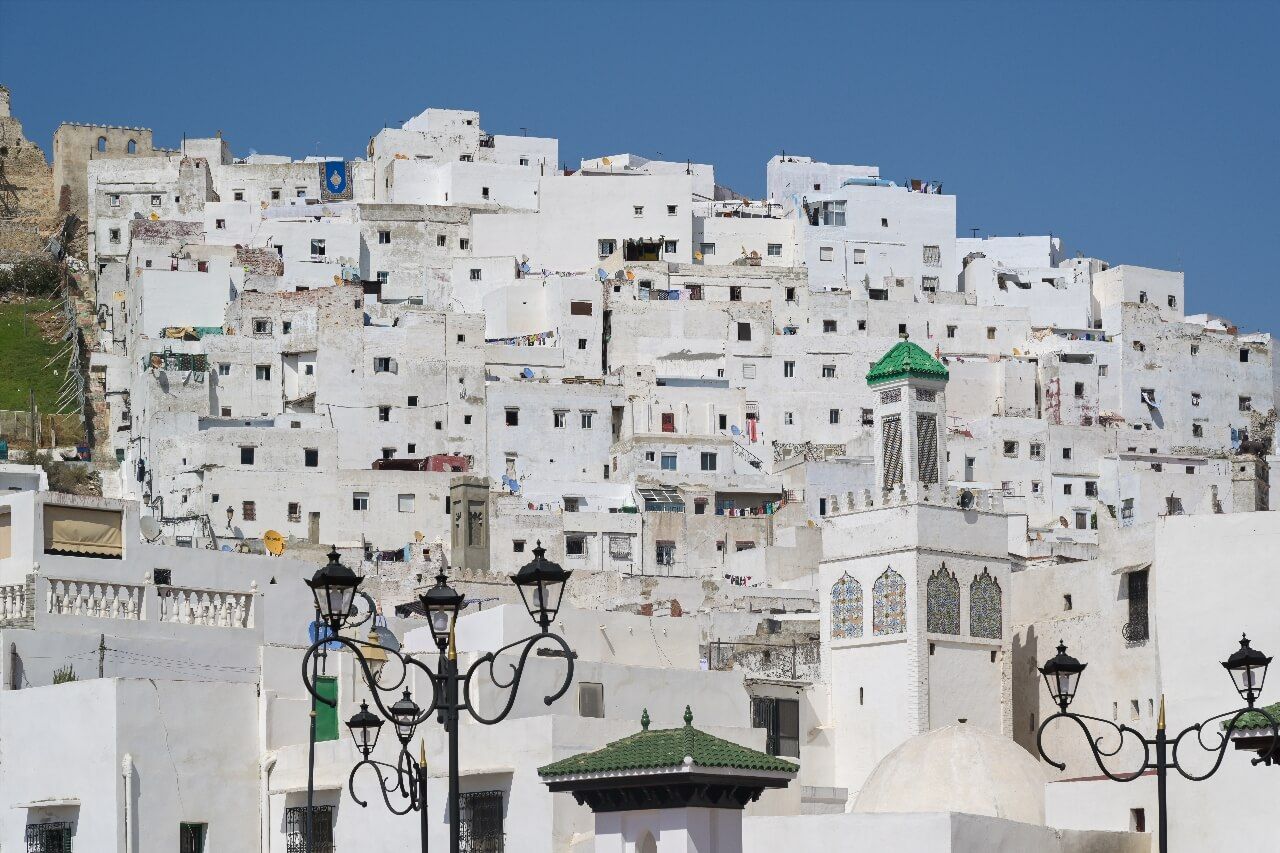
Tétouan is the Moroccan city that least resembles Morocco, or rather, the city that most resembles medieval Andalusia that Morocco never renounced preserving. When Moors and Jews were expelled from Spain in 1492 following the Reconquista, many settled in Tétouan, bringing with them their architecture, crafts and language. The medina, UNESCO World Heritage listed in 1997, is an extraordinary concentrate of this hybrid culture: patios with central fountains, finely worked ironwork, ceramic staircases with geometric patterns.
The Hassan II Square and its terrace cafés are the lively heart of the modern city. The Archaeological Museum of Tétouan groups Roman collections from Tamuda excavations, ancient city 3 km from the center. Less touristy than neighboring Chefchaouen (60 km away), Tétouan attracts those seeking an authentic medina without entrance queues. Martil beach, 10 km away, is the family beach resort of Tétouanais, fine sand, safe swimming, modest prices.
Practical Tips for Planning Your Trip to Morocco
When to Go?
Morocco can be visited all year round, but seasons are not equal. Spring (March-May) is ideal for imperial cities and the North: mild temperatures (20-26°C), flowering vegetation, fewer crowds compared to summer. Autumn (September-November) offers similar conditions and constitutes the best period for the South and desert.
Summer (June-August) is daunting in interior cities: Marrakech regularly exceeds 42°C in July. Atlantic coasts (Essaouira, Agadir) are notably cooler but very crowded. Winter remains on the contrary the season
The ONCF train network is excellent between major northern cities: Tanger, Rabat, Casablanca, Fès and Meknès are connected by regular and comfortable services. Casablanca-Rabat takes 45 minutes; Casablanca-Marrakech, 3 hours. For the South (Ouarzazate, Zagora, Merzouga) and less connected cities (Chefchaouen, Essaouira, Tétouan), bus companies CTM and Supratours provide a comfortable network with online booking.
Car rental has considerable advantages for itineraries including the South: it allows stopping at ksour in the Dadès valley, Todra gorges or Atlas villages at will. Count 40 to 60 € per day for a small city car with unlimited mileage from a serious local rental company. Driving in medinas is discouraged, park on the periphery and continue on foot.
How Much Time to Plan?
Ten days constitute the reasonable minimum to combine imperial cities (Fès, Meknès, Marrakech) with one or two complementary destinations. Two weeks allow adding the desert, Essaouira or the northern coast. Here are three proven itinerary frameworks:
7 days, The Essentials: Casablanca (1 night, arrival) → Rabat (1 night) → Meknès with Volubilis excursion (1 night) → Fès (2 nights) → Marrakech (2 nights). This train route requires no car rental.
10 days, Northern Loop: Casablanca → Rabat → Meknès → Fès → Chefchaouen → Tanger → return Casablanca or exit via Tanger. Add Essaouira as coastal variant from Marrakech.
14 days, Grand Tour: Same base as 10 days, then Marrakech → Ouarzazate → Merzouga (desert) → return via Dadès and Todra valleys.
Daily Budget
Morocco remains a financially accessible destination. In medium-high budget, count 80 to 120 € per person per day (good level riad, local restaurant for lunch and quality table for dinner, transport). In economy budget, 35 to 50 € per day are realistic with hostels and CTM network. Street markets and neighborhood café-restaurants offer complete meals between 4 and 8 €.
Entry to official monuments (Bahia, Bou Inania, national museums) oscillates between 30 and 100 dirhams (3 to 10 €). Most medinas and public squares are free. Plan cash in dirhams for souks, small cafés and local transport, credit cards are not accepted everywhere despite recent progress.
Do You Need to Speak Arabic or French to Travel in Morocco?
French is the first foreign language in Morocco and suffices to travel without difficulties in all major cities and in the majority of tourist accommodations. English is rapidly progressing, especially in Marrakech and large cities. In southern villages or High Atlas, a few words of darija (Moroccan Arabic) or tamazight (Berber) are appreciated and immediately break the ice. Learning 'chokran' (thank you) and 'labas' (how are you?) is enough to trigger smiles.
FAQ
What Is the Most Beautiful City in Morocco to Visit?
There is no universal answer, but if we had to choose just one, Marrakech concentrates the most possibilities in a single place: historical monuments, nightlife, gastronomy, artisanal shopping and easy access to the rest of the country. For a historically deeper experience, many experienced travelers prefer Fès, whose medieval medina is the best preserved in the Arab world. Those who prefer calm and sea will lean towards Essaouira.
Which Moroccan City Should Be Visited First If You Only Have One Week?
One week allows you to cover the Rabat-Fès-Marrakech triangle with reasonable logistics. Start in Casablanca or Rabat for arrival, go up to Fès via Meknès, then down to Marrakech. This 6 to 7-day journey by train and bus is feasible without car rental and covers the four imperial cities in a geographically coherent order.
Is It Safe to Travel to Morocco in 2026?
Yes. Morocco is one of the safest destinations in Africa and the Arab world for foreign tourists. The country registers tens of millions of visitors each year with a very low incident rate. Usual precautions apply: watch your belongings in crowded souks, don't display signs of wealth in busy medinas, learn about local courtesy codes. Harassment from self-proclaimed guides has considerably decreased since regulation laws adopted in 2015.
Which City to Choose for Its Beaches and the Sea?
For beach holidays combining sea and cultural heritage, Essaouira is the most balanced choice: fine sand beach, UNESCO medina, artistic atmosphere. For developed hotel infrastructure and an international-level beach, Agadir has no rival in Morocco. Tanger offers decent beaches with the advantage of a culturally dense city. For the less frequented Mediterranean coast, Tétouan and its surroundings (Martil, M'diq) deserve the attention of travelers seeking to get away from crowds.
How Many Days Are Needed to Visit Marrakech Properly?
Three days constitute the minimum to go beyond the must-sees and explore less touristy neighborhoods: medina and souks on the first day, Majorelle Gardens then Saadian Tombs and Mellah on the second, traditional hammam and Bahia Palace on the third. Two additional days allow for an excursion to the Atlas mountains or a night in a countryside riad. The Ryo Ryocity Marrakesh is designed to maximize these walking days in the medina.
Are All Imperial Cities of Morocco Comparable?
No, and that's precisely what makes their discovery complementary. Fès is the densest, most medieval, most bewildering. Meknès is the most architecturally grandiose, but also the most peaceful of the four. Marrakech is the most international and liveliest. Rabat, finally, is the most balanced between heritage and contemporary life. A stay combining all four in one week remains one of the richest itineraries Morocco can offer.
How to Get to Chefchaouen From Fès?
The Fès-Chefchaouen connection is made by CTM bus (daily departures, 3h30 to 4h journey, about 100 dirhams). A collective taxi from Chefchaouen to Fès costs a similar fare but with less schedule flexibility. The route crosses the foothills of the Rif and offers remarkable mountain landscapes. There is no direct rail connection, the nearest station to Chefchaouen is in Meknès, which is an additional 2h30 by bus.
Conclusion
These ten Moroccan cities share a rare quality: that of keeping their promise with each return. Fès reveals a new quarter with each visit. Marrakech reinvents itself without ever losing its soul. Chefchaouen soothes when other cities exhaust. Essaouira ventilates in the literal sense as well as figuratively. The difficulty, with Morocco, is not finding a beautiful city, it's stopping adding them to your itinerary.
To explore Marrakech with all the historical depth it deserves, the Ryo audio-guided tour of Ryocity Marrakesh accompanies you through the medina alleys, in front of monuments and in neighborhoods that classic circuits forget. Our Ryo app is available without connection, Morocco is yours to discover.