© Shutterstock
 Votre guide Ryo
The 20 must-see places to visit in New Zealand
Nicknamed the land of the long white cloud by the Maoris, New Zealand is a dream destination for nature and adventure lovers. This island country of Oceania, lost in the middle of the Pacific Ocean, fascinates with the breathtaking diversity of its landscapes. Between the North Island, land of volcanoes and Maori culture, and the South Island, kingdom of majestic mountains and spectacular fjords, New Zealand offers a palette of natural wonders that leave you speechless. From fine sandy beaches to millennial glaciers, from subtropical forests to bubbling geysers, each region reveals its unique character. Discover the 20 must-see places to visit in New Zealand for an unforgettable experience at the antipodes.
1. Milford Sound, the most spectacular fjord
Considered the eighth wonder of the world, Milford Sound (Piopiotahi, 9679 New Zealand) is undoubtedly one of the most iconic sites in the country. Located in Fiordland National Park, a UNESCO World Heritage site, this majestic fjord cuts 15 kilometers between vertiginous cliffs that rise up to 1,200 meters above the water. The permanent waterfalls that cascade down the rocky walls, like the spectacular Stirling Falls and Bowen Falls, create a fairy-tale spectacle. Writer Rudyard Kipling had called it the eighth wonder of the world, and one easily understands why facing this raw beauty. Cruises on the fjord allow observation of exceptional marine wildlife with seal colonies, dolphins and sometimes even Fiordland penguins. The road to get there, via the Milford Road, crosses breathtaking alpine landscapes and is already an adventure in itself.
2. Hobbiton, the hobbit village
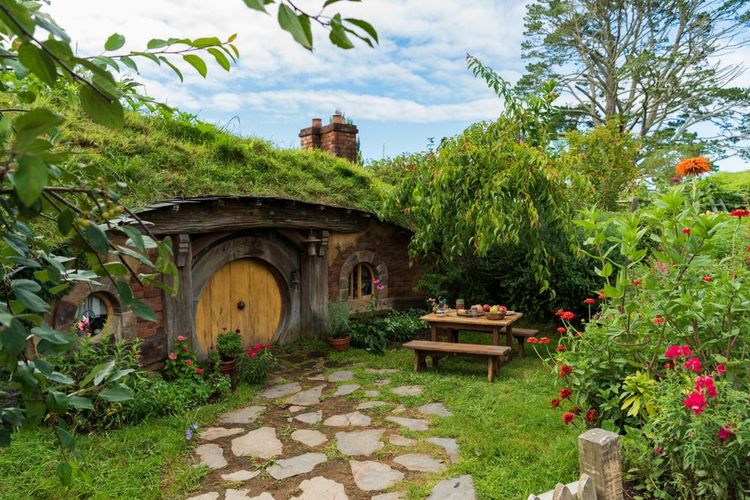
Lord of the Rings and Hobbit fans cannot miss visiting the original set of Hobbiton Movie Set (501 Buckland Road, Hinuera, Matamata 3472, New Zealand, rated 4.7/5 on Google for over 26,000 reviews). Nestled in the heart of a green farm near Matamata, this 12-acre site houses 44 perfectly preserved hobbit holes, the mill, the two-arch bridge and of course the famous Green Dragon tavern. The guided tour immerses you in the magical universe created by Peter Jackson, where every detail has been carefully reconstructed. The lush gardens, lovingly maintained, truly give the impression of having entered the Shire. The tour ends with a tasting of cider or beer at the Green Dragon, for total immersion in Tolkien's universe.
3. Tongariro National Park
New Zealand's first national park and one of the oldest in the world, Tongariro National Park (Manawatū-Whanganui, New Zealand) is inscribed on UNESCO's World Heritage list for its exceptional cultural and natural values. Sacred land for the Maoris, it houses three majestic volcanoes: Tongariro, Ngauruhoe and Ruapehu. The famous Tongariro Alpine Crossing trek, often considered one of the most beautiful in the world, winds over 19.4 kilometers through fascinating lunar landscapes. The trail reveals active smoking craters, emerald lakes with surreal colors like the Red Crater, black lava fields and breathtaking alpine panoramas. This demanding but accessible hike rewards walkers with a unique diversity of volcanic landscapes. The park also served as a backdrop to represent Mordor in the Lord of the Rings trilogy.
4. Queenstown, adventure capital
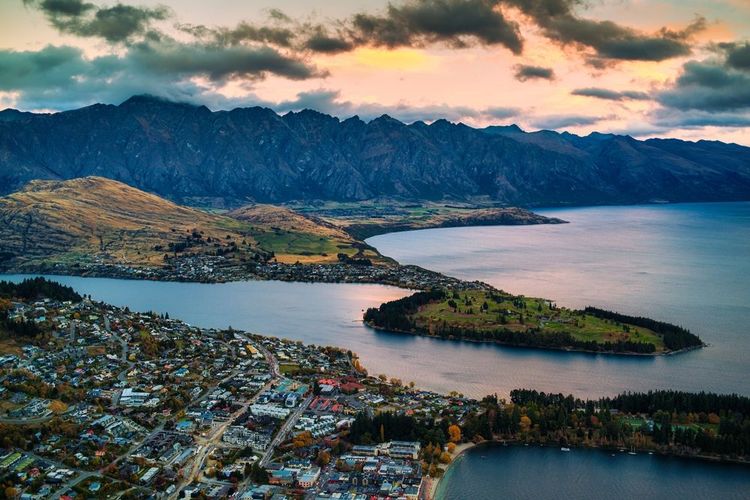
Nestled on the shores of Lake Wakatipu and dominated by the Remarkables mountain range, Queenstown (Otago, New Zealand) amply deserves its nickname as the world's adventure capital. This dynamic city is the ideal playground for thrill seekers: this is where commercial bungy jumping was invented, and adrenaline activities abound. From jet-boating on the Shotover River to paragliding over the lake, from downhill mountain biking to skiing on the Remarkables in winter, each day offers its share of adventures. But Queenstown is not just an adrenaline destination: its renowned vineyards, particularly in the Gibbston Valley region, produce excellent Pinot Noirs. Gourmet restaurants and lively bars also make it a top culinary destination. The old gold miners' village of Arrowtown, nearby, is worth the detour for its authentic charm and flamboyant autumn colors.
5. Rotorua, land of geothermal activity and Maori culture
Built on an area of intense geothermal activity, Rotorua (Bay of Plenty, New Zealand) first surprises with its characteristic sulfur smell that permeates the air. This unique city offers a permanent natural spectacle with its spouting geysers, bubbling mud pools and steaming hot springs. Wai-O-Tapu geothermal park reveals the famous psychedelically colored Champagne Pool, while Te Puia houses the Pohutu geyser that erupts up to 20 times per day. Rotorua is also the Maori cultural heart of New Zealand. Cultural villages like Whakarewarewa allow discovering the ancestral traditions of the indigenous people: haka performances, traditional songs, Maori tattoos and hangi, the traditional meal cooked in the hot earth. The Rotorua Redwood Forest also offers magnificent walks, notably the suspended walkway illuminated in the evening.
6. Abel Tasman National Park
New Zealand's smallest national park but certainly one of the most enchanting, Abel Tasman National Park (Tasman, New Zealand) seduces with its golden sand beaches bathed by turquoise waters. Located in the Nelson region, at the north of the South Island, this coastal paradise bears the name of the Dutch explorer who discovered New Zealand in 1642. The famous Abel Tasman Coast Track, one of the country's Great Walks, winds over 60 kilometers along a preserved coast where isolated coves, luxuriant native forest and sculpted rock formations follow one another. Sea kayaking is the ideal way to explore hidden bays and observe seals basking on the rocks. Anchorage Bay, Bark Bay and the spectacular Cleopatra's Pool are among the must-see spots. The region's sunny climate makes it a popular destination even outside the summer high season.
7. Aoraki / Mount Cook, the roof of New Zealand
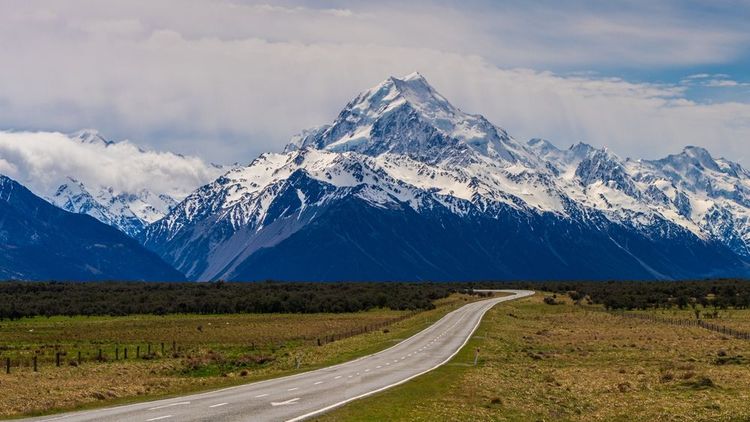
New Zealand's highest point at 3,724 meters, Aoraki / Mount Cook (Canterbury, New Zealand) majestically dominates the national park of the same name, inscribed on UNESCO's World Heritage list. Its Maori name Aoraki means "Cloud Piercer," a perfectly appropriate description. The national park, covering 70,000 hectares, houses 27 peaks over 3,000 meters and New Zealand's longest glaciers, including the Tasman Glacier stretching 27 kilometers. Hikes around Mount Cook Village offer spectacular panoramas accessible to all levels: the short Hooker Valley Track leads to a glacial lake dotted with floating icebergs, while more technical circuits cater to experienced mountaineers. Helicopter flights allow landing on glaciers for an unforgettable experience. At night, the starry sky of this international dark sky reserve offers a dazzling celestial spectacle.
8. Lake Tekapo and Lake Pukaki
These two neighboring glacial lakes are distinguished by their extraordinary milky turquoise color, due to rock particles ground by glaciers suspended in the water. Lake Tekapo (Canterbury, New Zealand) is famous for the picturesque Church of the Good Shepherd, built in 1935, which offers an iconic photographic setting with the Southern Alps as backdrop. The region is part of the Aoraki Mackenzie International Dark Sky Reserve, recognized for having one of the purest night skies on the planet. Mount John Observatory offers fascinating guided night tours. Lake Pukaki, slightly larger, offers spectacular views of Aoraki / Mount Cook reflecting in its turquoise waters. The road that runs along the lake from Twizel to the national park is considered one of New Zealand's most beautiful. In spring, multicolored lupins lining the shores add an explosion of colors to the already breathtaking landscape.
9. Coromandel Peninsula and Cathedral Cove
Less than two hours from Auckland, the Coromandel Peninsula (Waikato, New Zealand) is New Zealanders' favorite seaside escape. This mountainous and forested region houses some of the country's most beautiful beaches. Cathedral Cove, accessible only on foot or by kayak, reveals a monumental natural arch sculpted in the white cliff, creating a cathedral passage between two immaculate beaches. This iconic site served as a backdrop for The Chronicles of Narnia film. Hot Water Beach is also worth the detour: at low tide, you can dig your own natural spa in the sand, heated by underground hot springs bubbling under the beach. The peninsula's native forest houses ancient kauris, these giant endemic trees, while small coastal towns like Whitianga and Hahei offer a relaxed atmosphere typical of the Kiwi lifestyle.
10. Bay of Islands, subtropical paradise
In the far north of the North Island, the Bay of Islands (Northland, New Zealand) scatters 144 islands in a turquoise lagoon. This historic region was the first contact point between Maoris and Europeans and houses Waitangi, site of New Zealand's founding treaty signed in 1840. Water activities dominate: cruises to observe dolphins and whales, sailing between islands, kayaking in hidden coves or diving on wrecks. The subtropical climate allows enjoying swimming almost year-round. The small towns of Paihia, Russell (the country's first capital) and Kerikeri retain colonial charm while the region's century-old kauri forests testify to a unique ecosystem. Not far away, Cape Reinga marks New Zealand's northernmost accessible point, where the Tasman Sea meets the Pacific Ocean in an impressive spectacle of breaking waves.
11. Wellington, cultural capital
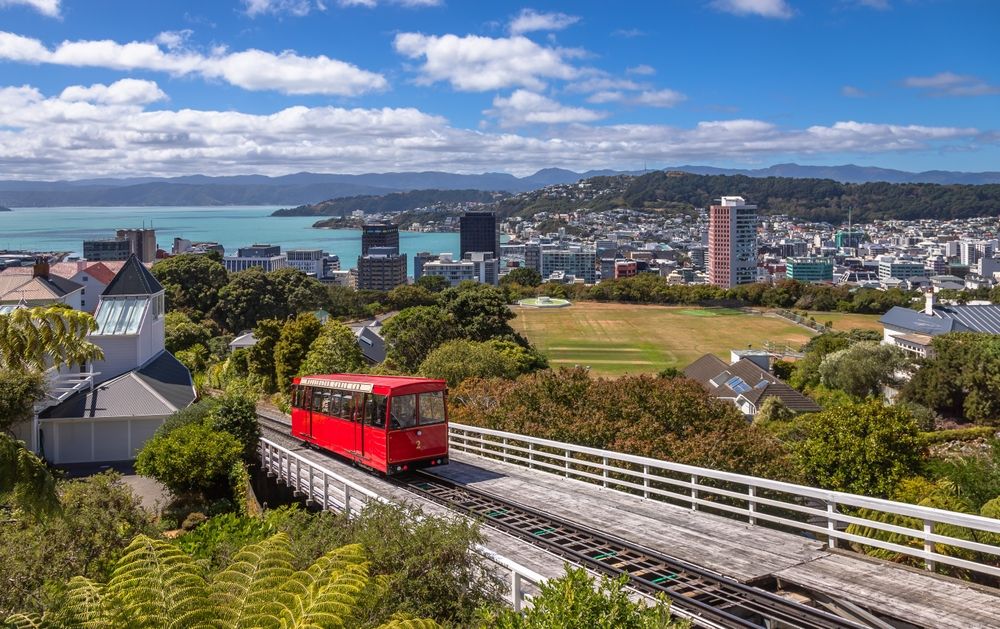
Compact and dynamic capital nestled between green hills and natural harbor, Wellington (New Zealand) seduces with its cultural and artistic effervescence. Often swept by winds, it nonetheless remains a fascinating city where you can easily get around on foot. Te Papa Tongarewa, New Zealand's national museum, offers a free interactive dive into the country's history, Maori culture and nature. The trendy Cuba Street district vibrates to the rhythm of its alternative cafés, art galleries, vintage shops and eclectic restaurants. The historic cable car climbs to the botanical gardens, offering a splendid panorama of the city and harbor. Wellington also houses Weta Workshop, the special effects studios that brought to life the creatures from Lord of the Rings and many other films. Wellington's gastronomic scene rivals the greatest cities, with an exceptional concentration of roasting cafés and starred restaurants. Hidden bars in alleyways add a bohemian touch to this quirky capital.
12. Waitomo Caves and their glowworms
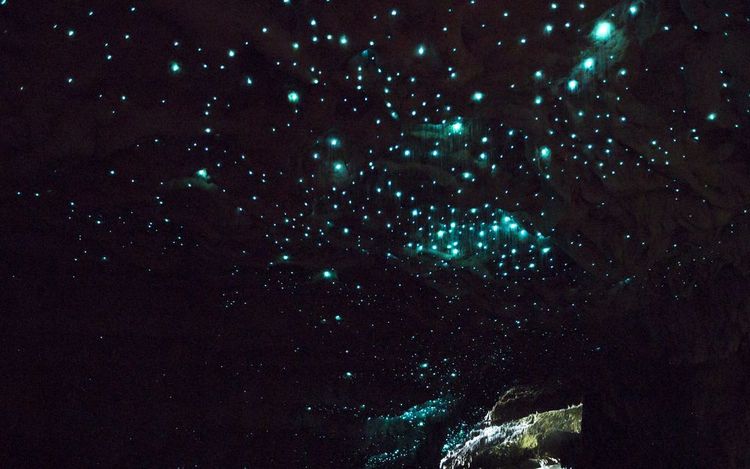
The Waitomo Caves (Waitomo Caves Road, Waitomo Caves 3977, New Zealand, rated 4.5/5 on Google for over 10,000 reviews) offer a unique magical underground experience. These millennial limestone caverns house an extraordinary colony of glow-worms, luminescent worms endemic to New Zealand. The classic guided tour culminates with a silent boat ride under a vault studded with thousands of tiny bioluminescent lights, creating the illusion of an underground fairy-tale starry night. The caves also present spectacular geological formations: stalactites, stalagmites and limestone columns sculpted by water over millions of years. For adventurers, black water rafting expeditions allow exploring underground rivers in wetsuits, letting yourself be carried by the current in darkness lit by glowworms. The less visited Ruakuri and Aranui caves offer different perspectives on this fascinating underground world.
13. Auckland and its volcanoes
New Zealand's most populous city with 1.6 million inhabitants, Auckland (New Zealand) stands out for its unique location on an isthmus between two natural harbors, surrounded by about fifty dormant volcanic cones. Nicknamed the "City of Sails" due to its very active harbor, Auckland offers a cosmopolitan mix of Pacific, European and Asian cultures. Mount Eden crater, in a park right in the city center, offers an exceptional circular panorama of the metropolis. Rangitoto Island, iconic volcano visible from the waterfront, can be visited by ferry for a hike to its summit from where the view over the Hauraki Gulf is breathtaking. The Sky Tower, 328 meters high, offers a vertiginous observation platform and even bungy jumps for the most daring. West coast beaches like Piha and Karekare seduce surfers with their powerful waves and black volcanic sand, while east coast beaches like Mission Bay offer calmer waters ideal for families.
14. Franz Josef Glacier and Fox Glacier
On the wild west coast of the South Island, the Franz Josef (Westland Tai Poutini National Park, New Zealand) and Fox (Westland Tai Poutini National Park, New Zealand) glaciers offer the rare spectacle of glaciers descending to only 300 meters altitude, surrounded by humid tropical forest. This unique proximity between ice and luxuriant vegetation creates a striking contrast. Guided ice walks allow exploring blue glacier crevasses, ice caves and ephemeral natural sculptures. Helicopter flights, though expensive, offer a spectacular perspective on these ice rivers flowing from the Southern Alps, with the possibility of landing on the immaculate snow of the upper glacier. The region receives significant precipitation, contributing to glacier feeding but making weather unpredictable. The villages of Franz Josef and Fox Glacier serve as base camps for exploring this UNESCO World Heritage region. The accelerated melting of glaciers in recent decades unfortunately testifies to climate change, making their visit all the more precious.
15. Kaikoura Peninsula and its whales
Wedged between ocean and snow-capped mountains, the Kaikoura Peninsula (Canterbury, New Zealand) is an exceptional marine sanctuary where ocean currents converge, creating an ecosystem of incredible richness. It's one of the rare places in the world where you can observe sperm whales year-round, these sea giants coming to feed in the deep marine trenches just a few kilometers from the coast. Boat excursions also offer encounters with acrobatic dusky dolphins, playful fur seals, majestic albatrosses and sometimes orcas. For those who prefer to stay dry, the seal colony at Ohau Point Stream or Point Kean offers a free and accessible spectacle. Kaikoura, whose Maori name means "crayfish meal," is also renowned for its exceptional seafood, notably local lobsters. The coastal road linking Christchurch to Kaikoura runs along the Pacific Ocean and counts among the country's most beautiful scenic routes, especially after its reconstruction following the 2016 earthquake.
16. Wanaka and the eponymous lake
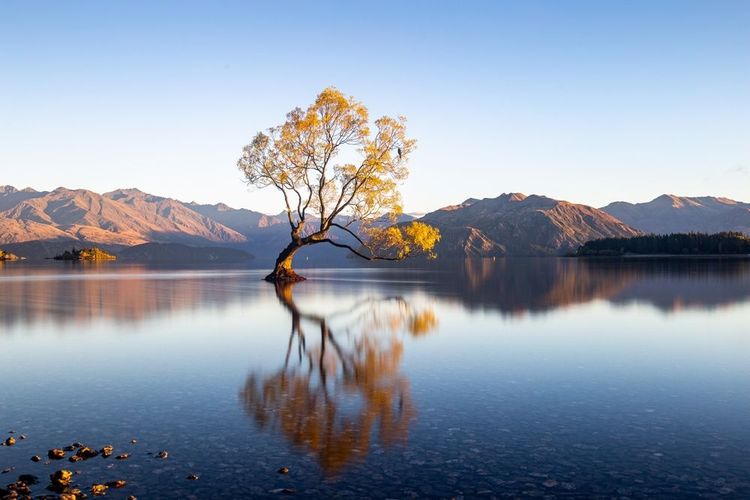
A more peaceful alternative to Queenstown's effervescence, Wanaka (Otago, New Zealand) charms with its relaxed atmosphere and exceptional natural setting. Lake Wanaka, the country's fourth largest lake, extends majestically at the foot of the Southern Alps. Wanaka's lone tree, a partially submerged weeping willow that became an Instagram icon, symbolizes the serene beauty of the place. The town serves as gateway to Mount Aspiring National Park, a hiker's paradise with its alpine peaks, hanging glaciers and wild valleys. The Roy's Peak hike, though demanding with its 1,500 meters of elevation gain, rewards the brave with an absolutely sublime 360-degree panorama of the lake and surrounding mountains. In winter, the ski resorts of Cardrona and Treble Cone attract skiing enthusiasts. The curious Puzzling World, with its labyrinths and optical illusions, offers quirky entertainment, while Cinema Paradiso offers original cinema sessions in vintage armchairs and converted cars.
17. The Pancake Rocks of Punakaiki
On the wild west coast of the South Island, the Pancake Rocks (Punakaiki, West Coast, New Zealand) constitute a spectacular geological curiosity. These stratified limestone formations, stacked like giant pancakes, have been sculpted by marine and chemical erosion over millions of years. The developed trail winds between these fascinating rocky pillars to the blowholes, natural vents where the sea rushes violently to spurt in saltwater geysers during high tides or storms. The spectacle is particularly impressive in heavy swell, when waves crash with a roar against the rocks and the blowholes roar. The short and accessible walk also crosses a native forest of nikaus, palms endemic to New Zealand. Located in Paparoa National Park, the site offers panoramas of the steep coast battered by the Tasman Sea. The surroundings house limestone caves and deep canyons for underground exploration enthusiasts. The region, less frequented than other flagship destinations, retains an authentic wild character.
18. Christchurch, the garden city in renaissance
The country's second city, Christchurch (Canterbury, New Zealand) is rebuilding with creativity and resilience after the devastating earthquakes of 2010 and 2011. The city now blends preserved Victorian architecture with bold contemporary creations. Christchurch Botanic Gardens, a true green lung in the heart of the city, justifies the "garden city" nickname with its 21 hectares of magnificent plant collections. A punting ride (flat-bottomed boat) on the Avon River that winds through the city offers a peaceful perspective. The Re:START Container Mall, a temporary shopping center built from colorful shipping containers after the earthquake, symbolizes the innovative spirit of reconstruction. Shigeru Ban's cardboard cathedral, erected as temporary replacement for the destroyed Anglican cathedral, impresses with its unique architecture. The new Riverside Market brings together local producers and restaurants in a lively gastronomic hall. Christchurch also serves as gateway to Banks Peninsula, an ancient volcano turned haven of peace with its picturesque bays and the charming French village of Akaroa.
19. The Marlborough Sounds
A complex network of drowned fjords, secret coves and rolling islands, the Marlborough Sounds (Marlborough, New Zealand) occupy the northern tip of the South Island. This indented coastal zone extends over 4,000 kilometers of coastline, creating an aquatic labyrinth conducive to pleasure boating and kayaking. Picton, the main port of the Sounds, welcomes ferries from Wellington and serves as starting point for exploring the region. The Queen Charlotte Track, one of the country's Great Walks, winds over 71 kilometers through native forest and ridges offering plunging views over the turquoise sea arms. The route can be done over several days with staggered accommodations, or in daily sections. The Sounds also house New Zealand's largest wine region, specializing in world-renowned Sauvignon Blanc. The caves of the Wairau and Awatere valleys offer tastings in a relaxing pastoral setting. The calm and sheltered waters of the Sounds constitute a paradise for dolphins, seals and seabirds.
20. Mount Taranaki
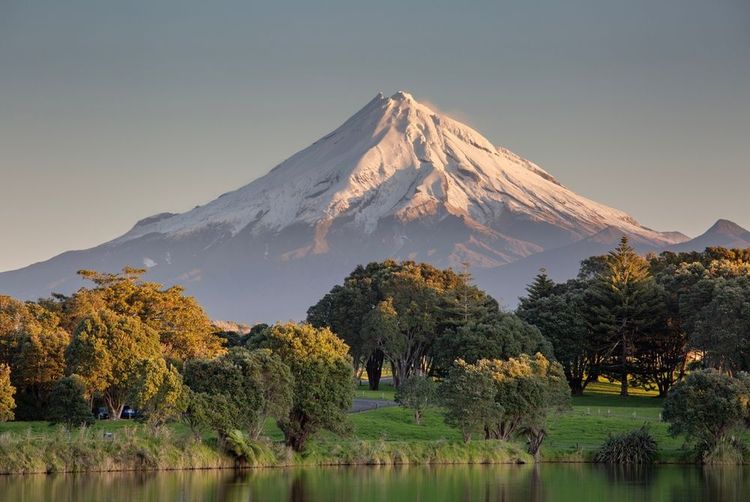
A solitary volcano whose perfectly symmetrical cone rises 2,518 meters above the west coast of the North Island, Mount Taranaki (Taranaki, New Zealand) is often compared to Japan's Mount Fuji. A sacred mountain for the Maoris, it dominates Egmont National Park, a unique ecosystem where tropical forest meets alpine landscapes. The park's perfect circular shape, visible from space, results from the protection boundary established around the volcano. Hikes in the park vary from easy walks through Goblin Forest to the demanding summit ascent, reserved for experienced and equipped mountaineers as weather conditions change rapidly. Trails cross diverse landscapes: mossy forests, roaring waterfalls, lava fields and, higher up, eternal snows. The small town of New Plymouth, at the foot of the volcano, stands out for its vibrant arts scene and remarkable gardens like Pukekura Park. The region benefits from a generous microclimate, favoring prosperous agriculture. The sunset over Taranaki's profile from the coast constitutes one of New Zealand's iconic images.
In conclusion, New Zealand reveals itself as an exceptional destination that transcends all expectations. From the dramatic fjords of Milford Sound to the snow-capped peaks of Aoraki / Mount Cook, from the paradise beaches of Abel Tasman to the volcanic landscapes of Tongariro, each place tells a fascinating geological and cultural story. The North Island and South Island offer striking but complementary contrasts, promising an incomparable diversity of landscapes and experiences on a relatively compact territory. Whether you're an adventure enthusiast, nature lover, cinema fan or seeking authentic Maori culture, these 20 must-see places constitute the foundation of a transformative journey to the antipodes. New Zealand is not just a destination, it's an invitation to reconnect with nature in its purest and most majestic form, while discovering the legendary warmth of Kiwi hospitality.
FAQ
What is the best time to visit New Zealand?
The best period extends from December to March (southern summer), with temperatures between 16°C and 24°C and long sunny days ideal for outdoor activities. However, each season has its charm: autumn (March-May) offers flamboyant colors, winter (June-August) is perfect for skiing, and spring (September-November) sees lupins blooming around glacial lakes.
How long is needed to visit New Zealand?
A minimum of two to three weeks is recommended to discover the main sites of both islands without rushing. Three weeks allow comfortably visiting the must-sees of each island, while a month offers the possibility to explore more deeply and include less touristy destinations.
Do you need a visa to visit New Zealand?
French citizens can enter New Zealand without a visa for tourist stays up to three months. You just need to request an electronic travel authorization (NZeTA) before departure and pay the tourism conservation tax (IVL). A passport valid at least three months after the return date is mandatory.
What budget to plan for a trip to New Zealand?
New Zealand is a relatively expensive destination. Budget between 70€ and 100€ per day per person in economy mode (youth hostels, homemade meals), 100€ to 150€ in intermediate mode (mid-range hotels, occasional restaurants), and over 200€ for a comfortable trip. Tourist activities and vehicle rental represent significant expense items.
What is the difference between the North Island and the South Island?
The North Island is characterized by its geothermal activity (Rotorua), active volcanoes (Tongariro), preserved Maori culture and subtropical beaches. The South Island offers more alpine and spectacular landscapes with its snow-capped mountains, glaciers, dramatic fjords and turquoise lakes. Both islands are complementary and deserve to be visited for a complete New Zealand experience.