© Shutterstock
 Votre guide Ryo
What to Do in Cascais in 2026: 18 Experiences along the Costa do Estoril
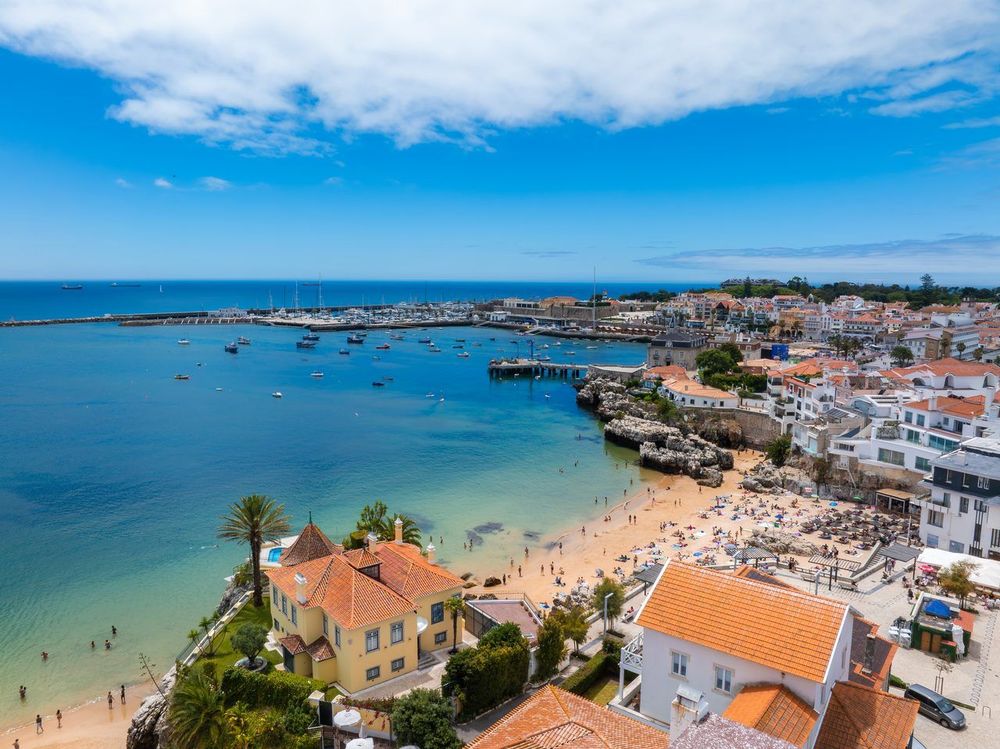
Just thirty minutes by train from Lisbon, Cascais long served as a secret garden for the Portuguese royal family before becoming the favorite seaside resort of the Lisbon bourgeoisie at the end of the nineteenth century. A century later, the town retains an aristocratic holiday feel while multiplying surf spots and terraces facing the Atlantic. What to do in Cascais depends largely on how much time you have, but between the historic center, the cliffs of the Boca do Inferno, and the beaches stretching all the way to Guincho, a single day rarely feels like enough. Before you set off, the Ryo app can already help you plan an initial reconnaissance: it offers audio-guided tours in many European cities, useful for the rest of your Portuguese stay if Cascais is just one stop among many.
This guide covers 18 experiences, from the country's most photographed lighthouse to a museum tucked inside a former library of 30,000 volumes. You will discover why Praia do Guincho has attracted kitesurfing champions since the 1980s, how a housekeeper of British origin bequeathed her art collection to the municipality, and what time to avoid the crowds at the Boca do Inferno. You will also learn why a British writer drew on the Casino Estoril for inspiration for a fictional spy who became a cultural icon. Allow one to two days for a first visit, more if you add a trip to Sintra or an afternoon in Estoril.
1. The Historic Center of Cascais (Baixa)
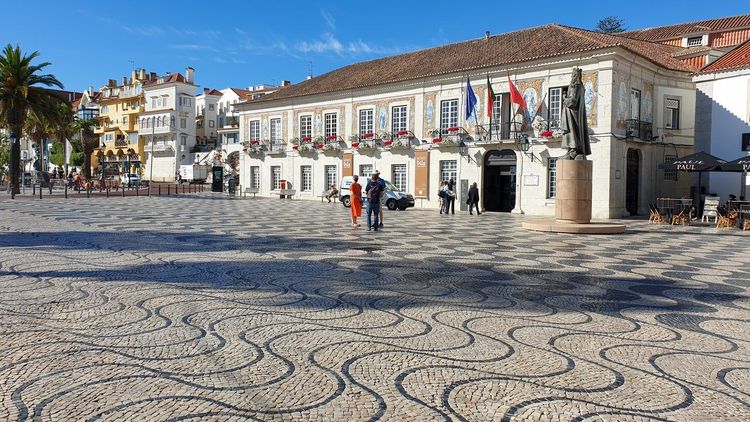
The Baixa of Cascais can be walked end to end in fifteen minutes, but it deserves far more time than a simple stroll through. Around the Praça 5 de Outubro (Praça 5 de Outubro, 2750-315 Cascais, rated 4.5/5 on Google with 1.2K reviews), colorful one- and two-story facades house ceramics shops, pastry parlors, and small fish restaurants, within a maze of pedestrian lanes closed to traffic since the 1990s. Rua Frederico Arouca concentrates most of the activity, its calçada portuguesa cobblestones drawing black-and-white waves that echo the nearby ocean at every step.
Just steps away, the small Igreja de Nossa Senhora da Assunção dates from the seventeenth century and preserves blue azulejo panels depicting biblical scenes, as well as a painted ceiling restored in the 2000s. The interior, dark and cool, contrasts with the harsh light of the surrounding lanes — a shift in atmosphere that many visitors stumble upon by chance simply while looking for shade. Shops often close between 1pm and 3pm, a rhythm inherited from the decades when Cascais remained a fishing village before the arrival of seaside tourism in the 1870s.
The neighborhood still lives to the beat of two very distinct populations: residents doing their morning shopping at the market, and visitors who flood the terraces from midday onward. This double life gives the center a different atmosphere depending on the hour — almost village-like before 10am, noticeably more touristy thereafter. Craft shops selling hand-painted ceramics typical of the Lisbon region are clustered mainly in the streets perpendicular to the main square, well away from the international chains that have set up along the shopping avenue.
Come early in the morning or late in the afternoon if possible: between 11am and 2pm, groups arriving by bus from Lisbon overwhelm the terraces of the central square and the most photographed lanes. While waiting for a dedicated audio-guided tour for Cascais, the Ryo app already lets you explore audio-guided tours available in other European capitals, handy if your trip extends beyond Portugal.
2. The Citadel of Cascais and Its Museum
Built in the sixteenth century to defend the mouth of the Tagus against maritime incursions, the Cidadela de Cascais (Avenida D. Carlos I, 2750-310 Cascais, rated 4.6/5 on Google with 1,112 reviews) has changed purpose many times: military fortress, then summer residence of King Luís I from 1870 onward, before becoming a cultural space open to the public today. The stone ramparts, still intact for several hundred meters, look directly down onto the marina and offer one of the best free views in the entire town.
Inside the enclosure, a contemporary art gallery, several craftsmen's workshops, and an upscale pousada installed in the former royal palace now coexist, with some rooms occupying the queen's former apartments. Visitors can wander freely through the inner courtyards without paying an entrance fee, and observe the seventeenth-century cannons still lined up facing the sea, aimed at the very spot where potential enemy ships once docked. Temporary exhibitions change several times a year and occupy former military storerooms that have been converted, with a program mixing contemporary photography and Portuguese design.
The Portuguese monarchy made Cascais its official summer residence under King Luís I, which explains the unusual concentration of aristocratic villas within a few hundred meters of the citadel. This royal installation, decided in large part for health reasons — the king appreciated the sea bathing recommended by his doctors — transformed a modest fishing village into a fashionable seaside resort across aristocratic Europe within just a few decades. This royal history remains little known to visitors who rush straight to the beach without pausing over the informational panels placed along the ramparts.
Allow 45 minutes for a complete visit of the exterior and the gallery, longer if an exhibition catches your attention or if you take time to sit on the ramparts facing the ocean. Access to certain areas sometimes closes without notice during private events or weddings organized in the gardens, so it is better to check on arrival rather than planning your visit solely from a distance.
3. The Marina of Cascais
Inaugurated in 1999 on former port land, the Marina de Cascais (Rua Visconde da Gandarinha, 2750-642 Cascais, rated 4.5/5 on Google with 8,494 reviews) has 650 berths and remains one of the favorite meeting points for visitors in the evening. The wooden quays run alongside a row of restaurants and bars, with a direct view of the citadel lit up at dusk — a particularly photogenic setting between 7pm and 8pm in summer. During the day the atmosphere is calmer, and many visitors stop simply to watch sailboats maneuvering at the basin entrance, a free spectacle appreciated by children and sailing enthusiasts alike.
Several operators offer boat trips from the marina to the Boca do Inferno or the Guincho cliffs, generally in late morning when the sea is calmer and the light more favorable for photographs of the sea caves. Expect to pay between 25 and 40 euros for an hour of coastal sailing, a price that varies with the season and the size of the boat. At weekends, the marina also serves as a departure point for deep-sea sport fishing excursions — a lesser-known activity among passing tourists but very popular with local residents on Saturday mornings. If you plan to stay for dinner, note that the best-positioned tables facing the illuminated citadel are often booked several days in advance in summer: it is worth calling in the afternoon rather than showing up in the evening, when the queue stretches along the pontoons.
4. The Santa Marta Lighthouse and Its Museum
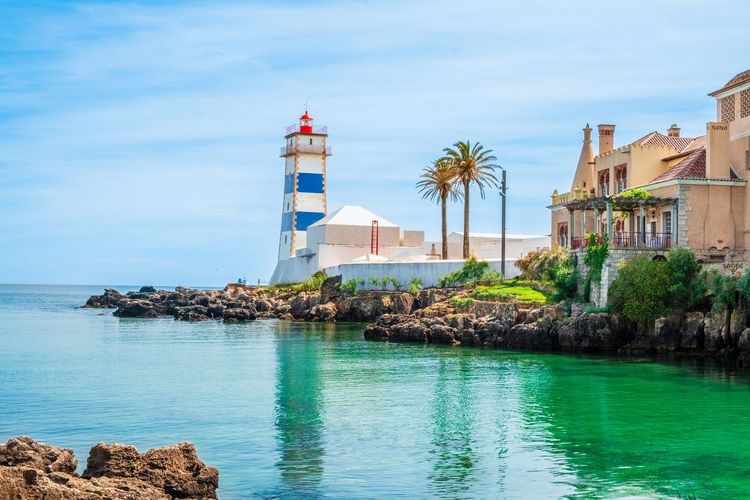
Painted in distinctive red and white stripes visible from a distance, the Farol de Santa Marta dates from 1868 and remains in operation, making it one of the rare Portuguese lighthouses that is both still functional and open to visitors. The former keeper's house, attached to the tower, now houses a small museum dedicated to the history of maritime signaling along the Portuguese coast, with antique nautical charts and period lighthouse lenses displayed behind glass.
The museum terrace looks directly out over the Atlantic and becomes, at the end of the day, one of the best vantage points for watching the sunset without mingling with the crowds on the main seafront. Admission is inexpensive, around 3 euros, and the visit takes only about twenty minutes to cover the two exhibition rooms. Many visitors stop here on the way back from the Boca do Inferno, a ten-minute walk along the coast, which makes it easy to combine both stops without any extra detour. The lighthouse is part of a municipal museum complex that also includes the neighboring Casa de Santa Maria (Avenida Rei Humberto II de Itália, 2750-461 Cascais, rated 4.5/5 on Google with 1,003 reviews); bring good shoes, as the coastal path leading to it from the center runs along rocks that can be slippery after a rain shower.
5. The Town-Center Beaches
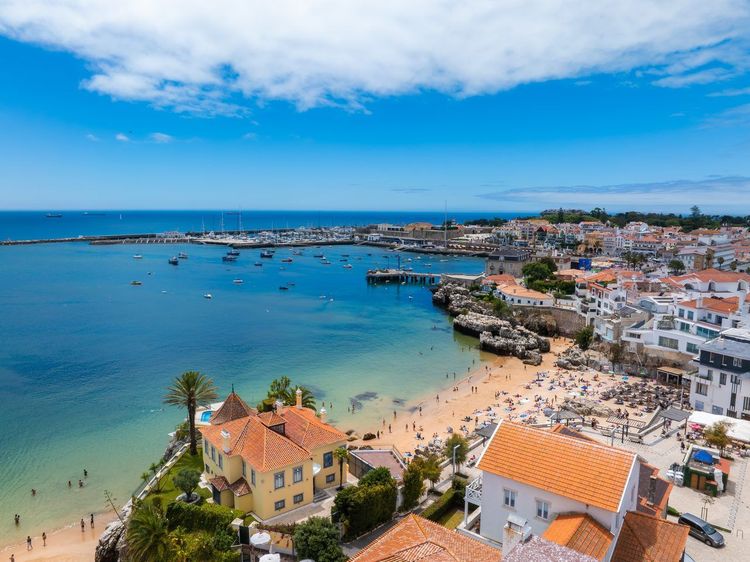
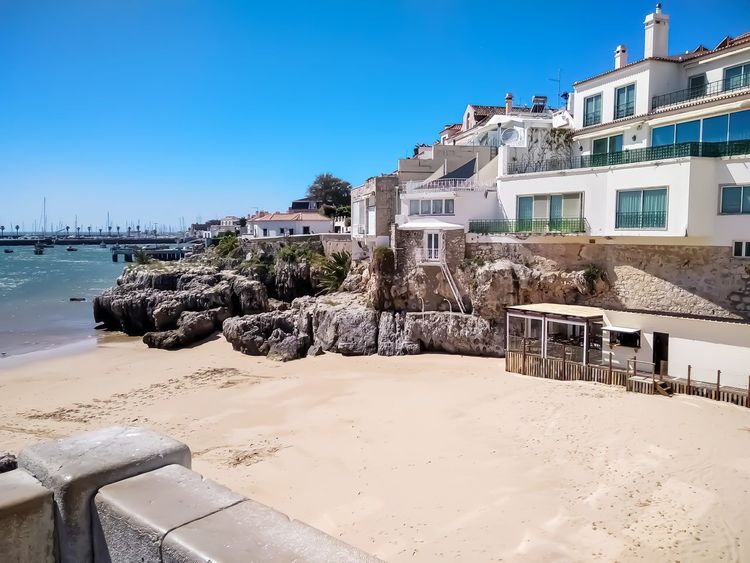
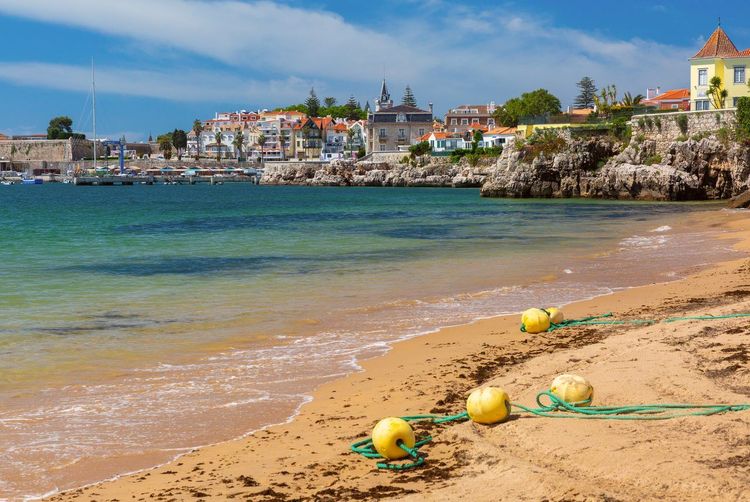
Cascais has several small beaches right in the town center, separated from one another by rocky outcrops that create a series of independent little coves. Praia da Rainha (Avenida Dom Carlos I, 2750-310 Cascais, rated 4.5/5 on Google with 3,402 reviews), the smallest, takes its name from Queen Amélia, who came here to bathe discreetly in the early twentieth century, shielded from public view by its compact size. Its modest dimensions — barely 50 meters of sand — mean it is often packed by 10am in midsummer, despite its undeniable charm and its position directly below the citadel gardens.
A few minutes' walk away, Praia da Conceição offers more space and generally calmer waters, popular with families with young children and more relaxed swimmers. Praia da Ribeira, right in front of the Baixa, serves mainly as a spot for a stroll and a photo rather than a prolonged swim, as its proximity to the fishing harbor makes it less clear than its neighbors. None of these beaches can match the waves at Guincho: the water here stays sheltered by the shape of the bay, ideal for a peaceful dip after stepping straight out of the historic center without needing any transport.
Arrive before 9:30am in high season if you want to lay your towel down without a long search for a free spot. Public showers and lifeguard posts operate from June to September only; outside that period, swimming is at the swimmer's own risk. Local families tend to favor Praia da Conceição on weekdays, when tourists concentrate more heavily on Praia da Rainha for its reputation and its immediate proximity to the citadel.
6. The Casa de Santa Maria
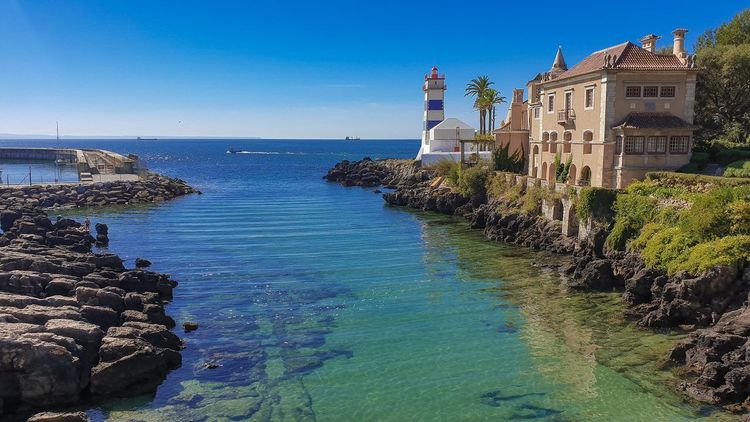
This Art Nouveau villa built in 1902 by architect Raul Lino for the Count of Foz remains one of the most photographed facades in Cascais, even though most visitors are unaware that the interior can also be visited by reservation.
Inside, azulejo panels illustrating the legend of Dom Sebastião cover several rooms — a work attributed to local craftsmen from the early twentieth century and remarkable for the refinement of its blues. The villa is visited only in small groups on limited time slots, which explains its relatively low attendance compared to the town's other museums. Book at least the day before in high season, as places go quickly despite the site's low profile among foreign visitors. Together with the nearby Santa Marta lighthouse, the house forms a small heritage trail that the municipality has laid out along the coastline: on foot, allow barely five minutes between the two — an ideal transition between the domestic architecture of the early century and the maritime history of the coast.
7. The Museu Condes de Castro Guimarães
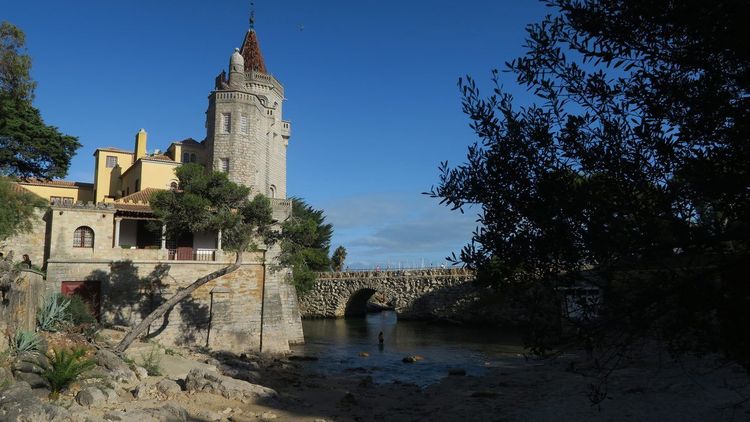
Set in a Neo-Manueline manor built in 1900 at the tip of a small rocky peninsula, the Museu Condes de Castro Guimarães (Avenida da República, 2750-320 Cascais, rated 4.6/5 on Google with 729 reviews) preserves the private collection of Count Jorge O'Neill and his successor, the Count of Castro Guimarães, who bequeathed the entire estate to the municipality in 1927. The ground-floor library alone holds more than 30,000 volumes, including several illuminated manuscripts predating the sixteenth century, kept in climate-controlled display cases.
The rooms retain their original furnishings, blending Indo-Portuguese furniture brought from Goa with eighteenth-century French pieces — a mixture of styles quite rare for a manor of this size. The crenellated tower, visible from the nearby beach, serves as a backdrop for many wedding photographs on summer weekends, to the point that certain visiting time slots are temporarily reduced. The garden surrounding the museum, planted with century-old palm trees and succulents adapted to the coastal climate, remains freely accessible even when the museum itself is closed.
Allow one hour for a full visit with the audio guide provided at reception, available in Portuguese and English only, with no French version at present. The building closes on Mondays, like most of the town's municipal museums — a detail worth checking before planning your weekly itinerary. Few hurried visitors stop here, making it one of the quietest spots in the entire Cascais center, even at the height of the summer tourist season.
8. Parque Marechal Carmona
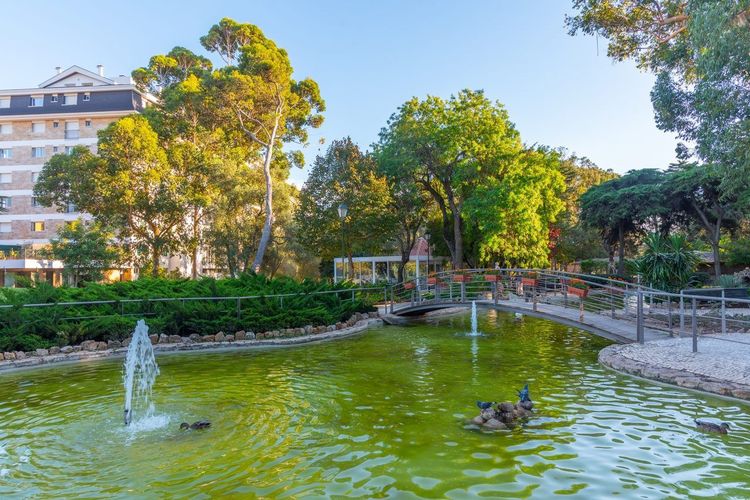
Once the private park of the Count of Castro Guimarães before being handed over to the municipality in 1943, Parque Marechal Carmona (Avenida Rei Humberto II de Itália, 2750-461 Cascais, rated 4.6/5 on Google with 10,049 reviews) offers nearly 8 hectares of welcome shade in the height of summer, planted with species imported during the estate's construction. A central pond is home to ducks and a few swans, around which local families come to picnic on Sundays on the shaded lawns.
A small enclosure also houses peacocks and a few pheasants — a free curiosity particularly appreciated by children, who often linger here longer than in the neighboring museums. The recently renovated playground stays open until sunset and attracts an almost exclusively local clientele. It is one of the few places in Cascais where you encounter more Portuguese families than foreign tourists, a useful indicator for those looking to step off the beaten track.
9. The Casa das Histórias Paula Rego
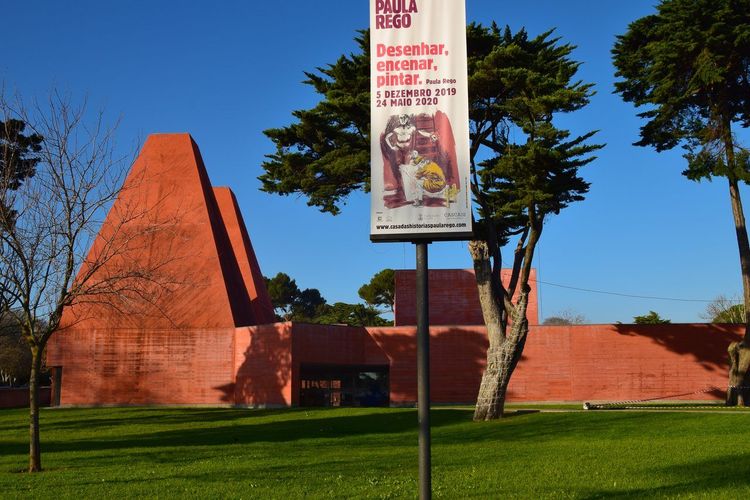
Designed by architect Eduardo Souto de Moura, winner of the Pritzker Prize in 2011, this museum — recognizable by its two pyramidal towers of red brick — houses the work of Portuguese painter Paula Rego, one of the most internationally acclaimed artists of her generation. The building itself, completed in 2009, is worth the visit independently of whatever exhibitions are on show, its architecture standing in such sharp contrast with the rest of the town's historic heritage.
Paula Rego's canvases, often dark and narrative, draw on Portuguese folk tales and domestic scenes treated with an almost theatrical tension — a style that earned the artist belated but lasting recognition in both the United Kingdom and Portugal. The museum also preserves works by her husband, British painter Victor Willing, presented in a more intimate room on the first floor. A small bookshop offers titles on contemporary Portuguese art that are difficult to find elsewhere in the region and frequently sought out by knowledgeable enthusiasts.
If you enjoyed the visit, the Ryo app also features tours dedicated to contemporary art in other European cities — a way to carry the discovery forward once you are back from your trip. Allow 45 minutes to an hour for a full visit, longer if a temporary exhibition occupies the main wing of the building. The museum café, on a terrace, overlooks a sculpture garden with free access — a good spot for a break before heading back into the town center.
10. The Boca do Inferno
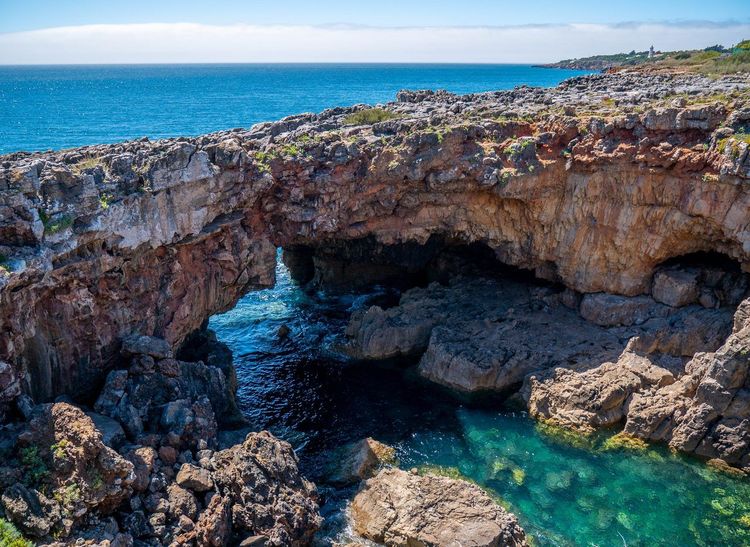
This natural chasm carved by marine erosion into the cliff takes its name — literally "the mouth of hell" — from the noise and power of the waves that crash into it when the sea is rough. The Boca do Inferno (Avenida Rei Humberto II de Itália, 2750-800 Cascais, rated 4.6/5 on Google with 3,712 reviews) lies about 2 kilometers from the town center, reachable on foot along the seafront or in ten minutes by car from the citadel.
A persistent local legend holds that British occultist Aleister Crowley staged his own disappearance at this spot in 1930, before reappearing three weeks later in Berlin under a false identity. The anecdote remains one of the most frequently told by the town's guides, even though its historical accuracy is debated among local historians. A small craft market sets up on some days in the adjacent car park, selling ceramics and jewelry at more reasonable prices than the shops in the town center — a good spot for a souvenir without breaking the bank.
Come preferably during rough seas — ideally after a winter storm — to watch plumes of spray soar well above the safety barrier installed along the path. In calm weather, the site remains attractive but loses much of its intensity and spectacular reputation. No railing protects certain slightly off-center viewpoints on the flanks of the chasm, so caution is essential with young children or in strong winds.
11. Praia do Guincho and Cycling along the Coast
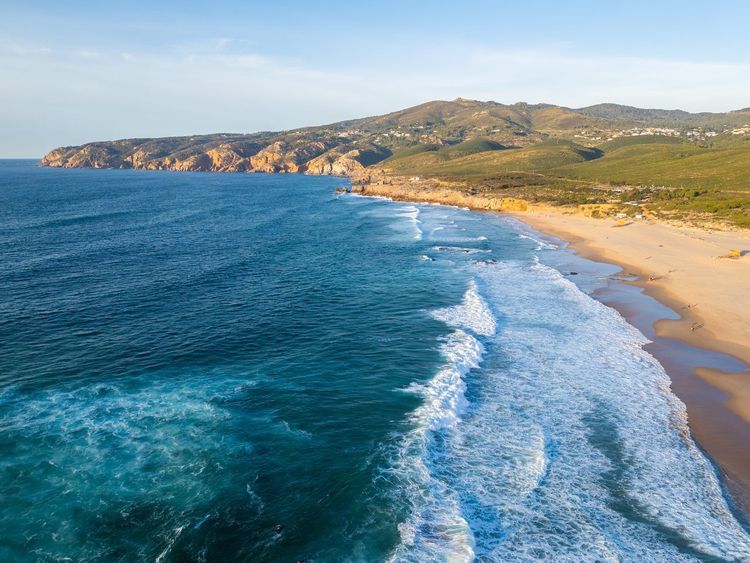
Nine kilometers north of Cascais, Praia do Guincho (Estrada do Guincho, 2750-053 Cascais, rated 4.7/5 on Google with 4,922 reviews) unfurls nearly 3 kilometers of sand between dunes and cliffs, within the Sintra-Cascais Natural Park. The wind blows here almost constantly — a characteristic that has built its worldwide reputation rather than deterred visitors, to the point that the beach attracts surfers from across Europe from the first days of spring.
This constant wind has drawn the world's top windsurfers and kitesurfers since the 1980s, and the beach hosted several rounds of the Windsurf World Cup in the 1990s — a legacy still claimed by the watersports schools operating on site. Those schools offer introductory sessions from around 60 euros for a half-day, equipment included, with instructors who generally speak English and sometimes French. Non-initiates often settle for watching the spectacle from the wooden restaurants built directly on the sand — a setting spectacular enough on its own to justify the trip.
The cycle path that runs along the coast from Cascais, known locally as the Ecopista, lets you reach Guincho in just under an hour of easy pedaling, with ocean views for almost the entire route and a few stretches through small pine forests. Several rental shops in the town center offer bikes by the day for around ten euros, with no advance booking required outside of August. The route passes the Boca do Inferno and then follows low cliffs before descending toward the dunes — a ride accessible even to infrequent cyclists, thanks to its generally moderate elevation change.
Plan to arrive at Guincho in the late afternoon: the wind drops slightly around 6pm and the terraces facing the sand offer one of the finest sunsets in the entire Lisbon region. Many visitors cycle there and take the bus back — a practical option if tiredness or a strong headwind makes the return journey less appealing. A free car park borders the beach, but it fills very quickly on summer weekends: arriving before 10am or after 5pm remains the best way to avoid circling for a long time in search of a space.
12. Cabo da Roca, the Westernmost Point of Europe
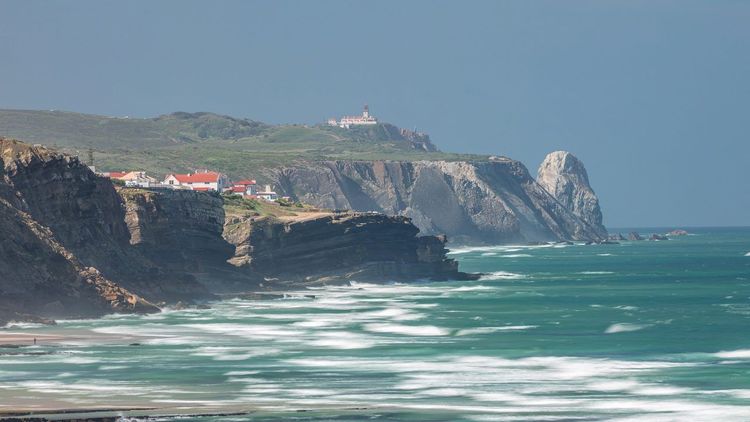
About twenty minutes by car from Cascais, Cabo da Roca (Estrada do Cabo da Roca, 2705-001 Colares, rated 4.8/5 on Google with 69,073 reviews) officially marks the westernmost point of the European continent, at 38°47' north latitude. An eighteenth-century lighthouse and a stone cross engraved with a verse by the poet Luís de Camões have marked the exact spot for generations of visitors.
The engraved verse, "Onde a terra se acaba e o mar começa" — loosely translated as "where the land ends and the sea begins" — captures the atmosphere of the place rather well: sheer 140-meter cliffs, strong wind almost year-round, and a near-total absence of tall vegetation capable of withstanding the salt spray. A small post office issues, for a few euros, a certificate attesting to your visit to the westernmost point of Europe — a souvenir appreciated even by travelers who are not usually drawn to that sort of tourist keepsake.
Dress warmly even in midsummer: the temperature drops noticeably as soon as the wind picks up, and the site, fully exposed to the west, is swept by gusts almost continuously. The small café next door provides a warming galão before heading back toward Sintra. Buses from Cascais serve Cabo da Roca in 30 to 40 minutes depending on the timetable, with less frequent service outside the season — worth checking before you leave. Many visitors combine this stop with a trip to Sintra, as both sites lie on the same road axis and allow a logical loop in a single half-day.
13. The Seafront Promenade from Cascais to Estoril
The Passeio Dom Luís I (Avenida Marginal, 2765-191 Estoril, rated 4.5/5 on Google with 512 reviews) connects Cascais to Estoril along about 3 kilometers, hugging the coast without ever straying from the sea. This paved promenade, lined with palm trees and stone benches installed in the early twentieth century, can be walked or cycled year-round regardless of the season.
The route passes through several small coves and runs alongside Praia de Tamariz, one of Estoril's most popular beaches, before reaching the casino seafront. Allow 45 minutes of easy walking, more with regular photo stops facing the villas that line parts of the route. The sunset, seen from any point along the promenade, ranks among the most photographed moments by visitors to the region, particularly from the benches located at the halfway point. The promenade is entirely flat and accessible to pushchairs and wheelchairs, making it one of the easiest outings in the area with young children; several kiosks along the route sell drinks and ice cream in season, handy for breaking the walk at Praia de Tamariz, where you can also swim before setting off again.
14. Casino Estoril
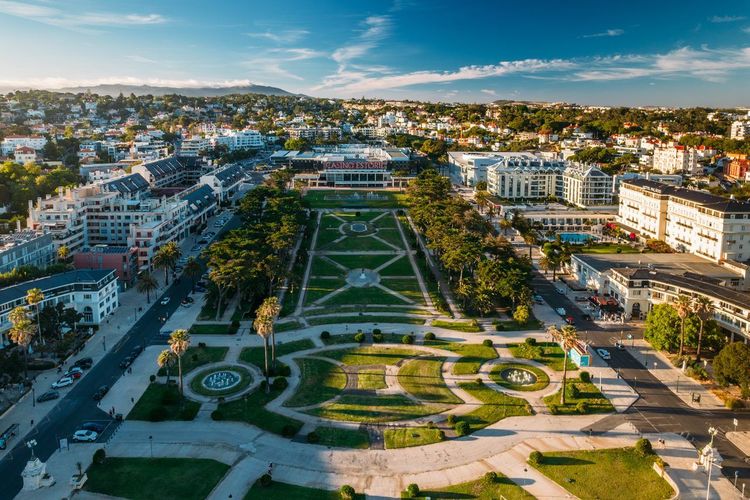
Opened in 1916 and rebuilt in the 1960s, Casino Estoril (Praça José Teodoro dos Santos, 2765-191 Estoril, rated 4.4/5 on Google with 14,599 reviews) lays claim to the title of Europe's largest casino by gaming floor area. Its reputation extends far beyond Portugal: British writer Ian Fleming, who stayed here during the Second World War when the town was teeming with spies from every side, is said to have drawn on it to create the world of James Bond. The town of Estoril, neutral yet populated by agents of both camps, is thought to have directly inspired the atmosphere of his first novel, Casino Royale, published in 1953.
Entry to the gaming rooms requires a modest admission fee and the presentation of an identity document, but the surrounding gardens and reception hall can be visited freely without any formalities. Cabaret shows and concerts take place regularly in the evenings, with a program that changes with the seasons and is best checked online before heading over. The complex also houses restaurants, an auditorium, and temporary exhibition spaces, meaning you can spend an entire evening there without ever approaching a gaming table. The gardens separating the casino from the sea are illuminated after dark and make a pleasant stopping point on the promenade toward Cascais, even for visitors who have no interest in gambling.
15. The Municipal Market (Mercado da Vila)
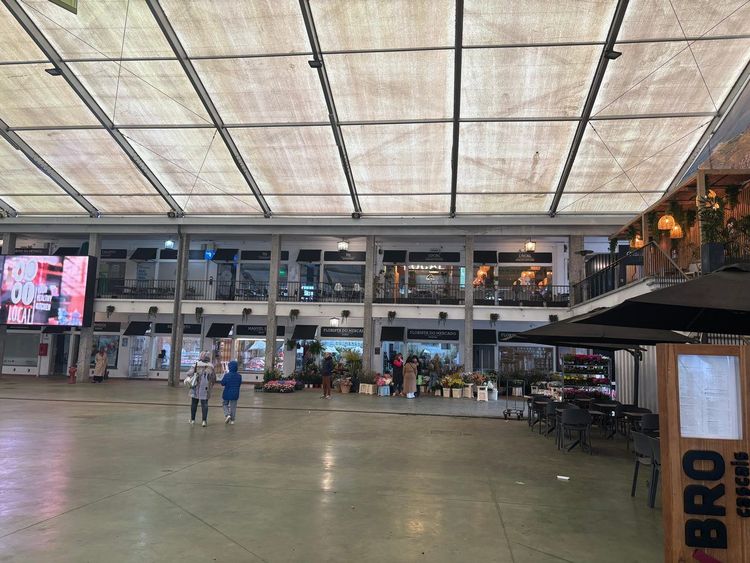
The Mercado da Vila (Rua Padre Moisés da Silva, 2750-388 Cascais, rated 4.4/5 on Google with 11,390 reviews) opens every morning, but it is on Wednesdays and Saturdays that the fish and fruit stalls reach their full liveliness. You will find sardines, octopus, and swordfish caught the same morning, sold directly by local fishmongers without any middleman.
The fruit stalls also offer produce less common in northern Europe, such as loquats or prickly pears depending on the season, often sold at very reasonable prices compared to tourist supermarkets. Few foreign visitors venture here, making it a good place to observe everyday life in Cascais well away from the signposted circuits of the historic center. Refurbished during the 2010s, the building now blends traditional stalls with a few food counters where you can eat the fish bought just a few meters away on the spot — a formula very popular with locals on Saturday lunchtime. Arrive before 1pm if you are after fish: the best catches go early, and by afternoon the atmosphere fades considerably once the fishmongers have packed up.
16. Where to Eat in Cascais
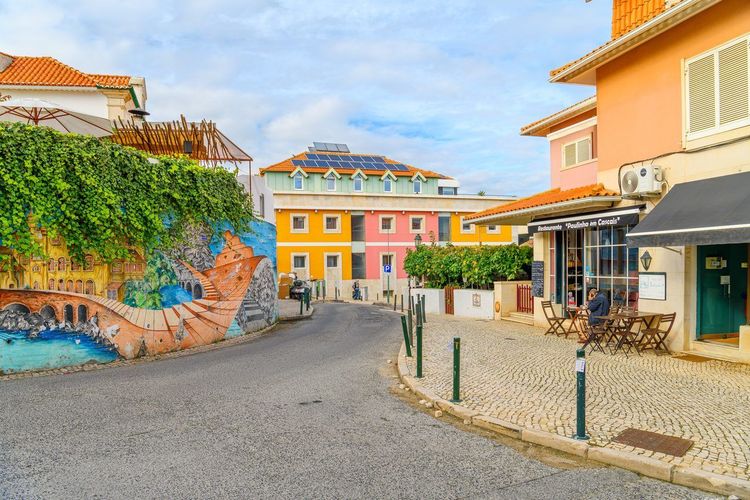
Cascais's gastronomic reputation rests first and foremost on its seafood, served simply and unfussily in small family-run tabernas handed down through several generations. Portuguese-style grilled fish, dressed with olive oil and lemon, remains the most-ordered dish on the seafront terraces, typically accompanied by steamed potatoes and simple vegetables.
For something sweet, Santini (Avenida Valbom 28F, 2750-508 Cascais, rated 4.5/5 on Google with 3,713 reviews), the oldest ice cream parlor in the region, open since 1949, continues to draw a regular queue outside its historic shop, summer and winter alike. Its signature flavors — notably chocolate and pineapple — have remained unchanged for decades, following the original Italian family recipe passed down without major alteration through the generations.
The tabernas in the town center generally serve petiscos — the Portuguese equivalent of tapas — to share among several diners for around fifteen euros per person on average. Piri-piri grilled chicken, often ordered as takeaway, is also a local staple, particularly at the small rotisseries near the municipal market where prices remain well below those on the seafront. The most sought-after restaurants are fully booked by 8pm in summer, so it is worth reserving or eating a little earlier to avoid the wait.
If you are looking for better value than on the seafront, move two or three streets inland: prices drop noticeably as soon as you lose the direct view of the ocean, with no notable loss in the quality of what is served. This simple rule applies to most coastal towns in Portugal, but it holds particularly true in Cascais, where the price gap between the first and second row of restaurants can reach 30 to 40 percent.
17. Day Trip to Sintra from Cascais
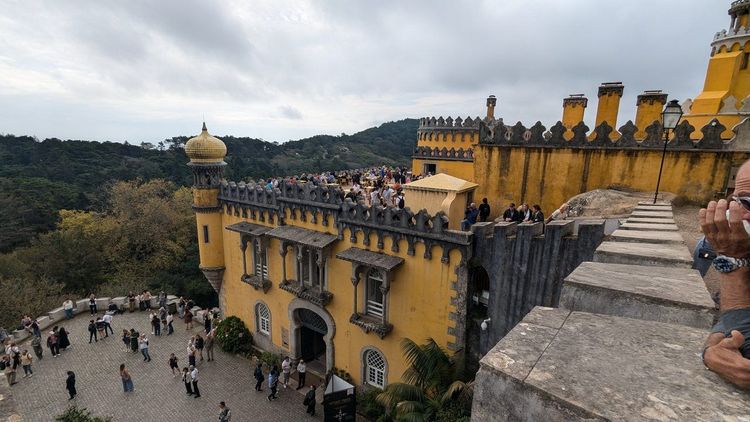
A UNESCO World Heritage Site, Sintra is about 30 minutes by car or bus from Cascais — a distance that makes it an easily manageable half-day excursion for those who do not have a full day to spare. The Palácio Nacional da Pena, a colorful nineteenth-century Romantic palace perched on a wooded hilltop, remains the town's most visited monument and one of the most photographed in the country.
The Quinta da Regaleira (Rua Barbosa do Bocage 5, 2710-567 Sintra, rated 4.7/5 on Google with 40K reviews), with its spiral initiatic well and esoteric gardens filled with Masonic symbols, often rounds off the visit for travelers who have a full day to devote to Sintra. The two sites are rarely visited on the same day without fatigue, so it is better to choose a clear priority according to your interests — royal architecture on one hand or mysterious gardens on the other.
Sintra does not yet have a direct rail link from Cascais: you generally need to go via Lisbon or take a regional bus, which adds a good hour to the journey compared with a direct departure from Cais do Sodré station. If your trip continues beyond the Lisbon region, the Ryo app already offers audio-guided tours in several historic European cities — a useful resource for planning the next stages of your journey once Portugal is behind you. Book your tickets for the Palácio da Pena online in advance: on-site queues can easily exceed one hour in high season, especially between 11am and 3pm.
18. Water Sports: Surfing, Sailing, and Kitesurfing
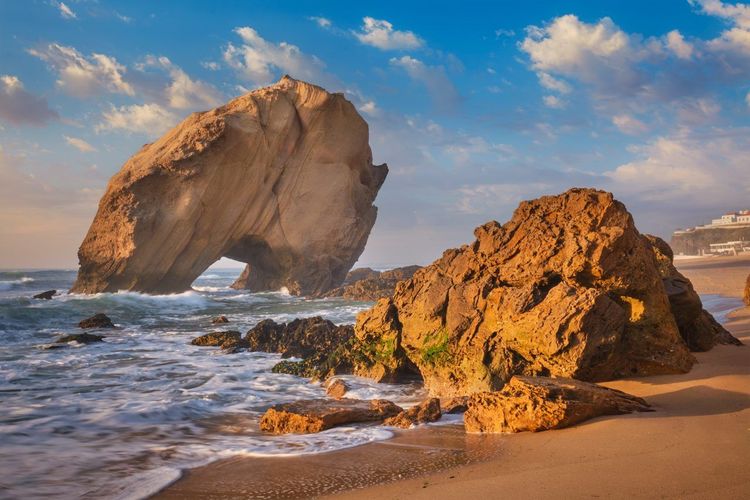
Between the calm waters of the marina and the powerful waves of Guincho, Cascais and its surroundings cover virtually the entire spectrum of water sports, accessible to beginners and experienced practitioners alike. Surf schools, concentrated mainly around Guincho and Praia do Abano, welcome complete beginners as well as experienced surfers looking for more technical waves at spots reserved for the initiated.
Sailing is practiced mainly from the marina of Cascais, where several clubs offer half-day or week-long courses, with or without a skipper depending on your level and budget. Kitesurfing, meanwhile, is the preserve of Guincho, whose regular wind draws practitioners from across Europe between April and September — the period during which conditions remain most stable. Expect to pay between 50 and 80 euros for a first supervised initiation, equipment provided, a reasonable budget compared with other renowned spots on the continent. For families, several clubs also organize multi-day camps during school holidays, a good way to make progress without starting from scratch each morning. Always check the flag and the lifeguards' instructions before entering the water at Guincho: the currents there are notoriously strong, and even good swimmers can be caught off guard by the power of the backwash when the wind picks up in the early afternoon.
FAQ
How long does it take to visit Cascais?
A full day is enough to cover the historic center, the citadel, and the Boca do Inferno. Allow two days to add Guincho, a trip to Estoril, and more time on the beaches. Three days or more if you include Sintra and Cabo da Roca at a relaxed pace, taking advantage of the museums on any rainy days.
Can you visit Cascais and Sintra in a single day?
Yes, but the day will be packed: allow about 30 minutes of travel between the two towns, plus 3 to 4 hours on the ground in Sintra to visit at least one palace properly. Starting early in the morning is essential to avoid the queues at the Palácio da Pena, which grow quickly after 10am.
What can you do in Cascais when it rains?
Indoor museums take over: the Museu Condes de Castro Guimarães, the Casa das Histórias Paula Rego, and the citadel offer several hours of sheltered exploration. The municipal market and the tabernas in the center are also a comfortable option on rainy days, as is a long break in one of the pastry shops in the Baixa.
Can you visit Cascais on foot?
The historic center, the citadel, the marina, and the central beaches can all be reached on foot in under 20 minutes. For Guincho or the Boca do Inferno, opt for a bicycle, the local bus, or a car instead, as the distance becomes long on foot in intense heat, especially with young children.
Where to eat in Cascais?
The tabernas around the municipal market offer the best value for grilled fish and petiscos. For something sweet, the Santini ice cream parlor has been a historic reference since 1949. Move two or three streets back from the seafront terraces for noticeably more reasonable prices.
How do you walk from Cascais to Estoril?
The Passeio Dom Luís I promenade connects the two towns along about 3 kilometers of paved seafront, walkable in 45 minutes at a relaxed pace. The route passes Praia de Tamariz before reaching the Casino Estoril, with no significant elevation change along the entire path.
Is Cascais worth a day trip from Lisbon?
Yes: the train journey takes only 30 to 40 minutes from Cais do Sodré station, with a departure roughly every 20 minutes throughout the day. The town combines beaches, royal heritage, and easy access to Sintra and Cabo da Roca, making it a particularly rewarding day trip for anyone staying in Lisbon.
Cascais encapsulates several facets of Atlantic Portugal on its own: a royal past still visible in its villas and citadel, beaches ranging from quiet coves to world-renowned surf spots, and an ideal position for day trips to Sintra or Estoril without passing back through Lisbon. Whether you have a single day or a long weekend, the town lends itself to exploration on foot, by bicycle, or a combination of both depending on the weather and your travel pace.
If your trip continues to other European cities, keep the Ryo app close at hand: its audio-guided tours already cover many destinations and usefully complement a Portuguese escape built around Cascais, Estoril, and Sintra.