
Créé par Romane, le 7 mai 2026
Votre guide Ryo
© Shutterstock
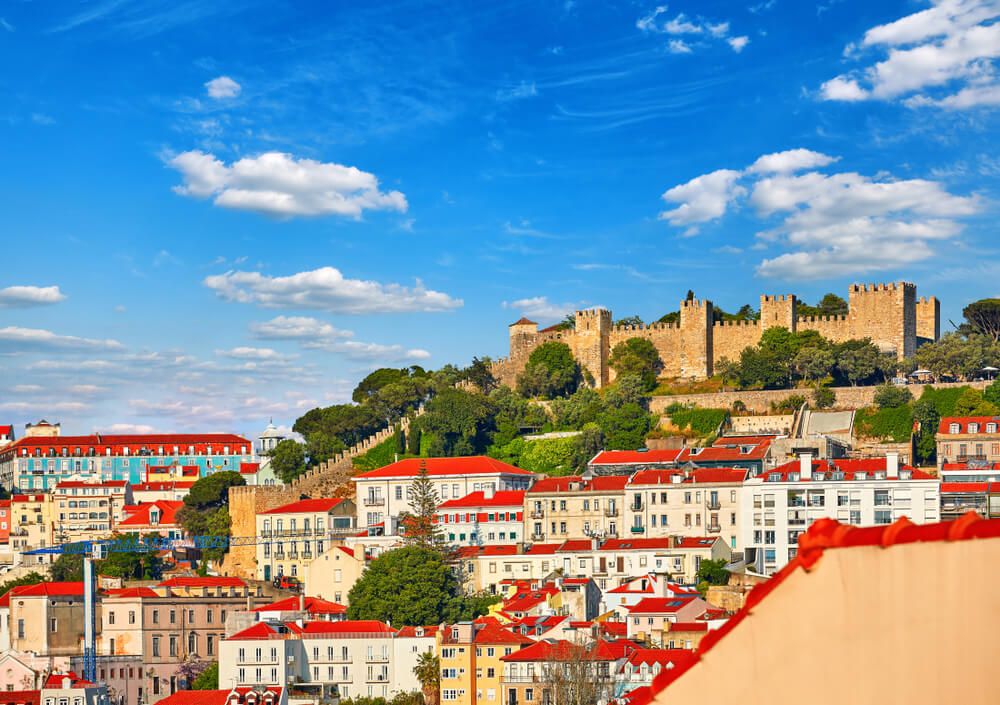
Majestically perched on one of Lisbon's seven hills, Saint-Georges Castle (Castelo de São Jorge in Portuguese) embodies the soul and history of the Portuguese capital. This millenary fortress, witness to successive conquests and urban transformations, offers visitors much more than a simple tourist visit: it's a true journey through time that unfolds in the heart of the Alfama district. Between medieval ramparts, archaeological remains and breathtaking panoramas over the Tagus, Saint-Georges Castle stands as one of the must-see attractions for anyone wishing to visit Lisbon. Prepare to discover this emblematic monument that has dominated the city for more than a thousand years.
How to get to Saint-Georges Castle?
Saint-Georges Castle is located at the top of the Alfama hill, at the following address: R. de Santa Cruz do Castelo, 1100-129 Lisboa, Portugal (rated 4.5/5 on Google for over 95,000 reviews). Several options are available to reach this emblematic monument from downtown Lisbon. The bravest visitors can walk there by crossing the picturesque streets of the Alfama district, a climb of about 15 minutes from Praça do Comércio that will immerse you in the authentic atmosphere of Lisbon's historic neighborhoods.
For those who prefer public transport, the 28E tram remains the most charming option, even if it's often crowded with tourists. You can get off at the Miradouro de Santa Luzia stop and walk a few minutes to the castle. Bus lines 737 (from Praça da Figueira to the Castelo stop) and 12E are also excellent alternatives. If you use the metro, get off at Rossio or Martim Moniz stations (green line), then allow about 10-15 minutes of uphill walking. Taxis and ride-sharing services are available throughout the city and can drop you directly at the castle entrance. For a typically Lisbon experience, tuk-tuks available in the Baixa districts or near Rossio will allow you to go up effortlessly to the top while enjoying a picturesque ride.
Opening hours and prices for Saint-Georges Castle
Opening hours
Saint-Georges Castle in Lisbon is open all year round, but hours vary by season. From March to October, the monument welcomes visitors from 9am to 9pm, with last admission at 8:30pm. During November to February, hours are reduced: the castle opens from 9am to 6pm, with last entry allowed at 5:30pm. These extended hours during high season allow you to enjoy the sunset from the ramparts, an absolutely magical spectacle over Lisbon and the Tagus.
Ulysses Tower and its camera obscura are accessible daily from 11am to 1pm as part of a guided tour included in the entrance ticket. The archaeological museum located within the grounds follows the same general hours as the castle. It's important to note that the site closes on certain holidays: January 1st (New Year), May 1st (Labor Day), December 24th (Christmas Eve with limited access), December 25th (Christmas) and December 31st (early closure at 1pm).
Prices
The standard adult ticket costs €15 and allows full access to the castle, ramparts, gardens, archaeological site and Ulysses Tower. Children under 13 get free admission, under adult supervision. Young people aged 13 to 25 can enjoy a reduced rate of €7.50, while seniors over 65 and people with disabilities pay €12.50. Companions of disabled people enter free.
Guided tours and educational workshops are offered as an additional €4 supplement, available in several languages and at different times. It's strongly recommended to buy your tickets online on the castle's official website to avoid queues, particularly during high tourist season. This advance booking also guarantees your entry slot and allows you to efficiently plan your visit to Lisbon. The castle is included or offers a discount in certain Lisbon tourist passes, remember to check the conditions before your purchase.
Download the audio-guided circuit to discover Lisbon on foot and independently
For a complete and immersive exploration of the Portuguese capital, discover our audio-guided circuit of Lisbon. This carefully designed route takes you through the city's emblematic neighborhoods, from Alfama to Chiado, via Baixa and Belém. With 24 commented points of interest, you can visit Lisbon independently, at your own pace, while benefiting from captivating historical explanations and lesser-known anecdotes. The itinerary naturally includes Saint-Georges Castle among the city's must-sees. Download the Ryo app and let yourself be guided through the cobbled streets of this fascinating city where every stone tells a story.
1. The fascinating history of Saint-Georges Castle
Ancient and Moorish origins
The history of Saint-Georges Castle in Lisbon goes well beyond the Middle Ages. The first fortifications on this strategic hill date back to Roman times, even to the 7th century BC, when Phoenicians and Celts were already settling on the banks of the Tagus. However, it was in the 11th century that the castle truly took shape under Moorish domination. The Moors, who then controlled the Iberian Peninsula, built an imposing defensive fortress to protect their alcáçova (citadel) and monitor the river mouth. This strategic position made it an essential control point for maritime trade and the defense of the city.
Moorish architecture was characterized by its advanced fortification techniques, with thick walls, watchtowers and an ingenious system of cisterns to guarantee water supply during prolonged sieges. These defensive elements testify to the military expertise of the era and the strategic importance of the site. The remains from this period, notably the perfectly preserved Moorish cistern, illustrate the sophistication of Muslim defensive architecture and its adaptation to the steep terrain of the hill.
The Christian Reconquest and royal symbol
The major turning point in the history of Saint-Georges Castle occurred on October 25, 1147, when Portugal's first king, Afonso Henriques, seized the fortress after a siege of several months. This victory, achieved with the help of crusaders from northern Europe, marked a crucial moment in the Christian Reconquista of the Iberian Peninsula and in the assertion of the young kingdom of Portugal against Muslim kingdoms. The castle then became the symbol of the nascent Portuguese royal power.
From the 13th century until the 16th century, the castle was transformed into a royal residence, known as the Alcova. Portuguese monarchs established their court there, held diplomatic audiences and organized state ceremonies. It was King João I who, in 1371, decided to dedicate the castle to Saint George, patron of England, to strengthen the historic alliance between Portugal and England. This alliance, one of the oldest diplomatic alliances still in force today, explains the current name of the monument and testifies to the importance of medieval international relations.
From decline to renaissance
The castle experienced a gradual decline after the royal family abandoned the residence in favor of the Ribeira Palace, located near the Tagus. The final blow came on November 1, 1755, when a terrible earthquake devastated Lisbon. The earthquake, followed by a tsunami and fires, destroyed a large part of the castle, notably the royal palace and several towers. The monument then fell into oblivion for nearly two centuries, serving successively as military barracks, prison and even theater, gradually losing its former luster.
It was only in the 20th century, in the 1940s, that Saint-Georges Castle found a second youth thanks to important restoration campaigns conducted under Salazar's regime. These works, though controversial to some historians due to their sometimes romantic approach to reconstruction, nevertheless allowed the site to regain its medieval splendor. Architects relied on original foundations and historical plans to recreate the walls, towers and part of the interior structures. Today, the castle, open to the public since 1938, welcomes more than one million visitors per year and constitutes one of Lisbon's most photographed sites.
2. The ramparts and panoramic walkway
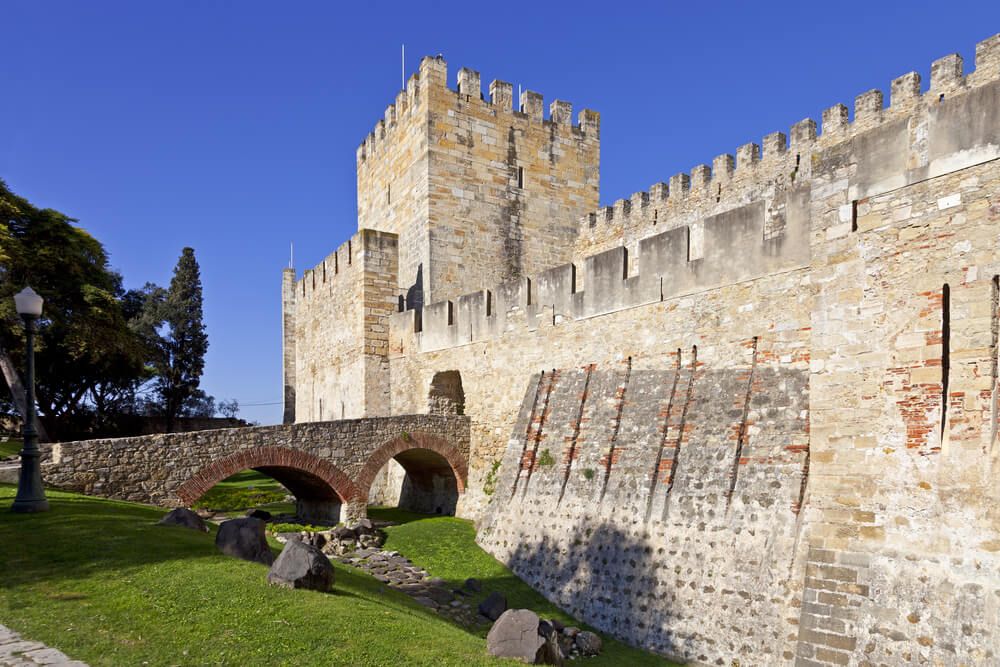
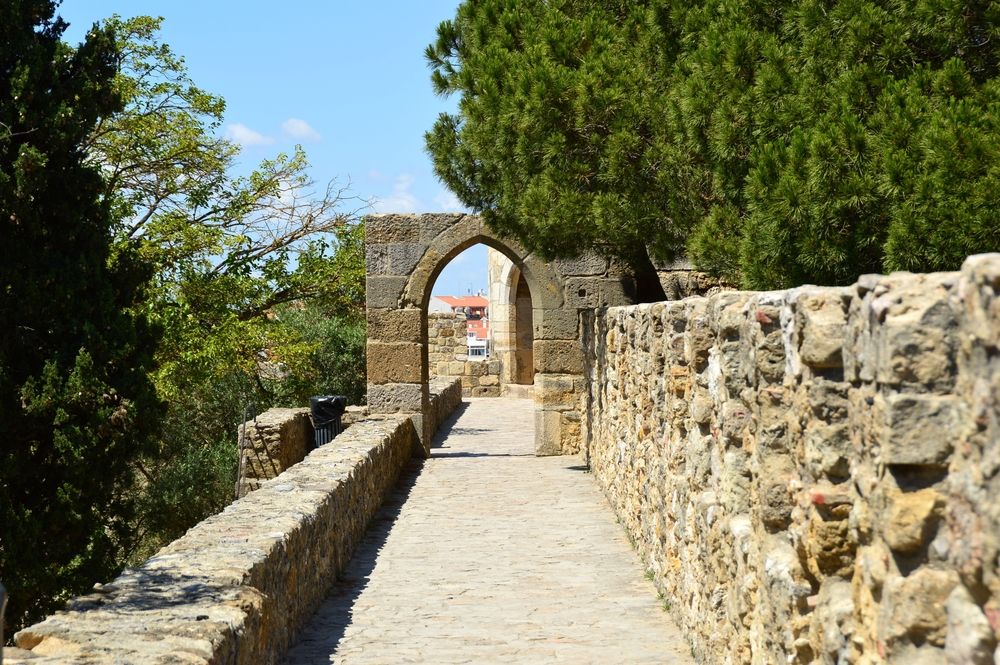
The ramparts of Saint-Georges Castle represent the most impressive architectural element of the site. Originally erected in the 11th century by the Moors then reinforced after the Christian Reconquest, these enclosing walls testify to the evolution of medieval military fortification techniques. With their 11 defense towers distributed over a perimeter of about 500 meters, the ramparts offer a remarkable example of military architecture adapted to the steep terrain of the hill. The walls, several meters thick, were designed to resist assaults from catapults and other siege engines of the era.
The walkway that runs along the top of the walls constitutes one of the major attractions of the Saint-Georges Castle visit. This promenade allows you to walk in the footsteps of former sentries while enjoying absolutely spectacular panoramic views of Lisbon, the Tagus and the surrounding hills. From these heights, you embrace the entire city in a single glance: the red tile roofs of the Alfama district that tier below, the white spires of Baixa, the 25 de Abril bridge that majestically spans the river, and on clear days, the statue of Christ the King on the other bank. The regularly spaced crenellations offer as many privileged viewpoints to photograph the Portuguese capital from all angles. At the end of the day, the sunset from the ramparts transforms the landscape into a golden and purple tableau, a magical moment that many visitors consider as the highlight of their discovery of Lisbon with the Ryo audio-guided itinerary.
3. Ulysses Tower and the camera obscura
Among the 11 towers that punctuate the ramparts of Saint-Georges Castle, Ulysses Tower occupies a special place in Lisbon's imagination. Its name refers to the legend according to which Ulysses, the Greek hero of the Odyssey, founded Lisbon (Olissipo in Latin) during his Mediterranean wanderings. Although this legend is more mythological than historical, it testifies to the antiquity of the site and its importance in the history of European navigation.
The real treasure of this tower is found at its summit: a camera obscura installed in the 19th century and recently restored. This fascinating optical device, inspired by Leonardo da Vinci's work, projects a real-time 360-degree panoramic view of Lisbon onto a white concave surface inside a dark room. Thanks to a system of mirrors and lenses, the operator can zoom in on different neighborhoods of the city, showing visitors emblematic monuments, animated squares and even passersby in the streets, creating an experience that is both playful and educational.
This camera obscura, accessible only as part of guided tours organized daily from 11am to 1pm, offers a unique perspective on Lisbon's urbanism. The experience, which lasts about 15 minutes, allows you to understand the complex topography of the city with its seven hills, locate the main monuments and grasp the extent of the agglomeration to the banks of the Tagus. This 19th-century technical feat retains all its power of fascination and constitutes one of the castle's most appreciated attractions, particularly by families with children. Don't hesitate to go early in the morning to avoid crowds, as the number of places is limited for each session.
4. The archaeological site and remains of the royal palace
Saint-Georges Castle houses one of Lisbon's richest archaeological sites, revealing the multiple layers of occupation that have succeeded one another since antiquity. Excavations conducted in the 20th century uncovered fascinating remains dating back to the hill's first inhabitants: Phoenicians (7th century BC), Greeks, Carthaginians, Romans, Visigoths, Moors and finally Christian Portuguese. This superposition of civilizations makes the castle a true open-air history book, where each archaeological layer tells a different chapter of Lisbon's past.
The permanent archaeological exhibition presents an impressive collection of objects discovered during excavations: Phoenician ceramics, Roman coins, Moorish jewelry, medieval azulejo fragments and everyday utensils. These artifacts allow us to trace the commercial and cultural evolution of Lisbon, an important maritime hub since antiquity. The explanatory panels, available in several languages, contextualize these discoveries and help visitors understand the strategic importance of this hill in the city's development.
The remains of the medieval royal palace constitute another major point of interest of the archaeological site. Although the 1755 earthquake considerably damaged the former royal residence, several sections of walls, foundations of ceremonial halls and decorative architectural elements remain. We can still distinguish the location of the great throne room, royal apartments and palatine chapel where court religious ceremonies took place. These ruins evoke the past splendor of the castle when it served as the seat of Portuguese royal power between the 13th and 16th centuries, a period during which sovereigns received ambassadors and lords in a magnificence now vanished but whose memory these stones keep.
5. The castle's gardens and green spaces
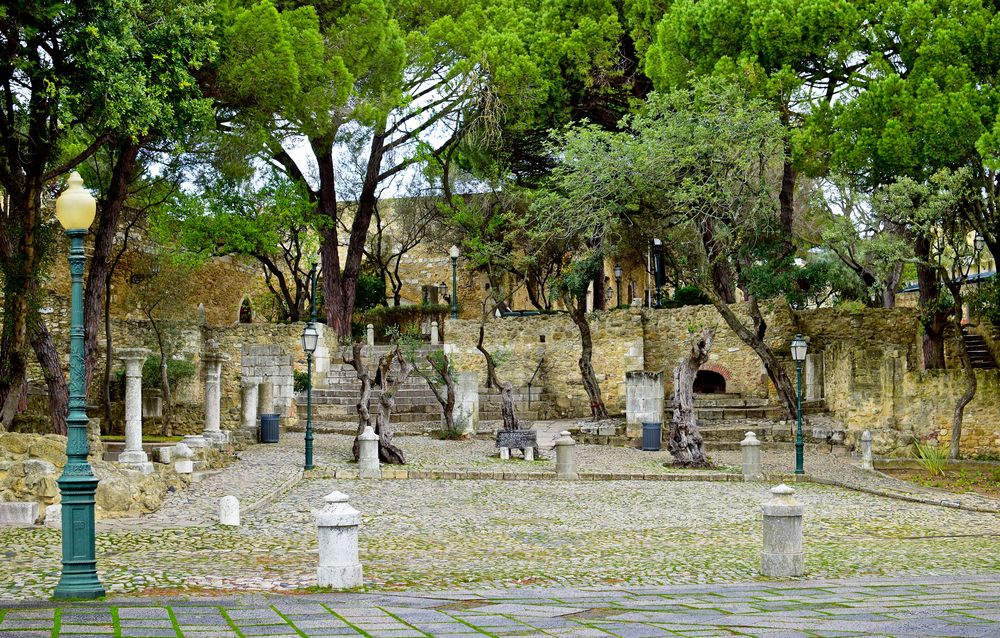
After exploring the ramparts and historical remains, the interior gardens of Saint-Georges Castle offer a welcome and refreshing break. These green spaces, laid out during 20th-century restorations, create a pleasant contrast with the mineral austerity of the fortifications. The gardens were designed to evoke the atmosphere of medieval Portuguese gardens, with shaded paths, flower beds, fountains and benches strategically placed to enjoy the view or simply rest in the shade of century-old trees.
The chosen vegetation reflects Mediterranean species typical of Portugal: olive trees, cypresses, oleanders, orange trees and various aromatic plants that perfume the air with their subtle fragrances. These terraced gardens follow the hill's natural relief and offer several levels of promenade, each revealing a new perspective on the city or the castle itself. The stone walls, covered with climbing vegetation, add a romantic touch to the ensemble.
One of the charming particularities of these gardens is the presence of peacocks roaming freely among visitors. These birds, introduced to the castle several decades ago, have become the unofficial mascots of the place. Their presence adds a fairy-like dimension to the visit, particularly when a male displays his magnificent ocellated tail to parade before visitors. Children love observing and photographing these feathered residents who seem perfectly at ease in this historic setting. The gardens also offer several observation terraces with orientation tables that allow you to identify monuments visible from the castle. It's the ideal place for a picnic break while enjoying a breathtaking view of Lisbon, before continuing your discovery of the city with the Ryo audio-guided circuit.
6. The permanent exhibition and castle museum
Saint-Georges Castle houses several museographic spaces that considerably enrich the visit by providing historical and cultural insight into the monument and its evolution through the centuries. The permanent exhibition, distributed in different restored rooms within the enclosure, offers a chronological journey from the first prehistoric occupations to the contemporary period. Interactive models show the castle at different eras, allowing visualization of successive architectural transformations and understanding how the site adapted to the changing needs of its occupants.
Detailed explanatory panels, accompanied by illustrations and reconstructions, trace the major historical events that took place at the castle: the 1147 siege during the Reconquest, the sumptuous ceremonies of the medieval court, the devastating 1755 earthquake, and the 20th-century restoration campaigns. Multimedia animations enrich the experience by offering virtual reconstructions of daily life scenes at the castle in different eras, bringing the ancient stones to life and allowing visitors to imagine the excitement that once reigned in this royal citadel.
The museum also offers a section dedicated to medieval construction and fortification techniques, with models of siege engines, reproductions of weapons and armor, as well as explanations of defensive strategies employed. This educational approach particularly appeals to families and allows children to better understand the castle's military function. Temporary exhibitions are regularly organized, highlighting particular aspects of Lisbon history or presenting recent archaeological discoveries. These cultural interpretation spaces transform a simple tourist visit into a true lesson in living and interactive history, thus offering an in-depth understanding of the central role that Saint-Georges Castle played in Portugal's history.
Practical advice for visiting Saint-Georges Castle
When to visit the castle?
The best time to visit Saint-Georges Castle in Lisbon depends on your priorities. If you wish to avoid crowds, prefer a visit early in the morning at opening (9am) or late afternoon, about an hour before closing. Weekdays, particularly Tuesday to Thursday, are generally less crowded than weekends and Mondays. To enjoy exceptional light and magical atmosphere, plan your visit at the end of the day to witness the sunset from the ramparts: the spectacle of the sun setting over the Tagus and coloring Lisbon's rooftops with golden and orange hues is absolutely unforgettable.
Regarding the season, each period has its advantages. Spring (March-May) and autumn (September-October) offer pleasant temperatures and moderate attendance, ideal for visiting. Summer (June-August) guarantees good weather but attracts enormous numbers of tourists, hence the importance of booking your tickets online in advance. Winter (November-February) allows visiting in relative tranquility, although hours are shorter and weather can be unpredictable. Whatever season you choose, plan about 2 to 3 hours for a complete visit to the castle including ramparts, gardens, archaeological exhibition and Ulysses Tower.
What to bring for the visit?
Saint-Georges Castle being situated in elevation and containing numerous stairs, irregular steps and paved surfaces, it's imperative to wear comfortable shoes suitable for walking. Absolutely avoid high heels or flip-flops. As a large part of the visit takes place outdoors and the castle overlooks the city, you'll be exposed to sun and wind. In summer, bring a hat or cap, sunglasses and sunscreen. Don't forget to bring a water bottle, especially on hot days (drinking water is available on site). In winter or on cooler days, bring warm clothing as the wind can be quite brisk at these heights.
Access to Saint-Georges Castle presents difficulties for people with reduced mobility or parents with strollers due to uneven terrain, numerous stairs and narrow passages in certain parts of the ramparts. Nevertheless, certain areas of the castle are accessible and adapted routes can be organized. It's recommended to contact the castle administration before your visit to obtain detailed information on accessibility and available facilities. Backpacks are allowed but must be of reasonable size. There's no storage for bulky luggage, so it's preferable to travel light. Photography is encouraged for personal use - the castle actually offers some of the best viewpoints for photographing Lisbon - but authorization is necessary for professional or commercial shoots.
On-site services
Saint-Georges Castle has a pleasant café-restaurant located inside the enclosure, offering a beautiful shaded terrace with views over the city. You can have a refreshing drink, coffee or light meal while enjoying the panorama. Prices are slightly higher than outside, as is often the case in tourist sites, but the location and view justify this difference. Clean restrooms are available near the main entrance and at other strategic points on the site.
A souvenir shop offers a selection of items related to the castle and Lisbon: history books, postcards, reproductions of medieval objects, decorative azulejos and Portuguese artisanal products. It's the ideal place to find an original souvenir of your visit. Audio guides are available for rental in several languages for about €4, offering detailed commentary on the castle's history and main points of interest. However, for an even more complete experience of Lisbon, don't forget that the Ryo audio-guided circuit allows you to discover not only Saint-Georges Castle but also all the city's emblematic neighborhoods in a coherent and fascinating route.
What to see around Saint-Georges Castle?
After exploring Saint-Georges Castle, take advantage of your presence on the hill to discover the wonders of the Alfama district that extends below. This historic neighborhood, Lisbon's oldest, miraculously survived the 1755 earthquake and retains its authenticity with its narrow winding streets, colorful houses decorated with azulejos, and its miradouros offering spectacular views. A few minutes' walk from the castle, don't miss the Miradouro de Santa Luzia with its pergola covered in bougainvillea, nor the Miradouro das Portas do Sol which offers a breathtaking view of the neighborhood and the Tagus.
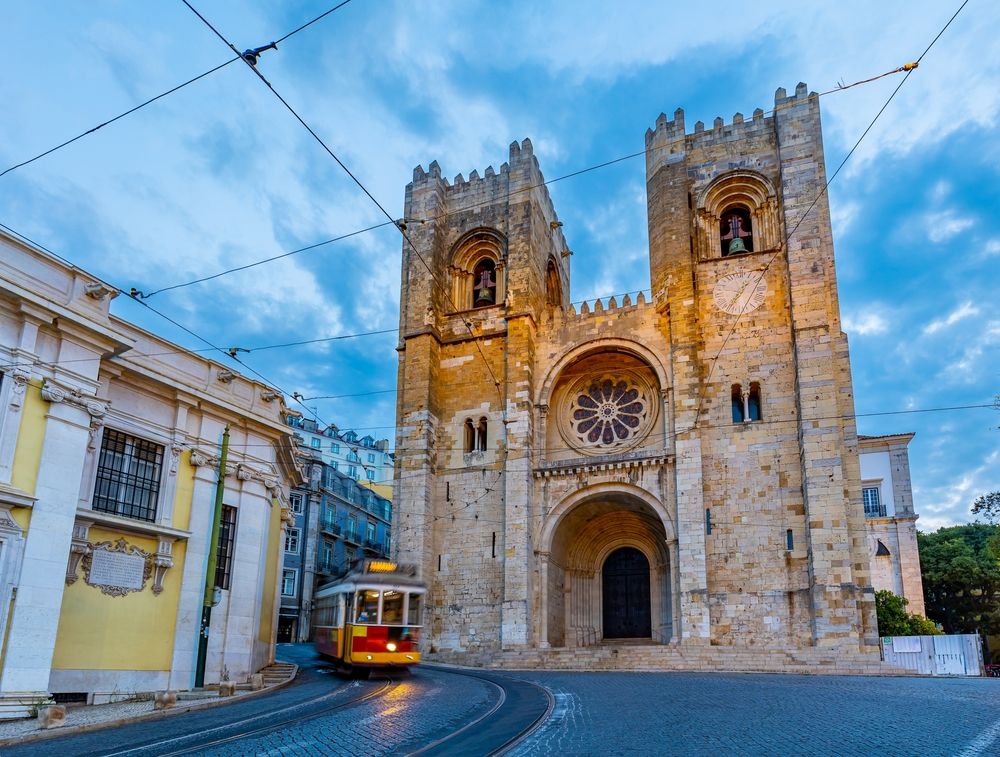
Lisbon Cathedral (Sé de Lisboa), located about 10 minutes' walk down towards Baixa, also deserves a visit. This imposing fortress church, built in 1147 just after the Christian Reconquest, presents a fascinating mix of Romanesque, Gothic and Baroque architectural styles. Its peaceful cloister and sacred art treasury testify to the religious importance of the place. Continuing your descent, you'll reach the lively Baixa district, Lisbon's commercial heart rebuilt in a grid pattern after 1755, with its wide straight avenues lined with shops and historic cafés.
For a complete experience without risk of getting lost in Lisbon's maze of streets, let yourself be guided by the Ryo audio-guided itinerary which intelligently connects all these points of interest and many others. The circuit takes you through the emblematic neighborhoods of the Portuguese capital, telling you the fascinating history of each place and revealing secrets that only Lisbon locals know. This walking exploration will allow you to fully experience Lisbon's unique atmosphere, where modernity and traditions coexist harmoniously along cobbled streets and lively squares.
FAQ: Frequently asked questions about Saint-Georges Castle
How much time should you plan to visit Saint-Georges Castle?
A complete visit to Saint-Georges Castle in Lisbon requires about 2 to 3 hours. This time allows you to leisurely explore the ramparts and walkway, visit Ulysses Tower and its camera obscura, browse the archaeological exhibition, stroll through the gardens and enjoy the panoramic views. If you simply want to tour the ramparts and admire the view, allow at least 1h30. For an optimal experience, plan rather 3 hours, especially if you like to take your time to photograph and soak up the atmosphere of the place.
Is Saint-Georges Castle accessible to people with reduced mobility?
Accessibility to Saint-Georges Castle for people with reduced mobility is limited due to the very nature of the site: sloping terrain, numerous stairs, irregular paved floors and narrow passages in certain parts of the ramparts. However, certain areas of the castle are accessible, notably part of the gardens and some ground-floor exhibition spaces. People with disabilities benefit from a reduced rate (€12.50) and their companion enters free. It's strongly recommended to contact the castle administration before your visit to obtain precise information on accessible areas and best organize your route. Manual wheelchairs can be made available upon prior request.
Can you visit Saint-Georges Castle for free?
Saint-Georges Castle doesn't offer totally free days for all visitors. However, entry is free for children under 13 and for companions of disabled people. Lisbon residents can benefit from preferential rates on certain special occasions, generally announced on the castle's official website. There are also reductions for young people from 13 to 25 years (€7.50), seniors over 65 (€12.50) and people with disabilities (€12.50). Certain Lisbon tourist passes include castle entry or offer a discount on the admission price.
Should you book tickets in advance?
It's strongly recommended to buy your tickets online in advance on Saint-Georges Castle's official website, particularly during high tourist season (May to September) and weekends. This advance booking allows you to avoid queues that can be long, notably mid-morning and early afternoon. Moreover, booking online guarantees your entry time slot, which helps you better plan your day visiting Lisbon. If you visit off-season (November to February) or on weekdays, it's generally possible to buy your tickets directly at the entrance without too much waiting, but online booking remains more practical and secure.
Can you picnic in the castle?
Yes, it's quite possible to picnic in Saint-Georges Castle gardens. Several green spaces furnished with benches in the shade of trees are perfectly suited for a lunch break while enjoying an exceptional view of Lisbon. This is actually a much-appreciated option by visitors who wish to spend several hours on site without having to leave to eat. The café-restaurant located inside the enclosure also offers dishes and drinks, but at slightly higher prices than outside. Think about bringing your picnic from the city if you want to save money and enjoy a peaceful moment in this exceptional historic setting. Don't forget to respect the cleanliness of the place and use the trash bins provided.
In conclusion, Saint-Georges Castle stands as an unmissable stop on any visit to Lisbon, offering much more than a simple historic monument. It's a true journey through time that transports you from the Roman and Moorish origins of the city to the era of Portuguese royal grandeur. Between its millenary ramparts, its breathtaking panoramic views, its peaceful gardens and its archaeological treasures, the castle concentrates the very essence of Lisbon history. The site's dominant position on its hill offers you not only a unique perspective on the capital's topography, but also a deep understanding of its urban evolution over the centuries. To extend this immersion in Lisbon's soul and discover all the city's secrets, don't hesitate to download the Ryo audio-guided circuit which will accompany you through the emblematic neighborhoods, from Alfama's heights to the Tagus banks, via Baixa's lively squares and Chiado's bohemian streets.