
Créé par Romane, le 7 mai 2026
Votre guide Ryo
© Shutterstock
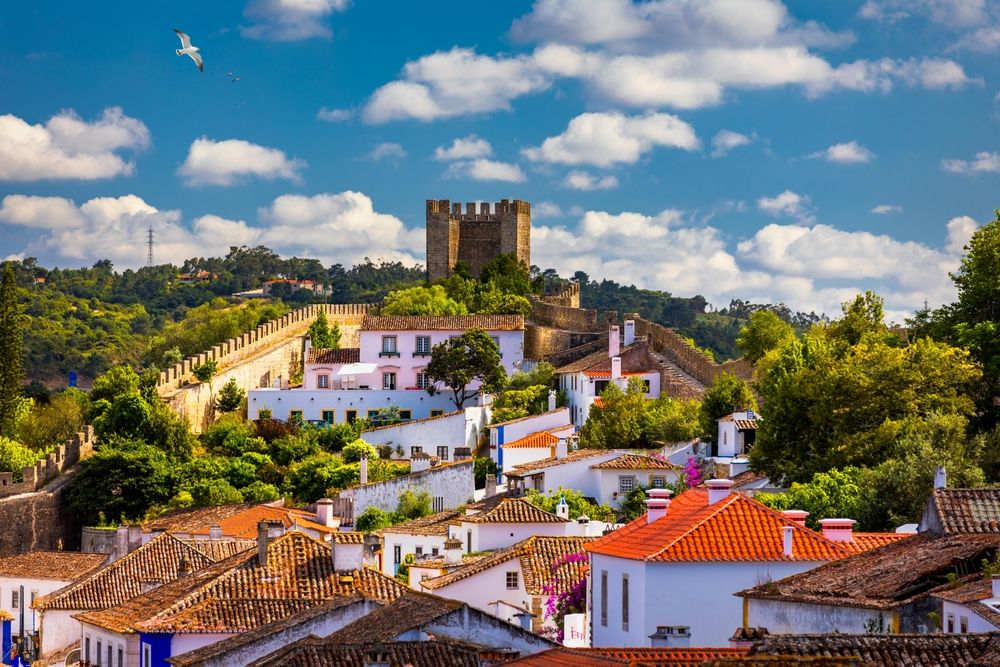
Perched on a hill in central Portugal, the medieval city of Óbidos is a true architectural jewel that fascinates with its perfectly preserved ramparts, cobblestone streets and period atmosphere. Nicknamed "the city of queens" since King Denis I offered it to his wife Isabella in 1282, this small historical marvel located just 80 kilometers from Lisbon constitutes an essential getaway for anyone wishing to discover the authentic soul of medieval Portugal.
This ancient fortress, surrounded by imposing walls, offers total immersion in Portuguese history. Between royal castle, churches steeped in history, Ginja tastings in chocolate cups and colorful festivals, Óbidos promises a unique experience where every stone tells a chapter of the Lusitanian epic.
1. Discover Óbidos castle and its majestic ramparts
The Óbidos castle, built in the 12th century and reinforced by King Denis I, constitutes the beating heart of the medieval city. This imposing fortress, classified as a National Monument, proudly dominates the surrounding plain and offers exceptional panoramic views of the region. Today transformed into a luxury hotel (Pousada Castelo de Óbidos), it remains one of the most emblematic symbols of medieval Portugal.
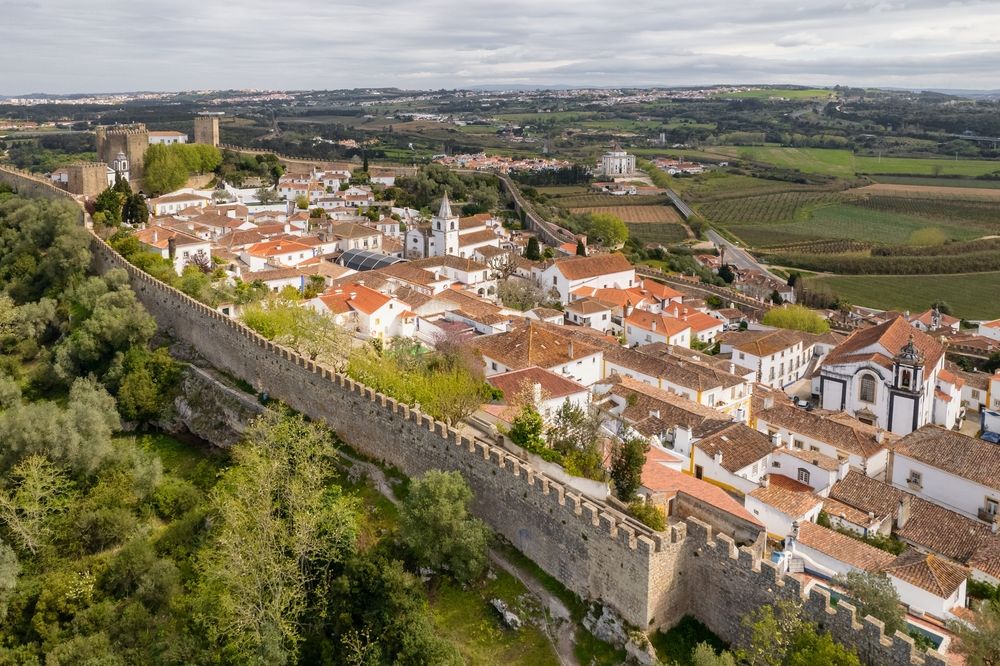
The Óbidos ramparts extend for nearly 1.5 kilometers and can be walked entirely on foot. This walk on the walls, accessible from several points in the village, represents one of the most memorable experiences of the visit. Visitors discover unique perspectives on the red tile roofs, secret gardens and surrounding rolling landscapes. The walk on the ramparts will allow you to grasp the defensive ingenuity of this medieval stronghold while enjoying breathtaking panoramas.
2. Explore the Porta da Vila and its exceptional azulejos
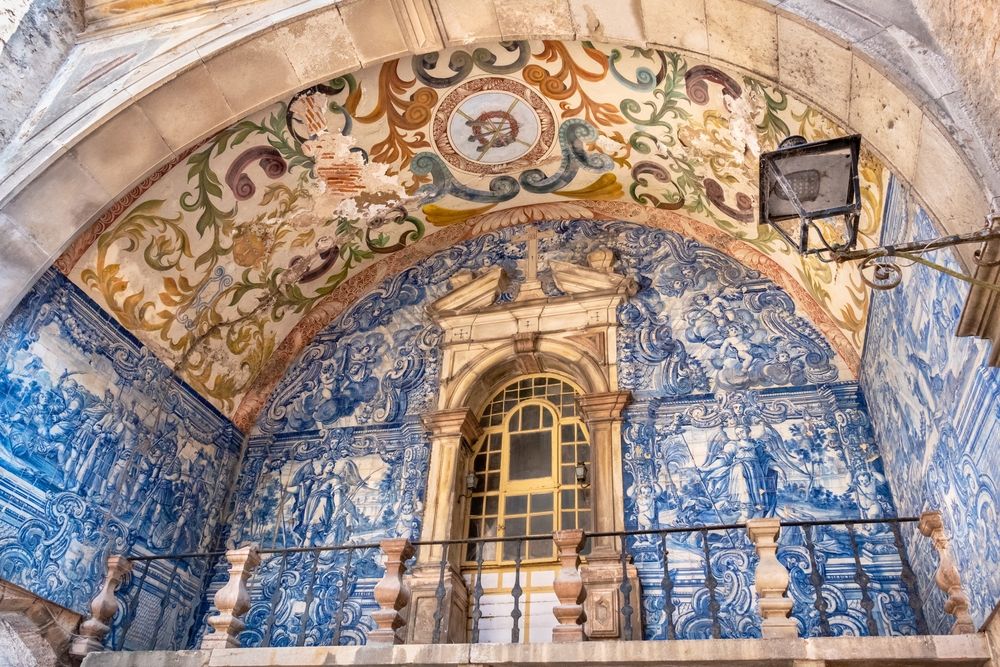
The main entrance to Óbidos, the Porta da Vila, erected in 1380, constitutes a true artistic masterpiece. This fortified gate houses a baroque chapel adorned with magnificent blue azulejos from the 18th century, finely representing the Passion of Christ. These hand-painted ceramic tiles testify to Portuguese artistic refinement and create a striking transition between the exterior and the intimate universe of the medieval city.
Upon crossing this emblematic gate, visitors are transported to another time. The architecture of Porta da Vila harmoniously blends Moorish and Christian influences, reflecting Portugal's cultural richness. It is also at this location that the Óbidos experience truly begins, with its first shops offering the famous Ginja served in chocolate cups.
3. Stroll along Rua Direita, the village's historic artery
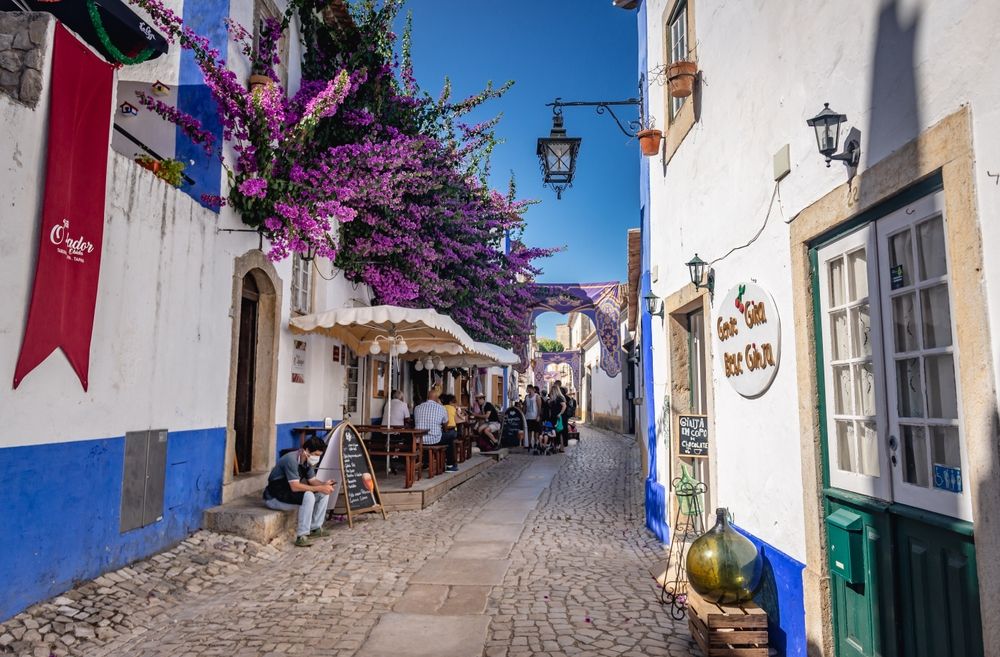
The Rua Direita represents the main axis of Óbidos, connecting the Porta da Vila to the castle over about 300 meters. This cobblestone street, bordered by white houses with characteristic blue and yellow outlines, concentrates most of the village's commercial and artisanal activity. The colorful facades, adorned with flowered balconies and refined architectural details, create a picturesque atmosphere that enchants visitors.
Throughout this historic artery, local craft shops, art galleries, specialized bookstores and shops offering regional products and authentic souvenirs follow one another. Rua Direita also constitutes the privileged theater of festivities during the numerous events organized in Óbidos, notably the famous summer medieval festival that transforms the street into a living stage of the Middle Ages.
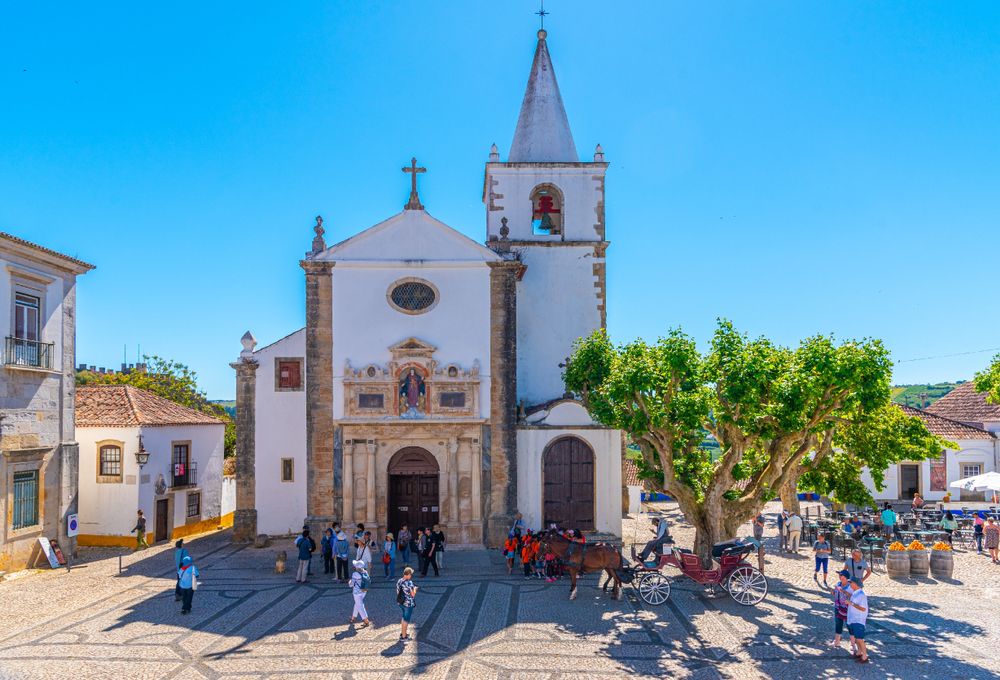
4. Visit Santa Maria church, witness to royal splendor
The Santa Maria church, located on the main square of Óbidos, occupies a special place in Portuguese history. Rebuilt in the 16th century in Renaissance style, it stands on the foundations of an ancient Visigoth temple transformed into a mosque then into a Christian sanctuary in the 12th century. This historical stratification makes the building a unique testimony to the religious and cultural evolution of the region.
The church owes its renown to the marriage celebrated within its walls in 1441 between King Alfonso V and Joanna of Portugal, then only 10 years old. The baroque interior, richly decorated, houses remarkable works of art and precious azulejos. Its white bell tower, visible from afar, rises majestically above the village rooftops and constitutes an essential landmark for all those who visit Lisbon and wish to discover the treasures of the surroundings.
5. Discover the municipal museum and the art of Josefa de Óbidos
The municipal museum of Óbidos, housed in an elegant 18th-century manor adjoining the Santa Maria church, presents a remarkable collection of sacred art spanning several centuries. The institution particularly honors the works of Josefa de Óbidos (1630-1684), the only known female painter in 17th-century Portugal, whose baroque canvases testify to exceptional talent.
The museum's collections trace the artistic and religious evolution of the region since the Middle Ages, with goldsmith pieces, polychrome sculptures and paintings by Portuguese masters. This cultural visit perfectly complements the architectural discovery of the city and allows for a deeper understanding of local history. The museum represents a must-see for lovers of baroque art and religious history.
6. Savor Óbidos Ginja in its chocolate cup
The Óbidos Ginja constitutes one of the most emblematic taste experiences of the visit. This tart cherry liqueur, produced locally according to a traditional recipe dating back to 17th-century monks, is tasted in an edible dark chocolate cup. This original presentation, which has become the city's signature, transforms the tasting into a true gourmet ritual.
Several establishments in the village offer this specialty, notably near the Porta da Vila. The liqueur, with about 20% alcohol content, develops complex aromas of bittersweet cherry perfectly balanced by the sweetness of chocolate. This unique culinary tradition perfectly illustrates the Portuguese art of living and local creativity in flavor combinations. Ginja tasting represents an unmissable convivial moment that enriches the Óbidos discovery experience.
7. Participate in festivals and cultural events
Óbidos comes alive throughout the year thanks to a rich and varied cultural program. The medieval festival, organized each late July, constitutes the flagship event of the summer season. During this historical reenactment, the streets are adorned with period decorations, inhabitants don medieval costumes, and street shows, knight combats and craft markets recreate the atmosphere of the Middle Ages.
The International Chocolate Festival, which generally takes place from March to April, transforms the city into the world capital of gastronomy. Making workshops, tastings, chocolate sculptures and culinary competitions punctuate these three weeks dedicated to cocoa. Other events punctuate the cultural calendar: literature festival, Christmas markets, classical music concerts, making Óbidos a dynamic cultural destination in all seasons.
8. Explore the surroundings: Óbidos lagoon and Atlantic beaches
Just 5 kilometers from the medieval village, the Lagoa de Óbidos forms Portugal's largest coastal lagoon. This protected ecosystem, of exceptional biodiversity, attracts naturalists and water sports enthusiasts. The calm and shallow waters are perfectly suited to kayaking, paddleboarding and windsurfing, while the developed trails allow for bird watching and gentle hiking.
The beach of Foz do Arelho, located at the lagoon's mouth, offers a unique setting where fresh water meets the Atlantic Ocean. This family seaside resort offers two types of swimming: lagoon side for children and calm activities, ocean side for surf enthusiasts and thrills. Further north, the wild beaches of Baleal and the renowned surf spots of Peniche complete the coastal offer of this portion of Atlantic coast renowned for its preserved landscapes.
9. Practical tips for visiting Óbidos
Download the audio-guided circuit to discover Lisbon on foot and independently
Although Óbidos does not yet have its own audio guide circuit on Ryo, visitors can take advantage of the Lisbon visit itinerary to discover the capital before or after their Óbidos escapade. This 7-kilometer urban route, accompanied by 24 fun audio guides, allows you to explore the emblematic neighborhoods of the seven-hilled city in complete autonomy.
To get to Óbidos from Lisbon, several options are available to visitors. By car, the A8 motorway allows you to reach the village in about an hour. Public transport constitutes a practical alternative: direct buses leave regularly from Lisbon's Campo Grande bus station, with a journey time of 1h15. The train, less frequent, requires about 2 hours with connection.
The best time to visit Óbidos is in spring (April-May) and autumn (September-October), when temperatures are pleasant and tourist attendance is moderate. Summer offers maximum animation but also significant crowds, particularly during festivals. Winter reveals the peaceful charm of the medieval city, ideal for an intimate discovery. Half a day is enough to discover the essential of the village, but a full day allows for a deeper visit and exploration of the surroundings.
10. Where to eat and what to bring back from Óbidos
Óbidos gastronomy reflects the culinary traditions of Portuguese Estremadura. The village restaurants offer local specialties and regional dishes in an authentic setting. Don't miss tasting leitão (roasted suckling pig), caldeiradas (fish stews) or queijadas (small cheese cakes) which constitute the must-haves of local cuisine.
For shopping, Óbidos offers quality craftsmanship: hand-painted ceramics, decorative azulejos, traditional basketry and embroidery. The shops on Rua Direita also offer regional products, local wines and, of course, bottles of Ginja to take away. Book lovers will appreciate the Ler Devagar bookstore, installed in the former Santiago church, which combines book sales and original cultural space.
In conclusion, the medieval city of Óbidos represents an essential getaway for anyone wishing to discover the authenticity of historical Portugal. Between exceptional architectural heritage, savory culinary traditions and dynamic cultural programming, this medieval jewel offers a complete experience just one hour from Lisbon. Whether you are a history enthusiast, curious gourmet or simple visitor seeking a change of scenery, Óbidos will charm you with its unique atmosphere and preserved way of life. Don't hesitate to be guided in your discovery of this Portuguese pearl thanks to the Ryo itineraries for the Lisbon region, and extend your stay by visiting the surrounding wonders.
FAQ: everything you need to know about Óbidos
How long does it take to visit Óbidos?
Half a day is enough to discover the essentials of Óbidos (castle, ramparts, main streets). Allow a full day if you wish to explore the surroundings, visit the museum and enjoy local restaurants.
Is Óbidos wheelchair accessible?
Accessibility is limited due to the medieval character of the city (cobblestone streets, stairs, ramparts). Some areas like Rua Direita remain accessible, but the complete visit may prove difficult for people with reduced mobility.
Can you visit Óbidos for free?
Access to the village and the walk on the ramparts are free. Only paid monuments are the municipal museum (about €2) and some temporary exhibitions. The castle being a hotel, its visit is reserved for guests.
What are the culinary specialties not to miss?
Don't miss the Óbidos Ginja served in its chocolate cup, queijadas (cheese cakes), leitão (suckling pig) and seafood from the nearby Atlantic coast. Local restaurants also offer excellent wines from the region.