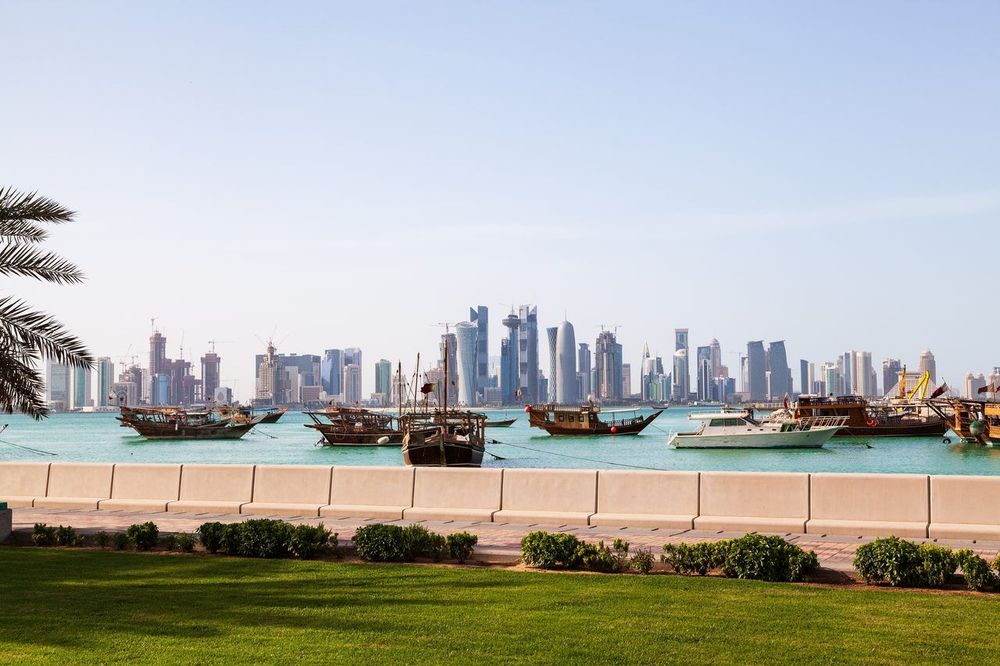
© Shutterstock
 Votre guide Ryo
Things to Do in Doha in 2026: 20 Experiences to Discover Qatar
Doha is unlike any other Gulf capital: here, futuristic glass towers rise just a few hundred meters from a souk that is more than a century old, and the Corniche stretches for nearly 7 kilometers without ever losing sight of the West Bay skyline. Wondering what to do in Doha often means underestimating the city: far from its image as a mere stopover between flights, the Qatari capital is home to exceptional museums, urban beaches, spice markets, and desert excursions, all accessible within a few hours by metro or taxi. Ryo is particularly drawn to cities that tell their story through contrasts, and Doha offers a striking version of exactly that.
Whether you have two days or a full week, the city reveals itself in layers: a Friday morning at Souq Waqif when merchants are still setting up their spice stalls, a sunset pause on the Corniche watching traditional dhows, a deep dive into the collections of the Museum of Islamic Art designed by I. M. Pei, or an organized camping night in the Sealine desert, less than an hour's drive away. Add to that a cultural district entirely rebuilt around Venetian canals, a national library of white marble and cascading shelves, and a family beach at Katara: here is more than enough to fill a stay of two, three days, or even a full week without repeating a single experience.
1. Souq Waqif, the Beating Heart of the Old City
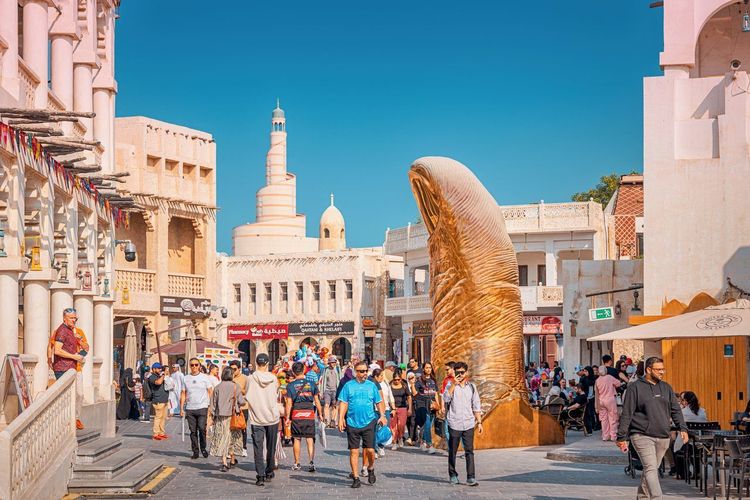
The Souq Waqif (Al Souq Street, Doha, rated 4.7/5 on Google with 33,669 reviews) remains a must-visit for anyone arriving in Doha for the first time. Rebuilt to its original specifications in the early 2000s after a fire destroyed part of its wooden and clay stalls, the market retained its labyrinthine layout inherited from the 19th century, when Bedouin caravans came to exchange wool, dates, and horses for goods imported by dhow from India or East Africa.
Today, the covered alleyways are home to nearly 300 shops spanning spices, fabrics, souvenirs, and still-active craftsmen's workshops. Stalls of Iranian saffron and Turkish delight sit alongside small eateries serving machbous (spiced meat rice) well past midnight. The area also houses a bird market, where wicker cages and colorful parakeets line up every morning, as well as a contemporary art gallery set up in former warehouses.
You will rarely find the souk empty: foot traffic rises sharply after 7 pm, when the heat subsides and Qatari families come to dine on the terraces. To avoid the evening rush while keeping the atmosphere, arriving around 5:30 pm lets you browse the stalls before the crowd gathers. Vendors are happy to negotiate prices on textiles and crafts, unlike the air-conditioned shops in the nearby malls.
Souq Waqif is also worth visiting in the late afternoon for its architecture: the ochre facades restored with traditional lime, imported teak wood shutters, and vaulted passages evoke Gulf style before the oil boom. A metro station of the same name on the green line drops visitors off less than five minutes' walk from the first stalls, making it the logical first stop of any stay in Doha.
Food lovers will appreciate the small Lebanese and Qatari restaurants tucked into inner courtyards, where karak — spiced condensed milk tea — is served at all hours. Allow two to three hours to explore the entire souk at a relaxed pace, more if you stop for a traditional massage or a shisha break on a terrace.
2. The Doha Corniche, 7 Kilometers Facing the Bay
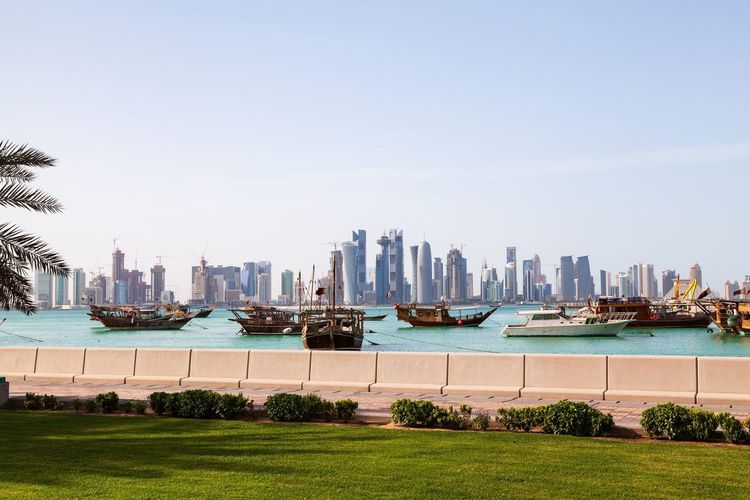
The Doha Corniche (Corniche Street, Doha, rated 4.8/5 on Google with 4,133 reviews) runs along the bay for approximately 7 kilometers, from the old dhow harbor to the West Bay business district. Developed in the 1970s on land reclaimed from the sea, it offers one of the few pedestrian promenades cooled by a sea breeze, even in midsummer when temperatures exceed 40°C by morning.
The route successively passes the historic Msheireb district, the Museum of Islamic Art and its park, and the landmark towers of West Bay, before ending near the first skyscraper built in the country, in 1982. At dawn, joggers and cyclists take advantage of a dedicated lane before the heat sets in; in the evening, Qatari families and expats converge on the waterfront benches to watch the illuminated dhows.
This is also where most of what one imagines as a Doha beach experience is concentrated: several developed public beaches with showers and shaded areas dot the route near MIA Park. You can combine a morning walk with brunch at one of the bay-facing cafés, many of which open as early as 6 am for early risers.
For a different vantage point, climb one of the pedestrian bridges near West Bay at sunset: the golden light on the glass towers contrasts with the white sails of the dhows moored below, a scene that alone encapsulates the architectural extremes of Doha.
Bicycle and family pedal-car rentals are available at several fixed points along the route, a popular option on Friday mornings when the Corniche becomes a semi-pedestrian axis with occasional traffic restrictions. Expect around 20 QAR (approximately 5 euros) per hour for a standard bicycle, slightly more for multi-seat models.
Photography enthusiasts typically target two windows: sunrise on the eastern side, which silhouettes the skyline in backlight, and sunset on the western side, which bathes the glass facades in orange reflections. Between the two, the midday heat makes indoor air-conditioned spaces more appealing, which is why the Corniche is best experienced at either end of the day.
3. The Museum of Islamic Art (MIA) and Its Park, the Cultural Reference
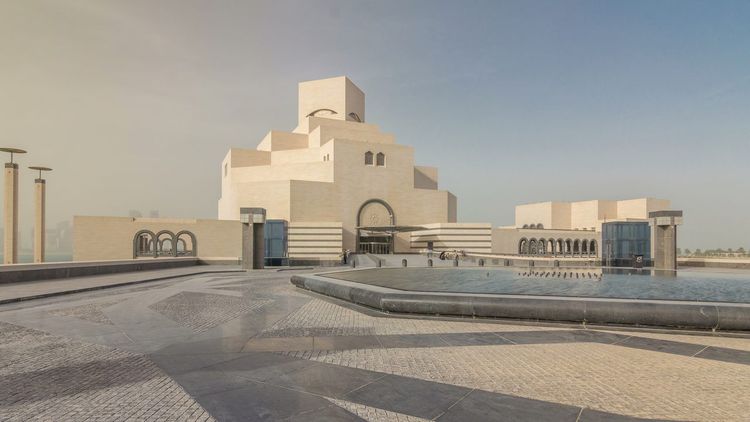
The Museum of Islamic Art (MIA Park, Doha, rated 4.7/5 on Google with 34,000 reviews) occupies an almost island-like position, set on an artificial peninsula at the southern tip of the Corniche. Chinese-American architect I. M. Pei, then 91 years old, drew inspiration from the ablution fountain of the Ibn Tulun mosque in Cairo to design this cube of pale limestone with pure geometric volumes, completed in 2008 after a construction process delayed by several years to ensure the building was fully isolated from the rest of the city.
Inside, the collections span 1,400 years of Islamic art, from Morocco to Southeast Asia: Quranic manuscripts illuminated in gold leaf, 9th-century brass astrolabes, lustrous Persian ceramics, Mughal carpets, and Mamluk glassware form a chronological journey spread across three floors. The most photographed piece is undoubtedly the monumental chandelier suspended in the central hall, whose steel structure echoes the geometric pattern repeated on the facade's mashrabiyas.
Behind the building, MIA Park stretches along nearly 700 meters of waterfront landscaped with lawns, olive trees, and reflecting pools, which has become over the years the favorite Friday picnic spot for Qatari families. Temporary art installations are regularly exhibited there, including Richard Serra's imposing sculpture 7, visible from the Corniche. In the late afternoon, the park fills with impromptu cricket players and wandering tea vendors, offering a sharp contrast to the hushed silence of the exhibition halls.
Entry is free for Qatar residents; foreign visitors pay a ticket of 50 QAR (25 QAR for students), and some temporary exhibitions may be priced separately. Allow two hours for a full visit, more if you linger at the top-floor café, whose glass wall perfectly frames the West Bay skyline. The museum is closed on Wednesdays, a detail many visitors discover on-site for lack of checking the opening hours in advance.
For architecture enthusiasts, a second look is warranted at the education tower, an annex structure connected to the main building by a suspended bridge above a water courtyard. The geometric patterns rhythming the aluminum mashrabiyas filter the Gulf light to recreate, indoors, a dimness close to that of the historic mosques Pei visited before designing the project.
If you can only visit one museum during your stay, this one stands out almost by default: it brings together both the history of the region and a scenography designed for a non-specialist audience, with explanatory texts available in Arabic, English, and French. Families are also well catered for, thanks to a children's discovery trail and Arabic calligraphy workshops held on certain weekends.
The museum shop, often overlooked, sells ceramic reproductions and art books that are hard to find elsewhere in the country — a solid option for a souvenir more original than a refrigerator magnet.
4. Katara Cultural Village
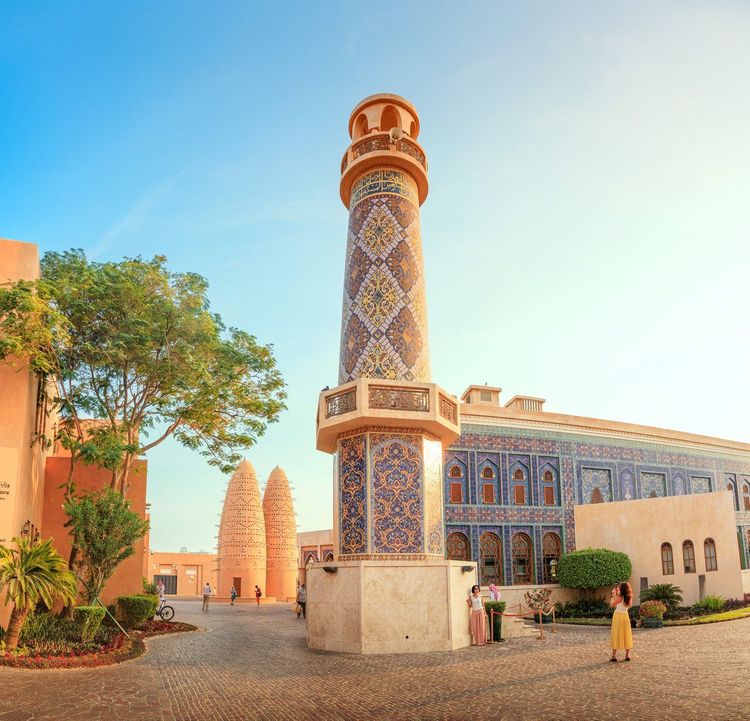
The Katara Cultural Village (Katara, Doha, rated 4.6/5 on Google with 22,000 reviews) was conceived as a showcase district dedicated to the arts, combining an Italian-style open-air theater with a 5,000-seat amphitheater carved into a dune. The name of the district revives the ancient historical name for the Qatar region mentioned by medieval Arab geographers, a deliberate identity nod by the architects of the project, launched in 2005.
The village includes both an Ottoman Turkish mosque decorated with blue tiles and a pagoda dedicated to Doha's Buddhist and Hindu community, evidence of a religious diversity rarely highlighted elsewhere in the Gulf. On weekends, the central square hosts craft markets, open-air concerts, and film screenings, while the side galleries alternate between contemporary photography and traditional calligraphy exhibitions.
Birdwatching enthusiasts often stop at the public aviary near the amphitheater, where parrots and falcons can be seen free of charge. For children, a small amusement park and an enclosed beach round out the offer, making it easy to combine culture and leisure in a single half-day without moving the car. Wear comfortable shoes: the site spans several hundred meters and is best explored on foot.
The open-air amphitheater hosts the Qatar International Food Festival each year, as well as several international concerts during the cool season, between November and March, when nighttime temperatures drop below 25°C. The carved stone terraces, facing the sea, allow audiences to enjoy performances with the Corniche and West Bay towers as a backdrop — a setting that has attracted multiple music video and advertising shoots.
A funicular connects the top of the artificial hill — where a photogenic viewpoint overlooks the entire village and the bay — to the beach below. The ride takes only a few minutes but remains one of the best ways to grasp the full scale of the architectural project in a single photograph.
5. The Imam Abdul Wahhab State Mosque
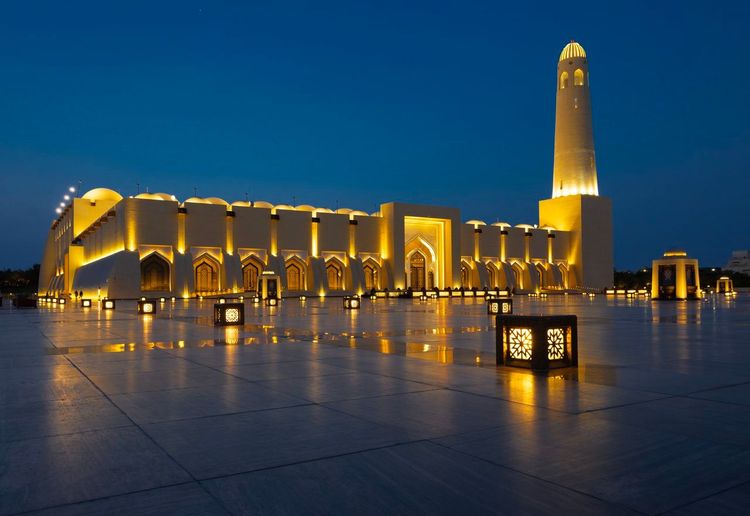
The Imam Abdul Wahhab State Mosque (Al Corniche Street, Doha, rated 4.7/5 on Google with 8,000 reviews) can accommodate up to 30,000 worshippers across its main prayer hall and outdoor esplanade, making it the largest religious building in the country. Completed in 2011, it bears the name of the theologian who founded Wahhabism, whose doctrine remains the official reference of Sunni Islam in Qatar.
The architecture follows traditional Najdi codes: multiple domes without excessive ornamentation, a single slender minaret, and an interior bathed in natural light through skylights concealed in the roof. Non-Muslim visitors may access certain areas outside prayer times, provided they follow a strict dress code — shoulders and legs covered for everyone, headscarf recommended for women.
Its proximity to Souq Waqif makes it easy to visit both in the late morning, before the heat makes walking outdoors less enjoyable.
On Friday, the holy day of the week in Qatar, the call to prayer draws particularly large crowds around the building — an impressive moment to observe from the esplanade without lingering too long if you are not from the neighborhood. Outside this weekly peak, the mosque remains surprisingly calm, almost silent.
6. Msheireb Downtown Doha, the World's Most Sustainable District
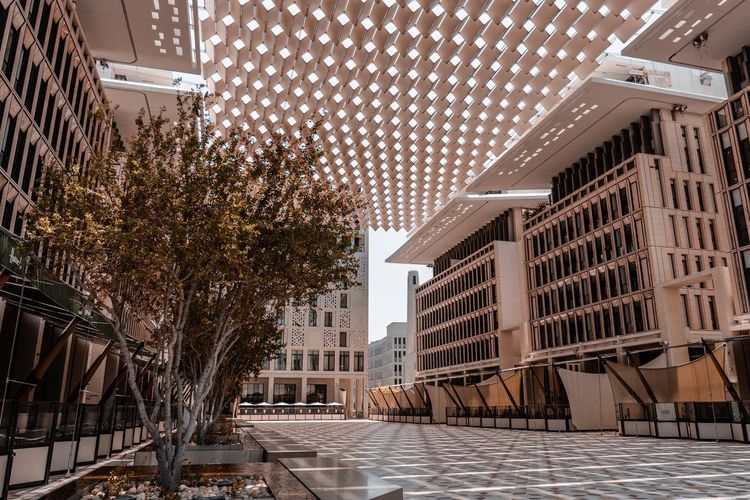
Msheireb Downtown Doha (Msheireb, Doha, rated 4.5/5 on Google with 5,000 reviews) claims the title of the largest urban project to achieve LEED Platinum environmental certification at the scale of an entire district. Built on the site of Doha's very first city center, demolished and rebuilt from 2010 onward, the development blends buildings cooled by a centralized district cooling network with facades of local limestone that echo traditional Gulf architecture without literally copying it.
The district also houses four restored heritage houses, including the former residence of the founding emir, which trace Qatar's history before the discovery of oil. The streets, entirely pedestrianized at ground level, conceal an underground network dedicated to deliveries and parking — an urban planning choice that explains the surprising calm at street level despite the density of offices and shops.
In the evening, restaurant terraces come alive around the central square, while public art installations — often interactive — punctuate the walkways between buildings. A metro station of the same name makes Msheireb a convenient transit point between Souq Waqif and West Bay.
Contemporary architecture enthusiasts will find an instructive contrast with the glass towers elsewhere in the city, as every facade here adheres to a shared aesthetic charter approved before construction — a rarity in a region where skyscrapers typically compete for individual boldness.
7. The Pearl-Qatar, the Luxury Artificial Island
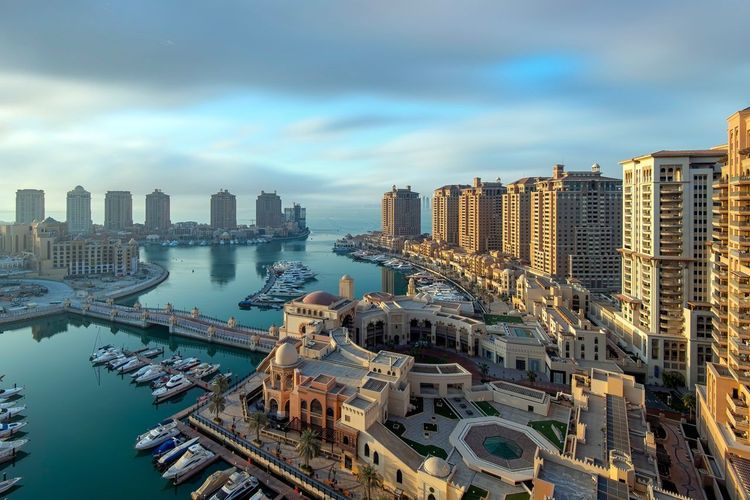
The Pearl-Qatar (The Pearl, Doha, rated 4.7/5 on Google with 3,684 reviews) is a 4-million-square-meter artificial island reclaimed from the sea from 2004 onward, built on the former site of a pearl oyster bed that gave the project its name. The district deliberately recreates a Mediterranean atmosphere: Italian riviera-style colored facades in the Qanat Quartier area, a marina lined with yachts, and luxury boutiques stretching along the Porto Arabia promenade.
Allow a good half-day to explore the island's different neighborhoods on foot or by free electric tram, which serves the residential areas through to the marina. Terrace restaurants, many of which serve alcohol unlike most Doha establishments, draw an international crowd in the evenings, while daytime is quieter — ideal for a relaxed stroll along the quays.
Ryo particularly recommends arriving in the late afternoon: the low light on the pastel facades and boat masts creates a very different atmosphere from the more institutional feel of the rest of the capital. Luxury retailers (Cartier, Chanel, Bulgari) sit alongside more accessible brands, allowing for a pleasant walk without necessarily spending.
On weekends, a local producers' market sets up near the marina, where Qatari farmers and artisans sell desert honey, dates, and handcrafted goods — a way to step outside the island's purely commercial circuit. Families also appreciate the numerous shaded playgrounds along the promenade, as well as the water jet fountains that cool children down during the hottest months.
The island officially owes its name to the ancient pearl diving industry, the dominant economic activity of Qatar before oil was discovered in the 1940s. Several commemorative plaques scattered along the marina recall this history through archival photographs of dhows setting out to sea for months at a time — a season that once defined the rhythm of life across the entire region.
Compared to Palm Jumeirah in Dubai, often cited as a benchmark, The Pearl-Qatar places less emphasis on architectural excess and more on a human scale: buildings rarely exceed ten stories, which leaves more perspective over the sea from the promenade. The Qanat Quartier district, covered further below, completes the picture with its canals and gondolas.
In the evening, a water and light show regularly animates the central marina fountain — a free event enjoyed by families picnicking on the surrounding lawns. Getting to the island is straightforward by taxi or ride-hailing app from West Bay, about fifteen minutes depending on traffic, as the metro does not yet serve the district directly.
8. A Dhow Cruise on Doha Bay
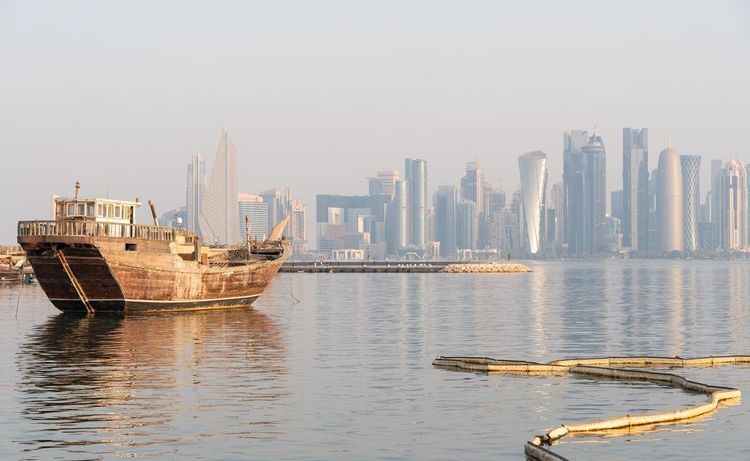
A traditional dhow cruise remains one of the most photographed activities in Doha, and for good reason: these wooden boats with their curved prows, once used for pearl fishing and maritime trade, are now repurposed as tourist shuttles moored near Souq Waqif and the Corniche.
Excursions typically last 30 to 45 minutes and run along the bay facing West Bay, offering a different angle on the skyline — particularly spectacular at sunset when the towers light up one by one. Expect to pay between 25 and 50 QAR depending on the duration and the boat chosen, negotiable directly on the quay with the captains, often of Indian or Pakistani origin and long established in Qatar.
Some dhows offer longer outings of up to two hours, with dinner on board and traditional music — a popular option for groups or family evenings. You can also simply watch the moored boats in the late afternoon, when fishermen return to unload their catch directly on the quay next to the fish market.
Prices rise considerably on weekends (Thursday and Friday evenings according to the local calendar), when demand surges among Qatari families themselves. Booking during the day, directly on the quay, tends to be simpler and cheaper than booking online in advance.
9. The Falcon Market, a Living Bedouin Tradition
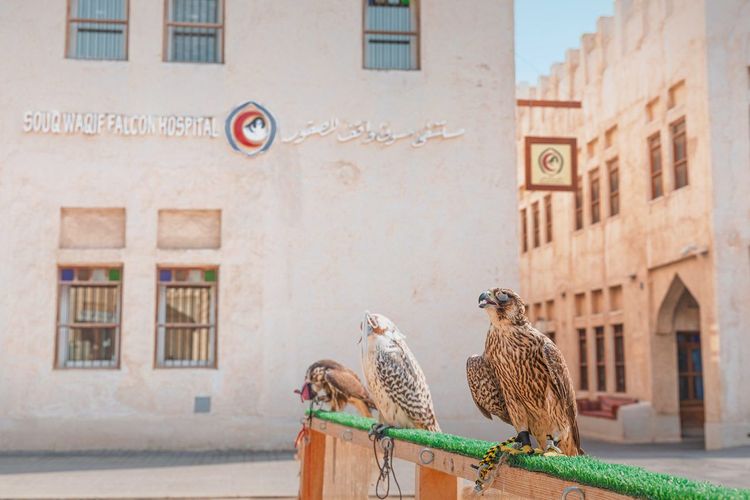
In a discreet wing of Souq Waqif, the falcon market brings together a dozen specialist shops where trained birds of prey, embroidered leather hoods, and bespoke falconry equipment are bought and sold.
Some peregrine falcons change hands for tens of thousands of euros, as falconry remains a powerful social marker in Gulf Bedouin culture. A dedicated veterinary clinic, open to visitors, allows you to watch birds being examined or fitted with mandatory microchip identification tags.
10. The Fire Station, Contemporary Art in a Former Firehouse
The Fire Station (Al Mansoura Street, Doha, rated 4.5/5 on Google with 1,200 reviews) occupies a former 1980s fire station, transformed into an artist residency and free exhibition gallery since 2014. The old engine bays now house around ten studios open to the public, where Qatari and international sculptors and painters display their work in progress.
The ground floor also houses a well-regarded restaurant known for its Mediterranean cuisine, a favorite address among expats far from the usual tourist circuit.
11. The Qatar National Library, an Architectural Masterpiece
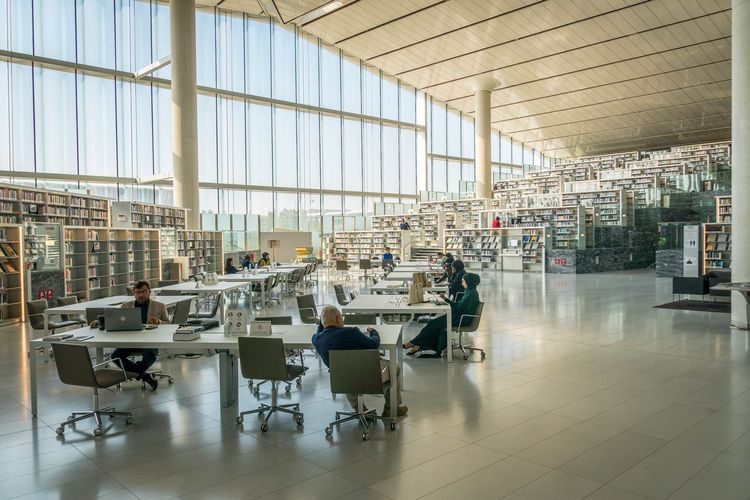
The Qatar National Library (Education City, Doha, rated 4.8/5 on Google with 6,000 reviews) unfolds its shelves across a single vast floor in the shape of a white marble fan designed by Dutch architect Rem Koolhaas. Opened in 2018, it holds more than one million volumes, including a heritage collection of Arabic manuscripts and ancient maps of the Arabian Peninsula, displayed underground in a case carved directly into the rock.
Entry is free and open to all, including visitors without a library card, making it a welcome stop during the hottest hours of the day. The marble terraces that structure the reading space also serve as a temporary exhibition area, with a regular focus on the history of the book in the Arab world.
The building sits at the heart of Education City, a university campus hosting several American university branches that deserves, in its own right, an architectural visit for its buildings designed by names such as Arata Isozaki and I. M. Pei himself.
Allow a good hour for the visit, more if you are drawn to interior design: the contrast between the immaculate white marble and the aged bindings of the heritage collection remains one of the most photographed moments on the campus.
12. Villaggio Mall, the Venetian Shopping Center
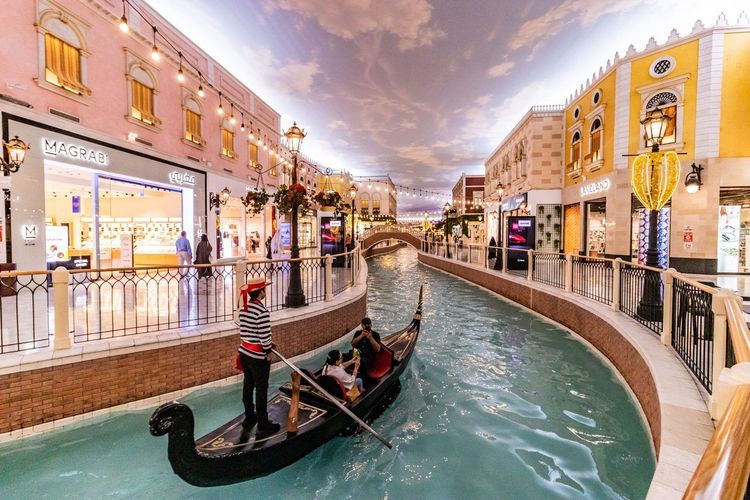
The Villaggio Mall (Aspire Zone, Doha, rated 4.6/5 on Google with 46,828 reviews) reproduces a Venetian canal setting beneath a ceiling painted as an artificial blue sky, gondolas included for a paid ride between the stores. Opened in 2006, it remains one of the most visited shopping centers in the country, with over 400 shops and an adjacent indoor theme park.
An air-conditioned Olympic ice rink completes the offer, popular with families looking to escape the outdoor heat in the afternoon.
13. Doha Quest, the Indoor Theme Park
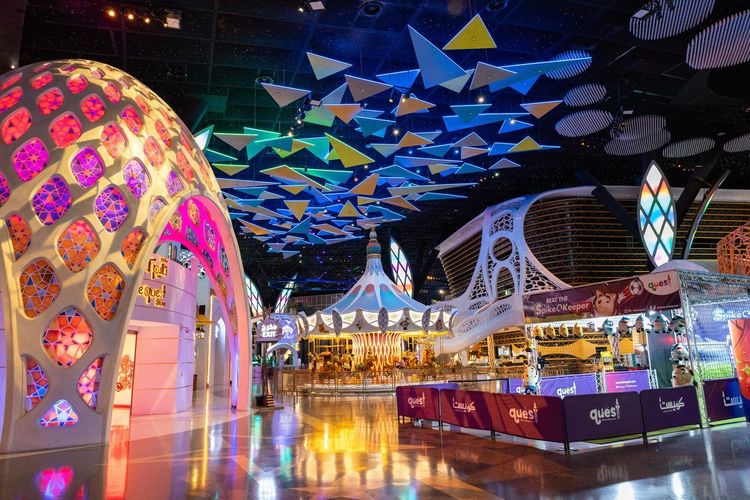
Doha Quest (Doha Oasis, Msheireb, Doha, rated 4.4/5 on Google with 2,542 reviews) claims the title of Qatar's largest indoor theme park, with more than thirty rides and attractions spread across three themed worlds: Oryxville, evoking an ancient Arab past; City of Imagination, focused on the present; and Gravity, oriented toward a space-age future. Opened in 2021 inside the Doha Oasis complex in the heart of Msheireb, it offers an air-conditioned leisure break in midsummer, when outdoor temperatures deter any daytime activity outside.
The indoor roller coaster EpiQ, billed as the world's tallest indoor roller coaster, stands in contrast to the gentler rides and entertainment in the zone dedicated to younger children. Expect an entry price of around 250 QAR for unlimited all-day access — a budget on the higher end compared to other family activities in the city.
School groups and large families often benefit from reduced rates on weekdays, outside the weekend when attendance spikes sharply on Fridays and Saturdays. Being located in the heart of Msheireb Downtown makes it easy to follow up with a visit to the district, a stop at the nearby Souq Waqif, or a metro ride just a few minutes' walk away — all without getting back in the car.
14. Qanat Quartier, Qatar's Little Venice
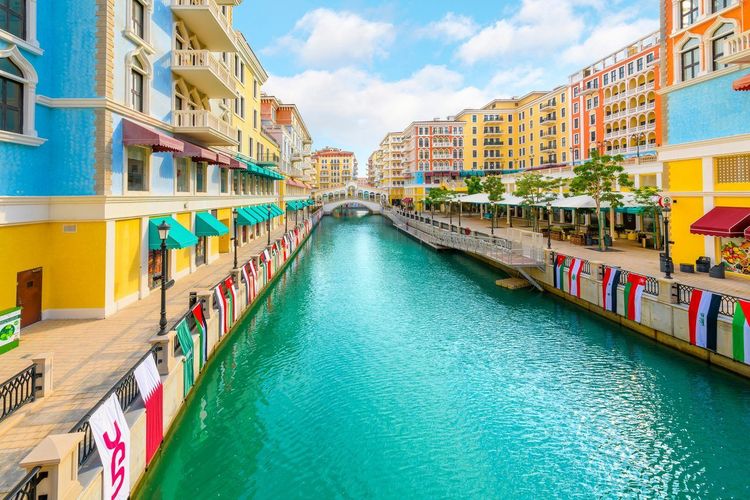
The Qanat Quartier (The Pearl, Doha, rated 4.5/5 on Google with 4,000 reviews) is the most unusual part of The Pearl-Qatar: a network of navigable canals lined with colorful facades directly inspired by Burano, the Venetian island famous for its pastel houses. Gondolas and small electric boats allow visitors to cruise the canals for a modest fare, generally around 25 QAR for a fifteen-minute ride.
The pedestrian alleyways, free of motor traffic, are packed with cafés and terrace restaurants — a rare configuration in Doha where cars dominate almost everywhere else. The contrast of pink, yellow, and sky-blue facades against the desert sky makes for a particularly photogenic setting, especially in the late morning when the light is still soft.
The district is easily walkable from Porto Arabia, about ten minutes along the main marina.
15. Katara Beach, Swimming in the City
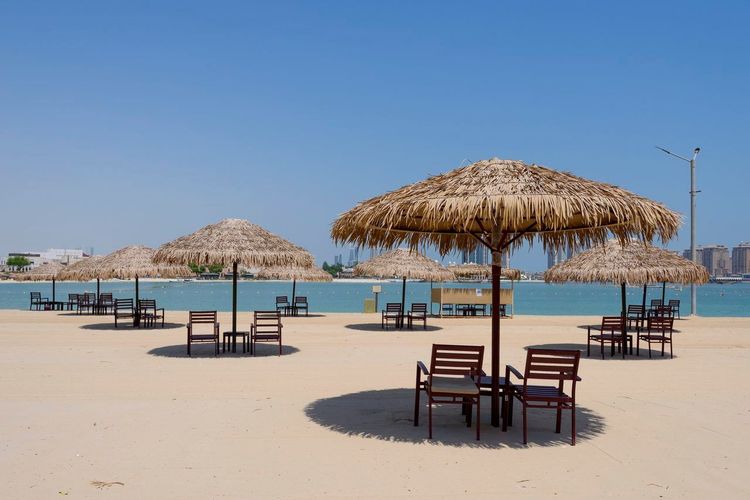
For the recurring question of where to swim in Doha, Katara Beach (Katara, Doha, rated 4.4/5 on Google with 5,000 reviews) remains the simplest option: groomed sand, paid sun loungers, showers, and light refreshments just meters from the water, in a supervised family environment.
Unlike the wilder, unequipped public beaches along the Corniche, Katara Beach charges a modest entry fee (around 20 QAR on weekdays) that guarantees a well-maintained setting and shallow water suitable for children. Swimming is possible year-round, as the water temperature rarely drops below 22°C even in the heart of the Qatari winter.
16. Oxygen Park and Aspire Zone, Breathing in the Urban Desert
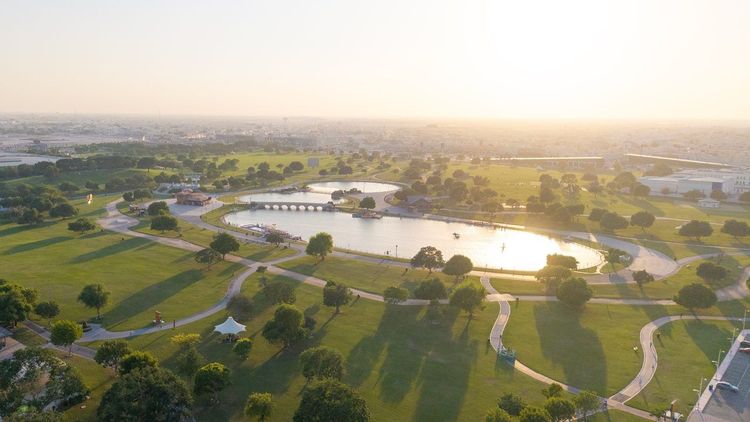
Oxygen Park (Aspire Zone, Doha, rated 4.6/5 on Google with 4,481 reviews) spreads across more than 32 hectares of lawns and ponds at the foot of the Aspire Tower, recognizable by its 300-meter-tall Olympic torch shape, a legacy of the 2006 Asian Games. The park remains one of the few open and free green spaces in the capital, heavily frequented at sunset by joggers and families picnicking.
A misting system installed along the main pathways makes walking bearable even in late spring, when temperatures already exceed 35°C. The surrounding Aspire Zone complex also includes several stadiums, an Olympic swimming pool, and the 3-2-1 Qatar Olympic and Sports Museum, dedicated to Olympic history and the story of sport in Qatar.
17. Desert Safari, Dune Bashing, and a Bedouin Camp
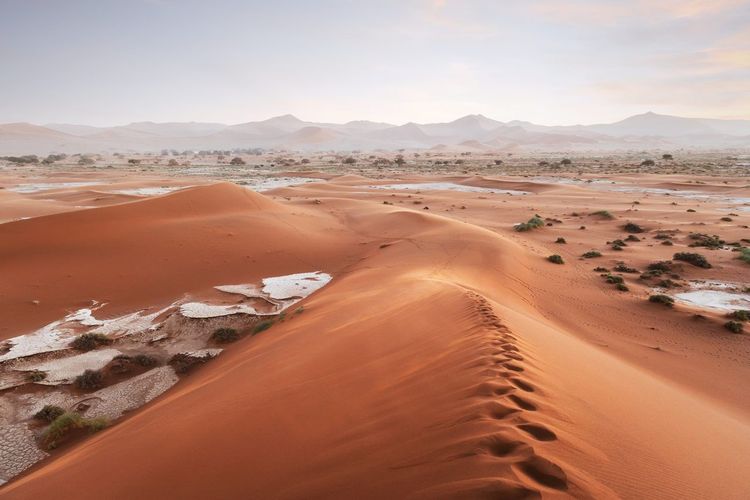
A desert safari consistently tops the list of searches related to Doha, and for good reason: less than an hour's drive south of the capital, the Sealine dunes (Mesaieed, Qatar, rated 4.6/5 on Google with 9,000 reviews) offer a total contrast to the glass skyline of the city center.
Organized excursions, typically in 4x4s driven by experienced drivers, alternate between sand rollercoaster thrills (the famous dune bashing) and photo stops at the tops of ridges overlooking the inland sea of Khor Al Adaid — one of the rare places in the world where the desert meets the sea directly with no intermediate coastline. Allow half a day for a basic round trip, or a full day with swimming and lunch under a Bedouin tent.
The most comprehensive packages include an overnight stay in an air-conditioned tent, a barbecue dinner, a tanoura dance show, and stargazing far from any light pollution — an experience radically different from the rest of an urban stay. Prices vary significantly according to comfort level, from 150 QAR for a basic group excursion to several hundred for a private overnight package.
Pack light but covering clothing to protect yourself from the sun during the journey, along with a swimsuit if you plan to swim at Khor Al Adaid: the water there stays surprisingly warm, sometimes even warmer than the Gulf itself due to the shallow depth. Local agencies generally offer a pick-up directly from city-center hotels, which simplifies logistics for visitors without a vehicle.
The best season for this excursion runs from October to April, when daytime temperatures drop below 30°C: in the heart of summer, between June and August, ground temperatures regularly exceed 45°C, making the experience grueling despite the vehicle's air conditioning. Booking several days in advance is recommended during peak tourist season, particularly around Gulf school holidays.
18. The Zig Zag Towers and Lusail, the City of the Future
The Zig Zag Towers (Lusail, Doha, rated 4.5/5 on Google with 300 reviews), recognizable by their sawtooth facade that intersects at mid-height, have become one of the most shared architectural subjects in the region in recent years. Located in the new district of Lusail, a new city developed north of Doha that will eventually house more than 200,000 residents, they stand alongside Lusail Stadium, where the 2022 FIFA World Cup final was played.
The Lusail marina, still partially under development, already offers several terrace restaurants and a pleasant evening promenade, less crowded than The Pearl-Qatar. Allow about twenty minutes' drive from West Bay to reach the district, which is in full expansion and changes character every year.
19. Sheikh Faisal Museum, the Gulf's Most Unusual Private Collection
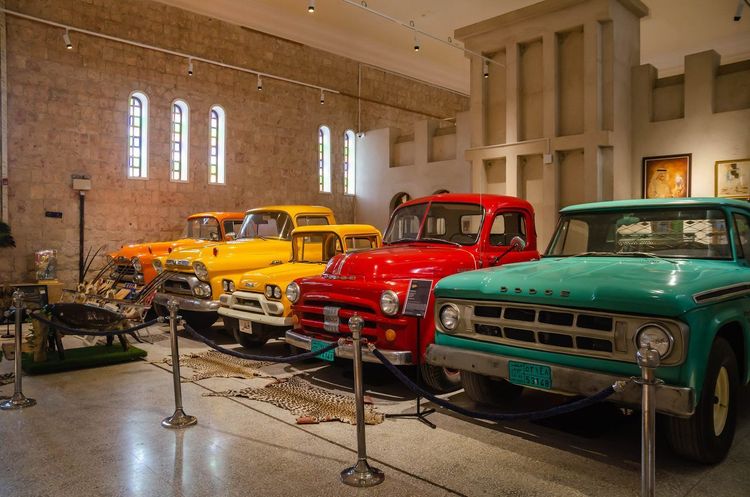
The Sheikh Faisal Museum (Al Samriya, Doha, rated 4.6/5 on Google with 2,170 reviews) brings together the personal collection of Sheikh Faisal bin Qassim Al Thani, amassed over several decades and partially opened to the public since 1998. Across nearly 20,000 m² of exhibition space spread over some twenty themed galleries, visitors encounter a mix of classic cars and supercars, antique weapons, Persian carpets, a genuine Egyptian mummy, and a reconstruction of a traditional Bedouin village.
The whole surprises by its lack of strict museographic logic: display cases combine 10th-century Islamic artifacts with 1950s automobiles, an accurate reflection of a collector's personal passions rather than a curatorial plan designed for a general audience. It is precisely this haphazard, almost cabinet-of-curiosities quality that wins over visitors tired of overly polished institutional museums.
Located about thirty minutes' drive from the city center, the museum is best visited in the late morning, paired with lunch at the adjoining traditional restaurant, which serves home-style Qatari cuisine rarely found elsewhere in this form. Entry is paid but modest, around 50 QAR, and a guided tour in English or Arabic is included in the ticket price.
Booking your time slot in advance is advisable on weekends, as organized groups fill the available guided tours quickly.
20. Al Wakrah, the Coastal Getaway South of Doha
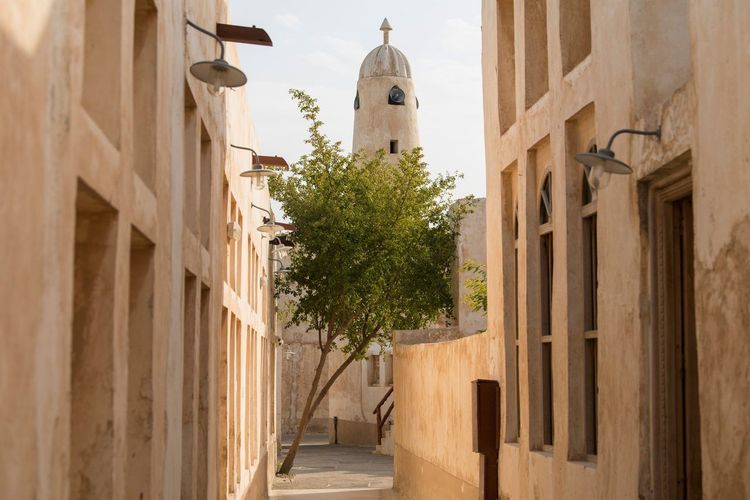
About thirty minutes south of the capital, Al Wakrah (Al Wakrah, Qatar, rated 4.5/5 on Google with 1,500 reviews) retains the atmosphere of a traditional fishing port that Doha has largely lost through its rapid development. The local corniche, shorter and far less busy than the capital's, runs along a waterfront dotted with colorful fishing boats and a small restored souk — a scaled-down version of Souq Waqif.
The town also houses Al Janoub Stadium, designed by Iraqi-British architect Zaha Hadid and inspired by the hull of a traditional dhow — one of the most aesthetically accomplished venues built for the 2022 FIFA World Cup. Guided stadium tours, offered on certain days outside sporting events, give access to the dressing rooms and the pitch, an option appreciated by football enthusiasts who don't always find a match scheduled during their stay.
The Al Wakrah souk, more modest than Doha's, is interesting for its decidedly less touristy atmosphere: vendors sell mostly everyday goods rather than souvenirs, and prices are noticeably lower than in the city center. A historic early-20th-century mosque, restored with its mangrove timber columns imported from East Africa, completes the waterfront visit.
This getaway is particularly well suited to a fresh fish lunch, with several seafood restaurants opening directly onto the harbor where the morning catch arrives. Allow half a day for the round trip including transport, making it an easy excursion to combine with the return route from the Sealine desert, located about twenty minutes further south.
Ryo appreciates this kind of stop that receives less coverage in mainstream guides: it is often in secondary cities, away from the most photographed attractions, that a country's most authentic atmosphere is found. Al Wakrah illustrates the Qatari paradox well, where tradition and an ultra-modern stadium coexist within just a few hundred meters of each other.
On winter weekends, between November and February, a small producers' market sets up near the harbor, where local fishermen and farmers sell their catch and harvest directly — a scene rarely captured by travel guides but representative of everyday Qatari life far from the clichés of oil wealth.
FAQ
How many days do you need to visit Doha?
Two days are enough to cover the essentials: Souq Waqif, the Corniche, and the Museum of Islamic Art. Three days allow you to add The Pearl-Qatar, Katara, and a desert excursion, while a week gives you time to explore Al Wakrah and Lusail at a leisurely pace.
What are the best things to do in Doha with family?
Villaggio Mall, Doha Quest, and Katara Beach offer the widest range of air-conditioned or supervised family activities. Oxygen Park and the Corniche are equally suited to daytime strolls and evening walks with children.
Can you visit Doha on a layover?
Yes: between two flights, a free or low-cost transit package often allows you to leave the airport for several hours. Souq Waqif, the Corniche, and the Museum of Islamic Art are all reachable in less than half a day from Hamad International Airport.
Where can you swim in Doha?
Katara Beach is the easiest and most supervised option in the city. For a wilder experience, the inland sea of Khor Al Adaid, to the south, combines swimming with a dramatic desert landscape.
What to do in Doha in 2 days?
Spend the first day at Souq Waqif, the Corniche, and the Museum of Islamic Art, then dedicate the second to Katara, The Pearl-Qatar, and an afternoon at the beach. This combination covers all the highlights without overloading your schedule.
Is Doha a safe destination for travelers?
Qatar ranks among the safest countries in the world according to international crime indexes. Visitors should, however, respect certain dress codes and behavioral rules, especially in religious sites and traditional public spaces.
Where can you go on a desert safari from Doha?
Excursions to the Sealine dunes and the inland sea of Khor Al Adaid, less than an hour from the capital, remain the benchmark for dune bashing and Bedouin camping, whether for a half-day or a full overnight stay.
Doha, between Bedouin Tradition and Deliberate Modernity
Doha is best discovered through contrasts rather than consensus: a centuries-old souk just minutes from a museum designed by one of the greatest architects of the 20th century, a family beach steps away from a pearl-shaped artificial island, a dune desert reachable in less than an hour's drive from air-conditioned glass towers. This diversity, rare at such a geographic scale, explains why the city continues to surprise visitors who initially came for a simple layover.
Whether you have two days between flights or a full week to explore the surroundings as far as Al Wakrah, this list covers more than enough to build a tailor-made itinerary. Ryo continues to explore destinations where heritage and modernity answer each other around every corner, and Doha — with its unique blend of Bedouin tradition and contemporary architecture — clearly deserves its place among the next capitals to explore on foot, discovery notes in hand.