
Créé par Romane, le 7 mai 2026
Votre guide Ryo
© Shutterstock
Every year, in the heart of April, Seoul transforms into an impressive pink and white impressionist painting. Millions of cherry trees simultaneously come into bloom, immersing the Korean capital in a poetic atmosphere unique in the world. Seoul's Cherry Blossom Festival — or cherry blossom festival — is much more than a simple seasonal event: it's a cultural ritual deeply rooted in the Korean soul, a moment of communion between nature, history and the modernity of a bustling city.
Whether you're a traveler passionate about Asian culture, a photographer seeking breathtaking landscapes or simply curious about the ephemeral beauty of cherry blossom season in South Korea, this guide will give you all the keys to best prepare your visit. From must-see places to the most practical advice, including activities not to be missed under any circumstances, discover why Seoul's Cherry Blossom Festival is among the most enchanting spring events in all of Asia.
Seoul's Cherry Blossom Festival, an unmissable spring event
Cherry blossom season is undoubtedly the most celebrated natural phenomenon in South Korea. In a city like Seoul, which has more than ten million inhabitants and permanent effervescence, this moment of blooming acts like an enchanted parenthesis. Parks fill with families, couples and tourists from around the world who come to witness this spectacle that Koreans call beotkkot (벚꽃), cherry blossoms.
The symbolism of cherry trees in South Korea
Contrary to what one might believe, the tradition of contemplating cherry blossoms doesn't exclusively belong to Japan. In South Korea, cherry blossom flowering is also associated with renewal, ephemeral beauty and the fragility of life. Cherry blossoms, which only last a few days before falling in a rain of pale pink petals, symbolize the transient nature of things. This Buddhist philosophy deeply colors the way Koreans experience this event: they take time to stop, picnic on the grass, share a moment of calm in the midst of daily agitation. Seoul's Cherry Blossom Festival is thus a true popular celebration, joyful and contemplative at the same time.
When does cherry blossom flowering occur in Seoul?
Cherry blossom flowering in Seoul depends each year on weather conditions. Generally, the first buds appear at the end of March, and full bloom is expected during the first half of April. Korean meteorologists publish precise forecasts each year, eagerly awaited by cherry blossom enthusiasts. For example, in 2026, flowering in Seoul is estimated around April 1st, with peak blooming around April 8th to 12th — dates of the Yeouido Cherry Blossom Festival. The total flowering duration is about one to two weeks, depending on weather whims. It's therefore advisable to monitor flowering forecasts published by the Korea Tourism Organization to plan your visit at the ideal moment.
The Yeouido Spring Flower Festival, epicenter of the cherry blossom celebration
Among all the spring events in the capital, the Yeongdeungpo Yeouido Spring Flower Festival is the most emblematic of Seoul's Cherry Blossom Festival. Organized each year in the Yeouido district, it attracts several million visitors during its short duration and constitutes one of the most photographed cultural events in all of South Korea.
The Yeouiseo-ro cherry tunnel
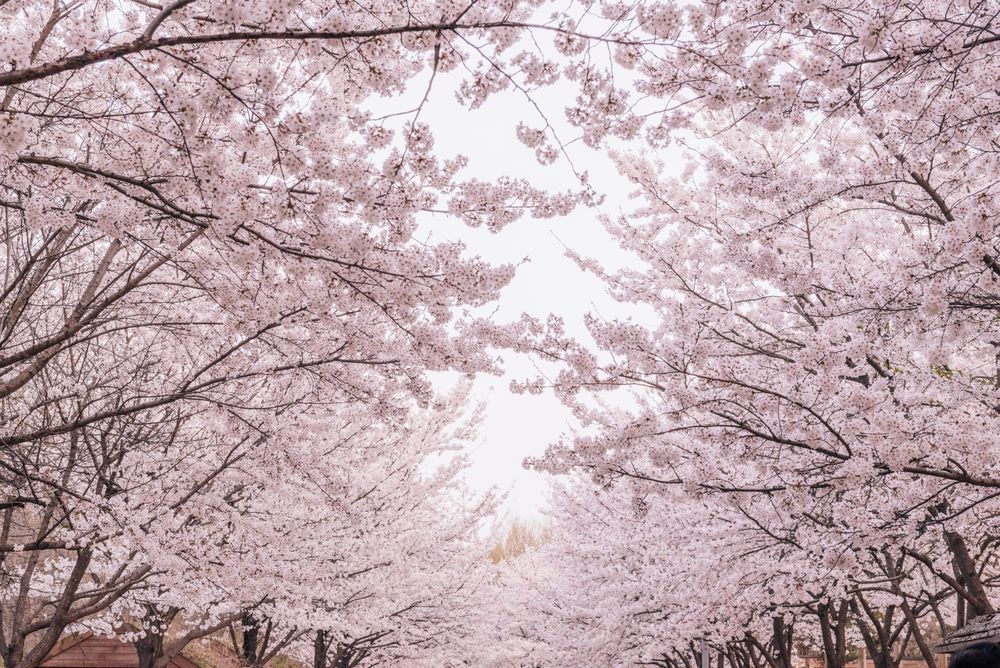
The beating heart of the festival is located along Yeouiseo-ro, the boulevard that runs alongside South Korea's National Assembly. Over nearly 1.7 kilometers, no less than 1,886 Yoshino cherry trees — Prunus × yedoensis, variety called "king cherry" — form an absolutely stunning luminous pink flower tunnel. Walking under this natural vault, surrounded by a joyful crowd, is an unforgettable sensory experience: petals swirl in the air like perfumed snow, leaving their ephemeral imprint on the city. Yeouido Park (68 Yeouigongwon-ro, Yeongdeungpo District, Seoul — rated 4.4/5 on Google for 6,159 reviews) also constitutes a beautiful walking space around the main site.
Yeouido festival program and activities
The Yeouido festival, which generally lasts five days, is much more than a simple botanical walk. Beyond the flowered alleys, the program is enriched each year with street performances, concerts and cultural performances that animate the park from morning to evening. Food trucks and catering stands offer the full range of Korean street food — tteokbokki, odeng, pajeon and other comforting specialties to enjoy while contemplating the flowers. Photo exhibitions and pop-up artistic installations also mark the route, offering magnificent photo opportunities. And if you want to live an even more memorable experience, it's possible to book a yacht cruise on the Han River to admire the cherry trees from the water at sunset — a radically different perspective very popular with the most romantic visitors.
How to get to Yeouido Park?
The Yeouido district is very well served by Seoul's metro. Yeouido station (lines 5 and 9) or Yeouinaru station (line 5) allow you to reach the festival on foot in a few minutes. During festival days, it's strongly discouraged to come by car: traffic jams are considerable and parking spaces extremely rare. Coming early in the morning — before 9am — allows you to enjoy the cherry tree atmosphere without crowds, and capture the most beautiful photos in the golden light of sunrise.
Other essential sites for admiring cherry blossoms in Seoul
Seoul's Cherry Blossom Festival is not limited to Yeouido. The Korean capital offers a multitude of sites where you can contemplate cherry blossoms in very different settings, from lakeshores to historic village alleys, including natural parks in the heart of the city.
Seokchon Lake, between cherry trees and modern skyline
Located in the Jamsil district, just steps from the famous Lotte World, Seokchon Lake (206 Songpa-namugilro, Songpa District, Seoul — rated 4.5/5 on Google for 5,074 reviews) is one of the most photogenic spots of Seoul's entire Cherry Blossom Festival. The path that goes around the lake for about two kilometers is bordered by cherry trees whose branches gracefully lean toward the water, creating a strikingly beautiful reflection. In the background, the iconic Lotte World Tower and the amusement park's Ferris wheels offer a fascinating contrast between nature and modernity. In the evening, illuminations extend the magic until nightfall, making Seokchon Lake one of the rare places where you can appreciate cherry trees both day and night. This place is particularly suitable for families, thanks to its numerous picnic spaces and accessible facilities.
Namsan Park and N Seoul Tower
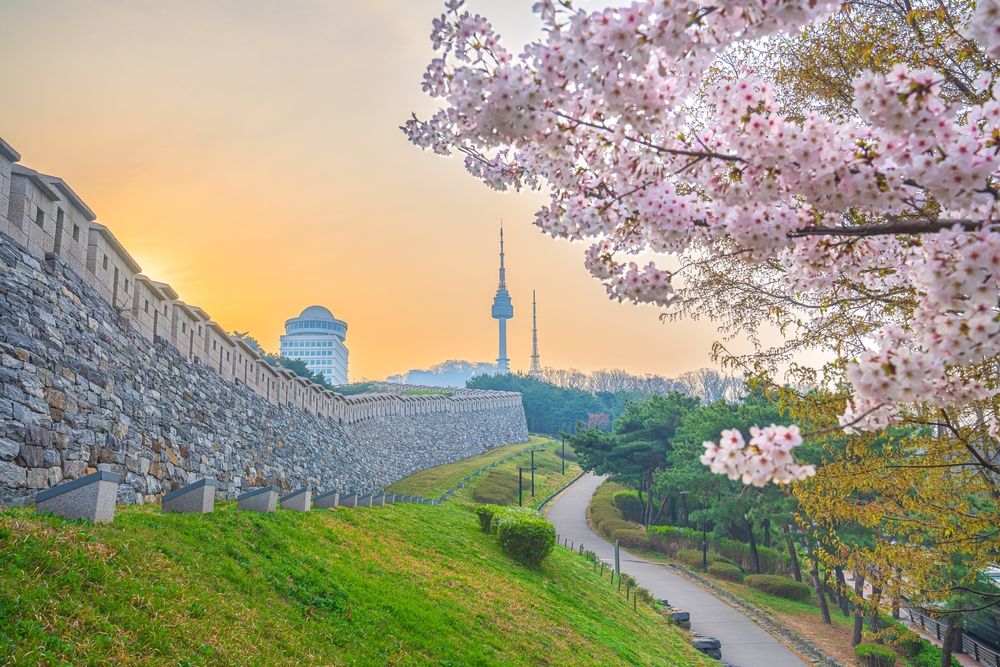
Mount Namsan, the capital's green lung, also covers itself with a blanket of flowers every spring. The wooded trails that climb from the foot of the hill to the summit offer spectacular perspectives on the city below, with cherry blossoms in the foreground. At the summit stands the N Seoul Tower, emblematic tower that rises to nearly 480 meters altitude (tower included). By taking the cable car, you'll enjoy a striking panoramic view of the city's rooftops bathed in cherry blossom pink — a tableau that few world capitals can rival. The N Seoul Tower is indeed one of the highlights of the Ryo audio-guided tour, which will guide you through the streets and emblematic neighborhoods of the city.
Gyeongbokgung Palace under cherry blossoms
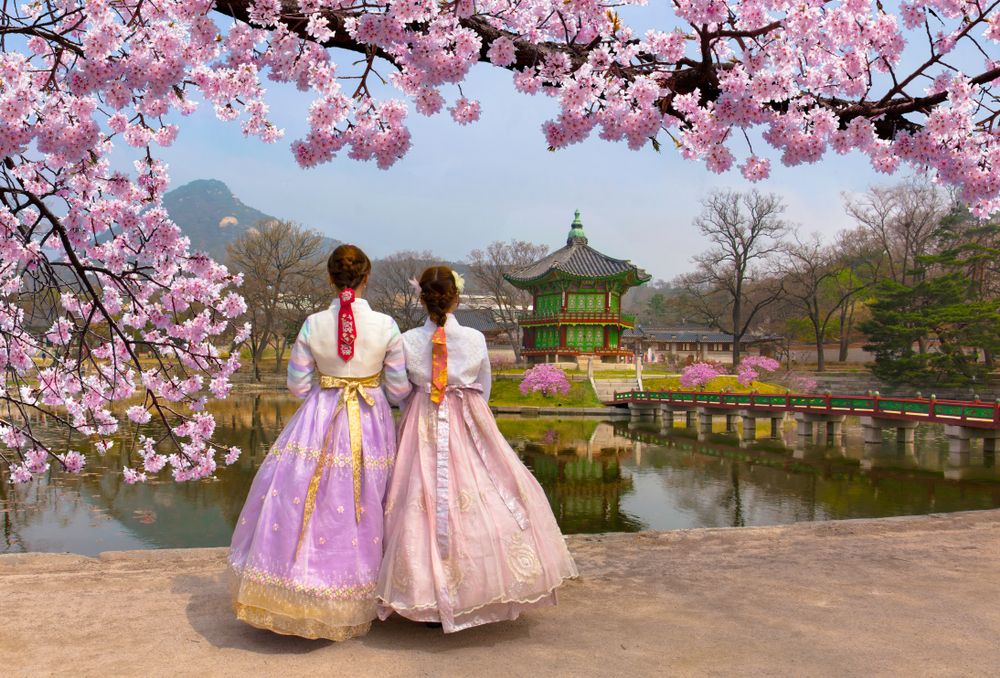
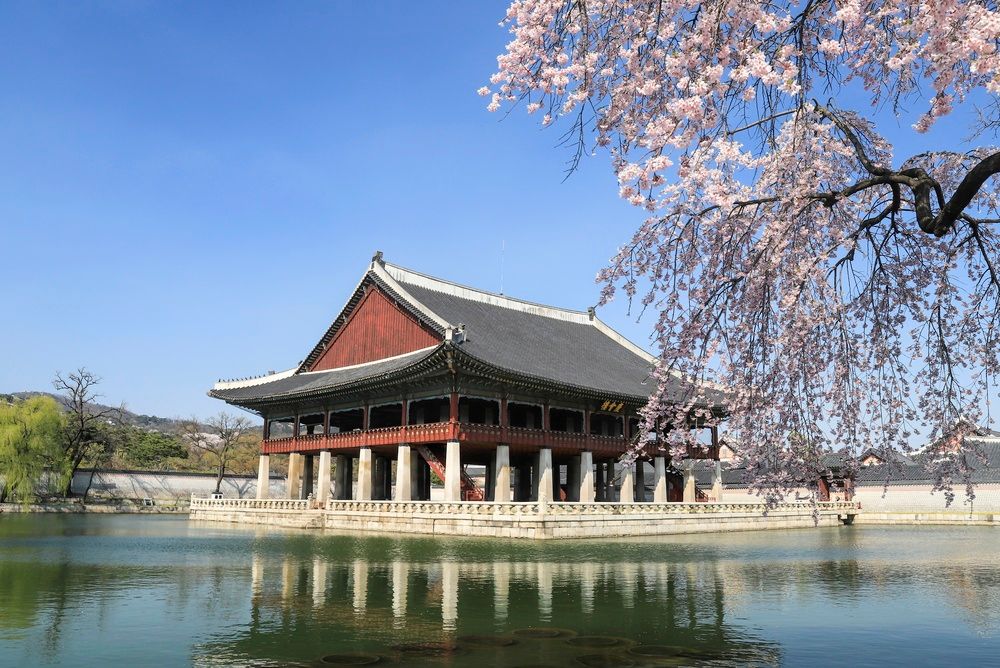
There are few visual contrasts as striking as that of a historic palace with pagoda roofs, framed by clouds of pink flowers. Gyeongbokgung Palace, the largest and most impressive of Seoul's five royal palaces, becomes during cherry blossom season a setting of unreal beauty. Built under the Joseon dynasty in the 14th century, this palace is the symbol of Seoul's historic soul. If you come for the Cherry Blossom Festival, don't miss Changdeokgung Palace, UNESCO World Heritage listed, and its secret garden — the Huwon — which houses some cherry trees of rare elegance. Note that Gyeongbokgung Palace is closed on Tuesdays, remember to plan your visit accordingly. You can even wear a traditional hanbok at the palace entrance for a memorable photographic experience.
Seoul Forest
Less known to tourists but beloved by locals, Seoul Forest (273 Ttukseom-ro, Seongdong-gu, Seoul — rated 4.6/5 on Google for 10,554 reviews) is a vast natural park of more than 595,000 m² that runs along the Han River in the trendy Seongsu district. During the Cherry Blossom Festival, its paths are carpeted with cherry blossoms, while deer roaming freely within the park wander among families. The atmosphere is more relaxed and authentic than at Yeouido, and photographic opportunities are exceptional thanks to numerous water features and natural compositions. It's the ideal place to escape the crowds while fully enjoying spring magic.
Bukchon Hanok Village in spring
For a truly timeless experience, head to Bukchon Hanok Village, historic district where more than 600 years of traditional Korean architecture are preserved. Its winding alleys between hanok houses are particularly enchanting in spring, when cherry trees add their pink touches to the gray tiles of curved roofs. This neighborhood is part of the Ryo audio-guided tour, and wandering there with your headphones will allow you to understand the fascinating history of these dwellings while enjoying the flower spectacle. Nearby is also Insadong district, ideal for a shopping or culinary break after your floral walk.
What to do and experience during Seoul's Cherry Blossom Festival?
Beyond simple contemplation, Seoul's Cherry Blossom Festival is an experience to be fully lived, with all your senses. The city implements a multitude of activities to make this moment unforgettable, and Koreans themselves know better than anyone how to enjoy the event.
Walking and picnicking under cherry trees
Koreans' favorite activity during cherry blossom season is undoubtedly picnicking. As soon as flowering begins, parks are covered with colorful tarps, tablecloths and picnic baskets. Sitting under a cherry tree in full bloom, sharing Korean specialties and watching petals slowly fall is one of the most beautiful and simplest experiences Seoul can offer. Along the Cheonggyecheon, the developed urban stream that crosses downtown, banks are also adorned with cherry blossoms in spring, offering a very pleasant walking setting just steps from major shopping thoroughfares. The park along the Han River, just in front of Yeouido, is also a huge relaxation space where Koreans gather en masse for their spring outings.
Korean street food, ideal companion to the festival
Seoul's Cherry Blossom Festival is also a great gastronomic celebration. Around flowering sites, food trucks and street stalls offer a selection of essential Korean specialties: tteokbokki (spicy rice cakes), odeng (fish skewers), hotteok (sweet pancakes filled with nuts and honey), bindaetteok (mung bean pancake) or the famous gimbap. Don't forget the colorful cherry blossom-themed snacks — cookies, ice cream and other limited edition treats that invade bakeries and cafés from April. After your floral visit, a detour through Gwangjang Market — one of Seoul's oldest covered markets — will allow you to extend the taste experience in an authentic and popular atmosphere.
Night illuminations, a second life for cherry trees
If Seoul's Cherry Blossom Festival is magnificent during the day, it takes on an almost fairy-like dimension once night falls. Illuminations are installed in several key sites — notably at Seokchon Lake, Yeouido and around Gyeongbokgung Palace — to transform cherry trees into luminous lanterns suspended in darkness. This nocturnal experience is very popular with couples and photographers, who find compositions of great beauty there. To avoid long waits, it's advisable to plan nighttime outings on weekdays rather than weekends.
Wearing hanbok, traditional Korean attire
Participating in Seoul's Cherry Blossom Festival while wearing a hanbok — traditional Korean costume in bright colors — is an experience many travelers choose to live. Many shops offer hourly rentals, particularly at the entrance to Gyeongbokgung Palace and in Bukchon Hanok Village. Walking in hanbok under cherry blossoms is both a cultural immersion and a highly appreciated photographic exercise — and often, wearing hanbok allows free entry to several royal palaces. It's one of those small experiences that make all the difference in a trip to Seoul.
Download the audio-guided tour to discover Seoul on foot and independently
Your presence in Seoul for the Cherry Blossom Festival is a golden opportunity to discover the historical and cultural treasures of the Korean capital. In addition to your cherry blossom strolls, the Ryo audio-guided tour to visit Seoul on foot offers you an itinerary of 19 points of interest — from Gyeongbokgung Palace to Bukchon Hanok Village, including Gwanghwamun Square and N Seoul Tower. With your smartphone and headphones, let yourself be guided at your own pace, without schedule or group constraints, and discover the city's secrets through historical commentary, anecdotes and some mysteries. It's the ideal way to complete your spring experience by combining culture and cherry blossom beauty.
Practical tips for preparing your stay during Seoul's Cherry Blossom Festival
Properly preparing your visit during Seoul's Cherry Blossom Festival is essential to fully enjoy the event. Here's the key information to know before leaving.
The best period and ideal hours to visit
Cherry blossom flowering in Seoul generally occurs between late March and mid-April, depending on the year's weather conditions. Flowering forecasts are published each year by the Korea National Tourism Organization (KTO) — it's advisable to consult them from February to adjust your travel dates. For hours, avoid weekends during the day, when attendance reaches its peak. The best hours to enjoy cherry trees without too many people are early morning (before 9am) or late evening, when illuminations transform sites into magical settings. On weekdays, even during the full festival, the atmosphere is more serene than on weekends.
How to get around Seoul during the festival?
Seoul's metro is by far the most efficient means of transportation to get around during the Cherry Blossom Festival. With 9 main lines and more than 300 stations, it serves all flowering sites: Yeouido (Yeouido or Yeouinaru stations, lines 5 and 9), Seokchon Lake (Jamsil station, line 2 or 8), Gyeongbokgung Palace (Gyeongbokgung station, line 3), Seoul Forest (Seoul Forest station, Bundang line) and Bukchon Hanok Village (Anguk station, line 3). The bus network perfectly complements the metro to reach certain less connected sites. You can load a rechargeable T-money card in any convenience store to use throughout your stay. Note that visiting Seoul on foot with the Ryo tour is perfectly suited to this historic downtown district, accessible from several metro stations.
Where to stay during Seoul's Cherry Blossom Festival?
The Cherry Blossom Festival period is one of the most popular of the year in Seoul, and accommodations quickly fill up. It's strongly recommended to book your hotel several months in advance, ideally from January or February. To be well positioned, the Jongno, Myeongdong or Yeouido districts are particularly practical: they are close to the main festival sites and offer easy access to the metro. If you want to discover addresses suitable for all budgets, you can consult our selection of the best hotels in Seoul to find the establishment that matches your desires. During cherry blossom season, Visiting Seoul in a central district will allow you to easily combine festival and cultural exploration of the capital.
Whatever your program, don't forget to download the Ryo audio-guided tour for Seoul before your departure: it's the ideal tool to organize your days between cultural visits and moments of contemplation under cherry blossoms, while benefiting from a pocket guide always available in your pocket.
Conclusion
In conclusion, Seoul's Cherry Blossom Festival is much more than a simple floral spectacle: it's a total immersion in Korean culture, an invitation to slow down in one of Asia's most dynamic cities and to let the ephemeral beauty of cherry blossoms permeate every moment of your stay. From the festive excitement of Yeouido Park to the serenity of Bukchon Hanok Village streets, including Seokchon Lake reflections and the majesty of Gyeongbokgung Palace under a pink blanket, Seoul offers an unexpectedly gentle face in spring. To extend this experience and discover the historical and cultural riches of the Korean capital, remember to take with you the Ryo audio-guided tour to visit Seoul on foot and independently: your best travel companion to not miss anything of this extraordinary city.
FAQ – Seoul Cherry Blossom Festival
When does Seoul's Cherry Blossom Festival take place?
Seoul's Cherry Blossom Festival generally takes place between late March and mid-April, depending on annual weather conditions. The main festival, the Yeouido Spring Flower Festival, usually runs for five days around the first half of April, when cherry trees reach their full bloom. Exact flowering forecasts are published each year by the Korea National Tourism Organization.
Is Seoul's Cherry Blossom Festival free?
Most cherry blossom flowering sites in Seoul are freely accessible: Yeouido Park, Seokchon Lake shores, Seoul Forest and alleys around Cheonggyecheon are free access. Entry to Gyeongbokgung Palace is paid (about 3,000 won), but discounts are given to people wearing traditional hanbok. Some activities on the festival margins (yacht cruise, private guided tours) are paid and generally must be booked in advance.
How much time to plan for visiting the Yeouido festival?
A complete visit to Yeouido during the Cherry Blossom Festival requires between two and four hours, depending on your pace and the activities you want to do there (walking, picnicking, food trucks, photo sessions). By combining Yeouido with Seokchon Lake or the historic district, it's entirely possible to devote a full day to the festival. To discover the city beyond the festival, the Ryo audio-guided tour is an excellent complement to your program.
Can you see cherry blossoms outside of Seoul in South Korea?
Absolutely! South Korea abounds with spectacular sites for observing cherry blossoms. The Jinhae festival, in the city of Changwon, is considered by many as the most beautiful in the entire country, with its twelve million cherry trees that invade the city in April. Gyeongju, former capital of the Silla Kingdom, also offers an exceptional historical setting to contemplate flowering. On Jeju island, the season begins even earlier, from the end of March, making it a first-choice destination for travelers wishing to anticipate the season.