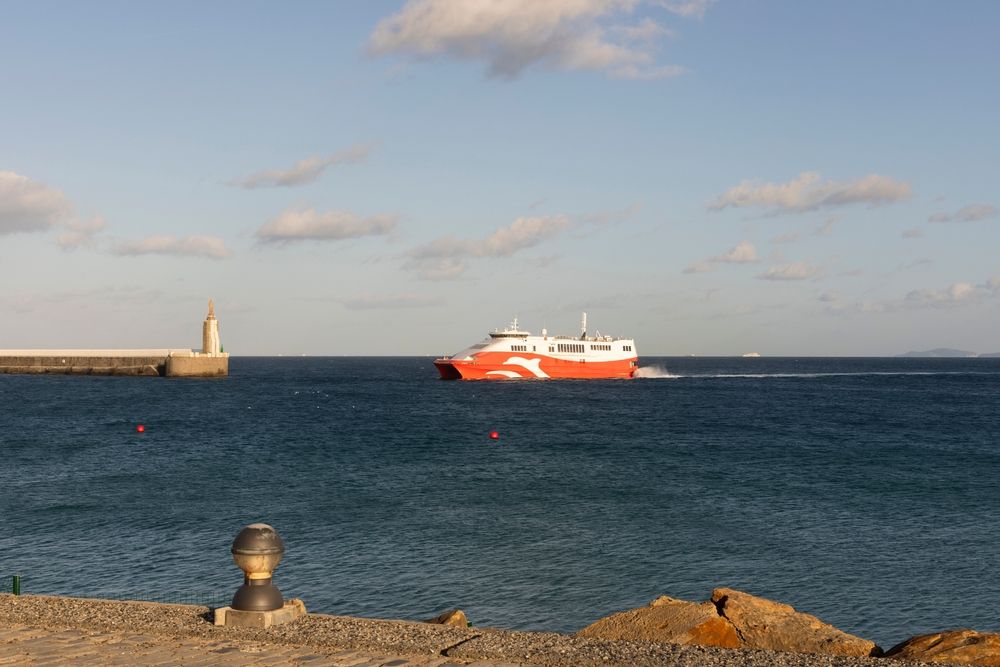

Créé par Emilie, le 4 juin 2026
Votre guide Ryo
How to get to Morocco by ferry from Spain?
© Shutterstock
Are you considering reaching Morocco by ferry from Spain? This travel option offers an attractive alternative to flying, allowing you to cross the Strait of Gibraltar with your vehicle while enjoying a unique maritime experience. Whether you depart from Algeciras, Tarifa, Barcelona or other Spanish ports, many maritime connections are available to reach Moroccan ports. In this comprehensive guide, we present all the essential information to organize your ferry crossing between Spain and Morocco: departure and arrival ports, maritime companies, fares, durations and practical advice.
1. Main departure ports in Spain
Spain has several ports offering regular connections to Morocco. The choice of your departure port will depend on your starting point in Europe, your budget and the time you have for the crossing.
Algeciras, the busiest port
Located in southern Spain, the port of Algeciras is the main gateway to reach Morocco by ferry. This port city, facing Gibraltar, offers frequent crossings to Tanger Med and Ceuta. With more than 75 weekly connections provided by several maritime companies, Algeciras represents the most convenient crossing point to go to Morocco from Spain. The crossing to Tanger Med takes about 1h30, making it one of the fastest routes. Fares start from €40 per passenger in low season, but can increase considerably during summer.
Tarifa, the shortest crossing
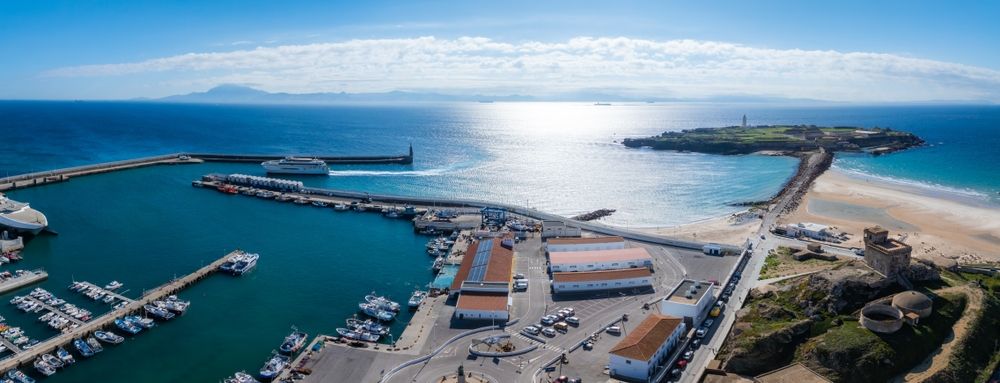
Tarifa stands out for the fastest ferry crossing between Spain and Morocco. From this Andalusian port, you can reach Tanger Ville in just one hour. This connection is particularly appreciated by travelers in a hurry who wish to make a day trip to Morocco. The companies FRS and Inter Shipping operate on this route with regular departures. The average price for a single ticket is around €40 for a foot passenger, plus fees for a vehicle if necessary.
Barcelona, for long-distance journeys
For those departing from northern Spain or southern France, Barcelona offers maritime connections to Tanger Med and Nador. The crossing takes about 27 to 31 hours depending on the company and weather conditions. The companies Grandi Navi Veloci (GNV) and Grimaldi Lines generally provide 2 to 3 departures per week. While this route is longer, it has the advantage of avoiding having to drive across all of Spain by car. Fares start around €100 per passenger, with supplements for cabins and vehicles.
Almeria, an interesting alternative
The port of Almeria, located on the Spanish Mediterranean coast, offers connections to Nador in Morocco. The companies Balearia, Naviera Armas and Trasmediterranea operate on this route with crossings of about 6 to 8 hours. This option is ideal if you are in southeastern Spain and wish to reach northeastern Morocco. Prices vary between €200 and €250 for a passenger with vehicle.
Motril and Malaga
Motril offers crossings to Tanger Med, Al Hoceima and Nador, while Malaga serves Tanger Med. These ports are less frequented than their neighbors but offer interesting alternatives depending on your itinerary. Crossings from Motril last between 6 and 8 hours, and departures are generally less numerous than at Algeciras or Tarifa.
2. Arrival ports in Morocco
Morocco has four main ports welcoming ferries from Spain. Each has specific characteristics that will influence your choice depending on your final destination in Morocco.
Tanger Med, the modern maritime hub
Inaugurated in 2007, Tanger Med has become the main Moroccan port for connections with Spain. This ultramodern port is located about 40 kilometers east of Tanger, about an hour's drive from downtown. It is the busiest port with more than 200 weekly crossings from different Spanish ports. Its modern infrastructure allows rapid processing of passengers and vehicles. From Tanger Med, you can easily reach the main cities of northern Morocco like Tanger, Tétouan or Chefchaouen, the famous blue city.
Tanger Ville, in the heart of the action
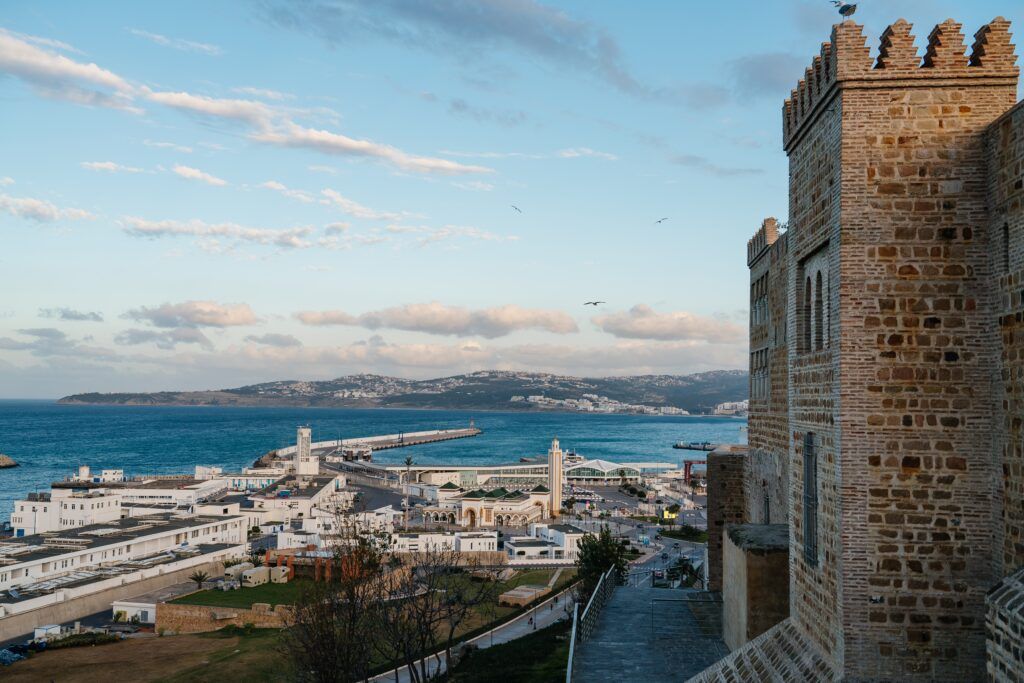
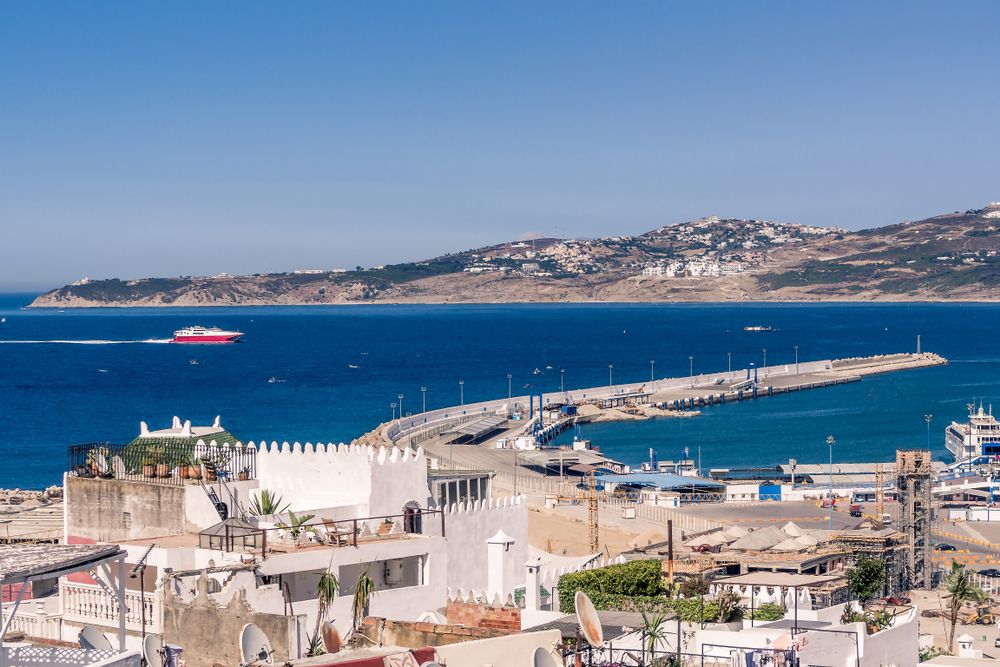
Unlike Tanger Med, the port of Tanger Ville is located right in the city center, which greatly facilitates your arrival if you wish to immediately discover the city. This port mainly welcomes fast ferries from Tarifa. The major advantage is to disembark directly in the historic medina of Tanger, a cosmopolitan city that was a source of inspiration for many artists. From there, you can easily explore the alleys of the old town, the fishing port and the kasbah that dominates the bay.
Nador, gateway to the eastern Rif
Nador is the main destination for ferries from Almeria and Barcelona. Located in northeastern Morocco, this port city is the ideal entry point if you wish to explore the eastern Rif region or reach Fès, the spiritual capital of the country. Crossings to Nador are generally longer but offer the advantage of avoiding the most touristy areas of northern Morocco.
Al Hoceima and Ceuta
Al Hoceima, accessible from Motril, is a coastal town renowned for its magnificent beaches. Ceuta, meanwhile, is an autonomous Spanish city located on the North African coast. Technically, you remain in Spanish territory in Ceuta, but this enclave offers easy access to Morocco by land.
3. Ferry companies to Morocco
Several maritime companies provide connections between Spain and Morocco, each with its specificities, fares and comfort levels. Here are the main companies operating on these routes.
FRS, specialist in fast crossings
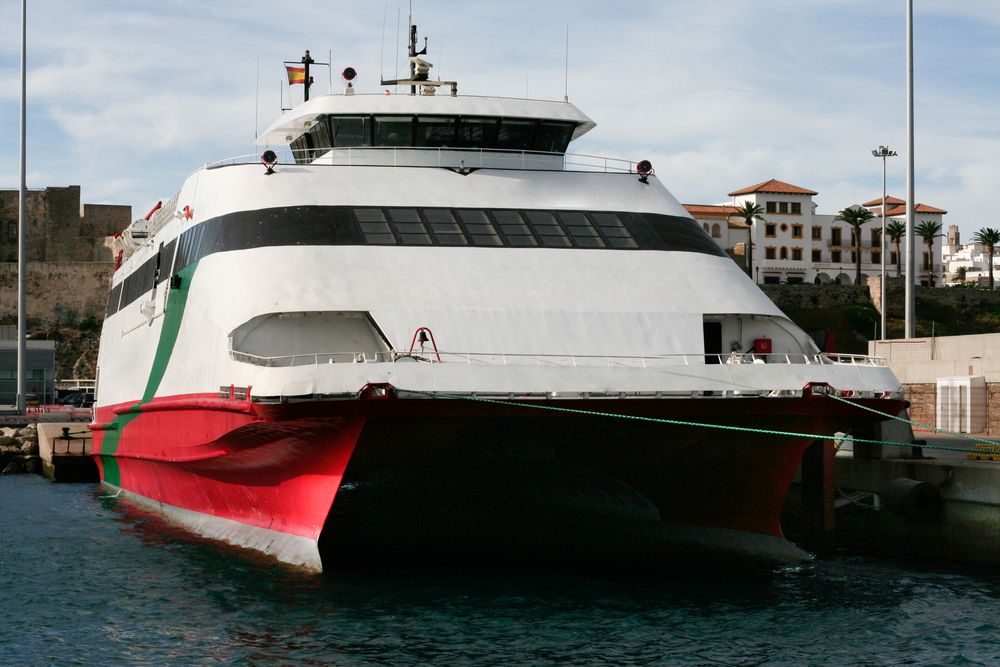
FRS is one of the most popular companies for crossings between Spain and Morocco. It operates mainly on the Tarifa-Tanger Ville and Algeciras-Tanger Med routes with fast and modern vessels. The company stands out for the punctuality of its crossings and the quality of its onboard services. FRS offers several daily departures, which provides great flexibility for organizing your trip.
Balearia, comfort and frequency
Balearia is a Spanish company that serves many routes to Morocco: Algeciras-Tanger Med, Almeria-Nador, and Malaga-Tanger Med. Balearia's fleet consists of modern ferries offering different comfort levels, from reclining seats to private cabins. The company also offers catering services on board and children's areas. Balearia provides up to 10 daily crossings on certain routes during high season.
Trasmediterranea, the maritime experience
With more than 90 years of experience, Trasmediterranea is one of the oldest companies operating in the region. It offers comfortable crossings with spacious vessels equipped with restaurants, bars and duty-free shops. The company mainly serves the Algeciras-Ceuta and Almeria-Nador routes. Trasmediterranea is renowned for its professionalism and the quality of its services.
Other companies
Other companies like AML (Africa Morocco Link), Naviera Armas, Inter Shipping, Grandi Navi Veloci (GNV) and Grimaldi Lines complete the crossing offer between Spain and Morocco. Each offers different services and fares, allowing you to find the solution best suited to your needs and budget.
4. Fares and crossing durations
Prices and durations vary considerably depending on the chosen route, season, ticket type and company. Here's an overview of the main crossings to help you plan your budget.
Algeciras – Tanger Med
This route, the most used, shows fares starting at around €40 per foot passenger in low season. For a passenger with vehicle, count between €150 and €250 depending on vehicle size and period. The crossing takes about 1h30, making it one of the fastest. In high season (July-August), prices can double or even triple, especially for travelers with vehicles. It is therefore strongly recommended to book in advance during this period.
Tarifa – Tanger Ville
The Tarifa-Tanger Ville connection is the shortest with only one hour of crossing. Tickets for foot passengers start around €40, while a vehicle will cost on average €80 to €120 extra. This route is ideal for a day trip or if you are in a hurry. Be careful though, fast ferries can be sensitive to weather conditions, sometimes leading to cancellations in case of strong swells.
Barcelona – Tanger Med
For this long-duration crossing (27 to 31 hours), fares are naturally higher. Count from €100 for a passenger in reclining seat, but it is strongly recommended to book a cabin for more comfort, which brings the price between €200 and €300 per person. For a vehicle, add between €150 and €250. This option nevertheless saves overnight accommodation costs and allows crossing Spain without driving.
Almeria – Nador
Crossings between Almeria and Nador last between 6 and 8 hours. Prices start around €200 to €250 for a passenger with vehicle. This route is less frequented than those of the Strait of Gibraltar, which can offer more availability even in high season.
Money-saving tips
To benefit from the best fares, absolutely avoid the months of July and August as well as school holidays, periods during which prices can be multiplied by two or three. Book your tickets at least 3 to 6 months in advance to take advantage of early booking rates. Consult online comparators like Direct Ferries, which allow you to compare offers from all companies simultaneously. Finally, favor mid-week crossings rather than weekends, generally cheaper.
5. How to book your ferry to Morocco
Booking your ferry can be done in several ways. The most convenient consists of using specialized online booking sites.
Online comparators
Platforms like Direct Ferries, Ferryhopper or Ferryscanner allow you to compare offers from all companies with just a few clicks. You enter your departure port, your destination, your travel dates, the number of passengers and your vehicle characteristics. The site then presents all available options with prices, schedules and crossing durations. You can filter results according to your preferences and book directly online.
Direct booking with companies
You can also book directly on maritime companies' websites. This option can sometimes offer exclusive promotions not available on comparators. The main companies have multilingual sites and intuitive booking systems. Don't forget to create a customer account to track your booking and receive notifications in case of schedule changes.
At the counter or by phone
If you prefer human contact, you can book at the port counter or by phone. This option is useful if you have specific questions or particular needs (accessibility, pet transport, etc.). However, fares may be slightly higher than online and you won't benefit from the possibility of easily comparing offers.
6. Required documents and formalities
Traveling to Morocco requires respecting certain administrative formalities. Here's what you need to prepare before your departure.
Passport and visa
For French, Belgian, Swiss and Canadian citizens, a valid passport is mandatory to enter Morocco. Be careful, the identity card is not accepted, even if it is valid. Your passport must be valid at least until the end of your planned stay. No visa is required for a tourist stay of less than 90 days. Upon arrival at the Moroccan port, you will receive an entry stamp on your passport. Keep it carefully as it will be required when leaving the territory.
Vehicle documents
If you travel with your vehicle, you must present the registration certificate (certificate of registration) in your name. If you drive a vehicle that doesn't belong to you, an authorization to leave the territory signed by the owner is necessary. Your national driving license is accepted in Morocco. International car insurance (green card) covering Morocco is mandatory. Check with your insurer that your contract indeed includes Morocco, otherwise you will need to take out temporary insurance at the border.
Customs formalities
On board the ferry, you will be given a police form (disembarkation card) to fill out with your personal information. This form must be presented at passport control upon arrival in Morocco. Passing through Moroccan customs can take time, especially in high season. Allow at least 30 minutes to 1 hour for formalities. Controls are generally faster for foot passengers than for those with vehicles.
7. Preparing your ferry crossing well
A successful maritime crossing is prepared in advance. Here are our best tips for a peaceful journey.
Arrive early at the port
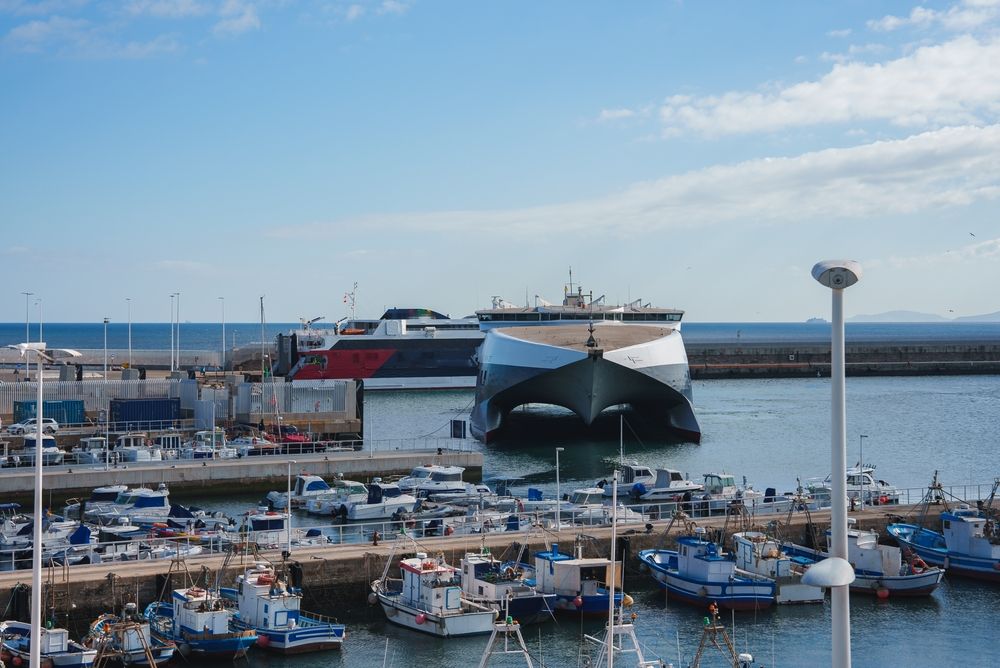
It is imperative to arrive at the port with sufficient advance notice. For passengers with vehicles, count at least 2 hours before departure (sometimes 3 hours in high season). For foot passengers, 1 hour to 1h30 before departure is generally sufficient. This safety margin allows you to complete check-in formalities, pass security controls and park your vehicle in the hold without stress.
Plan something to keep you occupied
Depending on your crossing duration, think about bringing entertainment: books, tablet, games for children. Most ferries offer paid WiFi access, but the connection can be unstable. Ships generally have restaurants, cafeterias and shops. On long crossings, cabins can be booked to rest comfortably.
Think about seasickness
If you are prone to seasickness, take precautions. Anti-nausea medications are available at the pharmacy. Choose a place in the center of the boat and on the main deck, where movements are less noticeable. Avoid staying confined inside and regularly go out for fresh air on deck. Eat lightly before and during the crossing.
Secure your vehicle
If you board with a vehicle, check that it is properly locked and that nothing valuable is visible inside. Access to the vehicle garage is generally prohibited during the crossing for safety reasons. Take with you all the items you will need during the trip: medications, warm clothes, entertainment for children.
8. What to do once you arrive in Morocco
Once disembarked in Morocco, the adventure is just beginning. The Cherifian kingdom is full of wonders to discover, from imperial cities to the desert landscapes of the Sahara.
Explore the northern cities
If you disembark in Tanger, take time to discover this cosmopolitan city that has inspired so many artists. Stroll through the medina, visit the kasbah and enjoy the unique atmosphere of the port. An hour's drive away, Chefchaouen, the blue pearl of Morocco, awaits you with its streets painted in blue and white, nestled in the Rif mountains. Tétouan, a city classified as a UNESCO World Heritage site, also deserves a detour for its authenticity and rich Andalusian heritage.
Discover the imperial cities
Morocco has four imperial cities that testify to the kingdom's past grandeur. Fès, spiritual capital, houses the world's oldest university still in operation and a fascinating medina. Marrakech, the red city, seduces with its colorful souks, sumptuous palaces and the excitement of Jemaa el-Fna square. Meknès impresses with its historical monuments, while Rabat, administrative capital, offers a harmonious blend of tradition and modernity. Each of these cities has a unique character that deserves several days of visit.
Adventure towards the desert
For an unforgettable experience, push on to the Sahara desert. Merzouga, at the gates of the Erg Chebbi dunes, offers camel excursions and nights under the stars in Berber camps. The Dadès valley and Todra gorges offer spectacular landscapes on the way. Ouarzazate, nicknamed the gateway to the desert, is also the ideal starting point to explore the kasbahs of southern Morocco.
Enjoy the Atlantic coast
The Moroccan Atlantic coastline holds beautiful surprises. Essaouira, charming port city with white and blue ramparts, attracts water sports enthusiasts thanks to its constant winds. Agadir seduces vacationers seeking sun with its long sandy beach and pleasant climate all year round. Casablanca, economic capital, is worth the detour for its majestic Hassan II mosque and its art deco architecture.
In conclusion, reaching Morocco by ferry from Spain represents an excellent option to discover this magnificent North African country. Whether you opt for the express crossing from Tarifa to Tanger or for the longer journey from Barcelona, each itinerary offers its advantages according to your needs and budget. By planning your trip in advance, choosing the right period and respecting administrative formalities, you ensure a peaceful crossing to the Cherifian kingdom. Once there, Morocco opens its doors to you with its imperial cities full of history, its breathtaking desert landscapes and the legendary hospitality of its inhabitants. Prepare your documents, book your ferry and let yourself be carried away by this Mediterranean adventure that marks the beginning of an unforgettable journey between two continents.
FAQ: everything you need to know about Spain-Morocco ferries
What is the fastest ferry crossing between Spain and Morocco?
The fastest crossing is the one connecting Tarifa to Tanger Ville, with a duration of about 1 hour. This connection is provided by the companies FRS and Inter Shipping. It's the ideal option for a day trip to Morocco or if you are in a hurry.
Can I travel to Morocco with my identity card?
No, the identity card is not accepted to enter Morocco, even if it is valid. A valid passport is mandatory for all European citizens. Make sure your passport is valid at least until the end of your planned stay in Morocco.
How much does a ferry crossing to Morocco cost with a car?
Prices vary considerably depending on the route and season. For the Algeciras-Tanger Med crossing, count between €150 and €250 for a passenger with vehicle in low season. In high season (July-August), fares can double or triple. The Tarifa-Tanger Ville crossing costs between €120 and €200 with car.
What is the best time to take the ferry to Morocco?
The best periods are spring (March to May) and autumn (September to November). Fares are more affordable, temperatures pleasant and crowds lower. Absolutely avoid July and August if you're looking to save money, as prices explode during this high-traffic period.
Should I book my ferry in advance?
It is strongly recommended to book in advance, especially in high season. Ideally book 3 to 6 months before your departure to benefit from the best fares and guarantee your place. In low season, you can sometimes find last-minute availability, but fares will be less advantageous.
Can you travel with a pet?
Yes, most companies accept pets for an additional fee (around €20 to €40). Your pet must have an up-to-date European passport, be identified by electronic chip and vaccinated against rabies. Some ferries offer cabins that accept animals, inquire when booking.
How long before departure should you arrive at the port?
For passengers with vehicles, arrive 2 to 3 hours before departure (3 hours in high season). For foot passengers, 1h to 1h30 in advance is generally sufficient. These delays allow you to complete all boarding formalities and security checks serenely.
Do ferries to Morocco have WiFi?
Most modern ferries offer WiFi access on board, but it is generally paid and the connection can be unstable, especially at sea. Plan alternatives to entertain yourself during the crossing: books, tablets with downloaded content, board games.