
Créé par Emilie, le 7 mai 2026
Votre guide Ryo
© Shutterstock
Barcelona, jewel of Spanish Catalonia, proves to be an ideal destination for lovers of urban walks. Between exceptional architectural heritage, authentic neighborhoods and Mediterranean panoramas, the Catalan capital offers a mosaic of discoveries on foot. Whether you are passionate about Art Nouveau, medieval history or simply seeking unique atmospheres, these 8 walks will guide you through the multiple facets of this fascinating metropolis.
Download the audio-guided circuit to discover Barcelona on foot and independently
To explore Barcelona in an immersive and enriching way, let yourself be guided by the Ryo itinerary that takes you through 27 emblematic places of the city. This audio-guided circuit to visit Barcelona allows you to discover both the unmissable monuments and the best-kept secrets of the Catalan capital, all at your own pace and in complete autonomy.
1. The Gothic Quarter, journey into medieval Barcelona
The Gothic Quarter of Barcelona represents the historic soul of the city, where every stone tells a thousand years of history. This walk in the Barrio Gótico transports you to the heart of medieval Barcelona, between winding cobblestone streets and secret squares. Begin your exploration with the Cathedral of Saint Eulalia, majestic Gothic construction dedicated to the patron saint of Barcelona (Plaça de la Seu, 08002 Barcelona, rated 4.4/5 on Google for more than 32,000 reviews).
Continue to Plaça de Sant Jaume, the true political heart of Catalonia where the Generalitat and City Hall stand. Don't forget to pass under the famous Pont del Bisbe, suspended neo-Gothic bridge that offers one of the most emblematic images of the quarter. Finish this discovery with the peaceful Plaça Sant Felip Neri, haven of tranquility where time seems to have stopped. For a complete immersion in this fascinating quarter, let yourself be guided by the Ryo route that reveals all the secrets of these places steeped in history.
2. Las Ramblas and La Boqueria market, the living artery of the city
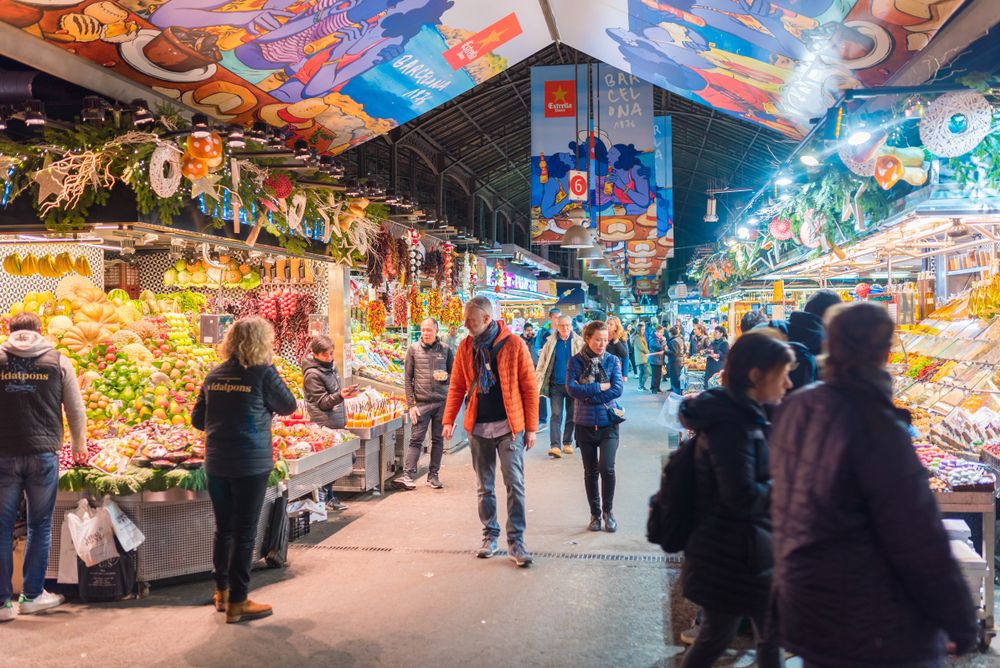
No visit to Barcelona would be complete without a stroll on Las Ramblas, the city's most famous avenue. This 1.2-kilometer pedestrian artery connects Plaça de Catalunya to the port, offering a permanent spectacle of street artists, florists and urban animation. Built on the former bed of a dried river, Las Ramblas takes its name from the Arabic word "ramla" meaning sand.
The highlight of this walk undoubtedly remains the visit to La Boqueria market, temple of Catalan gastronomy where Mediterranean colors, flavors and aromas mingle (La Rambla, 91, 08001 Barcelona, rated 4.2/5 on Google for more than 85,000 reviews). Also take time to admire the Palau de la Virreina, splendid 18th-century baroque edifice. The Ryo itinerary accompanies you throughout this discovery so you don't miss any of the hidden treasures of this legendary avenue.
3. Park Güell, Antoni Gaudí's fantastic universe
Perched on the heights of Barcelona, Park Güell represents one of Antoni Gaudí's most magical creations. This architectural walk transports you into a fairy tale world where nature and art blend harmoniously. Begin your visit with the famous dragon staircase, guarded by the emblematic salamander covered in colorful mosaics (Carrer d'Olot, s/n, 08024 Barcelona, rated 4.2/5 on Google for more than 240,000 reviews).
The main terrace offers a breathtaking panoramic view of Barcelona and the Mediterranean, adorned with the famous serpentine bench decorated with trencadís, this mosaic technique dear to Gaudí. The park's gardens invite strolling between winding paths and organic constructions that seem to spring naturally from the ground. This walk in Gaudí's universe is particularly magical in late afternoon, when golden light illuminates the Catalan architect's creations. Don't hesitate to visit Barcelona with the Ryo application to enrich your discovery of this unique place in the world.
4. Eixample and Passeig de Gràcia, temple of Catalan modernism
The Eixample district constitutes the heart of Catalan modernism, where the most beautiful examples of this revolutionary architecture of the early 20th century are aligned. This exceptional architectural walk focuses on the prestigious Passeig de Gràcia, a true open-air museum of creations by Gaudí and his contemporaries. Admire Casa Batlló (Passeig de Gràcia, 43, 08007 Barcelona, rated 4.4/5 on Google for more than 75,000 reviews), this dreamlike work with changing reflections that evokes a sleeping dragon or marine depths.
A few steps further stands Casa Milà, nicknamed La Pedrera, Gaudí's last civil work with undulating forms that defy the laws of geometry (Provença, 261-265, 08008 Barcelona, rated 4.4/5 on Google for more than 55,000 reviews). This stroll in Eixample also reveals other modernist marvels like Casa Amatller or Casa Lleó Morera, together forming the famous "manzana de la discordia" (block of discord). The Ryo itinerary guides you through these masterpieces to understand the aesthetic revolution that transformed Barcelona at the turn of the century.
5. El Born and La Ribera, Barcelona's authenticity
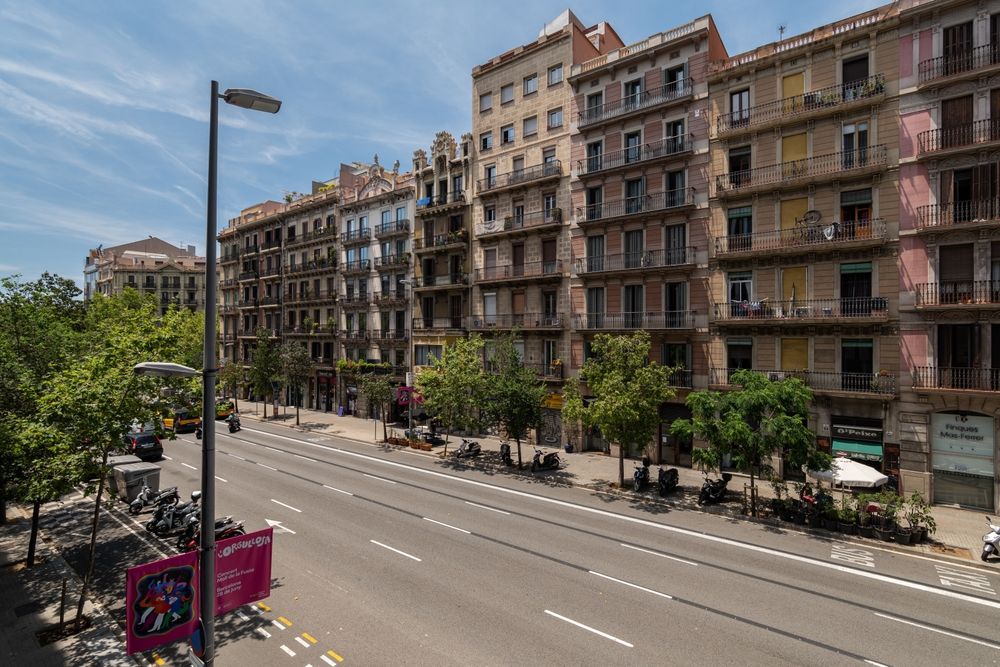
The El Born district embodies the artistic and bohemian soul of contemporary Barcelona, a successful blend between historical heritage and modern creativity. This walk in La Ribera makes you discover an authentic Barcelona, far from classic tourist circuits. Begin with the majestic Basilica of Santa Maria del Mar, pure marvel of Catalan Gothic art nicknamed "cathedral of the people" (Plaça de Santa Maria, 1, 08003 Barcelona, rated 4.5/5 on Google for more than 18,000 reviews).
Then stroll along Passeig del Born, former medieval tournament arena now transformed into a shaded promenade lined with tapas bars and design shops. The El Born cultural center deserves a stop for its exhibitions devoted to 17th and 18th century Barcelona. This lively district reveals the daily life of Barcelona residents between animated terraces, artists' workshops and cobbled streets full of history. The Ryo route reveals all the secrets of this district in full creative effervescence.
6. Montjuïc, between panoramic gardens and Olympic heritage
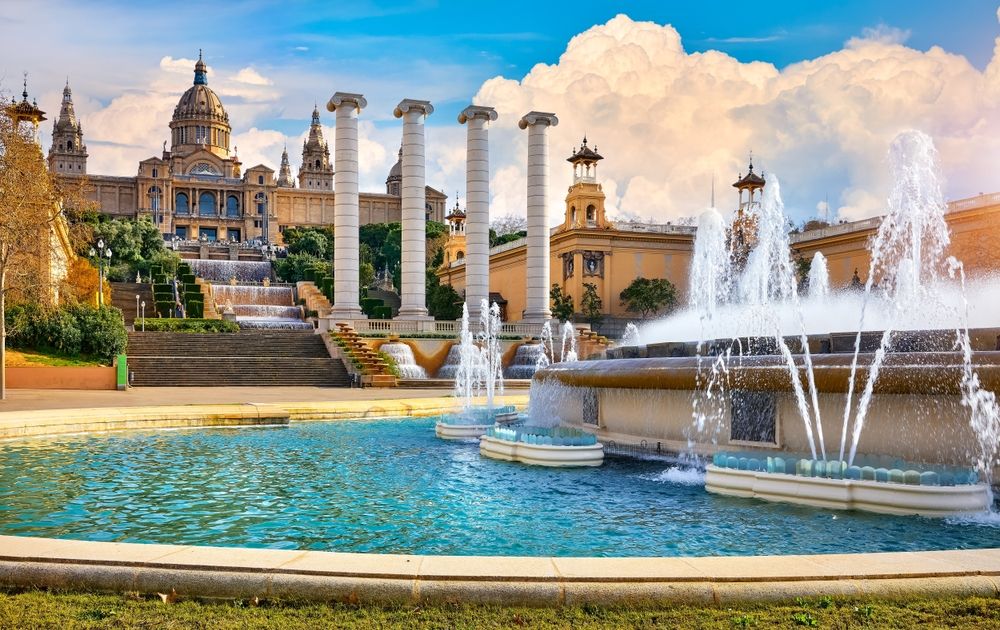
The mountain of Montjuïc offers one of the most beautiful nature walks in Barcelona, combining green spaces, exceptional panoramas and cultural richness. This 173-meter high hill was completely redesigned for the 1929 Universal Exhibition and then for the 1992 Olympic Games. Begin your ascent from Plaça d'Espanya, passing in front of the former arenas transformed into a shopping center, to reach the gardens of Mirador de l'Alcalde.
These Mediterranean gardens offer breathtaking views of the port and the Mediterranean, while Montjuïc Castle (Carretera de Montjuïc, 66, 08038 Barcelona, rated 4.1/5 on Google for more than 25,000 reviews) tells the military history of the city. Don't miss the famous Font Màgica, musical and luminous fountain that has enchanted visitors since 1929 (Plaça de Carles Buïgas, 1, 08038 Barcelona, rated 4.3/5 on Google for more than 35,000 reviews). This walk on Montjuïc can easily be completed by visiting the National Museum of Art of Catalonia (MNAC) or the Joan Miró Foundation. To optimize your discovery of this exceptional site, follow the advice of the Ryo itinerary specially designed to explore Barcelona.
7. Barceloneta and the seafront, between maritime tradition and modernity
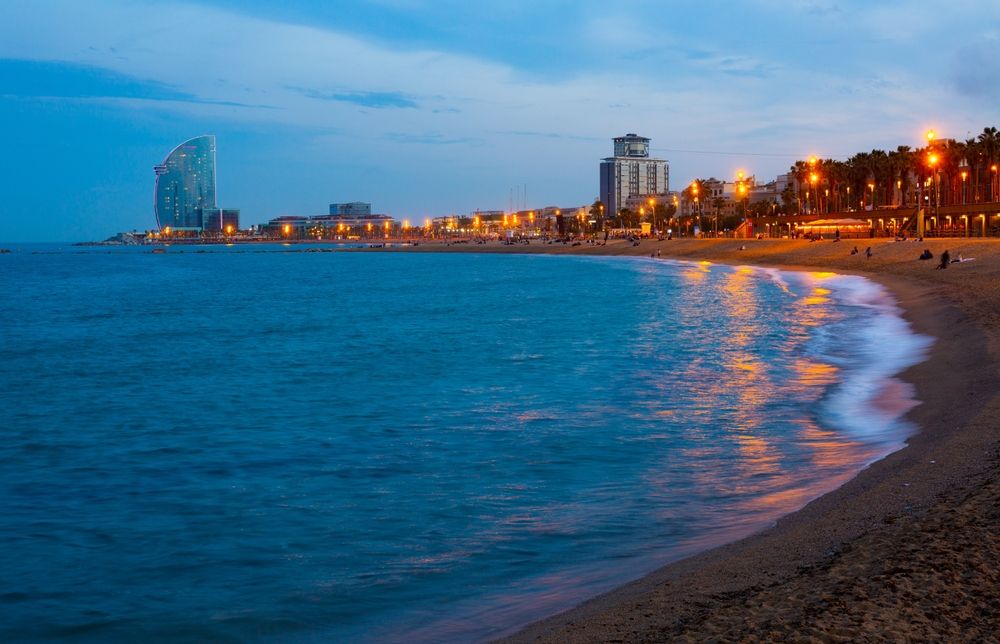
The Barceloneta district transports you into Barcelona's traditional maritime universe, where iodized fragrances mix with the flavors of Catalan cuisine. This seaside walk reveals an unknown face of the Catalan capital, between fishing heritage and ultra-modern Olympic installations. Begin your discovery from Port Vell, former commercial port transformed into a pleasure marina, where stands the statue of Christopher Columbus pointing towards the Mediterranean (Portal de la Pau, s/n, 08001 Barcelona, rated 4.1/5 on Google for more than 8,000 reviews).
Then walk along the beaches of Barceloneta to the Olympic Port, admiring the urban transformation operated for the 1992 Games. The chiringuitos (beach bars) offer authentic maritime gastronomy facing the azure blue waters of the Mediterranean. This coastal promenade extends pleasantly to the modern district of Poblenou, nicknamed the "Barcelona SoHo" for its former industrial warehouses converted into lofts and cultural spaces. The Aquàrium Barcelona (Moll d'Espanya del Port Vell, s/n, 08039 Barcelona, rated 4.0/5 on Google for more than 35,000 reviews) constitutes a perfect stop for families during this maritime exploration.
8. Gràcia and its secret squares, village spirit in the heart of the metropolis
The Gràcia district carefully preserves its Catalan village soul, despite its integration into greater Barcelona in the 19th century. This walk through the steep streets of Gràcia reveals an intimate and authentic Barcelona, punctuated by its shaded small squares and colorful facades. Begin your discovery with Plaça de la Vila de Gràcia, beating heart of the district where stands the clock tower, symbol of this commune's past independence (Plaça de la Vila de Gràcia, 08012 Barcelona).
Then explore Plaça del Diamant, immortalized by writer Mercè Rodoreda, or the picturesque Plaça del Sol, nocturnal meeting place of Barcelona youth. The streets of Gràcia are full of alternative shops, bohemian cafés and artists' workshops that perpetuate the creative spirit of the district. Every August, the famous Festa Major de Gràcia transforms the streets into ephemeral works of art, manifestation of the inhabitants' collective creativity. This walk can extend towards Park Güell, accessible from the heights of Gràcia. To not miss anything of this district's unique atmosphere, follow the recommendations of the Ryo itinerary to visit Barcelona.
In conclusion, these 8 walks offer a complete panorama of Barcelona's multiple facets, from its rich historical heritage to its contemporary creativity. Each itinerary reveals a different personality of the Catalan capital, inviting ever-renewed discovery. To further enrich your exploration of this fascinating city, don't hesitate to let yourself be guided by the Ryo application that will accompany you in each of your Barcelona discoveries with historical commentary and enriching anecdotes.
Frequently asked questions
How long does it take to do these 8 walks in Barcelona?
Each walk takes between 2 to 4 hours depending on your pace and the visits you wish to explore further. To discover all 8 itineraries, count between 4 to 6 days in Barcelona, which also allows you to enjoy the city's atmosphere between visits.
What is the best period to do these walks in Barcelona?
Spring (April-May) and autumn (September-October) offer ideal conditions with pleasant temperatures and fewer crowds. Summer can be hot but allows you to fully enjoy seaside walks. Winter remains mild in Barcelona, perfect for indoor cultural discoveries.
Are these walks suitable for families with children?
Absolutely! Most itineraries are stroller-friendly, notably the walks on Las Ramblas, in Eixample or at Barceloneta. Park Güell and Montjuïc offer green spaces perfect for children. Only the walk in the Gothic Quarter presents some cobbled streets that are more difficult to access.
Do you need to book in advance to visit the monuments?
For the most popular sites like Park Güell, Sagrada Família, Casa Batlló or Casa Milà, online booking is strongly recommended, especially in high season. The other places mentioned in the walks are generally freely accessible or with reduced waiting times.