
Créé par Emilie, le 7 mai 2026
Votre guide Ryo
© Shutterstock
What is the Alhambra?
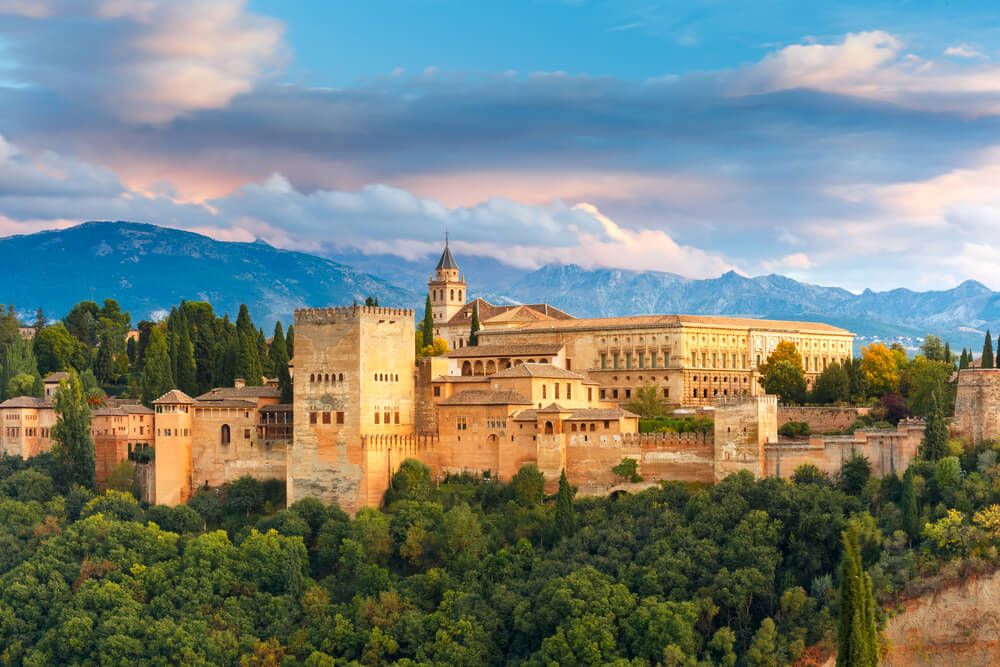
Perched on its hill, this true fortress is a sign of the great power once exercised by the Nasrids, a Muslim people who dominated Al-Andalus. Here's a brief look back to understand the importance of this place steeped in history.
First, you should know that the Iberian Peninsula, the whole that Spain and Portugal form today, was long under Muslim domination, more precisely between 711 and 1492. Different dynasties succeeded each other, notably the Umayyads, the Almoravids, the Almohads and the Nasrids. It was the latter who made this small fortress, first built in the 9th century, a unique place, richly decorated and symbol of an entire territory.
In the 13th century, the few structures that had been built on the hill transformed into a succession of palaces and fortresses with impressive architecture, typical of the Nasrids. Some monuments from this period are no longer visible today, as they were destroyed or modified after the reconquest of Granada by the Christians, but the Alhambra is the most beautiful example still standing that can be seen in the country.
It consists of a fortified enclosure that houses the Alcazaba, the Nasrid palaces, the Generalife, the gardens and the palace of Charles V. Monuments and gardens that extend over more than 100,000 m²! The name Alhambra comes from Arabic and means 'the red castle', a reference to the founder of the Nasrid dynasty, Mohammed ben Nazar, called 'the Red' because he had a red beard.
How to visit the Alhambra?
1- Getting to the Alhambra
On foot: it is quite possible to reach the Alhambra from the city center in about twenty minutes on foot. There are two paths to get there: the Cuesta de Gomérez or the Cuesta del Rey Chico. Know however that in both cases, the road is quite steep around the site!
By public transport: bus lines C30, C32 and C35 drop you off at the Alhambra. The little tourist train also makes a stop nearby.
By car: two paid parking lots are located next to the Alhambra entrance. If you don't have GPS, you shouldn't have trouble finding it, the monument is signposted everywhere! You can otherwise choose to book a taxi that will take you to the gates of the site.
2- Hours and prices
Hours
- Between April 1st and October 14th, the Alhambra is open for visits between 8:30 AM and 8:00 PM, Monday to Sunday.
- Between October 15th and March 31st, it is open between 8:30 AM and 6:00 PM Monday to Sunday.
There are also night visits, both summer and winter.
Prices
- Ticket price: €19.09
- Free admission for children under 12
- Reduced rate for children between 12 and 15 years old, EU citizens over 65, EU citizens with a European youth card, people with disabilities and members of large families.
Tips
Remember to book your admission ticket well in advance, especially during the summer period: more than a month before your visit to be sure to choose the time slot you prefer.
It is possible – and recommended in summer – to reserve your entry online, but you can also buy tickets directly on site, at the ticket offices. If you want to avoid waiting too long on site, come before the ticket office opens, or plan your visit in late afternoon, 2 or 3 hours before closing: there are generally fewer people. However, know that the number of places per day is limited, so it is recommended in all cases to book in advance, especially during busy periods.
Warning: in Granada, in summer, temperatures very regularly exceed 30°C and even often approach 40°C. It is imperative to protect yourself well against the sun (sunscreen, cap) and to think about taking a bottle of water with you. The visit lasts between 2 and 3 hours and the site is very exposed to the sun. There is little shade and you have to walk about twenty minutes before reaching the hill and the monuments. Take this well into account for your visit!
3- When to visit?
The Alhambra can be visited year round. The crowds are heaviest during summer holidays, but it gets really hot. You need to book your slot several weeks in advance to be able to choose the desired time. The best time to visit the Alhambra is spring, as the gardens are in bloom, the weather is nice but not too hot – although from the end of May and early June you can easily reach 30°C anyway – and there are fewer people than in summer. Autumn is also a good solution if you still want a little warmth.
When you take an admission ticket for the Alhambra, the time indicated is when you must be at the Nasrid palaces. Their visit is indeed limited, so you must take this schedule into account to be able to enter. The rest of the visit is free, so you can organize as you wish according to your ticket time. Take into account that it takes about 15-20 minutes to climb up to the site from the entrance and about 30 minutes to visit the palaces.
What to see at the Alhambra?
The Alhambra is a concentrate of exceptional history and architecture that takes us straight back to the medieval period, when the city of Granada and the Iberian Peninsula were under Nasrid domination.
The Nasrid palaces
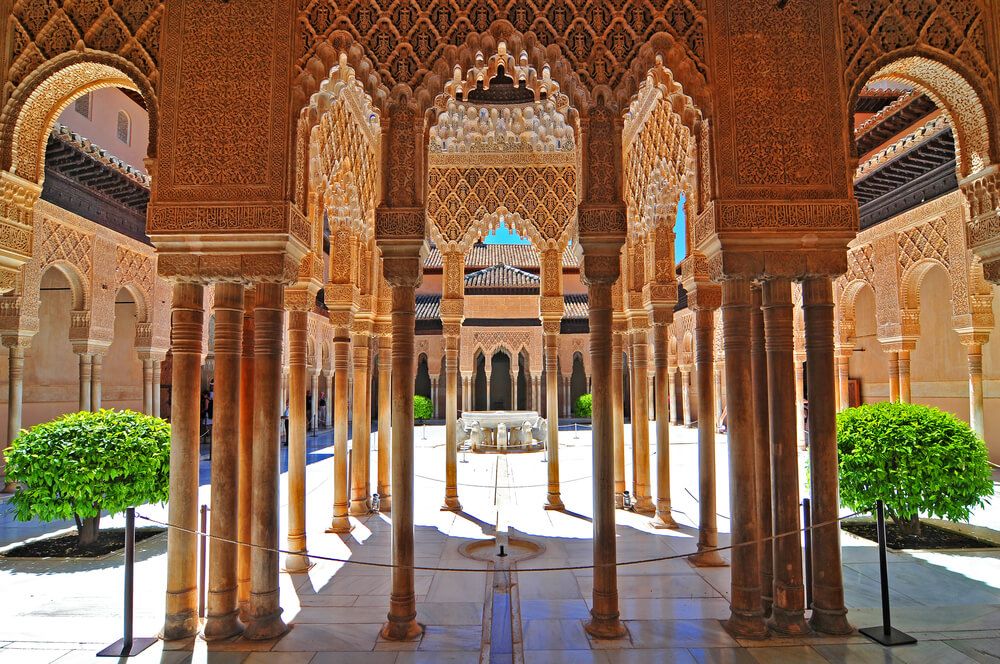
Composed of the Mexuar, the Comares and the Palace of the Lions, the Nasrid palaces constitute one of the most important elements of the Alhambra. This architectural ensemble actually represents a single palace, which was enlarged, modified and embellished as rulers succeeded each other inside and Granada's wealth increased. It therefore took several generations before it became the magnificent building it is today. It includes many rooms to visit, emblematic courtyards and typically Arab baths. This is where the royal family lived.
The Alcazaba
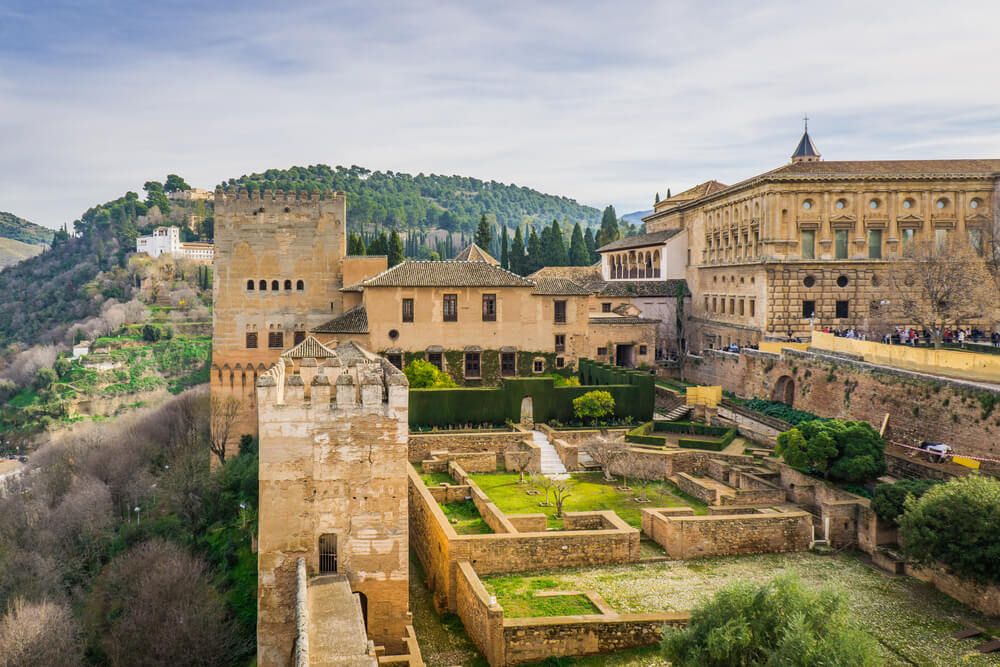
The Alcazaba corresponds to the primitive fortress of the Alhambra. It is the oldest part still remaining today. It is a citadel that housed the men of war, located on the most strategic part of the hill: from its highest tower, you have a panoramic view over the entire plain of Granada. It is also where the sultan, his family and his military guard lived before the construction of the Nasrid palaces. It is the most extensive and best preserved alcazaba in all of Spain.
The Generalife
Built during the 13th century then redecorated the following century, the Generalife is a garden designed by and for kings to allow them to walk outside their palace. It is composed of two very simple patios, basins and gardens conducive to relaxation and walking. While it was built at about the same time as the palaces, it was modified several times by the Christians and does not completely retain its original appearance. It nonetheless remains one of the must-see sites of the Alhambra and a place steeped in history and nature.
The palace of Charles V
The palace of Charles V is more recent than the rest of the Alhambra constructions. He wanted the construction of his palace within walking distance of the Nasrid enclosure, to be able to enjoy the wonders it offered. Construction then began in 1527. The palace constitutes one of the most important works of the Spanish Renaissance, and it took several centuries to give it its current appearance, which is actually not completely finished. Charles V would never have had the opportunity to live there, nor anyone else for that matter, but it remains a magnificent testimony to the grandeur of this era.
In conclusion
There you have it, you have all the practical information and all our tips for visiting the Alhambra! As you can see, this incredible site is a must-see in the city of Granada and reveals many surprises. The opportunity to immerse yourself in the history of a city that has long been talked about and reveals an architectural style recognizable worldwide!