
Créé par Romane, le 15 mai 2026
Votre guide Ryo
© Shutterstock
Seville hits differently from other Spanish cities. It is the only major European capital built on a river that never reaches the sea before it turns back on itself, the Guadalquivir loops, reverses, and deposits centuries of trade wealth in terracotta and tile. The city that gave the world Don Juan, Carmen, and the Barber of Seville is also the city where Christopher Columbus reported to the Spanish Crown after landing in the Americas, where the world's third-largest Gothic cathedral still holds his tomb, and where orange trees lining every street produce some of the bitterest fruit you have ever tasted (shipped to England for marmalade, not eaten here). Whether you have three days or a long weekend, the Ryo Seville Ryocity audio guide covers the city's streets and monuments with narrated walks, a good starting point before you arrive.
This list pulls together the 25 best things to do in Seville in 2026: the architectural landmarks that genuinely deserve the hype, the neighbourhoods best explored on foot, the live flamenco venues that are not staged for tour buses, and a pair of day trips that most visitors skip entirely. A few numbers you will not find on most travel blogs: the Real Alcázar has been in continuous use since 1364, Seville's Semana Santa procession employs over 60,000 people in a single week, and the Metropol Parasol is the largest wooden structure on the planet. Read on.
1. The Real Alcázar
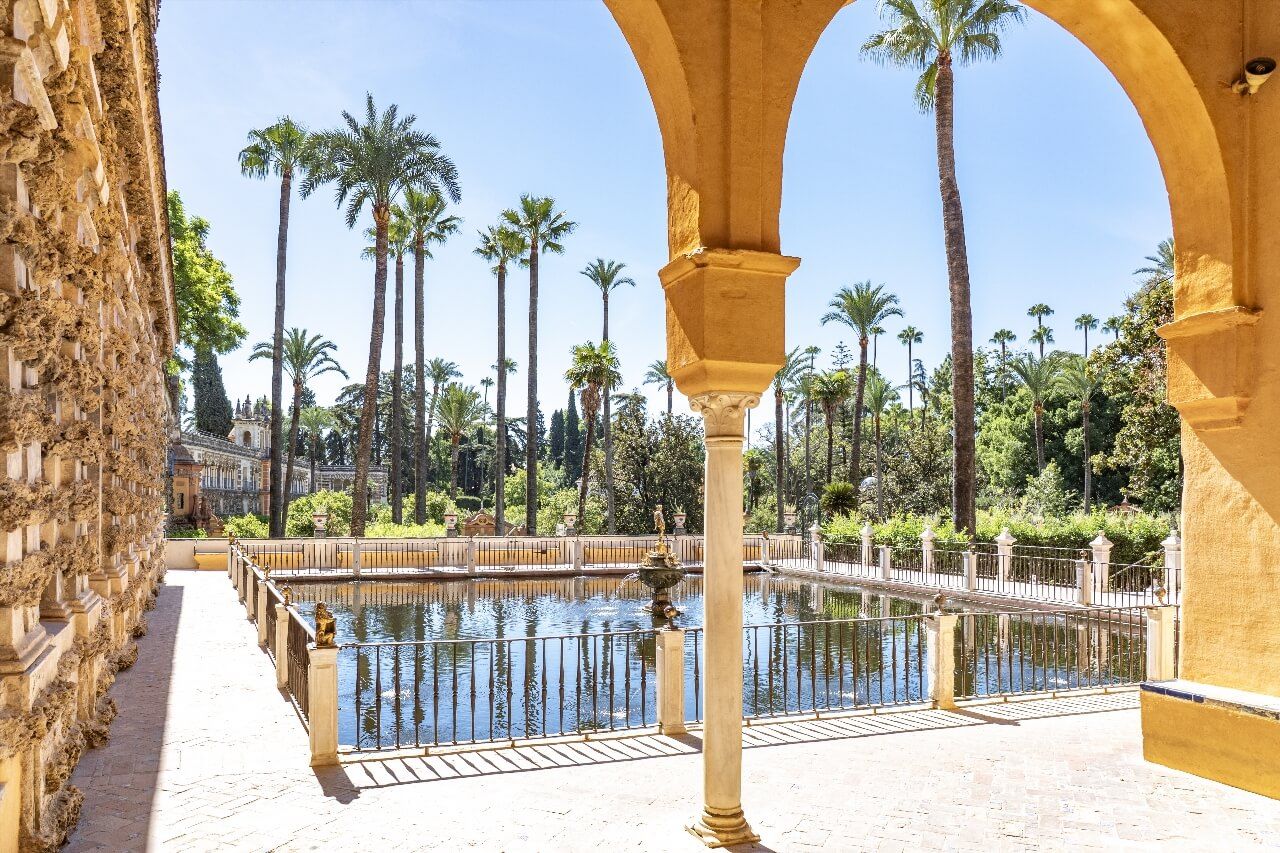
The Real Alcázar de Sevilla (Patio de Banderas s/n, 41004 Seville, rated 4.7/5 on Google (99 683 avis)) (Patio de Banderas, s/n, 41004 Seville) is the oldest royal palace still in active use in Europe. The Spanish royal family has an official apartment here, and they use it. That fact alone separates this building from almost every other palace on the continent: it is not a museum that used to be a palace, it is a palace that also happens to welcome visitors.
The site was built in the mid-10th century as an Abbadid Muslim palace, substantially expanded under Peter I of Castile between 1356 and 1366 with Moorish craftsmen brought from Granada, and then enlarged again by each successive dynasty including the Habsburgs and the Bourbons. The result is a layered architectural conversation that has no clean answer, it is neither fully Mudéjar, nor fully Gothic, nor fully Renaissance, but all three intertwined in a way that architects still study.
Give the gardens at least 45 minutes. The formal parterres, ancient fountains, and tiled pathways cover almost 100,000 square metres, easy to underestimate from the entrance courtyard. The Patio de las Doncellas (Court of the Maidens) is the obligatory photograph, with its central reflecting pool and interlocking stucco arches, but the Mercury Pond and the Grotto Gallery behind it are quieter and just as extraordinary. Book online at least 3 days in advance, the daily cap on visitors fills quickly between April and October, and same-day entry is almost never available. Mornings before 10 a.m. offer the most manageable crowds.
The General Admission ticket (around €15.50 for adults in 2026) includes access to the palace rooms and the gardens. The rooftop terrace requires a separate ticket and gives you a direct sightline across to the Giralda. Worth it in late afternoon light. For a narrated walk-through that puts the Mudéjar details in context as you move room to room, the Ryocity Seville audio guide covers the Alcázar with stop-by-stop commentary you can play on your phone.
2. Seville Cathedral & La Giralda
When Seville's city council voted to build their cathedral in 1401, the reported decision was: "Let us build a church so large that those who see it finished will think us mad." They were not joking. Seville Cathedral (Av. de la Constitución, s/n, 41004 Seville) covers 11,520 square metres of floor space and remained the largest cathedral in the world until St Peter's Basilica in Rome overtook it in 1626. It still ranks third globally.
Inside, the scale becomes visceral. The central nave rises to 42 metres, the golden altarpiece (Retablo Mayor) is the largest in the world at 27 metres high and 18 metres wide, and the tomb of Christopher Columbus, carried by four royal figures representing the kingdoms of Castile, León, Navarre, and Aragon, sits to the right of the main entrance. Whether Columbus's remains are actually here, or in Santo Domingo, has been disputed since the 18th century. DNA testing in 2006 confirmed a partial match, which is the best answer science has so far.
La Giralda, the cathedral's bell tower, was originally the minaret of the Almohad mosque that stood here before 1401. The climb is done by ramp, not stairs, the ramp was designed so that the muezzin could ride up on horseback. At 97.5 metres, the views over Seville's roofscape and across the Guadalquivir are among the best in Andalusia. Allow 2.5 to 3 hours for a thorough visit of both, and consider pairing your visit with the Ryo audio guide of Seville so the cathedral's chronology unfolds without you having to read a guidebook between the columns. Combined tickets run around €12 for adults, with free entry on Mondays from 4 p.m. to 7 p.m. (subject to seasonal changes, verify on the cathedral's official site before you go).
3. Barrio de Santa Cruz
Do not approach the Barrio de Santa Cruz (Calle Mateos Gago, 41004 Seville, rated 4.6/5 on Google (28K avis)) with a map. This is the historic Jewish quarter of Seville, a neighbourhood of whitewashed lanes so narrow that two people with bags cannot pass without turning sideways, and the street layout was deliberately designed to disorient outsiders during the medieval period. Getting lost here is not a failure of navigation, it is the experience.
The neighbourhood sits between the cathedral and the Alcázar, which means the outer edges can feel crowded, but two or three streets inward the tourist density drops sharply. Look for the Plaza de Doña Elvira, a small square with orange trees and tiled benches where Sevillanos actually sit, and the Callejón del Agua (Alley of the Water), a 200-metre lane that runs along the outer wall of the Alcázar gardens and gets its name from the aqueduct pipe that supplied fresh water to the palace. Explore in the early morning before 9 a.m., or after 7 p.m. when the light turns gold and the tour groups retreat to their hotels. The Santa Cruz loop is also one of the most rewarding chapters of the Ryocity Seville parcours, with narrated stops at the Casa de Murillo, the Plaza de los Refinadores, and the Hospital de los Venerables.
4. Plaza de España
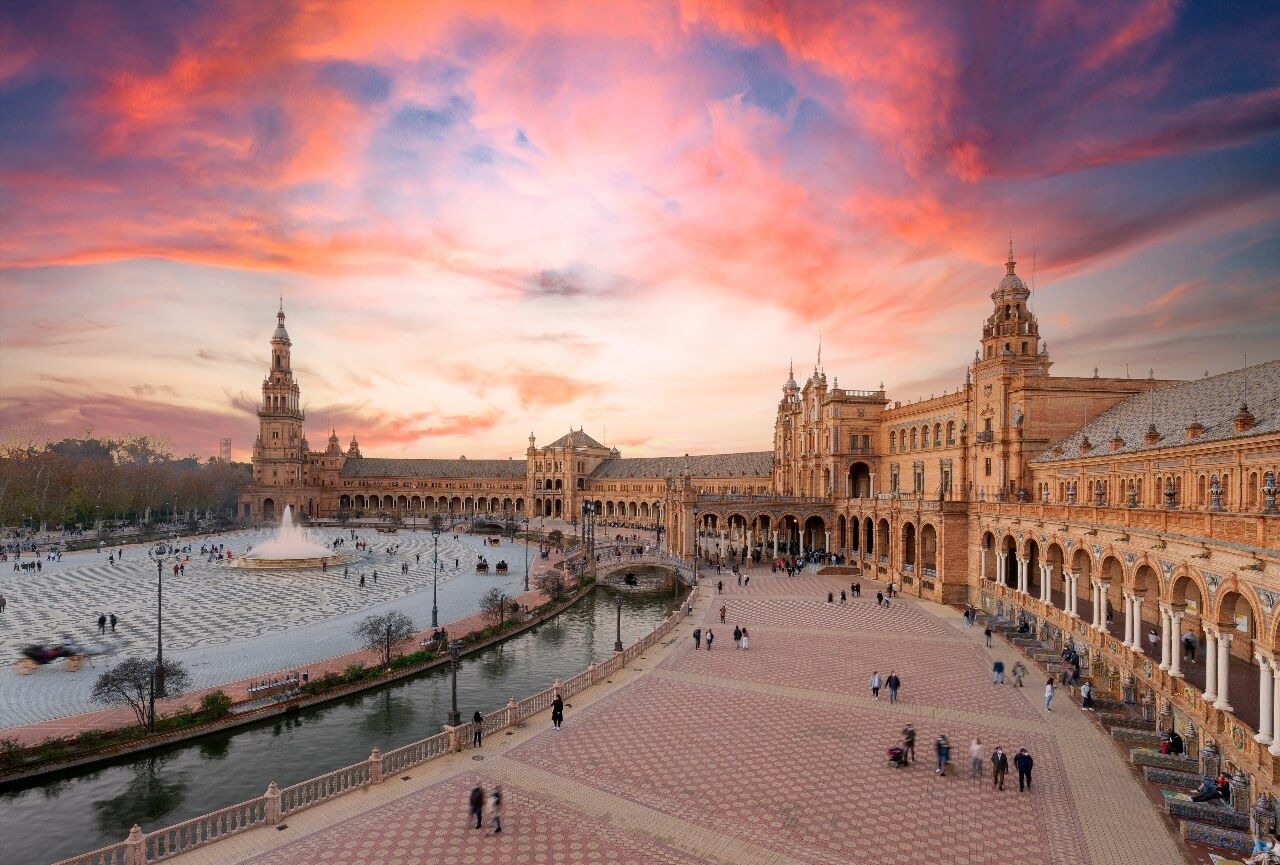
Built for the 1929 Ibero-American Exposition, the Plaza de España (Avenida de Isabel la Segunda s/n, 41013 Seville, rated 4.8/5 on Google (184 271 avis)) (Avenida de Isabel la Segunda, s/n, 41013 Seville) is one of the most theatrical public spaces in Europe, and it is completely free to enter. The semicircular brick-and-tile complex stretches 170 metres in diameter, flanked by a canal you can cross via four baroque bridges and framed by two Renaissance Revival towers at either end.
The tiled alcoves lining the interior wall are the detail most visitors spend longest examining. There are 48 alcoves, one for each province of Spain at the time of construction, each decorated with a hand-painted tile panorama of the province's history and a map. Finding your own region, or the region you are about to visit next, turns into an impromptu geography lesson. The tilework is Triana ceramics, produced in the neighbourhood across the river that still specialises in this craft today.
Renting a rowboat on the canal costs around €6 for 35 minutes and gives you a different perspective on the architecture, specifically, the reflection of the towers in the water on a calm morning. Come before 9 a.m. if you want photographs without crowds; the plaza is at peak capacity between 11 a.m. and 2 p.m. The entire complex is directly adjacent to Parque de María Luisa, so it works well to combine both in the same half-day.
5. Metropol Parasol (Las Setas)
Locals call it Las Setas (The Mushrooms) because no one agreed on the official name. Whatever you call it, the Metropol Parasol (Plaza de la Encarnación s/n, 41003 Seville, rated 4.4/5 on Google (107 745 avis)) (Plaza de la Encarnación, s/n, 41003 Seville) is the largest wooden structure on earth, 150 metres long, supported by six enormous parasol-shaped columns, and built on a site that was originally going to be a parking lot until archaeologists in 1992 found significant Roman and Moorish remains underneath.
Those remains are now the Antiquarium museum, which occupies the basement and displays mosaics, amphorae, and structural foundations from Roman Hispalis (Seville's name under Roman occupation). Entry to the Antiquarium is around €2. The walkway that winds along the top of the structure to the panoramic terrace costs around €5 more and offers an aerial view of the old city that no tower or rooftop bar can replicate, you are above the rooflines but still within the urban fabric. The terrace also includes a strip of bars and a café. Best visited at sunset, when the wooden lattice catches the orange light and the city below switches on its streetlights.
6. Torre del Oro
The Torre del Oro (Paseo de Cristóbal Colón, s/n, 41001 Seville) is a 13th-century military watchtower that once anchored a chain stretched across the Guadalquivir to block enemy ships from reaching the city. The chain has long since vanished, but the 12-sided tower remains, 36 metres tall, built in 1220 by the Almohad governor of Seville using a limestone and mortar mix that still shows its original golden hue in afternoon light, giving the tower its name.
Inside is a small but well-curated maritime museum covering Seville's role as the exclusive port of trade with the Americas from 1503 to 1717. Entry is €3 (free on Mondays). The roof terrace gives a clean river view. Give it 30-40 minutes, it is compact, but the context it provides for understanding Seville's relationship with the Atlantic trade routes makes the cathedral and the Archivo de Indias more legible afterwards.
7. Triana
Triana is the neighbourhood on the west bank of the Guadalquivir, connected to the city centre by the Puente de Isabel II bridge, and it has always maintained a separate identity, the people here identify as Trianeros first, Sevillanos second. Historically a working-class district of fishermen, bullfighters, and flamenco artists, it is now one of the most atmospheric places to spend an evening in Seville.
The riverfront promenade, Calle Betis, lines the eastern edge of the neighbourhood with bars and restaurants facing back across the water toward the Torre del Oro, the view from a table on this street at dusk, with the city reflected in the river, is one of Seville's defining images. Walk inland from there to find the Mercado de Triana, a covered market inside a 19th-century former fortress gatehouse, selling fresh produce, jamón, cheese, and the district's famous ceramics. The tile workshops on Calle Alfarería still produce by hand, and several are open to visitors.
Triana also has its own flamenco history distinct from the city centre scene. The neighbourhood produced some of the 20th century's most important flamenco singers and dancers, and the cultural centre Casa de la Memoria de Triana on Calle Rodó occasionally hosts smaller, less-touristic performances than the main venues in the centre. Worth checking their programme when you are in town. Allow a full evening, cross the bridge around 7 p.m., explore the market and the ceramic shops, eat on Calle Betis, and walk back across the bridge after midnight. If you want the historical backbone of Triana's flamenco and ceramic heritage explained as you walk, the Ryocity Seville audio guide includes a dedicated Triana extension.
8. Catch a Live Flamenco Show
Flamenco is not Spanish, it is Andalusian, and specifically Sevillano in many of its most important forms. The city has roughly 70 active flamenco venues, ranging from tourist tablaos with dinner packages to intimate peñas (private clubs) where professional artists perform for an audience that includes other professionals. Choosing the right one matters more than most travel guides admit.
For serious flamenco without the dinner-show trappings, Casa de la Memoria (Calle Cuna 6, 41004 Seville, rated 4.7/5 on Google (4 034 avis)) (Calle Cuna, 6, 41004 Seville) is the standard recommendation among musicians and dancers themselves. The venue holds around 100 people in a former palace courtyard, performances run 70 minutes with no interval, and the artists are professional-level rather than conservatory students. Tickets run €22-26 and sell out, book a week in advance for peak season.
El Palacio Andaluz and Tablao El Arenal are the larger commercial options with full dinner packages (€60-90 per person). The production values are high and the dancing is genuinely skilled, but the atmosphere is different, these are theatrical performances, not communal gatherings. If you have an older traveller in your group or someone who would benefit from English commentary, the larger tablaos can be the better choice.
For a more spontaneous experience, the neighbourhood of La Macarena has several bars where informal flamenco happens on weekend evenings, especially Thursday and Friday nights. There is no fixed schedule and no ticket, you walk in, order a drink, and either it happens or it does not. That uncertainty is, for many visitors, a more authentic contact with how flamenco actually functions in Sevillano life than any staged performance.
One practical note: flamenco shows rarely start before 8 p.m. and frequently run until 10:30 or 11. Plan dinner around the performance, not the other way around.
9. Parque de María Luisa
Parque de María Luisa (Paseo de las Delicias s/n, 41013 Seville, rated 4.8/5 on Google (41 691 avis)) (Paseo de las Delicias, s/n, 41013 Seville) covers 34 hectares of gardens donated to the city in 1893 by Infanta María Luisa, sister of Queen Isabella II. It was redesigned for the 1929 exposition and incorporates the Plaza de España on its northern edge, but the park itself, with its labyrinthine paths, duck ponds, tiled fountains, and centuries-old trees, is distinct from the plaza and worth an hour on its own.
In the summer heat (July-August regularly hits 42-45°C in Seville), the park is one of the few places in the city where the tree canopy provides genuine shade. The Glorieta de Bécquer, a circular garden monument to the Romantic poet Gustavo Adolfo Bécquer, is in the northern section. The Museo Arqueológico and the Museo de Artes y Costumbres Populares, both housed in pavilions built for the 1929 exposition, border the park and offer good context for Andalusian history. Entry to the Arqueológico is free for EU citizens; check the current fee for non-EU visitors at the door.
10. Casa de Pilatos
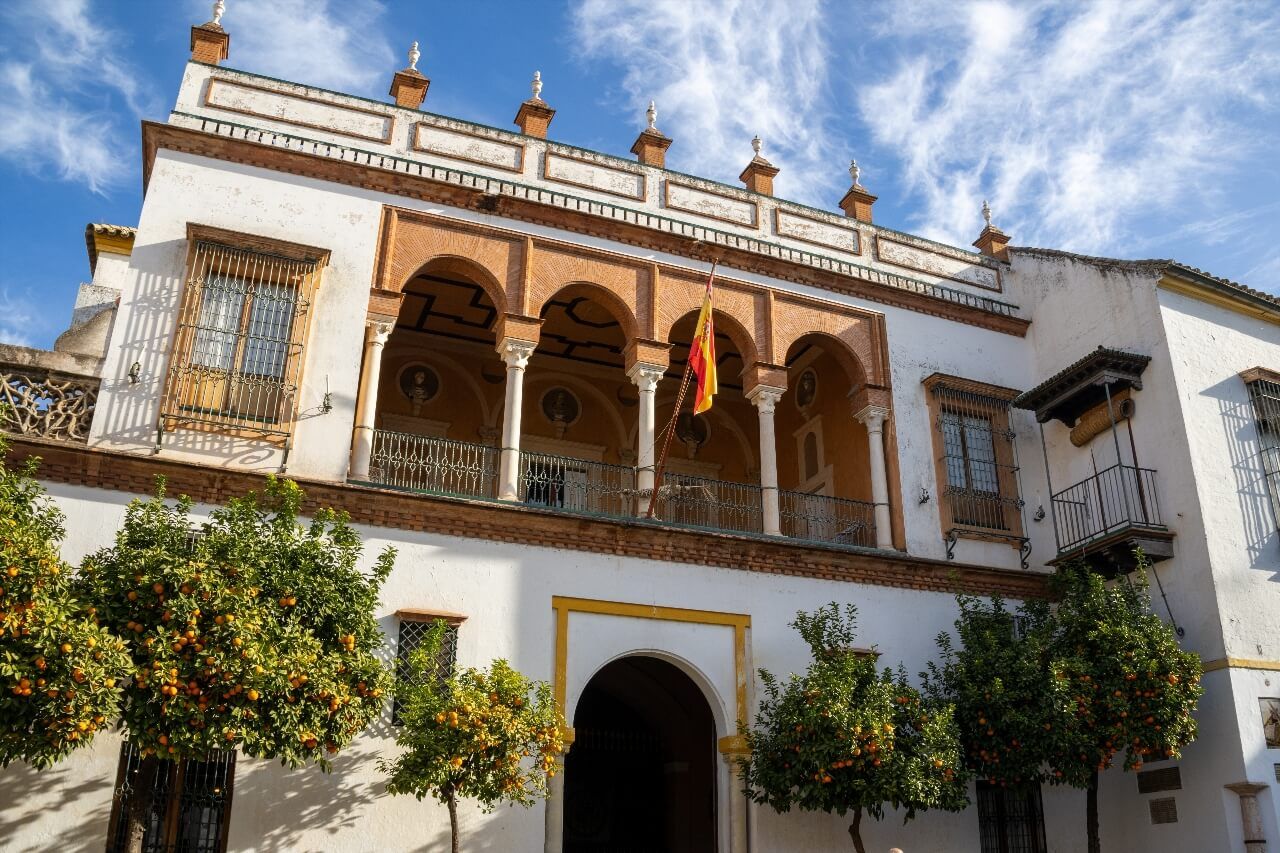
The Casa de Pilatos (Plaza de Pilatos 1, 41003 Seville, rated 4.4/5 on Google (14 258 avis)) (Plaza de Pilatos, 1, 41003 Seville) is the closest thing Seville has to a privately owned rival to the Alcázar, and the Medinaceli family, who have owned it since the 16th century, are still in residence in part of the building today. Built in the 15th century as the residence of the first Marquis of Tarifa, it blends Mudéjar, Gothic, and Renaissance architecture in proportions that feel more domestic than palatial, which is precisely its appeal.
The name comes from a long-standing local tradition that identified the building as a replica of Pontius Pilate's house in Jerusalem, a tradition that historians have found no basis for, but which the building's owners did nothing to discourage given the pilgrimage traffic it generated. The central courtyard's Roman sculptures are genuine, shipped from Italy in the 16th century, and the collection includes pieces that would not look out of place in the Prado.
The ground floor (jardines and main patio) costs around €12, the full tour including the upper floor with its frescoed ceilings and family art collection runs around €19. The upper floor is worth the extra cost, the rooms are kept exactly as the family furnished them in the 18th and 19th centuries, and guided visits (included in the price) run every 30 minutes. Arrive when doors open at 9 a.m.. this is a place where the mid-morning crowd genuinely changes the experience.
11. Archivo General de Indias
The Archivo General de Indias (Avenida de la Constitución 3, 41004 Seville, rated 4.4/5 on Google (7 590 avis)) (Avenida de la Constitución, 3, 41004 Seville) houses 80 million pages of documents from the Spanish colonisation of the Americas, every administrative record, every navigator's log, every land grant and treaty from 1492 through to the independence of Spain's last colonies in 1898.
Entry is free. The rotating exhibitions in the ground floor galleries display original maps and letters, including correspondence in Columbus's handwriting. The building itself (a 16th-century exchange built by Juan de Herrera, the architect of El Escorial) is a UNESCO World Heritage Site alongside the cathedral and the Alcázar. Allow 40-50 minutes.
12. Alameda de Hércules
Alameda de Hércules (Alameda de Hércules, 41002 Seville, rated 4.4/5 on Google (21 581 avis)) (41002 Seville) is a tree-lined promenade in the northern part of the old city that functions as the social axis of Seville's younger, more bohemian population. Laid out in 1574, making it the oldest public promenade in Europe, it is anchored at the southern end by two Roman columns topped with statues of Hercules and Julius Caesar.
During the day, the Alameda belongs to cyclists, parents with children, and the terrace cafés that line both sides. After dark, it transforms into one of the city's most animated bar zones, low-key, local, and markedly less touristic than the streets around the cathedral. The bars here lean toward vermouth, natural wine, and craft beer rather than sangria and mojitos. It is the part of Seville that most visitors miss because it is twenty minutes' walk from the main monuments, and that is exactly why it is worth the detour.
13. Real Maestranza Bullring & Museum
Whether or not bullfighting is your subject, the Plaza de Toros de la Real Maestranza (Paseo de Cristóbal Colón 12, 41001 Seville, rated 4.4/5 on Google (32 113 avis)) (Paseo de Cristóbal Colón, 12, 41001 Seville) is an extraordinary piece of 18th-century architecture and one of the oldest bullrings in Spain, with construction running from 1761 to 1881.
The tour, available daily when there is no corrida, covers the arena, the stables, the infirmary (still equipped with original 19th-century surgical instruments), the chapel where matadors pray before entering the ring, and the museum, which holds an exceptional collection of historical costumes, paintings, and posters dating from the late 18th century onwards. The museum documents the social and artistic history of the tradition with an objectivity that does not proselytise in either direction. Guided tour costs approximately €10. The main corrida season runs from Easter through October, if you are visiting during that period, check the Maestranza's programme. Tickets for the corrida range from around €25 for a seat in the sun to over €150 for premium shade seats.
14. Museo de Bellas Artes
Spain's second-most important painting collection after the Prado sits in Seville's Museo de Bellas Artes (Plaza del Museo, 9, 41001 Seville), housed in a converted convent from 1594 and overlooking one of the city's most pleasant small plazas.
The collection's strength is 17th-century Sevillano painting, the period when Velázquez, Zurbarán, and Murillo all lived and worked in the city. Murillo's large-format religious canvases fill an entire room (Room V, the former church nave), with the natural light and the scale of the space designed to work together. Velázquez trained here under Francisco Pacheco before leaving for Madrid, and several early works remain in the collection. Entry is free for EU citizens, around €1.50 for non-EU visitors, arguably the best price-to-collection ratio of any major Spanish museum. Closed Mondays.
15. Cartuja Island & the Contemporary Art Centre (CAAC)
Cartuja Island (Isla de la Cartuja, 41092 Seville) is where the 1992 Expo was held, and the site still contains the Centro Andaluz de Arte Contemporáneo (Avda. Américo Vespucio 2, 41092 Seville, rated 4.4/5 on Google (3 609 avis)) (CAAC), housed in a former 15th-century Carthusian monastery where Columbus stayed before his first voyage.
The juxtaposition is productive: medieval cloisters holding video installations and conceptual sculpture, a 15th-century church displaying large-format contemporary paintings. The permanent collection includes major works by Spanish artists from the 1960s onwards, and the temporary exhibitions rotate every three months. Entry is €3.01, free on Fridays from 7 p.m. to 11 p.m. and all day Sunday. Reaching the island requires crossing one of the bridges at the northern end of the city, allow 20 minutes from the city centre on foot or take bus C5.
16. Join a Tapas Bar Crawl Through the Old Town
Seville's tapas culture operates by a rule that visitors from other Spanish cities find remarkable: in many traditional bars, a tapa is included with every drink you order, free of charge. This is not universal, the newer gastro-bars charge separately, but in the old-school bodegas of the Santa Cruz neighbourhood and around the Mercado de la Encarnación, ordering a cold beer or a glass of manzanilla still comes with a small plate of food.
The mechanics of a good tapas crawl: one drink at each bar, move every 30-40 minutes, aim for three or four stops across the evening. Start around 8 p.m. (locals do not eat dinner before 9 p.m., and arriving early means you get bar seats and the bartender's attention).
High-priority stops: El Rinconcillo (Calle Gerona 40, 41003 Seville, rated 4.3/5 on Google (14 300 avis)) (Calle Gerona, 40, operating since 1670, one of the oldest bars in Spain), Las Columnas near the Alameda for tortas de camarones (shrimp fritters), Bar Giralda on Calle Mateos Gago for cazón en adobo (marinated dogfish) in a former Arab bathhouse, and Bodega Santa Cruz (Calle Rodrigo Caro, 1) for a classic local experience without any tourist-facing staging.
Drinks to order: fino (dry sherry from Jerez) or manzanilla (slightly saltier fino from Sanlúcar de Barrameda) are the local standard. Both are served chilled. A caña (small draught beer) is always correct. Avoid sangria unless you specifically want it, it is not what Sevillanos drink.
If you prefer a guided version, several small-group culinary tour operators run 3-hour tapas walks for €65-85 per person that include five or six bars with pre-selected tapas. The advantage is that the guide handles the navigation and explains the dishes; the disadvantage is you lose the spontaneity. Both options are valid depending on your energy and appetite for improvisation. For a free, self-paced alternative that still threads the historical context between bars, the Ryo Seville Ryocity audio guide lets you set your own pace and pause whenever a tapa arrives.
17. Calle Feria & the El Jueves Market
Calle Feria is the main street of the La Feria neighbourhood in northern Seville, and it hosts the Mercado de El Jueves every Thursday morning, claimed to be the oldest street market in Spain, in continuous operation since at least the 13th century.
The market runs from roughly 8 a.m. to 2 p.m. and sells secondhand books, vintage clothing, ceramics, tools, vinyl records, and a great deal of miscellaneous material that resists classification. It is not a crafts market oriented at tourists, it is a genuine secondhand market where Sevillanos rummage for things they need. That distinction is felt immediately: the prices are low, the vendors are not performing hospitality, and finding something unexpected is the point. The surrounding street has several excellent independent tapas bars open from mid-morning; La Goleta and Bar Ruperto on the same street are reliable stops for a mid-market break.
18. Museo del Baile Flamenco
The Museo del Baile Flamenco (Calle Manuel Rojas Marcos 3, 41004 Seville, rated 4.5/5 on Google (4 879 avis)) (Calle Manuel Rojas Marcos, 3, 41004 Seville) is the only museum in the world dedicated entirely to flamenco as a living art form, not as history, but as active practice.
Founded by dancer Cristina Hoyos, the museum uses projection, sound installations, and physical archives to trace flamenco's development from its Romani, Moorish, and Jewish roots to its current global diffusion. Entry costs around €12; the combined ticket with an evening flamenco performance in the museum's own courtyard is around €28 and is a good value option for visitors who want both the context and the live experience in the same place.
19. Hospital de los Venerables Sacerdotes
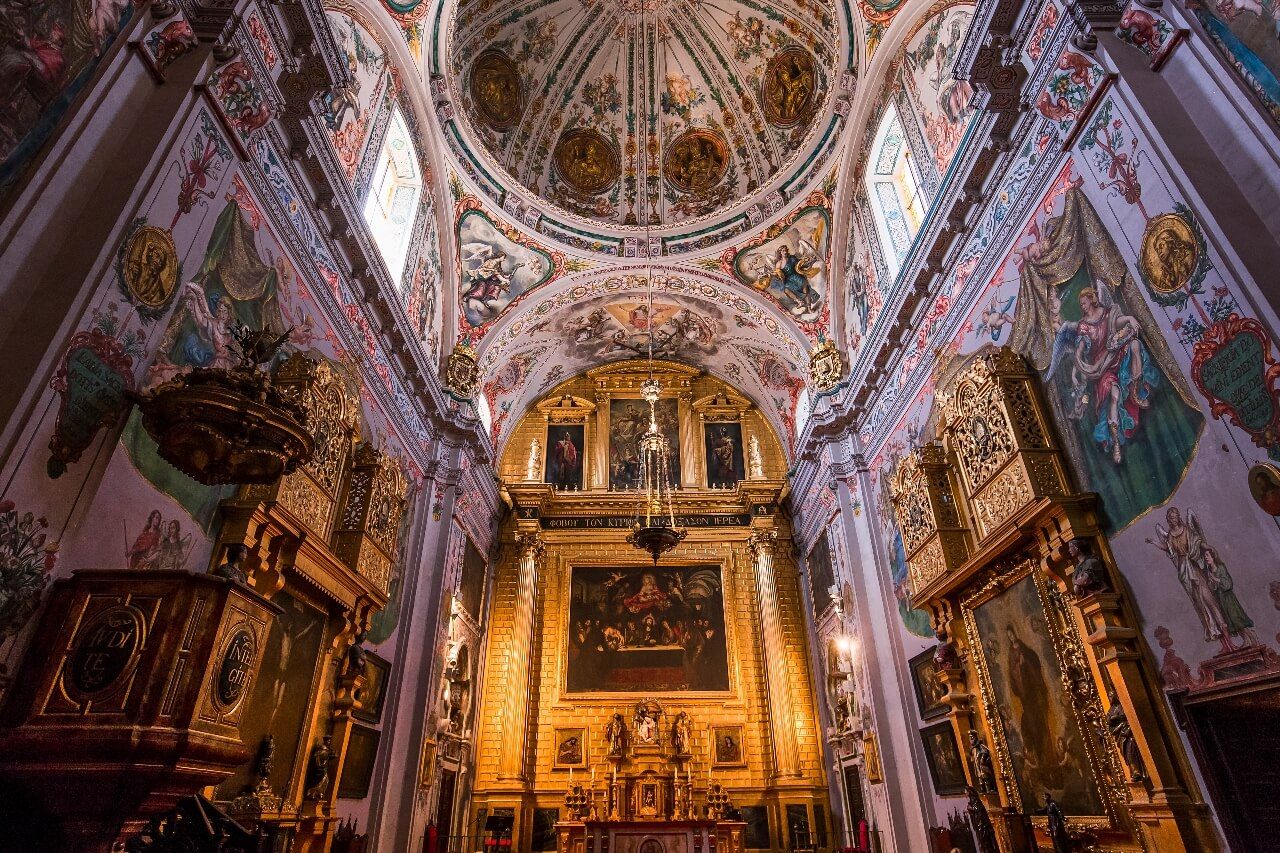
The Hospital de los Venerables (Plaza de los Venerables, 8, 41004 Seville) is a late 17th-century baroque building in the heart of the Santa Cruz neighbourhood that now houses the FOCUS-Abengoa Foundation's art collection, with an emphasis on Velázquez.
The building's chapel is the main draw: ceiling frescoes by Juan de Valdés Leal and his son Lucas Valdés, and two Velázquez paintings, including the recently reattributed Santa Rufina, that alone justify the €10 entry fee. Compact and rarely crowded even in high season, it is a good counterpoint to the Bellas Artes museum if you want Seville's 17th-century painting scene in a more intimate setting.
20. Take a River Cruise on the Guadalquivir
Seville is the only inland port in Spain, connected to the Atlantic via 80 kilometres of navigable river. The Guadalquivir once made the city the wealthiest trading port in the world; the cruise gives you a 75-minute narrated tour of that history from the water.
Departures run from the dock beside the Torre del Oro approximately every hour between 11 a.m. and 9 p.m. (seasonal variation, check the dock schedule on arrival). Tickets cost around €20 for adults, €10 for children. The cruise passes under the Triana bridge, past the Expo 92 site, and gives an unobstructed view of the Torre del Oro and the Maestranza from the river. The narration is available in English and Spanish. On a hot afternoon when walking feels inadvisable, this is a useful way to cover significant ground with minimum exertion. Go in the morning for the best light photography of the riverbanks.
21. Day Trip to Italica
Nine kilometres northwest of Seville, the Roman ruins of Italica (Avda. de Extremadura, 2, 41970 Santiponce) are among the best-preserved Roman sites on the Iberian Peninsula, and almost completely overlooked by visitors who spend their entire trip in the city.
Italica was founded in 206 BCE by the Roman general Scipio Africanus as a veterans' settlement after the Second Punic War. It later became the birthplace of emperors Trajan and Hadrian, two of the most significant rulers in Roman history, and was expanded under Hadrian into a major city with a population estimated at 8,000-10,000. The amphitheatre alone holds 25,000 spectators, which would have made it the third-largest in the Roman world; it is still the largest in Spain.
The mosaics preserved in the private houses (the House of Neptune, the House of the Birds) are exceptional, intact floors depicting marine scenes and mythological figures in colours that have survived almost 2,000 years underground. Entry is free for residents of the EU and around €1.50 for non-EU visitors. Reach Italica by bus (M172A from Plaza de Armas bus station, around 25 minutes, departing frequently) or by taxi (around €18 one-way). Go on a weekday morning and allow 2.5 to 3 hours for a thorough walk of the site.
22. Experience Semana Santa or the Feria de Abril
Two annual events make Seville temporarily unrecognisable, and if your dates align with either one, they take priority over every item on this list.
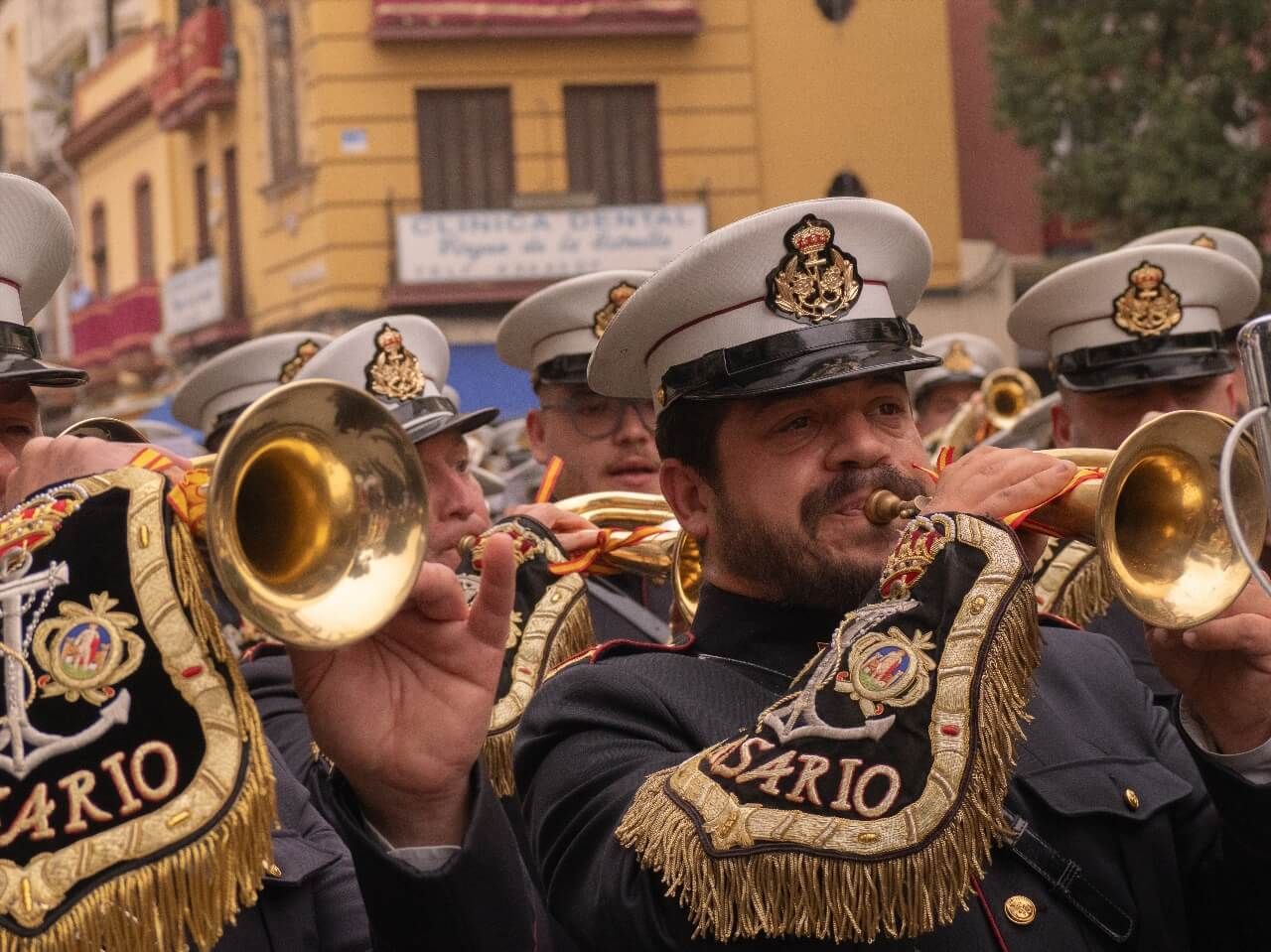
Semana Santa (Holy Week, late March or April depending on Easter) is the largest religious procession in the world. Over the course of seven days, 61 brotherhoods carry elaborate floats (pasos) through the city's streets, each procession lasting between 8 and 14 hours. The floats weigh up to 5,500 kilograms and are carried on the shoulders of teams of 40 to 50 men (costaleros) working in darkness beneath the float. The streets are lined continuously, day and night, from Palm Sunday to Easter Sunday.
This is not a performance for tourists. Sevillanos have belonged to the same brotherhoods for generations; participation is passed down through families. The atmosphere, the smell of orange blossom and incense, the sound of saetas (spontaneous flamenco hymns sung from balconies), the packed streets at 3 a.m.. cannot be replicated in any other city or at any other time of year. If you want a viewing position along the official route (Carrera Oficial), arrive at least three hours before the procession passes. Free grandstand tickets for the Carrera Oficial are allocated by lottery months in advance, check the Seville Tourism website from January.
The Feria de Abril takes place two weeks after Easter on a dedicated fairground (Real de la Feria) in the Los Remedios neighbourhood. For six days, over 1,000 casetas (private and public tents) host continuous eating, drinking, and dancing of the sevillanas. Horses parade twice daily. The official opening is signalled by the alumbrao, the switching on of several hundred thousand coloured lights over the fairground, on the Monday night. Most casetas are private (you need an invitation from a member), but there are also public casetas open to all. This is Seville's most genuinely communal celebration, attend the paseo de caballos (horse parade) at 1 p.m. on any day and you will understand immediately why the city's residents consider this the most important week of the year.
23. Cycle the Guadalquivir Greenway
Seville built 180 kilometres of dedicated cycle infrastructure starting in 2006 and became one of the most bike-friendly cities in southern Europe almost overnight. The riverside greenway running from the city centre south along the Guadalquivir is the best urban cycling route in Andalusia.
Sevici, the city's public bike-share system, has stands throughout the centre, a 3-day tourist pass costs €13.50 and covers unlimited journeys of up to 30 minutes (long enough for any urban route). Rental bikes are also available from private operators near the Torre del Oro for around €10-15 per day. The riverside route south from the Torre del Oro toward the Parque de Los Príncipes and the San Telmo canal is largely flat, car-free, and passes through some of the quieter residential sections of the city that most visitors never reach.
24. Rooftop Bars & Sunset Views
Seville's skyline is low, building height limits protect the views of the cathedral and the Giralda, which means that even modest rooftop terraces sit above the city's visual horizon and offer extraordinary sunsets.
EME Catedral Hotel (Calle Alemanes, 27) has the most photographed rooftop in the city, directly opposite La Giralda at eye level. The terrace bar is open to non-guests; expect to pay €12-15 for a cocktail and arrive by 7:30 p.m. in summer to secure a railing spot before the sunset crowd fills the terrace. The Hotel Doña María on the same street has a smaller, slightly less crowded rooftop with comparable views. For a less touristic option, the rooftop of the Mercado Lonja del Barranco (the converted riverside market near the Triana bridge) gives river and cityscape views alongside food stalls on the lower floors. The Metropol Parasol terrace (see #5 above) is the best elevated view for the labyrinthine street pattern of the old town.
25. Day Trip to Jerez de la Frontera
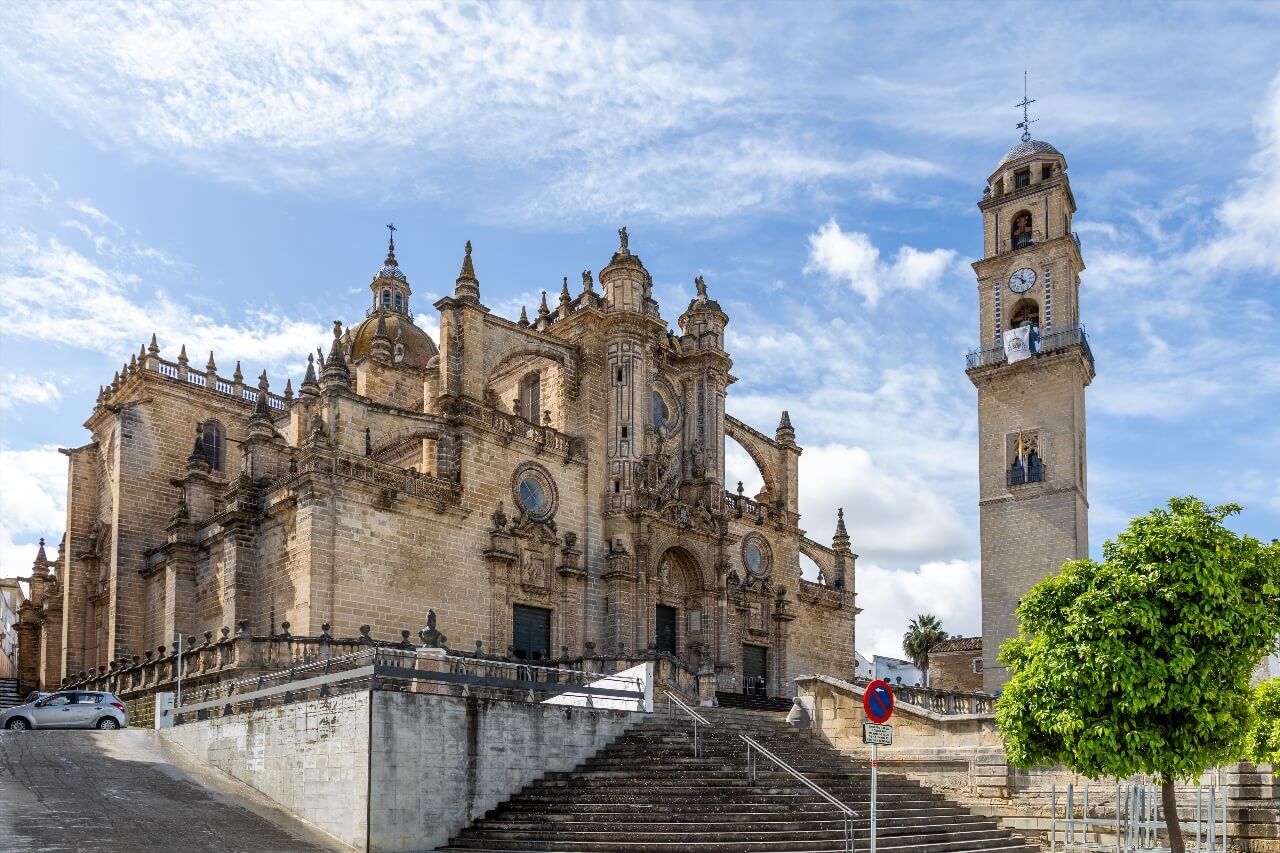
Jerez de la Frontera (Plaza del Arenal, 11401 Jerez de la Frontera, rated 4.6/5 on Google (8.3K avis)) (1 hour south of Seville by RENFE train or bus, around €10-12 return) is the most productive day trip from Seville for anyone interested in wine, horses, or a secondary dose of flamenco history.
Jerez is where sherry comes from, every bottle labelled « Jerez », « Sherry », or « Manzanilla » in any wine shop anywhere in the world originated within a specific triangle of land centred on this city. The major bodegas, González Byass (home of the Tío Pepe brand), Bodegas Lustau, and Williams & Humbert, all offer guided tours with tastings for €15-25 per person. The González Byass tour includes access to their historic cellar, where Albert Einstein and Orson Welles both signed a barrel during visits (separate occasions).
Beyond wine, Jerez houses the Real Escuela Andaluza del Arte Ecuestre (Royal Andalusian School of Equestrian Art), where the famous dancing horses of Jerez perform a classical dressage show every Tuesday and Thursday. Tickets run €25-40. The old city also has a compact but excellent flamenco scene in its own right, the Barrio de Santiago, Jerez's historic Gitano neighbourhood, is where bulerías was developed as a flamenco form.
FAQ
How many days do you need in Seville?
Three full days is the minimum to cover the major monuments (Alcázar, cathedral, Plaza de España) without feeling rushed, and to spend an evening in Triana and catch a flamenco show. Five days allows you to slow down, explore the Alameda and Calle Feria neighbourhood, visit Italica, and do at least one day trip. If your visit coincides with Semana Santa or the Feria de Abril, add an extra day, those events absorb time and make a tight schedule genuinely stressful.
What is the best time of year to visit Seville?
March to early May and October to November are the peak-quality travel windows. Temperatures are comfortable (18-26°C), the city's two main festivals fall in spring, and the tourist pressure, while never absent, is manageable. July and August are extremely hot, with average highs of 35-38°C and occasional peaks above 44°C. Summer visitors should plan all outdoor activity before 11 a.m. and after 7 p.m. December to February is mild (12-18°C) and significantly quieter, with lower hotel prices and shorter queues at the Alcázar.
Is Seville safe for tourists?
Seville is consistently ranked among the safest cities in Spain for visitors. The main risk is pickpocketing in the high-density tourist areas around the cathedral, the Alcázar entrance, and on crowded buses. Use a money belt or an anti-theft bag in those specific locations, and keep your phone in a front pocket or a bag you can hold against your body in crowds. Violent crime directed at tourists is extremely rare.
How do you get around Seville?
The old city is compact and walkable, most of the main attractions are within a 20-minute walk of each other. For longer distances, Seville's tram (T1 line) connects San Bernardo station to the Archivo de Indias. The Sevici bike-share system (€13.50 for a 3-day tourist pass) is highly practical for the flat terrain. Taxis are metered and reasonably priced; the minimum fare is around €4. Avoid renting a car in the old city, parking is expensive and the streets were not designed for motor vehicles.
Where should you stay in Seville?
The Santa Cruz neighbourhood puts you within walking distance of the Alcázar and the cathedral, with excellent restaurant options on the doorstep. It is the most expensive area. The Alameda de Hércules neighbourhood is cheaper, has better independent bars and restaurants, and is 15-20 minutes' walk from the main monuments, good for travellers who want a more local residential feel. For a mid-range option with great transport access, the El Arenal neighbourhood (between the river and the Maestranza) combines proximity to the river and the main monuments with slightly lower prices than Santa Cruz.
Can you see Seville on a budget?
Yes, more easily than most Andalusian cities. The Museo de Bellas Artes is free or €1.50, the Archivo de Indias is free, the Parque de María Luisa and Plaza de España are free to enter, and the Metropol Parasol basement museum costs only €2. With tapas bars that still include a free tapa with each drink, lunch can cost €8-12 for a full meal if you eat where locals eat, the menus del día (fixed lunch menus) available in most neighbourhood restaurants between 1 p.m. and 3:30 p.m. typically run €12-15 for three courses with a drink included.
Plan Your Seville Trip with Ryo
Seville rewards the visitor who plans carefully and moves at pace through its streets, but it also rewards the one who sits down in a bar on the Alameda at 6 p.m. with a glass of fino and watches the city go about its evening. Both approaches work. The city is large enough to fill a week and compact enough to feel knowable after three days, which is a balance that not many cities manage.
If you want a narrated introduction to the streets and monuments before or during your visit, the Ryocity Seville audio guide by Ryo walks you through the Alcázar, the cathedral, Santa Cruz, and Triana with historical context at the pace of the city itself. Ryo's Seville Ryocity is designed to slot around your own itinerary, you can start at any monument on this list, pause when you stop for a tapa, and pick up exactly where you left off. Treat this list as the shortlist of what to see, and let Ryo handle the narration while you keep your eyes on the architecture.