
Créé par Emilie, le 14 mai 2026
Votre guide Ryo
© Shutterstock
Liverpool divides people who haven't been there. They expect a post-industrial port city coasting on past glories, and instead they find one of the most culturally dense cities in Britain, a place where a free national museum sits two minutes from the dock where slave ships once unloaded cargo, where cathedrals built in rival styles face each other across the same mile of road, and where half the street corners seem to have a plaque commemorating something improbable. If you want a starting point before you arrive, Ryo's Liverpool Ryocity audio guide lets you explore the waterfront and city centre with narrated stops at each landmark, useful if you prefer to walk at your own pace and understand what you're actually looking at.
This list covers 25 things to do in Liverpool in 2026 that span the full range of what the city offers: the Fab Four exhibits that draw visitors from every continent, a stadium tour where you walk out through a tunnel that still has the word LIVERPOOL tiled into the floor, a stretch of iron men standing silent in the Mersey tide, the sharpest street food scene in the North West, and a slavery museum whose permanent collection is among the most affecting in Europe. Enough variety to fill a long weekend, or give you a strong reason to book a return trip.
1. The Beatles Story
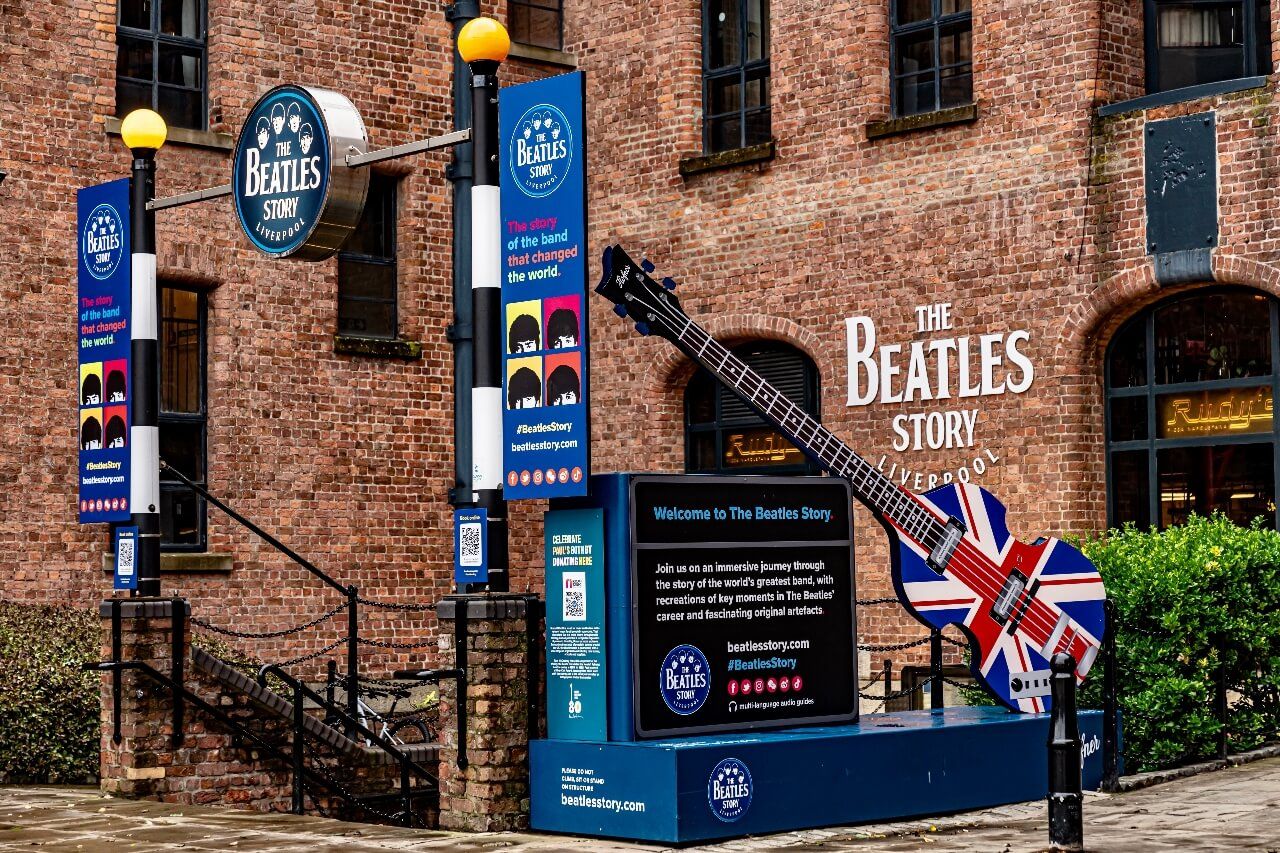
The Beatles Story (Britannia Vaults, Albert Dock, Liverpool L3 4AD) is the world's largest permanent exhibition dedicated to the Fab Four, and it earns that billing not through sheer square footage but through curatorial restraint. Rather than overwhelming you with memorabilia in glass cases, it recreates the environments: the cramped cellar of the original Cavern Club, a full-scale replica of the Abbey Road Studio Two control room, John Lennon's White Room from the Imagine video. The result is something genuinely atmospheric.
The exhibition follows a chronological arc from Liverpool childhoods through Beatlemania, the psychedelic period and the eventual break-up. Audio guides are included in the admission price and worth using, the commentary adds context that the displays alone don't always supply. Admission is around £17.50 for adults (2026 prices); book online to avoid the queues that build up between 10am and 2pm on weekends.
One detail most visitors miss: there's a separate Imagine exhibition at the Pier Head, included with the same ticket, that focuses on Lennon's solo years. Give yourself at least half a day if you want to do both properly. If you want a single narrative thread connecting the dock-era Beatles sites with the broader city story, the Ryo Ryocity audio guide for Liverpool sequences them in a logical walking order.
2. Albert Dock
The waterfront complex surrounding Albert Dock is the most-visited paid attraction in the UK outside London, which tells you something about how well the redevelopment has worked. Opened in 1846, it was the world's first non-combustible warehouse system, the cast iron, brick and stone construction was deliberately built without a single piece of timber to reduce fire risk after a series of catastrophic dock fires. It fell derelict in the 1970s and was restored in the 1980s in what became a template for regenerating industrial waterfronts across Britain.
Today it houses four major attractions (The Beatles Story, Tate Liverpool, the Merseyside Maritime Museum and the International Slavery Museum), plus restaurants, bars and independent shops along the colonnade. The architecture alone justifies a walk-through even if you don't enter any of the museums, the proportions of the dock basin, with the Liver Building visible across the water, make for one of the better urban views in England.
Budget at least two hours just for the dock itself if you want to eat, browse and look properly. Coming on a weekday morning gives you the best light on the water and considerably thinner crowds.
3. Tate Liverpool
Tate Liverpool (Albert Dock, Liverpool L3 4BB, rated 4.3/5 on Google (4 842 avis)) holds the national collection of modern and contemporary art for the North of England. Unlike some regional outposts, it regularly stages exhibitions of genuine weight, the permanent collection rotates, but you can expect works from Picasso, Dalí, Hockney and Warhol alongside artists who are less familiar outside specialist circles.
Entry to the permanent collection is free; temporary exhibitions usually cost £12-£18. The gallery reopened after a major refurbishment in 2023 and the new layout, particularly the top-floor galleries with Mersey views, is significantly better than what preceded it. Worth at least 90 minutes.
4. Walker Art Gallery
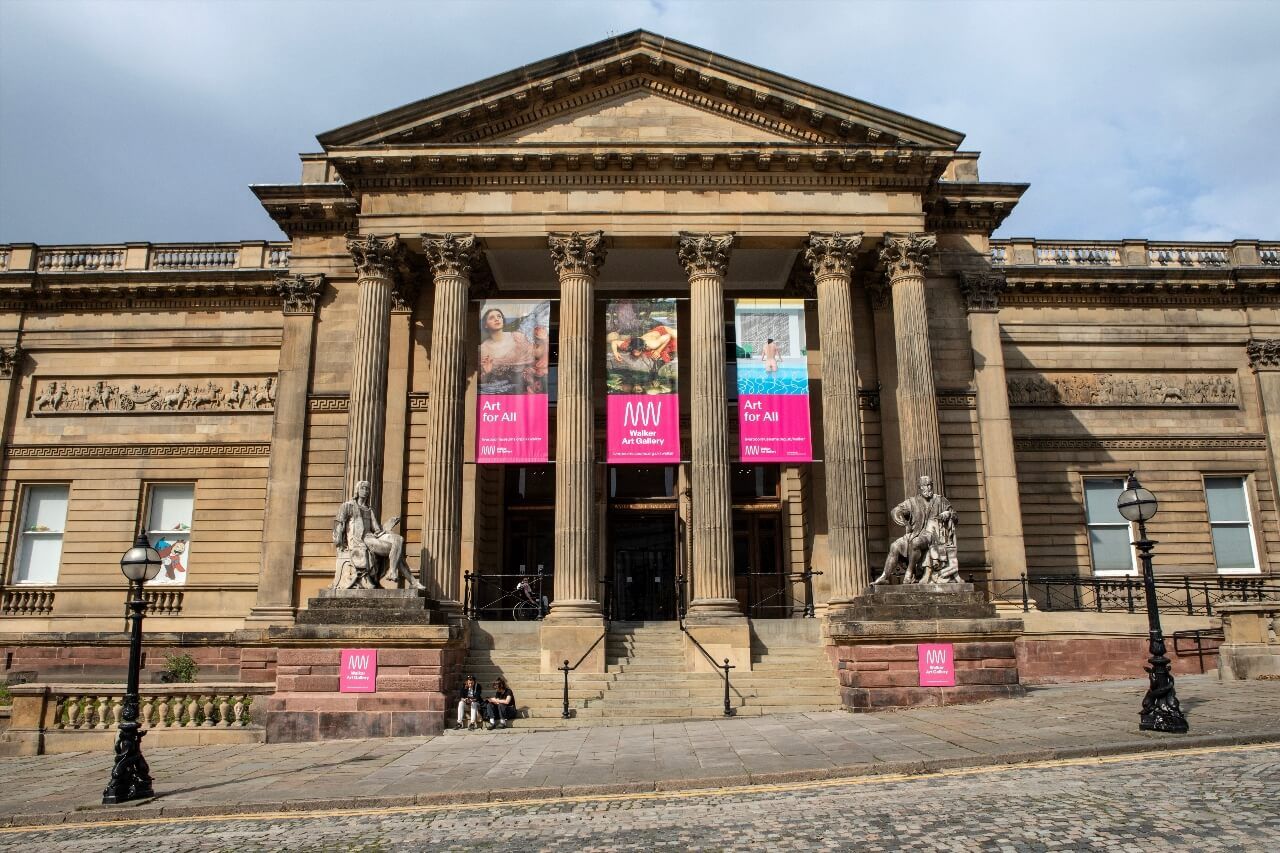
The Walker Art Gallery is one of the finest collections of European art outside London, and it's entirely free to enter. The permanent collection spans seven centuries, from early Italian Renaissance panels through Rubens, Rembrandt and Poussin to a particularly strong holding of Victorian and Pre-Raphaelite work, George Frederic Watts, Lord Leighton and Millais are all well represented.
What makes the Walker particularly satisfying is the coherence of the hang. Rather than bouncing between styles and eras, the rooms build on each other chronologically, so you leave with a stronger sense of how European painting developed than you might from a larger but more chaotic collection. Don't skip the 20th-century galleries at the rear, the Liverpool-born and Liverpool-associated work there is often overlooked by visitors focused on the headline names.
5. Liverpool Cathedral
Liverpool Cathedral is the largest cathedral in Britain and the fifth largest in the world by internal volume. Those facts are cited so often they've become slightly numbing, but standing inside the Central Space, looking up at the tower lantern roughly 100 metres above the floor, the scale reasserts itself. The total external length, at 189 metres, makes it the longest cathedral in the world, a detail that only really lands when you walk the nave end to end.
Entry to the cathedral is free, though a suggested donation of £5 is clearly signposted. The tower climb costs £7 and is completely worth it: the view from the top takes in the Irish Sea on clear days, the curve of the Mersey estuary, both cathedrals and the entire city spread out below. The cathedral was designed by Giles Gilbert Scott, who also designed Battersea Power Station and the classic red telephone box, and construction ran from 1904 to 1978, spanning two world wars. That long building history is visible in the fabric if you look carefully: different phases of work have subtly different stone colouring. The bells in the central tower form the highest and heaviest ringing peal in the world, hung at 67 metres above ground.
Time your visit for an organ recital if the schedule allows. The Henry Willis instrument here, with 10,268 pipes across two five-manual consoles, is the largest pipe organ in the UK, and the acoustic at full volume is an experience that doesn't translate well to photographs. Even outside recital times, the resident organist often runs through repertoire that you can sit and listen to from anywhere in the nave.
6. Metropolitan Cathedral
A mile up Hope Street from the Anglican cathedral, the Metropolitan Cathedral of Christ the King (Mount Pleasant, Liverpool L3 5TQ, rated 4.6/5 on Google (4 960 avis)) provides a study in contrast so extreme it might have been staged. Where the Anglican cathedral is stone, vertical and Gothic in ambition, this is concrete, circular and modernist, built between 1962 and 1967 to a design by Frederick Gibberd that looks, depending on your perspective, like either a futuristic tent or a rocket on a launch pad.
Step inside and the hostility tends to dissolve. The central tower is filled with stained glass by John Piper and Patrick Reyntiens, 2,000 pieces of glass in blues and yellows that flood the interior with coloured light on any sunny day. Entry is free. The two cathedrals together make one of the more unusual architectural walks in Britain: twenty minutes on foot along Hope Street, passing the Philharmonic Hall and a series of Georgian terraces.
7. Museum of Liverpool
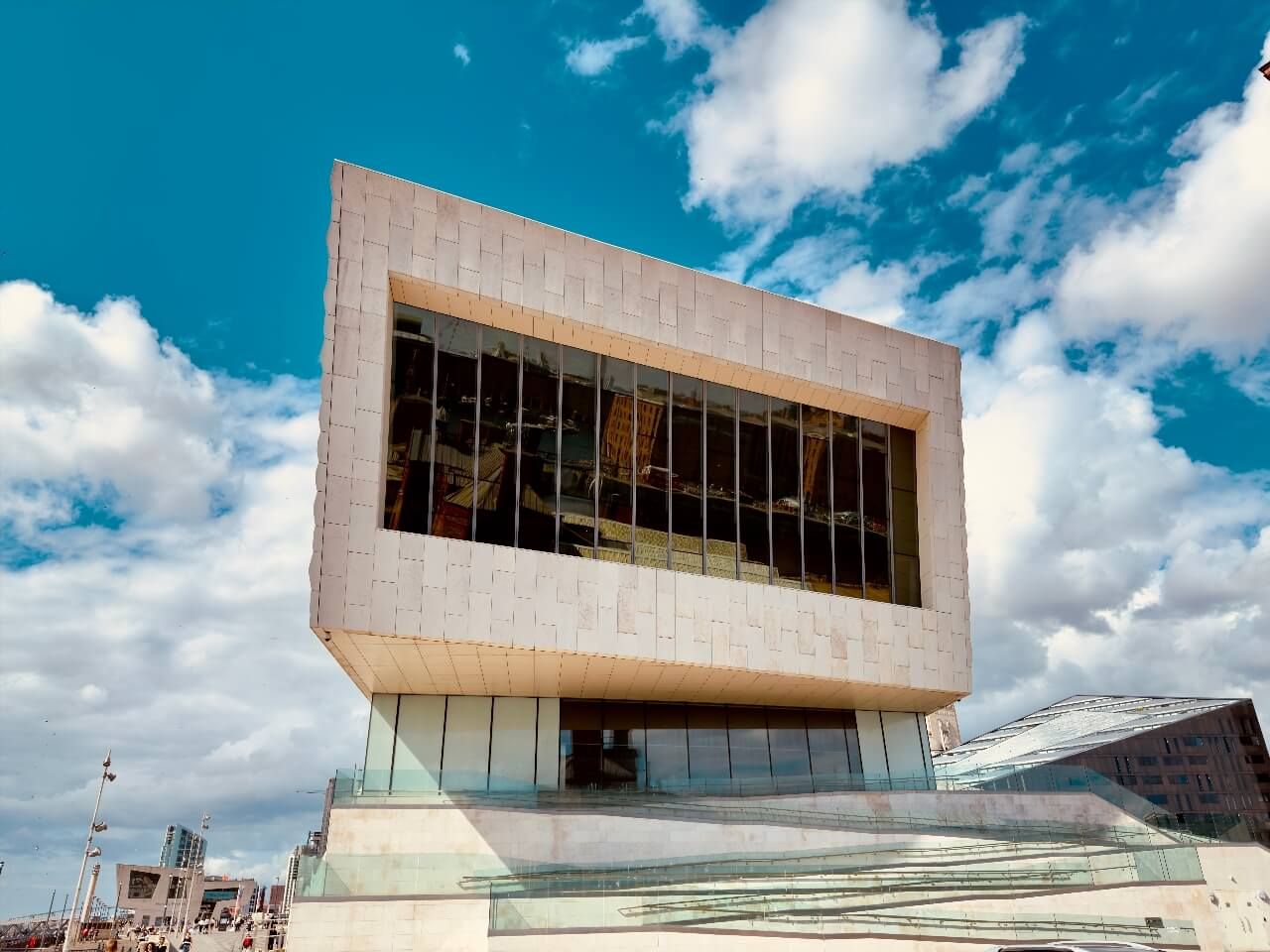
Opened in 2011 on the Pier Head waterfront, the Museum of Liverpool (Pier Head, Liverpool L3 1DG, rated 4.6/5 on Google (11 641 avis)) is the largest newly built national museum in Britain for a generation, and it takes on an ambitious brief: telling the story of a city that shaped global culture in ways entirely disproportionate to its size.
The permanent galleries cover the city's role in the slave trade and its abolition, the waves of Irish and Welsh immigration that defined the city's character, the development of the docks, the roots of Merseybeat and the social history of ordinary Liverpudlians across the centuries. The building is architecturally interesting in its own right, its angular glass facade tilts toward the Mersey at an angle that catches light at different times of day. Entry is free, and the ground-floor café is a reasonable stop for lunch if you're working your way through the Pier Head attractions.
8. Merseyside Maritime Museum
The Merseyside Maritime Museum occupies three floors of the dock's warehouse complex and tells the story of one of the world's great port cities from the inside out. The collection covers everything from navigational instruments and ship models to the full, unsanitised account of Liverpool's central role in the transatlantic slave trade.
Two permanent exhibitions deserve particular attention. The Titanic and Lusitania galleries explore both ships' connections to Liverpool, the Titanic's crew were predominantly from here, and the Lusitania was torpedoed just south of Ireland with heavy Liverpool losses. The Border Force National Museum in the basement, covering smuggling and customs enforcement through the centuries, is consistently overlooked and considerably more engaging than that description suggests. Entry is free. Allow a minimum of two hours.
9. Cavern Club
The original Cavern Club was demolished in 1973 to make way for an underground railway ventilation shaft, a fact that surprises most visitors who assume they're standing in the authentic space. What exists today at 10 Mathew Street, Liverpool L2 6RE is a reconstruction built using some of the original bricks in 1984, positioned about two-thirds underground in roughly the same location as the venue where the Beatles played 292 times between 1961 and 1963.
Knowing it's a reconstruction doesn't necessarily diminish the experience. The atmosphere during live music sessions, and there are sessions most afternoons and evenings, is real enough. Local bands play here constantly, and the standard of musicianship is generally high. Entry is free during the day; evening shows may charge depending on the act. The wall of fame in the entrance corridor, listing every artist who has played the Cavern, is worth pausing at. The Beatles entry, all four individual names, sits quietly in the middle of it.
10. Royal Liver Building
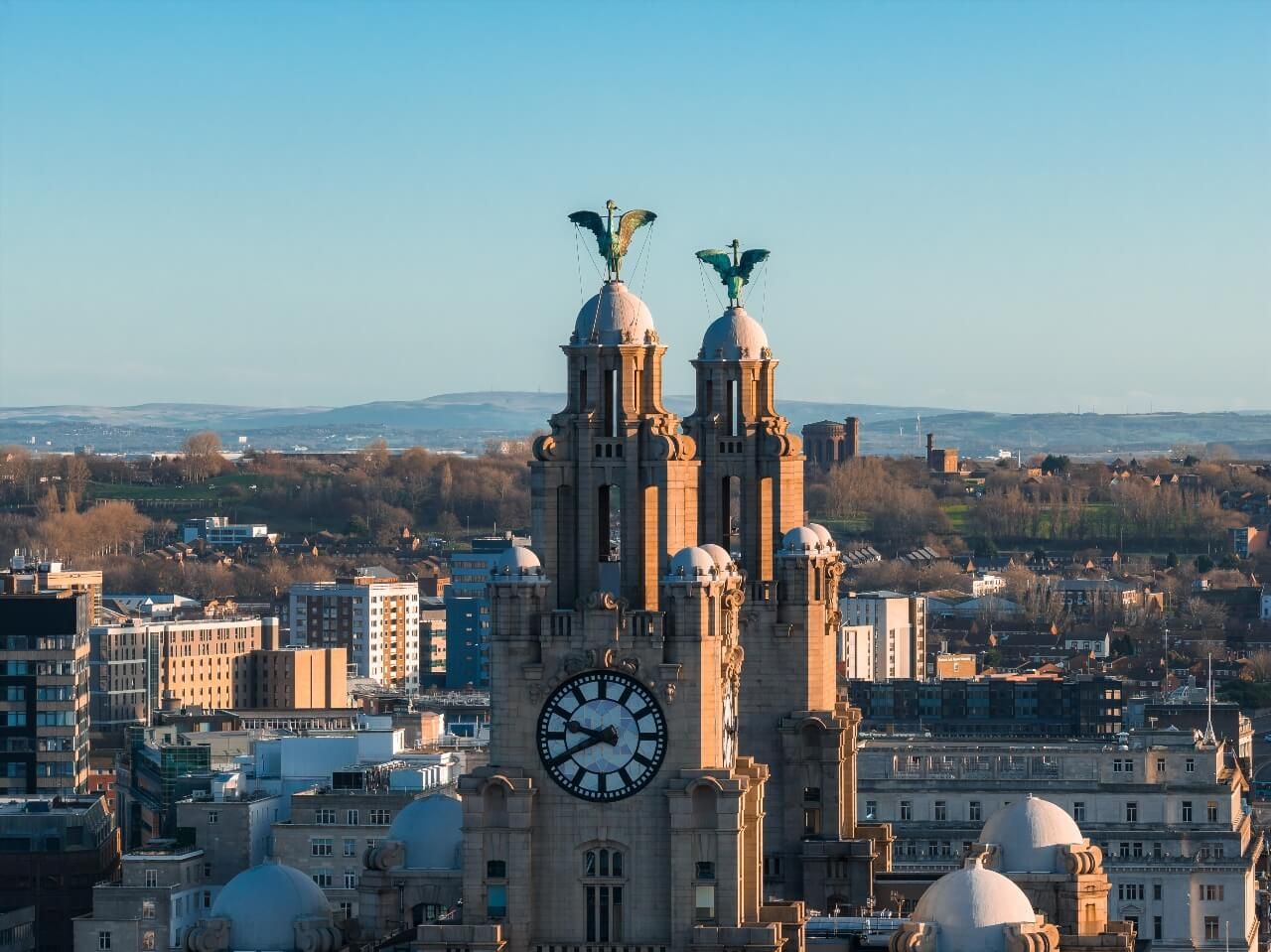
The three buildings that define Liverpool's waterfront skyline are collectively known as the Three Graces, and the most distinctive of them is the Royal Liver Building (Pier Head, Liverpool L3 1HT, rated 4.7/5 on Google (8K reviews)), completed in 1911. It was one of the first buildings in the world constructed using reinforced concrete, and the two clock towers topped with the mythical Liver Birds, a cormorant-like creature unique to Liverpool heraldry, have become the city's most recognisable image.
Guided tours of the interior run regularly and cost around £12. You see the original boardroom, the mechanical clock workings (the faces are 25 feet in diameter, larger than Big Ben's 22.5-foot dials) and get to stand on the roof terraces with the Liver Birds at close range. Without a tour, you can only view the exterior, but the Pier Head promenade, free, always open, frames all three Graces together and is among Liverpool's better photography spots.
11. Liverpool ONE
Liverpool ONE (5 Wall Street, Liverpool L1 8JQ, rated 4.5/5 on Google (43 241 avis)) is the city centre's main shopping district, an open-air retail development opened in 2008 with around 170 shops stepping down toward the waterfront.
The food and drink offer on Chavasse Park's upper level is worth noting for visitors who aren't here primarily to shop, several restaurants have outdoor terraces with views toward the Anglican Cathedral.
12. Anfield Stadium Tour
Even if you have no particular allegiance to Liverpool FC, the Anfield Stadium Tour (Anfield Road, Liverpool L4 0TH, rated 4.7/5 on Google (53 294 avis)) is one of the better sports venue experiences in Britain. The club has invested significantly in the tour infrastructure, and the result goes well beyond the usual walk-through-a-boardroom format that makes most stadium tours forgettable.
The route takes you through the players' tunnel, where you walk out to a recording of You'll Never Walk Alone building as the crowd noise rises, into the home and away changing rooms, the press conference room and the boot room that figured so heavily in the Shankly-era mythology. The new Anfield Road Stand, fully opened in 2024, expanded total capacity to 61,015 seats and the upper tier gives extraordinary views of the city.
The LFC Museum is included in the tour price (around £25 for adults). It covers the club's full history with particular depth on the 1970s-80s dynasty under Bob Paisley, six European Cups in a decade, and the Klopp era that ended the 30-year league title drought in 2020. Book well ahead for weekend tours; they sell out weeks in advance during the season.
If you want to go deeper on the city's football culture, explore Liverpool with Ryo's audio guide, which covers the city's social history including how football shaped working-class neighbourhoods around Anfield.
13. Goodison Park
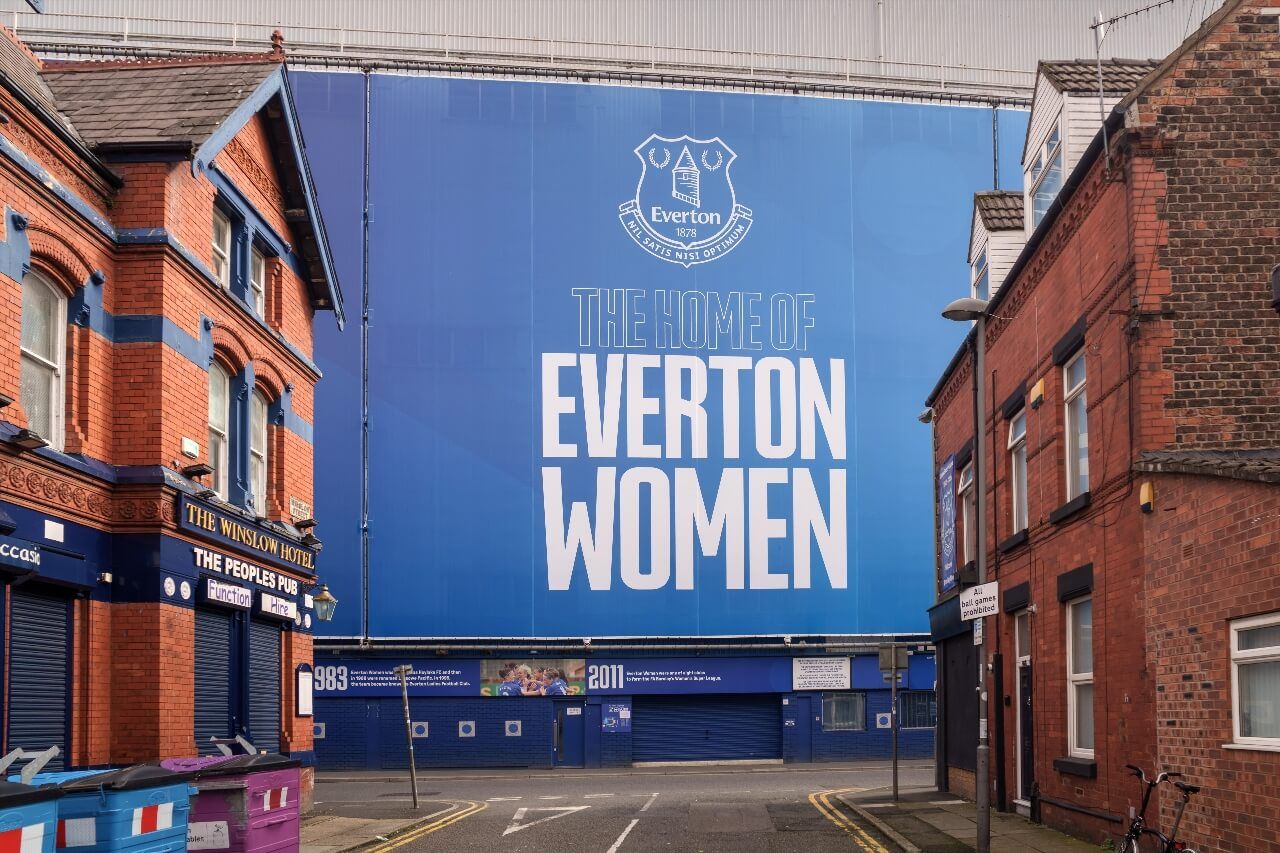
Goodison Park (Goodison Road, Liverpool L4 4EL, rated 4.4/5 on Google (7 295 avis)) is Everton FC's former home ground after the club's move to the new Bramley-Moore Dock stadium in 2025. As a stadium it occupies a peculiar place in English football: the oldest purpose-built top-flight football ground in the country, surrounded so tightly by terraced houses that residents on Goodison Road could watch from their bedroom windows.
The Everton Heritage Society runs occasional tours that are genuinely excellent for football historians, the stand architecture here predates the Premier League era by decades, and the stories attached to the ground have a different texture from the polished corporate narrative at Anfield. Check the club's website for current tour availability given the post-move transition.
14. Sefton Park
Sefton Park (Aigburth Drive, Liverpool L17 1AP, rated 4.7/5 on Google (16K reviews)) covers 235 acres in the south of the city and is, for most Liverpudlians, the park where they actually spend time. Designed in 1867 by Édouard André and Lewis Hornblower and opened in 1872, it was consciously modelled on the great Parisian parks, broad sweeping paths, a boating lake, a Victorian palm house that somehow survived the 20th century intact.
The Palm House, a Grade II listed cast iron and glass structure from 1896, has been restored and hosts events ranging from plant sales to classical music performances. The park is free to enter and is at its best on summer weekends when the café terraces around the lake fill up and the boats go out. It's far enough from the tourist centre to give you a feel for how the city actually lives when it's not performing for visitors.
15. Crosby Beach and Another Place
Take the Merseyrail Northern Line 20 minutes north of Liverpool Central to Blundellsands & Crosby station and you reach one of the stranger and more affecting public artworks in Britain. Antony Gormley's Another Place consists of 100 cast-iron figures modelled on the artist's own body, each standing at a slightly different height and facing out to sea, distributed along 3 kilometres of beach and extending up to 1 kilometre into the Mersey estuary at low tide.
At high tide, many of the figures are submerged to chest or shoulder height. At low tide they stand revealed, draped in seaweed and barnacled from years of immersion in tidal water. The work was originally intended as a temporary installation in 2005 but proved so popular that Sefton Council made it permanent after a public campaign. Go at low tide if you can, the revealed figures against a wide-open Mersey horizon, with the Welsh mountains sometimes visible in the distance, are something you won't find anywhere else.
16. The Waterfront Walk
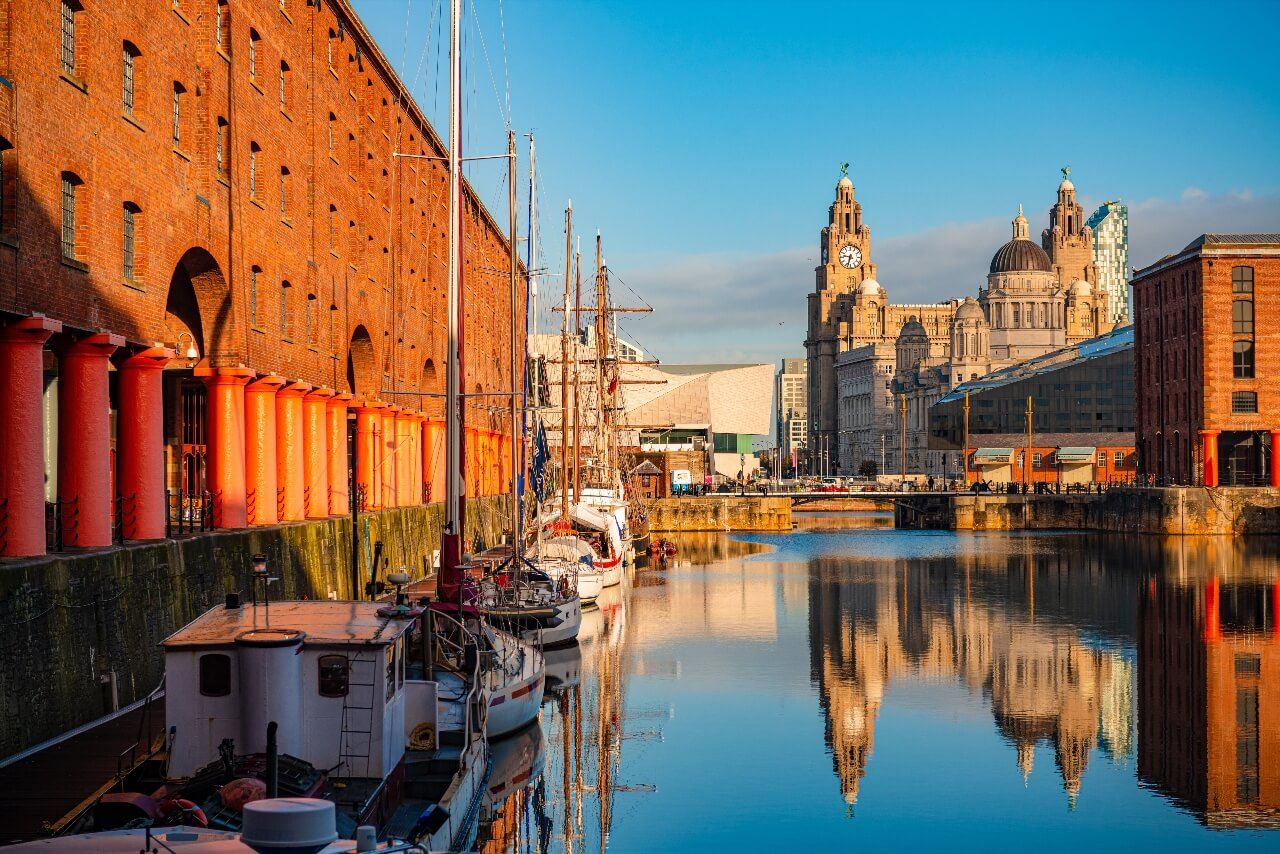
The stretch of promenade from Pier Head to Albert Dock is Liverpool's front page, the route reproduced on every tourism poster and the path that orients you to everything else. The walk itself takes about 15 minutes at an ambling pace.
Do it early on your first morning before the tourist boats start running and the café queues build. The Mersey at 8am on a weekday gives you the industrial-maritime scale of the place in a way that midday crowds obscure.
17. World Museum Liverpool
The World Museum Liverpool (William Brown Street, Liverpool L3 8EN, rated 4.6/5 on Google (15 867 avis)) sits next to the Walker Art Gallery on the Cultural Quarter's main boulevard and covers natural history, archaeology, ethnology and the history of science across six floors. The collections are substantial, over 1 million objects, and the museum handles the considerable challenge of breadth fairly well.
The aquarium on the ground floor draws families reliably, but the planetarium, which runs ticketed shows throughout the day, is the real draw for adults visiting without children. The ancient Egypt galleries and the natural history floors are both significantly above average for a regional collection. Entry is free; planetarium shows cost £4. Allow two hours minimum, more with children. If you're moving between this museum, the Walker and the central library next door, the entire Cultural Quarter is covered by the same stop on the Ryo audio guide so you don't lose the thread between visits.
18. St George's Hall
St George's Hall (St George's Place, Liverpool L1 1JJ, rated 4.7/5 on Google (4 416 avis)) is one of the finest neo-classical buildings in Europe and, remarkably, most visitors walk past it on the way to something else. Completed in 1854 to designs by Harvey Lonsdale Elmes (who died before it was finished, aged 33), it combines a concert hall, crown court and civil court in a single Corinthian-columned structure of extraordinary ambition.
The Great Hall interior, with its Minton-tiled floor normally covered for preservation and revealed only on occasional open days, is among the most spectacular Victorian interiors in Britain. Check the website for open day schedules, when the floor is uncovered and the hall is lit properly, it's genuinely exceptional. Free guided tours run on Saturdays at 11am.
19. The Baltic Triangle
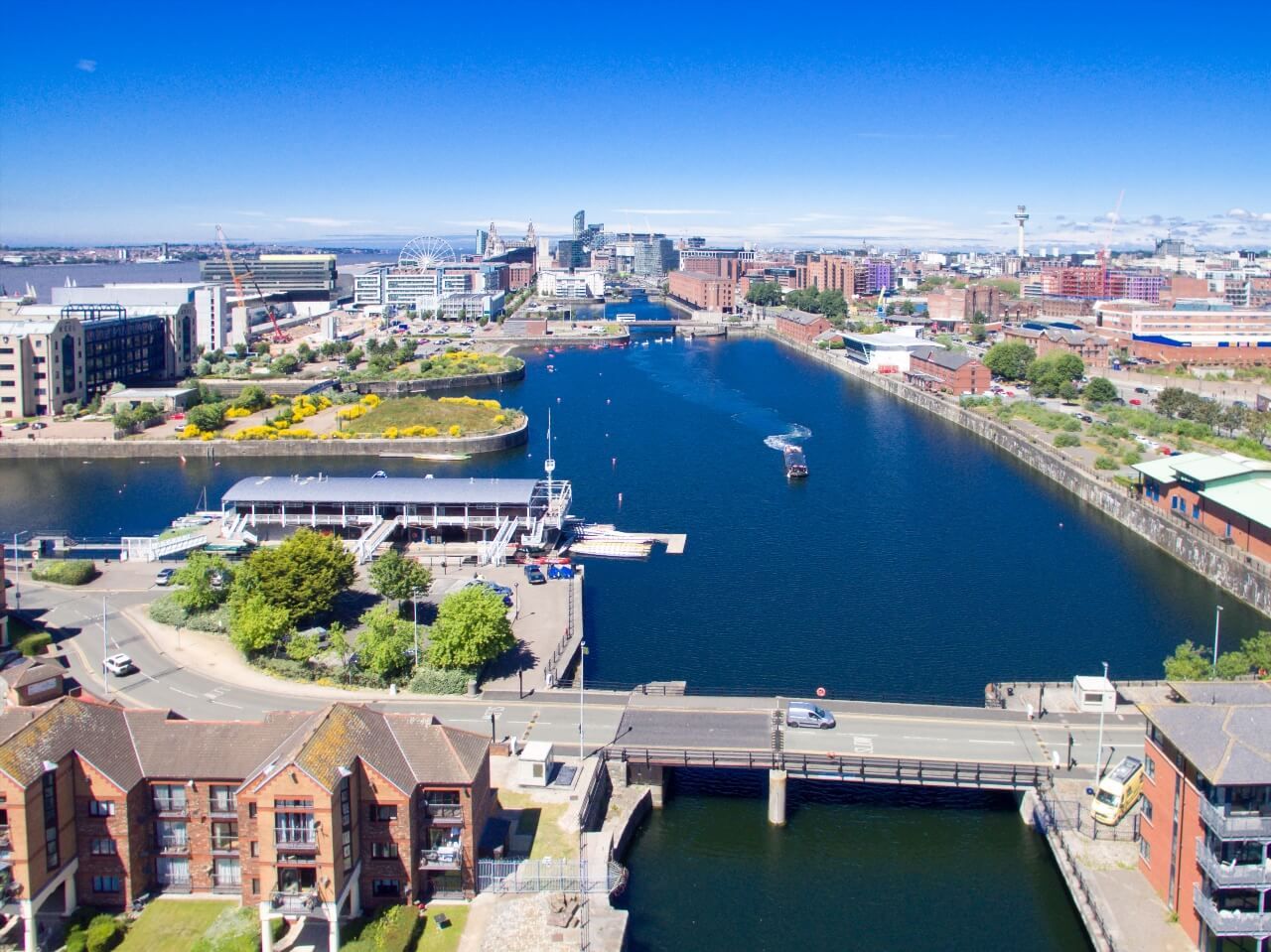
Liverpool's creative quarter occupies a post-industrial wedge of former warehouses and factories southeast of the city centre. The Baltic Triangle (Parliament Street, Liverpool L8 5RN, rated 4.3/5 on Google (2K reviews)) has undergone the kind of slow-burn regeneration that produces genuinely interesting results rather than the instantly sanitised version: independent coffee roasters, recording studios, independent music venues, craft breweries and street food traders operating from converted railway arches.
Grade II listed Camp and Furnace on Greenland Street is the anchor venue, a vast former foundry with exposed brickwork and a courtyard that hosts markets, festivals and evening events throughout the year. The Baltic Market, held on weekends inside one of the warehouse spaces, is worth timing your visit around if you're in Liverpool on a Saturday, around 30 food traders, a bar, and a genuinely local crowd rather than a tourist-facing operation.
20. International Slavery Museum
The International Slavery Museum (Albert Dock, Liverpool L3 4AQ, rated 4.4/5 on Google (231 avis)) is one of the most important museums in Britain, housed in the upper floors of the Merseyside Maritime Museum and free to enter. It addresses Liverpool's central role in the transatlantic slave trade with a directness and depth that similar institutions often avoid.
Liverpool's role in the trade is documented precisely: between 1699 and 1807, the city's merchants organised more than 5,000 slaving voyages, transporting approximately 1.5 million enslaved Africans across the Atlantic. The profits from those voyages built much of the city visible today, the dock warehouses, the Georgian townhouses of Rodney Street, the banking institutions. The museum makes this connection explicit and doesn't soften it.
The galleries are organised across three floors. The first deals with the history and diversity of West African cultures before the slave trade, deliberately establishing that context before moving to the trade itself. The central hall covers the mechanics of the Middle Passage, the ships, the conditions, the mortality rates, through a combination of contemporary documents, maps and objects. The upper galleries address resistance, abolition and the long aftermath: the legacies of slavery in the Americas, the Caribbean, Britain and West Africa that are still present in social and economic structures today.
This is not comfortable viewing, nor should it be. Budget at least 90 minutes and be prepared for the material to sit with you. It's one of the few museums anywhere that genuinely changes how you understand a city you're standing in.
21. Mathew Street and Liverpool Nightlife
Mathew Street (Mathew Street, Liverpool L2 6RE, rated 4.3/5 on Google (4K reviews)) (Liverpool L2) is the nexus of Liverpool's Beatles tourism and its nightlife simultaneously, sometimes uncomfortably so. The Cavern Club anchors the strip, but the surrounding area extends into a broader network of bars and live music venues that operate from mid-afternoon into the early morning hours most nights of the week.
For a less tourist-heavy evening, the concert venues that matter to the city's current music scene sit elsewhere: the O2 Academy Liverpool on London Road for mid-size touring acts, Invisible Wind Factory in the Baltic Triangle for electronic music and larger underground nights, and the Arts Club on Seel Street for everything in between. Liverpool's music output since the Beatles, from Echo & the Bunnymen through Orchestral Manoeuvres in the Dark to more recent electronic artists, gives local culture a depth that pure heritage tourism misses.
22. Bold Street
Bold Street (Liverpool L1) runs south from the city centre toward the Georgian quarter and acts as a reliable indicator of what independent Liverpool actually looks like. The street has resisted chain-store homogeneity better than most and currently houses a concentration of independent coffee shops, bookshops, international food restaurants and vintage clothing stores that would sustain an afternoon easily.
The surrounding grid of streets, Hardman Street, Leece Street, Lark Lane further south, extends the offer. Lark Lane in particular has the density of a neighbourhood with its own identity: a farmers' market on Saturdays, a cluster of independently owned restaurants spanning Thai, Lebanese, Italian and North African cuisines, and a local clientele that doesn't much care whether tourists have found it yet.
23. Liverpool Philharmonic Hall
Liverpool Philharmonic Hall (Hope Street, Liverpool L1 9BP, rated 4.7/5 on Google (2 438 avis)) is the home venue of the Royal Liverpool Philharmonic Orchestra, one of the oldest professional orchestras in Britain, founded in 1840. The hall itself, rebuilt after a fire in 1933 in an Art Deco style that remains largely intact, is one of the better concert halls in the North of England for acoustics.
The programme runs from orchestral concerts through jazz, folk and world music, with ticket prices that are significantly lower than equivalent London venues. The adjacent Philharmonic Dining Rooms pub, a Grade I listed Victorian gin palace with ornate carved mahogany, etched glass and mosaic floors, is worth visiting independently of any concert plans. It's one of the few pubs in England where the architecture is genuinely unmissable.
24. Speke Hall
Eight miles south of the city centre, Speke Hall (The Walk, Liverpool L24 1XD, rated 4.7/5 on Google (4 819 avis)) is a National Trust property that manages the difficult feat of being both genuinely historic and genuinely enjoyable to visit. The house dates from 1490, an extraordinarily well-preserved Tudor timber-framed manor built around a central courtyard containing two ancient yew trees planted, by tradition, when the house was new.
The interior holds Victorian room settings from the period when the hall was restored and reoccupied after a long abandonment, the contrast between the Tudor structure and the Victorian furnishings creates an interesting layering of domestic history. The grounds include walled gardens and woodland walks down to the Mersey, with the airport runway visible across the water (Speke Hall sits inside the airport's noise corridor, which is historically anomalous but not particularly disruptive in practice). National Trust admission applies (free for members); the hall is reachable by bus from Liverpool South Parkway station.
25. Ferry Cross the Mersey
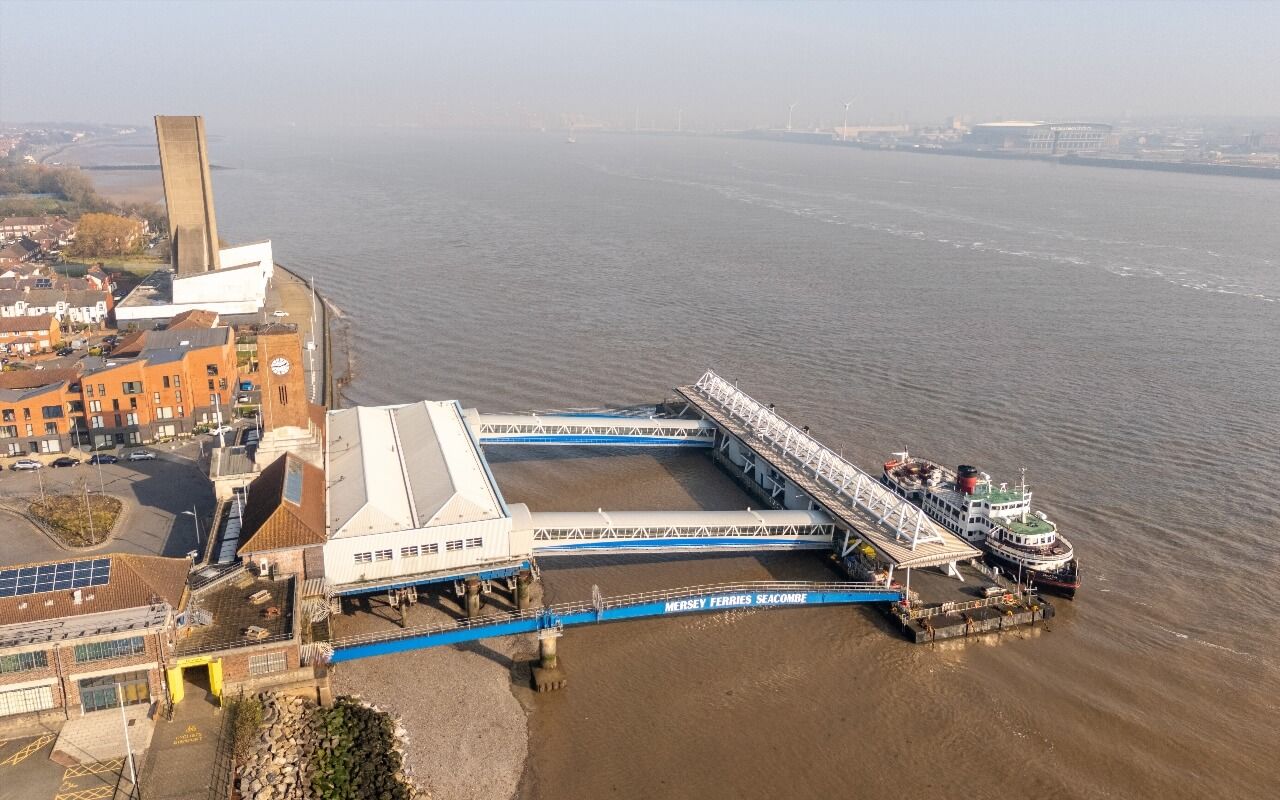
The Mersey Ferry (Pier Head Ferry Terminal, Liverpool L3 1DP) has been carrying passengers across the estuary for centuries, with the first recorded service dating to the 12th century. The tourist cruise version, running 50-minute round trips with commentary, is a deliberate homage to the Gerry & The Pacemakers song that turned a municipal ferry service into a global cultural reference.
The practical argument for taking it is the view of the Liverpool waterfront (Pier Head, Liverpool L3 1HT, rated 4.7/5 on Google (1 460 avis)) from the water, the Three Graces read completely differently from the Mersey than they do from the Pier Head promenade, and the scale of the river (which is tidal, brown with sediment and moves at a speed that surprises first-time viewers) only becomes apparent when you're on it. The commuter ferry to Birkenhead and Seacombe also runs regular services and costs less than the tourist cruise if you simply want to cross and return. Adult cruise tickets cost around £12.50. The terminal is a short walk from the Museum of Liverpool.
FAQ
Is Liverpool worth visiting for more than The Beatles?
Absolutely. The Beatles are one thread in a very dense cultural fabric. Liverpool has more free national museums than any English city outside London, an architectural heritage that ranges from medieval timber-framing at Speke Hall to the most ambitious Victorian and Edwardian civic buildings in the country, and a contemporary arts, music and food scene that has developed independently of its tourism economy. Most visitors who come for the Beatles leave surprised by how much else there is.
How many days do you need in Liverpool?
Two full days cover the main waterfront sites and one or two excursions. Three days lets you add the outlying attractions, Crosby Beach, Speke Hall, a football stadium tour, without feeling rushed. The city is compact enough that you won't spend much time in transit: Albert Dock, the city centre museums, the cathedrals and the Baltic Triangle are all walkable from a central hotel.
What is free to do in Liverpool?
A considerable amount. The Walker Art Gallery, World Museum, Museum of Liverpool, Merseyside Maritime Museum, International Slavery Museum and Tate Liverpool's permanent collection are all free. Both cathedrals are free to enter (the tower climb at Liverpool Cathedral costs extra). Crosby Beach and the Antony Gormley figures are free. The Waterfront Walk is free. A visitor could spend two full days in Liverpool without paying for any attraction.
When is the best time to visit Liverpool?
May through September gives the best weather and longest days, though Liverpool is further north than most UK visitors expect and summer temperatures rarely exceed 20°C. The city is busy year-round because of football and the Beatles trade. March and April offer lower hotel rates and thinner crowds with acceptable weather. Avoid the week of the Grand National at Aintree (early April) if you want affordable accommodation.
How do you get around Liverpool?
The city centre is compact and walkable. For outlying attractions, Merseyrail covers Crosby Beach (Northern Line, 20 minutes from Central), Speke Hall (Southern Line to Liverpool South Parkway, then bus) and the Wirral Peninsula. The ferry to Birkenhead leaves from Pier Head. Taxis and rideshares are plentiful in the centre. Driving in the city centre is impractical given parking costs and one-way systems.
Is Liverpool safe for tourists?
Yes. Liverpool city centre, the waterfront, the Cultural Quarter around William Brown Street, Hope Street, the Baltic Triangle and the main shopping areas are all straightforward for visitors. Like any large city it has areas where situational awareness is sensible after dark, but these are not areas that tourists typically visit. The city has a strong culture of directness with strangers that can initially read as unfriendliness but very rapidly proves to be the opposite.
Make the Most of Your Visit
Liverpool rewards the visitors who move beyond the obvious itinerary. The waterfront and the Beatles landmarks are exceptional, but the city that built those things, its slavery history, its civic Victorian ambition, its uninterrupted musical output since the 1960s, is more interesting still. Whether you spend a weekend or a full week, picking a clear walking spine on day one (Pier Head, the docks, the Cultural Quarter, the cathedrals) lets the rest of the city fall into place without a map app open in one hand.
The Ryo Liverpool Ryocity audio guide keeps you oriented with narrated context at every stop along the way, sequencing the waterfront, Mathew Street and the Hope Street axis into a coherent walk so nothing ends up as just a building you photographed without quite knowing why. Slip headphones in, follow the route at your own pace, and the city's layered history starts to read as a single story rather than a checklist of attractions.