
Créé par Emilie, le 7 mai 2026
Votre guide Ryo
© Shutterstock
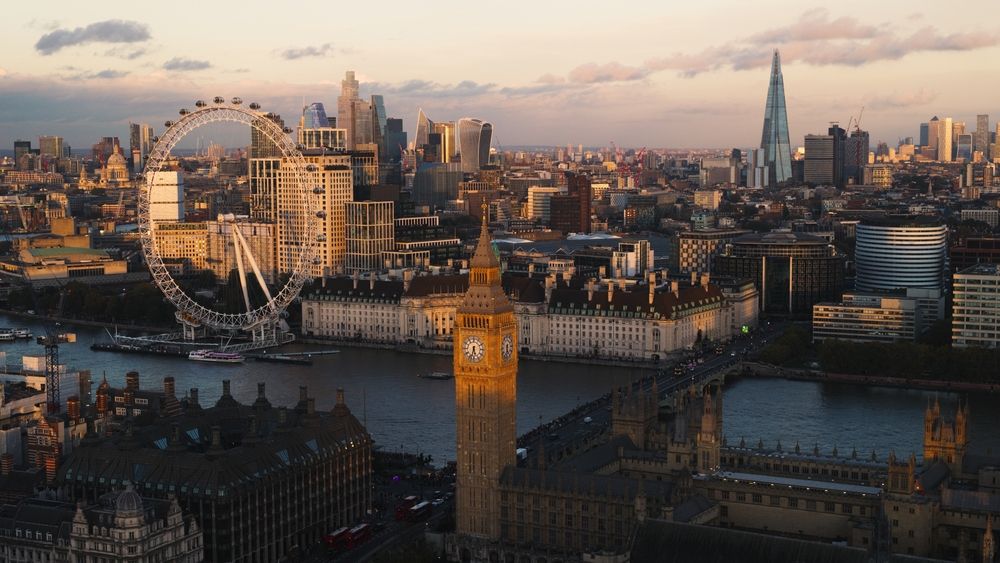
London, the millennial capital of the United Kingdom, is brimming with historic monuments that tell the fascinating story of the British Empire. From the Tower of London to the Houses of Parliament, every stone bears witness to centuries of history, power and culture. These historic monuments of London attract millions of visitors from around the world each year who come to admire their exceptional architecture and discover their secrets. Whether you're passionate about history, an architecture enthusiast or simply curious, this selection of 8 must-see monuments will allow you to dive into the heart of London's soul. Prepare yourself for an extraordinary journey through the centuries, where each monument reveals a unique facet of this legendary metropolis.
1. The Tower of London
The Tower of London undoubtedly represents one of the most emblematic historic monuments of the British capital. Founded by William the Conqueror in 1066, this thousand-year-old fortress has traversed the centuries serving as a royal palace, fearsome prison and treasury. Today classified as a UNESCO World Heritage site, it houses the precious Crown Jewels, true symbols of the monarchy. (Tower Hill, London EC3N 4AB, rated 4.4/5 on Google for 45,000 reviews)
The imposing architecture of the White Tower, built from Caen stone, majestically dominates the banks of the Thames. Its thick walls have sheltered illustrious figures like Anne Boleyn, Lady Jane Grey and Sir Walter Raleigh. The visit allows exploration of the different towers, including the famous Bloody Tower, and witnessing the Ceremony of the Keys, a centuries-old tradition that marks the nightly closing of the fortress. The famous ravens, living legends of the place, watch over this history-laden monument according to the prophecy that predicts the kingdom's fall should they disappear.
2. The Palace of Westminster and Big Ben
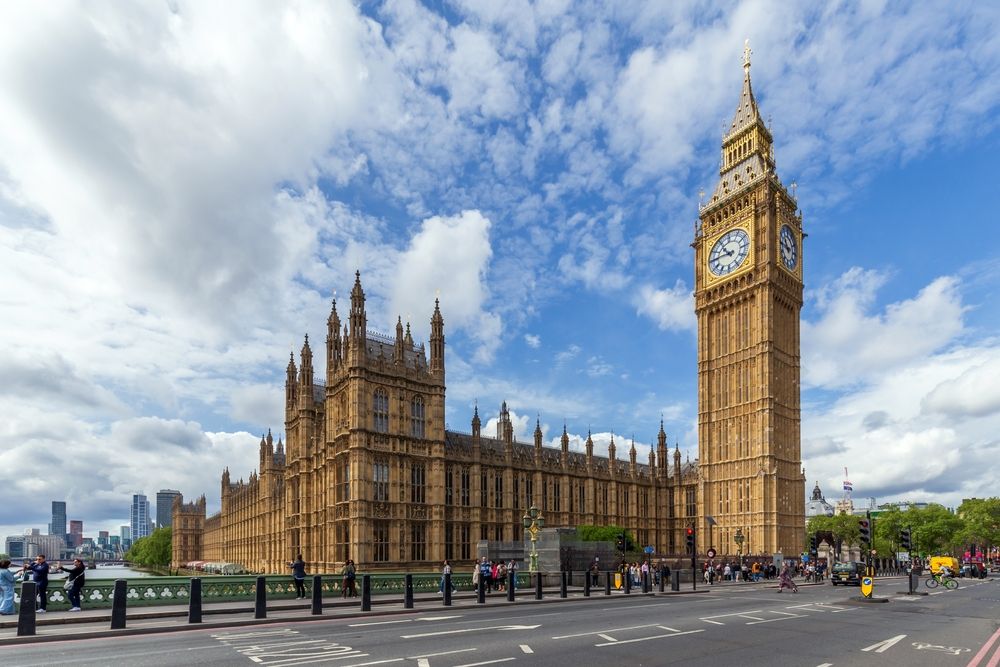
The Palace of Westminster, seat of the British Parliament, constitutes one of London's most recognizable historic monuments thanks to its famous clock tower housing Big Ben. Rebuilt in the 19th century after the 1834 fire, this masterpiece of Victorian neo-Gothic architecture extends majestically along the Thames. (Westminster, London SW1A 0AA, rated 4.5/5 on Google for 25,000 reviews)
Designed by Sir Charles Barry and Augustus Pugin, the edifice impresses with its soaring spires, Gothic vaults and 1,100 rooms spread across four floors. The Elizabeth Tower, commonly called Big Ben after its largest bell, rises to 96 meters and has rhythmed London life since 1859. Westminster Hall, a medieval vestige dating from 1097, testifies to the site's antiquity and has hosted the most significant trials in British history. Visiting London without contemplating this symbol of British democracy would be unthinkable.
3. Westminster Abbey
Westminster Abbey embodies the spiritual and historical heart of the British monarchy for over a thousand years. This marvel of English Gothic architecture has been the theater of all royal coronations since 1066, as well as numerous princely weddings, including that of Prince William and Kate Middleton in 2011. Rebuilt by Henry III in the 13th century, it impresses with its vaults reaching 31 meters in height and its multicolored stained glass windows. (20 Deans Yard, London SW1P 3PA, rated 4.4/5 on Google for 18,000 reviews)
Poets' Corner houses the tombs and memorials of the greatest British literary figures, from Chaucer to Dickens, including Shakespeare. The Henry VII Chapel, jewel of perpendicular Gothic art, dazzles with its fan ceiling and finely sculpted stalls. More than 3,300 personalities rest in this royal necropolis, making each step a journey through British history. Visitors can also admire St. Edward's Throne, used during coronations for 700 years.
4. Buckingham Palace
Official residence of the British royal family since 1837, Buckingham Palace represents one of London's most visited monuments. This imposing residence of 775 rooms, including 19 State apartments, testifies to royal splendor through its sumptuous salons adorned with artistic masterpieces. Originally built in 1703 for the Duke of Buckingham, the palace was transformed by architect John Nash to become a residence worthy of the British Empire. (London SW1A 1AA, rated 4.4/5 on Google for 35,000 reviews)
The east facade in Portland stone, added in 1913, offers the perfect setting for the famous Changing of the Guard ceremony that attracts thousands of spectators daily. The State Rooms, open to the public during summer, reveal an exceptional collection of works by Rembrandt, Rubens and Canaletto. The royal balcony, witness to great moments in British history, overlooks the Mall where crowds gather during national events. Let yourself be guided by the Ryo itinerary to discover all the secrets of this emblematic monument.
Download the audio-guided circuit to discover London on foot and independently
5. Tower Bridge
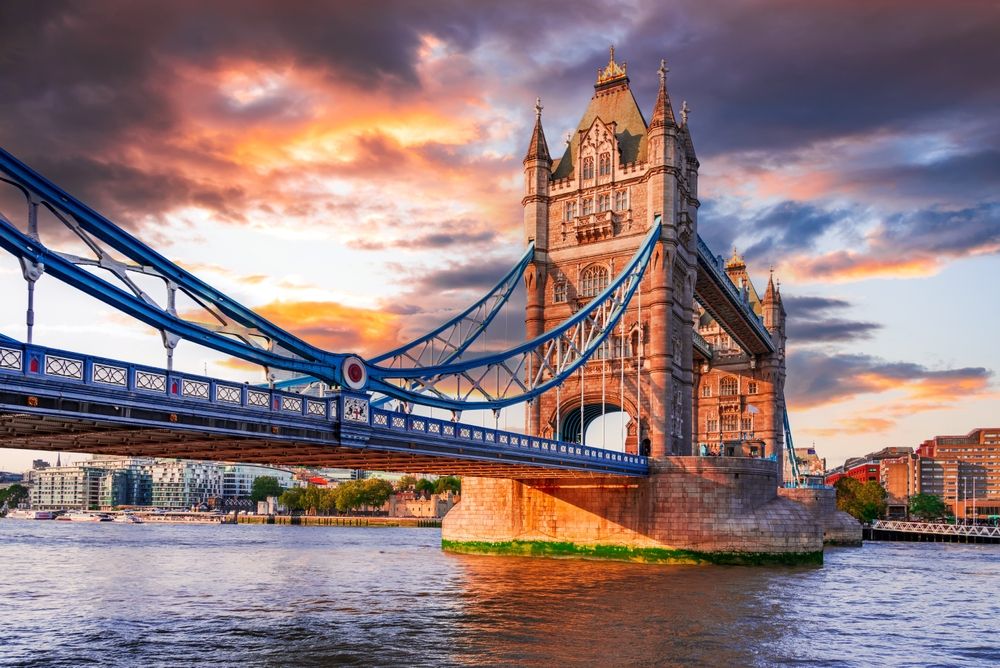
Architectural symbol of London, Tower Bridge has majestically spanned the Thames since 1894. This Victorian neo-Gothic style bascule bridge represents an engineering marvel of its era, combining functionality and aesthetics in perfect harmony. Designed by Sir Horace Jones and Sir John Wolfe Barry, it allows ships to go up the Thames thanks to its revolutionary hydraulic mechanism, still in operation today. (Tower Bridge Rd, London SE1 2UP, rated 4.4/5 on Google for 55,000 reviews)
The two towers of 65 meters in height, connected by panoramic walkways with glass floors, offer spectacular views of the City and the Tower of London. The Victorian Engine Rooms, perfectly preserved, reveal the workings of this exceptional mechanism that still lifts the deck more than 800 times per year. The permanent exhibition traces the fascinating history of the bridge's construction, a major technical challenge of the late 19th century that required eight years of work and the intervention of 432 workers.
6. St. Paul's Cathedral
Masterpiece of English Baroque architecture, St. Paul's Cathedral has dominated the London skyline for more than three centuries. Designed by Sir Christopher Wren after the Great Fire of London in 1666, this cathedral impresses with its monumental dome of 111 meters in height, second largest in the world after St. Peter's in Rome. Its construction spanned 35 years, from 1675 to 1710, mobilizing the best craftsmen of the era. (St. Paul's Churchyard, London EC4M 8AD, rated 4.5/5 on Google for 22,000 reviews)
The interior reveals exceptional acoustics notably in the Whispering Gallery, located 30 meters high where the slightest whisper propagates around the entire circumference. The Victorian mosaics, Grinling Gibbons sculptures and Sir James Thornhill paintings create an artistic ensemble of unprecedented richness. The crypt houses the tombs of illustrious personalities like Admiral Nelson, the Duke of Wellington and Sir Christopher Wren himself, making this cathedral a British pantheon.
7. London Bridge
Mythical bridge of the British capital, London Bridge embodies two millennia of London history. The current bridge, inaugurated in 1973, succeeds a long line of structures that have shaped the city's identity since Roman times. First permanent bridge over the Thames around the year 50, it constituted for centuries the only passage between the two banks, making London a major commercial crossroads of medieval Europe. (London Bridge, London SE1 9DD, rated 4.2/5 on Google for 8,500 reviews)
The medieval London Bridge, built in stone around 1200, was a veritable city on water with its houses, shops and even a chapel. Demolished in 1831, it was replaced by a granite bridge that crossed the Atlantic to be reassembled in Arizona after its sale in 1968. This extraordinary anecdote testifies to the special place this bridge occupies in the global collective imagination. Today, the modern London Bridge in concrete and steel allows the passage of 40,000 daily pedestrians while offering unique perspectives on the historic monuments of London.
8. London Eye
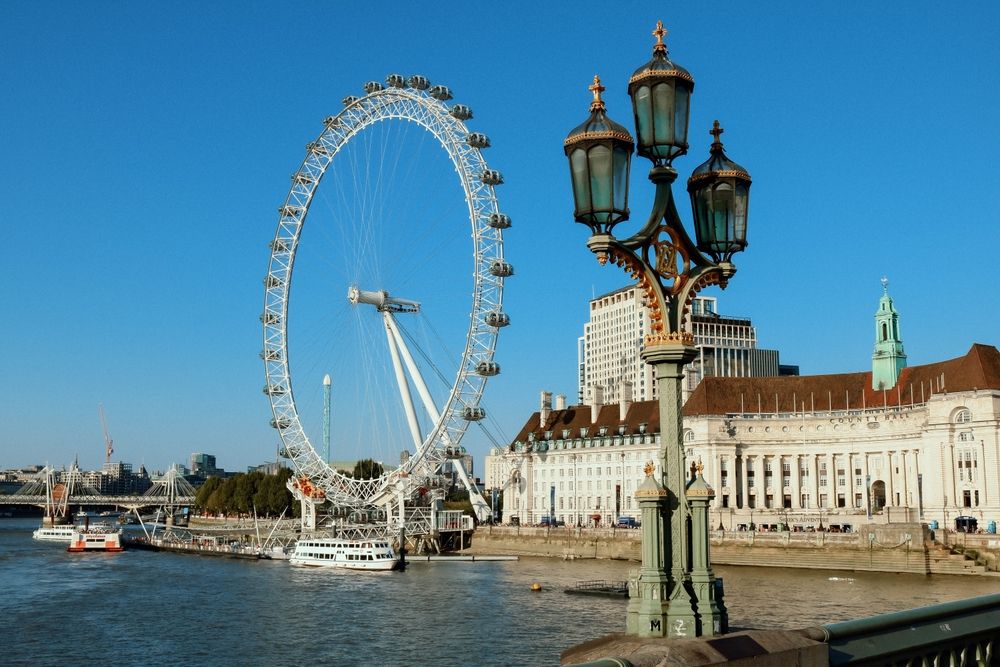
Emblematic contemporary monument of London, the London Eye revolutionized the London horizon during its inauguration for the new millennium in the year 2000. This observation wheel of 135 meters in diameter, Europe's tallest wheel during its construction, offers an unprecedented perspective on the capital's architectural treasures. Designed by architects David Marks and Julia Barfield, it symbolizes London's entry into the 21st century while paying homage to its historic heritage. (Riverside Building, County Hall, London SE1 7PB, rated 4.3/5 on Google for 85,000 reviews)
Its 32 air-conditioned glass capsules, representing London boroughs, accommodate up to 25 passengers for a 30-minute journey above the Thames. In clear weather, the view extends up to 40 kilometers, revealing an exceptional panorama over Westminster, the City, Greenwich and the surrounding hills. This technical prowess, assembled by floating cranes on the Thames, testifies to modern British innovation. More than 3.75 million annual visitors make the London Eye the United Kingdom's most popular paid attraction, confirming its status as a new historic monument of London.
In conclusion, these eight historic monuments form the beating heart of London, each telling a unique chapter of the British epic. From the thousand-year-old Tower of London to the contemporary innovations of the London Eye, they testify to the constant evolution of a metropolis that knows how to reconcile tradition and modernity. Each stone, each vault, each perspective reveals the soul of a city that has managed to traverse the centuries while keeping its exceptional heritage intact. For an optimal discovery of these architectural treasures, the Ryo audio-guided itinerary accompanies you step by step in this unforgettable historical adventure, revealing the secrets and anecdotes that only true lovers of London know.
FAQ – Historic Monuments of London
What is the oldest historic monument in London?
The Tower of London, founded by William the Conqueror in 1066, constitutes the oldest still intact historic monument in London. Although Westminster Hall (1097) is also very ancient, the Tower of London presents the best preserved medieval architectural ensemble in the British capital.
How much time should I plan to visit the main historic monuments of London?
For a complete visit of the 8 essential monuments, count a minimum of 3-4 full days. Each major site (Tower of London, Westminster Abbey, St. Paul's) requires 2-3 hours of visit, while exterior monuments can be admired more quickly during a guided walk.
Can you visit the interior of Big Ben?
Visits to the Elizabeth Tower (Big Ben) are exceptionally limited to British residents and only by reservation through Members of Parliament. The ongoing restoration works until 2028 further restrict access. The exterior remains freely admirable from Parliament Square.
Which monuments offer the best panoramic views over London?
The London Eye offers the most spectacular view at 135 meters altitude. St. Paul's Cathedral also offers exceptional panoramas from its Golden Gallery (85m), while Tower Bridge allows admiring the Thames and the City from its glass walkways at 42 meters height.
Are London's historic monuments accessible to people with reduced mobility?
Most monuments offer facilities: elevators at the London Eye and Tower Bridge, adapted access to Westminster Abbey and Buckingham Palace. However, certain historic parts (Tower of London towers, St. Paul's dome) remain inaccessible due to their ancient architecture. Check in advance on official websites.
Are there tourist passes to visit several historic monuments in London?
The London Pass includes access to the Tower of London, Westminster Abbey, St. Paul's and Tower Bridge, allowing substantial savings. The 2-3 day pass proves particularly advantageous for discovering major historic monuments while avoiding queues thanks to included skip-the-line access.