
Créé par Emilie, le 7 mai 2026
Votre guide Ryo
© Shutterstock
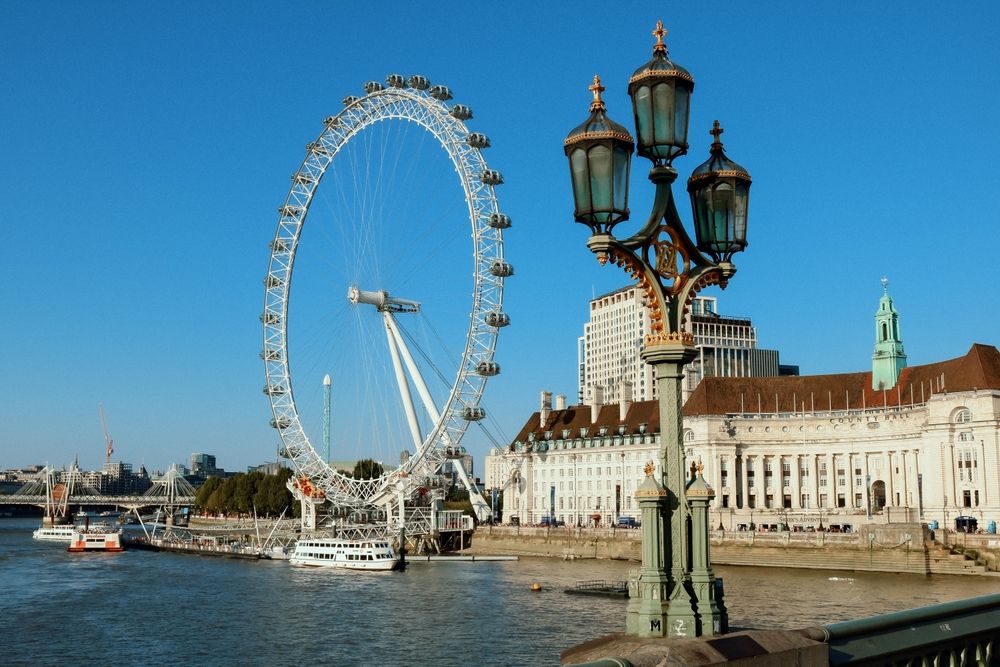
The London Eye, this majestic giant wheel standing on the south bank of the Thames, has become in just a few years one of the most iconic attractions of the British capital. At 135 meters high, this observation wheel offers a 360-degree panoramic view of London, attracting millions of visitors each year. Whether you're planning your first trip to the English capital or want to rediscover this engineering marvel, this comprehensive guide will accompany you in your visit to the London Eye.
What is the London Eye?
The London Eye, officially known as London Eye since its partnership with travel site lastminute.com in 2020, is much more than just a giant wheel. It's an architectural feat that has revolutionized the concept of modern observation wheels. Inaugurated on December 31, 1999 to celebrate the turn of the new millennium, this structure quickly won the hearts of Londoners and visitors from around the world.
Designed by architects David Marks and Julia Barfield, a married couple who won a design competition, the wheel was initially planned as a temporary five-year installation. However, its phenomenal success led to its permanent establishment, and it's now considered an essential symbol of the London skyline, alongside Big Ben or Tower Bridge.
At 135 meters high, the London Eye was Europe's tallest observation wheel until 2006. Today, it still holds the record for Europe's tallest cantilevered wheel, an impressive technical characteristic meaning it's supported only from one side, without a central structure.
History and construction of the London Eye
A bold design for the new millennium
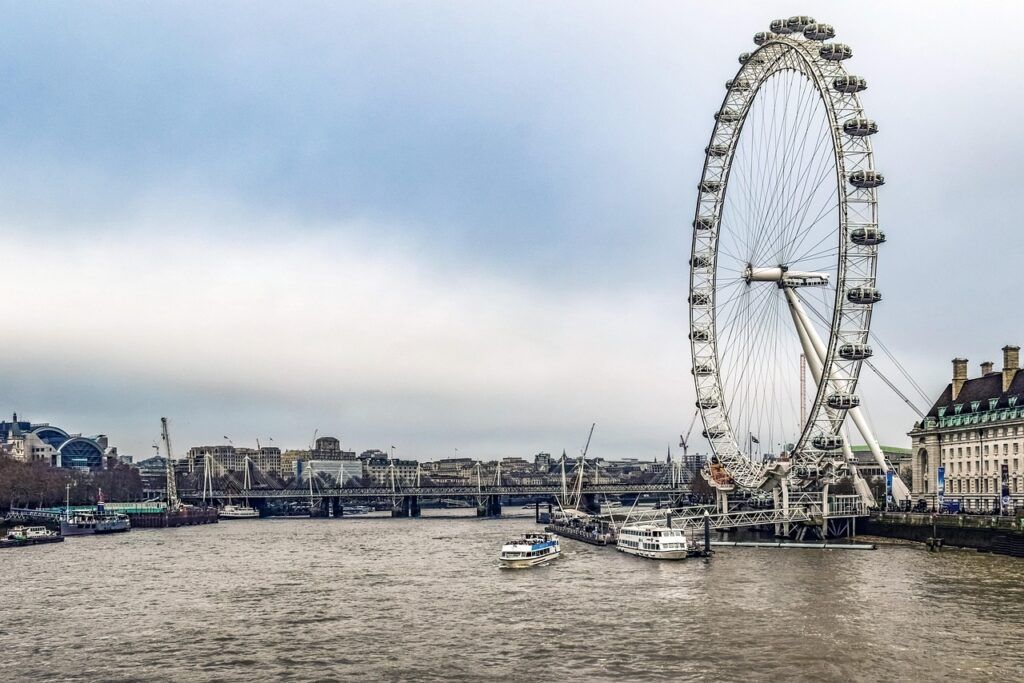
The London Eye's story begins in 1993, when The Sunday Times newspaper launched an architectural competition to create a monument marking the entry into the third millennium. David Marks and Julia Barfield, architects by profession and married in life, proposed a revolutionary project: an observation wheel that would offer visitors an unprecedented perspective on the British capital.
Their vision was inspired by the Giant Wheel of the 1893 Chicago World's Fair, but with a resolutely modern approach. The concept immediately captivated with its boldness and potential to become a new symbol for London. However, the path to realization was not without obstacles, and the project took several years to come to fruition.
An unprecedented engineering challenge
Construction of the London Eye began in 1998 and represented a real technical challenge. The building required more than 1,700 tons of materials from eight different countries. The segments were transported in separate pieces then assembled on site, before being gradually raised above the Thames in an operation requiring millimeter precision.
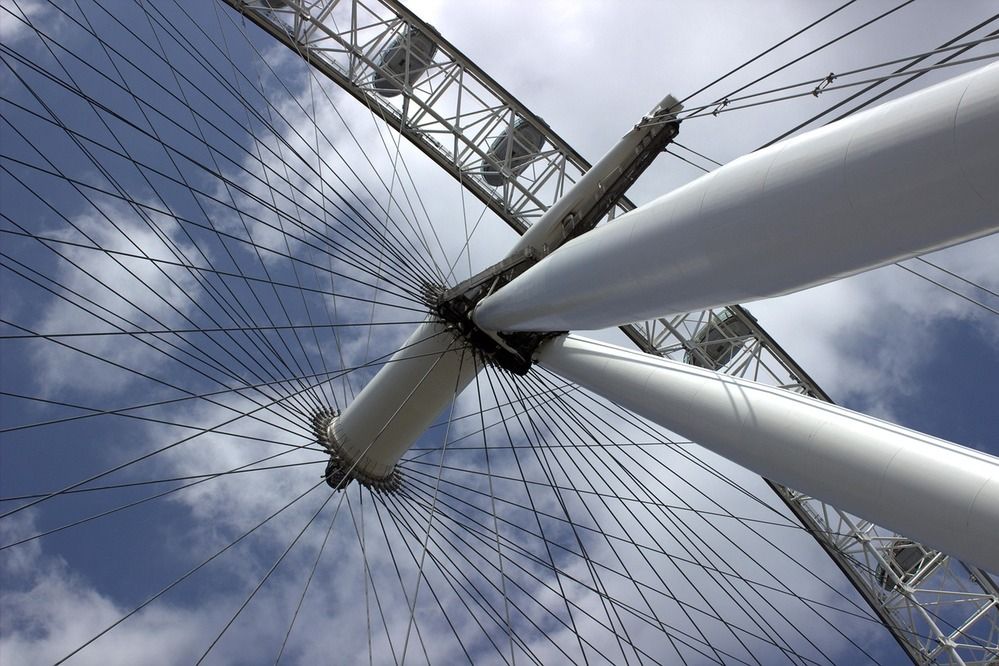
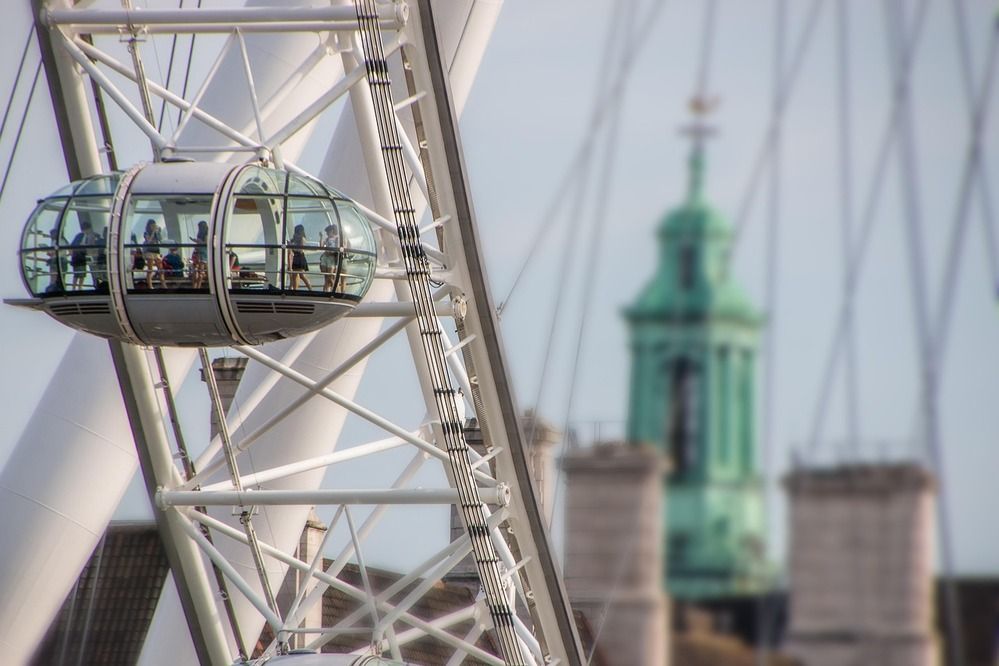
One of the most remarkable features of the London Eye is its cantilevered design. Unlike traditional wheels with a central hub, this one is supported only from one side by an A-frame structure. This technical achievement, using tension cables similar to those used in aeronautics, allows the wheel to appear to float in the London sky.
The inauguration and immediate success
The London Eye was officially inaugurated on December 31, 1999 by Prime Minister Tony Blair, although public opening didn't take place until March 2000 due to minor technical issues. From its first months of operation, the attraction achieved resounding success, far exceeding attendance forecasts.
What was supposed to be a temporary five-year installation quickly became a permanent and unmissable element of the London landscape. Over the years, the London Eye has welcomed more than 90 million visitors and has transformed the silhouette of the British capital, establishing itself as one of the most visited paid attractions in the United Kingdom.
Download the audio-guided circuit to discover London on foot and independently
To make the most of your stay in the British capital, don't miss discovering our London audio-guided itinerary. This carefully designed route will allow you to explore the main monuments and iconic neighborhoods of the city, including the London Eye, while benefiting from historical commentary and captivating anecdotes. Ryo accompanies you in your independent discovery of London, at your own pace, for a unique and enriching experience.
The technical characteristics of the London Eye
The impressive dimensions
The London Eye stands out for its extraordinary dimensions. At 135 meters high from its base to the top, it offers a privileged viewpoint over the entire city. Its diameter reaches 120 meters, making it one of the largest structures of this type in the world.
The wheel rotates at a constant speed of 26 centimeters per second (about 0.9 km/h), a pace slow enough to allow passengers to board and disembark without the wheel stopping. A complete rotation takes about 30 minutes, thus giving visitors all the time needed to admire the panoramic view and take memorable photos.
The high-tech capsules
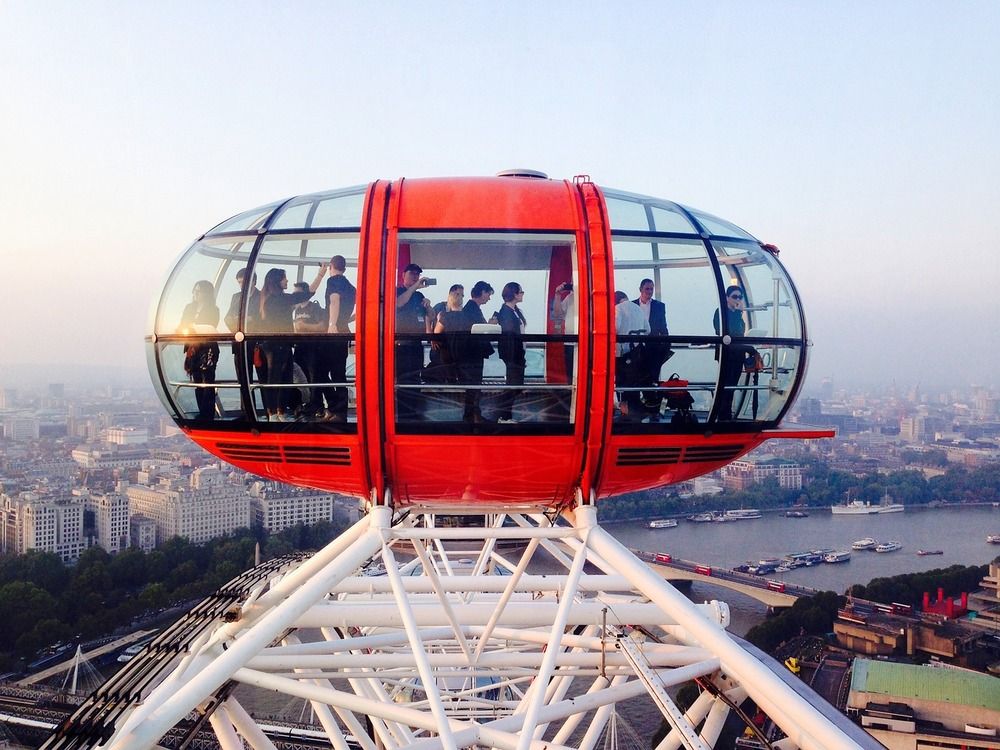
The London Eye has 32 passenger capsules, symbolizing the 32 boroughs of London. By superstition, the numbering goes directly from number 12 to number 14, omitting 13. Each capsule is a true technological achievement: fully glazed to offer 360-degree visibility, air-conditioned for visitor comfort, and equipped with central benches allowing rest while enjoying the view.
These high-tech capsules measure 8 meters long by 4 meters in diameter and weigh 10 tons each. They can accommodate up to 25 people, although the number is generally limited for greater comfort. Interactive tablets are installed inside each capsule to provide information about the monuments visible from the London Eye. The total capacity of the attraction is about 1,600 people per hour, equivalent to 11 London red buses!
London Eye opening hours and days
The London Eye is open almost all year round, with only a few closure days for maintenance. Hours vary according to season, so it's recommended to check on the official website before your visit.
During the winter period (generally from October to late March), the London Eye opens from 11:00 AM to 6:00 PM, with last admission at 5:30 PM. During the summer season (April to September), hours are extended from 10:00 AM to 8:30 PM, with last admission at 8:00 PM, allowing visitors to admire the capital at sunset and nightfall.
Two dates are exceptions: December 24 (Christmas Eve) when the attraction closes early around 5:30 PM, and December 31 (New Year's Eve) with closure around 3:00 PM. The London Eye is closed on December 25 (Christmas Day) as well as during an annual maintenance period, generally between early and mid-January (exact dates vary each year).
For your London visit, consider consulting our audio-guided circuit which will allow you to optimize your time and discover all the must-sees of the British capital, including the South Bank area where the London Eye is located.
Prices and tickets to visit the London Eye
1. Different ticket formulas
The London Eye offers several ticket formulas adapted to all budgets and desires. The standard ticket is the most accessible option, with prices starting at £29 for adults and £26 for children (2-15 years) when booked online in advance. On-site, these prices rise to £39 and £35 respectively, so it's highly recommended to book in advance to achieve substantial savings.
For those who want to avoid queues, the Fast Track ticket (skip-the-line access) is available from £44 online. This formula guarantees priority access and saves precious time, particularly appreciated during busy periods like school holidays and weekends. The Flexi Fast Track ticket, from £49, offers even more flexibility by allowing you to freely choose your arrival time during the day.
2. Premium experiences
For an even more exclusive experience, the Champagne Experience offers, from £62, to combine the panoramic view with champagne tasting in a shared capsule. This formula automatically includes Fast Track access, allowing faster boarding while savoring a glass of champagne during the tour.
Groups or couples seeking intimacy can opt for a private capsule, accommodating 2 to 25 people. This option offers boarding via a dedicated entrance and a complete rotation in total exclusivity. For special occasions like marriage proposals, the London Eye also offers Cupid's Capsule, a specially decorated capsule with champagne and VIP experience.
3. Combination tickets and tourist passes
For visitors wanting to discover several London attractions, combination tickets allow for interesting savings. The London Eye is part of the attractions included in certain city tourist passes, and also offers formulas combining the wheel with other sites managed by Merlin Entertainments, such as Madame Tussauds, SEA LIFE London Aquarium or Shrek's Adventure.
Children under 3 years old benefit from free access, while reduced rates apply to 3-15 year olds. For people with reduced mobility, the London Eye is fully accessible and staff are available to facilitate boarding. It's advisable to report your specific needs when booking.
What to see from the London Eye?
One of the main reasons to visit the London Eye is, of course, the spectacular view it offers of London. On clear days, visibility can reach up to 40 kilometers, allowing you to embrace the entire capital and even beyond.
The emblematic monuments
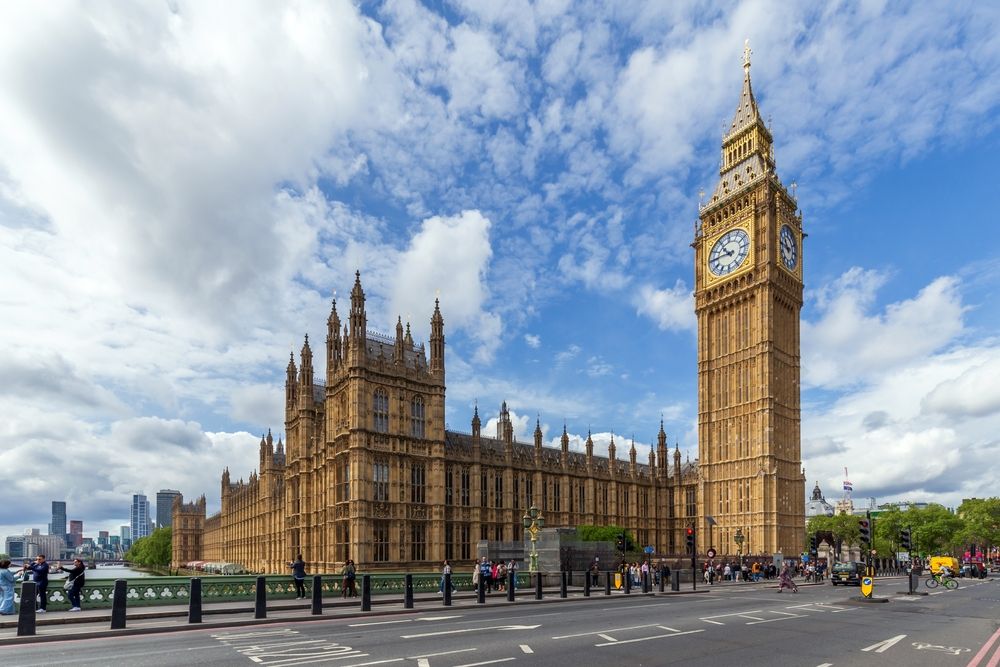
From the London Eye capsules, you can admire London's most famous monuments from a unique angle. Looking east, Big Ben and the Palace of Westminster stand majestically on the banks of the Thames. Elizabeth Tower, which houses the famous Big Ben bell, is particularly photogenic from this height.
Further north, St. Paul's Cathedral dominates the skyline with its imposing baroque dome, an architectural masterpiece by Christopher Wren. You can also spot Buckingham Palace, the official residence of the British monarchy, as well as Westminster Abbey, coronation site of sovereigns since 1066.
Tower Bridge, the world's most famous bascule bridge, reveals itself in all its splendor to the east, while the Tower of London, historic fortress housing the Crown Jewels, stands out along the Thames. Lovers of modern architecture will appreciate the view of The Shard, a 310-meter skyscraper inaugurated in 2012, as well as the towers of the City financial district.
Green spaces and the Thames
London is renowned for its numerous parks and green spaces, and the view from the London Eye allows you to appreciate this unique characteristic of the capital. Hyde Park and Kensington Gardens spread like vast green oases in the heart of the urban agglomeration. Regent's Park, with its zoo and French gardens, can be seen to the north, while Buckingham Palace gardens draw a green setting around the royal palace.
The Thames itself offers a fascinating spectacle from this height. The river winds through the city, connecting different neighborhoods and revealing the multiple bridges that span it: Westminster Bridge right opposite the London Eye, Waterloo Bridge, Blackfriars Bridge, and many others. The water taxis and cruise boats that ply the river look like small models from the top of the wheel.
To complete your exploration of London, don't hesitate to follow our audio-guided itinerary which will take you to discover the main monuments and neighborhoods of the city on foot, with enriching commentary on London history and culture.
How to get to the London Eye?
Address and location
The London Eye is located on the south bank of the Thames, in the South Bank area. Its exact address is: Riverside Building, County Hall, Westminster Bridge Road, London SE1 7PB, United Kingdom. The attraction benefits from an exceptional central location, in immediate proximity to many other major tourist sites in the capital.
To get there easily, check the route on Google Maps (Riverside Building, County Hall, Westminster Bridge Road, London SE1 7PB, rated 4.6/5 on Google for over 292,000 reviews). The giant wheel is visible from afar and constitutes an easy landmark in the urban landscape.
Access by public transport
The London Eye is remarkably well served by London public transport. The nearest underground station is Waterloo Station, located only 5 minutes walk away. This important station is served by the Jubilee (grey), Northern (black), Bakerloo (brown) and Waterloo & City (turquoise) lines, as well as by surface trains (National Rail).
The Westminster station, served by the Circle (yellow), District (green) and Jubilee (grey) lines, is also nearby, on the other side of the Thames, about a 10-minute walk crossing Westminster Bridge. This option allows you to admire Big Ben and Parliament on the way. The Embankment station (Circle, District, Northern and Bakerloo lines) constitutes another viable alternative, about 10 minutes on foot.
Several bus lines stop in immediate proximity to the London Eye. Lines 211, 77 and 381 have stops located just minutes walk away. For visitors coming from further away, lines 24, 148, 159 and 176 also allow easy access to the South Bank area.
From main tourist sites
The London Eye benefits from a privileged location in the heart of tourist London. From Big Ben and the Palace of Westminster, it takes only 6 minutes on foot crossing Westminster Bridge. Westminster Abbey is about a 10-minute walk away, while Trafalgar Square and the National Gallery are accessible in about 20 minutes on foot.
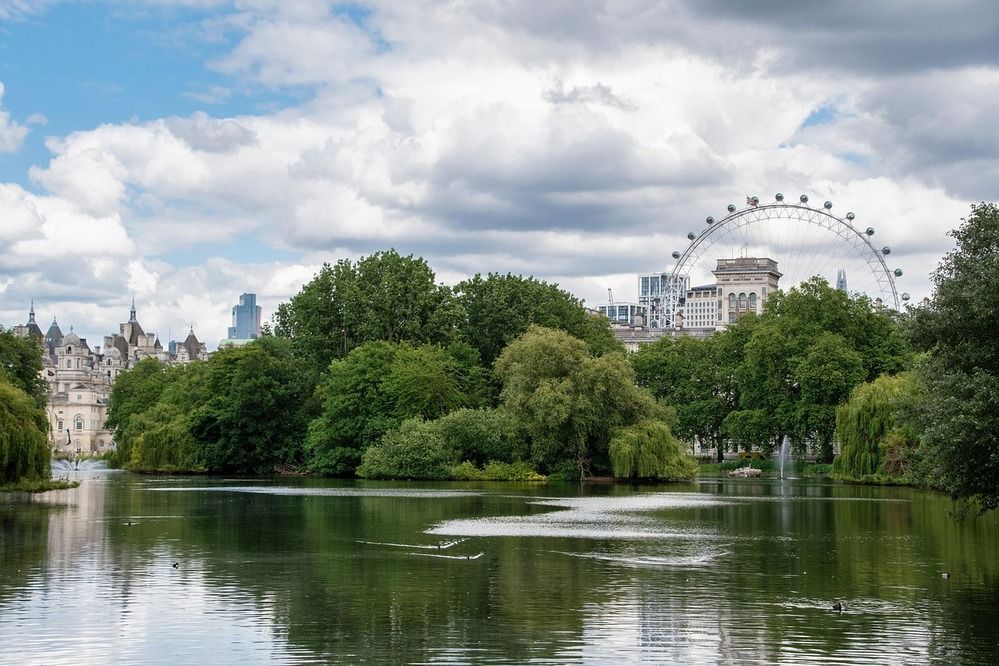
Buckingham Palace is about a 25-minute walk away, but this journey through St James's Park is well worth the detour. If you're in the City area, count about 30 minutes on foot, or choose the underground for more speed. To visit London optimally, the Ryo app offers you an audio-guided circuit that integrates the London Eye among the many must-see attractions of the capital.
By car and parking
Although discouraged due to heavy traffic and the congestion charge (urban toll) in central London, it's possible to reach the London Eye by car. The nearest parking is Q-Park Westminster, located about 10 minutes walk from the attraction. Other public car parks are available in the South Bank area, but they are generally expensive.
London black taxis and ride-hailing services like Uber constitute a comfortable alternative to reach the London Eye from anywhere in the city. However, budget accordingly, especially during rush hours.
Practical tips for visiting the London Eye
1. Book in advance to avoid queues
The first tip, and probably the most important, is to book your ticket online in advance. Not only will you achieve substantial savings (up to £10 per ticket), but you'll also avoid long queues at ticket offices, particularly during high tourist season (April to September) and during school holidays.
Tickets purchased online allow you to choose a specific time slot, which greatly facilitates organizing your day of visits. For maximum flexibility, opt for a Flexi Fast Track ticket that allows you to show up at any time of day without strict time reservation.
2. Choose the best time to visit
The timing of your visit can transform your London Eye experience. For an absolutely magical view, choose a sunset slot (golden hour). You'll have the privilege of admiring the city bathed in the last rays of sunlight, then watching the iconic monuments gradually light up as night falls over London. This spectacle is truly unforgettable.
If you want to avoid crowds, choose a visit on weekdays, early morning or late afternoon. Weekends and school holiday periods see thousands of visitors flock in, which can considerably lengthen waiting times despite reservations. The months of January and February, calmer tourist-wise, also offer a more serene experience, even if the weather can be unpredictable.
3. Allow sufficient time
Although the rotation itself lasts 30 minutes, allow a total of about 1 to 1h30 for the entire experience. This time includes security checks, boarding your capsule, the complete tour, and disembarking. During busy periods, these delays can extend, hence the value of a Fast Track ticket if you have a tight schedule.
Don't forget to check the opening hours before your visit, as they vary according to season and certain public holidays may result in early closures or modified hours.
4. What to bring with you?
A few practical recommendations will allow you to fully enjoy your experience. First, plan weather-appropriate clothing. Even though the capsules are air-conditioned, remember it can be cool by the Thames, particularly in winter. A light jacket is often appreciated.
Bring your camera or smartphone with a well-charged battery. The panoramic view from the London Eye offers countless opportunities for memorable photos. The capsule windows are designed to allow excellent shot quality, and you can photograph freely throughout the rotation.
You can board with a reasonably sized backpack, but know that all bags go through security control similar to airports. Avoid bringing prohibited items like knives, sharp objects, or glass bottles. Strollers are allowed and can be boarded folded in the capsules.
5. Accessibility and services
The London Eye is fully accessible to people with reduced mobility. The wheel only rarely stops to allow boarding for people in wheelchairs, who benefit from complete staff assistance. It's recommended to report your specific needs when booking online.
Toilets are available before boarding, and it's advisable to use them as there are none in the capsules. A souvenir shop is located at the attraction exit, offering a wide range of items related to the London Eye and London.
To optimize your stay in the British capital, consider downloading our London audio-guided circuit, which will allow you to discover all the city's must-sees at your own pace, with enriching explanations about each place of interest.
What to do around the London Eye?
The South Bank area, where the London Eye is located, is packed with attractions and activities. Here are some suggestions to complete your visit.
The Southbank Centre and surroundings
A few steps from the London Eye is the Southbank Centre, Europe's largest cultural center. This vibrant complex houses the Royal Festival Hall, Queen Elizabeth Hall and Hayward Gallery. Throughout the year, you can attend concerts, contemporary art exhibitions, theater performances and various cultural events.
The walk along the Thames, called Riverside Walk, is one of London's most pleasant. Lined with restaurants, cafés and shops, it offers a lively and friendly atmosphere. Street artists regularly perform there, adding a touch of life and creativity to the urban landscape. The numerous pop-up markets and food markets that set up along the river allow you to taste cuisine from around the world.
Family attractions
In immediate proximity to the London Eye is SEA LIFE London Aquarium (County Hall, Riverside Building, Westminster Bridge Road, London SE1 7PB, rated 4.3/5 on Google for over 17,000 reviews), one of Europe's largest aquariums. Housing more than 500 marine species, it's a visit particularly appreciated by families with children. Immersive tunnels allow you to admire sharks, rays and a multitude of tropical fish swimming above your head.
For thrill and sensation lovers, London Dungeon (County Hall, Riverside Building, Westminster Bridge Road, London SE1 7PB, rated 4.4/5 on Google for over 12,500 reviews) offers a terrifying plunge into the darkest pages of London history, with actors, special effects and thrill rides.
Museums and galleries
About a 15-minute walk east stands Tate Modern (Bankside, London SE1 9TG, rated 4.7/5 on Google for over 85,000 reviews), one of the world's most visited modern and contemporary art museums. Housed in a beautifully rehabilitated former power station, it offers a free permanent collection including works by Picasso, Dalí, Warhol and many other major 20th and 21st century artists.
Continuing east, you'll reach Shakespeare's Globe (21 New Globe Walk, London SE1 9DT, rated 4.6/5 on Google for over 17,000 reviews), a faithful reconstruction of the Elizabethan theater where the works of England's most famous playwright were created. Guided tours and open-air performances during summer allow you to immerse yourself in the atmosphere of Shakespearean theater.
Crossing Westminster Bridge
By crossing Westminster Bridge from the London Eye, you'll reach the iconic monuments of the north bank in just a few minutes: Big Ben, the Palace of Westminster and Westminster Abbey. This walk offers exceptional views of the Thames and allows you to photograph the London Eye from the other bank.
To discover all these places and many more, let yourself be guided by the Ryo audio-guided itinerary which will accompany you in your exploration of London with fascinating commentary and historical anecdotes.
Where to eat near the London Eye?
The South Bank area offers a multitude of dining options for all tastes and budgets. Whether you're looking for a quick meal before your ride on the giant wheel or a gourmet dinner with views over the Thames, you'll find what you're looking for.
Restaurants with views
For a high-end culinary experience, Gillray's Steakhouse & Bar (Westminster Bridge Road, London SE1 7PG, rated 4.4/5 on Google for over 2,800 reviews), located inside the Marriott County Hall, offers a stunning view of the Palace of Westminster while serving excellent steaks and grills. The intimate atmosphere and impeccable service make it a choice address for a memorable meal.
The Skylon, located within the Royal Festival Hall, offers modern British cuisine in an elegant setting with large bay windows overlooking the Thames. Divided into two spaces (a more casual bar-grill and a gourmet restaurant), it adapts to all occasions.
Quick and affordable options
For a quick and tasty lunch break, the Southbank Centre Food Market offers, on Fridays, Saturdays and Sundays, a varied selection of street food stands from around the world. It's the ideal place to taste different cuisines at reasonable prices in a friendly atmosphere.
The Wagamama chain, present in the area, serves hearty and tasty Asian dishes in a relaxed setting. The ramen, curries and donburi are particularly appreciated there, and prices remain affordable for central London.
For fish and chips lovers, the iconic British dish, several establishments in the area offer this specialty. Masters Super Fish, although located a bit further away, is worth the detour for its quality and authenticity.
Traditional pubs
For a typically British experience, several traditional pubs dot the London Eye surroundings. Waterloo Tap, located in Waterloo station, offers a wide selection of craft beers and pub dishes in an authentic Victorian setting. It's the perfect place for a pint break before or after your visit.
The The Stage Door, a few minutes from the London Eye, offers a warm and relaxed atmosphere, with a varied menu of traditional British dishes and local beers. Its location makes it a convenient stop for dining while exploring South Bank.
Where to stay near the London Eye?
Staying in the South Bank area or in immediate proximity to the London Eye has many advantages: you'll be in the heart of tourist action, within walking distance of many major attractions, and enjoy a dynamic riverside setting.
Luxury hotels
The London Marriott Hotel County Hall (Westminster Bridge Road, London SE1 7PG, rated 4.4/5 on Google for over 3,500 reviews) benefits from an exceptional location, literally next to the London Eye. This 5-star hotel offers elegant rooms, some with direct views of the Thames and iconic monuments. Its spa, indoor pool and restaurants make it a highly sought-after luxury address.
The Park Plaza Westminster Bridge (200 Westminster Bridge Road, London SE1 7UT, rated 4.3/5 on Google for over 8,000 reviews), located a few minutes walk from the London Eye, offers modern and spacious rooms with panoramic views. Its rooftop bar offers a unique perspective on the London Eye and London skyline.
Mid-range options
The Premier Inn London County Hall (Belvedere Road, London SE1 7PB, rated 4.2/5 on Google for over 6,000 reviews) offers excellent value for money for its exceptional location. The rooms are comfortable and functional, and the hotel has a restaurant on site. Its proximity to the London Eye makes it a preferred choice for budget-conscious travelers.
The ibis London Waterloo, located 10 minutes walk from the London Eye, offers modern and affordable rooms in a convenient setting. The excellent transport network from Waterloo station greatly facilitates getting around London.
Youth hostels
For tighter budgets or travelers seeking conviviality, several quality youth hostels are located in the area. Generator London, although located near Russell Square, offers a good compromise between price, quality and accessibility to the South Bank area via the underground. Its young and dynamic atmosphere, as well as its well-thought-out common spaces, make it an address appreciated by backpackers.
Whatever your accommodation choice, the Waterloo and South Bank area will place you in the heart of London, allowing easy exploration of the city on foot or by public transport. To best organize your visiting days, don't hesitate to consult our London audio-guided circuit.
Anecdotes and unusual facts about the London Eye
The London Eye is full of fascinating anecdotes and surprising facts that add to its charm and legend.
An initially temporary project
As mentioned earlier, the London Eye was only designed to remain in place for five years, during the millennium celebrations. Its immediate popular success convinced authorities to maintain it permanently. Today, it would be unthinkable to imagine the London skyline without this iconic giant wheel!
A wheel without central hub
The London Eye is the world's largest cantilevered observation wheel. Unlike traditional giant wheels with a central hub supporting the spokes, this one is supported only from one side by an A-frame structure and a network of tensioned cables. This technical achievement, inspired by aeronautical engineering, gives the wheel its airy and elegant appearance.
The mystery of number 13
Although the London Eye has 32 capsules symbolizing London's 32 boroughs, the numbering jumps from 12 to 14, omitting the number 13 by superstition. This practice, common in many buildings and hotels, reflects the persistence of popular beliefs even in modern engineering projects!
A rotation for charity
In 2013, the London Eye organized a unique charity event by offering continuous rotations for 24 hours straight. The funds raised were donated to local charitable organizations, demonstrating the attraction's social commitment beyond its tourist role.
The royal capsule
During the London Eye's 10th anniversary in 2010, a capsule was officially named in honor of the British royal family. Called the "Royal Capsule," it's the only one among the 32 to bear an official name, underlining the symbolic link between the attraction and the monarchy.
Records and performances
Since its opening, the London Eye has welcomed more than 90 million visitors, making it one of the most visited paid attractions in the United Kingdom. On clear days, visibility from the top can reach 40 kilometers, even allowing glimpses of Windsor Castle in the distance. More than 5,000 marriage proposals have been made aboard the London Eye, making this giant wheel one of London's most romantic places!
In conclusion, the London Eye is much more than just a giant wheel: it's an architectural icon, a symbol of London modernity and an absolute must-see for any visit to the British capital. Whether you come to admire the sunset over the Thames, enjoy a 360-degree panoramic view of iconic monuments, or simply experience a unique family moment, the London Eye will amaze you. Don't forget to book your tickets in advance to avoid queues, and complete your London discovery by following our audio-guided circuit which will take you through the city's most beautiful neighborhoods and monuments. Ryo accompanies you for an enriching and authentic exploration of the English capital, at your own pace and in complete independence.
FAQ – Frequently asked questions about the London Eye
How long does a London Eye tour last?
A complete rotation of the London Eye lasts about 30 minutes. This time is ideal to fully enjoy the panoramic view of London, take photos and identify the different monuments visible from the capsules. However, plan about 1 to 1h30 in total including security checks, boarding and disembarking.
What's the best time to visit the London Eye?
The ideal time to visit the London Eye is at sunset (golden hour). You'll thus enjoy the golden light over the city, then the night illuminations of iconic monuments. To avoid crowds, favor weekdays, early morning or late afternoon. January and February are generally calmer months.
How many capsules are there in the London Eye?
The London Eye has 32 capsules, symbolizing London's 32 boroughs. Each capsule can accommodate up to 25 people and offers a 360-degree view. By superstition, the numbering goes from number 12 to number 14, omitting 13.
Is the London Eye accessible to people with reduced mobility?
Yes, the London Eye is fully accessible to people in wheelchairs. Access ramps are provided, and staff assist visitors during boarding. It's recommended to report your specific needs when booking to ensure an optimal experience.
Should I book in advance for the London Eye?
Yes, it's highly recommended to book your tickets online in advance. You'll benefit from reduced rates (up to £10 savings per ticket) and avoid long queues at ticket offices, particularly during high tourist season and school holidays.
What's the height of the London Eye?
The London Eye measures 135 meters high from its base to the top, with a diameter of 120 meters. It was Europe's tallest observation wheel until 2006 and remains today the continent's tallest cantilevered wheel.
Can you see the London Eye for free?
You can admire the London Eye from outside for free, notably from the Thames banks, Westminster Bridge or the Southbank Centre. However, to board and enjoy the panoramic view, purchasing a ticket is necessary. There's no free formula for access to the capsules.
How much does a London Eye ticket cost?
Prices vary according to the chosen formula. The standard ticket starts at £29 for adults and £26 for children (2-15 years) when booking online in advance. On-site, count £39 and £35 respectively. Fast Track (skip-the-line access) and premium formulas (Champagne Experience, private capsule) are also available at higher prices.
Which underground station for the London Eye?
The nearest underground station to the London Eye is Waterloo Station, located only 5 minutes walk away. It's served by the Jubilee, Northern, Bakerloo and Waterloo & City lines. Westminster station (Circle, District and Jubilee lines) constitutes an alternative, about 10 minutes walk crossing Westminster Bridge.
What to do after visiting the London Eye?
The South Bank area is packed with attractions: SEA LIFE London Aquarium, Southbank Centre, Tate Modern, Shakespeare's Globe, or a walk along the Thames. By crossing Westminster Bridge, you'll reach Big Ben, Palace of Westminster and Westminster Abbey. For a complete visit, follow our London audio-guided circuit which will guide you through all the capital's must-sees.