
Créé par Emilie, le 7 mai 2026
Votre guide Ryo
© Shutterstock
Housed in a former power station on the banks of the Thames, the Tate Modern has become one of the world's most visited museums of modern and contemporary art within just a few years. This iconic venue, with free access to its permanent collections, captivates visitors as much with its impressive industrial architecture as with its bold exhibitions. Whether you're a confirmed art lover or simply curious to discover London from a different angle, a visit to the Tate Modern stands as an essential stop during your stay in the British capital.
Why visit the Tate Modern in London?
Visiting the Tate Modern in London means immersing yourself in the fascinating world of modern and contemporary art at the heart of a building with a remarkable industrial past. This former Bankside power station, transformed into a cultural temple in 2000, now welcomes more than 5 million visitors each year. The museum's main attraction lies in free access to its permanent collections, which bring together major works by artists like Picasso, Warhol, Matisse and Rothko.
The building's architecture is in itself a reason to visit the Tate Modern. The Turbine Hall, with its 35 meters of height, immediately impresses visitors and regularly hosts monumental artistic installations. The main building stands alongside the Blavatnik Building, a pyramidal extension inaugurated in 2016, which offers a spectacular panoramic view of the Thames, St Paul's Cathedral and London's rooftops from its top floor. Beyond the exhibited works, the museum offers a complete cultural experience with its interactive spaces like Tate Exchange, its restaurants with stunning views and its design shops. Located just minutes' walk from London's historic heart, the Tate Modern integrates perfectly into a visiting itinerary of the British capital.
History of the Tate Modern: from power station to iconic museum
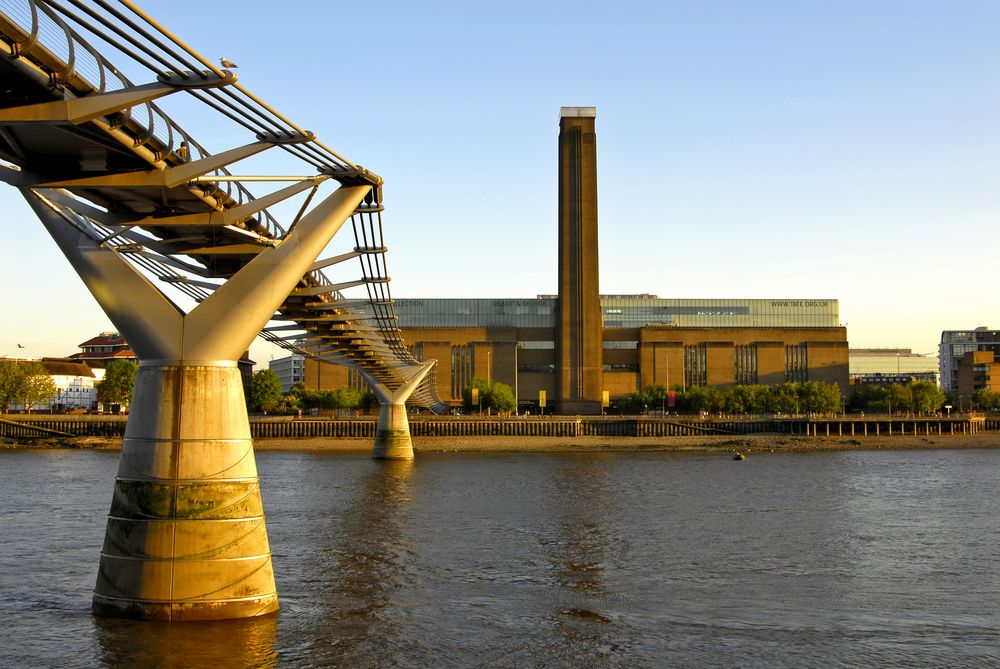
The history of the Tate Modern begins long before its transformation into a museum. Between 1947 and 1963, architect Giles Gilbert Scott, also famous for designing London's red telephone boxes, conceived the Bankside power station. This imposing brick structure, with its chimney reaching 99 meters (level with St Paul's Cathedral dome), supplied electricity to London for nearly 30 years. Closed in 1981 due to evolving energy technologies, the power station remained abandoned for nearly two decades.
In 1994, the Tate Gallery launched an ambitious transformation project. Swiss architects Herzog & de Meuron won the competition with a bold vision: preserve the building's industrial soul while creating ultra-modern exhibition spaces. The titanic construction project was completed in May 2000, and the Tate Modern opened its doors to the public. The success was immediate and exceeded all expectations. The former turbine hall became the spectacular Turbine Hall, an exhibition space of more than 3,300 square meters. Faced with growing attendance, an extension became necessary: the Blavatnik Building, inaugurated in 2016, added 60% additional exhibition space and ten floors of galleries. This expansion allowed the museum to strengthen its position among the world's most important cultural institutions.
During your visit to London, you'll discover how this former factory became the symbol of the Bankside district's cultural renaissance and an internationally admired model of architectural conversion.
1. The Turbine Hall: the monumental space of the Tate Modern
The Turbine Hall undoubtedly constitutes the beating heart of the Tate Modern. This former machinery hall, which once housed the turbines generating electricity for London, now stands as one of the most spectacular exhibition spaces in the world. With its 155 meters of length, 23 meters of width and especially its 35 meters of height, it offers an impressive volume that leaves visitors speechless from the moment they enter the museum.
Each year, the Turbine Hall hosts a special commission, inviting a renowned contemporary artist to create a monumental installation designed specifically for this extraordinary space. These ephemeral works, visible for free, have marked the history of contemporary art: from Olafur Eliasson's Weather Project (a giant artificial sun in 2003) to Carsten Höller's industrial slides, passing by Ai Weiwei's giant cracks. These installations transform the perception of space and create unforgettable immersive experiences. The raw architecture, with its exposed metal structures and vertiginous volumes, constantly dialogues with contemporary creations, creating a striking contrast between industrial heritage and artistic audacity. Visiting the Tate Modern without crossing the Turbine Hall would be unthinkable, as this space embodies the spirit of the place.
2. The permanent collections: a journey through modern art
The Tate Modern's permanent collections bring together major works covering the period from 1900 to the present day. Free access to these galleries allows visitors to discover masterpieces of surrealism, cubism, abstract expressionism and pop art, among other fundamental artistic movements. Pablo Picasso, Salvador Dalí, Henri Matisse, Mark Rothko, Andy Warhol and Jackson Pollock feature among the great names represented.
The thematic organization of the collections, spread across several floors, facilitates understanding of the links between works and artistic movements. You can notably admire Andy Warhol's 'Marilyn Diptych', an iconic piece of pop art, or Mark Rothko's 'Seagram Murals', creating a unique meditative experience. Henri Matisse's 'The Snail' brilliantly illustrates the French artist's work with cut-out gouaches. Marcel Duchamp's 'Fountain', a conceptual work that revolutionized contemporary art, still questions today's very definition of art.
Beyond the great masters, the museum focuses on presenting emerging artists and promoting the diversity of contemporary artistic expressions. The collections evolve regularly, ensuring that even regular visitors discover new perspectives during each visit to the Tate Modern.
3. Temporary exhibitions: exceptional retrospectives
The Tate Modern offers internationally significant temporary exhibitions throughout the year dedicated to major artists of modern and contemporary art. These retrospectives, often exclusive, attract enthusiasts from around the world and generally require the purchase of a specific ticket (from £11 to £25 for adults, with reduced rates available).
The Tate Modern's temporary exhibitions are distinguished by their scientific and scenographic quality. They offer the opportunity to discover rarely exhibited works, loaned by private collections or other international institutions. The museum has notably hosted memorable exhibitions on Frida Kahlo, Picasso, Yayoi Kusama and more recently contemporary artists like Steve McQueen or Lubaina Himid. These thematic presentations allow for deeper understanding of an artist, movement or specific artistic period.
It's highly recommended to book your tickets online before your visit, particularly for the most popular exhibitions which quickly sell out. To optimize your discovery of the museum and its surroundings, the Ryo itinerary for visiting London guides you through the capital's must-sees, including the cultural district of Bankside where the Tate Modern is located.
4. The Tanks: live art and performance
Inaugurated in 2012, the Tanks represent a major innovation in the international museum landscape. These three former fuel oil tanks from the power station, located in the building's basement, have been transformed into spaces dedicated to live art, performances, video installations and sound works. Their particular acoustics and raw architecture, characterized by low concrete ceilings and circular spaces, create a unique atmosphere conducive to artistic experimentation.
The Tanks regularly host performances by contemporary artists, art film screenings, interactive installations and multidisciplinary events. This space allows the Tate Modern to push the boundaries of traditional exhibition and explore new forms of artistic expression. The programming changes frequently, offering regular visitors the opportunity to constantly discover new propositions. Access to the Tanks is generally free, like for the permanent collections, although some special events may require advance booking. This living dimension of the museum testifies to its will to remain at the cutting edge of contemporary creation and to actively dialogue with artists of our time.
5. The Blavatnik Building: contemporary architecture and panoramic views
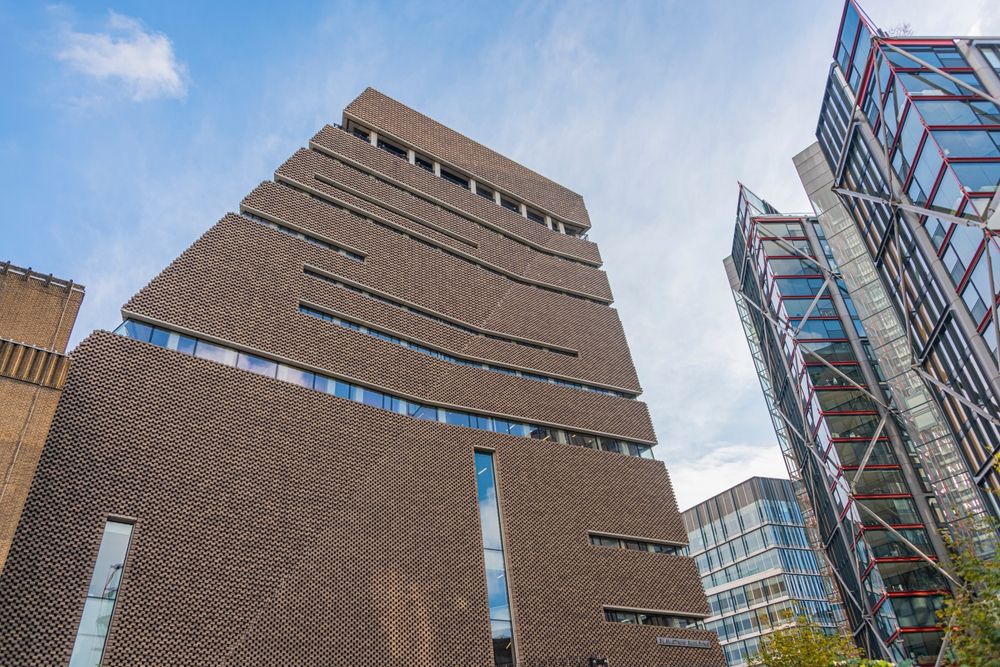
The Blavatnik Building, completed in 2016 by architects Herzog & de Meuron, constitutes the spectacular extension of the Tate Modern. This twisted pyramidal structure of ten floors, built with perforated bricks, offers 60% additional exhibition space and redefines the skyline of the Bankside district. Its bold architecture creates a fascinating dialogue between the historic building's industrial heritage and contemporary innovation.
The Blavatnik Building's galleries present eclectic programming, mixing works from the permanent collections and temporary exhibitions. Each floor reveals different perspectives on international contemporary art. But the main attraction of this extension lies in its tenth level, accessible for free, which houses a 360-degree panoramic viewpoint. From up there, the view embraces the Thames, St Paul's Cathedral, the financial district of the City, the London Eye and London's rooftops stretching as far as the eye can see. At sunset, the spectacle becomes magical, with golden light illuminating the capital's iconic monuments.
Download the audio-guided circuit to discover London on foot and independently
To make the most of your London stay, we recommend downloading the Ryo audio-guided itinerary for visiting London. This circuit allows you to discover at your own pace 20 unmissable places of interest in the British capital, including the Bankside district where the Tate Modern is located. Thanks to audio explanations available in French, you'll explore the history, architecture and fascinating anecdotes of each site. The application guides you interactively, transforming your visit into an enriching and fun experience, ideal for understanding London's soul in complete autonomy.
6. Tate Exchange: participating and creating
Tate Exchange represents an innovative initiative launched in 2016 that transforms the museum into a space for dialogue, collaboration and co-creation. Located on level 5 of the Blavatnik Building, this space open free to the public invites visitors to become actors rather than simple spectators. Tate Exchange hosts local organizations, universities, artist collectives and communities that offer workshops, debates, performances and artistic residencies.
The themes addressed are varied and ambitious: social inclusion, climate change, identity, technology, mental health... Each project explores how art can help respond to contemporary challenges and create social bonds. Unlike traditional galleries, Tate Exchange encourages active participation: you can contribute to a collective work, participate in a creation workshop, attend a conference or simply exchange with artists and other visitors. This participatory dimension reflects the Tate Modern's will to democratize art and make it accessible to all, beyond social or cultural barriers. The programming changes regularly, check the official website before your visit to discover current projects.
Practical information for visiting the Tate Modern
Opening hours
The Tate Modern is open every day from 10:00 to 18:00. The museum is closed on December 24, 25 and 26. It's recommended to arrive early in the morning or late afternoon to avoid crowds, particularly during weekends and school holidays. Last admission is generally 45 minutes before closing for temporary exhibitions.
Prices and tickets
Access to the Tate Modern's permanent collections is completely free, a policy that allows everyone to discover modern and contemporary art without financial barriers. However, temporary exhibitions require purchasing a ticket whose price varies according to the exhibition, generally between £11 and £25 for adults. Reduced rates (Concession) are offered at £10-22 for students, people over 60 and beneficiaries of certain social aids upon presentation of proof. Young people aged 16 to 25 can benefit from the Tate Collective program offering access for £5. Children under 12 enter temporary exhibitions free when accompanied by an adult. It's highly recommended to book your tickets online in advance on the museum's official website to avoid queues and guarantee your access, as some exhibitions quickly sell out.
How to get there
The Tate Modern is ideally located in Bankside, on the south bank of the Thames (address: Bankside, London SE1 9TG). Several options are available to reach the museum. By underground, Southwark station (Jubilee Line) is about 600 meters away, an 8-minute walk. Blackfriars (District and Circle Lines) and St Paul's (Central Line) stations are also nearby, at 800 and 1,100 meters respectively. By train, Blackfriars (300 meters from the south exit) and London Bridge (1,100 meters) stations serve the district. Several bus routes stop nearby: routes 40, 63 and 100 on Blackfriars Bridge Road, route 381 on Southwark Street, and route 344 on Southwark Bridge Road.
For a more picturesque approach, you can take the Millennium Bridge from St Paul's Cathedral, an exclusive pedestrian footbridge offering a spectacular perspective on the museum and the Thames. This crossing of a few minutes constitutes one of London's most beautiful walks. Bike-sharing stations (Santander Cycles) are available at New Globe Walk and Sumner Street (320 meters). There is no parking at the museum nor in the surrounding streets, so public transport remains the most practical option. A minute drop-off point for taxis is located on Holland Street, just in front of the main entrance. To integrate the Tate Modern into a complete tour of the capital, don't hesitate to follow the Ryo itinerary that guides you through London interactively.
Dining and shopping at the Tate Modern
The Tate Modern offers several dining options adapted to different budgets and desires. On the sixth floor, the Tate Modern Restaurant offers a gastronomic experience with an exceptional panoramic view of the Thames and St Paul's Cathedral. The cuisine is modern and creative, highlighting seasonal British produce. Reservations are advised, particularly on weekends. For a quicker break, the Kitchen and Bar offers sharing plates, snacks and drinks in a relaxed atmosphere. Several cafés are scattered throughout the museum, offering coffee roasted on site, pastries, sandwiches and salads. These spaces allow you to take a break while enjoying the atmosphere of the place.
The Tate Modern shop, located on the main level, also deserves a visit. It offers a carefully curated selection of art books, exhibition catalogues, posters, design objects and gifts inspired by the museum's collections. You'll find limited editions created in collaboration with contemporary artists, reproductions of iconic works, as well as a range of stationery and accessories with clean design. The shop also offers a beautiful selection of children's books about art, ideal for introducing young people to contemporary creation. Design enthusiasts will appreciate the functional and aesthetic objects, reflecting the museum's creative spirit.
Tips for optimizing your visit to the Tate Modern
To make the most of your visit to the Tate Modern, some practical advice is essential. Allow at least two to three hours to discover the permanent collections and the Turbine Hall without rushing. If you also wish to visit a temporary exhibition, count on half a day. Arrive preferably at opening time (10:00) or late afternoon to avoid crowds, particularly on weekends. Tuesdays and Wednesdays are generally the least busy days.
Free guided tours in English are offered daily, lasting about 45 minutes, departing from the meeting point on level 2 in the Natalie Bell Building. Check the program on-site or online for times. Audio guides are also available for certain temporary exhibitions. The museum is fully accessible to people with reduced mobility, with elevators serving all floors and wheelchairs available on request. Photography without flash is allowed in the permanent collections, but check specific restrictions for temporary exhibitions.
Don't forget to go up to the viewpoint on the tenth floor of the Blavatnik Building to admire the panoramic view of London, particularly spectacular at sunset. If you're visiting London for the first time, let yourself be guided by the Ryo application which offers a complete circuit of the city, integrating the cultural district of Bankside where the Tate Modern is located, as well as the main London monuments like the London Eye and Westminster.
What to see around the Tate Modern?
The Bankside district, where the Tate Modern is located, abounds with cultural and historical attractions. Just steps from the museum, Shakespeare's Globe Theatre is a faithful reconstruction of the original Elizabethan theatre where the playwright's works were performed. Guided tours allow visitors to discover the venue's history and, during the theatre season, attend outdoor performances faithful to period conditions.
The Millennium Bridge, a suspended pedestrian footbridge inaugurated in 2000, directly connects the Tate Modern to St Paul's Cathedral on the other side of the Thames. This walk of a few minutes offers spectacular views and constitutes one of London's most coveted photo spots. Continuing east along the Queen's Walk, you'll reach Borough Market, one of London's oldest food markets, ideal for lunch or tasting British and international specialties in a lively atmosphere.
Nearby you'll also find the Golden Hinde, a replica of the famous privateer Sir Francis Drake's galleon, as well as Southwark Cathedral, a discreet but remarkable Gothic gem. The Bankside district integrates perfectly into a day of cultural discovery. To miss nothing of the British capital's treasures, follow the Ryo itinerary for visiting London, which will guide you through iconic sites with enriching audio explanations.
In conclusion, visiting the Tate Modern in London represents much more than a simple museum visit. It's an immersion into international modern and contemporary art, in an exceptional architectural setting mixing industrial heritage and contemporary audacity. Whether you're an art enthusiast or simply curious, free access to the permanent collections and the impressive Turbine Hall offer you a memorable cultural experience. The world-renowned temporary exhibitions, innovative spaces like the Tanks and Tate Exchange, as well as panoramic views from the Blavatnik Building further enrich this discovery. Ideally located on the banks of the Thames in the dynamic Bankside district, the museum naturally fits into a visiting itinerary of the British capital. To discover London optimally and miss nothing of its treasures, download the Ryo application which offers a complete audio-guided circuit of the city, including the main attractions as well as authentic and lesser-known districts.
Frequently asked questions about the Tate Modern
Is entry to the Tate Modern really free?
Yes, access to the Tate Modern's permanent collections is completely free for all visitors, with no reservation necessary. However, temporary exhibitions require purchasing a ticket whose price generally varies between £11 and £25 for adults. It's recommended to book these tickets online in advance, particularly for popular exhibitions.
How much time should I plan for visiting the Tate Modern?
For a visit to the permanent collections and the Turbine Hall, plan at least 2 to 3 hours. If you also wish to see a temporary exhibition and go up to the panoramic viewpoint, count on half a day. Contemporary art enthusiasts can easily spend a full day in the museum exploring the different spaces, including the Tanks and Tate Exchange.
Is the Tate Modern suitable for children?
Yes, the Tate Modern regularly offers activities and workshops specifically designed for families and children. Adapted trails allow young visitors to discover contemporary art in a fun way. Entry is free for under-12s, including temporary exhibitions when accompanied by an adult. The museum also has rest areas and cafés suitable for families.
Can I take photos in the Tate Modern?
Photography without flash is generally allowed in the permanent collections for personal non-commercial use. However, some works may be subject to specific restrictions, indicated by pictography. For temporary exhibitions, rules may vary: some completely prohibit photography. Always respect the signage in place and indications from museum staff.
Is there a cloakroom at the Tate Modern?
Yes, the Tate Modern has free cloakrooms where you can deposit your coats, bags and bulky objects. Large backpacks and suitcases must be deposited at the cloakroom before accessing the galleries. This free service allows you to visit comfortably without being encumbered. The cloakrooms are generally located on the main entrance level of the museum.
Is the Tate Modern accessible to people with reduced mobility?
The Tate Modern is fully accessible to people with reduced mobility. Elevators serve all floors, access ramps facilitate circulation, and wheelchairs are available free upon request (subject to availability). Adapted toilets are present on each level. Museum staff are trained to accompany visitors with specific needs. It's advisable to contact the museum in advance for any particular request.
What are the most famous works at the Tate Modern?
Among the iconic works in the permanent collections, don't miss Andy Warhol's 'Marilyn Diptych', Mark Rothko's 'Seagram Murals', Henri Matisse's 'The Snail', Marcel Duchamp's 'Fountain', and Pablo Picasso's 'Weeping Woman'. The museum also houses monumental installations in the Turbine Hall that change regularly. The richness of the collections guarantees that you'll discover many masterpieces of modern and contemporary art during your visit.