
Créé par Romane, le 20 juin 2026
Votre guide Ryo
Ferry France-England: Routes, Rates and Tips for 2026
© Shutterstock
Taking a ferry France England remains, each year, the choice of more than 10 million vehicles that cross the Channel by boat, a staggering figure when you know that the Channel Tunnel has existed since 1994. The ferry persists, and for good reason: it often costs less, allows you to carry as much luggage as you want, and offers something that the Eurostar doesn't provide - an hour or two watching the sea. Several ferry France England routes connect the two shores, with crossing times that vary from 1h30 to almost 9 hours depending on the departure port. In this guide, you'll find details of each link, the companies that operate them, real price ranges in 2026, and tips to avoid paying the rate displayed at first glance. Before or after the crossing, the Ryo audio guide of Calais awaits you on the northern coast, 24 audios to understand why this city was English for more than two centuries.
Calais-Douvres: The Most Popular Cross-Channel Route
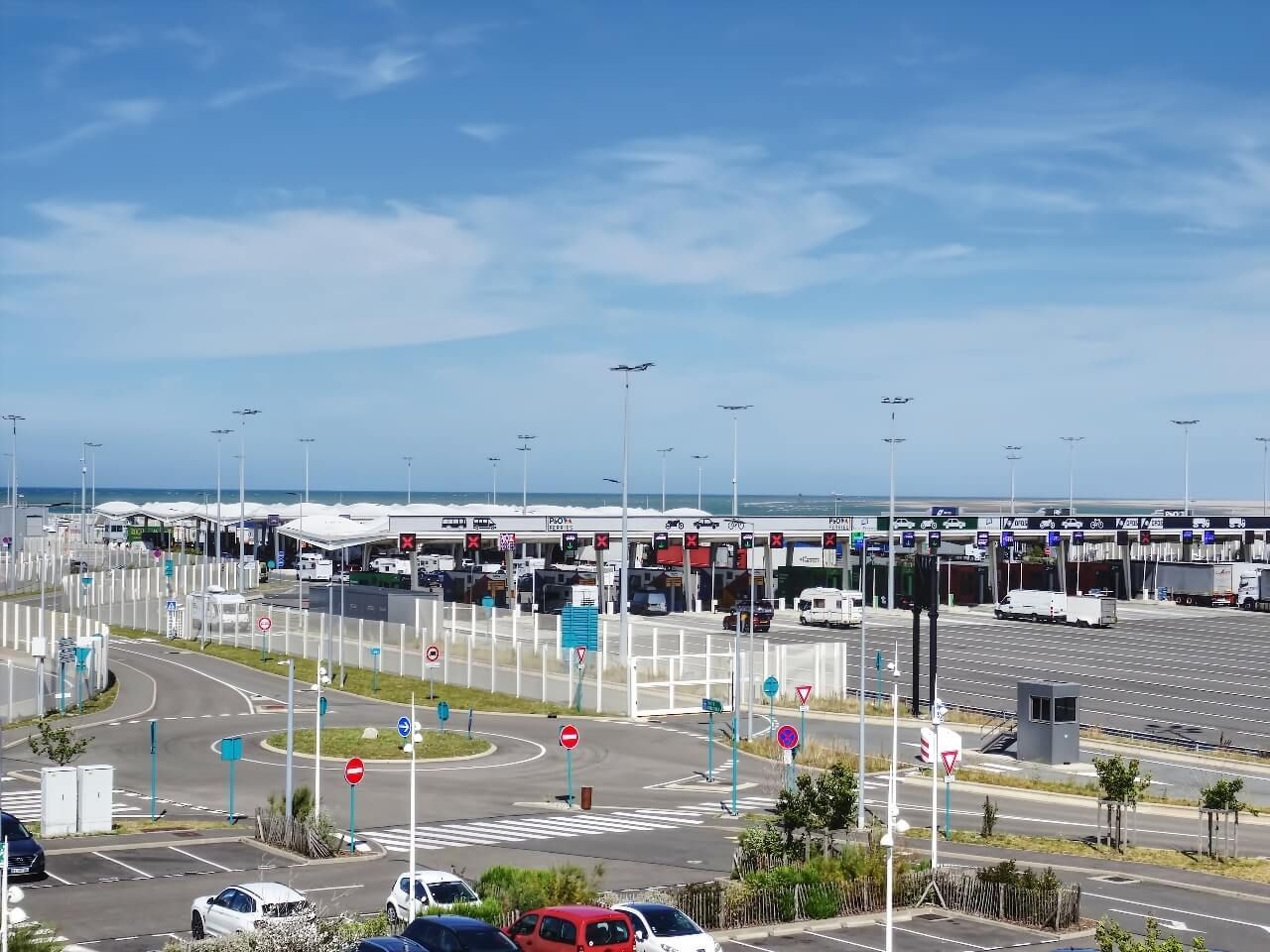
There is no busier maritime link in Europe. Calais-Douvres alone concentrates nearly 80% of cross-Channel ferry traffic, with departure frequency every 45 minutes during peak hours. The distance between the two ports is only 45 km, which explains the express crossing in 1h30 approximately, just enough time to grab a sandwich and watch the white cliffs of Douvres appear on the horizon. It is, by far, the most popular ferry France England route.
Two operators share this route. DFDS and P&O Ferries offer almost continuous departures from 6 AM to 11 PM. Each operates several ships on this line, with capacities that can exceed 1,800 passengers per crossing. The competition between the two companies is a direct advantage for the traveler: prices generally remain competitive, and it's worth comparing both sites before booking.
Rates for a vehicle with two passengers start around 55 to 70 € in low season (January-March), rising to 130-200 € during school holidays and summer. Passengers without cars travel for 25 to 45 € one way depending on the season. A golden rule: book at least 6 to 8 weeks in advance to access the best slots. Night crossings (departure after 9 PM) are often cheaper and allow you to arrive early at your destination.
The port of Calais (Boulevard des Alliés, 62100 Calais, rated 3.6/5 on Google for 25 reviews) is well equipped: secure parking, duty-free shops, restaurants. Allow 30 to 45 minutes before departure for check-in and customs controls, more in July-August. And if you have some time before embarking, don't reduce Calais to just a transit port: the belfry of the Town Hall, Rodin's sculpture of the Burghers of Calais and the lace museum tell the story of a surprisingly dense city.
Dieppe-Newhaven: The Norman Crossing
Dieppe is the ferry port closest to Paris, just 2h30 drive from the capital. The Dieppe-Newhaven link is operated exclusively by DFDS, with two to three daily departures depending on the season. The crossing lasts 4 hours, making it an intermediate option between the Calais-Douvres sprint and long night crossings.
Newhaven serves Brighton directly, 15 km away, and London in about 1h30 by train. It's a coherent itinerary if your English destination is in the southeast of the country. Rates for a vehicle with passengers range between 80 and 180 € depending on the period.
The real added value of Dieppe is that it's worth visiting. Before or after the crossing, allow an hour to walk the seafront, the pebble beach and the castle-museum that dominates the city from its 30-meter height. The Saturday morning market is one of the liveliest in Normandy, and a one-hour stop is enough to transform waiting time into a real stopover.
Le Havre-Portsmouth: The Great Norman Crossing
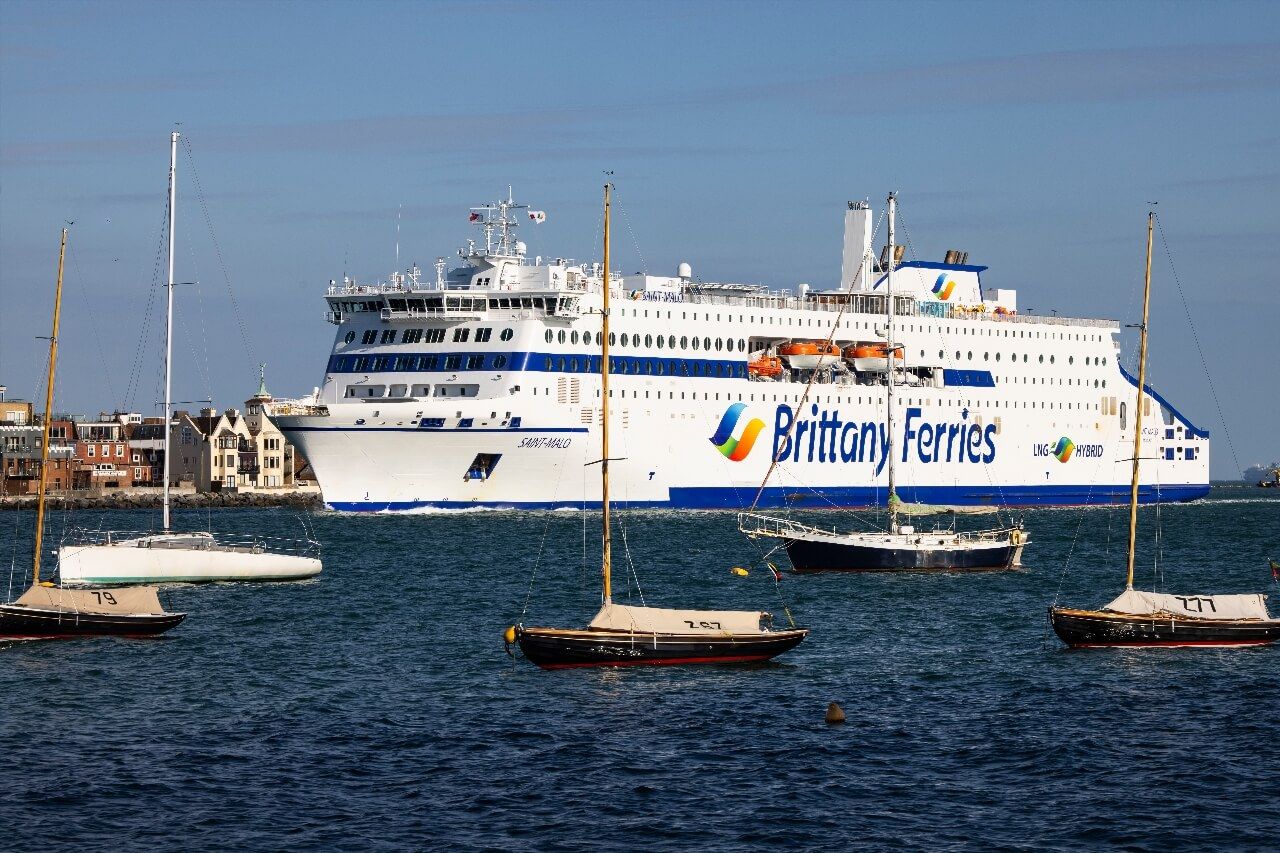
Le Havre is the second largest ferry port by traffic volume from France. The Le Havre-Portsmouth link is operated by Brittany Ferries, with crossings lasting between 5h30 and 8h depending on schedules (night or day crossing). This route particularly appeals to travelers coming from Paris (2 hours away by car) or those traveling up from the Atlantic coast.
Brittany Ferries ships on this line, the Normandie and the Mont Saint-Michel notably, offer superior comfort to the express ferries of Calais. Cabins available on night crossings, onboard restaurant with regional menu, cinema area for children. For a family, paying the cabin supplement can be well worth the expense: you arrive rested in England.
Indicative rates for a vehicle with two adults: 100-160 € off season, 200-320 € in July-August. The night crossing (departure around 9 PM - 11 PM) often includes a basic cabin in the base price, but check the exact conditions at the time of booking.
If you arrive at Le Havre with a few hours to spare, the city is classified as a UNESCO World Heritage site for its post-war architecture by Auguste Perret. Take time to walk along the straight main avenues of the reconstructed center: these concrete blocks, up close, reveal a striking formal rigor, almost musical in the repetition of their frameworks.
Caen (Ouistreham)-Portsmouth: The D-Day Ferry
Caen's ferry port is actually located in Ouistreham, 15 km north of the city, at the mouth of the Orne. Brittany Ferries provides several crossings per day to Portsmouth, with a duration of approximately 5h45. It's a popular route among families and travelers who want to combine the crossing with a stop at the D-Day landing beaches.
Ouistreham is 10 minutes by car from Sword Beach, the D-Day landing beach of June 6, 1944 where British and Canadian soldiers landed. The Caen Memorial, about twenty kilometers away, is one of the most visited World War II museums in France, with more than 400,000 visitors per year. If you take the evening crossing, half a day is enough to visit Ouistreham, the beach and the Grand Bunker museum.
Caen itself deserves a stop. The Ryo audio guide of Caen takes you to William the Conqueror and Mathilde, two figures whose influence on England is inseparable from the history of the country you are about to reach. 22 audios, 4.6 km, 1h50 walk in a city that too many travelers pass through without stopping.
Cherbourg: The Cotentin Peninsula Port
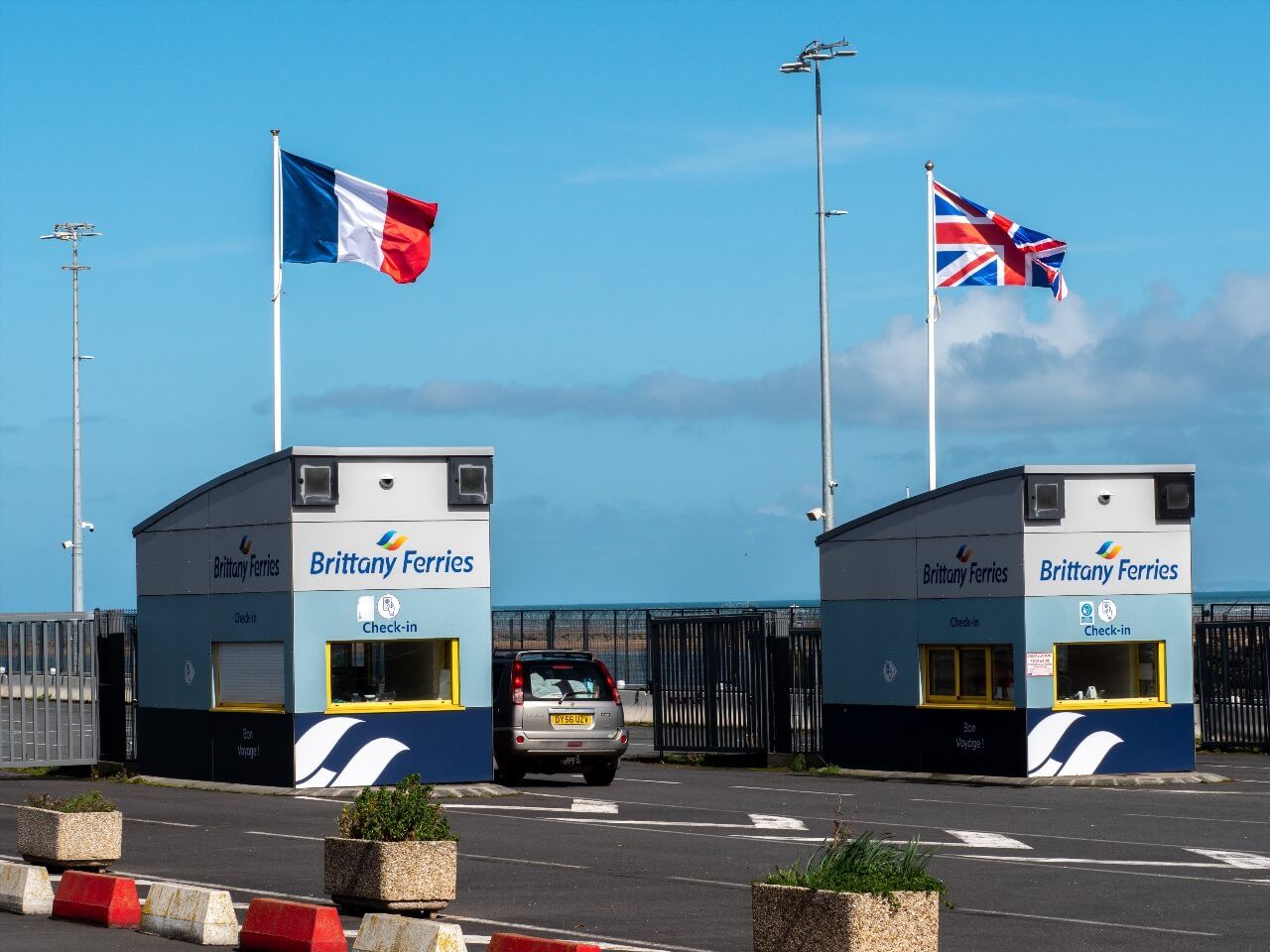
Cherbourg-en-Cotentin is served by Brittany Ferries (to Poole and Portsmouth) and by Irish Ferries (to Rosslare in Ireland, with possible stop in England). The crossing to Poole lasts about 4h15, to Portsmouth 3h on the fast service, longer on the standard day or night crossings.
Cherbourg is less busy than Le Havre or Caen, a good option when other ports are saturated in high season. Don't miss the Cité de la Mer, installed in the former transatlantic maritime station, with its visitable nuclear submarine.
Rates to Portsmouth: 90-180 € for a vehicle with two passengers. Morning departures arrive in England in the middle of the day, ideal timing if you plan to reach London the same day.
Saint-Malo-Portsmouth: The Breton Crossing
Saint-Malo and the link to Portsmouth operated by Brittany Ferries offer one of the longest crossings from France: 8h45 during the day, or even a full night depending on the schedule. It's precisely what makes it one of the most appreciated by travelers who want to arrive rested.
Ships on this line have comfortable cabins, a gourmet restaurant and self-service. Prices for a vehicle with two passengers and a basic cabin start at 170 € off season to rise to more than 400 € in summer with a standard cabin.
Saint-Malo is one of the most spectacular coastal cities in France. Its intra-muros ramparts, the malouinières, the beaches directly accessible from the old town gates, you can spend a whole day there without getting bored. And if you head inland, Rennes is 1h15 away by the A84, with its half-timbered houses on rue Saint-Georges and its central halls that are well worth the detour.
Roscoff-Plymouth: The Far West Option
Roscoff is the westernmost port in France for crossings to England. Brittany Ferries operates the link to Plymouth, with a 6 hour daytime crossing. The route is particularly well positioned for travelers coming from Pays de la Loire, Brittany or the far west, and who want to avoid traveling up to northern ports.
Plymouth is a port city with exceptional maritime history, it's from here that the Mayflower departed in 1620 and Francis Drake to circumnavigate the globe. From Plymouth, you reach Bristol in 1h30 by car and London in less than 4h.
Indicative rates: 110-200 € for a vehicle with two passengers. Roscoff doesn't have a vast city to explore, but the town is worth a pause: the church of Notre-Dame-de-Croaz-Batz and its Renaissance bell tower, the lobster ponds fed by the sea, and the famous fig tree planted in the 16th century are enough to fill an hour of waiting. It's also the birthplace of the "Johnnies", those pink onion merchants who crossed the Channel by bicycle to sell their harvest to the British, a story that resonates beautifully when embarking for the same English coast.
Dunkerque-Douvres: The Second Pas-de-Calais Route
Dunkerque offers an alternative to Calais on the same route to Douvres, operated by DFDS. The crossing lasts 2 hours, slightly longer than from Calais, but the port is often less congested, especially in high season.
It's an option to seriously consider if you're coming from Belgium, Hauts-de-France or if you prefer to avoid the Calais saturation in July-August. Rates are comparable to the Calais-Douvres route, sometimes slightly lower.
Dunkerque itself deserves better than its reputation as an industrial city. The 1940 evacuation, nearly 338,000 allied soldiers embarked in nine days under bombs, made it a world symbol, popularized well beyond France by cinema. The city also cultivates one of the most exuberant carnival traditions in the country: a carnival that spans several months, punctuated by bands and the famous "rigodons", and that rivals without complex with that of Nice. If your crossing departs in the evening, a walk along the dike of Malo-les-Bains and a detour through the port museum are enough to change your view of the city.
Cross-Channel Ferry Companies: 2026 Overview
Three main operators share the ferry France England routes.
Brittany Ferries is the leader of long crossings. The Breton company operates on the Caen-Portsmouth, Le Havre-Portsmouth, Saint-Malo-Portsmouth, Roscoff-Plymouth and Cherbourg-Poole routes. Its ships are generally larger and better equipped than the competition, with well-maintained restaurants and cabins. It primarily targets families and travelers who want the comfort of a mini-cruise. Note for 2026: the company is strengthening its winter offer, notably with a Poole-Cherbourg maintained from November to March and Plymouth-Roscoff crossings in winter.
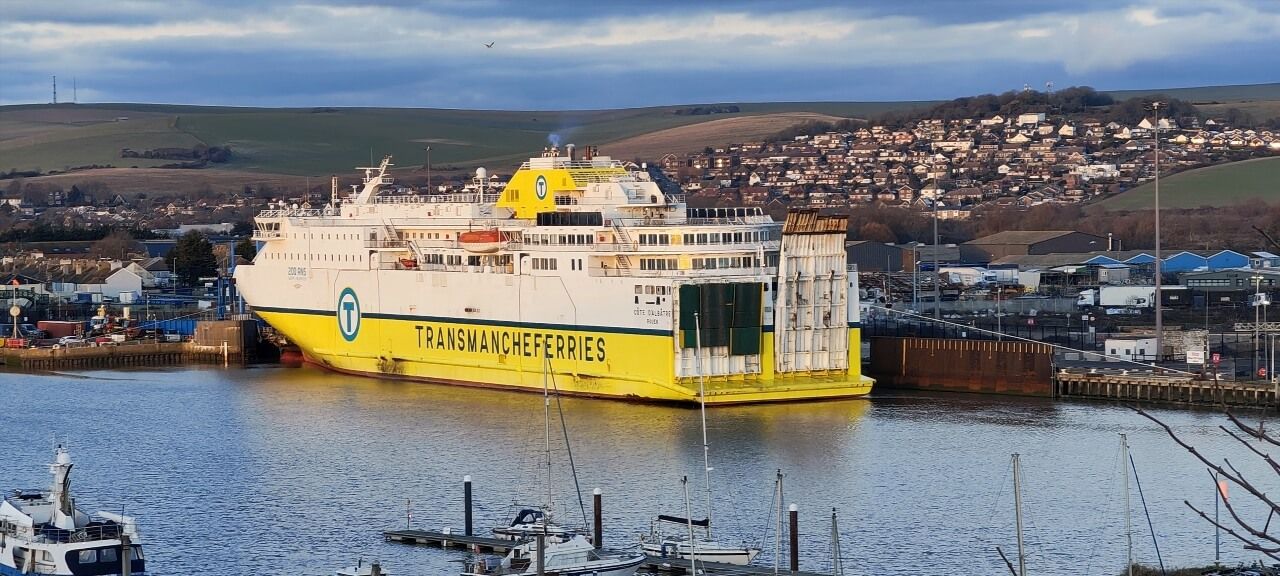
DFDS is the specialist in fast crossings. The Danish company controls Calais-Douvres (alongside P&O) and Dunkerque-Douvres, as well as Dieppe-Newhaven. It also offers vehicle deals and develops formulas for frequent travelers (loyalty cards, annual subscriptions).
P&O Ferries is the other key player on Calais-Douvres. The company went through social turbulence in 2022 that affected its image, but its ships have been running normally since then. It regularly offers aggressive promotional deals, especially outside school holidays.
A fourth company, Irish Ferries, operates the Cherbourg-Dublin-Rosslare link with possible stops in England, which may interest travelers en route to Ireland.
To compare ferry France England prices in real time, several comparators aggregate company offers: DirectFerries, Ferryscanner and each company's website remain the best sources.
Rates and Tips: How to Pay the Right Price
Prices for a ferry France England vary from single to quintuple depending on season, day and departure time. Here are the levers to pull to reduce the bill.
Book early. The first tickets put on sale, often 6 to 12 months in advance, are systematically the cheapest. As soon as you know your dates, book your crossing. Prices rise as capacity fills up.
Travel outside school holidays. The price difference between a Monday departure in January and a Friday in July can exceed 200% on the same route. If you have flexibility, low season (November to March, excluding holidays) offers the best deals.
Choose night crossings. On long routes (Le Havre, Caen, Saint-Malo), night departures often include a basic cabin in the fare or provide access to cabins at low prices. You save a hotel night while crossing.
Compare times during the day. On Calais-Douvres, a crossing at 8 AM on a Tuesday can cost half as much as at 5 PM on a Friday. Test several slots before confirming.
Use loyalty cards. DFDS and Brittany Ferries offer loyalty programs that provide discounts from the second crossing. For Channel regulars, registration is free and quickly pays for itself.
Check "early saver" offers. Brittany Ferries regularly publishes flash promotions on its site, particularly for crossings less than 30 days away. Sign up for the newsletter to receive them.
On Calais-Douvres, the lowest offers for a car with two passengers in low season are around 55-70 €. In high season, budget 150-200 € as a realistic amount. On long crossings (Le Havre, Saint-Malo), count roughly double.
Traveling with a Car: What You Need to Know
The ferry is often chosen precisely because it allows you to cross to England with your own vehicle. Some practical rules to keep in mind.
Arrive early. Companies recommend arriving 45 minutes to 1h30 before departure depending on port size. At Calais and Douvres in high season, allowing 2 hours is not excessive. Late check-in can make you miss your crossing without refund.
Customs controls on the French side. Since Brexit (effective since January 2021), crossing the Franco-British border involves customs controls in both directions. On the French side, British border authorities operate on French soil in tunnel and Calais ports, a special arrangement from the Le Touquet agreements. Prepare your passport (French identity cards are accepted for EU nationals, but check the rules in force at the time of your departure).
Pets. England has specific health rules for animal entry. A European pet passport, electronic chip and recent antiparasitic treatment are generally required. Check with your veterinarian and British authorities at least 4 weeks before departure.
Oversized vehicles. Motorhomes, caravans and trailers are accepted on most ferries, but require declaration when booking. Specific rates apply according to the total length of the vehicle.
Traveling Without a Car: Foot Passengers and Cyclists
Ferry crossing without a car is often less well known, but it remains a serious option, sometimes the most economical.
On Calais-Douvres, foot passenger rates start at 25-35 € one way in low season with DFDS and P&O. From Calais, the station is a few minutes' walk from the terminal. On the Douvres side, buses regularly reach Canterbury (30 min), Folkestone (20 min) and London Victoria (about 2h) from the port.
Cyclists are accepted on almost all cross-channel ferries, generally with a modest supplement of 10 to 20 €. On long crossings (Le Havre, Saint-Malo), bikes are stored in vehicle garages; on fast crossings, they often go up with passengers. Check during booking for boarding procedures.
Motorcyclists benefit from intermediate rates between foot passengers and cars. Most companies offer dedicated two-wheeler deals, particularly on Brittany Ferries' long routes.
When to Travel: Seasonality and Crossing Conditions
The Channel is navigable year-round, but conditions vary significantly by season.
Winter (November-March): prices are at their lowest, ports less congested, but weather can be rough. Ferries are designed to navigate in heavy seas, crossings are rarely canceled, but seasickness is more frequent. If you're sensitive to it, opt for large ships on long routes rather than small fast ferries.
Spring (April-May): the best compromise for travel. Prices remain reasonable, days are longer, queues shorter than in summer. It's the ideal season to visit Normandy before or after crossing.
Summer (June-August): high season. Ferries often show full from March onwards on the most sought-after slots. Absolutely book in advance. July and August weekends on Calais-Douvres can generate hours-long queues.
Autumn (September-October): a beautiful underestimated period. Prices drop from mid-August, weather often remains mild, and England is discovered from a less touristy angle.
Channel crossings are on average 10 to 20 minutes longer in winter than in summer due to weather conditions. On short routes like Calais-Douvres, the impact is minimal. On long crossings, sustained swells can extend journey time by an hour.
FAQ
What is the cheapest ferry between France and England?
The Calais-Douvres route is generally the cheapest, with rates starting around 55-70 € for a vehicle with two passengers in low season. For passengers without cars, crossings are available from 25 € one way. The best deals are obtained by booking several weeks in advance and avoiding French and British school holiday periods.
How long does the ferry crossing between France and England take?
It depends on the departure port. The shortest crossing is Calais-Douvres (1h30), followed by Dunkerque-Douvres (2h). Norman routes are longer: Cherbourg-Portsmouth (3h-4h30), Caen-Portsmouth (5h45), Le Havre-Portsmouth (5h30-8h). Brittany crossings are the longest: Saint-Malo-Portsmouth (8h45) and Roscoff-Plymouth (6h).
Do you need a passport or ID card to take the ferry to England?
Since Brexit, the United Kingdom is a third country. French and European nationals can enter with a valid French national identity card according to the rules in force in 2026. Check official information from the British government or your embassy before departure, as rules have evolved since 2021. Children must have their own travel document.
Can you bring your dog or cat on the ferry to England?
Yes, but under strict conditions. England requires animals to be identified by electronic chip, have a European pet passport and receive antiparasitic treatment against echinococcus within 5 days before entry. These conditions must be validated by an authorized veterinarian. Inquire at least one month before departure, as treatment deadlines are restrictive.
Which ferry company to choose for crossing the Channel?
It depends on your priority. For price and frequency on Calais-Douvres, compare DFDS and P&O Ferries, both are equivalent in quality and often match on prices. For comfort on long routes (Le Havre, Caen, Saint-Malo, Cherbourg), Brittany Ferries offers the best ships with cabins, restaurants and relaxation areas. Check two or three companies on your route before deciding.
Conclusion
The Channel is a border that crosses well. Whether you prefer the Calais-Douvres express in 1h30 or the long night crossing from Saint-Malo, ferry France England options are plentiful to adapt the journey to your budget and schedule. The key remains advance booking, especially if you're traveling in summer with a vehicle.
If you arrive on the French side with time to spare, the Channel port cities deserve a serious stop. The Ryocity of Le Havre and that of Calais will make you see these transit cities from a completely different angle, their history is often much denser than one imagines from the deck of a ferry.