
Créé par Romane, le 14 mai 2026
Votre guide Ryo
© Shutterstock
Looking for the best things to do in Chicago without ending up at the same five postcard stops as everyone else? This guide is built for that. Chicago hits differently the moment you step outside O'Hare. The skyline isn't a backdrop, it's a wall of architectural history rising from the edge of a freshwater sea, and the city has a way of making you feel immediately underprepared for how much it has to offer. Three days is never enough. If you want to walk the city on foot and actually understand why it's built the way it is, the Ryo audio tour through Chicago's Windy City waterfront is a genuinely useful companion before you dive into the list below.
What you'll find here: a museum with 40 million specimens that once housed a living elephant named Judy, a rooftop observatory where the glass floor puts you 412 metres above the street, a comedy club that launched the careers of nearly every Saturday Night Live cast member you can name, and a lakefront trail that stretches 18 miles without a single stoplight. The Chicago Ryocity audio guide accompanies several of the waterfront and Loop stops on this list, so you can pair it with the picks below as you go. This guide covers 25 experiences across neighbourhoods from Hyde Park to Wicker Park, from the Loop to the far North Side, each one worth the detour.
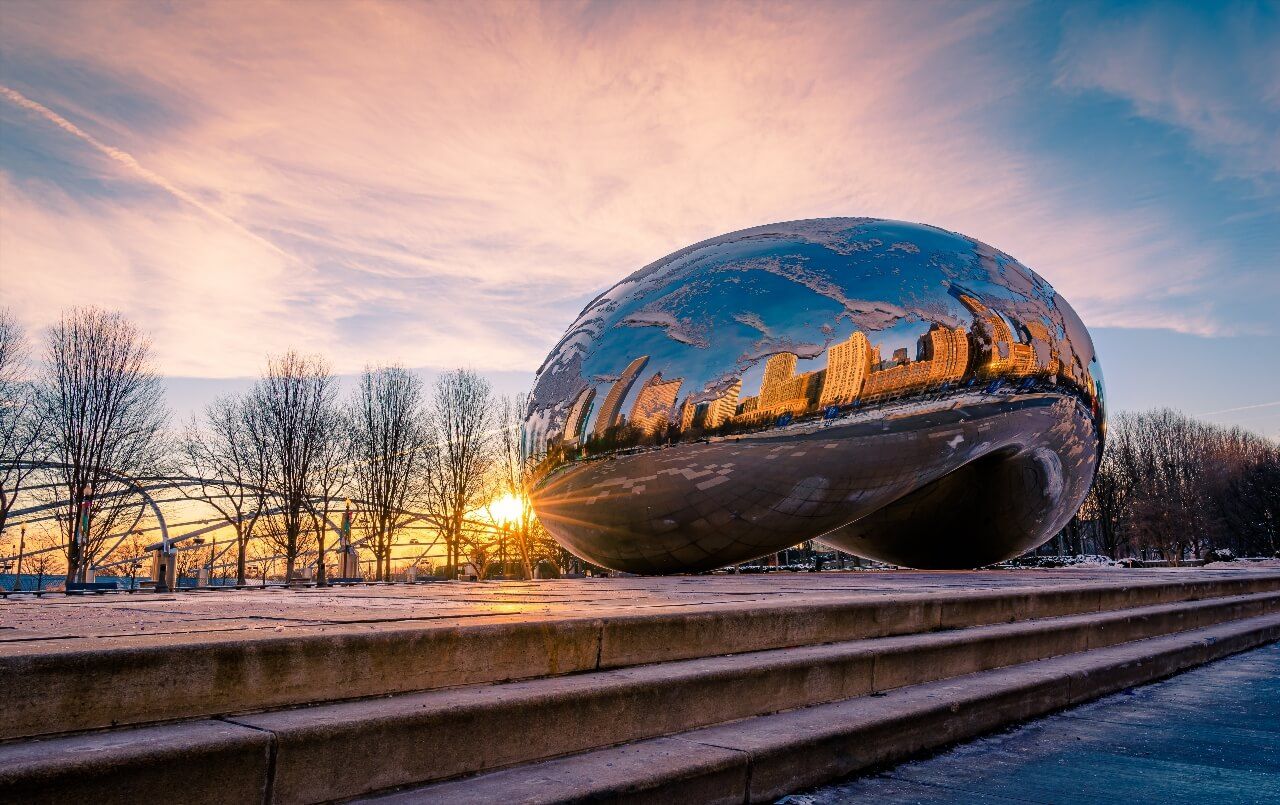
1. Cloud Gate (The Bean) at Millennium Park
Cloud Gate rewards repeat visits. Anish Kapoor's 100-tonne polished steel sculpture reflects a distorted, kaleidoscopic version of the skyline back at you, and at the city's thousands of daily visitors. It's free at any hour, though the early morning light before 8 a.m. gives you the cleanest reflection and almost no crowds. Walk underneath into the omphalos (the concave centre) for a disorienting 360-degree mirrored ceiling effect.
2. Willis Tower Skydeck
Willis Tower (233 S Wacker Dr, Chicago IL 60606, rated 4.6/5 on Google (36 387 avis)) held the title of world's tallest building for 25 years after its 1973 completion, and even now, at 442 metres to roof, it remains the third-tallest structure in the Western Hemisphere. The Skydeck sits on the 103rd floor, and the real centrepiece isn't the panoramic view, it's The Ledge: four glass-floored balconies that extend 1.2 metres beyond the building's facade, putting nothing but air between your feet and the street 412 metres below.
Book tickets online in advance; on-the-day queues in summer can push two hours. The view on a clear day reaches four states: Illinois, Indiana, Wisconsin, and Michigan. Go at sunset if you can, the city lights beginning to flicker across the lake as the sky turns orange is a Chicago moment that stays with you. If you want the architectural context before you ascend, the Ryo audio walk through the Loop primes you with the structural history that shaped this skyline.
3. The Art Institute of Chicago
Few American art museums match the breadth of The Art Institute of Chicago (111 S Michigan Ave, Chicago IL 60603, rated 4.8/5 on Google (37 843 avis)). Founded in 1879, the collection spans 300,000 works across 5,000 years of human creativity. Georges Seurat's A Sunday Afternoon on the Island of La Grande Jatte is here, that enormous, impossible pointillist canvas that takes ten minutes just to walk past slowly. So is Grant Wood's American Gothic, Edward Hopper's Nighthawks, and one of the finest collections of Impressionist painting outside Paris.
The Modern Wing, added in 2009 and designed by Renzo Piano, houses the contemporary collection in a space flooded with natural light through a vast glass ceiling nicknamed the «flying carpet.» Plan at least half a day; the permanent collection alone could fill two. Admission is free for Chicago residents and children under 14. For everyone else, tickets run around $32 for adults in 2026, worth every dollar.
The two bronze lion sculptures flanking the Michigan Avenue entrance have stood there since 1894. Every Chicago sports championship, the locals dress them in team jerseys. The photos are consistently magnificent.
4. Chicago Riverwalk
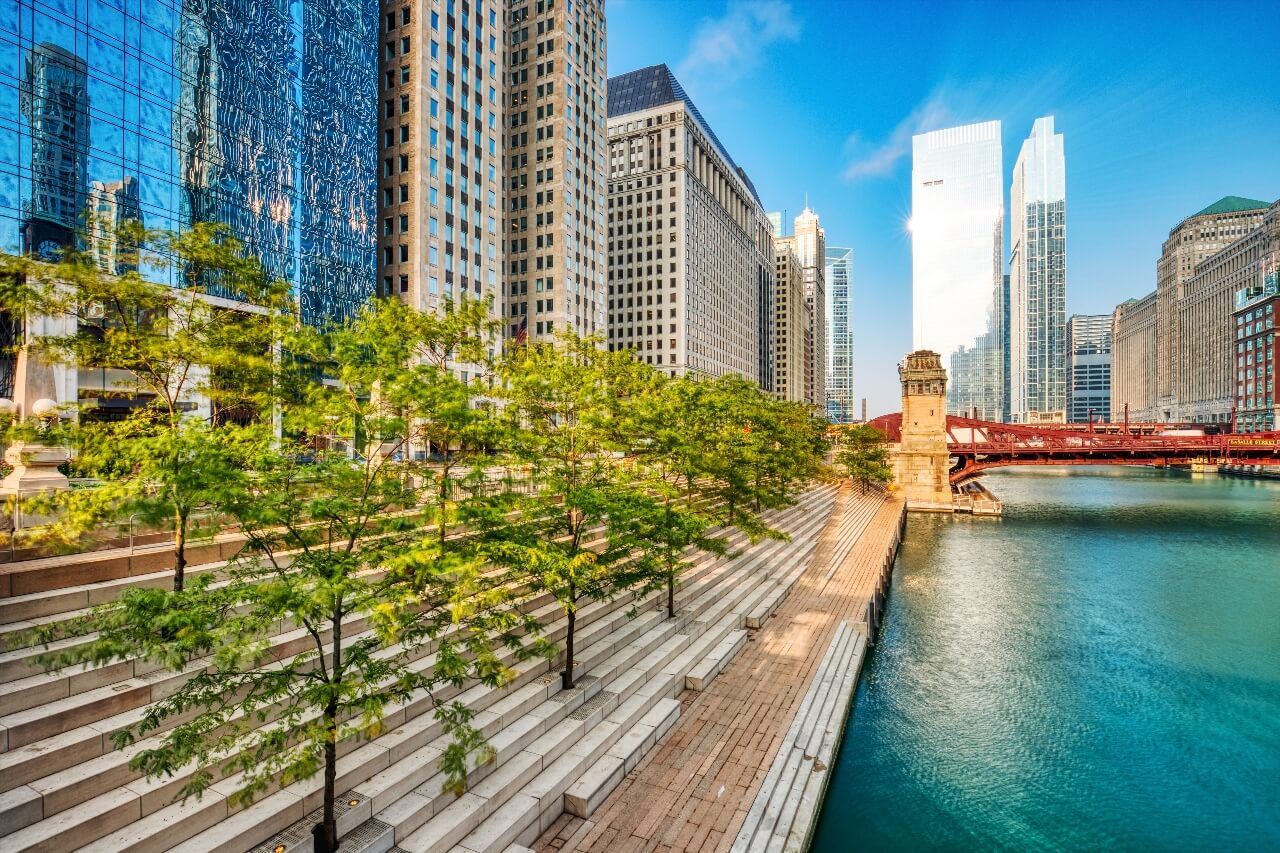
The Chicago Riverwalk (601 E Riverwalk South, Chicago IL 60601, rated 4.8/5 on Google (22 268 avis)) runs 1.25 miles along the south bank of the Chicago River through the heart of the Loop, with around nine bridges crossing overhead along the path, each one different, many of them the distinctive double-leaf bascule design that opens to let tall boats through. The canyon of skyscrapers above creates a corridor of shadows and light that changes by the hour.
At river level, you're looking up at buildings that most visitors only ever see from street level, which completely changes how the skyline reads. Stop at the riveted steel of the Wrigley Building, the gothic crown of the Tribune Tower, and the corncob towers of Marina City. The walk is free and open year-round; in summer, kayak rentals launch directly from the river's edge.
5. Navy Pier
Navy Pier (600 E Grand Ave, Chicago IL 60611, rated 4.6/5 on Google (87 274 avis)) stretches 3,000 feet into Lake Michigan, a distance that makes the walk from the entrance to the far end feel almost meditative when the wind off the lake is with you, and genuinely punishing when it isn't. The pier hosts the Centennial Wheel, a 196-foot Ferris wheel with enclosed gondolas that offers some of the city's best views of the skyline from the water side.
The pier is part amusement park, part convention centre, part restaurant strip. On summer weekends, it draws enormous crowds. Come on a Tuesday or Wednesday evening for the free fireworks shows that run from June through August, and arrive early enough to walk to the very tip, out there, with the skyline behind you and the lake in every other direction, the scale of Lake Michigan finally becomes clear. It's bigger than some countries.
6. 360 CHICAGO Observatory at 875 North Michigan
The 360 CHICAGO observatory on the 94th floor of the former John Hancock Center is the Skydeck's slightly less famous rival, and many locals prefer it. The views north along the lakefront are arguably better here, and the space is generally less crowded. The signature attraction is TILT: a moving glass wall that tilts visitors outward over Michigan Avenue at a 30-degree angle.
Entry costs around $30 for adults, but the same ticket includes access to the observation deck. If you're willing to pay a drink premium, the Signature Lounge on the 96th floor lets you sip a cocktail with the same view for roughly the cost of admission, and there's no tilt surcharge. Weather makes a real difference here: call ahead or check the webcam on cloudy days.
7. Chicago Architecture Center River Cruise
Chicago is, without any serious argument, the world capital of modern architecture. The city burned to the ground in 1871 and rebuilt itself as a laboratory for structural ambition, inventing the skyscraper, pioneering the steel frame, giving the world Louis Sullivan, Daniel Burnham, Frank Lloyd Wright, Ludwig Mies van der Rohe, and Helmut Jahn within the span of a century. The Chicago Architecture Center River Cruise (111 E Wacker Dr, Chicago IL 60601, rated 4.7/5 on Google (2 036 avis)) (112 E Wacker Dr, 60601 Chicago) is the single best way to understand that history.
Docents from the Chicago Architecture Foundation narrate 90 minutes on the water, identifying more than 50 buildings along the Chicago River and its two branches. The combination of expert commentary and river-level vantage gives you context that no walking tour can fully replicate. You'll understand why the Aqua Tower's undulating balconies look the way they do, why the Gothic details of the Tribune Tower include stones from 149 historic buildings worldwide embedded in its base, and why the city's grid turns 30 degrees from true north at the river. The Ryo audio guide through the Loop's waterfront covers the same buildings on foot if a boat isn't your speed, which means you can sequence both for the deepest possible read of the skyline.
Book in advance, tours sell out weeks ahead in summer. The cruise departs from the Chicago Architecture Center's dock just east of Michigan Avenue. Evening departures in summer, with the buildings lit against the darkening sky, are particularly striking.
8. Magnificent Mile
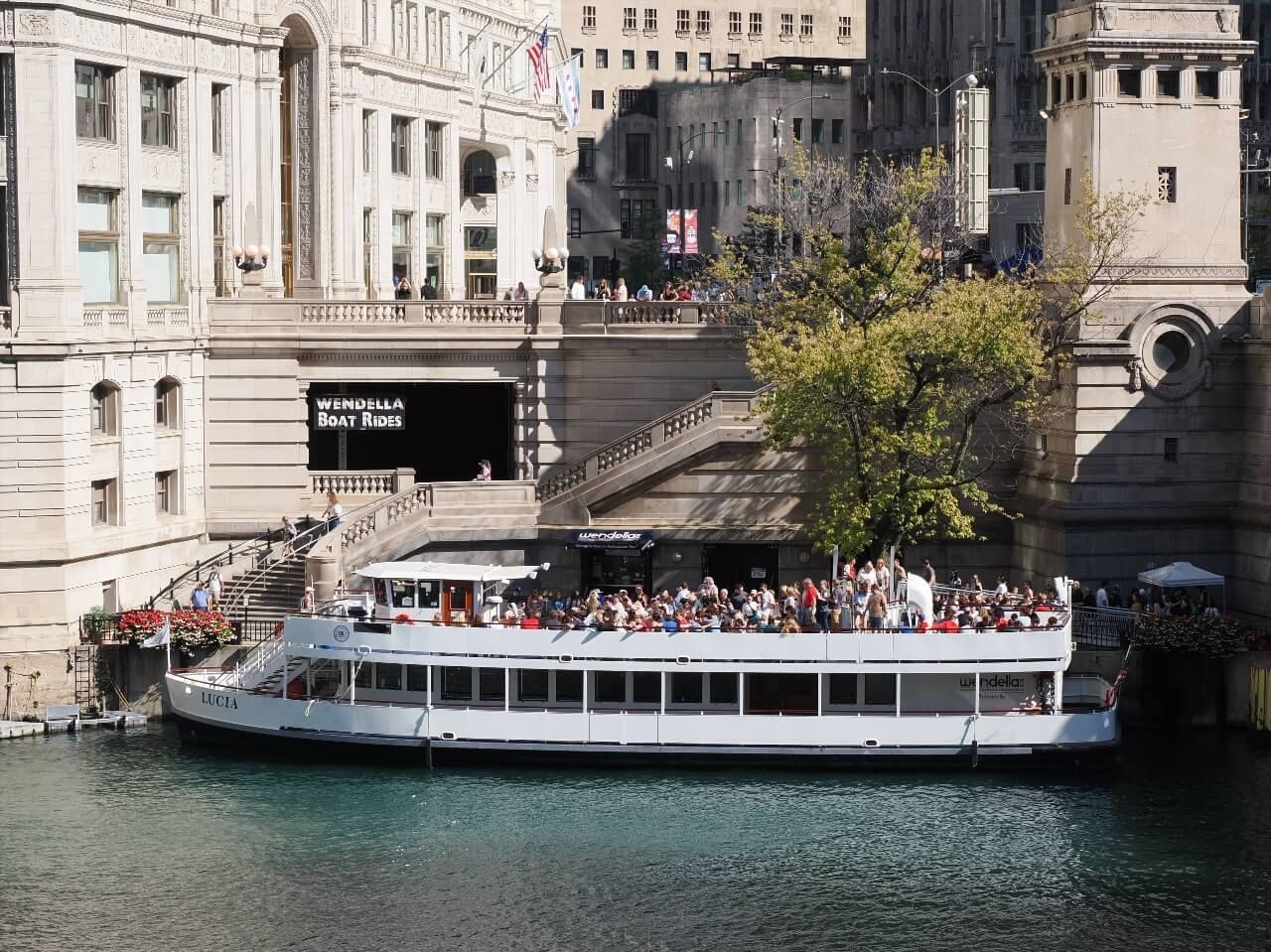
The Magnificent Mile (625 N Michigan Ave, Chicago IL 60611, rated 4.7/5 on Google (33K avis)) (N Michigan Ave, 60611 Chicago) is the 13-block stretch of North Michigan Avenue between the Chicago River and Oak Street, and it's one of the most commercially dense corridors in the world. The shopping, from the Shops at North Bridge to Water Tower Place, is genuinely world-class. But come here for the architecture as much as the retail: the Gothic Revival tower of the Fourth Presbyterian Church stands almost surreally calm between the glass-and-steel towers on either side, and the Water Tower (one of the few buildings to survive the 1871 fire) still anchors the streetscape at Chicago Avenue.
9. Lincoln Park Zoo
Lincoln Park Zoo (2001 N Clark St, Chicago IL 60614, rated 4.6/5 on Google (38 126 avis)) is one of the last free admission zoos in the United States. It has been free since 1868, longer than most countries have had national parks. The zoo houses close to 200 species across 49 acres, with a particular strength in great apes: the Regenstein Center for African Apes is one of the finest gorilla facilities in North America.
The zoo sits inside Lincoln Park, which stretches along 7 miles of lakefront and includes the Lincoln Park Conservatory, a Victorian-era greenhouse with free admission, and the North Pond Nature Sanctuary, a quiet urban wetland that genuinely feels remote despite being ten minutes from downtown. Summer brings outdoor concerts and a seasonal carousel. The zoo is open 365 days a year, which means a grey January morning here, with the animals active in the cold, can be oddly beautiful.
10. Chicago Deep-Dish Pizza Trail
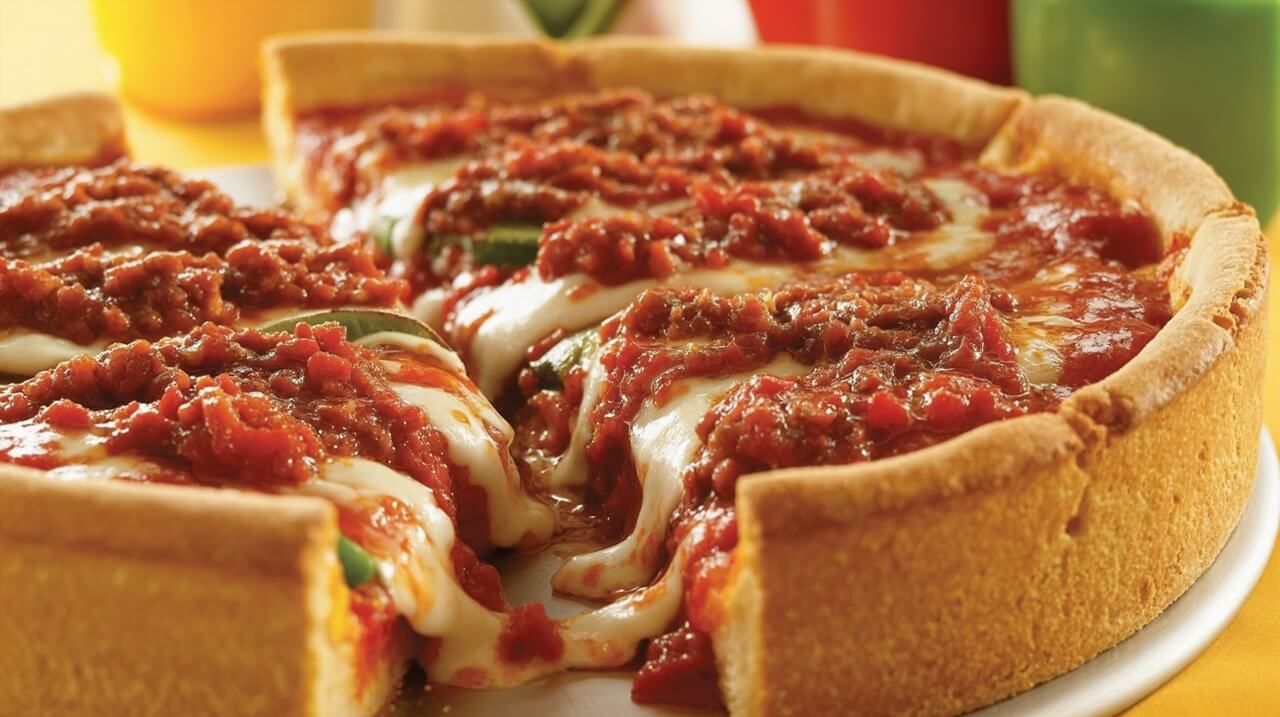
No visit to Chicago is complete without eating deep-dish pizza, ideally more than once, ideally from different institutions, ideally while defending your choice vigorously to someone from New York. Uno Pizzeria & Grill on Ohio Street claims to have invented the style in 1943. Lou Malnati's (multiple locations, flagship at 439 N Wells St) has the most loyal local following. Giordano's does a stuffed pizza variant that is technically a different dish but equally non-negotiable.
The defining characteristic of Chicago deep-dish is the crust: a thick, buttery shell pressed up the sides of a round steel pan, filled with chunky tomato sauce on top of a dense layer of mozzarella cheese, note that the cheese goes under the sauce, not over it. A single 12-inch pizza comfortably feeds two people. Order before you're hungry, because baking takes 45 minutes minimum. Plan accordingly.
11. Wicker Park Neighborhood
Wicker Park (1425 N Damen Ave, Chicago IL 60622, rated 4.6/5 on Google (1 257 avis)) (centred on Milwaukee, Damen & North Avenues, 60622 Chicago) was Chicago's artist district before gentrification arrived, and even now, it retains enough independent bookshops, vintage clothing stores, record shops, and neighbourhood bars to feel distinct from the rest of the city. The architecture here is residential Victorian: three-flats and greystones with ornate facade details that the Loop's commercial ambition never had time for.
The intersection of Milwaukee, Damen, and North Avenue, known to locals as «The Crotch», anchors the neighbourhood. Walk north along Damen for the restaurant and cocktail bar density; walk south along Milwaukee toward Bucktown for more independent retail. The neighbourhood comes fully alive after dark on weekends, when the music venues and late-night diners fill with a crowd that's genuinely mixed by age and background.
12. The 606 Trail (Bloomingdale Trail)
The 606 (access points at Damen, Ashland, Ridgeway, and Kimball Avenues, 60622 Chicago) is Chicago's elevated linear park: 2.7 miles of converted rail line running above the rooftops of Wicker Park, Humboldt Park, and Logan Square. The design is clean and purposeful, concrete path, native plantings, public art installations at intervals, and the elevated vantage gives you a view of Chicago's residential fabric that no street-level walk can replicate. The trail opened in 2015 and is free at all times.
13. Museum of Science and Industry
The Museum of Science and Industry (1400 S Lake Shore Dr, Chicago IL 60605, rated 4.7/5 on Google (30 254 avis)) (5700 S Lake Shore Dr, Chicago IL 60637, rated 4.7/5 on Google (34 819 avis)) in Hyde Park is the largest science museum in the Western Hemisphere, and it earns that designation. The building, a repurposed Beaux-Arts exhibition hall from the 1893 World's Columbian Exposition, houses 35,000 artifacts across 14 acres of exhibition space, and the way the collection is staged turns the building itself into part of the exhibit.
The headliner exhibits are genuinely extraordinary. A captured German U-505 submarine from World War II, the only one in the United States, sits in a climate-controlled underground gallery with a 30-minute guided tour that explains how the capture actually happened, a covert operation on June 4, 1944, roughly 150 miles off the coast of Western Sahara, the first time the US Navy had captured an enemy vessel at sea since the 19th century. A full-scale coal mine recreation descends into the basement with narrated elevator rides. The Apollo 8 spacecraft command module sits in the Space Center gallery. The Coal Mine and the U-505 Tour cost extra beyond general admission; both are worth it.
For families, the Science Storms exhibit features a 40-foot tornado in a glass chamber, a real lightning bolt fired every few minutes, and a tsunami simulator. The museum also screens IMAX films in the Henry Crown Space Center's Omnimax Theatre. Plan at least four hours; six if you have children and want to see everything. Hyde Park is roughly 30 minutes south of downtown by CTA bus, which means the museum pairs well with an Obama Presidential Center visit (see #19) or a wander around the University of Chicago campus if you want to make a full day of it on the South Side.
14. Buckingham Fountain
Buckingham Fountain (301 S Columbus Dr, Chicago IL 60605, rated 4.7/5 on Google (16 714 avis)) in Grant Park is one of the largest fountains in the world, modelled on the Bassin de Latone at Versailles but scaled up significantly: the central jet reaches 150 feet high during the hourly water display from May through October. The fountain's four sea horse sculptures each weigh 7 tonnes. At night, the choreographed light-and-water show runs for 20 minutes on the hour from dusk until 11 p.m. The fountain sits at the geographical heart of Chicago's lakefront park system, with the skyline rising behind it. Free.
15. Chicago Blues & Jazz Clubs
Chicago's relationship with blues music is not a tourist attraction, it's a historical fact. The Great Migration brought hundreds of thousands of African Americans from the Mississippi Delta to Chicago's South and West Sides between 1910 and 1970, and they brought the blues with them. What developed on Maxwell Street and in the clubs of Bronzeville was the electric urban sound that gave birth to rock and roll, and you can still hear direct lineages of that music on any given night across half a dozen venues in the city.
Buddy Guy's Legends (700 S Wabash Ave, Chicago IL 60605, rated 4.6/5 on Google (3 628 avis)) is the starting point: the club owned by the guitarist who played alongside Muddy Waters and Howlin' Wolf, and who still performs there every January. The food is good, the sound is loud, and the walls are covered in memorabilia that constitutes a serious secondary education in Chicago music history. For jazz, Andy's Jazz Club (11 E Hubbard St, 60611 Chicago) has featured live music every night since 1951, no cover charge for the lunchtime set. The Green Mill in Uptown (4802 N Broadway, 60640 Chicago), Al Capone's former haunt, runs jazz every night of the year and hosts the city's longest-running poetry slam on Sunday evenings.
Don't book dinner before a show. Order at the club. Stay for the second set.
16. Logan Square Farmers Market
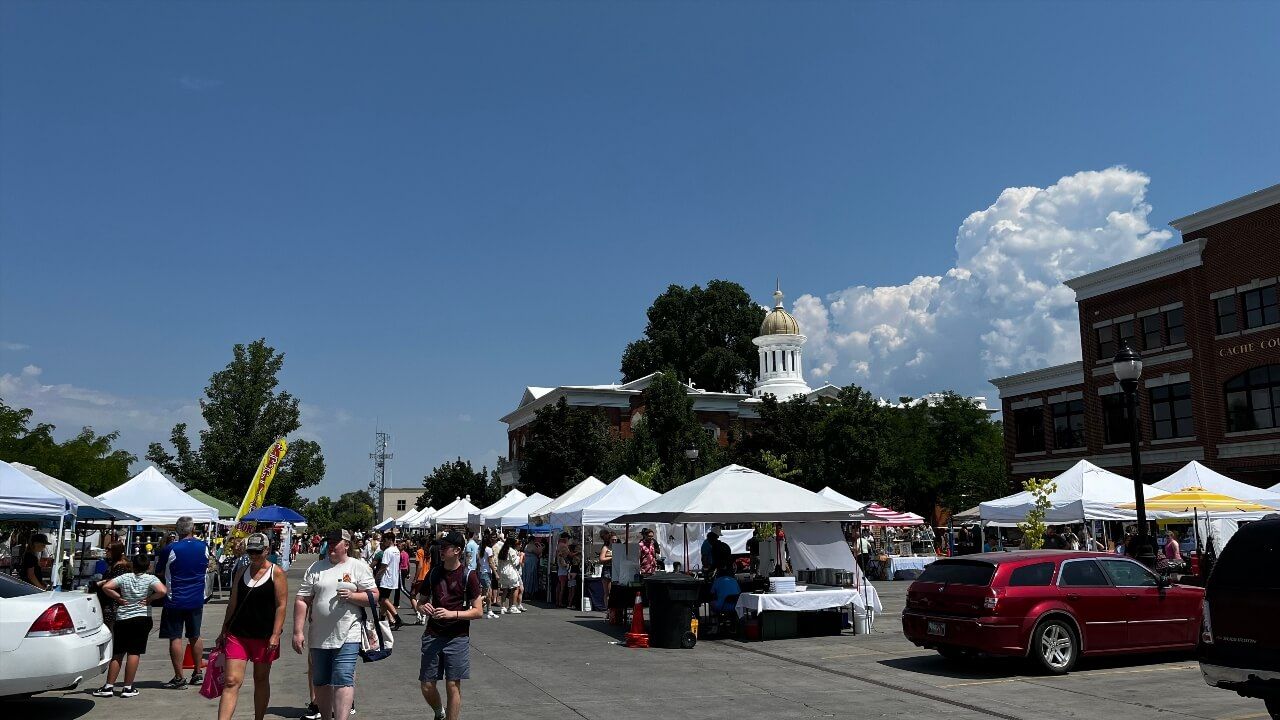
Logan Square Farmers Market (2400 N Kedzie Blvd, Chicago IL 60647, rated 4.6/5 on Google (748 avis)) runs every Sunday from May 10 through October 25 in 2026, from 9 a.m. to 3 p.m. The market stretches along the boulevard median, with around 50 vendors selling produce, bread, cheese, cut flowers, and prepared food from some of the city's independent restaurants.
The neighbourhood that surrounds it, Logan Square proper, is worth a full morning's exploration: the Illinois Centennial Monument at the centre of the square, the vintage movie palaces-turned-music-venues along Milwaukee Avenue, the boulevard's greystone architecture. Several of Chicago's most talked-about restaurants have opened here in the past decade, including Lula Cafe, which helped define what farm-to-table cooking looks like in the Midwest.
17. North Avenue Beach
North Avenue Beach (1601 N Lake Shore Dr, Chicago IL 60610, rated 4.6/5 on Google (12 avis)) is the most popular stretch of Chicago's 18-mile lakefront trail, and in summer it operates less like a city beach and more like a resort. The steamship-shaped beach house contains concession stands, beach volleyball rental, kayak and paddleboard launch, and a rooftop bar. The water in Lake Michigan is genuinely swimmable from late June through August, cold by ocean standards, but clear and clean.
The lakefront trail running past the beach connects Ardmore Avenue in the north to 71st Street in the south, entirely car-free, shared by cyclists and pedestrians. Walking or cycling the full length takes most of a day; the stretch between North Avenue Beach and Oak Street Beach to the south is the most scenic four kilometres.
18. Chicago Cultural Center
Chicago Cultural Center occupies a former city library that opened in 1897, and its interior is one of the most extravagant public spaces in the United States. The building contains two Tiffany glass domes, the one in the Preston Bradley Hall, at 38 feet in diameter and built from roughly 30,000 pieces of Favrile glass, is the largest Tiffany dome in the world. Entry is entirely free.
The Cultural Center hosts a rotating programme of free contemporary art exhibitions, public lectures, film screenings, and concerts. Spend 30 minutes here minimum just for the architecture; the mosaics in the grand staircase and the Carrara marble columns in the main hall are worth the detour independently of whatever exhibition is on.
19. Hyde Park & the Obama Presidential Center
Hyde Park is the South Side neighbourhood that defines Chicago's intellectual identity. The University of Chicago has been here since 1890, and its Gothic quad architecture, borrowed from Oxford and transplanted onto the prairie, creates an atmosphere unlike anything in the rest of the city. The campus is open to visitors; the Smart Museum of Art and the ISAC Museum (one of the world's great collections of ancient Near Eastern artifacts, formerly the Oriental Institute) offer free admission.
The Obama Presidential Center (5200 S Cornell Ave, Chicago IL 60615, rated 4.7/5 on Google (4K avis)) (Stony Island Ave & E 60th St, 60637 Chicago) is now open in Jackson Park after years of construction and legal challenges. The complex includes the presidential museum, a public library branch, a recording studio, and a plaza designed by landscape architects who worked with Frederick Law Olmsted's original Jackson Park layout. Barack Obama grew up on the South Side and taught constitutional law at the University of Chicago for 12 years; the centre's location in the neighbourhood where he spent much of his life makes the site feel genuinely earned rather than imposed.
Hyde Park rewards a full afternoon. Take the 6 Express bus from downtown, it runs directly down Lake Shore Drive and deposits you steps from the campus. The neighbourhood's independent bookshops, particularly Seminary Co-op (one of the finest academic bookshops in the country), justify the journey on their own.
20. West Loop & Fulton Market Dining
Ten years ago, Fulton Market was a meatpacking district. Today it's the most restaurant-dense neighbourhood in the Midwest, with a concentration of serious cooking per city block that rivals any comparable area in New York. The transformation has been rapid and total: where refrigerated warehouses once stored wholesale meat, you'll now find Michelin-starred restaurants alongside excellent ramen counters, natural wine bars, and rooftop terrace spaces.
Girl & the Goat (800 W Randolph St, 60607 Chicago), opened by Top Chef winner Stephanie Izard, is the most famous table. Reservations open three months in advance and disappear within hours. For a walk-in option, The Publican (837 W Fulton Market, 60607 Chicago) specialises in oysters, heritage pork, and Belgian-style beer. The neighbourhood runs west from Halsted Street along Randolph and Fulton, and most of the serious restaurants are within a five-minute walk of each other. Go hungry. Reserve in advance where possible.
21. Chicago History Museum
The Chicago History Museum (1601 N Clark St, Chicago IL 60614, rated 4.6/5 on Google (2 715 avis)) at the southern edge of Lincoln Park is the place to make sense of everything else you've been seeing around the city. The permanent collection traces Chicago's history from Fort Dearborn through the Great Fire, the Pullman Strike, the 1893 World's Fair, Prohibition, the jazz age, the civil rights movement, and the architectural revolution that produced the modern skyline.
The standout exhibit is the Abraham Lincoln collection, Chicago was the city where Lincoln received the Republican presidential nomination in 1860, and the museum holds his original deathbed, his pocket watch, and several manuscripts in his own hand. Admission runs around $22 for adults. Allow two hours minimum; the Chicago history content alone is dense enough to fill a day.
22. Grant Park
Grant Park (337 E Randolph St, Chicago IL 60601, rated 4.7/5 on Google (8 527 avis)) stretches for 319 acres along Chicago's downtown lakefront, between Michigan Avenue and the lake. It's the venue for the city's major summer festivals, Lollapalooza in August, the Chicago Jazz Festival over Labor Day weekend, and the Taste of Chicago food festival in early July, which draws over a million visitors across five days. Outside festival season, the park is a quiet, well-maintained green space with Buckingham Fountain at its centre and the Art Institute on its western edge.
23. Adler Planetarium
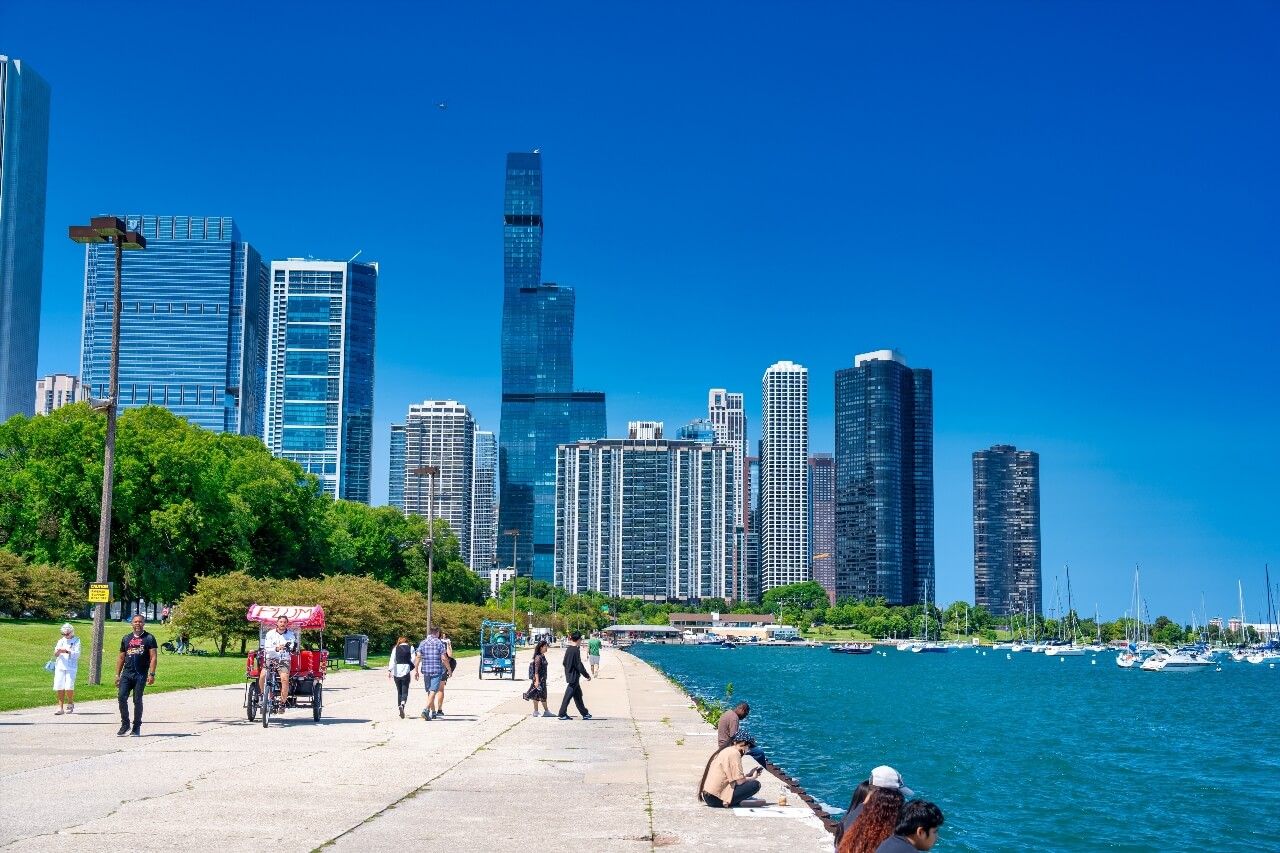
Adler Planetarium (1300 S Lake Shore Dr, Chicago IL 60605, rated 4.2/5 on Google (2 805 avis)) sits at the tip of its own peninsula jutting into Lake Michigan, which gives it arguably the finest view of the Chicago skyline available anywhere in the city. The building itself, opened in 1930 as the first planetarium in the Western Hemisphere, is a beautiful Art Deco dodecagonal structure that looks significant from the outside and delivers on the interior.
The planetarium runs four full-dome shows daily, including a live sky tour narrated by staff astronomers. The Doane Observatory on the roof offers public telescope viewing on Friday evenings. The view of the skyline from the Adler's lakeside terrace is, objectively, the best in Chicago, and it's free to stand there regardless of whether you buy a ticket to the shows inside. Pair this with the Adler-to-Field Museum lakefront walk, ten minutes of skyline and water that ranks among the finest stretches of waterfront walking in any American city, and easily the most photogenic kilometre on the Chicago Ryocity audio guide.
24. Second City Comedy Club
The Second City (1616 N Wells St, Chicago IL 60614, rated 4.5/5 on Google (149 avis)) is the most important comedy institution in the world, and that statement is barely an exaggeration. Founded in December 1959, the club has launched the careers of John Belushi, Bill Murray, Gilda Radner, Dan Aykroyd, Tina Fey, Stephen Colbert, Steve Carell, and roughly half the writing staff of every late-night television programme produced in the last 40 years.
The main stage runs a rotating sketch revue that runs approximately 90 minutes, with an improv set following after most performances. Tickets for the main stage run around $30-40. The e.t.c. Stage next door hosts more experimental work, often at lower prices. Friday and Saturday late shows include free-form improv after the scripted set. Chicago comedy audiences are among the most generous anywhere, they come to laugh, not to assess.
25. Field Museum of Natural History
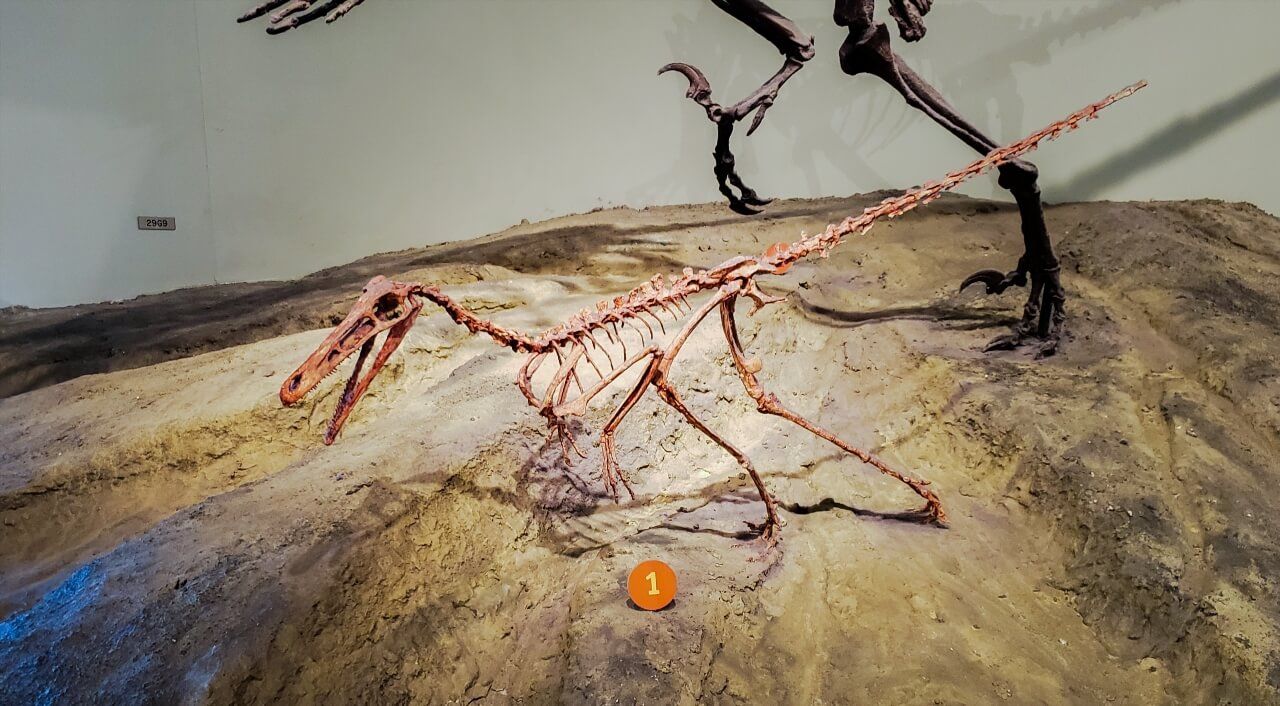
The Field Museum is the most scientifically significant natural history museum in North America, and one of the finest in the world. The collection holds 40 million specimens, from meteorites and gemstones to entire ancient Egyptian tombs, from Papua New Guinean ceremonial objects to the largest mounted dinosaur skeleton ever assembled.
Sue, the T. rex skeleton, is no longer the largest known specimen (that distinction now belongs to Scotty, in Regina, Saskatchewan), but Sue's skull alone weighs roughly 272 kilograms and the skeleton has been remounted in a dynamic pose that makes the animal look genuinely terrifying rather than merely large. A new titanosaur cast installed in a separate gallery dwarfs Sue in length. The ancient Egypt section, with 23 mummies including complete tomb reconstructions, constitutes one of the most thorough explorations of funerary practice and afterlife belief available anywhere outside Cairo. The Northwest Coast Native American galleries, including an entire reconstructed Haida house, could occupy a standalone museum.
General admission runs around $30 for adults in 2026. The museum validates parking for the underground Museum Campus garage. Arrive at opening (9 a.m.) to beat the school group rush, which typically arrives between 10 and 11 a.m. A day here barely scratches the surface; most visitors leave with a list of things they'd like to revisit.
FAQ
What is the single most iconic thing to do in Chicago?
If you're picking just one from the best things to do in Chicago, Cloud Gate, the reflective steel sculpture in Millennium Park known as the Bean, is the image most people associate with the city and costs nothing to visit. For an experience rather than a monument, the Architecture Center River Cruise gives you 90 minutes of the city's entire architectural story from the water, narrated by an expert. Both should be on any first-time visitor's list.
When is the best time to visit Chicago?
Late May through September is when Chicago is at its most vibrant, outdoor festivals, beach weather on Lake Michigan, open-air concerts in Millennium Park. July and August are the warmest months, with average highs around 28°C, though heat and humidity can occasionally push past comfortable. September is arguably the finest month: warm days, cool evenings, and smaller crowds. Winter is genuinely cold, but the city doesn't shut down, the holiday lights on the Magnificent Mile and the free ice skating in Millennium Park have their own appeal.
How many days do you need in Chicago?
Three days gets you the core experiences: the Loop architecture and waterfront on day one, a neighbourhood (Wicker Park, Lincoln Park, or Hyde Park) on day two, and the Museum Campus on day three. Five days lets you add the West Loop dining scene, a river cruise, a jazz or blues club evening, and time to wander without an agenda. Chicago rewards slowing down.
Is Chicago expensive to visit?
Less expensive than New York or San Francisco. Several major attractions are free, Lincoln Park Zoo, Cloud Gate, the Riverwalk, the Chicago Cultural Center, the lakefront trail, which means a well-planned day can cost almost nothing beyond food. Museum admissions typically run $22-32 for adults in 2026. Deep-dish pizza for two with drinks costs around $50-70 at the classic pizzerias. The CTA (bus and L train) connects most major attractions for $2.50 per ride.
Is Chicago safe for tourists?
The neighbourhoods covered in this guide, the Loop, River North, Lincoln Park, Old Town, Wicker Park, Logan Square, Hyde Park, are all well-frequented by visitors and have no particular safety concerns beyond ordinary urban common sense. Chicago's crime statistics are sometimes reported in ways that aggregate the entire city, including neighbourhoods that tourists have no reason to visit. Apply the same awareness you'd bring to any major city, stay oriented, and you'll have no issues.
Chicago doesn't give itself away easily. The first afternoon feels overwhelming, too much skyline, too many options, too much history compressed into too small an area. But the city has a logic to it, and once you understand the grid, the lakefront, and the neighbourhoods, it starts to make sense as a place people genuinely choose to live rather than just visit. The Ryo audio walking tour of Chicago's Windy City and Michigan waterfront is worth starting with, it connects the architectural and social history that underpins everything else on this list, and it means you'll be asking better questions by the time you reach the Field Museum or the Green Mill at midnight. Chicago rewards the curious. Go prepared to be surprised.