
Créé par Romane, le 4 juin 2026
Votre guide Ryo
Hoover Dam in 2026: The Complete Guide to Planning Your Visit
© Shutterstock
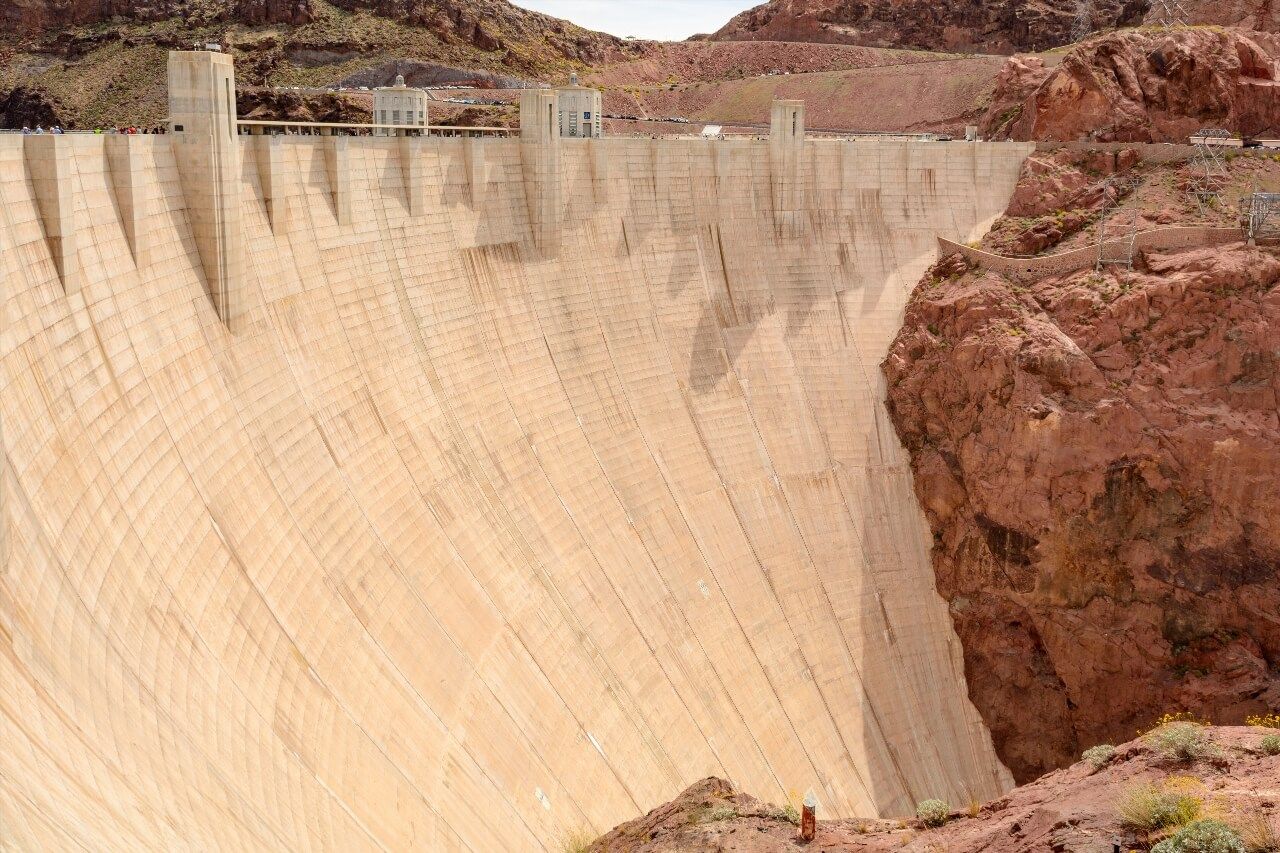
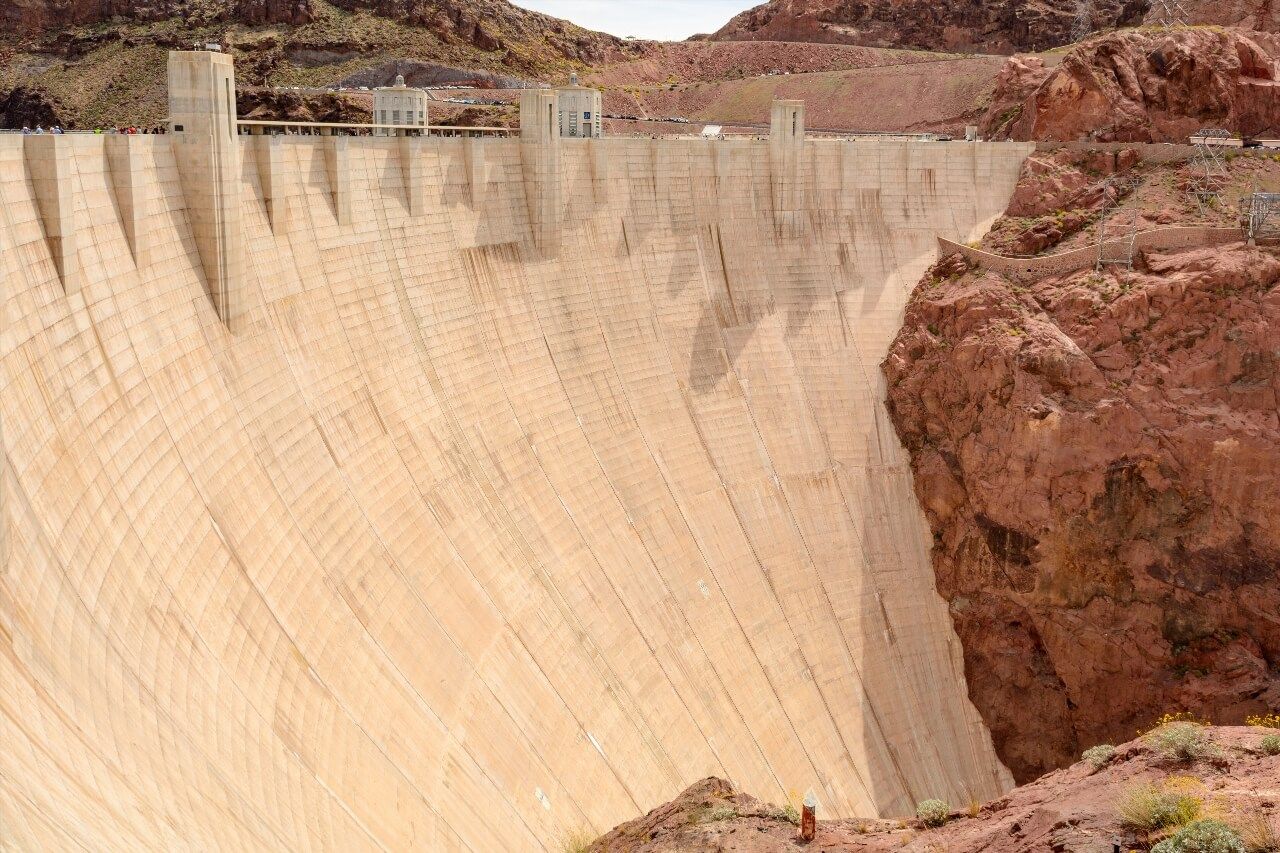
There's something strange about standing on the deck of Hoover Dam and looking down: 221 meters of void, the turquoise Colorado emerging from the turbines in the shadow of the canyon, and on each side black basalt walls gleaming like glass. You didn't expect to feel this way. You thought you were visiting a dam, but found yourself facing one of the most ambitious constructions a country has ever carried to completion in the middle of an economic catastrophe. Built between 1931 and 1936, completed two years ahead of schedule, Hoover Dam forever transformed the American West and continues to supply water and electricity to Los Angeles, Las Vegas, and Phoenix. If you're planning a visit to the region, 48 kilometers from the Las Vegas Strip, this guide gives you everything you need to know to not miss the essentials.
What you'll find here goes beyond the raw numbers already available everywhere online. We detail the three visit options available in 2026: free access, Visitor Center, Power Plant Tour, specifying what each is really worth based on your time. We cover the Lake Mead crisis, whose level has dropped 55 meters since 2000 and whose 'bathtub rings' tell the story of water in the American West better than any speech. We explain why the Mike O'Callaghan-Pat Tillman bridge, inaugurated in 2010, offers the best view of the dam, better than from the dam itself. And we give practical advice for going at the right time, avoiding weekend crowds, and returning with a real understanding of what you've seen, not just photos of concrete. Speaking of autonomous discovery of iconic sites, if your itinerary includes European cities with similar routes, the Ryo app offers audio guides to explore major destinations at your own pace.
History: Why the Colorado Had to Be Tamed
To understand why Hoover Dam exists, we must start with a paradox: one of North America's most powerful rivers was, at the beginning of the 20th century, both too violent and too unpredictable to feed the people living on its banks. The Colorado, 2,330 kilometers long from the Rockies to the Gulf of California, would flood devastatingly every spring, submerging agricultural lands in California's Imperial Valley, then dry up in autumn, leaving farmers without irrigation water when they needed it most.
Between 1905 and 1907, a catastrophic flood caused the rupture of a diversion canal in Southern California, transforming part of the desert into a temporary inland sea. The Salton Sea, still visible on maps today, is partially inherited from this hydraulic catastrophe. The episode marked minds and accelerated discussions on the need for a major regulatory dam.
But it was demographic growth that made the question urgent. Los Angeles had 100,000 inhabitants in 1900. It had over a million in 1930. Phoenix, Tucson, Las Vegas, all these cities were growing in arid areas that could only survive if water was brought from elsewhere. The decision to build an immense reservoir on the Colorado wasn't a choice: it was an arithmetic necessity.
The Boulder Canyon Project Act, signed by President Coolidge in December 1928, officially authorized the dam's construction. The site choice in Black Canyon, on the Nevada-Arizona border, resulted from a decade of geological and hydraulic studies. The canyon's basalt and sandstone walls offered a rock foundation capable of supporting millions of tons of concrete. The site's geography allowed for creating an immense reservoir, what would become Lake Mead, the largest artificial reservoir in the United States with 36.7 km³ of water at full capacity.
The structure's impact was immediate and lasting. Within a few years, Lake Mead would supply drinking water and electricity to millions of inhabitants across three states. Without Hoover Dam, Las Vegas, with 2.2 million inhabitants today in the metropolitan area, could never have existed in this form in the Mojave Desert. The dam also irrigates approximately 900,000 hectares of agricultural land in Arizona, California, and Mexico. This transformation had an ecological price, which the Lake Mead section details, but the decision to build remains one of the founding acts of the modern American West.
The Name Controversy: Hoover, Boulder, Then Hoover
Hoover Dam wasn't always called that, and it's a small political story revealing the tensions of the era.
Herbert Hoover, then Commerce Secretary under the Coolidge administration, was one of the project's main architects. He negotiated the water-sharing agreement between the seven concerned states, convinced Congress of the project's merit, and supervised preliminary studies. When construction began under his presidency in 1930, the dam naturally bore his name: Hoover Dam.
But in 1933, the new President Roosevelt's Interior Secretary, Harold Ickes, officially renamed the structure 'Boulder Dam.' The official pretext: the dam was located in Black Canyon, not Boulder Canyon as initially planned, making the name 'Boulder Dam' technically more accurate. The real reason, which no one really contested at the time: Ickes deeply despised Hoover, whom he held responsible for the Great Depression. This nomenclature quarrel lasted 14 years. It was a Congressional resolution in 1947 that definitively restored the name 'Hoover Dam.' On both sides of the deck, plaques recall both names and the date of this restoration.
Related anecdote: the two large Art Deco clocks installed on the dam's entrance towers display two different times. Not due to an oversight, but because Nevada and Arizona don't have the same time zone in summer, as Arizona doesn't observe daylight saving time, creating a one-hour offset between the two sides of the same structure.
Construction: 21,000 Workers, a Hostile Canyon, 5 Years
The construction site is taught in engineering schools worldwide. Not because it's the largest dam ever built—several Asian structures have surpassed it since—but because it was completed two years ahead of the contractual date, under climatic and logistical conditions that would have discouraged any contemporary project manager.
Before pouring the slightest shovelful of concrete in the Colorado gorge, the river had to be diverted first. This operation, itself titanic, required boring four 17-meter diameter tunnels through the walls of Black Canyon, tunnels 600 to 900 meters long, blasted with explosives in sixteen months, with teams working three 8-hour shifts, 24 hours a day, 7 days a week. These diversion tunnels are still visible from certain points on the site.
The contract was won in March 1931 by Six Companies, Inc., a consortium of six major American construction companies. The sum: $48.9 million of the time, about $750 million today. No single company could absorb such a project; this grouping formed specifically to respond to the tender is the direct ancestor of modern public works consortiums.
Conditions on the construction site were brutal in every sense. Black Canyon gorge functions like a natural furnace: in summer, temperatures at the bottom of the canyon regularly exceeded 49°C. Workers called 'high scalers' operated suspended in the void on rudimentary platforms, tasked with dislodging unstable rock blocks from vertical walls with sledgehammers and explosives, a preventive operation essential to protect teams below. Paid 56 cents per hour (40% more than ground workers), these void acrobats became legendary figures in American worker culture.
The 96 official deaths on the construction site (Bureau of Reclamation figure) probably don't represent the whole reality. Records of the time excluded deaths classified as 'pneumonia' by site doctors, a generic term used to designate what workers called among themselves 'tunnel sickness': actually carbon monoxide poisoning caused by exhaust fumes from gasoline drills operating in confined spaces. The exact count remains debated, with some estimating the real number of work-related deaths significantly higher than the official figure. During your visit to the interior galleries, guides generally address this subject without evasion.
The concrete pour itself posed a major technical challenge that the engineering of the time didn't yet know how to solve. Pouring 3.3 million cubic meters of concrete in a single block was impossible: the heat released by the cement's curing reaction would have taken 125 years to dissipate, causing catastrophic cracks under thermal stresses. The solution: pour the dam in 215 distinct concrete blocks, interlocked like a three-dimensional puzzle. To accelerate cooling, a network of 900 kilometers of pipes was embedded in the concrete mass, circulated by refrigerated water in a closed circuit. Once the concrete solidified, the pipes were injected with cement grout. You can observe some of these pipes during the Power Plant Tour; they're intact, visible in the inspection galleries 150 meters beneath your feet.
The structure was officially completed in March 1936. The hydroelectric plant, with its 17 turbines distributed in two machine rooms on either side of the dam, entered service progressively until 1961. Its total installed capacity: 2,079 megawatts, enough to power about 1.3 million American homes. A performance achieved almost a century ago, in a canyon where communications were still done by sound signals and mail.
How Hoover Dam Works
The structure is above all a machine for converting gravity into electricity. Its principle is deceptively simple; it's the proportions that leave you speechless.
Water from Lake Mead enters the system through four intake towers, visible from the dam deck. These cylindrical towers, 100 meters tall, are equipped with valves at different depths, allowing water to be drawn at different levels depending on temperature and demand. The water then descends through vertical shafts 4.5 meters in diameter, then through horizontal tunnels carved into the rock, which conduct it to the turbines installed in the two machine rooms.
Each turbine drives an alternator of 115,000 to 130,000 kilowatts. The 17 generators operate in variable regime according to grid demand: some stop at night when consumption is low, then restart quickly during peak hours. This flexibility makes Hoover Dam a particularly valuable regulatory energy source. Production is shared between Nevada, Arizona, and California according to a 1928 agreement, revised several times since.
Turbined water emerges in the Colorado riverbed downstream, at about 9°C, much colder than at entry. This artificial cooling of the river has profoundly modified downstream aquatic ecosystems. Native Colorado species, adapted to warm and silt-laden waters, have been replaced in the downstream section by rainbow trout that thrive in clear, cold waters. This is one of many side effects of river domestication that the Visitor Center visit addresses frankly.
In case of exceptional flooding, two spillway gates can evacuate up to 11,300 m³/second. These spillways have only been opened once since the dam's construction: in 1983, during an exceptional flood that partially damaged the diversion tunnels. Reinforcement work was undertaken afterward. To date, the dam has never overflowed.
In the Power Plant Tour galleries, the operation becomes physical and sensory: the muffled roar of turbines, vibrations in the polished concrete floor, the oil and ozone smells characteristic of high-voltage electrical installations. No explanatory video replaces this experience.
Art Deco Architecture: A Machine That Visits Like a Museum
You don't expect to find aesthetics in hydraulic infrastructure. The site offers it nonetheless, carefully considered.
Architect Gordon Kaufmann was hired to dress the raw facade of engineering. His work is visible from every angle: the two entrance towers sculpted in a rigorously geometric Art Deco style, the bronze bas-reliefs representing two winged angels at the Nevada entrance, the terrazzo floors with geometric patterns inspired by Navajo and Pueblo arts, a deliberate homage to the cultures of First Nations whose territories were crossed by the works. The tower clocks display the time zones of both states, Nevada and Arizona, constantly reminding that you're standing exactly on a border.
This attention to aesthetic detail in purely utilitarian infrastructure is rare in American civil engineering history. It testifies to a political ambition: to make the dam a visible symbol of United States power and organizational capacity in the middle of the Great Depression. Roosevelt, in person, inaugurated the site in September 1935, before a crowd of 10,000 people. Ryo offers audio guides to explore comparable architectural monuments in Europe, another way to put in perspective how great democracies have invested public space with monumental architecture.
Visiting the Dam: Free Access, Visitor Center, Power Plant Tour
In 2026, the site offers three distinct exploration levels. The choice depends on your available time and your level of interest in industrial history.
Free access to the deck is free and requires no reservation. You can park in the Nevada or Arizona side parking lots (about $10 USD each), walk across the dam, enjoy views of the canyon and lake, and observe the intake towers from the pedestrian walkway. Allow 30 to 45 minutes for this outdoor exploration. It's sufficient for photos, insufficient to understand what you're looking at.
The Visitor Center ($15 USD per person, free for children 3 and under) is located on the Nevada side. The permanent exhibition traces construction history with remarkable period photographs—high scalers suspended in the void, night teams by floodlight in the canyon—scale models of diversion systems and an 11-minute film projected in a 360° circular room. This film has been recently updated to include the water crisis and climate perspectives, making it much more relevant than a simple historical documentary. Plan 45 to 60 minutes for this part alone.
The Power Plant Tour ($25 USD adult, $15 USD child 4-16 years, free for 3 and under) is the site's signature visit. It lasts about 60 minutes and includes: an elevator descent of 150 meters inside the dam itself, crossing inspection galleries, visiting the Nevada machine room with its operating alternators, and access to a viewing gallery overlooking the turbines. Guides are generally former Bureau of Reclamation engineers or well-trained federal park agents, capable of explaining both electrical operation and construction social history. Questions are welcome, and often the best answers aren't on the exhibition panels.
There's no official combined ticket: each option is paid separately, on site, upon arrival. Tours start continuously from 9:00 AM to 5:00 PM (doors closed at 4:15 PM, last tour at 4:10 PM). Arrive at opening or after 2:30 PM to avoid midday lines.
Essential practical advice: wear closed shoes (mandatory for descending into galleries), a light jacket even in summer (galleries are maintained at 21°C regardless of outside temperature), and sunscreen for outdoor areas. Large backpacks and photography tripods are prohibited inside the dam; baggage lockers are available at the entrance.
Visitors with reduced mobility can access the Visitor Center and most of the Power Plant Tour. Elevators are wide, main galleries accessible by wheelchair. Some passages in inspection tunnels are narrower; inquire at reception before buying your ticket.
The Guided Dam Tour and Advanced Options
For visitors who want to go even further than the Power Plant Tour, an option exists, but it requires anticipation.
The Guided Dam Tour ($40 USD per person, free for 3 and under) offers access to areas the Power Plant Tour doesn't cover: descent by the original elevator to the top of the dam, historic inspection tunnels at the heart of the structure, and additional viewpoints of the Colorado. The visit is paid only on-site, without online reservation, and strollers and motorized wheelchairs aren't admitted for access reasons. Check directly the official site usbr.gov/lc/hooverdam for daily schedules. This is the version of the visit that transforms a tourist excursion into a real engineering experience.
For groups of more than 15 people, advance reservation is mandatory via the same site. Group rates are available for schools and associations.
The Panoramas: Mike O'Callaghan-Pat Tillman Bridge and Overlooks
The dam deck offers vertiginous downstream views of the canyon. But the most impressive view of the dam itself is taken from outside, and few visitors know this before arriving.
The Mike O'Callaghan-Pat Tillman Memorial Bridge, inaugurated in October 2010, is an arch bridge that spans the Colorado at 274 meters above the river, located about 400 meters downstream from the dam. It's the only point from which you can see the dam in its entirety, head-on, with Lake Mead in the background and the intake towers in their complete geographical context. A pedestrian walkway crosses the bridge, accessible from dedicated parking on the Nevada or Arizona side.
The light is particularly beautiful in late afternoon from the Nevada side walkway, when the sun is behind you and directly illuminates the dam's upstream face. At high noon, under zenith sun, the concrete textures and canyon reliefs lose all their depth; experienced photographers systematically avoid this time slot.
From the dam deck itself, downstream views are vertiginous: 221 meters of void, the turquoise Colorado visible far below, the dark walls of Black Canyon framing everything. A border plaque at the exact center of the deck marks the Nevada-Arizona boundary; taking the photo straddling two states is a classic. On the Arizona side, the overlook gives a different view of the lake, more open to the east, revealing the reservoir's sinuous coves and the red and ochre striped cliffs of surrounding geological formations. This side is often less crowded in early morning.
Two golden hours to remember for photographers: 7-9 AM (raking light on red walls, canyon still in shadow) and 5-7 PM in summer (warm light on concrete and geological formations). Between these two windows, the site remains spectacular, but photography becomes more difficult.
Lake Mead: Historic Drought, Water Activities, Hiking
Behind the dam stretches Lake Mead, the United States' largest artificial reservoir by capacity. In 2026, it resembles itself while being profoundly transformed.
The water crisis in the American West is strikingly visible here. The 'bathtub rings,' these white limestone rings encircling the red cliffs all around the lake, testify to a level drop of more than 55 meters since 2000. In 2022, the lake reached its historically lowest level since the first filling in 1937, revealing wrecks of boats sunk decades ago, rusted metal barrels surfaced, and the ruins of the town of St. Thomas, engulfed during initial filling and today visible during low water periods. Exceptional rains in winter 2022-2023 partially raised the level, but the situation remains well below historical norms in 2026. For visitors, this retreat is an applied hydrology lesson no one forgets.
The Lake Mead National Recreation Area is managed by the National Park Service. Entry fee is $25 USD per vehicle (valid 7 days), or free with the annual America the Beautiful Pass ($80 USD, valid in all American national parks for one year, a profitable investment if you visit several sites during your stay).
Despite the level drop, water activities remain popular and accessible. Boulder Beach, a few kilometers from the dam on the Nevada side, offers a sandy beach, an operational marina, and kayak, paddleboard, and jet ski rentals. In summer, lake water reaches 28 to 30°C, ideal for swimming. Supervision is partial in high season. Watch for irregular bottoms near certain shores and motorboat navigation areas.
The Lake Mead Marina (322 Lakeshore Rd, Boulder City, NV 89005, rated 4.6/5 on Google for 2,095 reviews) offers 90-minute commented cruises on the lake. These outings offer a radically different perspective on the dam; seen from the water, from the lake it created, the structure reveals a scale and presence you don't perceive from the deck itself. Cruises also pass near the intake towers and allow visually measuring the bathtub rings' extent from lake level. Reservation recommended in high season (April-October).
For hiking, the River Mountains Loop Trail is a paved 56-kilometer trail that circles the peninsula between Lake Mead and Las Vegas. Accessible on foot, by bike, and on rollers, it offers panoramas of the lake and River Mountains. Shorter sections are accessible from the dam parking; allow one hour round-trip to reach the first overlook with lake views.
Fishing is permitted with a valid permit in the concerned state (Nevada or Arizona depending on the side). Present species include largemouth bass, striped bass, and catfish. Striped bass specimens exceeding 10 kilograms are regularly reported; local fishing guides offer outings from the marinas.
Hoover Dam in Popular Culture
The imagination the structure has generated since its construction goes far beyond its technical function.
In cinema, its Art Deco silhouette and position as a border between two states have made it a recurring symbol of American infrastructure vulnerability. In Superman (1978), Lex Luthor triggers an earthquake to destroy the dam and flood California. It appears in the background of Casino (1995) by Scorsese, associated with Las Vegas development and Nevada mob money. In San Andreas (2015), it's one of the first infrastructures to fail during the fictional mega-earthquake. Several specialized documentaries catalog all its screen appearances; the list is long and crosses genres, from film noir to action blockbusters.
In literature, dam construction has fed narratives about working conditions during the Great Depression. Woody Guthrie evoked Colorado workers in his 1930s folk songs. More recently, the novel The Water Knife (2015) by Paolo Bacigalupi imagines a near future where water war in the American West degenerates into armed conflict between states; Hoover Dam plays a central role as a symbol of water resource control.
The dam's architecture itself, worked by Gordon Kaufmann, is regularly cited as one of the rare examples of Art Deco aesthetics applied to heavy engineering. The bronze bas-reliefs, terrazzo floors with geometric patterns, sculpted towers: all this was designed so the infrastructure would be as beautiful as functional, a rare ambition in public works of the era.
From Las Vegas: By Car, Bus, Organized Excursion
Hoover Dam is located 48 kilometers from the Las Vegas Strip, or 45 to 55 minutes drive under normal conditions; allow 70 to 80 minutes on Friday afternoons and Sunday evenings with weekend traffic jams.
By car, it's the most flexible and comfortable option. From Las Vegas, take US-93 South (Boulder Highway, then US-95 South toward Phoenix). The road crosses Boulder City, the only Nevada city where gambling has been prohibited since its founding: built to house construction workers, its founders deliberately excluded casinos to maintain a 'respectable' environment. This particularity merits a 20-minute stop for the historic center and its 1930s buildings, time for coffee and a look at the Boulder City Museum and Historical Association gallery. From Boulder City, the dam is an additional 10 minutes.
Parking costs $10 USD Nevada side and $10 USD Arizona side. Nevada parking is largest and closest to the Visitor Center, but fills quickly on weekends. Arizona parking, accessible via the road passing over the Mike O'Callaghan-Pat Tillman bridge, is often less crowded and positions visitors ideally for a frontal view of the dam from the bridge before descending to the deck.
By bus from Las Vegas, the Boulder City Express (RTC, Regional Transportation Commission of Southern Nevada) connects downtown Las Vegas to Boulder City with possible connection to the dam. This option takes 1.5 to 2 hours door-to-door, with limited frequencies outside peak hours. Check schedules on rtcsnv.com before departing.
On organized excursions from Las Vegas, dozens of operators offer bus or minivan packages from the Strip, with French-speaking guides available from some providers. Half-day packages (4-5h) include transport, Visitor Center, and sometimes the Power Plant Tour. Full-day packages add a Lake Mead cruise or Boulder City visit. Prices range from $55 USD (half-day large bus) to $150 USD (full day minivan with private guide). Advantage: no parking constraints. Disadvantage: imposed timing, little flexibility to extend the visit if you discover something interesting.
By taxi or Uber/Lyft, allow $50 to $80 USD one way depending on time. Many drivers refuse rides to destinations where they won't find immediate return trips. Booking round-trip specifying 2-3 hours waiting time is possible via app, but expensive.
When to Go and How to Avoid Crowds
The best period to visit Hoover Dam is undoubtedly October to April. Temperatures in the canyon remain between 10 and 25°C, crowds are significantly less dense than in high season, and autumn and winter light on the red sandstone walls is particularly beautiful.
In summer (June-August), temperatures at the bottom of the canyon regularly exceed 43 to 48°C. Visiting is still possible if you stay mostly in the air-conditioned buildings of the Visitor Center and Power Plant Tour, but outdoor areas become exhausting after a few minutes.
The month of March coincides with American Spring Break: avoid or arrive before 9:30 AM. May and September weekends, when Americans take advantage of the beginning and end of hot season, are also among the most crowded of the year. Outside these periods, arriving at 9 AM opening or after 2:30 PM generally avoids ticket office lines.
Calendar point to remember: the Visitor Center is closed on Thanksgiving Day and Christmas Day. The road on the deck remains accessible every day from 5:00 AM to 9:00 PM (Pacific Time), but interior facilities close at 5:00 PM (doors closed at 4:15 PM).
Practical Info: Rates, Hours, Security, Logistical Tips
Site hours in 2026:
- Dam deck (car and foot access): 5:00 AM-9:00 PM every day (Pacific Time)
- Visitor Center: 9:00 AM-5:00 PM every day except Thanksgiving and Christmas (doors closed at 4:15 PM)
- Power Plant Tour and Guided Dam Tour: 9:00 AM-5:00 PM, last tour around 4:10 PM
Rates in 2026:
- Deck access: free
- Nevada parking: $10 USD/vehicle
- Arizona parking: $10 USD/vehicle
- Visitor Center only: $15 USD per person, free for 3 and under
- Power Plant Tour only: $25 USD adult, $15 USD child (4-16 years), free for 3 and under
- Guided Dam Tour (complete guided dam visit): $40 USD per person, free for 3 and under
- No official combined ticket: each option paid separately
Tickets are purchased on-site, cash or card. No online reservation system exists for individuals. For groups over 15 people, reservation is mandatory via usbr.gov/lc/hooverdam.
Security: since 2001, the site has enhanced security measures. Vehicles over 2.7 tons (RVs, campers, trucks) are prohibited on the deck and directed to the Mike O'Callaghan-Pat Tillman bridge bypass route. A checkpoint examines vehicles before access. All visitors entering the Visitor Center and tours pass through bag scanners; allow 5-10 additional minutes.
What's prohibited on site: firearms, drones (formally prohibited above the dam and lake), photography tripods inside the dam, large backpacks in tunnels. Compact cameras and phones are allowed everywhere.
Dining and amenities: a Nevada-side cafeteria offers simple meals. A gift shop sells books and postcards about the site. Water fountains are numerous on site; hydrate systematically, even outside summer: Mojave Desert dry air dehydrates faster than you think.
Time zone note: Nevada applies Pacific Time with seasonal time changes. Arizona applies Mountain Time without time changes. During American daylight saving time (March-November), there's therefore 1 hour difference between the two sides of the same dam. All official site hours are announced in Pacific Time (Nevada).
FAQ
How Much Time Should You Plan to Visit Hoover Dam?
Plan 2 hours minimum for a superficial visit with deck access and Visitor Center. For a complete experience including the Power Plant Tour, allow 3 to 4 hours on site. If you add a walk on the Mike O'Callaghan-Pat Tillman bridge and a stroll along Lake Mead, a full half-day of 5 to 6 hours is a comfortable pace. Including travel from Las Vegas (45-55 min each way), a total half-day of 7 to 8 hours allows you to see all essentials. Some visitors combine the dam visit with a stop at Valley of Fire State Park (45 minutes northeast) for a full day away from Las Vegas.
Is Hoover Dam on the Nevada Side or Arizona Side?
Both. The dam sits exactly on the border between the two states, with the state line crossing the deck at its center. The administrative portion (Visitor Center, main parking, ticket offices) is on the Nevada side. The power plant is distributed on both sides of the dam. A plaque on the deck marks the exact border. Practical consequence: Arizona doesn't observe daylight saving time, so there can be a one-hour time difference between the two sides of the same structure from March to November. Official site hours are always announced in Pacific Time (Nevada).
Can You Visit Hoover Dam Without a Guide?
Yes, partially. The deck and Mike O'Callaghan-Pat Tillman bridge are freely and gratuitously accessible. The Visitor Center can be visited independently with its permanent exhibition. However, access to interior galleries, machine room, and inspection tunnels is reserved exclusively for guided tours, the Power Plant Tour or Guided Dam Tour. There's no self-guided tour of interior facilities: a guide's presence is mandatory for safety reasons in a live power plant.
Is Lake Mead Drying Up?
Not completely, but the situation is structurally concerning. Lake Mead has lost more than half its capacity since 2000, with a historic low reached in July 2022. The crisis is structural: the Law of the River, the set of 1922 agreements governing water sharing among seven states and Mexico, was negotiated during an exceptionally wet period and overestimated long-term available flows. States have extracted more than the river could provide. Water reduction agreements were signed in 2023, and winter 2022-2023 rains temporarily raised the level. But climate projections through 2050 remain grim. Visiting the dam today is also an immersion in the water crisis of the American West.
Can You Swim in Lake Mead?
Yes, in designated areas. Boulder Beach, a few kilometers from the dam on the Nevada side, is the closest official beach: parking, restrooms, picnic tables, partial supervision in high season. Swimming is practically possible from May to October; water is cold the rest of the year (12-15°C). Water quality is regularly monitored by the National Park Service. Stay in marked areas and watch for motorboat navigation zones.
Could Hoover Dam Collapse?
The probability is extremely low. The dam was designed with very significant safety margins and has withstood exceptional floods, notably in 1983. Regular structural inspections are conducted by the Bureau of Reclamation. The main long-term concern isn't the integrity of the concrete itself, but the gradual accumulation of sediments at the bottom of Lake Mead. Since the Colorado naturally carries many particles, the reservoir bottom is slowly rising, reducing storage capacity. Studies on controlled discharge techniques to evacuate sediments are underway. By 2100, the lake's useful capacity could be reduced by 10-15% by this effect.
Are There Other Sites to Visit Near Hoover Dam?
Several. At 10 minutes, Boulder City offers a 1930s historic center with the Boulder City Museum and Historical Association and small-town charm that contrasts radically with Las Vegas. At 45 minutes northeast of the dam, Valley of Fire State Park is one of Nevada's most spectacular state parks, with its 150-million-year-old red sandstone formations, Native American petroglyphs, and natural arches. At 30 minutes northwest, Lake Las Vegas Resort offers water activities on a smaller artificial lake in an unusual architectural setting. For travel to other major American or European destinations, the Ryo app offers audio-guided routes to discover sites at your own pace, a way to continue exploration beyond the dam.
Conclusion
Hoover Dam merits the journey in itself, not as a checkbox on a Las Vegas itinerary. Behind the Art Deco facade and vertiginous numbers, there's a complex human story: a nation that mobilized its forces at the worst moment of its economic history to build something lasting, and which today faces the consequences of this domestication of a river. Lake Mead's bathtub rings aren't just a visual curiosity; they're a concrete measure of one of the 21st century's greatest resource crises.
Organize your visit carefully: book the Power Plant Tour in advance if you're coming with a group, arrive at opening or early afternoon to avoid lines, and save time for the Mike O'Callaghan-Pat Tillman bridge—the frontal view of the dam from the pedestrian walkway is often more striking than any angle from the deck itself. Bring water, closed shoes, and a light jacket, even in July.
If your trip includes other stops in the United States or Europe, the Ryo app offers audio guides to explore monuments and historic districts at your own pace, without imposed schedules. A way to continue traveling as you visited Hoover Dam: by understanding what you're looking at.