
Créé par Emilie, le 7 mai 2026
Votre guide Ryo
© Shutterstock
Just 30 minutes drive from the glittering Las Vegas Strip, Red Rock Canyon National Conservation Area offers a spectacular escape into a desert landscape with flaming hues. This natural gem of Nevada captivates with its bright red sandstone cliffs, geological formations millions of years old, and hiking trails accessible to all levels. Whether you're a nature lover, climbing enthusiast, or simply a visitor seeking extraordinary landscapes, Red Rock Canyon is an essential excursion during your stay in Las Vegas.
How to access Red Rock Canyon from Las Vegas?
Red Rock Canyon is located about 27 kilometers west of the famous Las Vegas Strip. To get there, take US-95 South from downtown, then take the Charleston Boulevard exit (Route 159 West) heading west. The journey usually takes between 25 and 35 minutes depending on traffic. Car rental remains the most practical option to visit Red Rock Canyon independently, as no direct public transport serves the site. You can also opt for an organized excursion departing from your hotel, including round-trip transport and often a French-speaking guide.
If you choose to drive yourself, keep in mind that parking can fill up quickly during high season, particularly between October and May. It is therefore recommended to arrive early in the morning or late afternoon to enjoy better availability and ideal lighting conditions for photography.
1. The Visitor Center: essential starting point
Your discovery of Red Rock Canyon begins at the Visitor Center, located at the park's main entrance. This modern and ecological building, inaugurated in 2010, operates on solar energy and houses interactive exhibits on the geology, fauna and flora of the Mojave Desert. You'll also find a shop offering maps, guides and souvenirs, as well as rangers available to answer your questions and advise you on the best hikes according to your level.
The visitor center helps you better understand the fascinating geological history of the region, particularly the formation of the famous red rocks that give the canyon its name. Don't hesitate to ask for information on the day's weather conditions and any trail closures. The Visitor Center is open daily from 8:00 AM to 4:30 PM.
2. The Scenic Drive: a 21-kilometer panoramic loop
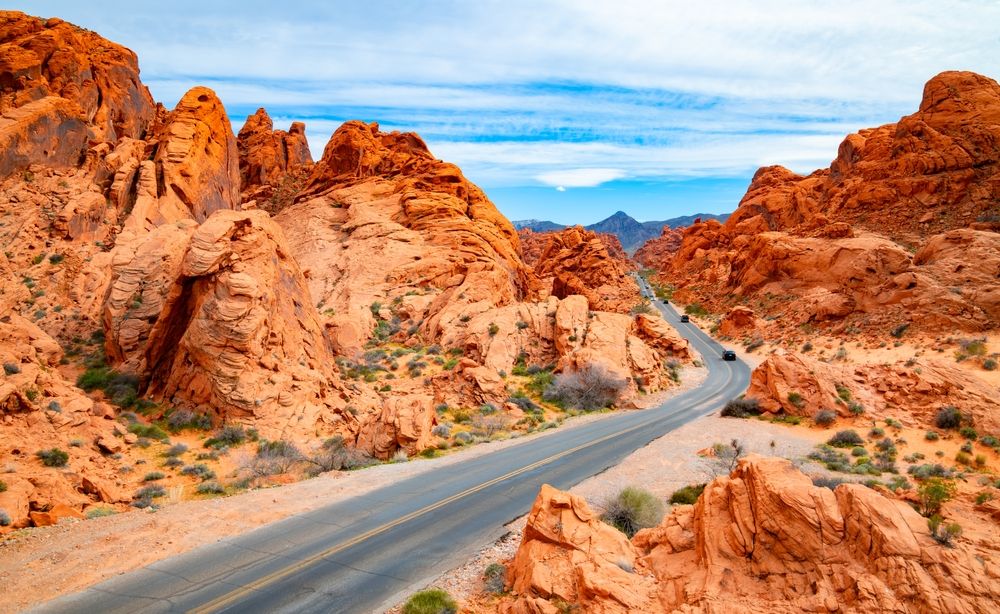
The Scenic Loop Drive is the main attraction of Red Rock Canyon. This one-way scenic road of 21 kilometers winds at the foot of red sandstone cliffs and offers breathtaking panoramas at every turn. Accessible by car, bike or even on foot for the most courageous, the loop has about fifteen scenic overlooks where you can stop to admire the landscape, take photos and access different trail starting points.
The highlight of the Scenic Drive is the High Point Overlook, which offers spectacular views over the Las Vegas valley in the distance and surrounding rock formations. Allow about an hour to complete the loop without stopping, or two to three hours if you want to explore the different viewpoints and do some short hikes. The road is open daily with varying hours depending on the season: from 6:00 AM to 5:00 PM in winter and from 6:00 AM to 8:00 PM in summer.
3. The Calico Hills and Calico Tanks trail
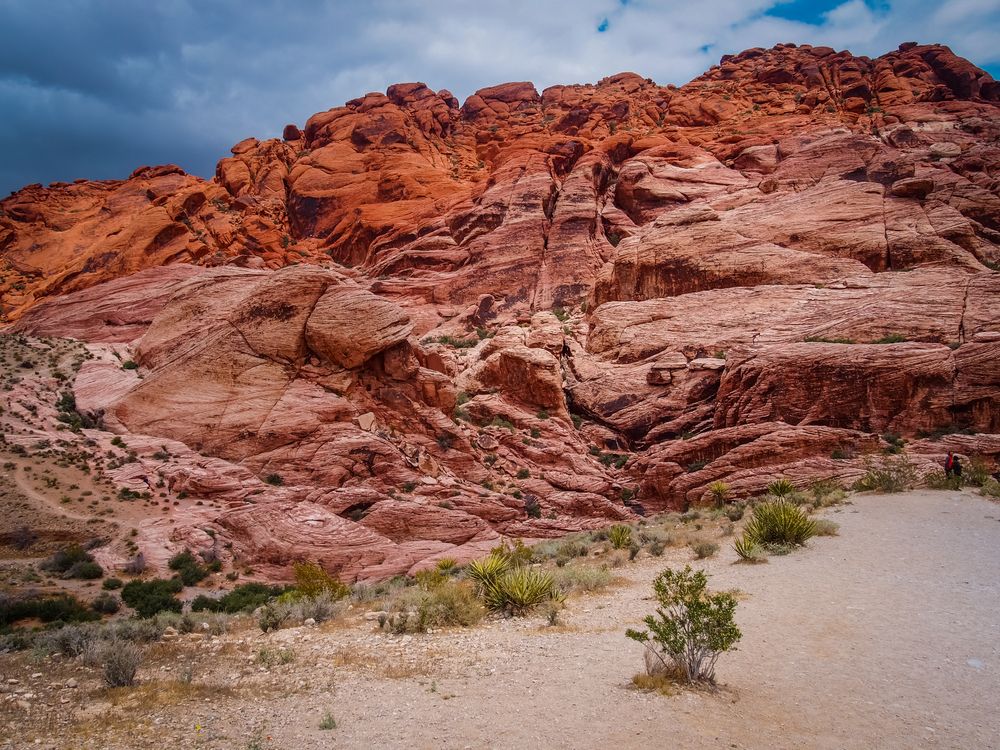
The Calico Hills are among the most photographed rock formations in Red Rock Canyon. These hills with varied hues ranging from orange-red to cream white date back more than 180 million years and contain marine fossils testifying to a time when the region was covered by an ocean. The Calico Tanks trail, 3 kilometers round trip, takes you through these formations to a natural basin nestled in the rocks.
This moderate difficulty hike has an elevation gain of about 120 meters and offers exceptional panoramic views over the Las Vegas valley. The contrast between the multicolored rocks and the azure blue desert sky creates an unforgettable natural spectacle. Allow about two hours for the round trip taking time to observe the landscapes and local wildlife, particularly lizards and desert birds.
4. The Sandstone Quarry: industrial remnants in the desert
The Sandstone Quarry site bears witness to a bygone era when sandstone extraction was an important economic activity for the Las Vegas region. At the end of the 19th century, workers extracted imposing blocks of red sandstone here that were used to build the first buildings in Las Vegas. Today, the abandoned blocks and extraction traces offer a fascinating glimpse into local industrial history and constitute a playground appreciated by climbers.
Interpretive signs installed on the site trace the history of the quarry and explain the extraction techniques used at the time. The trail that leads there is short and accessible to all, making it an ideal stop for families with children. The contrast between industrial heritage and the natural beauty of the canyon adds an interesting cultural dimension to your visit to Red Rock Canyon.
5. The Keystone Thrust: a life-size geology lesson
The Keystone Thrust represents one of the most remarkable examples of visible thrust fault in the American West. This geological formation, over 65 million years old, illustrates the spectacular phenomenon of uplifting ancient limestone layers above more recent sandstone strata. The trail leading to Keystone Thrust extends about 3 kilometers and offers a unique opportunity to observe this geological upheaval up close.
Along the way, you'll cross contrasting mineral landscapes where gray limestone rocks seem to defy the laws of gravity by dominating the underlying red formations. At the hike's climax, you'll enjoy an exceptional panoramic view over Red Rock Canyon and the surrounding valley. This moderate difficulty hike suits hikers with good physical condition who wish to deepen their understanding of Mojave Desert geology.
6. Ice Box Canyon: coolness and seasonal waterfalls
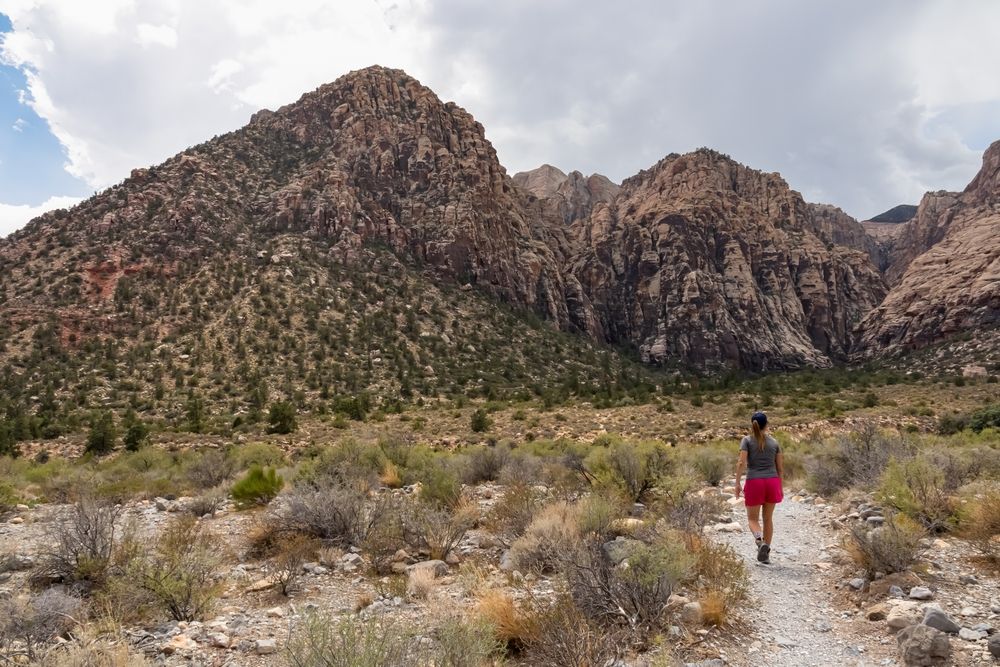
Ice Box Canyon owes its evocative name to the pleasantly cool temperatures that prevail in this narrow canyon, even during the hottest summer months. The vertical rock walls block sunlight for much of the day, creating a surprisingly temperate microclimate in this arid desert. The trail crossing Ice Box Canyon measures about 4 kilometers round trip and presents medium difficulty due to some rocky passages requiring agility.
This hike holds nice surprises, particularly the presence of ponderosa pines and junipers that benefit from the relative humidity of the canyon. After winter or spring rains, small waterfalls appear along the rock walls, adding a touch of magic to this desert landscape. Arriving at the bottom of the canyon, bordered by vertiginous cliffs, provides a sensation of isolation and communion with nature particularly appreciated by hikers seeking tranquility.
7. Pine Creek Canyon: green oasis in the heart of the desert
Pine Creek Canyon stands out from other park canyons by the surprising presence of ponderosa pines, a tree species rare in this desert environment. The stream flowing through the canyon provides sufficient humidity to allow this unusual vegetation to thrive. The Pine Creek trail, about 5 kilometers round trip, takes you through this unique ecosystem where wildlife is particularly active and diverse.
Along the way, you'll discover remnants of early 20th century farms, of which some foundations and construction vestiges remain. These traces of the past testify to attempts at human settlement in this inhospitable region. The trail also offers magnificent views of surrounding cliffs and constitutes a popular hike for its landscape diversity and relative coolness. Pine Creek Canyon is particularly recommended for a late afternoon visit, when the golden light of the setting sun enhances the red hues of the cliffs.
8. Willow Spring petroglyphs: ancestral rock art
The Willow Spring site houses one of the most important petroglyph collections in Red Rock Canyon. These rock carvings, made by indigenous peoples several centuries ago, represent hunting scenes, spiritual symbols and passage marks testifying to millennial human occupation of the region. The trail leading to the petroglyphs is short and accessible to all, making it an essential stop to discover the canyon's cultural heritage.
Near the petroglyphs, a natural spring continues to supply water to a small wetland area that attracts desert birds and mammals. Interpretive panels help you identify and understand the meaning of different motifs carved in the rock. It's important to respect these archaeological vestiges by not touching them and staying on marked trails. The visit to Willow Spring offers an enriching cultural perspective that perfectly complements the discovery of Red Rock Canyon's natural wonders.
9. Turtlehead Peak: the challenge for experienced hikers
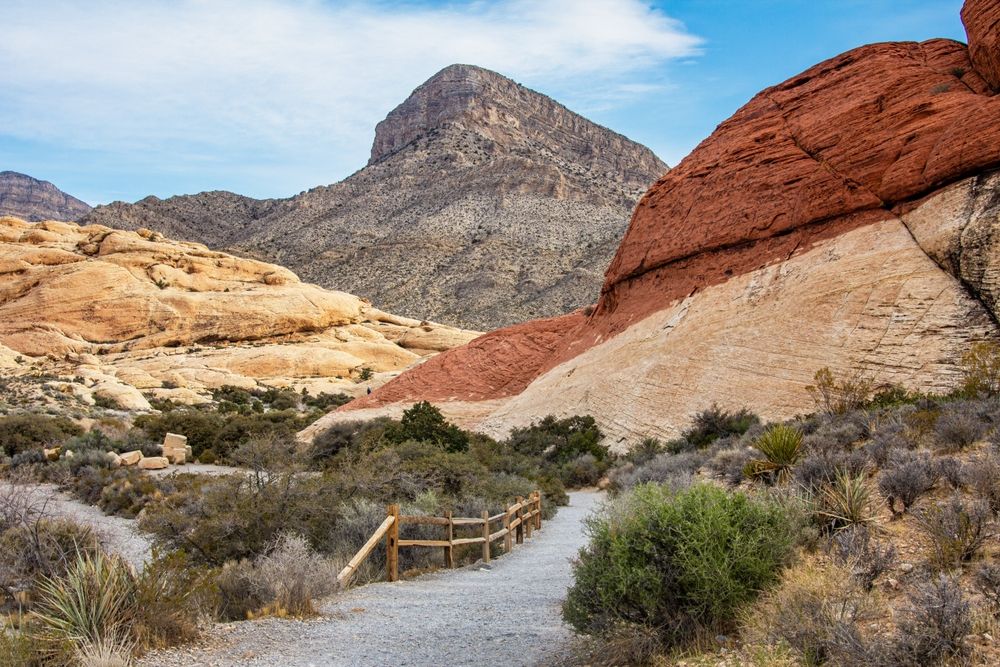
Turtlehead Peak represents one of the most demanding but also most rewarding hikes in Red Rock Canyon. This summit culminating at about 1,890 meters elevation takes its name from its shape evoking a turtle's head seen from afar. The 8-kilometer round trip trail gradually climbs through rocky slopes and requires good physical condition as well as sure footing to negotiate certain technical passages in the final part of the ascent.
The effort is largely rewarded by the 360-degree panorama from the summit. You'll embrace the colorful Calico Hills, the immensity of the Mojave Desert, surrounding mountains and, on clear days, the Las Vegas skyline sparkling in the distance. This athletic hike is particularly popular with experienced hikers who appreciate its technical character and grandiose landscapes. Allow at least four hours for the round trip and leave early morning to avoid the crushing heat of midday, especially in summer.
10. Picnic areas: well-deserved breaks
Along the Scenic Drive, several developed picnic areas invite you to take a lunch break in the heart of spectacular landscapes. These areas equipped with tables, benches and trash cans offer shaded locations appreciable during hot months. Some areas even have drinking water points and toilets, although it's always recommended to bring your own water in sufficient quantity for the day.
These picnic areas constitute ideal rest spots between two hikes and allow quiet observation of local wildlife, particularly numerous desert birds and, with a bit of luck, bighorn sheep or jackrabbits. Although these areas are popular on weekends and during school holidays, they generally remain quiet on weekdays. Remember to take all your trash with you to preserve the cleanliness and natural beauty of these privileged spaces in the heart of Red Rock Canyon.
Practical information for visiting Red Rock Canyon
Rates and entry tickets
Access to Red Rock Canyon National Conservation Area is paid. The rate is $20 per vehicle (car or RV), $10 per motorcycle, $8 per bike and $5 per person on foot. These rates are valid for one day. If you own an America the Beautiful pass, it is accepted and allows free access to the park. Commercial tour vehicles (buses, limousines, taxis) must pay $20 per vehicle plus $5 per person transported.
Opening hours
Red Rock Canyon's Scenic Drive is open year-round, but hours vary by season. From November to February, the park is accessible from 6:00 AM to 5:00 PM, with last admission at 4:30 PM. In March and October, hours extend from 6:00 AM to 7:00 PM (last admission at 6:30 PM). From April to September, the opening period is maximum, from 6:00 AM to 8:00 PM (last admission at 7:30 PM). On Christmas Day, the park closes earlier, from 6:00 AM to 12:00 PM only. The Visitor Center welcomes visitors daily from 8:00 AM to 4:30 PM.
Mandatory reservation during high season
Since 2020, a timed entry reservation system is mandatory to access the Scenic Drive between October 1st and May 31st, from 8:00 AM to 5:00 PM. These reservations can be made online on the Recreation.gov site and are strongly recommended, as the number of visitors is limited to preserve the environment and guarantee a quality experience. Outside these dates and hours, no reservation is necessary, but it's advisable to arrive early morning to avoid crowds.
Tips for a successful visit
To fully enjoy your visit to Red Rock Canyon, here are some essential recommendations. Plan for at least two liters of water per person, even more if you plan to do long hikes or in hot weather. The desert climate is very dry and dehydration occurs quickly. Wear comfortable, closed hiking shoes, even for short walks, as the rocky terrain can be slippery and has thorny cacti.
Apply sunscreen generously and wear a wide-brimmed hat to protect yourself from the intense desert sun. Temperatures can be extreme, particularly in summer when the thermometer regularly exceeds 40°C. It's therefore preferable to plan your hikes early morning or late afternoon. In winter, mornings can be cool with temperatures near 0°C, remember to bring a jacket. Respect local wildlife and flora by staying on marked trails and not approaching wild animals, particularly rattlesnakes that sometimes hide under rocks.
What to do after visiting Red Rock Canyon?
After exploring Red Rock Canyon, many options are available to extend your nature day. Valley of Fire State Park, located about an hour's drive northeast, offers even more spectacular red rock formations and exceptional petroglyphs. Spring Mountain Ranch State Park, very close to Red Rock Canyon, allows you to discover a historic former property with its restored buildings and green gardens, offering a striking contrast with the surrounding desert landscape.
If you want to combine nature and entertainment, the return to Las Vegas quickly brings you back to the glittering universe of the Strip with its casinos, shows and gourmet restaurants. The contrast between the mineral serenity of Red Rock Canyon and the nocturnal effervescence of Las Vegas is indeed one of the most striking experiences of a stay in this Nevada region. You can also take advantage of your visit to discover Seven Magic Mountains, a colorful artistic installation located between Las Vegas and Lake Mead.
In conclusion, Red Rock Canyon represents an essential natural escape during a stay in Las Vegas. This exceptional site offers a striking contrast with urban agitation and allows you to discover the raw beauty of the Mojave Desert. Between panoramic hikes, fascinating geological formations and ancestral cultural heritage, the canyon will seduce all types of visitors, from families to experienced adventurers. Don't forget to reserve your access slots during high season and prepare for a memorable experience in the heart of breathtaking natural landscapes, just steps from the world capital of entertainment.
FAQ: Frequently asked questions about Red Rock Canyon
How long should you plan to visit Red Rock Canyon?
A complete visit to Red Rock Canyon ideally requires half a day to a full day. If you just drive the Scenic Drive with some photo stops, allow about two hours. To do one or two moderate difficulty hikes, plan rather four to six hours on site. Hiking enthusiasts wanting to explore several trails and climb to the top of Turtlehead Peak will need a full day.
What's the best time to visit Red Rock Canyon?
The most pleasant periods to visit Red Rock Canyon extend from March to May and from September to November, when temperatures oscillate between 15 and 25°C. Winter (December to February) also offers mild conditions with sunny and cool days, ideal for hiking. On the other hand, summer (June to August) can be extremely hot with temperatures exceeding 40°C, making hikes difficult or even dangerous during the hottest hours of the day.
Can you visit Red Rock Canyon with children?
Absolutely! Red Rock Canyon is perfectly suitable for families with children. The Scenic Drive allows you to admire the landscapes without particular physical effort, and several short and easy trails like the one leading to Willow Spring petroglyphs or the beginning of Lost Creek trail are accessible to young children. Picnic areas offer appreciable rest spaces. Just make sure to hydrate children well, protect them from the sun and carefully supervise the youngest near cliffs and rocky areas.
Are there dangerous animals in Red Rock Canyon?
As in any desert environment, some potentially dangerous species live in Red Rock Canyon, particularly rattlesnakes, scorpions and venomous spiders. However, these animals are generally discreet and avoid contact with humans. To minimize risks, stay on marked trails, avoid putting your hands in crevices or under rocks without checking first, and wear closed high shoes. Dangerous encounters are extremely rare if you respect these basic precautions.
Can you camp in Red Rock Canyon?
There is no developed camping directly in Red Rock Canyon National Conservation Area. Wild camping is not authorized in the conservation area itself. However, campgrounds are available in the surroundings, particularly at Red Rock Canyon Campground managed by the Bureau of Land Management, located a few kilometers from the park entrance. This campground offers tent and RV sites with basic facilities. For more comfort, many hotels and private campgrounds are also available in Las Vegas, less than 30 minutes drive away.