
Créé par Romane, le 3 juin 2026
Votre guide Ryo
© Shutterstock
Few cities in the world carry as much mythology as Los Angeles, a metropolis of 502 square miles where Pacific beaches, canyon hikes, Art Deco cinemas and world-class museums coexist under near-perpetual sunshine. The things to do in Los Angeles range from free morning strolls along Venice Beach to full-day immersions inside the Warner Bros. backlot where entire fictional universes were built from scratch. If you only have a few days, the best shortcut into the city's layered history is an Ryo's audio-guided tour of Los Angeles that walks you through Hollywood, Downtown and the canyons at your own pace.
What most first-time visitors miss: the Griffith Observatory draws more than 1.5 million visitors per year without charging a single dollar of admission; the Getty Center, one of the most extraordinary art institutions in the United States, is equally free; and Malibu Creek State Park, just 25 miles from Hollywood, was the filming location for the original M\A*S*H* TV series and still looks like a different continent. This list covers 27 experiences that go well beyond the tourist checklist, with practical details to help you make the most of every neighbourhood in LA, from the Walk of Fame to the canyons of Malibu, with stops in Echo Park, Silver Lake, Watts and the Huntington along the way.
1. Walk the Hollywood Walk of Fame
The Hollywood Walk of Fame (Hollywood Blvd, Los Angeles, CA 90028, rated 4/5 on Google (61 175 avis)) stretches for 1.3 miles along Hollywood Boulevard and Vine Street, embedding more than 2,700 five-pointed terrazzo stars into the pavement in honour of entertainers, directors, musicians and broadcasters. The first permanent star, dedicated to film producer Stanley Kramer, was laid on March 28, 1960 at Hollywood and Gower; Joanne Woodward's star (one of eight 1958 prototypes installed to drum up interest) was the first to be photographed by the press, which is why she is so often miscredited as the original honoree. New stars have been unveiled several times a year ever since, drawing crowds that rival red-carpet premieres.
Walking the boulevard takes no more than 45 minutes at a casual pace, though most visitors end up spending longer once they start identifying names. A few things worth knowing before you arrive: the stars are organised by category (film, television, radio, recording, live theatre), each identified by a small brass symbol at the centre. Look for Charlie Chaplin, Marilyn Monroe and Michael Jackson, their stars are among the most photographed. The Hollywood & Highland complex at the western end of the walk is a convenient landmark and houses several dining options if you need a break.
Tip: visit in the early morning (before 9am) to photograph the stars without crowds. The boulevard gets busy by mid-morning and chaotic on weekends. The nearby TCL Chinese Theatre (covered separately) is a natural continuation of any Walk of Fame visit.
2. Griffith Observatory
Griffith Observatory (2800 E Observatory Rd, Los Angeles, CA 90027, rated 4.7/5 on Google (17 637 avis)) sits at 1,134 metres above sea level on the southern slope of Mount Hollywood, offering what many Angelenos consider the single best viewpoint in the city, a panoramic sweep from the Santa Monica Mountains to downtown's glass towers, with the Pacific shimmer visible on clear days. James Dean made the site iconic in Rebel Without a Cause (1955), but the observatory's real story began even earlier: it was built in 1935 using a bequest from Griffith J. Griffith, a Welsh-born businessman who wanted to make astronomy accessible to ordinary Angelenos, free of charge.
That founding principle still holds. Admission to the building and the rooftop telescopes is completely free, making this one of the most remarkable value-for-money experiences in Southern California. The main hall houses a Foucault pendulum, a 240-pound brass ball suspended from the ceiling on a 40-foot cable, that swings slowly to demonstrate the Earth's rotation. The pendulum alone warrants a long pause; few physical demonstrations of planetary mechanics are as quietly hypnotic.
The Samuel Oschin Planetarium inside the building runs ticketed shows throughout the day. The most popular, Centered in the Universe, runs approximately 30 minutes and is well worth the modest fee ($10 for adults as of 2026). The café on the west terrace serves decent coffee with a view of the Hollywood Sign, the combination of caffeine and that skyline tends to justify the effort of getting up here.
Getting there is part of the experience. You can drive and park along the access roads (lot parking is $10 per hour, but the road shoulder a mile downhill is free), take the DASH Observatory shuttle from Vermont/Sunset Metro, or hike up from the Fern Dell entrance via the Western Canyon Road trail, a 1.5-mile walk gaining about 160 metres in elevation. The hike through Griffith Park before sunrise, arriving at the observatory just as the sky changes colour, is one of those LA experiences that stays with you.
The Griffith Observatory is open Tuesday through Friday from noon to 10pm, and Saturday and Sunday from 10am to 10pm. It is closed on Mondays.
3. Santa Monica Pier and Beach
Santa Monica Pier (200 Santa Monica Pier, Santa Monica, CA 90401, rated 4.6/5 on Google (132 316 avis)) is the most westerly point on the historic Route 66, a fact marked by a somewhat modest sign that nonetheless draws an extraordinary number of photographs each year. The pier itself dates from 1909 and stretches 558 metres into Santa Monica Bay, long enough that the Ferris wheel at the far end feels genuinely separated from the bustle of the beach.
The Pacific Park amusement park on the pier operates a solar-powered Ferris wheel that has become one of LA's most recognisable silhouettes against an orange sunset. Rides are ticketed separately ($5-$10 depending on the attraction), but walking the pier, watching street performers and looking down at the breakers below costs nothing. The trapeze school operating from the pier's south side is a surprisingly good spectator sport.
Santa Monica Beach itself stretches north and south of the pier for several miles. The section immediately north is popular with families; head south towards Venice for the transition into the famous boardwalk culture. If you plan to cycle the beach path, a dedicated route running 22 miles from Pacific Palisades to Torrance, rent a bike at one of several shops on Main Street rather than at the pier itself, where prices are higher and availability unpredictable on weekends.
The best time to visit Santa Monica is on a weekday morning in September or October, when the summer crowds have thinned but the water remains warm. Parking near the pier is expensive ($3-$5 per hour in most beach lots); taking the Metro Expo Line from downtown to the Downtown Santa Monica station deposits you one block from the pier without the stress.
4. Venice Beach Boardwalk
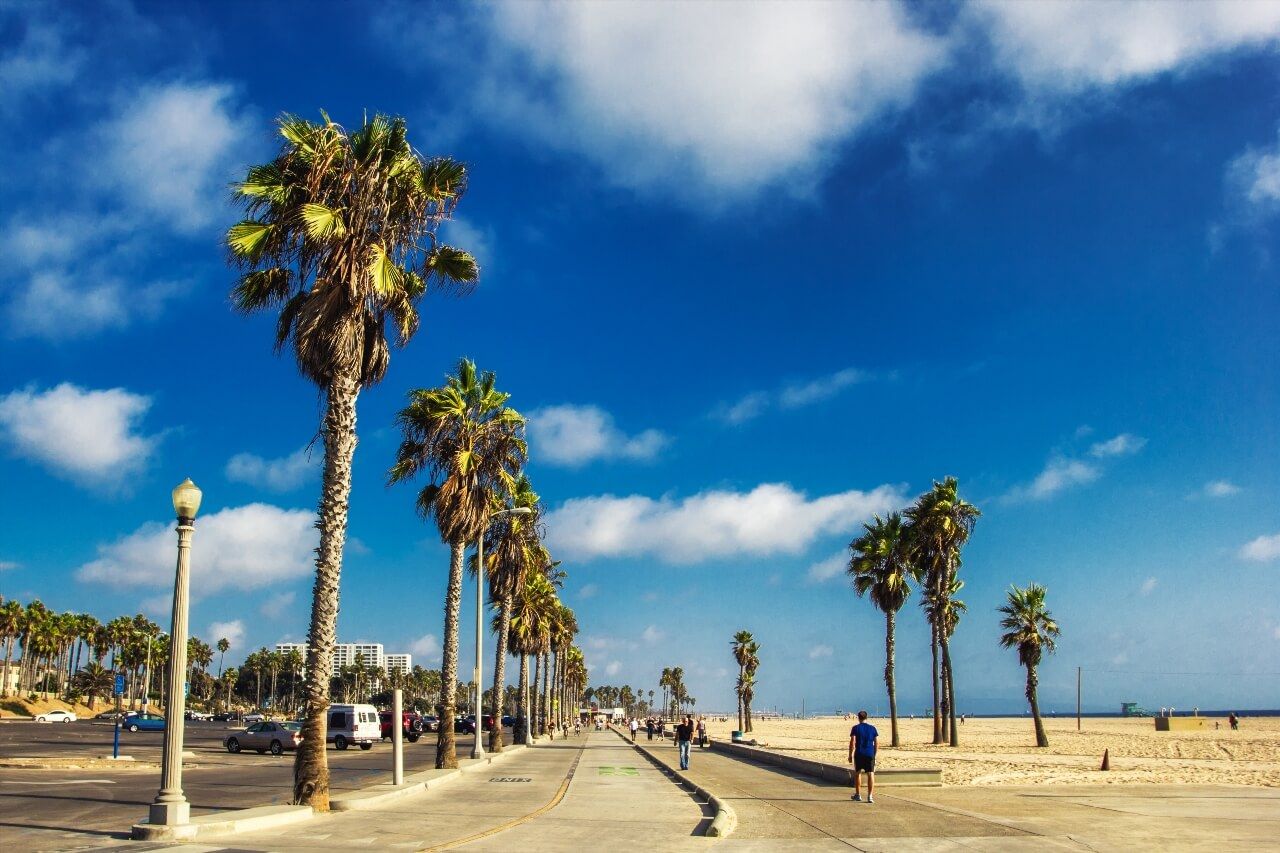
No description of Los Angeles is complete without Venice Beach, and no description of Venice Beach is adequate. The boardwalk, officially Ocean Front Walk, runs for about 2.5 miles along the coast and functions as something between a street market, an outdoor gym, a performance stage and a sociology experiment. On any given weekend afternoon, you might pass competitive bodybuilders at Muscle Beach, sand artists working on elaborate bas-reliefs, and skateboarders executing technical tricks at the Venice Beach Skate Park, which many consider the most scenic concrete park in the United States.
The canal district behind the boardwalk is a quieter and less-visited dimension of Venice. When tobacco millionaire Abbot Kinney developed this area in 1905, he modelled it directly on Venice, Italy, complete with 16 miles of canals and gondoliers. Most of the canals were paved over in the 1920s, but the remaining six blocks form a peaceful residential neighbourhood of drawbridges and ducks, a five-minute walk from the chaotic boardwalk and a complete change of register.
Abbot Kinney Boulevard, running parallel to the beach about a kilometre inland, is where Venice's creative class eats, shops and works. The independent coffee shops, vintage clothing boutiques and galleries here are among the best in the city. Gjusta bakery, on Sunset Avenue, regularly tops lists of the best bakeries in Los Angeles, arrive early, because the good pastries sell out.
5. The Getty Center
Set on a hilltop above Brentwood, the Getty Center (1200 Getty Center Dr, Los Angeles, CA 90049, rated 4.8/5 on Google (36 392 avis)) is one of those institutions that justifies a trip to Los Angeles all by itself. The building is a Richard Meier masterwork of travertine and glass, opened in 1997 after 14 years of planning and construction at a cost exceeding $1 billion. The collection it houses spans more than 100,000 works across paintings, drawings, sculptures, manuscripts and decorative arts, and admission is, remarkably, free.
The permanent collection is genuinely strong in European paintings from the 13th through the 19th centuries. Van Gogh's Irises (1889) is the painting most visitors come to see, and it rewards the attention: the original cobalt blue of the irises has faded to white-grey over the centuries, but the energy of the brushwork remains extraordinary. Rembrandt's self-portraits, Monet's water series and a Pontormo portrait are among the other works that justify lingering.
The Central Garden, designed by artist Robert Irwin, is one of the more unusual features: a spiralling water garden descending from the main plaza into a pool of bougainvillea. Irwin designed it specifically to change with the seasons, and the garden in winter looks entirely different from the garden in June. Allow at least 30 minutes here separately from the galleries.
Parking at the Getty costs $25 per car (or $15 after 3pm; $10 after 6pm for evening events), a flat charge regardless of duration, and a complimentary tram carries visitors from the parking structure to the hilltop campus. The tram ride takes about five minutes and already offers sweeping views of the city and the Pacific. The Getty is open Tuesday through Friday and Sunday from 10am to 5:30pm, Saturday until 8pm; closed on Mondays.
Budget at least three hours. The galleries are extensive, the Central Garden demands a leisurely pace, and the café terrace, with its view across the 405 freeway to the Pacific, is too good to skip quickly. Booking timed-entry tickets online is recommended on weekends, even though admission is free.
6. LACMA, Los Angeles County Museum of Art
LACMA (5905 Wilshire Blvd, Los Angeles, CA 90036, rated 4.6/5 on Google (20 650 avis)) is the largest art museum in the western United States, with a permanent collection of more than 150,000 works spanning 6,000 years of human art-making. The campus on Wilshire Boulevard occupies 20 acres across multiple buildings, and the outdoor spaces are as worth visiting as the galleries inside.
The Urban Light installation at the museum's entrance, 202 restored cast-iron street lamps from the 1920s and 1930s, arranged in a grid, is one of LA's most photographed landmarks, at its best just after sunset when the lamps come on automatically. Admission to view the installation from the street is free; the museum itself charges $30 for non-resident general admission, with LA County residents paying $25 and benefiting from free admission Monday-Friday after 3pm. Visitors 17 and under enter free regardless of residency, and the second Tuesday of every month is free for everyone.
The collection's breadth is its defining characteristic. Japanese woodblock prints, pre-Columbian ceramics, ancient Egyptian reliefs and abstract expressionist canvases all live here, though the presentation is uneven, some galleries feel cramped, others expansive. The Broad Contemporary Art Museum building, connected to the main campus, focuses on works from the 1970s onwards and includes important pieces by Jeff Koons and Cindy Sherman.
On Friday evenings, the Bing Theater on the LACMA campus frequently hosts live jazz and world music performances as part of the long-running « Jazz at LACMA » series (free and open to the public). If your visit falls on a Friday, check the schedule, the combination of music in the outdoor plaza and the illuminated Urban Light installation is one of the city's better free evenings.
7. Universal Studios Hollywood
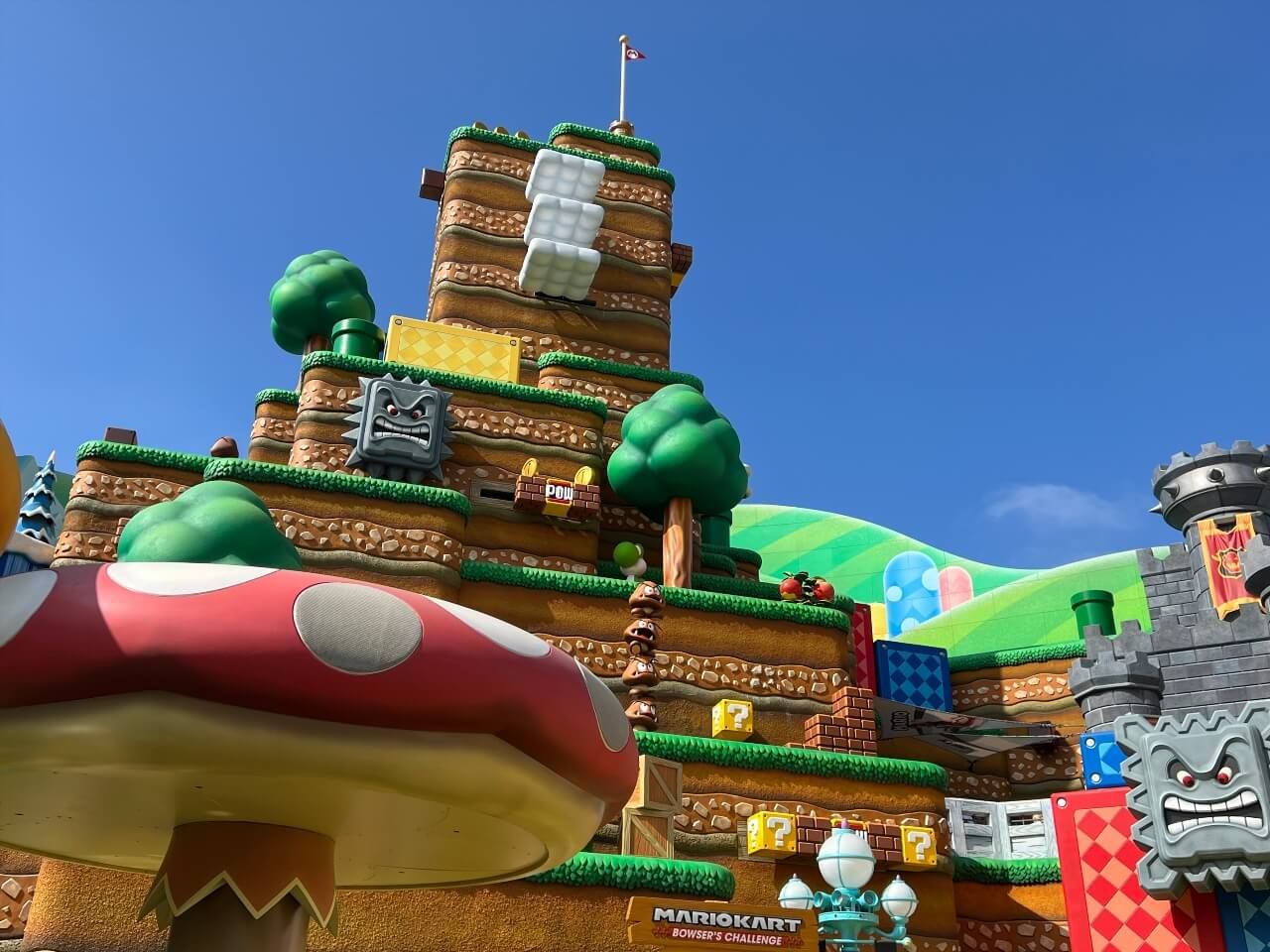
Universal Studios Hollywood (100 Universal City Plaza, Universal City, CA 91608, rated 4.6/5 on Google (173 536 avis)) is not merely a theme park, it is a working film and television production studio that has been continuously operating since 1912, making it the oldest and most continuously active movie studio in the world. The theme park component opened to paying guests in 1964, and the famous Studio Tour has been running in various forms ever since.
The Studio Tour is the centrepiece and the reason most visitors come. A double-decker tram carries guests through 414 acres of active production space, warehouses where sets are stored, the famous New York street backlot, and areas from which recognisable production equipment and standing sets can be spotted. The tour integrates several cinematic experiences: a King Kong 3D encounter, a high-speed chase simulation, and a timed visit to the Bates Motel from Psycho, the original building, still standing.
The Wizarding World of Harry Potter section, opened in 2016, is the park's most popular themed area by a considerable margin. Butterbeer (a cream soda variant with a butterscotch foam top), the Flight of the Hippogriff roller coaster and the detailed recreation of Hogsmeade village draw queues that begin forming well before opening. If you have any interest in this attraction, arrive at opening time and head directly there before the crowds accumulate.
Beyond the tour and the Wizarding World, the park houses The Secret Life of Pets: Off the Leash walk-through experience, a Super Nintendo World section opened in 2023, and the classic Jurassic World ride. General admission starts at around $109 per adult, though prices vary significantly by date and booking timing, purchasing tickets at least two weeks in advance typically saves $20-30. The CityWalk area outside the park gates offers dining and entertainment without requiring park admission.
One practical note: Universal Studios sits in the San Fernando Valley and can be brutally hot in July and August. A weekday in spring or autumn, combined with advance online booking, gives you the best combination of moderate crowds and tolerable temperatures.
8. Griffith Park and the Hollywood Sign Hike
Griffith Park (4730 Crystal Springs Dr, Los Angeles, CA 90027, rated 4.8/5 on Google (41K avis)) covers 4,310 acres of rugged terrain in the eastern Santa Monica Mountains, making it one of the largest municipal parks in the United States and, by area, one of the most significant green spaces in any major American city. Most visitors know it as home to the Griffith Observatory (covered earlier), but the park contains far more: 70 miles of hiking trails, the Los Angeles Zoo, the Autry Museum of the American West, two golf courses, a historic merry-go-round and the famous outdoor Greek Theatre concert venue.
The Hollywood Sign, nine white letters perched at 474 metres elevation on Mount Lee, is the city's defining landmark and, technically, cannot be closely approached. The sign is fenced and monitored; you can see it from dozens of vantage points across the city, but the legal viewpoints closest to the letters are the Hollyridge Trail and the Mulholland Highway from the back side. The best legal close-up view comes from the Mount Hollywood Trail, a 6-mile round trip gaining roughly 350 metres of elevation from the Griffith Observatory parking lot.
The hike itself is worthwhile regardless of the sign. The trail passes through chaparral and oak woodlands, with the city spread below in a perpetual brown-gold haze that somehow looks beautiful from altitude. Carry at least 1.5 litres of water per person, there are no water refill points on the trail, and the combination of direct sun and steep climbing dehydrates faster than expected. Start before 8am to beat both the heat and the crowds.
For a less strenuous connection with the sign, the viewing area at Lake Hollywood Park (off Wonder View Drive) frames the letters nicely above a quiet stretch of water in the early morning light.
9. Warner Bros. Studio Tour Hollywood
The Warner Bros. Studio Tour (3400 Warner Blvd, Burbank, CA 91505, rated 4.4/5 on Google (4 596 avis)) in Burbank offers something that no other attraction in Los Angeles can match: unmediated access to a working studio complex where productions including Friends, The Big Bang Theory, Batman and the entire DC Extended Universe were filmed. This is not a theme park recreation, it is the actual lot, the actual stages, the actual props.
The tour lasts approximately 3 hours (one hour guided, then two hours self-guided around exhibits and shopping) and covers ground in small tram-assisted groups. You will walk through Stage 48, which houses permanent exhibits dedicated to the DC universe and Harry Potter (Warner Bros. holds the production rights to the film series), including original costumes, props and set dressings used in the actual productions. The Central Perk café replica from Friends, with the original orange sofa on set, is a perennial highlight, and yes, you can sit on it for photographs.
The backlot is the real treasure. Warner Bros. has maintained a vast outdoor standing set representing an American street that has appeared in hundreds of productions across nine decades. Walking it feels like both a film history lesson and a peculiar form of cinematic déjà vu, every corner looks familiar because you have, in some sense, been here before in an audience. The production guides are typically well-informed and genuinely enthusiastic, often drawing on current productions on the lot.
Tickets cost $76 per adult for the standard tour (as of 2026), rising to higher tiers for the Deluxe Tour (6 hours, including a fine-dining lunch on the lot) and other behind-the-scenes options. The Stage 48 Interactive Experience and Harry Potter tour extensions are available as add-ons. Book well in advance, tours sell out regularly, particularly on weekends. The tour departs from the official tour centre on Warner Blvd in Burbank, about 12 miles north of Hollywood via the 101 freeway.
A practical note: the tour operates daily from 8:30am to 3:30pm, with departures every 30 minutes, but private production days occasionally close the lot, so check the Warner Bros. website before booking. Confirmed tickets cannot be refunded.
10. Rodeo Drive and Beverly Hills
Rodeo Drive (Rodeo Dr, Beverly Hills, CA 90210, rated 4.7/5 on Google (2 128 avis)) is exactly what you expect and nothing like what you expect. The three-block stretch in the heart of Beverly Hills between Wilshire and Little Santa Monica Boulevards is home to Gucci, Chanel, Cartier, Prada and Harry Winston, among others, a concentration of luxury retail that few streets in the world can match. Walking it is free and takes about 20 minutes; the shop windows alone are worth the detour.
Beyond the famous strip, Beverly Hills itself is worth an hour of exploration. The Beverly Hills Hotel on Sunset Boulevard, the Pink Palace, built in 1912 and an enduring symbol of Hollywood excess, is open for breakfast and lunch to non-guests at prices that are high but not irrational. The bungalows where Elizabeth Taylor famously honeymooned are still there, visible from the driveway. Several blocks east, the residential streets of North Beverly Drive and Elm Drive reveal the scale at which old Hollywood wealth was expressed: Spanish Colonial Revival, Georgian manor and French Normandy architecture sit side by side in immaculate condition.
Tip for celebrity homes tours: skip the open-top bus tours in favour of a self-guided walk using any of the several well-maintained maps available online. You cover more ground, set your own pace, and avoid the awkward hovering outside private residences that characterises the organised tours. A Ryocity Los Angeles audio guide also includes a Beverly Hills sequence that pairs the architecture with the studio-era backstories.
11. The Broad
The Broad (221 S Grand Ave, Los Angeles, CA 90012, rated 4.7/5 on Google (17 703 avis)) is downtown Los Angeles's premier contemporary art museum, opened in 2015 in a building designed by Diller Scofidio + Renfro, a white fibreglass and glass structure whose distinctive « veil and vault » exterior is designed to let in natural light while protecting works from UV exposure. The permanent collection, built over decades by philanthropists Eli and Edythe Broad, comprises approximately 2,000 works by post-war and contemporary artists.
Jeff Koons, Cindy Sherman, Jean-Michel Basquiat and Barbara Kruger are heavily represented, but the two works visitors most reliably queue for are Jeff Koons's Tulips (a monumental polychrome steel sculpture on the ground floor) and Yayoi Kusama's Infinity Mirrored Room, The Souls of Millions of Light Years Away, a walk-in mirrored installation that creates the illusion of infinite space through reflection and LED lighting. The Kusama room requires a timed entry reservation within your broader museum ticket; book it as far in advance as possible.
Admission to The Broad is free, though the Kusama installation requires separate advance registration via the museum's website. The museum is open Tuesday through Sunday, closed on Mondays. Its location on Grand Avenue, directly opposite the Walt Disney Concert Hall (Frank Gehry's stainless steel landmark of 2003), makes it an easy pairing, you can photograph the two buildings against each other for a remarkable exercise in architectural contrast.
12. Runyon Canyon Park
Runyon Canyon Park (2000 N Fuller Ave, Los Angeles, CA 90046, rated 4.8/5 on Google (5 626 avis)) is a 160-acre open space in the Hollywood Hills, sitting improbably between Mulholland Drive to the north and the urban density of West Hollywood to the south. Its location, trail access begins less than half a mile from the intersection of Hollywood and Highland, makes it the most accessible serious hike in the city.
The trail network covers several routes between 1.5 and 4 miles, all offering views over Hollywood, the San Fernando Valley and, on clear days, the Pacific. The Upper Runyon Trail (a short but steep 30-minute loop from the north entrance on Mulholland Drive) gives the best panoramas with the least distance. Dogs are allowed off-leash in designated sections of the park, making it one of the city's few genuinely dog-friendly natural spaces.
Arrive early on weekday mornings, by 9am on weekends it can feel more like a social event than a hike. Bring water; there are no facilities inside the park.
13. The Last Bookstore
The Last Bookstore (453 S Spring St, Los Angeles, CA 90013, rated 4.7/5 on Google (12 634 avis)) occupies a former bank vault in downtown LA and has earned a reputation as one of the most visually distinctive independent bookstores in the United States. The ground floor operates as a standard, if very large, new and used bookstore.
The upstairs Labyrinth level is the real attraction: tunnels formed from stacked books, a horror section called « The Haunted Bookstore, » and a suspended vinyl record ceiling section make it as much an art installation as a retail space. Used books are priced from $1. The vault rooms at the back house art galleries with rotating exhibitions. Budget 45-60 minutes for a thorough visit.
14. Melrose Avenue and the Street Art Scene
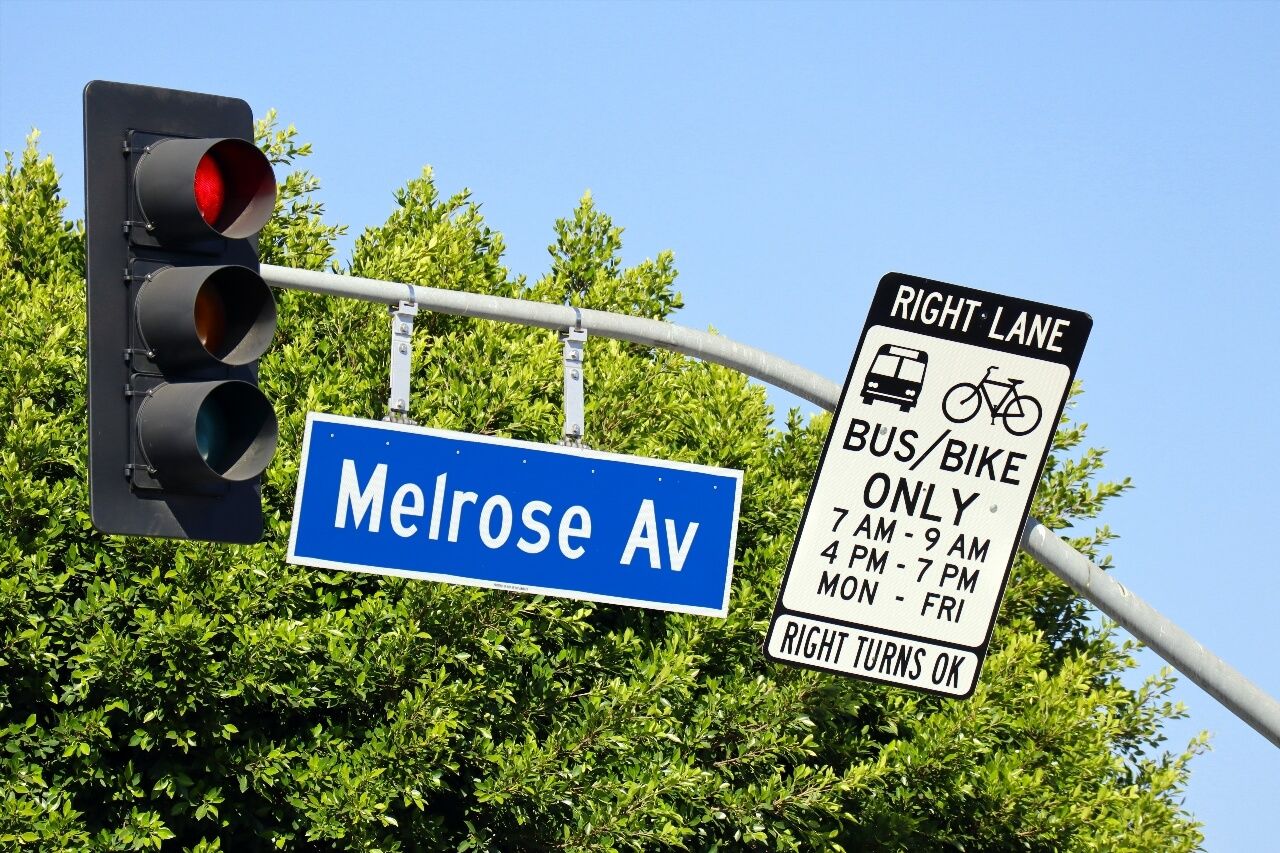
Melrose Avenue (Melrose Ave, Los Angeles, CA 90046, rated 4.5/5 on Google (12K avis)) between Fairfax and La Brea is a 2-mile stretch that functions as a living archive of Los Angeles style, vintage clothing stores, independent record shops, tattoo studios and the kind of restaurant that opens on a Tuesday and has a three-week wait list by Friday. The stretch around Fairfax Avenue is the heart of the streetwear district, and the building facades in this area are among the most photographed street art in California.
The murals on and around Melrose are both a spontaneous art scene and a curated attraction. A Paul McCartney mural by Robert Vargas on Cahuenga Boulevard, a Tupac Shakur tribute on Fairfax and a constantly rotating series of commissioned works make a dedicated walk here genuinely rewarding. The Fairfax Flea Market (Melrose and Fairfax, operating Saturdays and Sundays) is the area's weekend social anchor, with vintage dealers, food vendors and a cross-section of LA subcultures that feels like a compressed version of the city itself.
For street food, the Grand Central Market at Broadway and 3rd Street (about 3 miles east) is the better option, but if you want the specific flavour of this neighbourhood, the tacos at Leo's Tacos Truck parked on La Brea near Fountain are reliably excellent and cost around $2.50 each.
15. TCL Chinese Theatre
TCL Chinese Theatre (6925 Hollywood Blvd, Los Angeles, CA 90028, rated 4.4/5 on Google (12 275 avis)) (formerly Grauman's Chinese Theatre) opened in 1927 and remains one of the most recognisable cinemas in the world, a theatrical Chinese imperial architecture façade on Hollywood Boulevard that has hosted film premieres continuously for nearly a century. The front courtyard contains the famous celebrity cement blocks: handprints and footprints cast in concrete by over 200 entertainers since the 1920s, including early imprints from Humphrey Bogart, Marilyn Monroe and more recent additions from the Marvel cast.
The courtyard is publicly accessible without charge and the cement blocks make for a genuine treasure hunt, some celebrities added personal items (wands, boot spurs, lightsabres) rather than just hands and feet. The theatre itself still operates as a cinema, screening current releases in its 932-seat main auditorium with an IMAX screen. Watching a film here, rather than just photographing the façade, is a worthwhile experience that connects you to a century of cinema history in a way that the Walk of Fame, one block north, cannot quite match.
Tickets for standard screenings run $20-30 for IMAX. Purchase in advance online, particularly for opening weekends.
16. Angels Flight Railway
Angels Flight Railway (351 S Hill St, Los Angeles, CA 90013, rated 4.5/5 on Google (3 587 avis)) is the shortest railway in the world that charges a fare, 298 feet of funicular track climbing 33.6 metres up the Bunker Hill incline in downtown Los Angeles. Originally opened in 1901 and closed for decades before a careful restoration in 1996, it connects Hill Street at the base to Olive Street at the summit of Bunker Hill for a fare of $1.50 one-way (or $0.75 with a Metro TAP card).
The ride takes under two minutes, but the view down to Grand Central Market from the top of the incline, and the elegant wooden cars named Sinaí and Olivet, make it worth a visit on any downtown itinerary. The railway featured prominently in the La La Land film (2016), and earlier in La Confidential (1997). Combine it with a visit to The Broad (four blocks north on Grand Avenue) and The Last Bookstore (five blocks south) for a complete downtown art and history circuit. The funicular runs daily from 6:45am to 10pm.
17. Malibu Creek State Park
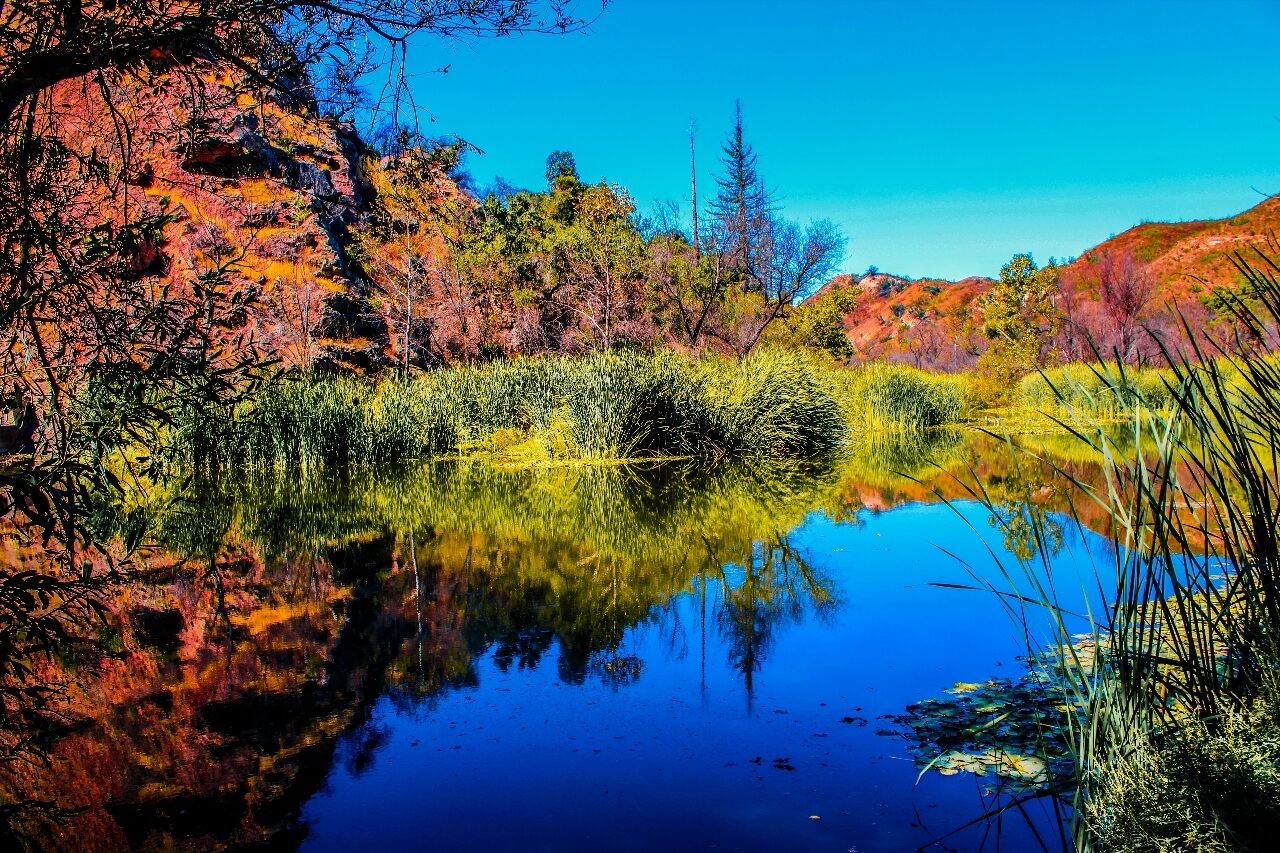
Malibu Creek State Park (1925 Las Virgenes Rd, Calabasas, CA 91302, rated 4.7/5 on Google (3 581 avis)) covers 8,200 acres in the Santa Monica Mountains, accessed from Las Virgenes Road off the 101 freeway, about 25 miles from Hollywood. Most visitors know it, if at all, as the location where the original M\A*S*H* TV series was filmed between 1972 and 1983; rusted remnants of production vehicles remain in the field near the main trail as an unofficial open-air museum.
The park's main trail (a 4-mile round trip from the parking area to the Rock Pool) passes through a landscape of volcanic rock formations, riparian oak woodland and the Malibu Creek itself, which, depending on the season, ranges from a rocky scramble route to a knee-deep wade. The Rock Pool is a natural swimming hole in a gorge of Chumash sandstone; swimming is permitted and, in summer, crowded. A more peaceful extension continues past the pool to the Century Lake viewpoint another 1.5 miles along.
Day-use parking costs $12 per vehicle (or $3 per hour). Park gates are open from 8am to 10pm. The park is also a good wildflower destination in February and March, when the hillsides carry poppy, lupine and sage in bloom.
18. The Original Farmers Market and The Grove
The Original Farmers Market (6333 W 3rd St, Los Angeles, CA 90036, rated 4.6/5 on Google (16 811 avis)) at Fairfax and 3rd Street has operated on the same site since 1934, when two entrepreneurs convinced farmers to sell directly from their trucks in an empty lot. What grew from that arrangement is now a permanent collection of 100 stalls and restaurants in a series of open-air buildings with a distinctive clock tower, one of LA's genuine neighbourhood institutions.
The food stalls are the reason to come: Cajun cooking, fresh-pressed juices, Magee's Nuts (roasting on-site since 1934), specialty cheeses, Brazilian rotisserie, a Dutch pancake stand and Loteria Grill's Mexican breakfasts are among the options. Arrive hungry. The adjacent The Grove open-air shopping mall, admittedly more conventional but pleasant enough, hosts the only remaining electric trolley line in Los Angeles, running through the centre of the complex, and a dancing fountain. Combined, the two make for a relaxed morning with good food and easy browsing.
19. Dodger Stadium and Elysian Park
Dodger Stadium (1000 Vin Scully Ave, Los Angeles, CA 90012, rated 4.7/5 on Google (49 994 avis)) (opened 1962) is the third-oldest active baseball park in Major League Baseball and the largest by capacity, accommodating 56,000 spectators. A game here is not just a sports event, it is a civic ritual that connects you to a city whose relationship with the Dodgers spans more than 65 years since the team relocated from Brooklyn in 1958.
Tickets start at around $15 for upper deck seats and can be booked directly through the Dodgers website. The stadium's Think Blue Barbeque and Dodger Dogs (a specific style of large hot dog with an almost cult following) are as much a part of the experience as the game itself. The stadium sits within Elysian Park, LA's oldest public park, established in 1886, the hills around the stadium are accessible for walks before and after games, with views over downtown.
Even outside the baseball season, the Dodger Stadium Experience guided tour ($35 per adult) takes visitors to the field level, the dugouts, the press box and the Tommy Lasorda Training Center in a 90-minute walk through baseball history.
20. Manhattan and Hermosa Beaches
Manhattan Beach and Hermosa Beach are the more relaxed, residential alternatives to the high-energy scenes of Venice and Santa Monica, two adjacent beach towns on the South Bay curve of Santa Monica Bay, accessible from downtown LA by a 35-minute drive south on the 405 freeway, or by the beachfront Marvin Braude Bike Trail for cyclists.
Manhattan Beach Pier (2 Manhattan Beach Blvd, Manhattan Beach, CA 90266, rated 4.8/5 on Google (14 460 avis)) (built in 1920, 325 metres in length) houses the small but worthwhile Roundhouse Marine Studies Lab and Aquarium at its end, free to visit, focused on local marine biology, and low-key enough to be genuinely interesting rather than touristy. The beach volleyball culture here is serious: Manhattan Beach hosts a professional AVP tour stop each year, and informal high-level games take place most days at the courts near the pier.
Hermosa Beach, a kilometre south, is the more boisterous of the two, the Pier Avenue pedestrian strip is full of bars and surf shops, and the beach itself is narrower but more social. The two towns together make a strong full-day alternative to the more visited beaches to the north, particularly in the shoulder season when the sky goes overcast (called « June Gloom » by locals) and the surf improves.
21. Grand Central Market and the Bradbury Building
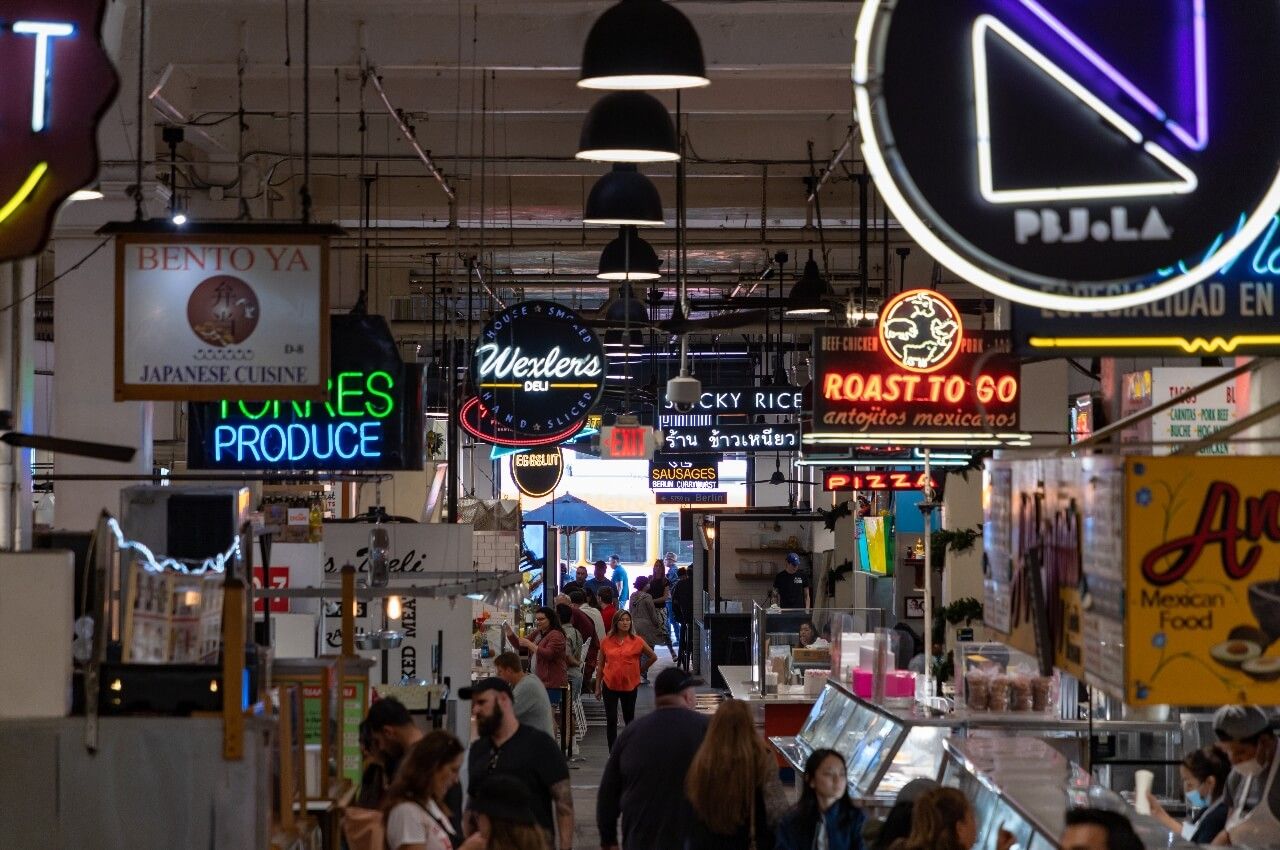
Grand Central Market (317 S Broadway, Los Angeles, CA 90013, rated 4.5/5 on Google (36 587 avis)) on Broadway has been feeding downtown Los Angeles continuously since 1917, longer than almost any other commercial space in the city. The vaulted neon-lit hall houses around 40 independent food vendors under one roof, a deliberate cross-section of the city's gastronomic geography: Eggslut for breakfast egg sandwiches, Sticky Rice for Thai street food, Wexler's Deli for smoked fish, Roast to Go for tacos from a family that has been making them on this exact spot since the 1950s.
Directly across Broadway sits the Bradbury Building (1893), one of the most important works of architecture in Los Angeles and a regular star of cinema, the iconic atrium with its open elevator cages and wrought-iron stairways serves as the apartment building in Blade Runner (1982). The lobby is open to the public Monday through Friday during business hours and access is free. The combination of lunch at Grand Central, a slow lap of the Bradbury and a ride up Angels Flight (two blocks away) is one of the most efficient hours of sightseeing in the city.
22. Echo Park Lake
Echo Park Lake (751 Echo Park Ave, Los Angeles, CA 90026, rated 4.7/5 on Google (57 avis)) is a 15-acre urban lake about three miles northwest of downtown, surrounded by a walking path, lotus beds, palm-lined lawns and one of the best skyline views in Los Angeles. The lotus beds, native to Asia and replanted here in 2013 after an ecological restoration, bloom from late June into August and draw thousands of visitors during the Lotus Festival, the city's longest-running cultural celebration of Asian and Pacific Islander heritage.
Swan pedal boats rent for $11 per half hour and operate from a small kiosk on the east shore, the kind of slightly absurd, completely charming activity that LA does well. The neighbourhood around the lake, anchored by Sunset Boulevard's vintage shops and the rebuilt Sunset Beer Co. taproom, has become one of the city's most stylistically distinct creative quarters in the past decade. Echo Park itself appeared as the heart of the city in countless films, most recently as the cycling sequence backdrop in La La Land.
23. Silver Lake and Sunset Junction
Silver Lake, a hilly residential neighbourhood east of Hollywood, is the closest thing Los Angeles has to a self-conscious indie quarter, the place where the city's musicians, designers and writers concentrated through the 2000s and 2010s. The Sunset Junction (Sunset Blvd & Santa Monica Blvd, Los Angeles, CA 90026, rated 4.6/5 on Google (28 avis)) intersection (Sunset and Santa Monica Boulevards) is the area's commercial anchor, with the long-running Intelligentsia Coffee flagship, vintage clothing stores and the Sunset Triangle Plaza, an LA-rare pedestrianised stretch of asphalt painted bright green and lined with café terraces.
The Silver Lake Reservoir, a 2.2-mile walking loop around the namesake body of water, has been redesigned as a public park after decades as a closed-off civic asset. The loop is popular at sunset, when downtown's towers catch the last light against the eastern horizon. A few blocks downhill, the Music Box Steps (made famous by Laurel and Hardy's Oscar-winning short The Music Box, 1932) climb 133 concrete steps between Vendome Street and Del Monte Drive, a quick film-history detour for those willing to walk uphill.
24. Watts Towers
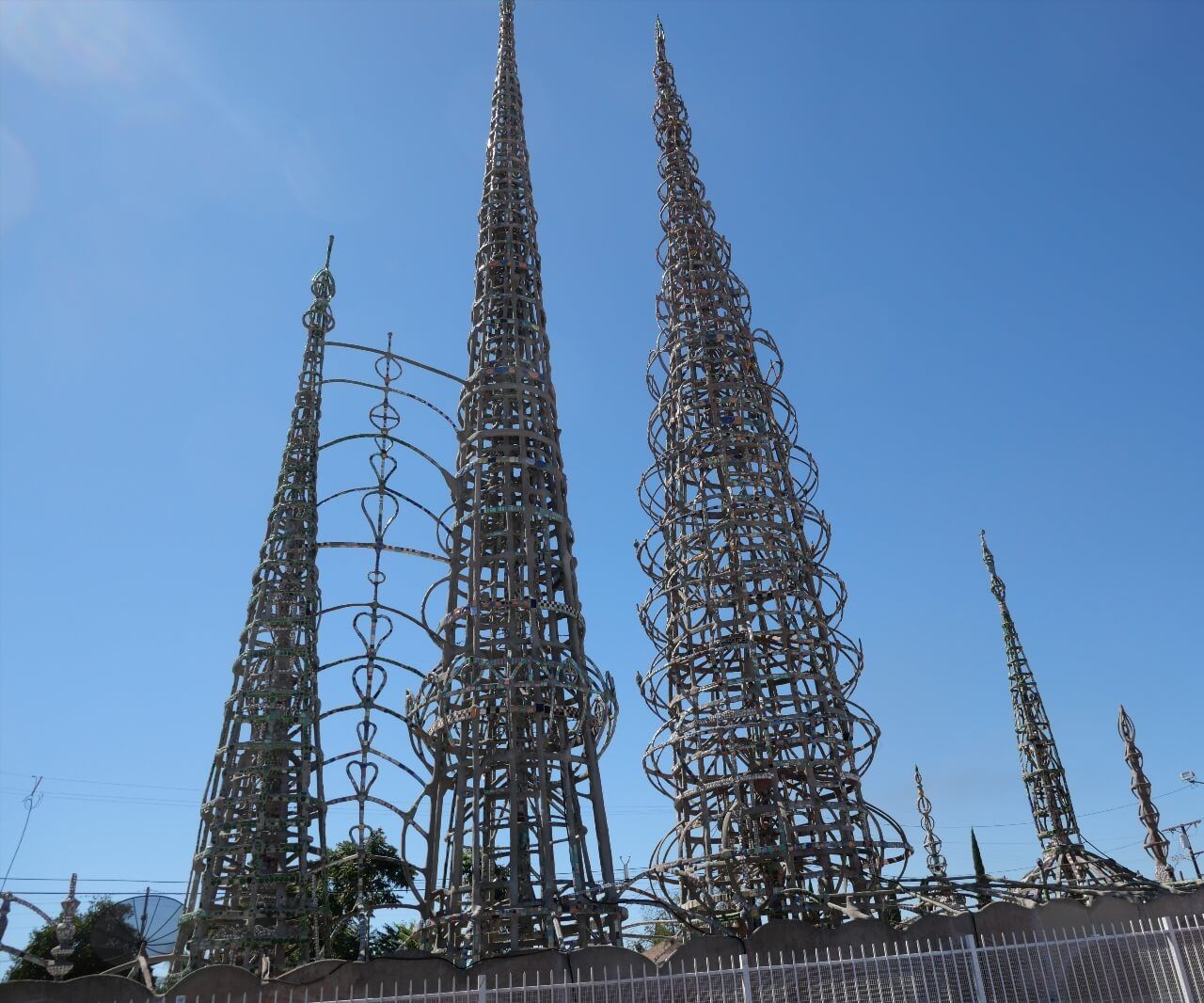
The Watts Towers (1727 E 107th St, Los Angeles, CA 90002, rated 4.5/5 on Google (1 596 avis)) are a set of 17 interconnected sculptural structures built by Italian immigrant Simon Rodia, by hand and without scaffolding, between 1921 and 1954 in the South LA neighbourhood of Watts. The tallest tower reaches 30 metres. Rodia, an unschooled construction worker, used steel rebar wrapped in wire mesh, embedded with broken glass, seashells, pottery shards, tiles and ceramic fragments scavenged from the surrounding streets, the result is one of the most ambitious works of folk architecture ever attempted in the United States.
Rodia worked alone, after his shifts, for 33 years, then abruptly walked away from the project in 1954, signed the land over to a neighbour and moved to Northern California, where he died in 1965 without ever returning. The towers were saved from city demolition by a 1959 stress test in which engineers tried to pull them down with a crane: the structure held. Today the site is a designated National Historic Landmark and admission to view the towers from the surrounding park is free; guided tours of the interior court (the only way to see the embedded mosaics up close) run on weekends for $7 per adult.
Watts is a 25-minute drive south of downtown and feels like a different city from Hollywood, that contrast is part of what makes the visit meaningful. The Watts Labor Community Action Committee runs the on-site cultural centre, with rotating exhibitions of African American and Latino artists from the neighbourhood.
25. Olvera Street and El Pueblo
Olvera Street (Olvera St, Los Angeles, CA 90012, rated 4.6/5 on Google (32 avis)) is the oldest section of Los Angeles, a narrow pedestrian alley founded in 1781 as part of the original Spanish pueblo, now preserved as a Mexican marketplace within the El Pueblo de Los Ángeles Historic Monument. The street is lined with stalls selling handmade leather goods, talavera pottery, papel picado bunting and street food, taquitos, churros, agua fresca, in a setting that has barely changed since the 1930s restoration.
The Avila Adobe (1818), the oldest standing residential building in Los Angeles, sits on Olvera Street as a free public museum. The plaza at the southern end hosts continuous live music and dance through most weekends, the Mexican Independence Day celebrations in September and the Día de los Muertos processions in early November are particularly worth scheduling around. Combine Olvera Street with Union Station (across the street, the most beautiful Art Deco railway terminus in the United States, completed in 1939) for a half day of historic downtown that most Hollywood-focused itineraries miss entirely.
26. Petersen Automotive Museum
The Petersen Automotive Museum (6060 Wilshire Blvd, Los Angeles, CA 90036, rated 4.8/5 on Google (13 495 avis)) on Wilshire Boulevard houses one of the largest collections of historically significant cars in the world, 300+ vehicles rotated through four floors of exhibition space inside a 2015 building whose stainless steel ribbon façade has become a Miracle Mile landmark in its own right.
The ground floor is dedicated to rotating exhibitions, recent shows have covered Bugatti, Hollywood movie cars and the Ferrari 250 GTO. The permanent collection upstairs spans the full breadth of automotive history: a 1903 Ford Model A, Steve McQueen's Jaguar XKSS, a DeLorean DMC-12 from Back to the Future, the Batmobile from the Tim Burton films, and a vault holding rarely-seen vehicles that requires a separate guided tour to access. General admission is $21 per adult (children 4-17: $13); the vault tour runs $25 extra. Allow two to three hours, longer if you intend to read the placards seriously.
27. The Huntington Library
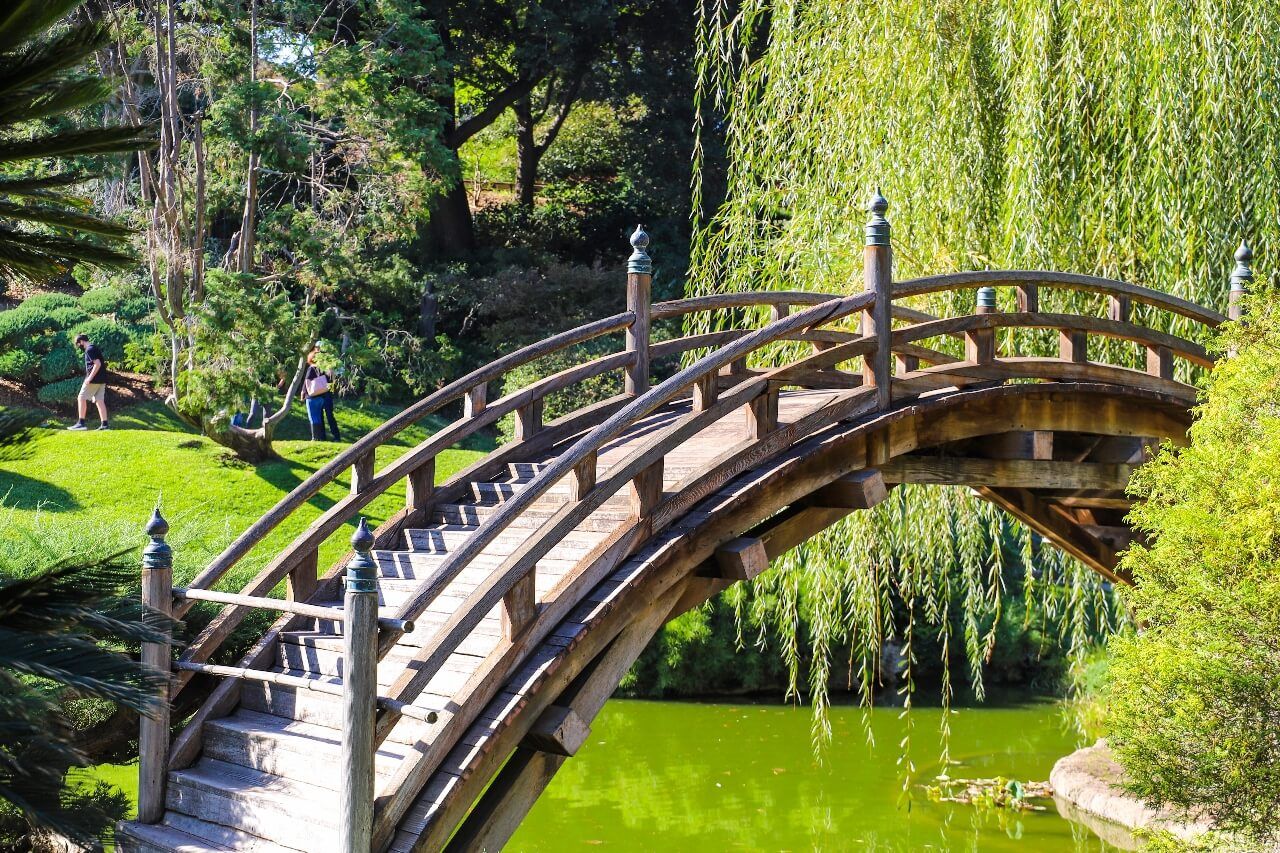
The Huntington Library, Art Museum and Botanical Gardens in San Marino, ten miles east of downtown, is the kind of institution that seems improbable until you visit. Founded by railroad magnate Henry Huntington in 1919, the 207-acre campus combines one of the most significant rare-book libraries in the United States (with original Gutenberg Bible and Shakespeare First Folio), a substantial art collection (including Gainsborough's Blue Boy and Thomas Lawrence's Pinkie, hung as a famous pair in the same gallery), and 16 themed botanical gardens covering everything from a Japanese Zen garden with a moon bridge to one of the largest desert plant collections on Earth.
The Chinese Garden (Liu Fang Yuan, the Garden of Flowing Fragrance), opened in stages between 2008 and 2020, covers 15 acres of pavilions, ponds and tea-houses built by craftsmen brought from Suzhou, and is among the largest classical Chinese gardens outside China. The Japanese Garden is older (1912) and equally extraordinary, particularly in March when the wisteria bloom.
Admission is timed-entry and runs $29 per adult on weekdays, $34 on weekends (children 4-11: $13); booking online a few days ahead is mandatory in spring. The Huntington (1151 Oxford Rd, San Marino, CA 91108, rated 4.8/5 on Google (8 131 avis)) easily justifies a full day, even visitors who think they have no interest in either rare books or botany generally emerge converted. Pair this with the Norton Simon Museum in nearby Pasadena (a smaller but exceptionally curated collection, including the most important Degas group in the United States) for an art-heavy day in the San Gabriel Valley.
FAQ
What is the best time of year to visit Los Angeles?
September and October offer the best weather for visiting Los Angeles, summer crowds have thinned, temperatures are pleasant (22-27°C), and the Santa Ana winds occasionally create exceptional clarity that makes the entire city sharper and the views from Griffith Observatory extraordinary. June and July bring « June Gloom, » a marine layer that keeps coastal neighbourhoods overcast until noon. December through February is mild (15-20°C) and significantly less crowded, though some attractions reduce hours.
How many days do you need to see Los Angeles?
Five to seven days gives a realistic overview of the city's main areas, Hollywood, downtown, the Westside (Getty, Venice, Santa Monica), Beverly Hills and at least one full-day excursion to Malibu or Griffith Park. Three days is possible for a focused visit covering the highlights, but LA's distances mean constant time lost to travel, and rushing through it produces the same vague impression of freeways and sunshine that most visitors want to move beyond.
Is Los Angeles expensive to visit?
Los Angeles is expensive relative to most US cities, though its range is genuinely wide. Free attractions, the Getty Center, the Griffith Observatory, Venice Beach, Runyon Canyon, LACMA's Jazz Fridays, are among the best in the country. Accommodation in prime areas (Santa Monica, West Hollywood, Hollywood itself) starts at around $180 per night for a mid-range hotel. Food ranges from $2.50 street tacos to $45 prix-fixe menus, with excellent options at every price point.
Do you need a car in Los Angeles?
For a comfortable visit covering multiple neighbourhoods, yes. The Metro network covers the main axis from downtown to Santa Monica (Expo Line) and to Hollywood and the Valley (Red Line), and ride-sharing is generally available. But the distances between areas mean that a car saves significant time. If you are staying in a single neighbourhood for a short visit, a car is less critical, downtown, Venice and Hollywood are each internally walkable.
Is the Hollywood Sign open to the public?
The Hollywood Sign itself is not publicly accessible, the letters are fenced and monitored to prevent vandalism. The closest legal viewpoints are the Hollyridge Trail and the Mount Hollywood Trail in Griffith Park, which approach to within about 300 metres of the sign. The Griffith Observatory parking area and the Lake Hollywood Park reservoir viewpoint (off Wonder View Drive) offer excellent photographs from a comfortable distance.
What are the best free things to do in Los Angeles?
Los Angeles has an unusually strong free offering for a major city. The Getty Center, Griffith Observatory (building and telescopes), Venice Beach Boardwalk, Runyon Canyon Park, LACMA's Jazz Fridays, The Broad, The Last Bookstore, Watts Towers (from the perimeter), Olvera Street and The Original Farmers Market (browsing, not eating) are all accessible without admission fees. Several of these, the Getty in particular, compete seriously with paid attractions in any major city in the world.
Los Angeles is a city that most first-time visitors experience primarily from a car window, and that most return visitors explore at a different scale entirely, on foot through Griffith Park before sunrise, cycling the beach path from Santa Monica to Venice, or sitting in the back of the TCL Chinese Theatre for a film that opened the same week. The 27 experiences in this guide are a starting point rather than a complete map.
The city rewards patience and specificity. Pick two or three neighbourhoods, allow more time than you think you need, and accept that you will not see everything, no single visit does. What you will find, with some planning and an early start, is a city of genuine depth beneath the mythology: one where a world-class art collection sits on a hilltop above a freeway, where a 124-year-old railway climbs a city block for a dollar fifty, and where the best view in the city is still, after nearly 90 years, free.
If you want a structured way to weave these landmarks together without losing half your day to the freeways, Ryo's LA audio guide sets out a sequenced narrative across the core neighbourhoods, Hollywood, Downtown, Beverly Hills, Echo Park and the canyons, with the historical context, anecdotes and music cues that turn a sightseeing list into an actual story of the city. Whether you load the Ryocity Los Angeles tour for a single afternoon in Hollywood or build a full week around its segments, you will leave with a sharper picture of LA than any drive-by itinerary alone provides.