

Créé par Emilie, le 20 juin 2026
Votre guide Ryo
Visit the Brooklyn Bridge in New York
© Shutterstock
An emblematic monument of New York, the Brooklyn Bridge fascinates with its neo-Gothic architecture and turbulent history. Connecting Manhattan to Brooklyn since 1883, this engineering masterpiece offers a spectacular crossing with breathtaking views of the New York skyline. Whether you're passionate about history, a photography enthusiast, or simply seeking an authentic experience, visiting the Brooklyn Bridge stands out as a must-do during your stay in the Big Apple.
Download the audio-guided tour to discover New York on foot and independently
To discover New York in an immersive and enriching way, opt for the Ryo audio-guided itinerary. This tour takes you through Manhattan's iconic locations, from Times Square to Central Park, with 22 narrated points of interest. Let yourself be guided by historical anecdotes and captivating explanations while exploring the city at your own pace. The app allows you to fully enjoy your visit independently, with interactive navigation that adapts to your movements.
What to see and do on the Brooklyn Bridge?
Crossing the Brooklyn Bridge offers much more than a simple walk from one neighborhood to another. Between remarkable architecture, exceptional panoramas, and unique atmosphere, every element of this historic monument deserves your attention. Here are the must-sees to discover during your visit.
1. Admire the majestic neo-Gothic arches
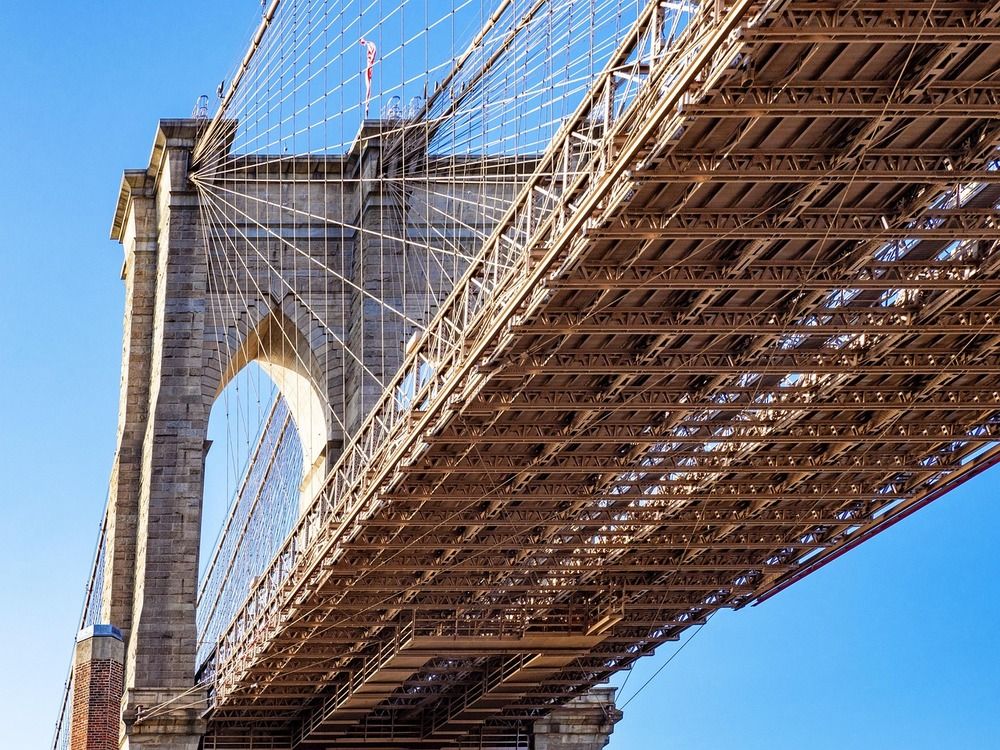
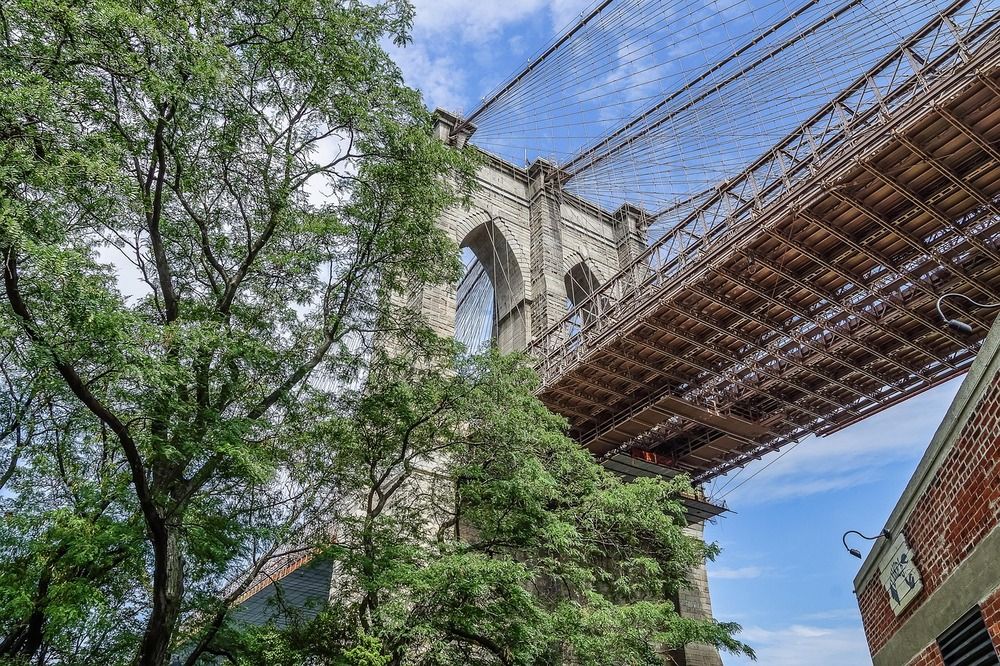
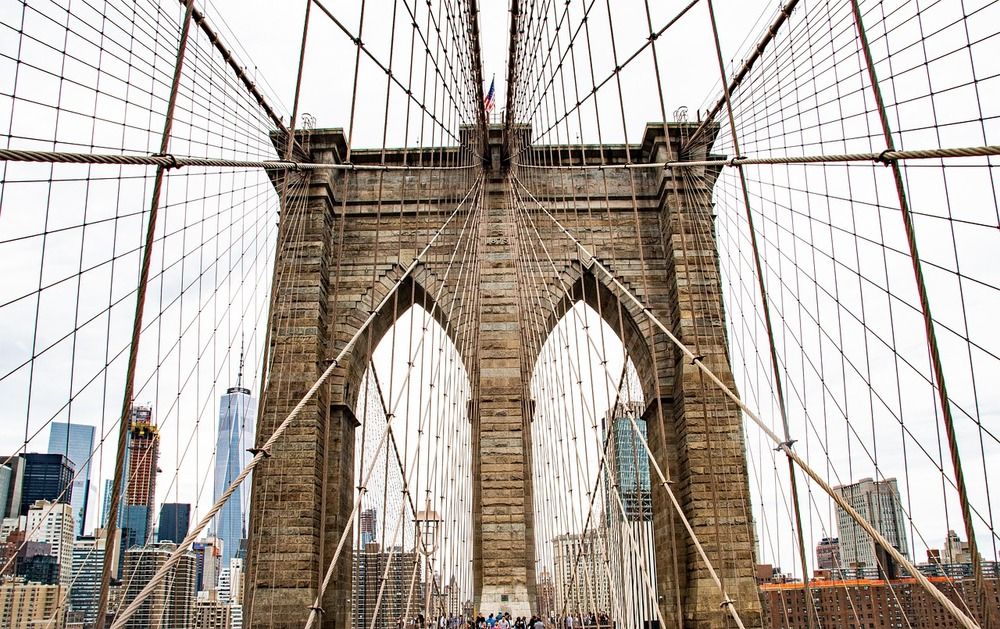
The two imposing limestone towers of the Brooklyn Bridge constitute one of its most recognizable features. Designed in neo-Gothic style by John Augustus Roebling, these arches rise to 84 meters in height and dominate the East River. Their architecture adorned with Gothic motifs recalls European medieval cathedrals, creating a striking contrast with Manhattan's modern skyscrapers. Take time to observe the sculpted details and ogive openings that testify to the exceptional craftsmanship of 19th-century builders.
2. Observe the ingenuity of the suspension cables
The Brooklyn Bridge's cable system represents a true technical prowess for its time. Four main steel cables, each composed of 5,282 metal wires, support the entire structure over 1,825 meters. It was the first time a suspension bridge used steel cables rather than wrought iron, a revolutionary innovation that inspired the construction of numerous bridges worldwide. Looking up, you can appreciate the elegant entanglement of these cables that draw geometric arabesques against the New York sky.
3. Take the elevated pedestrian promenade
The Brooklyn Bridge's pedestrian promenade constitutes one of its major assets. Elevated 5.5 meters above automobile traffic, it offers a safe and peaceful crossing. This 2.4-kilometer-long wooden walkway allows visitors to fully enjoy the views without being bothered by road traffic. The generous width of the promenade offers enough space to stroll peacefully, even during busy periods. Don't hesitate to take regular breaks at the numerous observation points to capture memorable photos.
4. Use the bike path
Parallel to the pedestrian walkway, the Brooklyn Bridge's bike path appeals to cycling enthusiasts. Accessible 24/7, it allows crossing the bridge in just about ten minutes. Many shops offer bike rentals near the bridge entrances, on both the Manhattan and Brooklyn sides. This option is particularly pleasant early in the morning or at the end of the day, when crowds diminish. Be careful to respect signage and stay vigilant, as the space is shared between cyclists and pedestrians, especially during rush hours.
5. Discover the commemorative plaques
Throughout the promenade, several commemorative plaques pay tribute to the Brooklyn Bridge's artisans. These bronze and stone historical testimonies recall the names of engineers, architects, and workers who contributed to this titanic achievement. You'll notably discover mentions of Emily Warren Roebling, whose role was crucial in completing the project after her husband Washington Roebling became seriously ill. These plaques offer a fascinating glimpse into the human history behind this monument, between personal tragedies and technical triumphs.
6. Enjoy panoramas of Manhattan and the Statue of Liberty
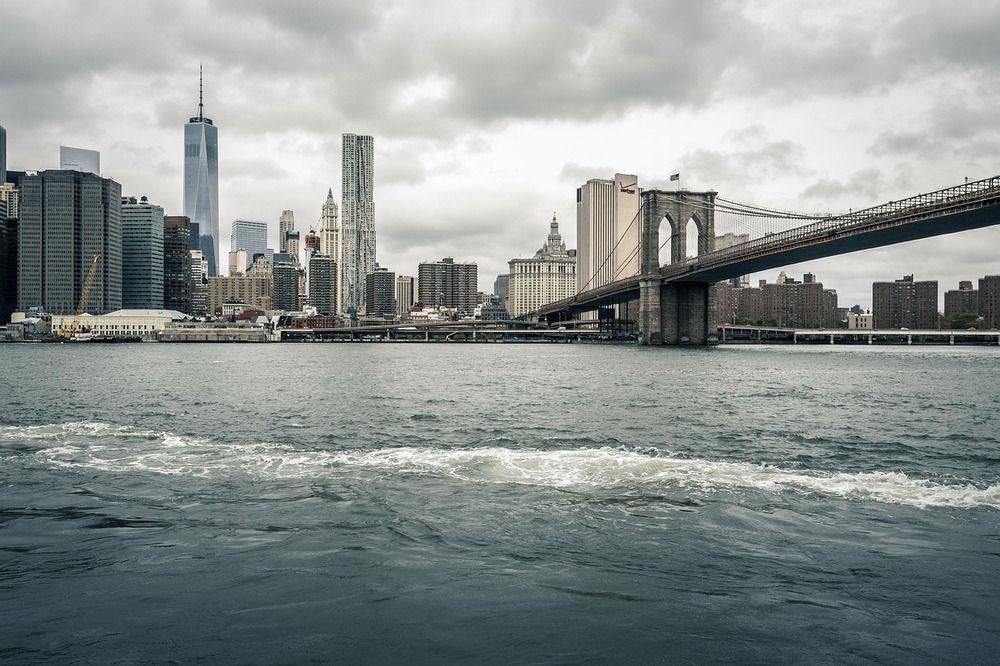
The view from the Brooklyn Bridge ranks among the most spectacular in New York. On the Manhattan side, you'll glimpse the impressive skyline dominated by One World Trade Center, the Empire State Building, and the Chrysler Building. Turning south, the Statue of Liberty appears in the distance, offering a unique perspective on this American symbol. The East River sparkles below, traversed by ferries and pleasure boats. Sunrises and sunsets transform this panorama into an unforgettable spectacle, bathing the skyscrapers in particularly photogenic golden light.
7. Access Brooklyn Bridge Park and the DUMBO neighborhood
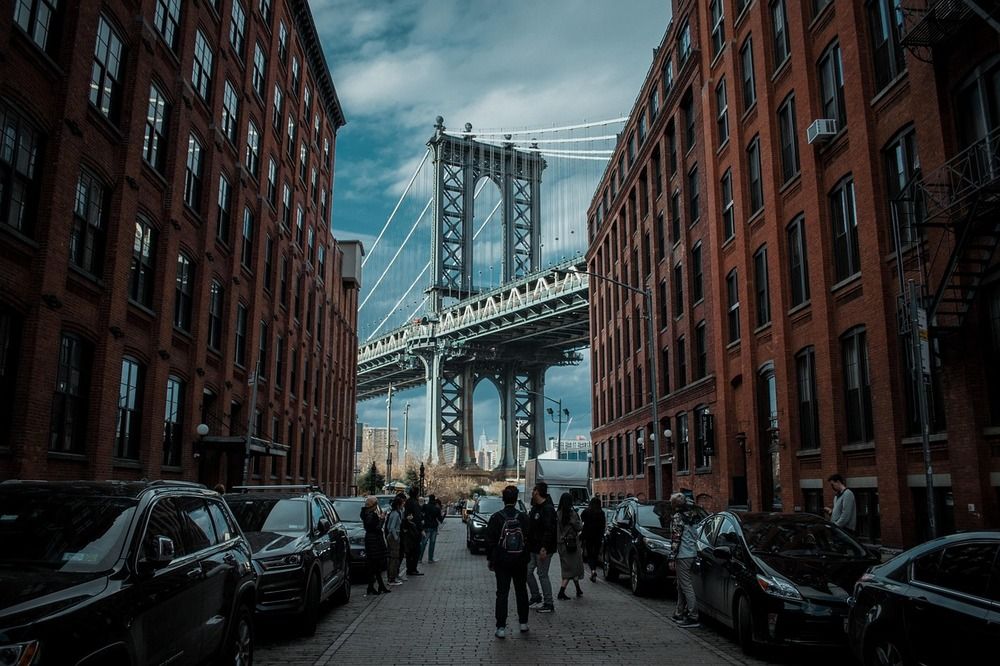
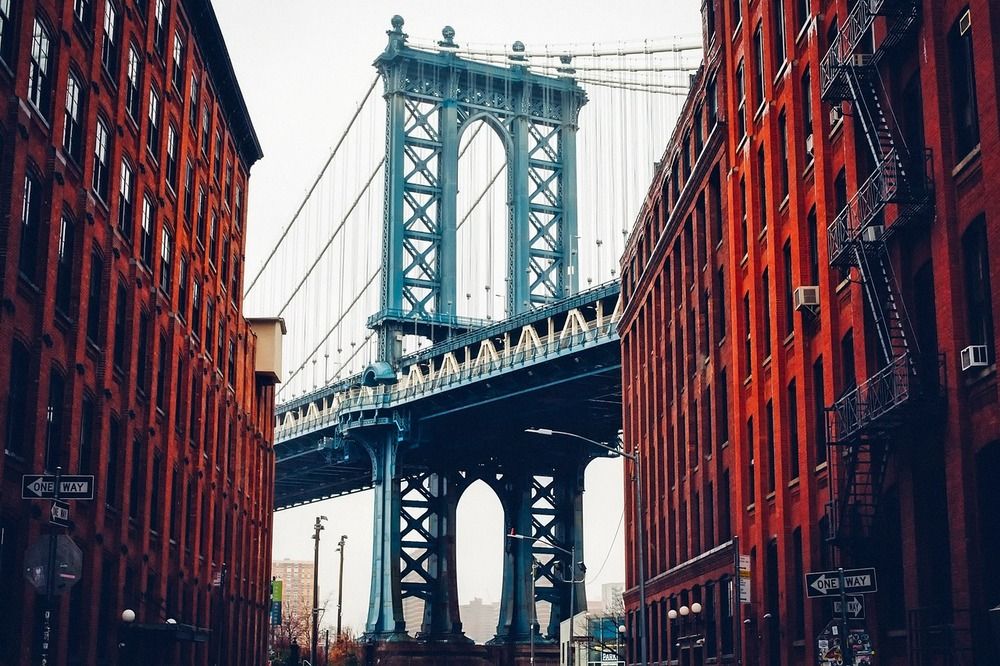
Once the crossing is completed on the Brooklyn side, you emerge into Brooklyn Bridge Park (Empire Fulton Ferry, Brooklyn, NY 11201, rated 4.7/5 on Google with over 21,000 reviews). This green space along the East River offers lawns, playgrounds, and sports facilities, ideal for relaxing after the walk. Two steps away is the trendy DUMBO neighborhood (Down Under the Manhattan Bridge Overpass), famous for its cobblestone streets, contemporary art galleries, creative shops, and gourmet restaurants. Don't miss Washington Street, which offers an iconic viewpoint with the Manhattan Bridge framing the Empire State Building, one of Instagram's most coveted photos.
Brooklyn Bridge hours and access
The Brooklyn Bridge is accessible free of charge 24 hours a day, 7 days a week, year-round. This permanent availability allows visitors to choose the ideal time for their crossing, whether at dawn to avoid crowds, during the day to fully enjoy the light, or at sunset to admire the shimmering colors on the skyline. Note, however, that exceptional closures may occur for maintenance reasons, during special events, or extreme weather conditions. It's recommended to check official information before your visit, especially during holiday periods like Christmas, New Year's, or July 4th.
How to get to the Brooklyn Bridge?
The Brooklyn Bridge enjoys an ideal location, easily accessible from Manhattan or Brooklyn by various means of transport. Here are the main options to reach this emblematic monument.
From Manhattan by subway
Brooklyn Bridge-City Hall station provides the most convenient access from Manhattan. Served by subway lines 4, 5, and 6, it drops you off in immediate proximity to the bridge's pedestrian entrance. From this station, count about 5 minutes of walking to reach the beginning of the promenade. Lines J and Z also stop at this station, offering additional connections from different New York neighborhoods.
From Brooklyn by subway
On the Brooklyn side, several subway stations provide access to the bridge. High Street-Brooklyn Bridge station (lines A and C) represents the closest option, about 10 minutes' walk from the bridge entrance. You can also take lines 2 or 3 to Clark Street station, located slightly north but offering a pleasant walk through Brooklyn Heights to the bridge.
By bus
Bus lines B25, M15, and M103 serve the Brooklyn Bridge vicinity. Line B25 drops you off at Fulton Ferry Landing on the Brooklyn side, while lines M15 and M103 run along Manhattan and stop near the bridge entrance. This option is particularly suitable if you're staying in neighborhoods not directly served by subway lines leading to the bridge.
By ferry
NYC Ferry offers a charming alternative to reach the Brooklyn Bridge. From Manhattan, take the ferry to DUMBO pier. You'll enjoy a mini-cruise on the East River with exceptional views of the bridge itself before walking across it. This option is particularly pleasant in good weather and helps avoid subway crowds.
By taxi or rideshare
Yellow taxis and rideshare services like Uber or Lyft can drop you off near the bridge's pedestrian entrances. Simply tell your driver "Brooklyn Bridge pedestrian entrance." This solution is convenient if you're traveling with luggage or from a distant neighborhood, though more expensive than public transport.
On foot
If you're staying in Lower Manhattan or near City Hall, reaching the Brooklyn Bridge on foot is an excellent option. From Battery Park, count about 20 minutes of walking. From the Wall Street financial district, 15 minutes suffice. This approach allows you to gradually appreciate the bridge's architecture as it emerges progressively as you approach.
For an optimal New York experience, consider using the Ryo audio-guided tour which will allow you to discover the city's main tourist sites while benefiting from enriching commentary on New York's history and culture.
The fascinating history of the Brooklyn Bridge
The Brooklyn Bridge's history goes far beyond that of a simple work of art. It embodies the American dream, technical progress, and human determination in the face of adversity. A look back at the epic of a monument that became legend.
Revolutionary construction (1869-1883)
When construction of the Brooklyn Bridge began in 1869, no one imagined the scale of the challenge ahead. Engineer John Augustus Roebling designed what would become the world's first suspension bridge using steel cables. His audacious project aimed to connect the then-independent cities of Manhattan and Brooklyn, separated by the East River. At that time, New York was experiencing explosive demographic and economic growth, and the need for a permanent link between these two urban centers became crucial. The bridge was meant to facilitate the transport of goods and people, reducing dependence on ferries that until then ensured the connection.
Between tragedy and triumph: the Roebling family
The Brooklyn Bridge construction story is inseparable from the tragic fate of the Roebling family. John Augustus Roebling, the visionary behind the project, would never see his work completed. In 1869, just weeks after construction began, he was seriously injured in a foot accident at the construction site. He developed tetanus and died three weeks later, leaving his son Washington Roebling to take up the torch. Washington, a brilliant engineer himself, supervised construction for several years until he was struck by caisson disease, a condition linked to brutal pressure variations during underwater foundation work. Paralyzed and severely weakened, he had to abandon daily direction of the site. It was then that Emily Warren Roebling, his wife, played a decisive role. Without initial engineering training, she studied mathematics, materials resistance, and construction techniques to serve as an intermediary between her husband and the field teams. She supervised work, communicated with engineers, contractors, and political officials, thus ensuring project completion. Her contribution was so essential that she was honored by being the first to cross the bridge during its inauguration on May 24, 1883, Emily was the first person to cross the bridge in a carriage, holding a rooster in a cage, a symbol of victory. However, for a long time, official history minimized her role, only fully recognizing her contribution in recent decades.
A cultural and historical symbol
From its opening, the Brooklyn Bridge aroused admiration. About 150,000 people crossed it during its inauguration, testifying to popular enthusiasm for this engineering marvel. The bridge quickly became much more than a simple transportation infrastructure: it symbolized American innovation, the conquest of new horizons, and humanity's ability to push the limits of possibility. In 1964, it was classified as a National Historic Landmark, officially recognizing its importance in United States history. Today, it remains among the oldest suspension bridges in service in the country and continues to be a source of inspiration for architects, engineers, and artists worldwide.
Historical anecdotes about the Brooklyn Bridge
Beyond major historical facts, the Brooklyn Bridge contains many fascinating anecdotes that enrich its legend. These stories, sometimes surprising, sometimes touching, testify to this monument's profound impact on New York life.
An official name adopted late
During its first decades of existence, the bridge didn't officially bear the name Brooklyn Bridge. It was commonly called "New York and Brooklyn Bridge" or simply "East River Bridge." It wasn't until 1915, 32 years after its inauguration, that the "Brooklyn Bridge" designation was officially adopted. This delay illustrates the gradual evolution of this monument's identity, which took time to find the name under which it's known worldwide today.
Caisson disease, an unknown scourge
Construction of the Brooklyn Bridge foundations required the use of pressurized caissons driven into the East River bed. Workers labored in these pressure chambers for long hours, exposed to extreme conditions. When they surfaced too quickly, they suffered from what was then called "caisson disease," now known as decompression sickness. Symptoms included intense joint pain, temporary or permanent paralysis, and in the most severe cases, death. At the time, medical knowledge about this phenomenon remained limited, and many workers paid a heavy price, including Washington Roebling himself. It's estimated that at least 20 workers lost their lives during construction, though exact figures remain uncertain.
Emily Warren Roebling, a woman at the helm
Emily Warren Roebling's role in completing the Brooklyn Bridge constitutes one of the most remarkable stories in 19th-century engineering. When her husband Washington was struck by caisson disease and became unable to visit the construction site daily, Emily took the reins of the project. She studied relentlessly the principles of bridge engineering, materials resistance, and structural calculations. Each day, she went to the site, transmitted her husband's instructions to foremen, supervised work progress, and managed relations with municipal authorities. Her dedication and competence were such that some engineers of the time considered her the true chief architect of the bridge. Her contribution was so essential that she was honored by being the first to cross the bridge during its inauguration, holding a rooster in a cage, a symbol of victory. However, for a long time, official history minimized her role, only fully recognizing her contribution in recent decades.
Cables under high surveillance
During construction, a scandal erupted when it was discovered that an unscrupulous supplier had delivered steel cables of inferior quality to that specified in contracts. These defective cables presented a major risk to the entire structure's solidity. Rather than dismantle what had already been built, engineers decided to reinforce the bridge by adding 150 tons of additional cables, well beyond originally planned needs. This precaution, taken urgently following the fraud, paradoxically contributed to making the Brooklyn Bridge one of the safest and most robust bridges ever built. Today, its structure remains largely over-dimensioned compared to the loads it supports.
The legend of George C. Parker, the bridge scammer
George C. Parker entered history as one of New York's most audacious scammers. Between 1900 and 1928, this cunning man "sold" the Brooklyn Bridge to many newly arrived immigrants, unfamiliar with American laws and easily duped. Parker presented false official documents, claimed to be the bridge's legitimate owner, and offered his victims to buy it to install tolls and get rich. Some gullible buyers even began installing toll barriers before police intervened. Parker was arrested several times, but he constantly reoffended, changing identity and method. His story gave birth to the American expression "If you believe that, I have a bridge to sell you," used to mock someone's naivety. He ended his days in prison, but his legend persists, embodying the quintessential New York scammer figure.
A historical record at its inauguration
Upon completion in 1883, the Brooklyn Bridge held the title of world's largest suspension bridge, with a main span of 486 meters. It kept this record for 20 years, until the Williamsburg Bridge was built in 1903. Beyond its impressive size, the bridge also marked considerable technological advancement: it was the first suspension bridge using steel cables rather than wrought iron. This innovation paved the way for building ever longer and more audacious bridges worldwide. Steel use enabled lighter and more resistant structures, revolutionizing bridge engineering for decades to come.
Practical tips for visiting the Brooklyn Bridge
To fully enjoy your Brooklyn Bridge crossing, some recommendations are essential. Here are our best tips for a successful experience.
1. No ticket required
The Brooklyn Bridge can be crossed for free, without reservation or entrance fees. This total accessibility makes it one of New York's most democratic attractions, allowing all visitors, regardless of budget, to experience this emblematic experience.
2. Average crossing duration
Count about 30 to 45 minutes to cross the bridge on foot, depending on your pace and the number of stops you make for photos or to admire the landscape. If you walk without stopping, the crossing can be done in 20 to 25 minutes. By bike, plan about 10 minutes. This estimate can vary considerably depending on crowds: during summer weekends and vacation periods, crowds can significantly slow your progress.
3. Best visiting times
To avoid crowds, favor early morning arrival, before 8 AM, or an evening visit after 8 PM. These hours offer a more peaceful atmosphere and allow appreciating the bridge without being bothered by the crowd. Sunrise over Manhattan constitutes a particularly magical spectacle, with soft light and pastel colors. Sunset, between 5 PM and 7 PM depending on season, attracts more people but offers spectacular panoramas with city lights gradually turning on. Weekdays are generally less crowded than weekends.
4. Respect shared traffic
The Brooklyn Bridge promenade is divided into two parts: a pedestrian walkway and a bike path. Make sure to stay on the designated pedestrian path and not encroach on the area reserved for bikes, especially when stopping for photos. Cyclists can travel quite fast and mutual respect for everyone's space ensures everyone's safety. If you rent a bike, keep in mind that during busy periods, it may be faster and more pleasant to push it on foot rather than trying to weave between tourists.
5. Recommended crossing direction
While you can cross the bridge in both directions, many visitors recommend starting from Manhattan and heading toward Brooklyn. This direction offers a spectacular frontal view of Manhattan approaching progressively, creating a striking visual effect. Moreover, you end up directly in the DUMBO neighborhood and Brooklyn Bridge Park, two perfect places to relax after the crossing. You can then return to Manhattan by subway or ferry, which allows for varying pleasures.
6. Recommended appropriate attire
Plan comfortable shoes suitable for walking, as the crossing represents nearly 2.5 kilometers. The wooden surface can become slippery in rainy weather, so it's better to opt for non-slip soles. New York experiences significant climatic variations depending on seasons: in winter, dress warmly as wind on the bridge can be icy; in summer, wear light clothing, a hat, and sunscreen, as sun exposure is total. Temperatures felt on the bridge are often lower than at street level due to wind blowing from the East River. Also think about bringing a water bottle, especially during hot days, as there are no refreshment points on the bridge itself.
7. Recommended photo equipment
The Brooklyn Bridge offers exceptional photographic opportunities. A smartphone suffices to capture beautiful memories, but photography enthusiasts will appreciate bringing a camera with a wide-angle lens to capture the scope of arches and cables. A telephoto lens can also prove useful for zooming in on architectural details or isolating Manhattan's skyscrapers. If you plan to photograph sunrise or sunset, a light tripod will allow obtaining sharp shots with longer exposure times. Remember to respect other visitors when setting up your equipment: favor lateral alcoves to avoid hindering traffic.
To complete your New York discovery, don't forget to download the Ryo audio-guided tour which will accompany you in exploring Manhattan's must-see locations with enriching commentary and intuitive navigation.
Where to stay near the Brooklyn Bridge?
To fully enjoy your Brooklyn Bridge visit, choosing accommodation nearby offers many advantages. The DUMBO neighborhood (Down Under the Manhattan Bridge Overpass) constitutes the ideal option if you want to be closest to the bridge on the Brooklyn side. This trendy neighborhood combines industrial charm and modernity, with boutique hotels, converted lofts, and apartments often offering breathtaking views of the bridge and Manhattan skyline. You can reach the bridge's pedestrian entrance in just 5 to 10 minutes on foot. Brooklyn Heights, located just north, represents an elegant alternative with its beautiful promenades and quiet residential atmosphere. Count about 15 minutes' walk to the bridge. On the Manhattan side, the Financial District, near Wall Street and City Hall, offers numerous accommodation options, from economical hostels to luxury hotels. You'll be just minutes' walk from the bridge access. These neighborhoods not only allow easy visits to the Brooklyn Bridge at different times of day, but also exploration of other major New York attractions on foot or by public transport. For personalized advice on the best accommodations, consult our selection of best hotels in New York.
In conclusion, visiting the Brooklyn Bridge represents much more than a simple crossing from one neighborhood to another. It's a dive into American history, an architecture and engineering lesson, and above all, an unforgettable visual and emotional experience. Whether you're passionate about history, a photography enthusiast, or simply looking for a free and accessible activity in New York, this emblematic monument will seduce you. By taking its elevated pedestrian promenade, you'll literally walk in the footsteps of millions of New Yorkers and visitors who, since 1883, have made this bridge a timeless symbol of the Big Apple. Don't forget to use the Ryo audio-guided tour to enrich your New York discovery with captivating commentary and interactive navigation that will guide you through the city's most beautiful sites.
Frequently asked questions
Is the Brooklyn Bridge accessible for free?
Yes, crossing the Brooklyn Bridge is completely free, 24/7, whether on foot or by bike. No reservation is necessary.
How long does it take to cross the bridge on foot?
The crossing takes on average 30 to 45 minutes depending on your pace and number of photo stops. Count 20 to 25 minutes if you walk without stopping.
What's the best time to visit the Brooklyn Bridge?
To avoid crowds, favor early morning (before 8 AM) or evening (after 8 PM). Sunrise and sunset offer the most beautiful panoramas but attract more visitors.
Can you rent bikes near the Brooklyn Bridge?
Yes, several shops offer bike rentals near the bridge entrances, on both Manhattan and Brooklyn sides. You can also use Citi Bike stations for short-term rental.
Is the bridge accessible to people with reduced mobility?
The Brooklyn Bridge pedestrian promenade has a slight slope but remains accessible to wheelchair users. Entrances from Manhattan and Brooklyn are designed to facilitate bridge access.
Are there restrooms on the bridge?
No, there are no restrooms on the bridge itself. Plan to stop before starting the crossing. You'll find public restrooms at Brooklyn Bridge Park on the Brooklyn side.
Can you visit the bridge in winter?
Yes, the bridge is accessible year-round. In winter, dress warmly as wind can be icy. Snowy landscapes offer spectacular views, but be careful, the surface can become slippery.
Should you cross from Manhattan to Brooklyn or vice versa?
While both directions are possible, starting from Manhattan toward Brooklyn is recommended to benefit from a spectacular frontal view of the Manhattan skyline approaching progressively.
Is the bridge lit at night?
Yes, the Brooklyn Bridge is beautifully lit at night, creating a magical atmosphere. Cables and arches are highlighted by an LED lighting system that makes nighttime crossing particularly romantic.
What to do after crossing the bridge on the Brooklyn side?
Once on the Brooklyn side, explore Brooklyn Bridge Park to relax, then discover the trendy DUMBO neighborhood with its art galleries, shops, and restaurants. Don't miss the iconic Washington Street viewpoint for a memorable photo.