
Créé par Emilie, le 14 mai 2026
Votre guide Ryo
© Shutterstock
San Francisco doesn't ease you in gently. The city hits you all at once: the salt-laced wind off the bay, the clang of a cable car bell on a steep hill, the disorienting beauty of fog pouring over the Golden Gate at dawn. Very few cities in the world pack this much geography, history, and cultural weight into 49 square miles. Whether you have a single afternoon or a full week, the things to do in San Francisco range from the bucket-list iconic, walking that bridge, taking a boat to a former federal prison, to the genuinely surprising: a Victorian conservatory sheltering a carnivorous plant collection, a neighborhood that still smells faintly of the Summer of Love, and a shoreline trail that ends at the ghostly ruins of a 19th-century bathhouse. The Ryo Ryocity audio guide for San Francisco is a good companion for exploring on foot at your own pace.
Expect a bison paddock inside a city park. Expect a 212-step climb to a tower whose murals depict 1930s California workers in astonishing detail. Expect a street so crooked that buses are banned from it entirely. This list covers 25 of the best experiences, the classics done right, several spots that most visitors overlook, and practical details that will actually change how you plan your days.
1. Walk Across the Golden Gate Bridge
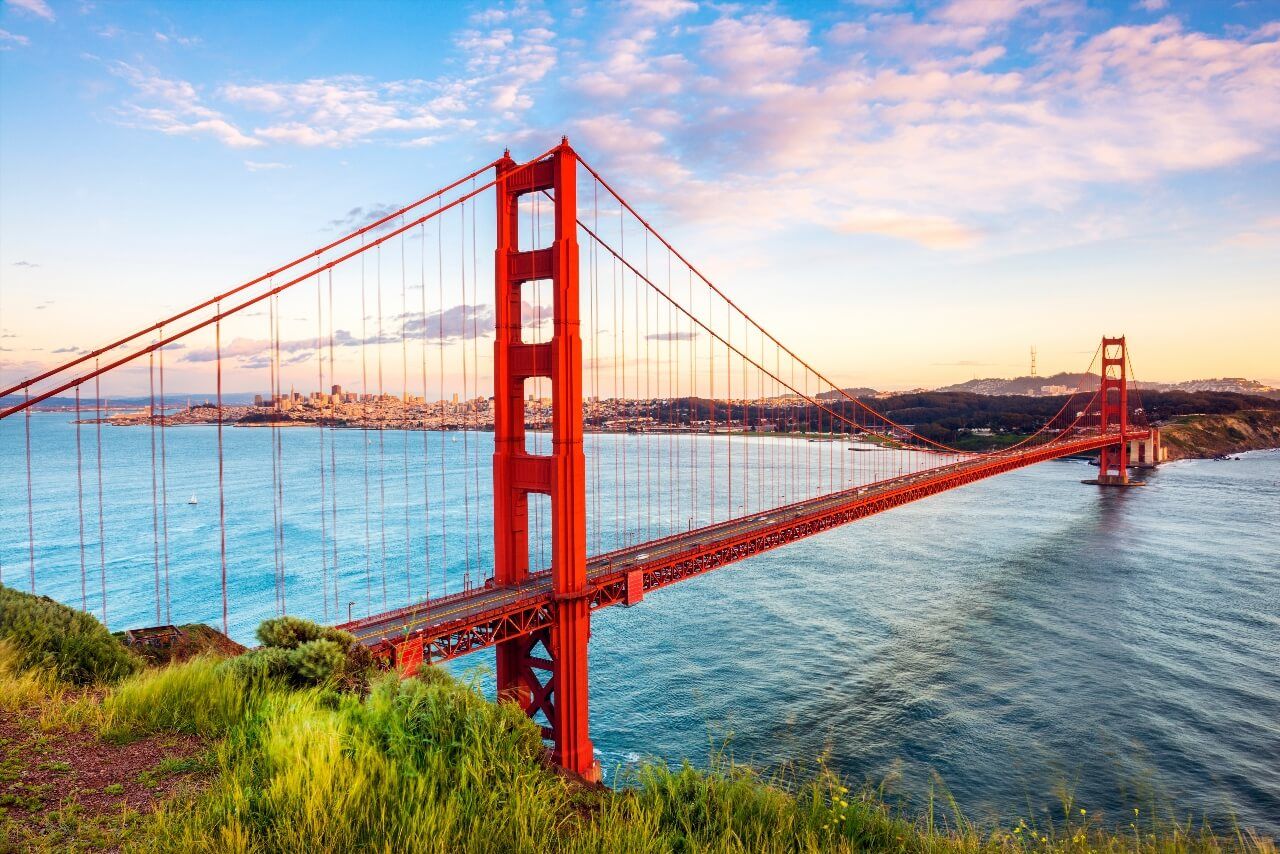
The Golden Gate Bridge stands at the northern tip of the San Francisco Peninsula, spanning roughly 1.7 miles across the mouth of San Francisco Bay. Its completion in 1937 was considered an engineering impossibility, the strait below is one of the most treacherous stretches of water on the Pacific Coast, raked by powerful currents and thick fog for much of the year. The International Orange paint, chosen partly for its visibility in low-visibility conditions, has become one of the most recognized color choices in architectural history.
Walking the bridge takes about 30 to 40 minutes one way at a relaxed pace. The eastern sidewalk is open to pedestrians daily (roughly 5 a.m. to 9 p.m. in summer, earlier closure between November and March); cyclists use the western path. From the midpoint, the views in both directions are difficult to describe without reaching for superlatives: the city skyline to the southeast, the Marin Headlands rolling green to the north, Alcatraz Island sitting low in the water to the east. On a clear morning, you can see all the way to Mount Tamalpais.
A few practical points that make a real difference. First, check the fog forecast before you go, the National Weather Service maintains a specific webcam feed for the bridge, and there is little point walking across if you can see only ten feet ahead. Second, the bridge is free to cross on foot or by bike. Driving across is tolled southbound only ($8.75 with FasTrak, $9.75 pay-by-plate for most passenger vehicles in 2026), and parking on the San Francisco side at the Welcome Center fills up fast on weekends. Third, the wind on the bridge is almost always cold, regardless of the air temperature in the city. Bring a layer you didn't think you'd need.
The Vista Point on the Marin side at the northern end offers a famous photograph angle looking back at the bridge with the city behind it. It is reached by crossing the full span or by driving separately into Marin County.
2. Spend a Day on Alcatraz Island
The moment the ferry pulls away from Pier 33 and the city begins to recede behind you, something shifts. Alcatraz Island (Alcatraz Island, San Francisco, CA 94133, rated 4.7/5 on Google (44 396 avis)) is only 1.5 miles from the waterfront, but it feels genuinely remote, which was, of course, the point. Between 1934 and 1963, the federal penitentiary housed some of the most dangerous inmates in the American prison system, including Al Capone and Robert Stroud, the self-taught ornithologist who would become known as the Birdman of Alcatraz.
The island operated as a prison for just 29 years, but before that it served as a Civil War military fortress and, before that, it was a critical lighthouse station for ships navigating San Francisco Bay. After the prison closed, the island was occupied for 19 months between 1969 and 1971 by a group of Native American activists under the banner of Indians of All Tribes, an occupation that left visible graffiti on the water tower and changed federal policy on Indigenous land rights. This history is covered in depth on the island and is often overlooked by visitors who come only for the prison stories.
Book your ferry tickets well in advance. Alcatraz City Cruises sells out weeks ahead during summer, and Pier 33 is the only legitimate departure point. The day tour runs about $47.95 for adults in 2026 and includes the self-guided audio tour of the cellhouse, which is genuinely excellent: narrated by former guards and inmates, it puts you inside the cells (some measuring just 5 by 9 feet) and explains the three escape attempts that came closest to succeeding. The night tour (around $59.65) offers a different atmosphere entirely, fewer crowds, dramatic lighting, and access to areas of the island not included in the day program.
Budget at least three hours. There is more on Alcatraz than the cellhouse: the gardens (maintained by volunteers and striking in spring), the parade ground with views of the bay, and the ruins of the Warden's House, which burned during the 1969 occupation and has been left deliberately unrestored.
3. Explore Fisherman's Wharf
Fisherman's Wharf is the part of San Francisco that gets the most complicated reactions from locals. It is loud, commercialized, and clogged with souvenir shops selling cable car keychains. It is also genuinely interesting if you know where to look and go at the right time.
The neighborhood's fishing heritage is real. The commercial fishing fleet still operates out of the docks between Pier 45 and Pier 47, and on foggy mornings you can watch the boats returning with their catch. The Dungeness crab season, which runs roughly from November through June, is the reason the waterfront restaurants still matter: the crab is pulled from local waters and cooked in giant steaming pots right on the sidewalk, and eating a fresh cracked crab at an outdoor table on a cold San Francisco morning is one of those experiences that holds up against any amount of tourist-trap context.
Pier 45 houses the SS Jeremiah O'Brien, one of only two fully operational Liberty Ships remaining from World War II. The ship participated in the D-Day landings and is open for tours most days of the year. Next door, the USS Pampanito, a WWII submarine, offers a tight, claustrophobic tour of what life looked like below the surface of the Pacific.
The best strategy for Fisherman's Wharf: arrive before 9 a.m., walk the docks while they're quiet, eat at one of the counter-service fish spots rather than the sit-down restaurants, and leave before noon when the tour buses arrive. Scoma's, opened in 1965, remains the most respected traditional seafood restaurant on the waterfront. Pair the morning walk with the Fisherman's Wharf segment of the Ryo Ryocity audio tour and you'll catch context most signs leave out.
4. Ride a Historic Cable Car
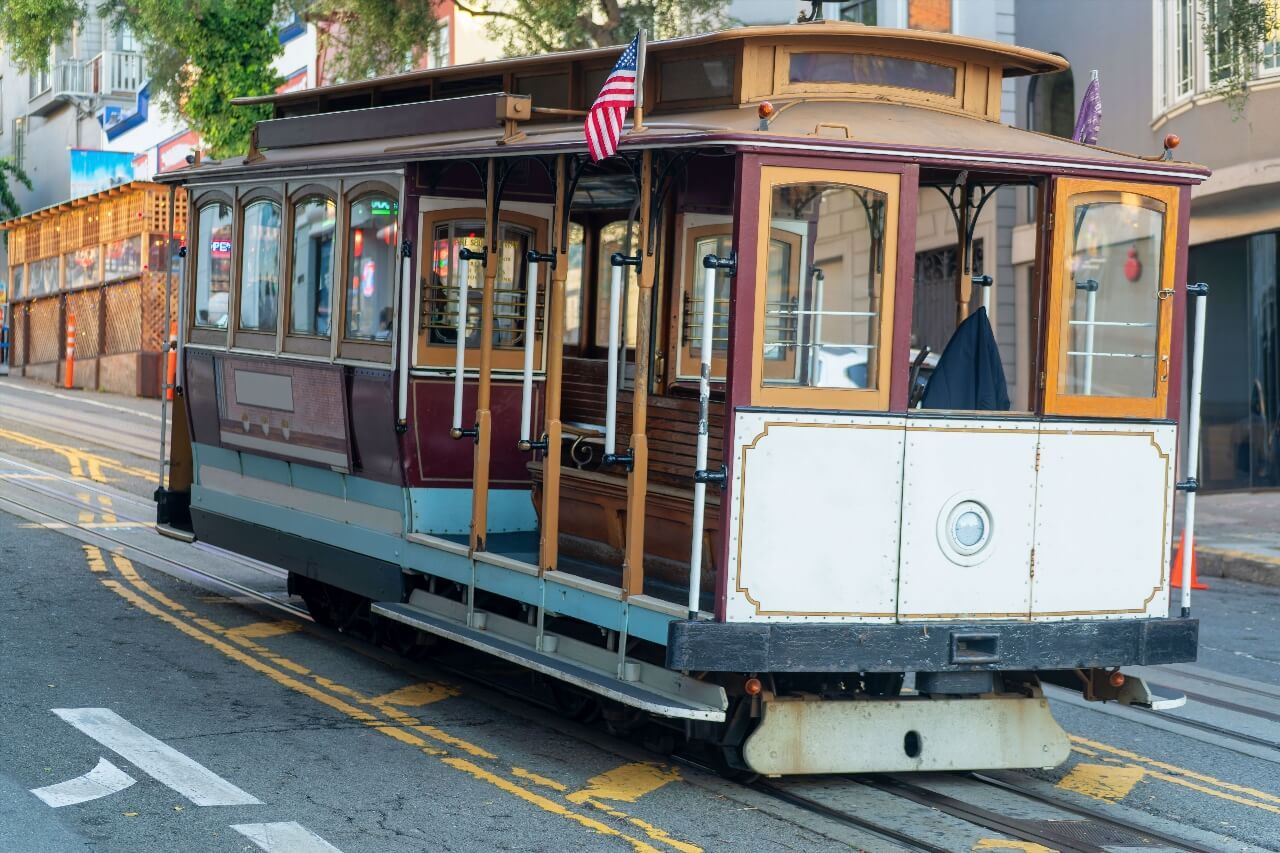
San Francisco's cable car system is the last manually operated one in the world, and it was declared a National Historic Landmark in 1964, not the individual cars, but the entire system: tracks, cars, cables, and the powerhouse that drives them.
Three lines remain in operation. The Powell-Hyde line is generally considered the most scenic, climbing over Nob Hill and descending toward Aquatic Park with views of the bay on clear days. The Powell-Mason line terminates near Fisherman's Wharf. The California Street line runs east-west across the city's financial core, used more by commuters than tourists and therefore less crowded.
The cable cars run on a moving underground cable, the car doesn't have an engine, it simply grips and releases a continuously moving cable running at 9.5 mph beneath the street. Brakemen control the grip mechanically, and on steep descents the skill required is considerable. Watch the operators at the turnaround at Powell and Market: the cars are manually turned on a rotating platform. A single one-way fare is $12 as of January 2026, with an $18 «Cable Car Plus» day pass that adds unlimited Muni travel and free rides for up to two accompanying kids. If you plan more than one ride, the day pass pays for itself.
Go early on weekdays. The queues at Powell and Market on summer afternoons can stretch to an hour. The Cable Car Museum at the Washington-Mason carbarn is free, shows the underground machinery in operation through a glass floor, and takes about 45 minutes to visit.
5. Wander Through Chinatown
San Francisco's Chinatown is the oldest in North America, established in 1848 by Chinese immigrants who came for the Gold Rush and stayed to build the railroads. Today it covers 24 square blocks and houses one of the densest populations in the city, a functioning neighborhood that happens to be on the tourist trail, not the other way around.
Enter through the Dragon Gate on Grant Avenue at Bush Street, a gift from Taiwan installed in 1970, its green-tiled roof and guardian lions have become the canonical image of the neighborhood. Grant Avenue itself is tourist-oriented: gift shops, dim sum takeout windows, and restaurants with laminated menus. One block west, Stockton Street is where residents actually shop: live seafood tanks, herbal medicine dispensaries, produce stalls selling vegetables you won't find anywhere else in the city.
Several specific stops reward attention. The Golden Gate Fortune Cookie Factory on Ross Alley has been pressing fortune cookies since 1962 and is tiny enough that you can watch the entire process from the doorway, the rounds of dough coming out of the press, the fortunes folded in by hand before the cookie hardens. The Tien Hou Temple on Waverly Place, four flights up a narrow staircase, is a working Taoist temple dating to 1852 and one of the oldest in the country. Remove shoes before entering, and go quietly.
For food, the neighborhood offers some of the best value in San Francisco. Dim sum at the larger Cantonese restaurants on Washington Street starts as early as 7 a.m. and the quality of the har gow and siu mai at the better spots rivals anything in Hong Kong.
6. Discover Golden Gate Park
Golden Gate Park covers 1,017 acres, making it slightly larger than Central Park in New York, though fewer visitors realize this. The park was built on sand dunes starting in 1870, a project that required the invention of new soil stabilization techniques and took decades to achieve the lush canopy that exists today. It stretches three miles from the Panhandle neighborhood all the way to the Pacific Ocean.
The eastern third of the park is the most visited, and for good reason. The Japanese Tea Garden (the oldest public Japanese garden in the United States, dating to 1894) covers 5 acres of meticulously maintained ponds, bridges, stone lanterns, and a pagoda, arrive when it opens at 9 a.m. to have it nearly to yourself. Immediately adjacent is the San Francisco Botanical Garden, with 55 acres of plants from around the world, including a remarkable collection of California native species and a cloud forest section that stays permanently misty.
The de Young Museum and the California Academy of Sciences face each other across the Music Concourse in the center of the park (covered separately below). Between them, the Spreckels Temple of Music hosts free Sunday afternoon concerts in summer.
Head to the western end of the park for the Bison Paddock, yes, a herd of American bison lives here, introduced in 1891. The Dutch Windmill near the ocean beach was built in 1902 to pump groundwater and irrigate the park; it still turns on windy days. The entire western end of the park borders Ocean Beach, which stretches five miles and is almost always windy and cold but genuinely dramatic in its emptiness.
Rent a bicycle at one of the shops near the park entrance on Stanyan Street. On Sundays, JFK Drive through the park is closed to cars and becomes one of the best urban cycling routes in California.
7. Visit the California Academy of Sciences
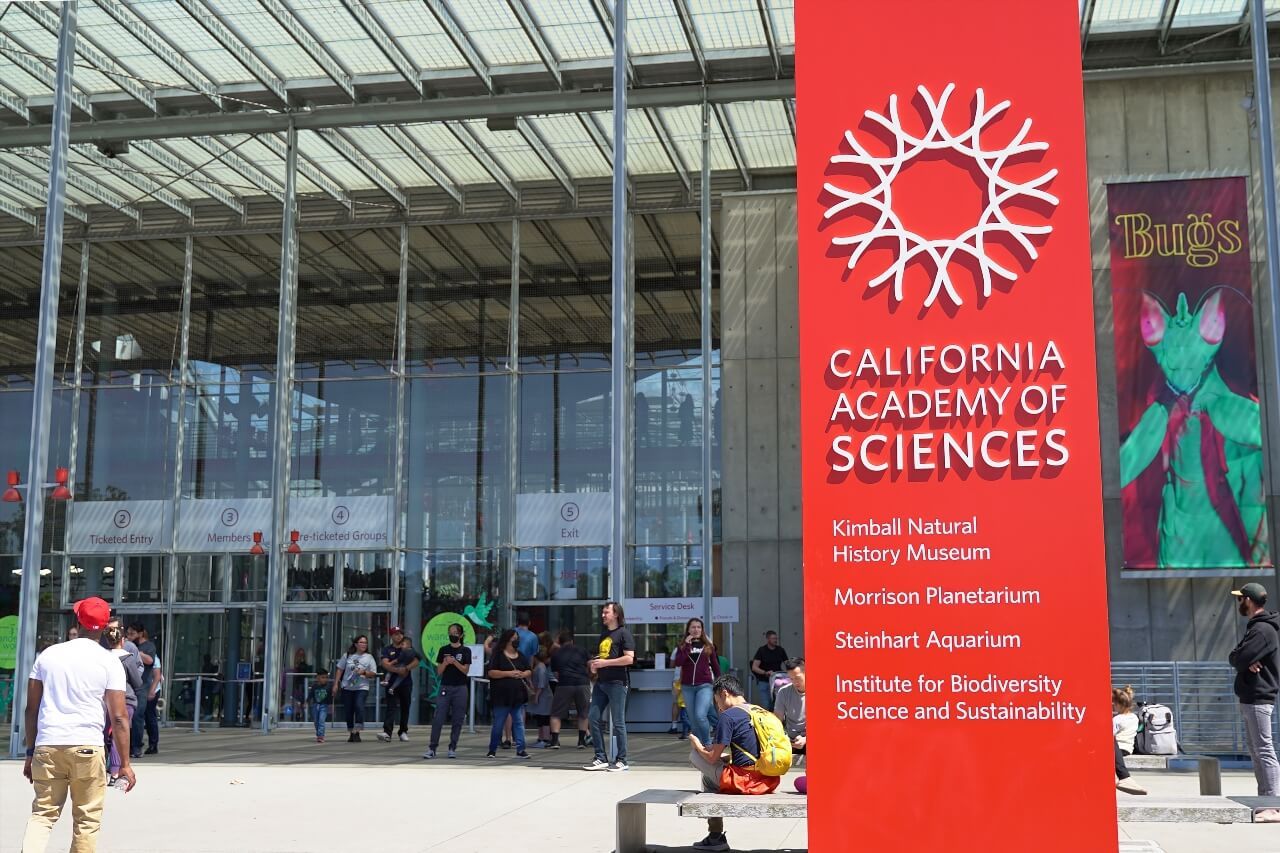
The California Academy of Sciences (55 Music Concourse Dr, San Francisco, CA 94118, rated 4.6/5 on Google (5 973 avis)) in Golden Gate Park is one of the strangest and most impressive natural history institutions in the world, strange because it packs a planetarium, a four-story living rainforest, a coral reef aquarium, and a natural history museum under a single roof topped by a 2.5-acre living green roof planted with native California plants.
The building, designed by Renzo Piano and opened in 2008, is worth a close look before you go inside: the undulating roofline mimics the hills of San Francisco, and the green roof reduces stormwater runoff by an estimated 3.6 million gallons per year. Inside, the Osher Rainforest is a glass dome 90 feet high containing free-flying butterflies, poison dart frogs, and a spiral ramp that ascends through tropical forest zones from the floor to the canopy. At the base of the dome, an elevator descends below the aquarium floor into a flooded Amazon exhibit.
The Steinhart Aquarium houses over 40,000 live animals, including the Philippine Coral Reef exhibit, one of the deepest coral reef tanks in the world at 25 feet. General admission runs $49 to $55 for adults in 2026 depending on peak dates (spring break, summer, holiday weekends sit at the top end). On Thursday evenings, the academy stays open late for NightLife, a 21-plus event with a cash bar, DJs, and rotating themed exhibits, tickets are roughly $25 and book up fast.
8. Stroll Along the Embarcadero
The Embarcadero is the broad waterfront boulevard that runs along the eastern edge of San Francisco from the Bay Bridge in the south to Fisherman's Wharf in the north, roughly 3 miles in total. Before 1989, an elevated freeway ran along its length and cut the city off from its own waterfront. The Loma Prieta earthquake damaged the structure severely enough that the city chose to demolish it rather than rebuild, and the boulevard that emerged transformed the eastern waterfront entirely.
Walking the Embarcadero (The Embarcadero, San Francisco, CA 94105, rated 4.7/5 on Google (22K reviews)) from the Ferry Building to Pier 39 takes about 45 minutes at a comfortable pace. Along the way, the piers each have a character of their own. Pier 7 is a public fishing pier that extends over the bay and is free to walk out onto; the views back toward the city skyline are among the cleanest angles available without getting on a boat. Pier 17 in the adjacent Seaport district houses restaurants and a rooftop venue that hosts concerts in summer.
The Bay Lights installation, 25,000 white LED lights strung across the western span of the Bay Bridge, runs nightly from dusk to 2 a.m. and is best seen from the Embarcadero between Pier 14 and Pier 7.
9. See the Painted Ladies at Alamo Square
Alamo Square is a small park at the top of a hill in the Western Addition neighborhood, and its eastern edge offers one of the most reproduced views in American city photography: a row of six Victorian houses, the Painted Ladies, with the downtown skyline rising behind them.
The Painted Ladies were built between 1892 and 1896 and are among approximately 48,000 Victorian and Edwardian houses that still stand in San Francisco, the largest concentration of intact Victorian residential architecture in the United States. Their vivid paint schemes, each house in a different palette of three to five colors, were part of a restoration movement that began in the 1960s, when these houses were being routinely demolished or painted gray.
The best light for photography is morning, with the sun illuminating the facades. The park itself has a gentle slope that makes it a popular picnic spot, and on weekends you'll find families, dogs, and the occasional wedding party. The neighborhood around the park, particularly Steiner Street running south from the park, has several more well-preserved Victorians worth looking at.
10. Climb Coit Tower
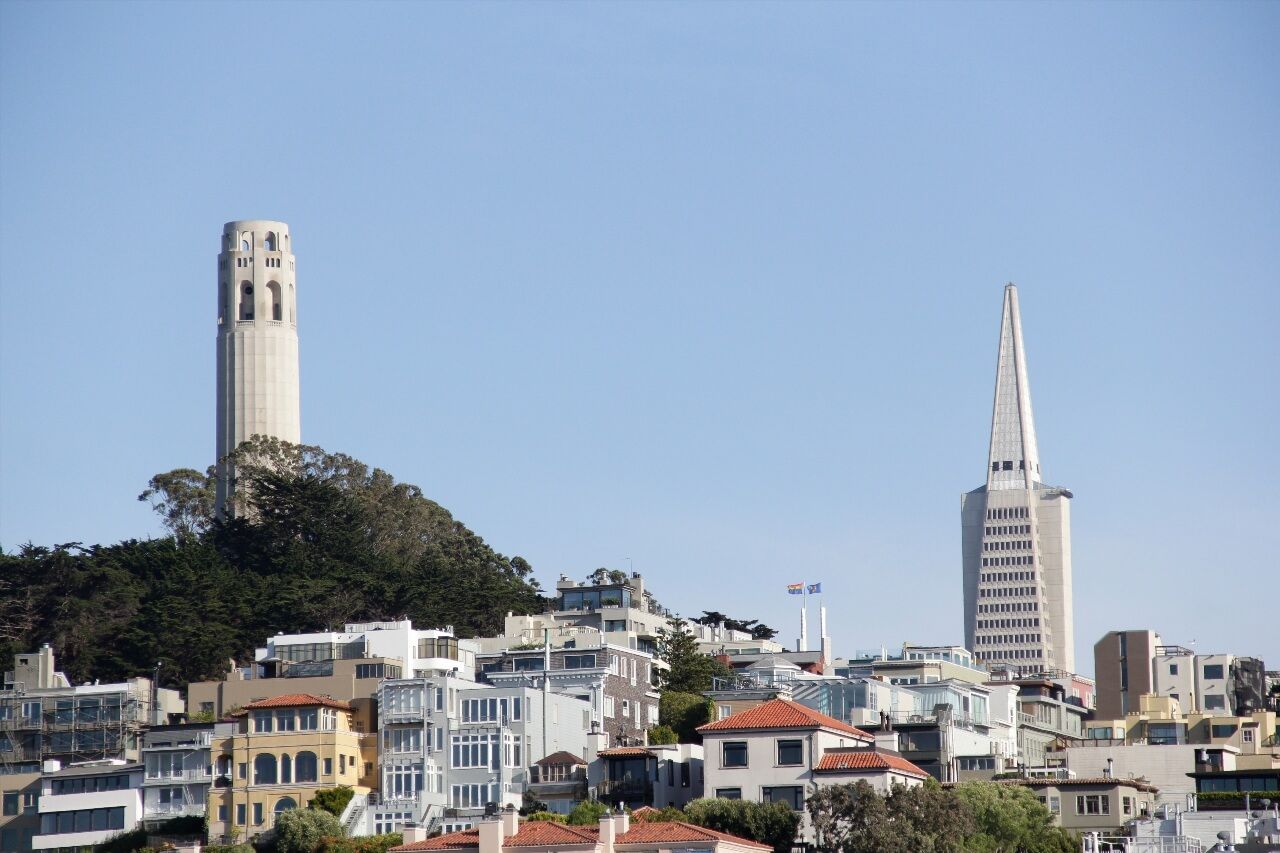
Coit Tower stands at the top of Telegraph Hill, rising 210 feet above the surrounding neighborhood. Built in 1933 with a bequest from eccentric socialite Lillie Hitchcock Coit (who left one-third of her estate to the city to beautify San Francisco), the concrete tower is a landmark visible from much of the northeastern waterfront.
The tower itself is free to enter and worth doing for one specific reason: the interior ground floor is covered in 27 fresco panels painted in 1934 by a team of artists working under the New Deal's Public Works of Art Project. The murals depict California workers, farmhands, factory workers, librarians, newspaper vendors, with an unflinching political energy that drew significant controversy at the time. Several panels show stevedores and longshoremen in the middle of the 1934 waterfront strike. Look closely at the mural at the top of the stairs for the copy of the communist newspaper that caused a near-riot before the building opened.
Pay the elevator fee ($10 for adults, $7 for San Francisco residents in 2026) to reach the open-air observation deck at the top. The 360-degree view takes in the bay, the bridges, Alcatraz, and the closely packed hills of the city in all directions. On clear days, the view stretches to Mount Diablo in the East Bay.
The walk up to the tower from Washington Square Park involves a set of public stairs climbing through a residential neighborhood where wild parrots, a flock of cherry-headed conures that has lived on Telegraph Hill since the 1990s, can often be heard and seen in the trees.
11. Explore the Palace of Fine Arts
The Palace of Fine Arts in the Marina District is one of the city's most consistently surprising landmarks, partly because nothing in the urban context prepares you for it. A Roman-style rotunda and curved colonnades reflected in a swan-filled lagoon, set against a backdrop of residential streets and a Target store, the visual dissonance is remarkable.
The structure was built for the 1915 Panama-Pacific International Exposition, a world's fair held to celebrate the completion of the Panama Canal and to demonstrate that San Francisco had fully recovered from the 1906 earthquake and fire. Almost every other structure from the exposition was demolished immediately after. The Palace of Fine Arts was so popular that the city kept it, though the original building was essentially a wood-and-plaster temporary structure. The current reinforced concrete version was rebuilt between 1965 and 1974.
Admission is free. The grounds are open daily and are particularly peaceful on weekday mornings. The lagoon is home to ducks, geese, and swans; the rotunda colonnade creates a theatrical backdrop for photographs at any time of day. On weekend afternoons, the interior of the rotunda is used for events and exhibitions, check local listings before you visit.
12. Wander Haight-Ashbury
The intersection of Haight and Ashbury Streets is a pilgrimage site for anyone with even passing interest in the counterculture movements of the 1960s. In the summer of 1967, approximately 100,000 people converged on this neighborhood for what became known as the Summer of Love, an event that announced the hippie movement to the American mainstream and changed popular culture in ways that are still being mapped.
The neighborhood looks quite different now. The Victorians that housed communes and crash pads have been renovated and now sell for well over a million dollars. The record stores and head shops of the original era have largely given way to boutiques. But the neighborhood retains a genuine identity: vintage clothing stores stocking the real thing, the Amoeba Music outpost at the eastern edge of the neighborhood (one of the last great independent record stores in the country, with an inventory of roughly 100,000 titles), and a street culture on Haight Street itself that is more vibrant than most San Francisco commercial strips.
Two blocks south of the main intersection, Buena Vista Park, the oldest park in San Francisco, established in 1867, offers good elevated views of the city and the bay. The hike up through the wooded park takes about 20 minutes.
13. Marvel at Lombard Street
Lombard Street, between Hyde and Leavenworth Streets on Russian Hill, is frequently described as the most crooked street in the world. It is not, that title arguably belongs to Vermont Street in the Potrero Hill neighborhood, which has a tighter curve-to-block ratio, but the 8 hairpin turns of Lombard's famous one-block section, lined with hydrangeas and brick-paved switchbacks, are genuinely striking. Walking down the steps on either side takes about three minutes. The speed limit for cars is 5 mph and traffic queues on summer weekends back up for blocks. The best view is from the bottom, looking back up.
14. Visit the de Young Museum
The de Young Museum (50 Hagiwara Tea Garden Dr, San Francisco, CA 94118, rated 4.6/5 on Google (9 533 avis)) in Golden Gate Park is San Francisco's primary fine art museum, housing a collection that spans American art from the 17th century to the present, alongside significant holdings in art from Africa, Oceania, and the Americas. The building, designed by Herzog and de Meuron and opened in 2005, is clad in perforated copper that is slowly patinating to green, in 30 years it will be nearly invisible against the park's tree canopy.
The collection's strongest areas are American painting and decorative arts (the 18th and 19th-century galleries are among the most comprehensive on the West Coast) and the Oceanic art collection, which is frequently cited as one of the finest in any American museum. Rotating exhibitions at the de Young consistently draw significant works from international institutions, check the exhibition calendar before visiting, as the special shows alone often justify the entry fee.
General admission is $20 for adults in 2026, with seniors at $17, students at $11, and youth 17 and under free. The Hamon Observation Tower above the main building is free to access regardless of museum entry and offers panoramic views over the park to the Pacific; note it closes at 4:30 p.m. daily. Admission is also free for everyone on the first Tuesday of each month.
15. Explore the Ferry Building Marketplace
The Ferry Building (1 Ferry Building, San Francisco, CA 94105, rated 4.6/5 on Google (37 722 avis)) at the foot of Market Street on the Embarcadero is one of the more successful adaptive reuse projects in American urban planning. Built in 1898 and once the second-busiest transit terminal in the world, the building fell into near-dereliction after the Bay Bridge opened and reduced ferry traffic. The 2003 renovation transformed it into a marketplace focused on local, artisanal, and sustainable food producers.
The ground floor runs the length of the building in a single long arcade: Acme Bread Company, Cowgirl Creamery (whose Mt Tam cheese has been featured in cheese competitions internationally), Hog Island Oyster Co. oyster bar, and a dozen other producers operating small retail counters. The Tuesday, Thursday, and Saturday farmers' market outside the building is one of the most respected in California, drawing restaurants and home cooks from across the Bay Area.
The clock tower above the building, modeled on the Giralda tower in Seville, stopped during the 1906 earthquake and restarted during the 1989 Loma Prieta quake, an urban legend that persists despite being historically inexact. The ferry terminal at the back of the building still operates, with boats to Oakland, Sausalito, Tiburon, and other East Bay destinations running throughout the day.
16. Hike Lands End and the Sutro Baths Ruins
Lands End is the northwestern corner of the San Francisco peninsula, a stretch of rocky coastline within the Golden Gate National Recreation Area that offers some of the most dramatic hiking in any American city. The Lands End Trail runs approximately 3.5 miles along cliffs above the Pacific, connecting the Sutro Baths (1004 Point Lobos Ave, San Francisco, CA 94121, rated 4.7/5 on Google (2 920 avis)) ruins in the east to Point Lobos in the west, with views of the Golden Gate Bridge, the Marin Headlands, and the open ocean throughout.
The trail is well-maintained but involves some elevation change and exposed sections. On clear days the views are extraordinary; in fog, the atmosphere is something else entirely, the sound of the surf below, the bridge appearing and disappearing, the occasional bark of a sea lion.
At the eastern end of the trail, the Sutro Baths are among the most evocative ruins in the city. Built in 1896 by former San Francisco mayor Adolph Sutro, the complex was at the time the world's largest indoor swimming facility: six saltwater pools fed by a tunnel from the ocean, plus a freshwater pool, all under a glass and iron roof covering three acres. Admission was designed to be affordable to working-class San Franciscans, a deliberate populist gesture. The complex burned in 1966 during a botched attempt to convert it into a luxury condominium development (accounts vary on whether the fire was accidental), and the concrete foundations remain where the pools once were, now filling and draining with each tide. On a grey afternoon with the waves coming in over the rocks, it is one of the most photogenic places in the city.
The parking lot at Point Lobos Avenue and El Camino del Mar is small and fills quickly on weekends. Take the 38 Geary bus and walk down from the Cliff House.
17. Spend Time in North Beach
North Beach (Columbus Ave & Broadway, San Francisco, CA 94133, rated 4.5/5 on Google (9K reviews)) is San Francisco's Italian neighborhood. Though the Italian fishing families who settled here in the late 19th century have largely dispersed, the area retains a strong espresso culture, a density of good restaurants, and the City Lights Bookstore on Columbus Avenue, which has been a literary institution since Lawrence Ferlinghetti opened it in 1953.
City Lights is the right place to start. The store published Allen Ginsberg's «Howl» in 1956, was raided by the San Francisco police for obscenity, and won the subsequent court case in a ruling that changed American freedom of expression law. The upstairs poetry room, with its dedicated section on Beat literature, is a functioning archive as much as a retail space. The basement holds small-press and political titles. Ferlinghetti died in 2021, but the store's character hasn't changed.
Across the street, Vesuvio Café has operated since 1948 and preserves the physical look of the Beat era, the booths, the art on the walls, the upstairs balcony looking down Columbus. Caffe Trieste, a block away on Vallejo Street, opened in 1956 as the first espresso bar on the West Coast. The coffee is good; the old Italians playing cards in the corner on Saturday mornings are better.
For food, Tony's Pizza Napoletana on Washington Square Park has won the World Pizza Cup in Naples, and the line on weekend evenings confirms that the reputation has traveled.
18. Visit SFMOMA
SFMOMA (151 3rd St, San Francisco, CA 94103, rated 4.6/5 on Google (16 389 avis)), the San Francisco Museum of Modern Art, is one of the largest modern art museums in the United States, housing a permanent collection of over 33,000 works across 170,000 square feet of gallery space. The Snøhetta expansion opened in 2016 more than tripled the building's square footage and added a remarkable living wall of 19,000 plants on the exterior face.
The collection's particular strengths are in American abstract expressionism (the Haas Family Foundation gifts include major works by Clyfford Still, whose largest collection outside Denver lives here), photography (the SFMOMA photography department is one of the most respected in the world), and contemporary media art. The Fisher Collection, the museum's crown jewel, contains works by Gerhard Richter, Ellsworth Kelly, and a set of Sol LeWitt wall drawings installed across multiple floors.
Adult admission is $30 in 2026 (seniors $25, students $23, free for visitors 18 and under). On Thursdays, the museum keeps its galleries open until 8 p.m., the calmest window of the week. The in-house restaurant In Situ, curated by Corey Lee, recreates dishes from notable restaurants around the world, an unusual concept that has held serious critical attention since opening.
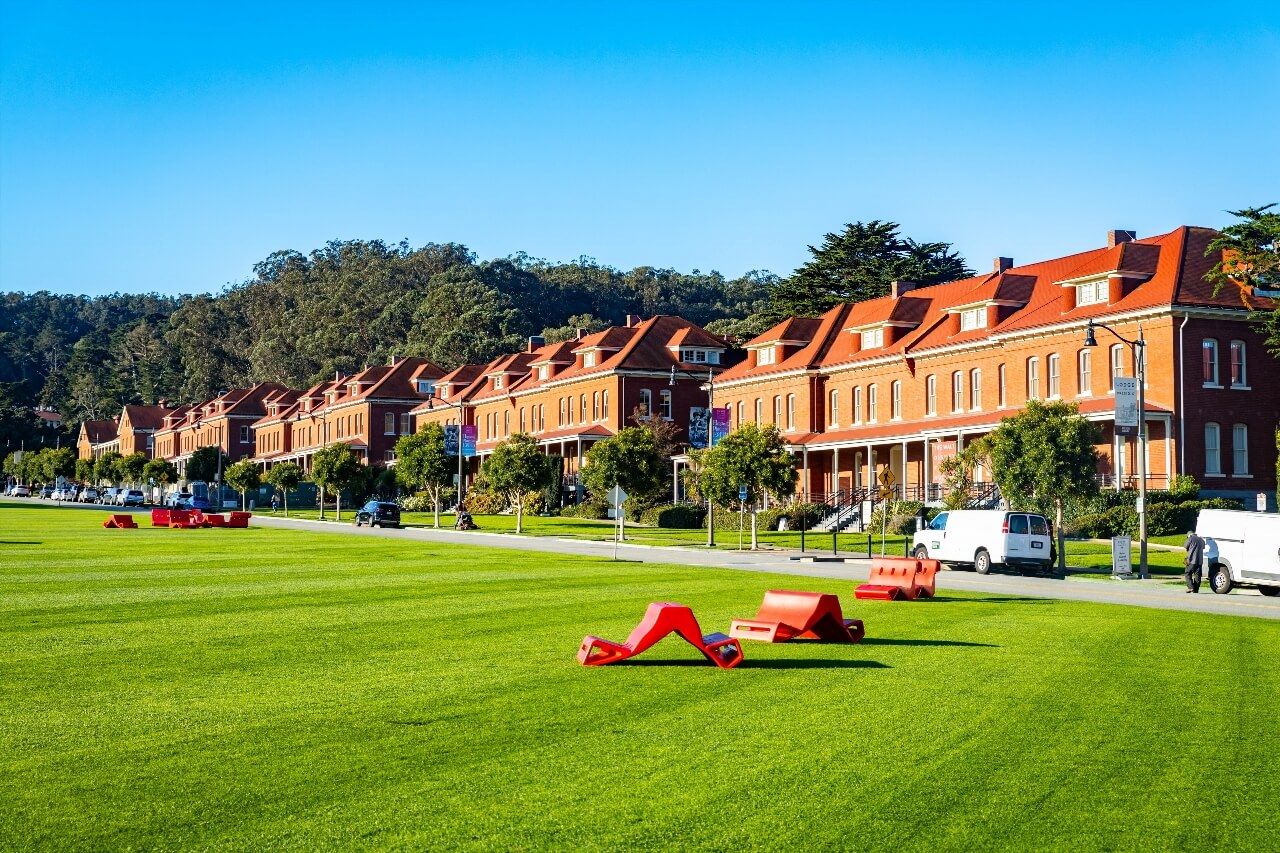
19. Explore the Presidio
The Presidio occupies the northwestern tip of the San Francisco peninsula, covering 1,491 acres, roughly the size of a small national park, entirely within city limits. It was established as a Spanish military outpost in 1776, passed to the Mexican government in 1822, was taken over by the U.S. Army in 1846, and remained an active military base until 1994, when it was transferred to the National Park Service as part of the Golden Gate National Recreation Area. Today it operates as a combination of national park, residential neighborhood, cultural campus, and open space.
The variety within the Presidio (105 Montgomery St, San Francisco, CA 94129, rated 4.7/5 on Google (26K reviews)) is striking. The main post area retains its historic military character: officers' quarters from the Spanish Colonial period, Civil War-era barracks, eucalyptus groves planted by the Army for windbreak. The Presidio Trust has converted former military buildings into residences, offices, and cultural venues, Lucasfilm moved its headquarters here in 2005, occupying buildings on the main post.
For visitors, the priorities depend on interest. The Walt Disney Family Museum on the main post is a meticulously assembled chronicle of Disney's life and work, the physical artifacts and film archives here go well beyond what the Disney Company presents in its branded venues. The hiking and cycling trails throughout the Presidio cover over 24 miles, connecting the bay shoreline at Crissy Fields with the forested interior and the southern bluffs overlooking the Golden Gate. The Batteries to Bluffs Trail is a recent addition that follows the coastal bluffs to an overlook directly below the south tower of the Golden Gate Bridge, the closest accessible point to the bridge in the city. The Ryo audio tour for San Francisco includes a Presidio segment that ties the military history, the architecture, and the trail network together as you walk.
20. Take a Bay Cruise
Viewing San Francisco from the water is a different experience entirely, the city appears as a wall of hills, the bridges reduced to scale, Alcatraz just a low island in the middle of a very large bay. A Bay Cruise from Pier 39 or Pier 41 typically lasts 60 to 90 minutes and passes under both the Golden Gate and Bay Bridges, offering clear views of the city skyline, the Marin Headlands, and Angel Island.
The Blue and Gold Fleet and Red and White Fleet both operate regular departures throughout the day. Prices run around $45 for adults in 2026. For a longer experience, the Sunset Cruise departing in late afternoon catches the light on the bridge and the city in a way that is difficult to replicate from shore. Book ahead on weekends, the boats hold between 150 and 400 passengers depending on the vessel, and summer departures fill up.
21. Discover the Mission District
The Mission District is the oldest neighborhood in San Francisco, named for the Mission Dolores, properly, the Misión San Francisco de Asís, established in 1776. The mission's adobe chapel is the oldest intact building in the city, and its cemetery contains the graves of several of San Francisco's early mayors. The much larger Basilica next door was built in 1918; the original chapel is the one worth seeing.
The neighborhood's character today is shaped primarily by its Central American immigrant community, particularly from Mexico and El Salvador, and the ongoing tension between that community and the waves of gentrification driven by the tech industry over the past two decades. The concentration of Mission-style taquerias on 24th Street remains among the best in North America, the burritos here are the original San Francisco Mission burrito: large, foil-wrapped, rice-included, priced for workers not tourists.
Clarion Alley between Mission and Valencia Streets is the city's most concentrated outdoor mural space, with 60-plus murals covering both walls of a full block, regularly repainted and politically engaged. The Valencia Street Corridor between 16th and 24th Streets has become the city's most interesting independent retail strip, bookstores, record shops, ceramics studios, and restaurants that range from old-school taquerias to serious natural wine bars.
The Mission Dolores Park on Dolores Street is the city's most socially diverse public space, a hillside park that fills on sunny weekend afternoons with an improbable cross-section of San Francisco life. Bring a blanket, grab a burrito from a 24th Street taqueria, and join in. The Mission is also one of the easier neighborhoods to fold into a Ryocity audio walk because the streets are flat and the murals practically narrate themselves.
22. Visit Pier 39 and the Sea Lions
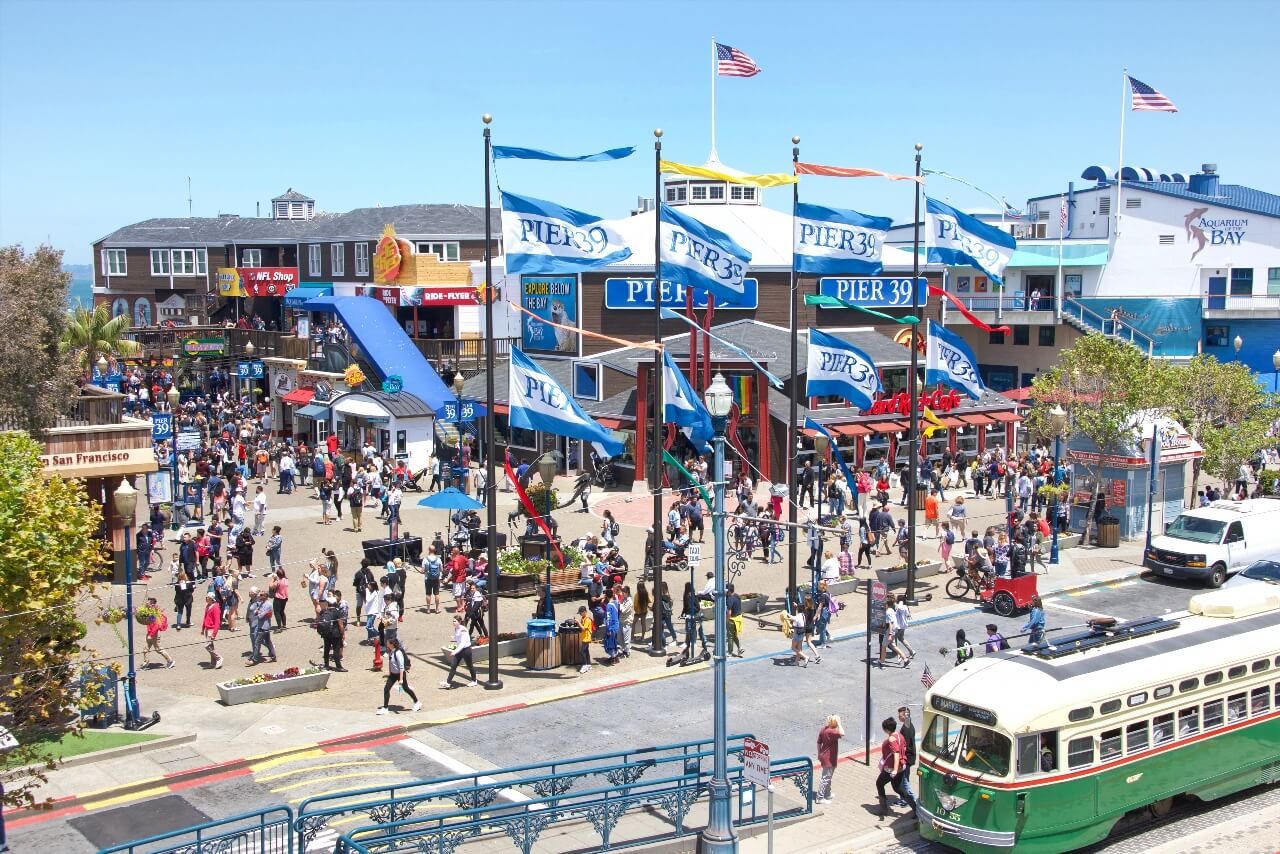
Pier 39 is the most commercial stretch of the Fisherman's Wharf waterfront. The reason to go is not the shops or the carousel but the sea lions on K-Dock. In January 1990, following the Loma Prieta earthquake, a small group of California sea lions arrived on the floating docks on the west side of Pier 39 and simply stayed. The colony has peaked above 1,000 animals; today, several dozen to several hundred are usually present, sprawled, barking, jostling for position. Watching them is free.
23. Explore Ghirardelli Square
Ghirardelli Square sits on the site of the original Ghirardelli Chocolate factory (1893 to the 1960s). The red brick complex was converted into shops and restaurants in 1964, one of the earliest adaptive reuse projects of its kind. Stop in at the Ghirardelli Ice Cream and Chocolate Shop in the Clock Tower building. A hot fudge sundae here is an old San Francisco ritual, and the line moves faster than it looks.
24. Cross to Sausalito by Ferry
Taking the Golden Gate Ferry from the Ferry Building to Sausalito is one of the most pleasant 30-minute boat rides available in any American city. The ferry crosses the bay past Alcatraz and arrives in downtown Sausalito, a small town on the Marin County waterfront that functions primarily as a place for San Franciscans to escape to for an afternoon.
Sausalito's waterfront promenade runs along Bridgeway, the main street, with views back across the bay to San Francisco. The town has a concentration of galleries, independent shops, and restaurants that is unusually high for its size. Bar Bocce on the waterfront has outdoor tables on the bay and serves thin-crust pizza and natural wine; Sushi Ran on Lincoln Avenue has been one of the Bay Area's most respected Japanese restaurants for over 30 years.
The Sausalito Houseboats community, on the northern edge of town, is a floating village of roughly 400 live-aboard boats that has existed since the 1950s. Many of the boats are architectural projects in themselves, walk along Gate 5 Road for the best views.
25. Day Trip to Muir Woods
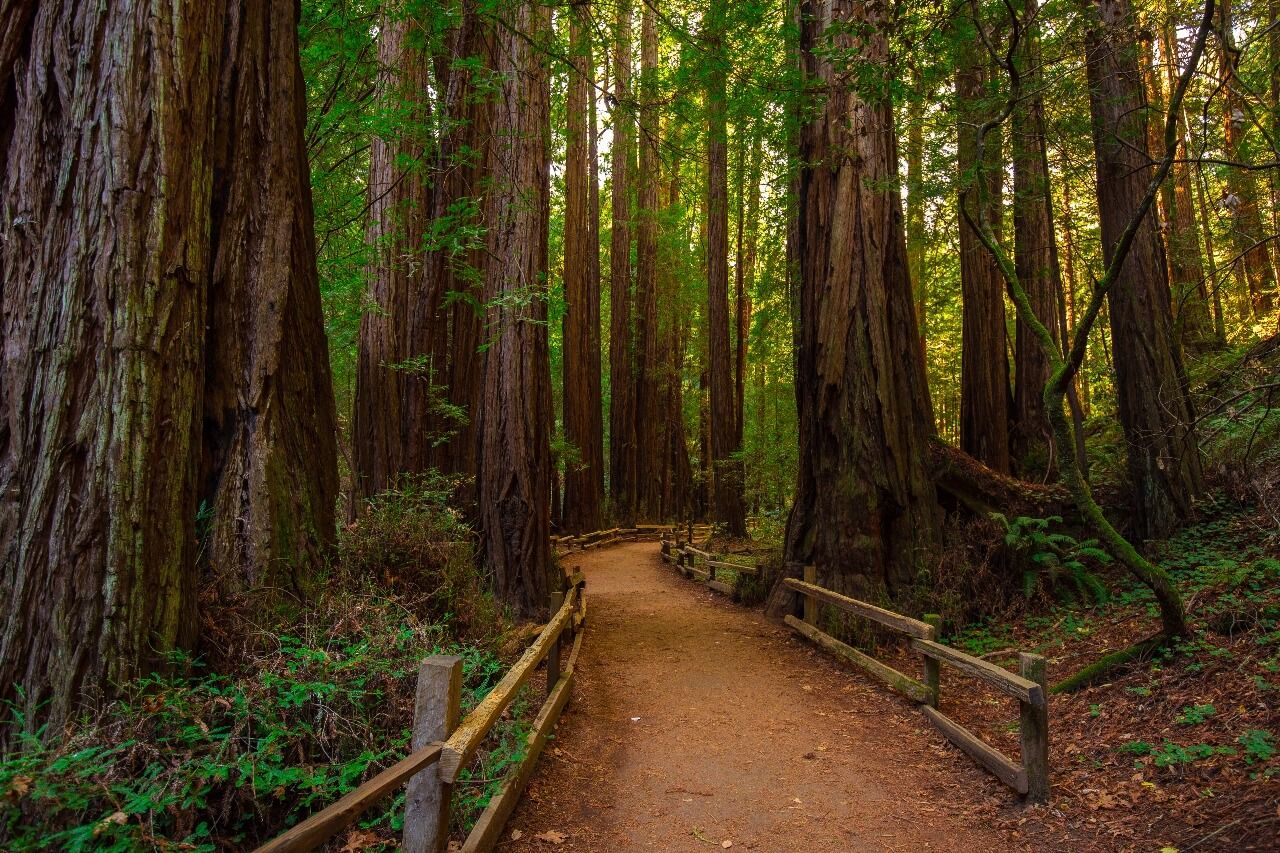
Muir Woods National Monument (1 Muir Woods Rd, Mill Valley, CA 94941, rated 4.8/5 on Google (20 226 avis)) is the most accessible old-growth redwood forest in the Bay Area, located 17 miles north of San Francisco in a narrow canyon on the slopes of Mount Tamalpais. The monument covers 554 acres; the main canyon contains coast redwoods up to 258 feet tall and estimated at over 1,000 years old.
The redwood forest has a particular quality of light and quiet that is difficult to find elsewhere close to a major city, the canopy filters the sun to a soft green, the creek runs through the floor of the canyon, and the scale of the trees makes the entire human world feel temporarily small. The main Cathedral Grove trail is flat and paved, accessible to most visitors. The connecting trails up the canyon walls climb steeply into mixed forest and offer solitude even on crowded days.
Visitation has increased significantly in recent years, and the park now requires advance reservations for both parking and shuttle access. Book at gomuirwoods.com (or recreation.gov) well ahead of your visit, same-day reservations are rarely available in summer. The Muir Woods Shuttle from Sausalito operates on weekends and holidays and is the recommended approach. The entrance fee is $15 per person for adults (free for visitors 15 and under), with parking reservations charged separately ($10 for a standard car). Arrive before 9 a.m. or after 4 p.m. to experience the grove with significantly fewer people.
FAQ
What is the best time of year to visit San Francisco?
September and October are generally the best months, the summer fog that cloaks much of the city from June through August lifts, temperatures climb into the mid-60s Fahrenheit, and the tourist crowds thin after Labor Day. Spring (March to May) is also good, with more rainfall but clear days between storms. July and August are paradoxically the foggiest, most overcast months, Mark Twain's attributed quote about the coldest winter he ever spent is every long-term resident's first year in San Francisco.
How many days do you need to see San Francisco?
Three to four days covers the essential attractions at a reasonable pace, Golden Gate Bridge, Alcatraz, Golden Gate Park with its museums, Chinatown, North Beach, and at least one afternoon of walking in a less-visited neighborhood. A week allows for day trips to Muir Woods, Sausalito, and potentially the Wine Country. Trying to compress everything into a single day is possible but leaves most of the city unseen.
Is San Francisco safe for tourists?
San Francisco has areas of significant social distress, particularly around the Tenderloin and parts of South of Market, and open drug use and homelessness are visible in ways that can be startling for first-time visitors. The tourist-heavy areas, Fisherman's Wharf, the Ferry Building, the Embarcadero, Union Square, North Beach, and the neighborhoods covered in this guide, are generally safe during the day. Standard urban precautions apply: watch your belongings, keep phones in pockets rather than out, and avoid the Tenderloin after dark.
What is the best way to get around San Francisco?
For most tourist itineraries, a combination of BART (Bay Area Rapid Transit), Muni bus and rail, and walking covers most of the city efficiently. A regular Muni day pass costs $13 in 2026 and covers buses and streetcars; if you also want cable cars included, the $18 Cable Car Plus pass is the better deal. Driving is actively counterproductive in most neighborhoods, parking is expensive, hills make navigation disorienting, and traffic management during peak hours is poor. Rideshare apps work but surge pricing near major attractions is common. Renting a bicycle is excellent for Golden Gate Park and the Embarcadero.
Is Alcatraz worth the money and effort to visit?
For most visitors, yes. The combination of the ferry crossing, the island's layered history (military fortress, federal prison, Native American occupation), and the quality of the audio tour make it one of the more complete visitor experiences in the city. Book tickets through Alcatraz City Cruises at least two weeks ahead in summer, the ferries sell out. The day tour is the right choice for first-time visitors; the night tour rewards those returning for a second visit.
What neighborhoods are worth exploring beyond the tourist trail?
The Outer Richmond along Clement Street is the city's second Chinatown and arguably has better food, Vietnamese, Burmese, Japanese, and Cantonese restaurants concentrated in a few walkable blocks. Bernal Heights has an elevated park with panoramic views and a village-scale main street on Cortland Avenue. Glen Park in the southern part of the city is quiet, residential, and completely off the tourist circuit. The Dogpatch neighborhood near the waterfront in the southeastern part of the city has repurposed industrial buildings housing ceramics studios, breweries, and the Museum of Craft and Design.
Ready to Explore San Francisco?
This city rewards slow travel, the neighborhoods that look similar on a map turn out to be completely distinct on foot, and the geography keeps revealing new angles. Walking the same hill on a foggy morning and a clear afternoon are two different experiences.
If you want a guided walk that connects the most storied streets in the city with the context that makes them make sense, the San Francisco audio guide on Ryo covers the key landmarks with narration developed by local historians. Download the Ryocity route before you go and use it at your own pace, no schedule, no group, no rush.