





RyoCity
The Fiery City
Liège, Belgium
RyoCity
The Fiery City
Liège, Belgium
5.5 km
Distance
2h30
Durée
31
Audios
Boucle
Parcours
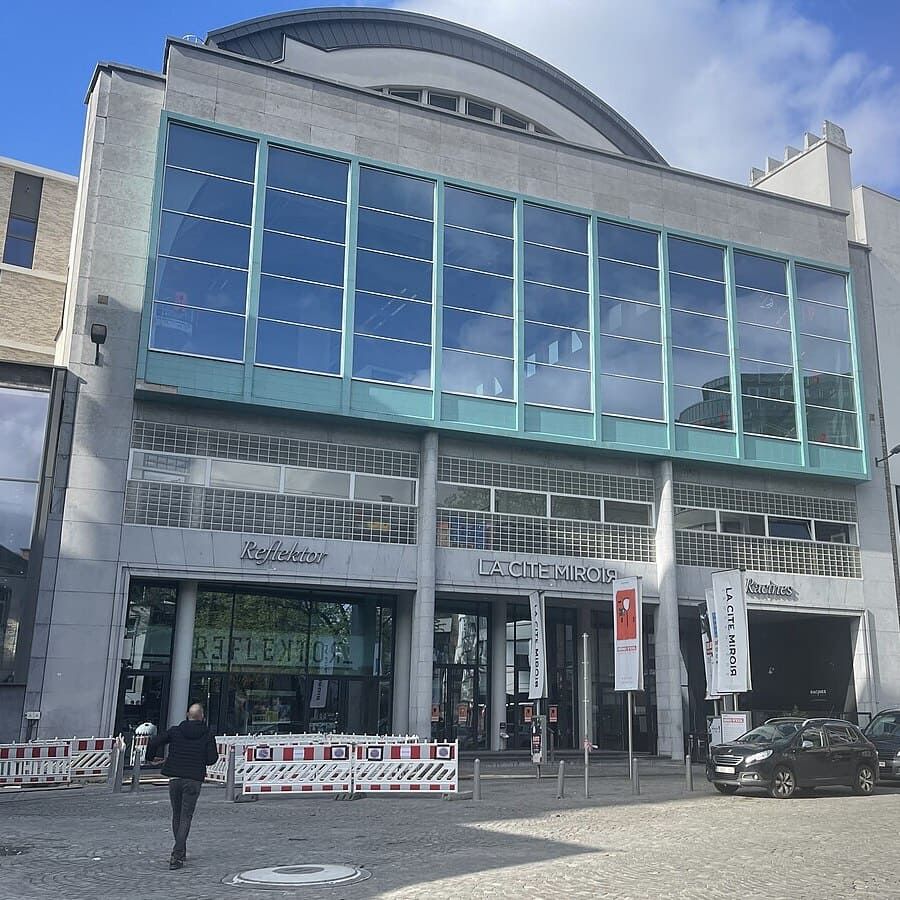
©Natacha LSP CC BY-SA 4.0. <https://creativecommons.org/licenses/by-sa/4.0/deed.fr>via Wikipedia Commons
La Cité Miroir is one of Liège’s most iconic cultural venues. Standing on Place Xavier Neujean, it occupies the former Sauvenière swimming pool, first opened in 1942. Designed in the modernist and Art Deco style of the interwar years, the building is striking for its clean lines, vast open spaces, and tall glass walls that flood the interior with natural light. Back then, it held two pools, public baths, and even thermal facilities, giving the people of Liège democratic access to hygiene and sport. Closed in 2000, the site was later listed as heritage and fully restored. Since 2014, its spectacular spaces have been reborn as a center for culture and civic life. The former pools now serve as exhibition halls, a theater, and meeting spaces, all while keeping their original architectural elegance. The Cité Miroir has a clear mission: to foster critical thinking, keep alive the memory of struggles for democracy, and promote civic engagement. Among its permanent exhibitions are "Plus jamais ça!" — in English, "Never Again" — dedicated to the memory of the Nazi camps, and "En Lutte" ("In Struggle") which highlights major social movements. Today, the Cité Miroir is more than just a cultural venue—it’s a vibrant place where architecture, history, and civic commitment come together, offering visitors an experience that is at once aesthetic, educational, and socially engaged. And right next door you’ll see the Collegiate Church of Saint Denis, founded in the tenth century by Bishop Notger. It’s one of Liège’s seven historic collegiate churches, and also one of the best preserved. Built in the Romanesque Mosan style, it still keeps its fortified westwork, which once served as both a bell tower and a defensive stronghold. Inside, you can admire a striking Gothic choir, centuries-old stained glass, and precious artworks including a sixteenth-century altarpiece. Side by side, the medieval church and the modernist Cité Miroir create a fascinating contrast—two neighbors that together embody more than a thousand years of Liège’s history.
