





RyoCity
Journey Through the Champagne Cork
Troyes, France
RyoCity
Journey Through the Champagne Cork
Troyes, France
4.1 km
Distance
1h40
Durée
27
Audios
Boucle
Parcours
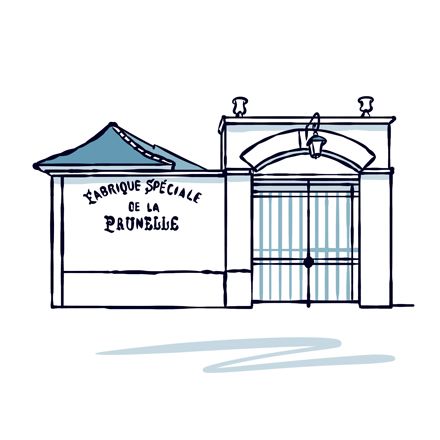
On your left, you’ll see the sign for the Cellier Saint-Pierre and the old painted inscription on the wall that reads “Special Factory of Prunelle.” This is where the famous Prunelle de Troyes liqueur is still distilled. It even won a gold medal at the 1900 Paris World’s Fair. The liqueur is made through a double distillation process in a copper still, using crushed sloe stone kernels macerated in alcohol. Mixed, of course, with other natural and secret ingredients, the result is a 40% spirit full of complex flavours. It’s traditionally served as a digestif or as a 'trou champenois'—a refreshing interlude during a meal, typically poured over sorbet or frozen nougat to cleanse the palate and stimulate the appetite before the next course—or, naturally, in a Champagne cocktail. The distillery is housed in a building that’s been used as a cellar since the 12th century, back when it was known as the Tithe Cellar. Tithes were a tenth of each harvest collected as tax, and the canons stored here the wine owed to the clergy by Champagne winemakers. The cellar also played a role in overseeing the construction of the cathedral. During the Revolution, it was taken over by wine merchants who used it for storing alcohol, and in the early 1800s, it became a distillery—still in operation today. Major renovations in 2015 revealed its spectacular 13th-century roof structure, one of the oldest visible timber frameworks on a secular building in France. The shop is located in a 17th-century canon’s house connected to the cathedral by an underground passage.
