




RyoCity
The Champagne Capital
Épernay, France
RyoCity
The Champagne Capital
Épernay, France
2.1 km
Distance
1h00
Durée
16
Audios
Boucle
Parcours
Shutterstock
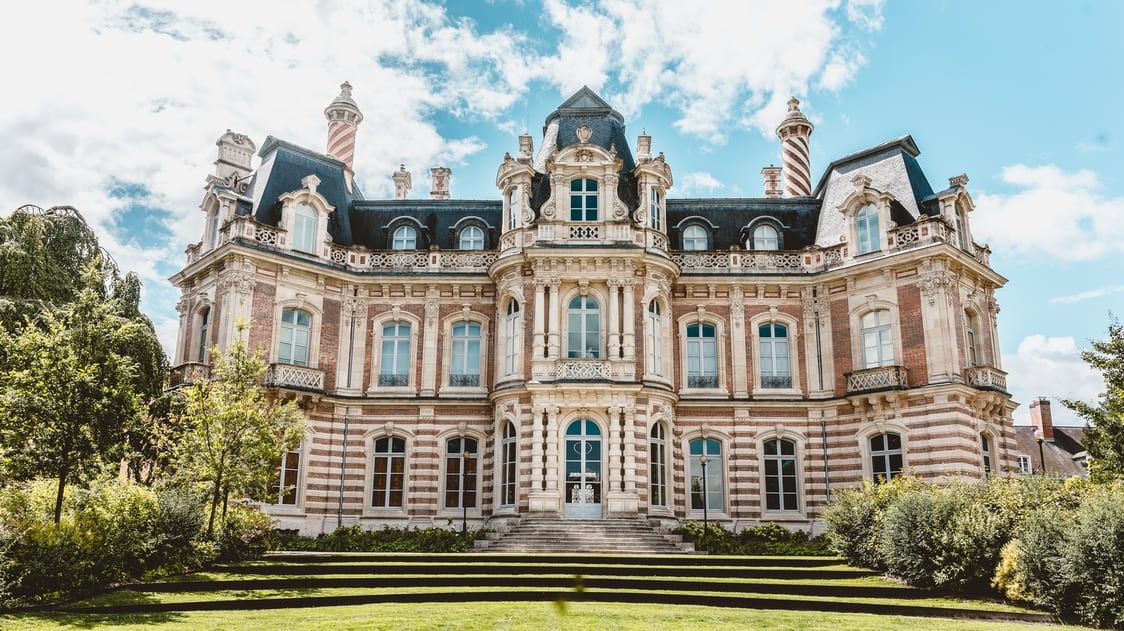
Right in front of you stands one of the most stunning buildings in the city—Château Perrier, a grand residence built in 1857 for Charles Perrier, the son of the founder of the Perrier-Jouët champagne house. Born in Épernay, Perrier wasn’t just a successful businessman—he also played a key role in the rise of the family champagne house, which is still one of the most prestigious in the world today. In addition to running the company, he became mayor of Épernay in 1854, following in his father’s footsteps, and was named a Knight of the Legion of Honor in 1863. Take a moment to admire the building. It’s a spectacular private mansion, so impressive in scale that people quickly started calling it a château. Built in the Louis XIII style, it features four façades inspired by Parisian landmarks like the Luxembourg Palace and the Tuileries. The man behind the design was local architect Pierre Eugène Cordier, who combined brick, stone, slate, and glass to create this truly monumental residence. But it was never just a home—it was also used for entertaining guests and producing champagne from the very beginning. By that time, Épernay had already earned its place as a global center for champagne, and Perrier-Jouët, founded in 1810, was the official supplier to the British royal court. The interior is just as opulent as the exterior, with decorations created by the same artisans who worked on the Opéra Garnier and Paris City Hall. In short, it’s an extraordinary building—so much so that it was officially listed as a Historic Monument in 2013. During World War II, the château took on a very different role, serving as headquarters for British, then German, and finally American forces. After the war, following the death of its owner Henri Gallice, the city bought the property and transformed it into a museum and library. It eventually closed in 1998, but a new restoration project kicked off in 2011, leading to years of renovation and the creation of today’s Museum of Champagne Wine and Regional Archaeology. A visit to the museum is a great way to explore the city’s heritage in a truly exceptional setting. With nearly 100 rooms and around 2,000 objects on display, it offers a deep dive into local history—and your ticket gives you access to the château’s stunning interiors.
