





RyoCity
Between Two Shores
Calais, France
RyoCity
Between Two Shores
Calais, France
5.6 km
Distance
2h15
Durée
25
Audios
Boucle
Parcours
Shutterstock
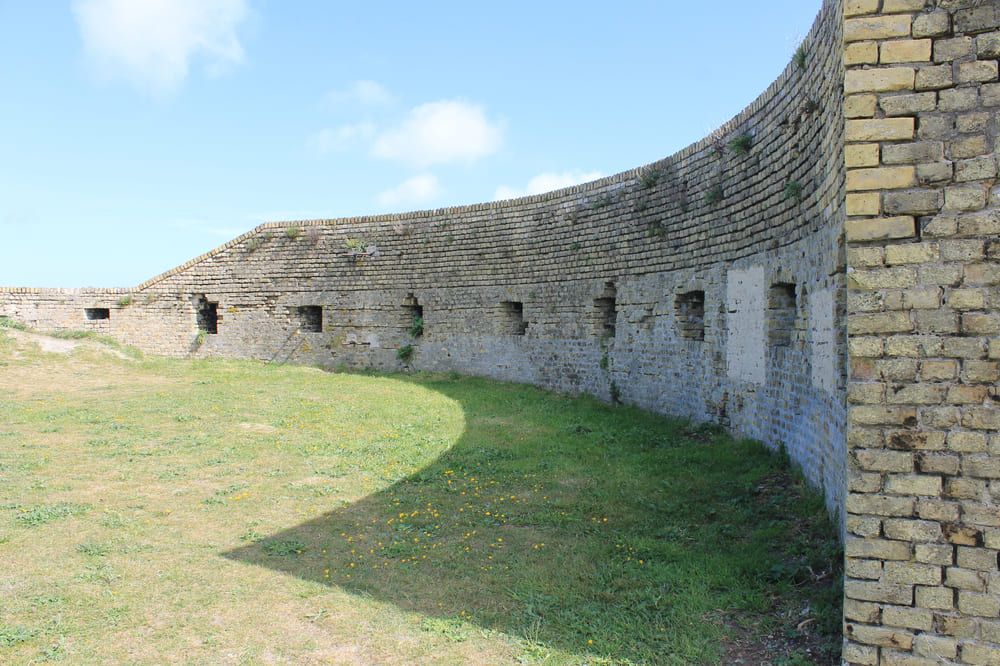
Perched at the end of the outer harbor, Fort Risban is a powerful reminder that Calais has long been a prized location on the Channel. The first fortifications here date back to the 14th century, during the Hundred Years’ War. In 1346, as English troops under Edward III tried to take Calais, they built a small wooden fort on what was then a sandbank, just outside the city walls. Their goal was simple: block all maritime supplies and force the city into submission. It worked—Calais fell to the English in 1347. Under English rule, the fort was rebuilt in stone and renamed Lancaster Tower. By around 1450, the site took on the name Risbank, a Flemish word meaning "a sandbank covered with branches." The name reflects both the landscape at the time and the strong Flemish linguistic influence in the Calais region during the Middle Ages. Over time, Risbank evolved into Risban.For centuries, the fort changed hands between English, French, and Spanish forces, before Calais permanently returned to France in 1598. In the 19th century, a devastating explosion in the powder magazine led to major reconstruction. The fort was decommissioned in 1921 and turned over to the city in 1938. Though it’s not open to the public, you can walk along the old parapet and enjoy the sweeping views. Being one of the last surviving sea forts in France—alongside the one in Ambleteuse—it still captures the imagination.
