





RyoCity
A Journey Through History
Compiègne, France
RyoCity
A Journey Through History
Compiègne, France
4.5 km
Distance
1h50
Durée
18
Audios
Boucle
Parcours
Shutterstock
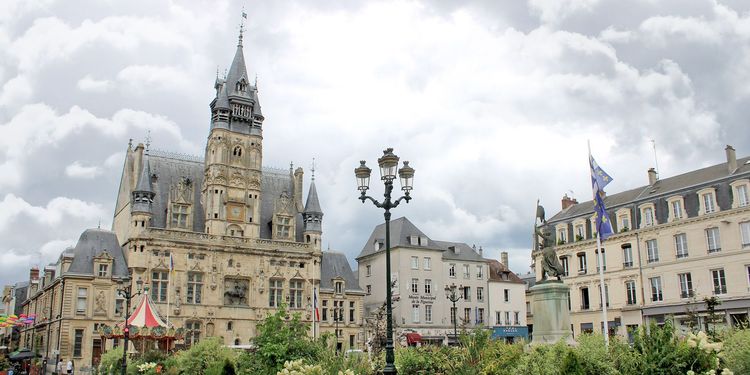
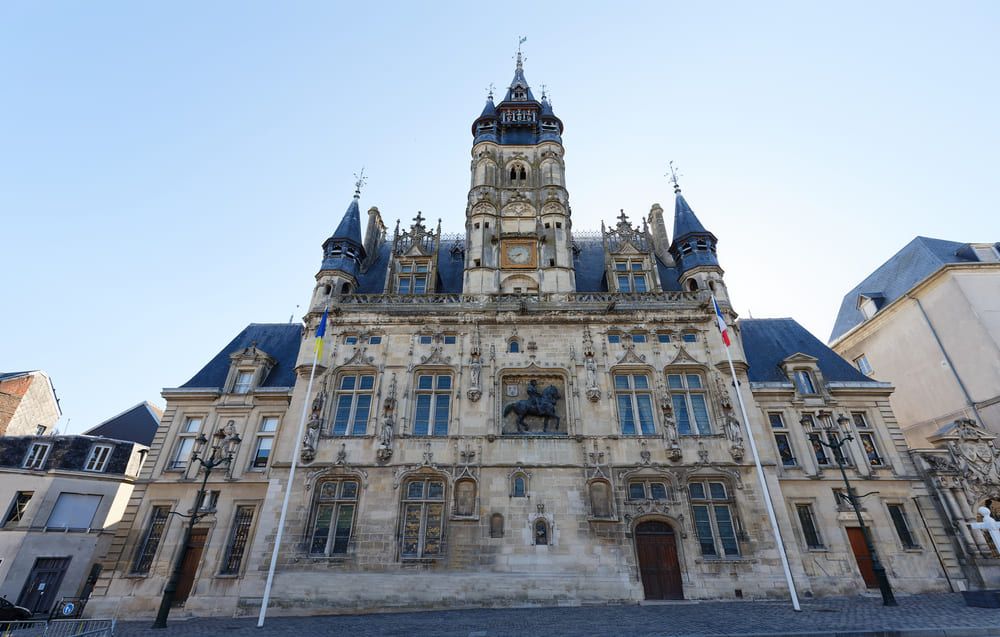
You’re now standing in the Town Hall Square, surrounded by the figure of Joan of Arc waving her flag, and perhaps the most stunning building in the city: the Compiègne Town Hall. Construction on this square began in the 1500s. After the end of the Hundred Years’ War between England and France, the early 16th century was a prosperous era. Compiègne was a trading hub, positioned between Paris and Flanders, and the economy was thriving. This was the golden age of municipal construction, and when things go well, it’s important to show it. People wanted to flaunt their wealth and power. The town hall was built in the King Louis XII style, and if you look closely, you can spot an equestrian statue of the king in the niche on the façade. This style marks the shift from Gothic to Renaissance architecture, influenced by the Italians. The façade is monumental and beautifully decorated, standing 47 meters tall and 24 meters wide. Creating such a vast space for a monumental building in the heart of a fortified city was a true feat, reflecting the growing power of municipalities, which began to assert themselves during the Hundred Years’ War, a time when they played a critical role in organising the defense and management of cities. You can see the effigies of Charles VII and Joan of Arc. In fact, it was here in Compiègne that Joan of Arc was captured in 1430, a key event in the Hundred Years’ War, and Charles VII represents the peace and renewal that followed. Over the next century, the monument was expanded, and its sculpted decorations were altered. Then, during the Enlightenment, the town hall was vandalised by revolutionaries. Much of the medieval décor, including tapestries, paintings, and furniture, was lost, and the façade was heavily damaged. Today, its grandeur has been restored by the author, historian, and archaeologist Prosper Mérimée. He listed the town hall as a historic monument in 1840. With the arrival of the Second Empire and Napoleon III’s presence in Compiègne, a major restoration of the building was launched, led by Viollet-le-Duc, a famous architect, who described the town hall as “the best example of civil architecture in northern France.” Empress Eugénie even referred to the famous architect as “my little violet.” I’ll let you admire the result. The belfry, with its spire topped by pepperpot turrets, reaches 47 meters into the Picardy sky. It houses a large bell, cast in 1303, which is one of the oldest bells still in existence today. Since 1530, the belfry has also housed a clock! Even now, you can see three wooden jacquemarts, which are artistic automata, striking the hours with their hammers on three small bells. The three picantins quickly earned nicknames based on Compiègne’s main enemies at the time, so let me introduce you to Langlois for the English, Flandrin for the Flemish, and Lansquenet for the Germans.
